Explore the Diverse World of Volcano Types & Features
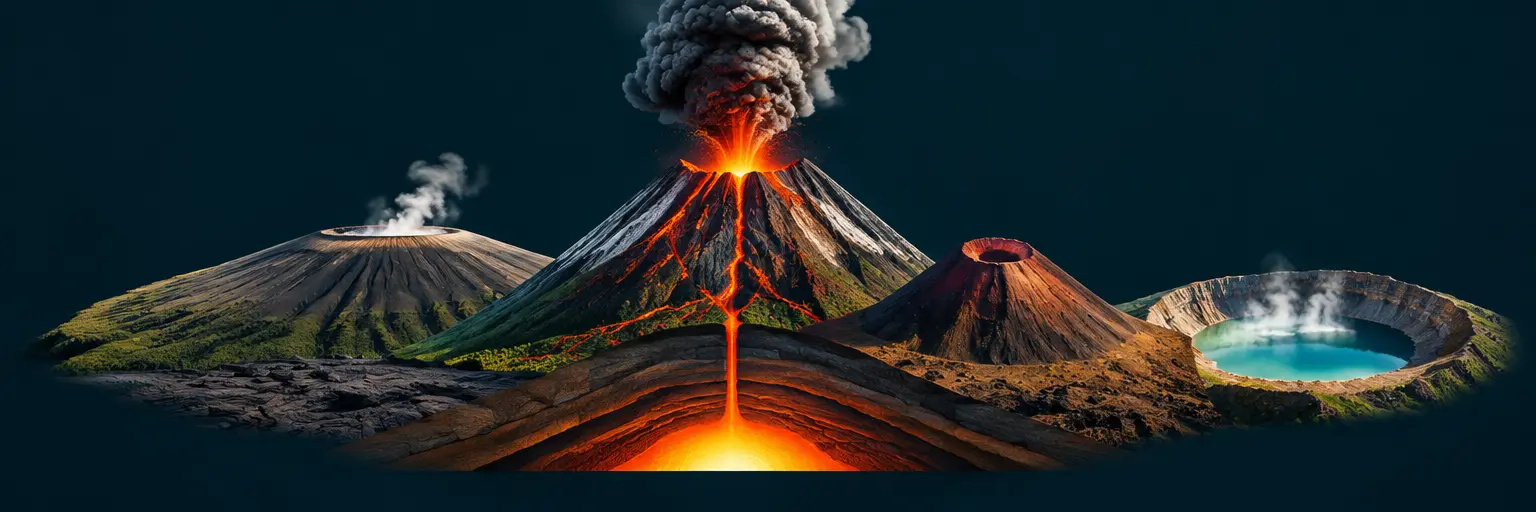
Welcome to Volcano Explorers' comprehensive guide on volcano types and features. Here, we break down the fascinating spectrum of volcanic landforms—from towering stratovolcanoes to mysterious submarine eruptions. Whether you're a student, researcher, or volcano enthusiast, this categorized resource helps you understand how magma, gas, and tectonic forces shape our planet. Discover each subtype's formation, hazards, and classic examples, with actionable safety insights for those living near active systems.
🌋 Mud Volcanoes: Non-igneous Volcanic Features
Mud volcanoes are fascinating geological structures that erupt not molten rock but mud, water, and gases—primarily methane. Unlike igneous volcanoes, they form when pressurized fluids and sediments are forced upward through weak zones in the Earth's crust. Expect to learn about famous sites like the Lusi eruption in Indonesia and how these features can indicate subsurface hydrocarbon reservoirs. Understanding their activity is crucial for hazard assessment in oil-rich regions.
🏔️ Stratovolcanoes (Composite Volcanoes): Formation and Hazards
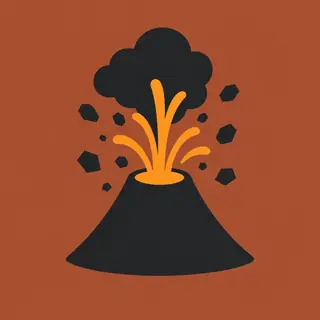
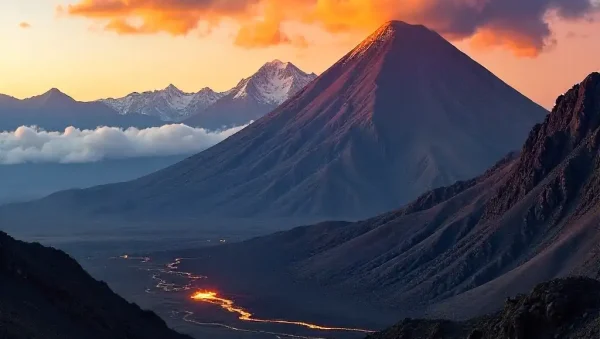
Stratovolcanoes are the classic symmetrical cones like Mount Fuji or Mount St. Helens. They form through alternating layers of lava flows, ash, and pyroclastic material, creating steep slopes. This section explains their explosive eruption styles—from viscous andesitic to rhyolitic magmas—and the associated hazards: pyroclastic flows, lahars, and ashfall. Risk management is emphasized, as these volcanoes are densely populated in places like Japan, Indonesia, and the Andes.
🌊 Submarine Volcanoes: Eruptions Beneath the Sea
Most of Earth's volcanism occurs underwater, shaping the ocean floor. Submarine volcanoes produce pillow lavas, black smokers, and can build to form new islands. This subcategory covers mid-ocean ridges, hotspot seamounts, and the 2012 Havre eruption's floating pumice rafts. Learn how hydrostatic pressure alters eruption dynamics and how scientists monitor these remote but influential features on marine ecosystems.
🪨 Volcanic Spines and Domes
Volcanic spines are tall, needle-like extrusions of highly viscous lava that harden within a vent, while domes are rounded mounds that grow from slow extrusion. Mount Saint Helens' post-1980 lava dome and the 1902 Mont Pelée spine are prime examples. This section discusses their growth patterns, the danger of collapse-induced block-and-ash flows, and methods for tracking dome inflation using satellite radar (InSAR).
🍮 Lava Domes: Viscous Lava and Growth
Lava domes form when thick, silicic lava (like rhyolite or dacite) is too viscous to flow far, piling up near the vent. They often grow in cycles, alternating between endogenous inflation and exogenous lobe addition. Expect details on dome collapse triggering deadly pyroclastic flows, as seen at Soufrière Hills, Montserrat. Monitoring dome growth is vital for eruption forecasting and protecting nearby communities.
➡️ Fissure Volcanoes: Linear Eruptions
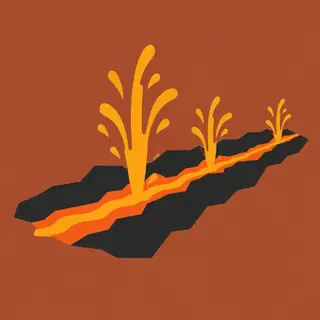
Fissure volcanoes erupt from elongated cracks rather than a central vent, producing extensive lava fields and curtains of fire. Iceland's Laki eruption (1783) and Hawaii's Mauna Loa rift zones are classic examples. This subcategory explains how fissures open due to dike intrusion, the transition from fountains to focused cones, and the environmental impact of released gases like sulfur dioxide.
🔥 Cinder Cones: Small but Explosive Volcanoes
Cinder cones are the simplest and most common volcanic landforms—steep hills of loose tephra (cinders, scoria) often found on the flanks of larger volcanoes. Paricutín in Mexico grew in just nine years. Explore their Strombolian eruption style, how they form in months or years, and why their steep slopes are prone to collapse. Despite their size, they can host surprising activity.
🔩 Volcanic Plugs and Necks
When magma solidifies inside a volcanic conduit, erosion later exposes the resistant rock as a volcanic plug or neck. Features like Devil's Tower in Wyoming and Shiprock in New Mexico are iconic. This section details the cooling and fracturing process, columnar jointing, and how these landforms help scientists reconstruct erosion rates and ancient volcanic systems over millions of years.
🏝️ Shield Volcanoes: Characteristics and Examples
Shield volcanoes are broad, gently sloping giants built by countless low-viscosity basaltic lava flows. Hawaii's Mauna Loa and Iceland's Skjaldbreiður exemplify their shape. Expect explanations of effusive eruptions, lava tubes, and hotspot interactions. The subcategory also covers their lower explosivity but high hazard potential due to lava inundation, plus how their slopes are monitored using tiltmeters and GPS.
🌀 Volcanic Conduits and Plumbing Systems
The plumbing system of a volcano is an underground network of magma chambers, dikes, sills, and conduits that feed eruptions. This section explores geophysical imaging (seismic tomography) revealing reservoirs at 5-50 km depth. Learn how magma ascent rates, gas exposition, and conduit geometry control eruption style—from effusive flows to violent explosions—and why understanding this system improves early warning.
⭕ Calderas: Formation and Supervolcanoes
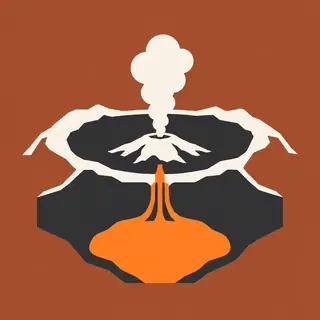
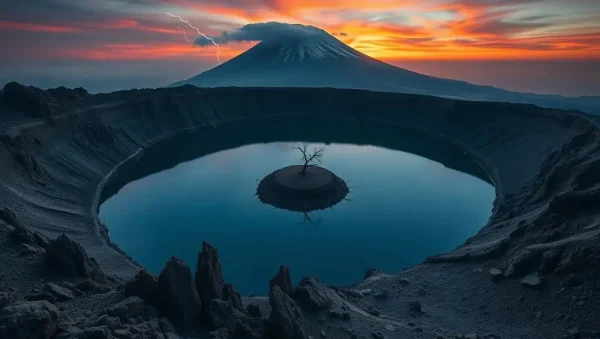
Calderas are large, basin-like depressions formed after a volcano empties its magma chamber and collapses. Yellowstone in the US and Toba in Indonesia are supervolcanoes with calderas. Discover the two main types (resurgent and collapse), the scale of catastrophic eruptions, and the post-collapse systems like hydrothermal activity. Risk assessment for supereruptions is a key focus for global preparedness.
🕳️ Maar Volcanoes: Broad Low-Relief Craters
Maar volcanoes form when rising magma encounters groundwater, causing explosive phreatomagmatic eruptions that blast a wide, shallow crater surrounded by a low tuff ring. Examples include Germany's Eifel maars and Arizona's Uinkaret fields. This subcategory details the interaction physics, crater lakes, and how maar deposits provide high-resolution records of past eruptions and climate changes.
🕳️ Lava Tubes: Underground Pathways
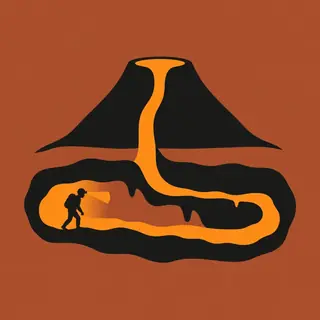
Lava tubes are natural tunnels formed when the surface of a lava flow cools and crusts over while the molten interior continues to drain. Hawaii's Thurston Lava Tube is a tourist favorite. Learn about tube formation, internal flow features like stalactites, and their importance as habitats for microbes. Speleology and safety are discussed, plus their role in expanding lava fields.
🌐 Volcanic Hotspots: Mantle Plumes and Island Chains
Hotspots are localized zones of intense volcanic activity fed by deep mantle plumes, unrelated to plate boundaries. The Hawaiian-Emperor seamount chain and Yellowstone are prime examples. This section covers plume theory, plate motion's effect on creating linear island chains, and geochemical evidence linking hotspot lavas to deep mantle reservoirs. They provide key insights into Earth's interior dynamics.
Frequently Asked Questions
What is the main difference between a shield volcano and a stratovolcano?
Shield volcanoes erupt low-viscosity basaltic lava repeatedly, building broad, gently sloping cones like Mauna Loa. Stratovolcanoes, in contrast, alternate between explosive and effusive eruptions of more viscous andesitic lava, creating steep, symmetric cones. Their hazards differ: shields produce lava flows, while stratovolcanoes generate pyroclastic flows and lahars.
Are mud volcanoes actually volcanoes?
No, they are non-igneous features. Mud volcanoes release pressurized sediment, water, and gases (methane) without any magmatic heat. They often occur in sedimentary basins, petroleum provinces, or accretionary wedges. While visually similar, their formation and eruption mechanics are entirely different from magmatic volcanoes.
Can a lava dome cause an explosive eruption?
Yes, lava domes are notoriously unstable. When a dome grows too steep, it can collapse, triggering block-and-ash flows. Additionally, if gas pressure builds beneath a viscous dome, it can fragment violently, producing a Vulcanian or Peléean explosion. This was seen at Mont Pelée in 1902, causing massive devastation.
How do scientists monitor caldera supervolcanoes?
Monitoring combines seismic arrays, GPS and InSAR for ground deformation, gas emissions (CO2, SO2), and geothermal temperature probes. At Yellowstone, hundreds of seismometers track microquakes, while uplift/subsidence patterns reveal magma chamber activity. Though supereruptions are rare, these tools help detect potential unrest long before an eruption.
Do lava tubes remain stable after eruptions?
Many do, surviving for millennia if not deformed by later flows. However, they can collapse over time due to roof thinning or seismic shaking. Some become collapsed skylights, as seen on Hawaii. Stability depends on lava composition, tube depth, and external erosion. Exploration requires safety gear and mapping for hazards.