
Lava Domes in Pop Culture: How They Are Depicted in Movies and Books

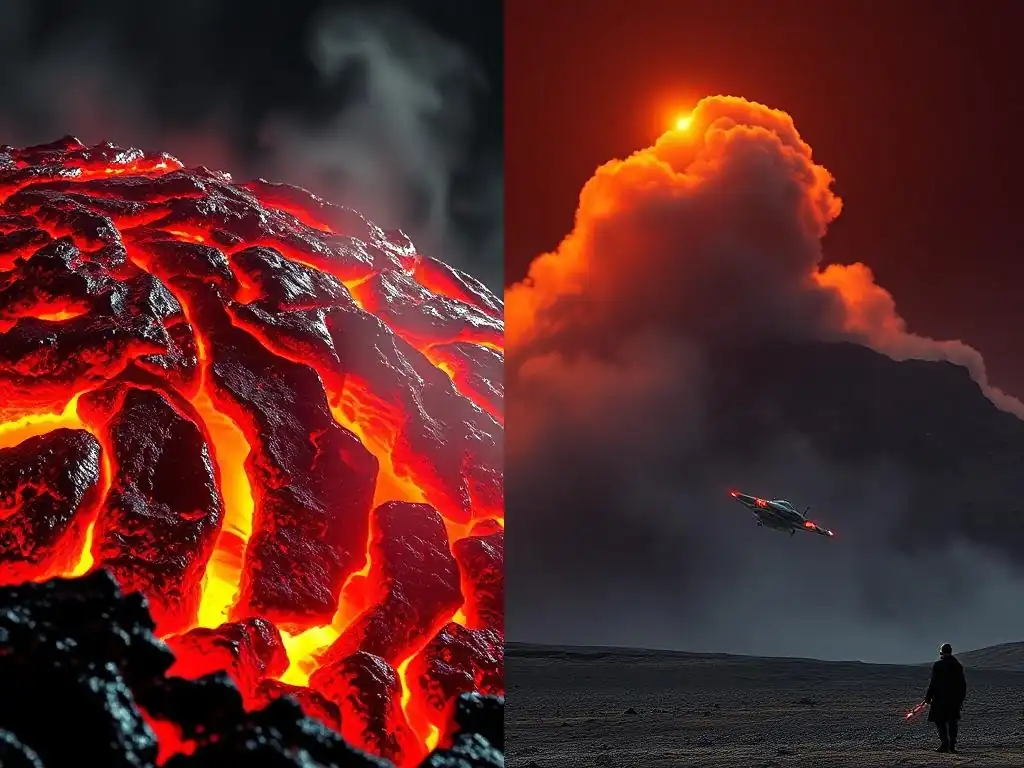
Welcome to Volcano Explorers!
Ever wondered how accurately Hollywood portrays the fiery reality of volcanoes? Prepare to be surprised...or perhaps not! This time we will discuss Lava domes in movies. Are they simply mountains of oozing rock, or something far more sinister lurking beneath the surface? Join us as we dissect the cinematic depictions of these fascinating formations, separating fact from fiction and revealing the true nature of these volatile volcanic features. Ready to uncover the secrets hidden within the screen? Let's dive in!
- Introduction: The Intriguing Allure of Lava Domes in Volcano Exploration
- Lava Domes in Movies: Action, Disaster, and Scientific Inaccuracy
- Lava Domes in Literature: From Scientific Accuracy to Mythological Interpretations
- Comparing Movie and Book Depictions of Lava Domes
- The Reality of Lava Domes: Bridging the Gap Between Fiction and Science
- Conclusion: The Enduring Fascination with Lava Domes
-
Frequently Asked Questions
- What is a lava dome, and why is it important to understand them in the context of movies?
- How are lava domes typically depicted in movies, and is this portrayal accurate?
- Why are some movies tempted to misrepresent lava domes?
- What are some examples of movies that feature lava domes, and how could they improve their depiction?
- What are the real-world hazards associated with lava domes that movies often overlook?
- Final Reflection: The Enduring Allure of Volcanic Fury
- Unearth Your Inner Volcanologist!
Introduction: The Intriguing Allure of Lava Domes in Volcano Exploration
Setting the Stage: Understanding Lava Domes in Volcanology
Lava domes are fascinating volcanic features that stand in stark contrast to the more commonly depicted explosive eruptions. They are formed by highly viscous lava, which, unlike the fluid basaltic lava flows that create shield volcanoes, is thick and sticky. This high viscosity is typically due to a higher silica content, making the lava resistant to flow. Instead of spreading out, this viscous lava piles up around the volcanic vent, gradually building a dome-like structure. The growth of lava domes is often a slow and continuous process, sometimes taking months, years, or even decades to fully form.
These geological formations often appear within the crater of a stratovolcano following a major explosive eruption, or on the flanks of existing volcanoes. A prime example is the Mount St. Helens volcano in Washington State, USA, where a prominent lava dome has been growing inside the volcano's crater since its catastrophic eruption in 1980.
Another notable case is the Soufrière Hills volcano on the island of Montserrat, where dome growth has been a defining characteristic of its ongoing eruption since 1995, leading to significant changes in the island's landscape and continuous monitoring efforts. Understanding lava domes is crucial in volcanology as their behavior can indicate the state of a volcano and the potential for future eruptions, including explosive events or dome collapses.
Why Lava Domes Capture the Imagination: Their Unique Visual Appeal
The visual appeal of lava domes stems from their unique and often imposing shapes. Unlike the classic cone shape of stratovolcanoes, lava domes can take on a variety of forms, from bulbous and rounded to spiny and jagged, depending on the lava's viscosity, extrusion rate, and the surrounding topography. This variety in shape makes them visually intriguing and distinct volcanic features. Furthermore, the contrast between the slow, almost imperceptible growth of a lava dome and the potential for sudden, dramatic events like explosions or collapses adds to their captivating nature.
Lava domes often present a stark visual dichotomy: a seemingly solid and stable mass built from molten rock, yet inherently unstable and capable of generating powerful volcanic hazards. This inherent tension between apparent stillness and latent power makes them compelling subjects in both scientific study and creative expression.
The visual imagery of a slowly growing dome within a volcanic crater, perhaps steaming and glowing, evokes a sense of primordial power contained but not entirely subdued. This visual drama, coupled with the scientific interest in their formation and behavior, makes lava domes a subject that naturally sparks curiosity and captures the imagination, lending itself well to depictions in movies and books seeking to portray the awe-inspiring and sometimes terrifying power of nature.
Lava Domes in Movies: Action, Disaster, and Scientific Inaccuracy
Blockbuster Depictions of Lava Dome Eruptions: Dante's Peak and Volcano
Exaggerated Explosions: Hollywood's Take on Lava Dome Volcanism
Hollywood movies such as Dante's Peak (1997) and Volcano (1997) frequently feature volcanic eruptions for dramatic effect, and lava domes sometimes play a role in these narratives. However, their portrayal often prioritizes cinematic excitement over scientific accuracy, particularly when it comes to depicting lava dome eruptions.
In many blockbuster films, lava domes are presented as sources of highly explosive and rapidly expanding eruptions, far exceeding the typical behavior of real-world lava domes. For instance, Dante's Peak showcases a visually spectacular but scientifically improbable scenario where a developing lava dome is associated with massive, pyroclastic flow-generating explosions almost immediately upon its appearance.
In reality, while lava domes can be associated with explosive activity, especially dome collapses that can trigger pyroclastic flows, their formation is generally a slower, effusive process. The explosions depicted in movies are often exaggerated in scale and speed, suggesting that lava domes are inherently and instantly explosive.
This misrepresentation creates a heightened sense of immediate danger and dramatic impact, which is effective for entertainment but deviates significantly from the more nuanced and often protracted reality of lava dome volcanism. The fast-paced, highly destructive eruptions linked to lava domes in films like Volcano and Dante's Peak are largely a product of cinematic license, designed to maximize audience engagement rather than reflect the actual science of volcanic processes.
Scientific Liberties: Common Misconceptions about Lava Dome Behavior in Film
Films often take significant scientific liberties when depicting lava dome behavior, contributing to several common misconceptions. One prevalent misconception is the speed at which lava domes form and erupt in movies. In reality, lava dome growth is typically a gradual process that can span weeks, months, or even years. Films, however, often compress this timeframe dramatically, showing domes appearing and erupting explosively within hours or even minutes to heighten the urgency and threat level. This compressed timescale misrepresents the monitoring and warning times that volcanologists often have in real-world scenarios involving lava dome activity.
Another common liberty is the portrayal of lava flows originating from lava domes. While lava flows can certainly be associated with dome eruptions, particularly during dome collapse events or when lava spills over the dome's edges, movies sometimes depict extremely fast-moving and voluminous lava flows directly emerging from domes in ways that are not scientifically plausible for highly viscous lava. Furthermore, the viscosity of lava in films is often inconsistently portrayed.
At times, it behaves like very fluid lava, moving rapidly and explosively, while at other times, it's implied to be highly viscous when forming the dome itself, creating a confusing and inaccurate depiction of how lava domes and associated lava flows actually behave. These scientific liberties, while serving the narrative needs of action and disaster movies, can lead to public misunderstandings about the true nature and hazards of lava domes.
Lava Domes as a Threat: Fictional Scenarios and Catastrophic Consequences
The "Sleeping Giant": Building Suspense with Dormant Lava Domes
In fictional narratives, lava domes are frequently used as a "sleeping giant" trope, a source of latent danger that can suddenly awaken to wreak havoc. This narrative device builds suspense by portraying seemingly dormant or inactive lava domes as harboring immense potential for catastrophic eruption.
The initial appearance of a lava dome, even if it's growing slowly or exhibiting low levels of activity, can be presented as an ominous sign, foreshadowing a much larger and more destructive event to come. This approach plays on the inherent uncertainty and potential for escalation associated with volcanic activity, particularly around lava domes, which can indeed transition from periods of slow growth to more dynamic and hazardous phases.
The suspense is further amplified by emphasizing the unpredictability of lava dome behavior in these fictional scenarios. Characters may debate whether the dome is truly stable or if it's on the verge of collapse or a significant explosive eruption.
This uncertainty creates dramatic tension and raises the stakes for the characters involved, who often find themselves in situations where they must assess and react to the evolving threat posed by the lava dome. The "sleeping giant" trope effectively leverages the public's perception of volcanoes as powerful and unpredictable forces of nature, using the lava dome as a visual and tangible representation of this latent danger, ready to erupt at any moment.
Lava Dome Collapse: Portraying the Dangers of Unstable Volcanic Structures
Lava dome collapse is a real and significant volcanic hazard, and movies sometimes incorporate this phenomenon to depict catastrophic consequences. When a lava dome becomes unstable, due to factors like over-steepening, gas pressure buildup within, or external triggers like earthquakes or rainfall, portions of the dome can collapse suddenly.
These collapses can generate pyroclastic flows, which are fast-moving, extremely hot mixtures of volcanic gas, ash, and rock fragments that pose a severe threat to areas downslope of the volcano. Films might exaggerate the scale and speed of these collapses for dramatic impact, but the underlying danger is rooted in real-world volcanic processes.
Movies often portray lava dome collapses as triggering massive, landscape-altering pyroclastic flows that engulf entire towns or regions in moments. While the destructive potential of pyroclastic flows is undeniable, cinematic portrayals may amplify the speed and extent of these flows beyond realistic scales.
However, the core concept of dome collapse as a hazardous event is scientifically accurate, and movies effectively utilize this threat to create dramatic and high-stakes scenarios. The visual of a seemingly solid volcanic structure fracturing and unleashing a torrent of hot material is inherently dramatic and serves to underscore the volatile and dangerous nature of volcanoes and the real risks associated with unstable lava domes.
Lava Domes in Literature: From Scientific Accuracy to Mythological Interpretations
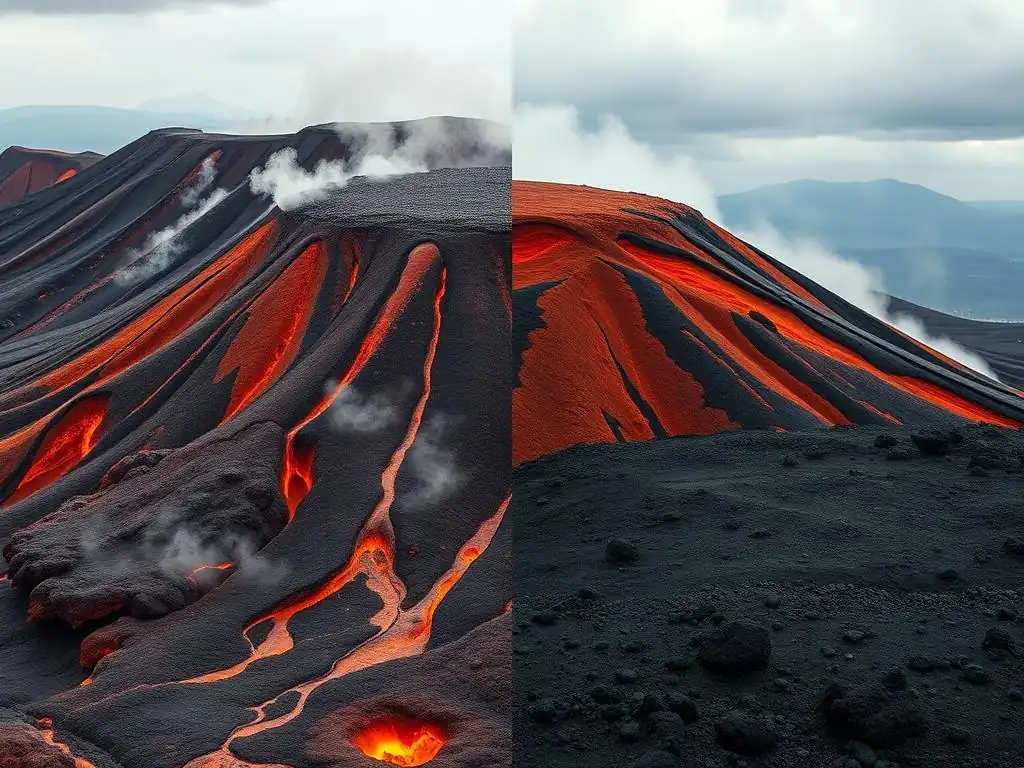
Novels Exploring the Science of Lava Domes: The Volcano Lover and A Fire Upon the Deep
Detailed Descriptions: Capturing the Viscosity and Slow Growth of Lava Domes
While movies often prioritize action and visual spectacle, literature provides a different avenue for exploring lava domes, allowing for more detailed descriptions and nuanced portrayals. Novels can delve into the scientific aspects of lava dome formation and behavior with greater depth, capturing the often slow and viscous nature of lava extrusion.
Authors can use descriptive language to convey the texture, appearance, and gradual growth of lava domes, painting a more scientifically grounded picture than is typically seen in fast-paced films. For instance, a novel might describe the "toothpaste-like" extrusion of viscous lava, the slow piling up of material layer by layer, and the cooling and cracking of the dome's surface as it grows.
Through detailed prose, literature can effectively communicate the time scales involved in lava dome development, emphasizing the contrast between the slow, almost geological pace of dome growth and the potential for sudden, hazardous events. Authors can explore the intricate processes of magma ascent, degassing, and crystallization that lead to the formation of viscous lava and the subsequent dome building. This level of detail allows readers to gain a more comprehensive understanding of the scientific principles underlying lava dome volcanism, moving beyond the simplified and often sensationalized depictions found in visual media.
Fictional Volcanologists: Characters Studying and Monitoring Lava Dome Activity
Literature also provides a space to explore the human element of volcanology, featuring characters who study and monitor lava dome activity. Novels can create fictional volcanologists who grapple with the challenges of understanding and predicting lava dome behavior, highlighting the scientific uncertainties and the importance of monitoring efforts. These characters can be portrayed as dedicated scientists working to unravel the complexities of volcanic systems, facing ethical dilemmas related to risk assessment and public safety, and experiencing the intellectual and emotional rewards of scientific discovery in a high-stakes environment.
Through the perspectives of fictional volcanologists, novels can explore the scientific methods used to study lava domes, such as remote sensing, gas monitoring, and ground deformation measurements. Readers can gain insight into the processes of data collection, analysis, and interpretation that are crucial for understanding volcanic activity and forecasting potential hazards.
Furthermore, these characters can embody the human fascination with volcanoes, driven by a desire to understand these powerful natural phenomena and to mitigate the risks they pose to communities living in volcanic regions. By centering narratives on volcanologists, literature can bridge the gap between scientific knowledge and public understanding, fostering a greater appreciation for the role of science in managing volcanic hazards associated with lava domes.
Lava Domes as Symbols: Metaphors for Power, Destruction, and Rebirth
Volcanic Landscapes as Backdrops: Setting the Scene with Lava Dome Formations
Beyond direct depictions of eruptions, lava domes can serve as symbolic elements in literature, enriching the setting and contributing to the overall themes of a story. Volcanic landscapes, shaped by the presence of lava domes, can provide dramatic and evocative backdrops for narratives, reflecting themes of power, destruction, and even rebirth. The stark, often barren terrain around lava domes, marked by solidified lava flows and volcanic debris, can create a sense of isolation, danger, or otherworldly beauty, depending on the author's intent and the tone of the story.
Lava domes themselves, towering over the landscape, can symbolize formidable obstacles, looming threats, or silent witnesses to dramatic events. Their presence can imbue a setting with a sense of geological time, reminding characters and readers of the immense forces that have shaped the Earth and the potential for future change.
In stories focused on survival or resilience, a volcanic landscape dominated by lava domes can represent a challenging environment that tests the characters' strength and adaptability, while also hinting at the potential for renewal and regrowth in even the most devastated landscapes, as volcanic soils can be fertile over time.
Mythological Connections: Linking Lava Domes to Ancient Volcanic Beliefs
In some literary works, lava domes and volcanoes in general are linked to ancient myths and beliefs, drawing upon the long history of human interaction with these geological phenomena. Volcanoes have often been associated with deities, spirits, and underworlds in various cultures, and lava domes, as prominent volcanic features, can inherit these symbolic connotations. Authors might draw parallels between the slow, inexorable growth of a lava dome and mythological narratives of creation or destruction, or use volcanic imagery to evoke themes of divine power, wrath, or transformative change.
For example, a lava dome might be portrayed as the solidified form of a mythical giant or monster, or as the physical manifestation of a deity's anger. Conversely, the volcanic landscape surrounding a lava dome could be depicted as a sacred or enchanted place, imbued with spiritual significance. By incorporating mythological elements, literature can tap into the deep-seated human fascination with volcanoes and their symbolic resonance across cultures and time periods, adding layers of meaning and interpretation to the depiction of lava domes and their place in both the natural and imagined world.
Comparing Movie and Book Depictions of Lava Domes
Accuracy vs. Entertainment: The Trade-Off in Pop Culture Representations
When comparing movie and book depictions of lava domes, a clear trade-off emerges between scientific accuracy and entertainment value. Movies, driven by the need for visual spectacle and immediate impact, often prioritize entertainment over strict adherence to scientific facts. This results in exaggerated eruptions, compressed timescales, and simplified representations of complex volcanic processes. The goal is to thrill and engage the audience, and scientific accuracy may be sacrificed to achieve this. The depiction of lava domes in movies tends to be sensationalized, focusing on the most dramatic and visually arresting aspects, even if they are not entirely realistic.
Books, on the other hand, have more flexibility to prioritize accuracy and detail. While fictional narratives still require engaging storytelling, novels can incorporate more nuanced scientific information and explore the complexities of lava dome volcanism in greater depth.
Authors can take the time to describe the slow growth of domes, the viscous nature of lava, and the scientific methods used to study these features. While literary depictions are not always perfectly accurate, they often strive for a greater degree of scientific plausibility and can offer a more educational perspective on lava domes compared to the often simplified and dramatized portrayals in film.
Visual vs. Descriptive: Different Approaches to Conveying the Nature of Lava Domes
Movies and books employ fundamentally different approaches to conveying the nature of lava domes, dictated by their respective mediums. Movies rely primarily on visual storytelling, using images, special effects, and fast-paced action to depict volcanic activity. The visual impact of a large, erupting lava dome on screen can be powerful and immediate, conveying a sense of scale and danger through direct sensory experience. However, this visual focus can sometimes come at the expense of detailed explanation or nuanced portrayal of the underlying scientific processes.
Books, in contrast, rely on descriptive language to create mental images and convey information. Authors can use words to paint vivid pictures of lava domes, describing their shape, texture, color, and the surrounding volcanic landscape. They can also use language to explain the scientific concepts behind lava dome formation and behavior, providing context and detail that may be difficult to convey effectively through visuals alone. The descriptive power of literature allows for a more in-depth and nuanced exploration of lava domes, engaging the reader's imagination and intellect in a way that complements the more immediate visual impact of film.
The Influence of Pop Culture on Public Perception of Lava Domes
Pop culture representations of lava domes in movies and books significantly influence public perception of these volcanic features. For many people, their understanding of volcanoes and lava domes is shaped more by fictional portrayals than by scientific education or direct experience. The often sensationalized and inaccurate depictions in movies can lead to misconceptions about the speed, explosivity, and overall danger associated with lava domes. These misconceptions can, in turn, affect public attitudes towards volcanic risk and preparedness, potentially leading to either undue alarm or a lack of appropriate caution.
Books, particularly those that strive for greater scientific accuracy or feature volcanologist characters, can play a more positive role in shaping public perception. By offering more nuanced and informative portrayals, literature can help to educate readers about the real nature of lava domes, the hazards they pose, and the scientific efforts to monitor and mitigate volcanic risks.
However, the wider reach and visual impact of movies often mean that their depictions, even if less accurate, have a more pervasive influence on general public understanding. Therefore, it is important to critically evaluate pop culture representations of lava domes and to seek out reliable sources of scientific information to form a more accurate and informed understanding of these fascinating and sometimes hazardous volcanic features.
The Reality of Lava Domes: Bridging the Gap Between Fiction and Science
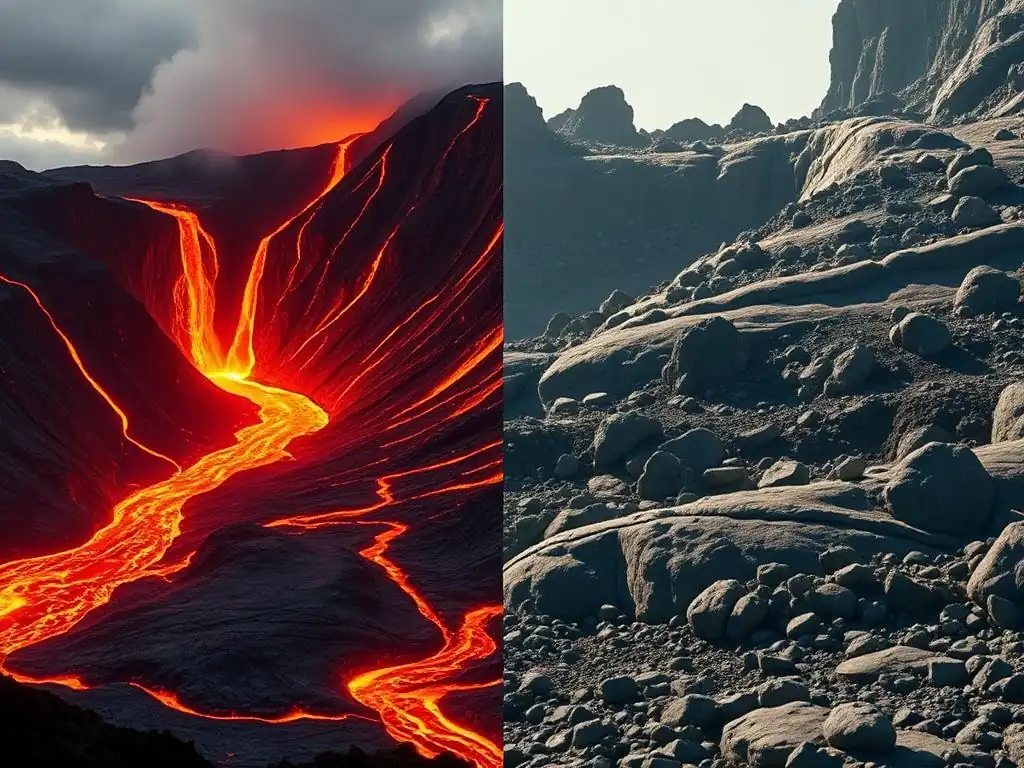
What Real-World Lava Domes Look Like: Examples from Around the World
Real-world lava domes, while sharing the basic characteristics of their fictional counterparts, often present a more varied and nuanced appearance than typically depicted in movies. They are not always perfectly dome-shaped; their forms can range from bulbous and rounded to jagged, spiny, and irregular. The surface texture of a lava dome can be rough and blocky, composed of solidified lava fragments and cooled lava flows.
Coloration varies depending on the lava composition and cooling processes, ranging from dark grays and blacks to reddish-browns and even lighter shades. Active lava domes often exhibit signs of ongoing activity, such as steaming vents, glowing cracks, and the slow extrusion of new lava.
Examples of real-world lava domes abound in volcanic regions around the globe. Mount St. Helens in Washington State, USA, hosts a prominent lava dome within its crater, which has been growing intermittently since the 1980 eruption. The Soufrière Hills volcano on Montserrat in the Caribbean has been characterized by extensive lava dome growth and collapse cycles since 1995, dramatically reshaping the island's landscape.
Unzen volcano in Japan experienced significant lava dome growth in the early 1990s, leading to pyroclastic flows that caused considerable damage and loss of life. These examples illustrate the diversity in size, shape, and behavior of real lava domes, highlighting the importance of studying individual volcanoes to understand their specific characteristics and potential hazards.
The Science Behind Lava Dome Formation and Eruption: Viscosity, Gas Content, and Stability
The formation and eruption behavior of lava domes are governed by several key scientific factors: lava viscosity, gas content, and dome stability. Viscosity, or resistance to flow, is the primary factor determining whether lava will form a dome or flow freely. Highly viscous lava, rich in silica, resists flowing and tends to pile up around the vent, creating a dome.
The gas content of the magma also plays a crucial role. While lava dome eruptions are generally less explosive than those associated with gas-rich magmas, gas still plays a role in dome dynamics. Gas pressure buildup within the dome can contribute to instability and potential explosive events, particularly dome collapses.
Dome stability is a critical factor in assessing lava dome hazards. Lava domes are inherently unstable structures, prone to collapse due to gravity, over-steepening, internal pressure, or external triggers. Dome collapses can generate pyroclastic flows, which are the most significant hazard associated with lava domes. The frequency and scale of dome collapses depend on factors like dome growth rate, lava viscosity, and the surrounding topography. Volcanologists study these factors to understand the processes driving lava dome formation and eruption, and to assess the potential for hazardous events like dome collapses and associated pyroclastic flows.
The Role of Volcanologists in Monitoring and Predicting Lava Dome Activity
Volcanologists play a vital role in monitoring and predicting lava dome activity, working to bridge the gap between fictional portrayals and the reality of volcanic hazards. They utilize a range of scientific techniques to monitor lava domes, including ground deformation measurements using GPS and satellite radar, gas emission monitoring, seismic monitoring to detect changes in volcanic activity, and thermal imaging to track temperature variations on the dome surface. By continuously collecting and analyzing data from these monitoring networks, volcanologists can detect changes in dome behavior and assess the potential for future eruptions or dome collapses.
Based on their monitoring data and scientific understanding of lava dome processes, volcanologists develop hazard assessments and provide warnings to communities living near active lava domes. These warnings may include alerts about increased volcanic activity, potential for dome collapse, or the likelihood of pyroclastic flow generation. Effective communication between volcanologists, emergency management agencies, and the public is crucial for mitigating the risks associated with lava domes and ensuring community safety. Volcanologists work to improve our understanding of lava domes and to translate scientific knowledge into actionable information that can help protect lives and livelihoods in volcanic regions.
Conclusion: The Enduring Fascination with Lava Domes
Reflecting on the Power of Volcanoes in Pop Culture
The enduring fascination with volcanoes, including lava domes, in pop culture reflects a deep-seated human awe and apprehension towards these powerful natural forces. Volcanoes represent both creation and destruction, beauty and danger, and this duality makes them compelling subjects for movies, books, and other forms of creative expression.
Pop culture depictions, while often exaggerating or simplifying the science, tap into this inherent fascination, using volcanoes as dramatic settings, symbols of power, and sources of both threat and wonder. The continued presence of volcanoes in popular media underscores their enduring relevance in the human imagination and their capacity to capture our attention and emotions.
The portrayal of lava domes specifically, whether as "sleeping giants" in suspenseful narratives or as dramatic backdrops in volcanic landscapes, highlights their unique appeal as volcanic features. Their slow, almost imperceptible growth contrasted with the potential for sudden, dramatic events encapsulates the unpredictable nature of volcanoes and the constant interplay between stillness and change in geological processes. Pop culture, in its various forms, serves as a mirror reflecting our complex relationship with volcanoes, amplifying our fears and fascination, and prompting us to contemplate the power of nature and our place within it.
Encouraging Further Exploration of Lava Domes and Volcanic Science
Ultimately, while pop culture representations of lava domes can be entertaining and thought-provoking, it is essential to encourage further exploration of the real science behind these fascinating volcanic features. By moving beyond fictional portrayals and engaging with accurate scientific information, individuals can develop a more nuanced and informed understanding of lava domes, their formation, behavior, and the hazards they pose. Websites like VolcanoExplorers.org and educational resources from geological surveys and volcanological organizations offer valuable opportunities to learn more about lava domes and the broader field of volcanology.
Exploring volcanic science not only enhances our understanding of the natural world but also fosters a greater appreciation for the work of volcanologists who dedicate themselves to studying and monitoring these powerful forces. By learning about the science behind lava domes, we can move beyond sensationalized depictions and develop a more informed perspective on volcanic risk, preparedness, and the ongoing efforts to mitigate the hazards associated with these dynamic and ever-changing geological features. The world of volcanoes, and lava domes in particular, offers endless opportunities for scientific discovery and a deeper understanding of our planet's dynamic processes.
Frequently Asked Questions
What is a lava dome, and why is it important to understand them in the context of movies?
A lava dome is a mound-shaped protrusion resulting from the slow extrusion of viscous lava. Understanding them is important because movies often portray them inaccurately, leading to misconceptions about volcanic hazards.
How are lava domes typically depicted in movies, and is this portrayal accurate?
Movies often depict lava domes as highly explosive and unstable, ready to erupt at any moment. While domes can be unstable, this portrayal often exaggerates the immediate danger and simplifies the complex processes involved.
Why are some movies tempted to misrepresent lava domes?
Movies often prioritize dramatic effect and suspense over scientific accuracy. Misrepresenting lava domes allows filmmakers to create more visually spectacular and thrilling scenes that capture audience attention.
What are some examples of movies that feature lava domes, and how could they improve their depiction?
Examples include disaster movies where a dome explodes catastrophically. Improvement could involve consulting with volcanologists to portray the gradual growth and potential for both effusive and explosive activity more realistically.
What are the real-world hazards associated with lava domes that movies often overlook?
Real-world hazards include dome collapse, pyroclastic flows, and ashfall, which can have devastating impacts. Movies often focus solely on large explosions, neglecting these more subtle but equally dangerous aspects of dome volcanism.
Final Reflection: The Enduring Allure of Volcanic Fury
The exploration of lava domes in movies and books, as we've seen, reveals a fascinating intersection of scientific reality and imaginative storytelling. The enduring power of these geological formations lies in their ability to symbolize both immense destructive potential and the raw, untamed forces of nature. Even as scientific understanding of lava domes evolves, their cinematic and literary depictions continue to captivate audiences, offering a thrilling glimpse into the earth's volatile heart.
The impact of these portrayals extends beyond mere entertainment. They shape our collective understanding of volcanic phenomena, influencing public perception and potentially impacting preparedness for real-world volcanic events. The only way to do great work is to love what you do,
Steve Jobs once said, and perhaps this love, or at least fascination, with the power of nature is what fuels both the scientific study and the artistic representation of lava domes. This fascination, whether rooted in fear or awe, underscores the profound connection between humanity and the planet we inhabit.
Now, consider the power of these narratives. How can we, as consumers of media, become more discerning viewers, appreciating the artistic license while remaining informed about the scientific realities? Let us strive to understand the true nature of these geological wonders, moving beyond the sensationalized depictions to appreciate the complex and vital role they play in shaping our world. Let us embrace the opportunity to learn, to question, and to connect with the planet on a deeper level, ensuring that our fascination with lava domes translates into a greater understanding and respect for the forces that shape our world.
Okay, I will write a Call to Action for a web article titled "Lava Domes in Pop Culture: How They Are Depicted in Movies and Books" for the website Volcano Explorers (volcanoexplorers.org), following the given instructions. Here's the CTA:
Unearth Your Inner Volcanologist!
Thank you for exploring the fiery world of lava domes in movies and books! We hope you've enjoyed uncovering the (sometimes exaggerated!) ways these volcanic formations are portrayed in pop culture. Now it's your turn to get involved!
Here's how to keep the eruption of knowledge flowing:
- Take on the Explorer Role: Share your favorite (or least favorite!) depiction of a lava dome in a movie or book in the comments section below!: Let us know what you loved or loathed about it.
- Dive Deeper: Research real-world lava dome formations and compare them to their fictional counterparts. Share your findings!
- Inspire Others: Discuss this article with your friends and family. Could these depictions influence how people perceive real volcanic hazards?
What fictional lava dome portrayal made the biggest impact on you, and why? We can't wait to read your thoughts!