
Famous Eruptions
Experience the raw power of Earth's most dramatic moments through our coverage of famous volcanic eruptions that have shaped history, science, and human resilience. From the devastating Pompeii and Mount Vesuvius disaster to the modern-day awe of Hunga Tonga-Hunga Ha'apai 2022, these events reveal nature's immense force. We dive deep into legendary catastrophes like Krakatoa 1883, whose sound circled the globe, and the Mount Tambora eruption that caused the "Year Without a Summer." Explore the lateral blast of Mount St. Helens 1980, the tragic lahars of Nevado del Ruiz, and the global cooling triggered by Pinatubo 1991. Uncover how Eyjafjallajökull 2010 grounded flights across Europe, while Kilauea 2018 and La Palma 2021 showed prolonged lava flows' community impact. Trace volcanic eruptions in art and literature, examine ancient texts' historical accounts, and learn about climate-altering events like the Laki Fissure. With vivid details and expert insights, these stories blend geology, tragedy, and survival—perfect for enthusiasts of natural disasters, earth science, and history alike.
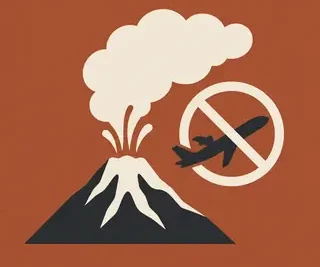 Eyjafjallajökull 2010: Air Travel Disruption
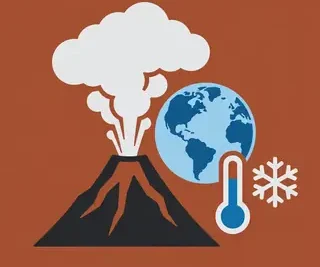 Pinatubo 1991: Global Cooling
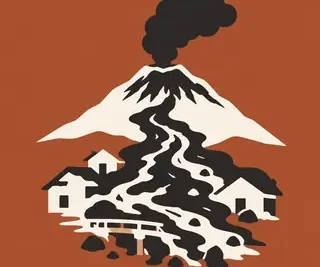 Nevado del Ruiz 1985: Lahar Tragedy
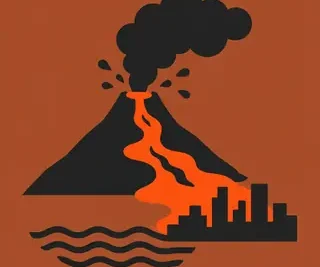 Nyiragongo 2002 and 2021: Lava Flow Threat to Goma
 Krakatoa 1883: The Sound Heard Around the World
 Historical Accounts of Volcanic Eruptions in Ancient Texts
 Kilauea 2018: Prolonged Lava Flows and Community Impact
 Mount Tambora and the Year Without a Summer
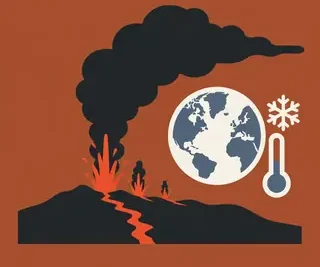 Icelandic Eruptions: Laki Fissure and Climate Impact
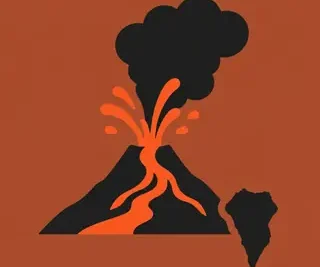 La Palma 2021: Long-lasting Eruption on a Canary Island
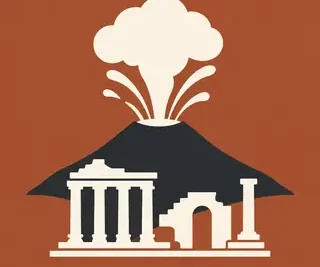 Pompeii and Mount Vesuvius
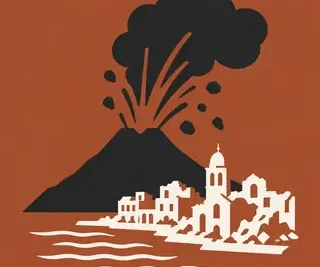 Mount Pelée and the Destruction of Saint-Pierre
 Mount St. Helens 1980: A Lateral Blast
 Volcanic Eruptions in Art and Literature Throughout History
 Hunga Tonga-Hunga Ha'apai 2022: Tsunami and Atmospheric Waves
Famous Eruptions: Journeys Through Earth’s Most Powerful Moments
Welcome to Volcano Explorers’ Famous Eruptions hub, where history’s most dramatic volcanic events come to life. From ancient Pompeii to modern-day La Palma, these eruptions have shaped landscapes, altered climates, and tested human resilience. Explore the science, stories, and lasting impacts of these natural phenomena, with each subcategory offering deep dives into the forces that changed our world. Perfect for students, travelers, and volcano enthusiasts seeking authoritative, engaging content.
🌋 Hunga Tonga-Hunga Haʻapai 2022: Tsunami and Atmospheric Waves
The January 2022 eruption of Hunga Tonga-Hunga Haʻapai was a once-in-a-century event, producing the tallest volcanic plume ever recorded and sending tsunami waves across the Pacific. Unlike typical eruptions, this submarine volcano generated atmospheric pressure waves that circled the globe multiple times, even triggering meteotsunamis in the Mediterranean. Here, you’ll discover how scientists used satellite data and sea-level sensors to unravel the eruption’s unique physics, plus learn about the rapid recovery of Tonga’s communities and the global research sparked by this underwater giant.
🎨 Volcanic Eruptions in Art and Literature Throughout History
Volcanoes have long inspired artists and writers, from Pliny the Younger’s eyewitness account of Vesuvius to modern disaster films. This section explores how eruptions like Krakatoa and Etna appear in paintings, poetry, and novels, symbolizing both destruction and sublime beauty. Expect analyses of works by Turner, Byron, and contemporary creators, showing how humanity’s fascination with fire mountains reflects our deepest fears and awe. Discover how volcanic imagery has shaped cultural narratives, from Romantic-era landscapes to post-apocalyptic fiction, and how each generation reinterprets these natural dramas.
💥 Mount St. Helens 1980: A Lateral Blast
The May 18, 1980 eruption of Mount St. Helens was a pioneering study in volcanic lateral blasts, where a massive landslide unleashed a sideways explosion that flattened forests 30 kilometers away. This event revolutionized volcanic hazard assessment, teaching scientists to watch for bulge growth and earthquake swarms. Here, you’ll find detailed timelines, survivor stories, and the ecological rebirth of the blast zone, now a living laboratory for ecological succession. Learn how this eruption became a benchmark for monitoring restless volcanoes worldwide, and why it remains a cautionary tale for preparedness.
🏛️ Mount Pelée and the Destruction of Saint-Pierre
The 1902 eruption of Mount Pelée annihilated Saint-Pierre, Martinique, in minutes, killing nearly 30,000 people with a deadly pyroclastic flow. This catastrophe highlighted the lethal nature of nuées ardentes, teaching volcanologists that eruptions can be more than just lava fountains. Explore the tragic missteps—officials downplayed risks during elections—and the sole survivor’s harrowing tale. This subcategory also examines how Pelée’s legacy shaped modern volcano monitoring in the Caribbean and the enduring lesson that evacuation saves lives, even when warnings arrive too late.
🏺 Pompeii and Mount Vesuvius
The 79 AD eruption of Mount Vesuvius preserved an entire Roman city under ash, offering an unmatched archaeological window into ancient life. This section unpacks the eruption’s phases, from the initial Plinian column to the deadly pyroclastic surges, and how casts of victims reveal their final moments. You’ll learn about Pliny the Younger’s letters, the rediscovery in 1748, and ongoing excavations that still uncover new secrets. Dive into the science of Vesuvius’ current status, a high-risk volcano watched closely, and what modern hazard zones mean for Naples today.
🌋 La Palma 2021: Long-lasting Eruption on a Canary Island
La Palma’s Cumbre Vieja eruption (September–December 2021) was the island’s longest in recorded history, spewing lava for 85 days and burying over 1,000 homes. Unlike violent explosions, this was a effusive eruption with rivers of molten rock that created new land at the coast. Here, you’ll examine the social and economic toll on islanders, the success of early evacuations, and debates over property compensation. Scientific highlights include lava flow modeling and gas monitoring, which helped predict tube collapses and improve real-time hazard communication. This is a modern case study in resilience and adaptation.
❄️ Icelandic Eruptions: Laki Fissure and Climate Impact
The 1783-84 Laki fissure eruption in Iceland released enormous sulfur dioxide clouds that drifted across Europe, causing acid rain, crop failures, and famine. This event is a stark reminder that volcanoes can trigger regional and even global climatic cooling, often misnamed “haze” at the time. This subcategory explores the eruption’s mechanics, its direct link to the Little Ice Age’s cold spells, and comparisons with modern fissure eruptions like Holuhraun. You’ll gain insight into how volcanic aerosols interact with weather systems and why Iceland’s volcanoes remain a primary climate-forcing natural hazard.
🌍 Mount Tambora and the Year Without a Summer
April 1815 saw the largest eruption in recorded history—Tambora in Indonesia ejected megatons of sulfate aerosols, dimming sunlight and causing 1816’s “Year Without a Summer” across the Northern Hemisphere. Crops failed, snow fell in July, and food riots erupted globally. This page details the climatic aftermath, including vivid sunsets in Turner’s paintings and Mary Shelley’s “Frankenstein” born from a gloomy Swiss summer. You’ll also explore the volcano’s caldera today and how geologists use ice cores to reconstruct past eruptions. Tambora remains the benchmark for super-colossal impacts.
🔥 Kīlauea 2018: Prolonged Lava Flows and Community Impact
Kīlauea’s 2018 eruption was its most destructive in over 200 years, with a collapse of the summit caldera and fissure eruptions destroying over 700 structures in Puna. The lava flows reshaped the coastline, filling Kapoho Bay and creating new land. This subcategory covers the sequence of events—from harmonic tremors to the explosive summit blasts—and the scientific breakthrough of linking magma withdrawal to summit collapse. You’ll also read about community resilience, the loss of Green Lake, and ongoing monitoring by Hawaiian Volcano Observatory, emphasizing the dynamic nature of shield volcanoes.
📜 Historical Accounts of Volcanic Eruptions in Ancient Texts
Long before modern instruments, ancient civilizations recorded eruptions in chronicles, myths, and administrative documents. This section reviews primary sources—from Pliny’s letters, Chinese dynastic histories, and Maya codices to medieval Icelandic sagas—that describe ashfall, tsunamis, and famine. Learn how scholars cross-reference these narratives with geological layers to date past events, like the Minoan eruption of Santorini. These texts offer a human perspective on disasters, revealing how societies interpreted eruptions as divine punishment or cosmic signs, and how that shaped early risk response.
🌊 Krakatoa 1883: The Sound Heard Around the World
The 1883 Krakatoa eruption generated the loudest sound ever recorded, audible over 3,000 miles away, and produced tsunamis up to 40 meters high. This disaster killed over 36,000 people, mostly from waves, and caused global optical effects like blue moons and vivid sunsets for years. Here, you’ll explore the eruption’s catastrophic caldera collapse, the role of submarine explosions, and the birth of Anak Krakatoa (“Child of Krakatoa”), which erupted again in 2018. This event also marks a turning point in global communication, as telegraphs spread news within hours, prompting modern emergency alerts.
🏙️ Nyiragongo 2002 and 2021: Lava Flow Threat to Goma
Nyiragongo’s fast-moving fluid lavas pose an extreme hazard to Goma, a city of over a million in the DRC. In January 2002, lava flows split the city, destroying 15% of it and killing nearly 150 people; in 2021, a new eruption again threatened Goma, thankfully with lower damage but revealing cracks in the nearby volcano. This subcategory explains the volcano’s lava lake dynamics, the challenges of monitoring in a conflict zone, and innovative early-warning systems using seismic and thermal data. Learn how scientists and officials balance evacuation fatigue with readiness for a potential deadly lake drainage.
🌫️ Nevado del Ruiz 1985: Lahar Tragedy
Colombia’s Nevado del Ruiz produced devastating lahars (volcanic mudflows) in November 1985 that buried the town of Armero, killing over 23,000 people. The eruption was small, but pyroclastic flows melted summit glaciers, creating a torrent of mud and debris that traveled 60 kilometers into river valleys. This event remains a **classic failure of risk communication**, as a previously published hazard map was ignored. This section details the volcanic process of glacier-lahar interactions, the role of early warning systems, and why Armero’s tragedy became a global call for community-based volcano preparedness.
🌡️ Pinatubo 1991: Global Cooling
The June 1991 eruption of Mount Pinatubo in the Philippines was the second-largest of the 20th century, injecting 15-20 megatons of sulfur dioxide into the stratosphere. This caused a global temperature drop of about 0.5°C (0.9°F) for two years, proving volcanoes can temporarily mask greenhouse warming. This subcategory explains the eruption’s successful evacuation of 58,000 U.S. military personnel and 250,000 civilians, thanks to seismic monitoring and typhoon-assisted ashfall fatigue. You’ll also explore the ozone depletion effects, the caldera’s subsequent lake, and how Pinatubo’s data refined aerosol-climate models.
✈️ Eyjafjallajökull 2010: Air Travel Disruption
Eyjafjallajökull’s mild but ash-rich eruption in April 2010 unleashed an ash cloud that shut down European airspace for six days, stranding 10 million passengers and costing $4.7 billion. The key issue was fine-grained abrasive ash that could damage jet engines, forcing regulators to close airspace with little precedent. This section covers the volcano’s unusual interaction with glacial meltwater, the creation of steam-rich plumes, and the subsequent redesign of ash concentration thresholds for aerial navigation. It also explores the eruption’s cultural nickname and the shift toward satellite-based ash detection.
Frequently Asked Questions
Which eruption caused the most deaths in recorded history?
The 1815 Mount Tambora eruption likely caused the most fatalities—estimates range from 71,000 to over 100,000—including direct deaths and subsequent famine and disease from crop failures. The 1883 Krakatoa eruption killed about 36,000, mostly via tsunamis, while the 1985 Nevado del Ruiz lahar tragedy took 23,000 lives. Tambora’s indirect mortality from the “Year Without a Summer” makes it uniquely catastrophic.
Can scientists predict when a volcano will erupt?
Scientists cannot predict exact eruption times, but they can forecast with increased confidence using monitoring data—earthquake swarms, ground deformation, gas emissions (SO2, CO2), and thermal anomalies. Each volcano behaves differently, so patterns are established over time. Probabilistic forecasts, like those used for Mount St. Helens or Pinatubo, provide warning windows, allowing for successful evacuations. However, unpredictable events like lateral blasts or sudden lahars still occur.
Why is volcanic ash so dangerous to airplanes?
Volcanic ash consists of fine, abrasive rock and glass particles that can melt in jet engine combustion chambers (temperatures above 1,100°C), coating turbines and causing engine failure. Also, ash can obscure cockpit windows, clog air sensors, and damage exterior surfaces. Eyjafjallajökull 2010 highlighted that even small ash amounts are hazardous, leading to airspace closures. Modern systems use satellite data and pilot reports to define no-fly zones based on ash concentration.
What is the difference between lava flows and pyroclastic flows?
Lava flows are relatively slow-moving molten rock that follows topography, typically at speeds of a few meters per hour to kilometers per hour, depending on viscosity. Pyroclastic flows are fast mixtures of hot gas, ash, and rock fragments that move like turbulent avalanches, often exceeding 700 km/h and temperatures of 1,000°C. Pyroclastic flows are far more dangerous and can travel across water or over hills, while lava flows generally destroy by burial and fire.
How do volcanic eruptions affect global climate?
Large eruptions inject sulfur dioxide gas into the stratosphere, where it reacts to form sulfate aerosols that reflect sunlight back to space, causing a cooling effect for one to three years. For example, Pinatubo 1991 cooled Earth by ~0.5°C. Eruptions also emit ash (short-lived), water vapor, and fine particles. However, volcanic CO2 is minor compared to human emissions. The cooling can be regional or global, but it is temporary and does not offset long-term greenhouse warming.