
Beneath the Surface Calm: The Explosive Origins of Maar Lakes

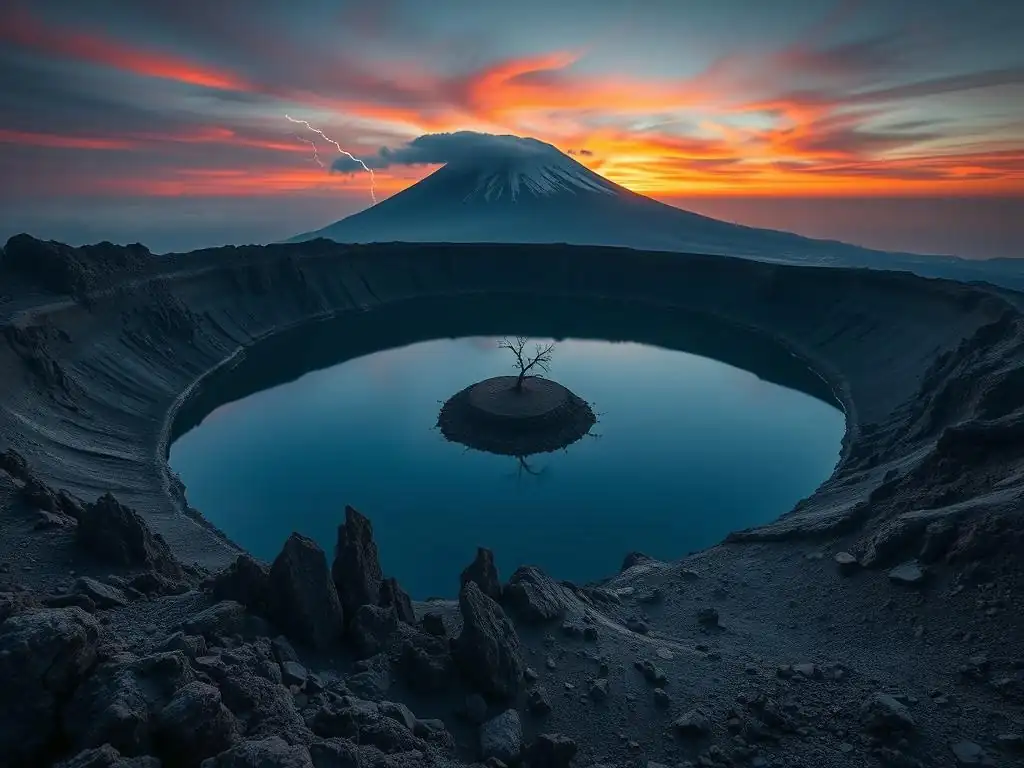
Welcome to Volcano Explorers, where we unveil the Earth's fiery secrets. But what lies beneath the serene surface of a lake? Prepare to be surprised as we delve into the explosive origins of maar lakes, revealing a story far more dramatic than you might imagine. This is just the beginning; are you ready to uncover the hidden forces that shape our planet?
- Introduction: Unveiling the Secrets of Maar Lakes
- What is a Maar? Understanding the Formation Process
- The Explosive Recipe: Magma, Water, and Volcanic Origins
- Step-by-Step: How a Maar Lake is Born
- Factors Influencing Maar Lake Characteristics
- Examples of Famous Maar Lakes Around the World
- Dangers and Benefits of Maar Lakes
- Studying Maar Lakes: Unraveling Volcanic History
- Conclusion: Appreciating the Power Behind the Calm Waters
- Frequently Asked Questions
- Final Reflection: Echoes of Ancient Eruptions
- Unearth Your Inner Explorer: Discover Maar Lakes!
Introduction: Unveiling the Secrets of Maar Lakes
Maar Volcanoes: More Than Just Pretty Lakes
Maar lakes often present a serene and picturesque landscape, easily mistaken for ordinary lakes nestled in gentle depressions. Their tranquil surface belies a dramatic and explosive origin, a secret hidden beneath the calm waters. These unique geological formations, known as maar volcanoes, are far more than just pretty bodies of water.
They are volcanic craters, often broad and shallow, formed not by the typical cone-building eruptions we associate with volcanoes, but by powerful explosions resulting from the interaction of magma and water. Unlike stratovolcanoes or shield volcanoes, maars are characterized by their low profile and the absence of a prominent volcanic cone, making their volcanic nature less immediately obvious to the casual observer.
These seemingly peaceful lakes are windows into the Earth's powerful subsurface processes. The surrounding landscape often provides subtle clues to their explosive past, such as low rims of fragmented volcanic rock called tuff rings. These rings, composed of ash, rock debris, and volcanic bombs, are remnants of the energetic eruptions that carved out the maar crater. Understanding maar lakes means delving into a fascinating realm of volcanology, where the interplay of heat, water, and pressure creates some of nature's most surprisingly violent, yet subtly disguised, volcanic features.
The Surprising Violent Birth of Maar Lakes
The placid appearance of a maar lake stands in stark contrast to its violent birth. Imagine an eruption, not of flowing lava, but of steam, ash, and fragmented rock blasted outwards at supersonic speeds. This is the characteristic eruption style that creates a maar.
The formation process is not driven by the slow accumulation of lava flows, but by a sudden, explosive release of energy triggered by the encounter of rising magma with groundwater or surface water. This interaction results in what volcanologists call a phreatomagmatic eruption, a type of volcanic explosion driven by the rapid heating and expansion of water into steam.
This explosive origin is what makes maar lakes so intriguing and scientifically significant. They are essentially scars on the Earth's surface, testaments to brief but intense periods of volcanic activity. While the eruption itself may be short-lived in geological terms, lasting perhaps days or weeks, the resulting maar crater and lake can persist for millennia.
The geological record preserved within and around these maars provides valuable insights into past volcanic events, the dynamics of magma-water interaction, and the broader volcanic history of a region. The seemingly calm surface of a maar lake, therefore, hides a history of intense volcanic energy and explosive origins.
What is a Maar? Understanding the Formation Process
Defining a Maar Volcano: A Unique Volcanic Feature
A maar volcano is defined as a broad, low-relief volcanic crater that is typically surrounded by a ring of ejected material, known as a tuff ring. The term "maar" itself originates from the local dialect of the Eifel region in Germany, where these volcanic features are particularly well-preserved.
Unlike classic cone-shaped volcanoes, maars are characterized by their relatively flat floor, often below the surrounding ground level, and their wide, circular to elliptical shape. The diameter of a maar can range from a few hundred meters to several kilometers, while their depth can vary, often depending on the subsequent accumulation of water to form a lake.
Key characteristics distinguishing maars from other volcanic craters include their phreatomagmatic origin, their broad, shallow depression, and the presence of a tuff ring composed of fragmented country rock and volcanic debris. The low profile of maars means they can be easily overlooked in the landscape, especially when filled with water and surrounded by vegetation.
However, geologically, they represent a distinct type of volcanic feature formed by a specific style of explosive eruption, setting them apart from craters formed by lava flows, caldera collapses, or impact events. Their unique formation process makes them valuable geological archives for understanding volcanic processes in areas where magma interacts with water.
Phreatomagmatic Eruptions: The Key to Maar Creation
The defining characteristic of maar formation is the phreatomagmatic eruption. This type of volcanic eruption occurs when magma, molten rock from beneath the Earth's surface, interacts explosively with water. The water can be groundwater, surface water from lakes or rivers, or even seawater in coastal areas. The crucial element is the rapid and intense transfer of heat from the much hotter magma to the water. This rapid heating causes the water to instantaneously flash into steam, expanding to over 1,700 times its original volume.
This sudden expansion of steam generates a powerful explosion, fragmenting the surrounding rocks and propelling them outwards along with volcanic ash, steam, and gases. The explosive force excavates a crater in the ground, tearing apart both the overlying rocks and some of the solidified magma. Unlike eruptions dominated by lava flows, phreatomagmatic eruptions are characterized by the ejection of fragmented material – tephra – rather than molten rock.
The energy released is primarily mechanical, driven by the expanding steam, resulting in the creation of a broad, relatively shallow crater, the maar, and the deposition of the ejected material around the crater rim, forming the characteristic tuff ring. The efficiency of this explosive process is what carves out the landscape to form these unique volcanic lakes.
The Explosive Recipe: Magma, Water, and Volcanic Origins
Magma-Water Interaction: Triggering the Explosion
The interaction between magma and water is the fundamental trigger for the violent explosions that create maar lakes. As magma rises towards the Earth's surface, it can encounter aquifers or bodies of surface water. The temperature difference between the extremely hot magma (ranging from 700°C to 1300°C, depending on composition) and the relatively cool water is immense. When these two meet, heat transfer is incredibly rapid. This rapid heat transfer is far more efficient than if the magma were simply to vent gases or flow as lava.
The process begins as water infiltrates the hot volcanic environment and comes into contact with the magma or very hot rocks surrounding it. The water is almost instantly superheated beyond its boiling point. Confined beneath the surface, this superheated water cannot readily expand. As more water vaporizes and pressure builds rapidly, it eventually exceeds the confining pressure of the surrounding rocks.
This critical point leads to a sudden and violent explosion. The explosion is not merely a steam explosion; the rapid expansion also fragments the magma itself into fine particles, further increasing the surface area for heat transfer and enhancing the explosive power. This chain reaction of vaporization, pressure build-up, and explosion is the engine driving the formation of maar craters.
The Role of Groundwater in Maar Lake Formation
Groundwater plays a crucial role in the genesis of most maar lakes. In many volcanic regions, aquifers – underground layers of water-bearing rock – are common. As magma ascends through the Earth's crust, it is likely to encounter these groundwater reservoirs. The presence of groundwater at relatively shallow depths is a key factor determining whether a volcanic eruption will be effusive (lava flows) or explosive (like those forming maars). Areas with abundant shallow groundwater are more prone to phreatomagmatic eruptions and the formation of maars.
The volume of groundwater available is also significant. A larger volume of water interacting with magma can lead to more powerful and sustained explosions, resulting in larger maar craters. Furthermore, the depth of the groundwater table influences the depth of the explosion and the morphology of the resulting maar. In regions where the groundwater table is close to the surface, even relatively small volumes of rising magma can trigger significant phreatomagmatic activity. This dependence on groundwater explains why maars are often found in areas with specific hydrogeological conditions, where volcanic activity and groundwater systems coincide.
Tuff Rings and Breccia: Evidence of Explosive Origins
The geological evidence of the explosive origins of maar lakes is readily found in the surrounding landscape, particularly in the tuff rings and the breccia deposits. Tuff rings are low, circular ramparts composed of tephra – fragmented volcanic material – that encircle the maar crater. This tephra is a mixture of volcanic ash, lapilli (small rock fragments), and volcanic bombs (larger ejected blocks), along with fragments of the surrounding country rock that were ripped apart by the explosions. The composition of the tuff ring provides direct evidence of the explosive, phreatomagmatic nature of the eruption.
Breccia, a rock composed of angular fragments cemented together, is another key indicator. In maar deposits, breccia is formed from the shattered and fragmented rocks excavated from the crater during the eruption. These breccia deposits often contain a chaotic mixture of rock types from various depths, reflecting the powerful disruptive forces of the explosions.
By studying the composition and distribution of the tuff ring and breccia, volcanologists can reconstruct the dynamics of the eruption, estimate the depth of the explosion, and understand the geological context in which the maar formed. These geological signatures are lasting testimonies to the violent origins hidden beneath the tranquil surface of a maar lake.
Step-by-Step: How a Maar Lake is Born
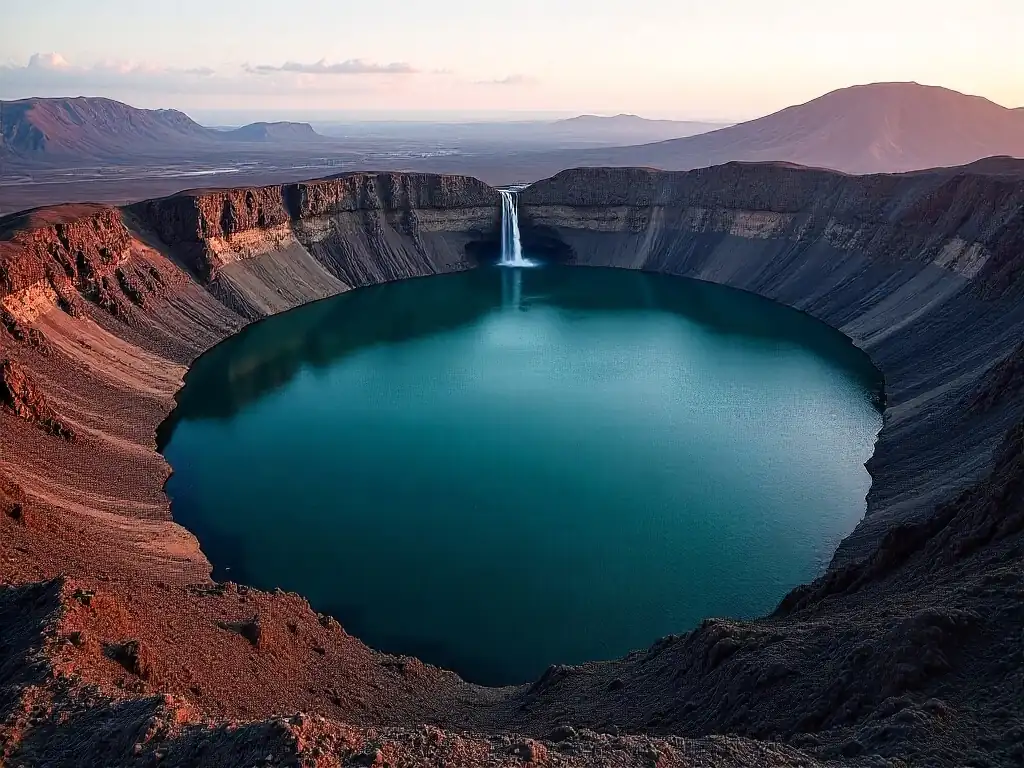
The Initial Explosion: Creating the Crater
The birth of a maar lake begins with an initial, powerful explosion. As magma rises towards the surface and encounters groundwater, the rapid heat transfer initiates the first phreatomagmatic eruption. This initial explosion is often the most energetic, excavating a significant volume of material and initiating the formation of the maar crater. The explosion is not a single, instantaneous event but rather a series of rapid, successive explosions occurring over a relatively short period, possibly hours to days.
This initial phase is characterized by the forceful ejection of fragmented rock, ash, steam, and volcanic gases. The energy released is directed both upwards and outwards, blasting away the overlying rocks and creating a bowl-shaped depression in the landscape. The size and shape of the initial crater are determined by the energy of the explosion, the depth of the water-magma interaction, and the resistance of the surrounding rocks. This initial explosive phase is crucial in setting the stage for the subsequent development of the maar feature.
Crater Formation: Ejecta and Debris Distribution
Following the initial explosion, the crater continues to form as subsequent, though potentially less intense, explosions occur. The ejected material, known as ejecta, is distributed around the newly formed crater. Heavier fragments, like volcanic bombs and larger rock debris, tend to fall closer to the crater rim, while finer ash particles can be carried further by wind and deposited over a wider area. This distribution pattern of ejecta is what builds the characteristic tuff ring around the maar crater.
The tuff ring is not a neatly symmetrical feature; its shape and thickness can vary depending on wind direction during the eruption and the topography of the surrounding landscape. The layering within the tuff ring reflects the sequence of explosions and the types of material ejected at different stages. By studying the stratigraphy of the tuff ring, geologists can reconstruct the eruptive history and dynamics of the maar-forming event. The crater itself takes shape through this process of repeated explosions and ejecta deposition, gradually developing the broad, shallow morphology typical of maars.
Water Accumulation: Transforming the Crater into a Lake
The final step in the formation of a maar lake is the accumulation of water within the newly formed crater. Once the explosive eruptions cease, the crater depression acts as a natural basin. Water can accumulate from various sources, primarily rainfall and groundwater. In many cases, the maar crater intersects the local water table, allowing groundwater to seep into the depression and contribute to the lake's water level. Surface runoff and direct rainfall also contribute to filling the crater.
The rate at which the crater fills with water depends on factors such as rainfall patterns, groundwater recharge rates, and the permeability of the crater floor and surrounding rocks. Over time, the crater transforms from a dry depression into a lake, often becoming a permanent or semi-permanent water body.
The water chemistry of the maar lake is influenced by the surrounding geology, rainfall, groundwater inputs, and any hydrothermal activity that might persist in the area. It is this accumulation of water that completes the transformation of a volcanic crater into the serene and often ecologically rich maar lake we observe today.
Factors Influencing Maar Lake Characteristics
Geological Setting: Impact on Maar Morphology
The geological setting plays a significant role in shaping the morphology of maar lakes. The type of bedrock and the structural geology of the region significantly influence the crater's shape, size, and the characteristics of the surrounding tuff ring. For instance, maars formed in areas with easily erodible sedimentary rocks might exhibit broader, shallower craters with less prominent tuff rings compared to those formed in more resistant crystalline rocks. The presence of pre-existing faults and fractures can also influence the location and alignment of maars, as magma may preferentially ascend along these zones of weakness in the Earth's crust.
Tectonic settings also play a role. Maars are often found in extensional tectonic environments, where the crust is being stretched and thinned, facilitating magma ascent. In these settings, maars may occur in volcanic fields, clusters of volcanic vents spread across a region. The regional stress regime can also affect the shape of the maar crater; for example, in areas with strong directional stress, maar craters might be elongated in a particular orientation. Understanding the geological setting is crucial for interpreting the specific characteristics of individual maar lakes and for placing them within a broader volcanic and tectonic context.
Water Source: Rainfall vs. Groundwater Influence
The primary source of water filling a maar crater significantly influences the lake's characteristics, including its water level, water chemistry, and hydrological stability. Maar lakes can be primarily fed by rainfall, groundwater, or a combination of both. Rainfall-dominated maar lakes are directly dependent on precipitation patterns. Their water levels can fluctuate significantly with seasonal variations in rainfall, and they may be more susceptible to drying out during prolonged periods of drought. The water chemistry in these lakes tends to be relatively dilute, reflecting the composition of rainwater.
Groundwater-fed maar lakes, on the other hand, are less directly influenced by short-term rainfall variations. Groundwater provides a more stable and consistent water supply. The water chemistry of groundwater-fed maars is typically influenced by the rocks and aquifers through which the groundwater flows, often resulting in higher mineral content compared to rainfall-fed lakes. Many maar lakes receive contributions from both rainfall and groundwater. The relative proportion of each source determines the overall hydrological regime and water quality of the lake, impacting its ecological characteristics and suitability as a water resource.
Magma Composition: Affecting Eruption Style and Maar Shape
While the water-magma interaction is the primary driver of maar formation, the composition of the magma also plays a role in influencing the eruption style and the resulting maar shape. Magma composition affects factors such as magma viscosity, gas content, and temperature, all of which can influence the explosivity of phreatomagmatic eruptions. For instance, more viscous magmas, like rhyolitic magmas, tend to trap more gas and can lead to more energetic explosions when they interact with water compared to less viscous basaltic magmas.
Basaltic maars, formed from eruptions of basaltic magma, are among the most common type. Basaltic magma, though less viscous than rhyolitic magma, can still produce significant phreatomagmatic explosions when interacting with water, creating broad, relatively shallow maars. The shape of the maar crater can also be influenced by the magma supply rate and the duration of the eruption, which can be related to the magma composition and the underlying magmatic system. Therefore, while the presence of water is the key ingredient, the type of magma involved adds another layer of complexity to the formation and characteristics of maar lakes.
Examples of Famous Maar Lakes Around the World
Lake Nyos, Cameroon: A Deadly Maar Lake
Lake Nyos in Cameroon is a tragic example of a maar lake with a hidden danger. This picturesque lake, nestled within a volcanic crater, is infamous for the 1986 limnic eruption, a rare event where a sudden release of dissolved carbon dioxide (CO2) suffocated an estimated 1,700 people and thousands of livestock in the surrounding villages. Lake Nyos is located within an active volcanic field, and CO2 of volcanic origin slowly seeps from the lakebed into the deep waters of the maar lake.
The density stratification of the lake water kept the CO2-rich bottom layers stable for many years. However, a triggering event, possibly a landslide or a small volcanic disturbance, caused the deep, CO2-saturated water to rapidly overturn and degas. The massive release of CO2, being heavier than air, flowed down the valleys surrounding the lake, displacing oxygen and causing widespread asphyxiation.
Lake Nyos serves as a stark reminder that even seemingly tranquil maar lakes can harbor volcanic hazards, particularly in areas with active volcanic degassing. Since the disaster, degassing pipes have been installed to vent CO2 from the lake's depths to prevent a recurrence of such a catastrophic event.
Zuni Salt Lake, New Mexico: A Sacred Maar Landscape
Zuni Salt Lake in New Mexico, also known as K'yakime, is a maar lake with significant cultural and historical importance. Unlike Lake Nyos, Zuni Salt Lake is not known for volcanic hazards but for its unique saline waters and its sacred status to the Zuni people and other Pueblo tribes. The lake occupies a broad, shallow maar crater formed by phreatomagmatic eruptions approximately 70,000 years ago in the Zuni-Bandera volcanic field. The eruptions ejected basaltic tephra, forming a low tuff ring around the crater.
The lake's salinity is due to the leaching of salts from the surrounding volcanic rocks and the arid climate, which promotes evaporation. For centuries, Zuni Salt Lake has been a vital source of salt for the Zuni people, used for culinary, medicinal, and ceremonial purposes. The lake and its surroundings are considered a sacred landscape, deeply intertwined with Zuni traditions and beliefs. Zuni Salt Lake exemplifies how maar lakes can be not only geological features but also culturally significant places, deeply connected to human history and traditions.
Lake Albano, Italy: A Volcanic Crater Lake
Lake Albano, located in the Alban Hills volcanic region near Rome, Italy, is a beautiful example of a maar lake with a rich history and stunning natural setting. Formed by phreatomagmatic eruptions within the larger Alban Hills volcanic complex, Lake Albano occupies a deep, circular maar crater. It is one of the deepest lakes in Italy, reaching a depth of over 170 meters. The surrounding landscape is characterized by steep crater walls and lush vegetation, making it a popular recreational area and a scenic destination.
In Roman times, Lake Albano was known as Albanus Lacus and held religious significance. Legend has it that the overflowing of Lake Albano was interpreted as a sign of impending Roman victory over Veii in the 4th century BC. The Romans even constructed an artificial emissary tunnel to control the lake's water level, a remarkable engineering feat for its time. Today, Lake Albano is a popular spot for swimming, boating, and hiking, offering a blend of natural beauty and historical significance, all rooted in its volcanic maar origins.
Pulvermaar, Germany: A Well-Preserved Maar
Pulvermaar, located in the Eifel volcanic region of Germany, is considered one of the best-preserved and most studied maar lakes in the world. The Eifel region is renowned for its numerous maar lakes, a testament to its volcanic past. Pulvermaar is a classic example of a maar, exhibiting a deep, circular crater and a well-defined tuff ring. Its relatively young age (around 20,000-30,000 years) and subsequent lack of significant erosion have contributed to its exceptional preservation.
Pulvermaar is a deep lake, reaching a depth of over 70 meters, making it ideal for studying long-term environmental changes through sediment core analysis. Scientists have extensively studied the sediments of Pulvermaar, providing valuable insights into past climate variations, vegetation history, and volcanic activity in the Eifel region. Its pristine condition and scientific importance make Pulvermaar a key site for understanding maar lake formation and their role as archives of environmental and volcanic history.
Dangers and Benefits of Maar Lakes
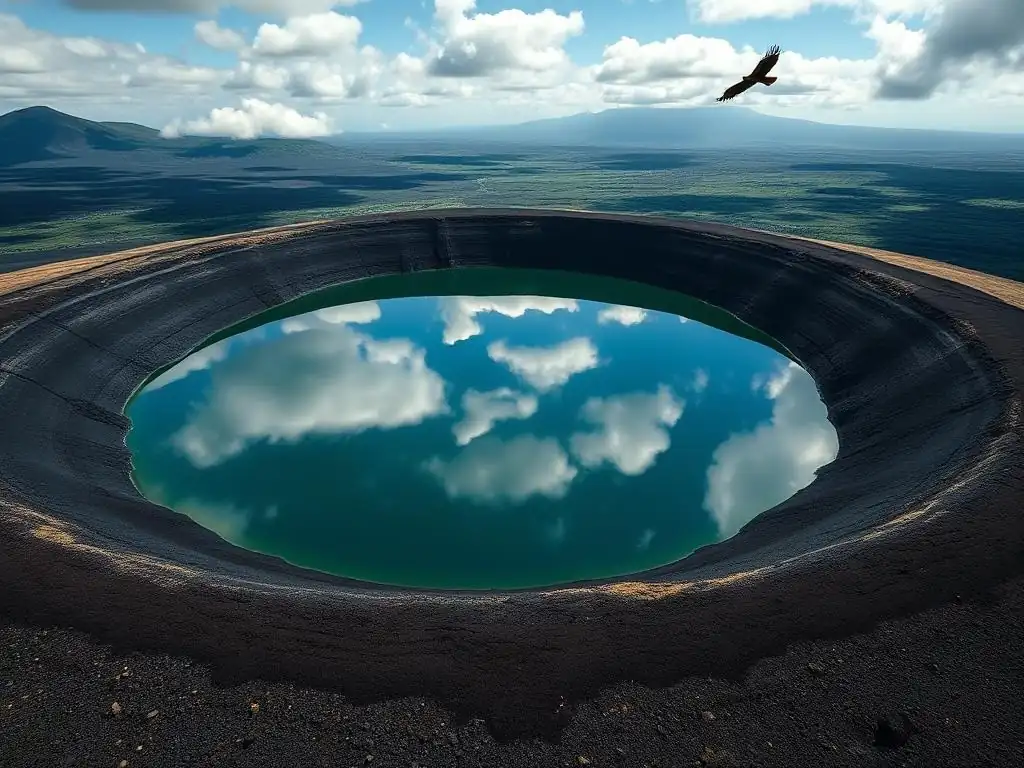
Volcanic Hazards Associated with Maar Lakes
While often appearing serene, maar lakes can still pose volcanic hazards, even long after their initial formation. Although large explosive eruptions may be infrequent from any individual maar after its formation, the volcanic systems that created them can remain active. One potential hazard is renewed volcanic activity. Magma pathways that led to the initial maar-forming eruption could become reactivated, potentially leading to new phreatomagmatic or even magmatic eruptions in the vicinity of existing maars.
Another significant hazard, as tragically demonstrated by Lake Nyos, is the potential for limnic eruptions in maar lakes that accumulate volcanic gases like CO2 or methane. These gases can build up in the deep waters and, under certain conditions, be suddenly released, posing a serious threat to life. Furthermore, maar lake areas can be susceptible to seismic activity associated with ongoing volcanism, and landslides from the steep crater walls can also occur, especially following heavy rainfall or earthquakes. Therefore, even dormant maar lakes in volcanic regions require careful monitoring and hazard assessment to mitigate potential risks.
Maar Lakes as Valuable Water Resources
Despite the potential hazards, maar lakes offer numerous benefits, particularly as valuable water resources. Many maar lakes are sources of freshwater, providing drinking water, irrigation water, and water for industrial and domestic use. Their crater basins naturally collect and store water, often fed by groundwater and rainfall, making them reliable water reservoirs, especially in regions with limited surface water. The relatively enclosed nature of maar basins can also help protect water quality from external contamination, though they are still vulnerable to pollution from human activities within their catchment area.
In some regions, maar lakes are essential sources of water in arid or semi-arid environments. The depth and volume of some maar lakes mean they can store significant quantities of water, providing a buffer against drought conditions. Sustainable management of maar lake water resources is crucial to ensure their long-term availability and to balance water use with the ecological needs of the lake environment. Recognizing the value of maar lakes as water resources is important for their conservation and responsible utilization.
The Ecological Significance of Maar Lake Environments
Maar lakes are not only geological and hydrological features but also significant ecological environments. They often support unique aquatic ecosystems, harboring diverse plant and animal life. The isolation of maar basins can lead to the development of endemic species, organisms found nowhere else. The water chemistry and physical characteristics of maar lakes, influenced by their volcanic origin and surrounding geology, create specific habitats that favor particular types of aquatic organisms.
Some maar lakes are oligotrophic, meaning they have low nutrient levels and clear water, supporting unique communities of algae and aquatic plants. Others may be more nutrient-rich, supporting higher productivity and different types of food webs. Maar lake environments can also attract a variety of wildlife, including birds, mammals, and amphibians, which rely on the lake for water and food.
The ecological value of maar lakes extends beyond their aquatic environment to the surrounding terrestrial ecosystems, which can be influenced by the lake's presence and microclimate. Conservation efforts are essential to protect the biodiversity and ecological integrity of these unique lake environments.
Studying Maar Lakes: Unraveling Volcanic History
Geological Surveys and Dating Techniques
Studying maar lakes provides valuable insights into volcanic history and geological processes. Geological surveys are fundamental to understanding the structure and formation of maars. These surveys involve mapping the maar crater, the tuff ring, and surrounding volcanic deposits. Geologists examine the types of rocks and volcanic materials present, their distribution, and their layering to reconstruct the eruptive history and the sequence of events that led to maar formation. Geophysical methods, such as seismic surveys and gravity surveys, can also be used to investigate the subsurface structure of maars and the underlying volcanic plumbing system.
Dating techniques are crucial for establishing the age of maar eruptions. Radiometric dating methods, such as carbon-14 dating for younger deposits and potassium-argon or argon-argon dating for older volcanic rocks, are used to determine the time of maar formation. By dating different layers within the tuff ring and the surrounding deposits, geologists can establish a timeline of eruptive events and place maar formation within the broader volcanic history of a region. These geological investigations provide a framework for understanding the frequency and style of past volcanic activity in maar-forming areas.
Analyzing Sediments and Volcanic Deposits
Analyzing the sediments that accumulate in maar lakes and the volcanic deposits surrounding them offers a wealth of information about past environmental conditions and volcanic processes. Sediment cores extracted from maar lakes provide a continuous record of environmental changes over time. The sediments can contain pollen grains, fossil diatoms, charcoal, and other proxies that reveal past vegetation, climate variations, and even evidence of past wildfires. Analyzing the chemical composition of the sediments can also provide information about past water quality and nutrient levels in the lake.
Volcanic deposits, such as the tuff ring, are analyzed to understand the characteristics of the maar-forming eruptions. The size, shape, and composition of tephra fragments provide clues about the explosivity of the eruption, the magma type, and the depth of the water-magma interaction. By studying the distribution and thickness of the tuff ring, geologists can estimate the energy of the eruption and the dispersal patterns of volcanic material. Combined analysis of lake sediments and volcanic deposits provides a comprehensive picture of maar formation and its environmental context.
Understanding Past Eruptions Through Maar Lake Research
Research on maar lakes plays a vital role in understanding past eruptions and assessing future volcanic hazards. Maar lakes serve as natural archives of volcanic activity, preserving evidence of past phreatomagmatic eruptions that might not be readily apparent in other volcanic landforms. By studying the age, distribution, and characteristics of maars in a volcanic field, volcanologists can reconstruct the spatial and temporal patterns of volcanic activity. This information is crucial for assessing volcanic hazards in maar-prone regions.
Understanding the mechanisms of maar formation, particularly the dynamics of water-magma interaction, helps to improve volcanic hazard assessments and forecasting. Research on maar lakes contributes to a broader understanding of phreatomagmatic volcanism, a type of volcanic eruption that can be particularly hazardous due to its explosive nature and widespread dispersal of ash and debris. By studying past eruptions recorded in maar lakes, scientists can better anticipate future volcanic events and develop strategies for mitigating volcanic risks in areas where maars are present.
Conclusion: Appreciating the Power Behind the Calm Waters
The Lasting Impact of Maar Volcanoes on the Landscape
Maar volcanoes, despite their often subtle appearance in the landscape, have a lasting impact on the environment and topography. Their formation through explosive eruptions carves out significant craters, altering drainage patterns and creating new basins that often become lakes. The tuff rings surrounding maars, though low in profile, represent substantial volumes of ejected material that reshape the local terrain. Even after volcanic activity ceases, maar lakes and their surrounding landscapes continue to evolve through erosion, sedimentation, and ecological succession.
The presence of maar lakes influences local hydrology, creating unique aquatic habitats and affecting groundwater flow. The volcanic materials and altered landscapes associated with maars can also impact soil formation and vegetation patterns. In regions with numerous maars, these volcanic features can collectively shape the overall character of the landscape, creating distinctive volcanic terrains. The lasting legacy of maar volcanoes is evident in the geological record, the topography, and the ecological diversity of the regions where they occur.
Further Exploration of Maar Lake Origins and Evolution
The origins and evolution of maar lakes continue to be a fascinating area of volcanological research. While much has been learned about their formation through phreatomagmatic eruptions, there are still open questions regarding the precise conditions that trigger these explosions, the dynamics of water-magma interaction at depth, and the long-term evolution of maar lake ecosystems. Further exploration using advanced geophysical techniques, high-resolution dating methods, and detailed sedimentological and geochemical analyses is needed to refine our understanding of maar lake genesis and their role in volcanic landscapes.
Ongoing research also focuses on the volcanic hazards associated with maar fields and the potential for renewed volcanic activity or gas releases from dormant maar lakes. Monitoring maar lakes and their surrounding volcanic regions is crucial for assessing and mitigating potential risks. Continued exploration and research on maar lakes are essential not only for advancing our scientific knowledge of volcanism but also for ensuring the safety and sustainability of communities living in maar-prone areas. The seemingly calm waters of maar lakes hide a complex and dynamic volcanic story, inviting further investigation and appreciation of these unique geological wonders.
Frequently Asked Questions
What exactly are maar lakes, and how do they form?
Maar lakes are volcanic crater lakes formed by explosive eruptions when magma interacts with groundwater. This creates a shallow, broad crater (maar) that fills with water over time.
What role does groundwater play in the formation of a maar lake?
Groundwater is essential! When hot magma encounters underground water reservoirs, it causes a powerful steam explosion. This explosion excavates the crater that eventually becomes the maar lake.
Are maar lakes found only near active volcanoes?
Not necessarily. While they are volcanic in origin, maar lakes can be found in regions with past volcanic activity, even if the volcano is now dormant or extinct. The key is the presence of groundwater and a prior explosive eruption.
How do volcanologists study the origins of maar lakes?
Volcanologists use several methods, including geological mapping to identify volcanic deposits, analyzing the composition of lake sediments, and studying the surrounding rock formations to understand the eruption history.
What makes maar lakes unique compared to other types of volcanic lakes?
Maar lakes are distinct because they are formed by phreatomagmatic eruptions, which are steam-driven explosions. Unlike caldera lakes, they are not formed by the collapse of a volcanic edifice, and unlike crater lakes, they are not directly associated with a volcanic cone.
Final Reflection: Echoes of Ancient Eruptions
The exploration of maar lakes, as we've journeyed through their formation and characteristics, reveals more than just geological processes; it unveils a profound connection to the Earth's raw power and its ability to reshape landscapes in dramatic, almost instantaneous ways. The enduring presence of these serene water bodies, born from violent volcanic explosions, serves as a constant reminder of the dynamic forces that lie just beneath the surface of our seemingly stable world. This understanding is particularly relevant today, as we grapple with the increasing awareness of natural hazards and the importance of understanding our planet's complex systems.
The story of maar lakes, from their explosive birth to their tranquil existence, resonates deeply with the human experience. It speaks to the cyclical nature of destruction and creation, chaos and calm. This understanding fosters a deeper appreciation for the delicate balance of our environment and the need for responsible stewardship. As the famous geologist Grove Karl Gilbert once said, The present is the key to the past.
By studying these geological formations, we gain invaluable insights into the Earth's history and its potential future.
Now, as you gaze upon a tranquil lake, perhaps even one with volcanic origins, take a moment to reflect on the immense power that shaped it. Consider the lessons learned from the origins of maar lakes – the reminder of hidden forces, the cyclical nature of change, and the importance of understanding our planet. Let this knowledge inspire you to appreciate the beauty and fragility of our world, and to act as a responsible steward, ensuring its preservation for generations to come.
Okay, I understand. Here's a CTA designed for the end of a web article titled "Beneath the Surface Calm: The Explosive Origins of Maar Lakes," targeted at Volcano Explorers readers on volcanoexplorers.org:
Unearth Your Inner Explorer: Discover Maar Lakes!
Thanks for journeying with us into the fascinating world of maar lakes! Now that you understand their volatile origins and unique beauty, it's time to take your exploration a step further.
Here are a few exciting ways to continue your adventure:
- Plan your own Maar Lake expedition: Use online resources and geological maps to identify potential Maar Lake locations near you and start planning a day trip to witness these incredible formations firsthand.
- Share this article with a fellow geology enthusiast and spark a discussion about the surprising volcanic landscapes around the world.
- Research the local legends and folklore associated with the nearest Maar Lake to you, uncovering the human connection to these explosive wonders.
What are you waiting for? Pack your hiking boots and get ready to experience the power of nature firsthand! Have you ever seen a Maar Lake in person? Share your experiences or the one you are most excited to visit below!