Why Cinder Cones Are Nature's Fireworks Display
Witness nature's fiery artistry! Discover fascinating cinder cone volcano facts and explore the explosive power behind these stunning formations at VolcanoExplorers.org. Uncover…
Read article
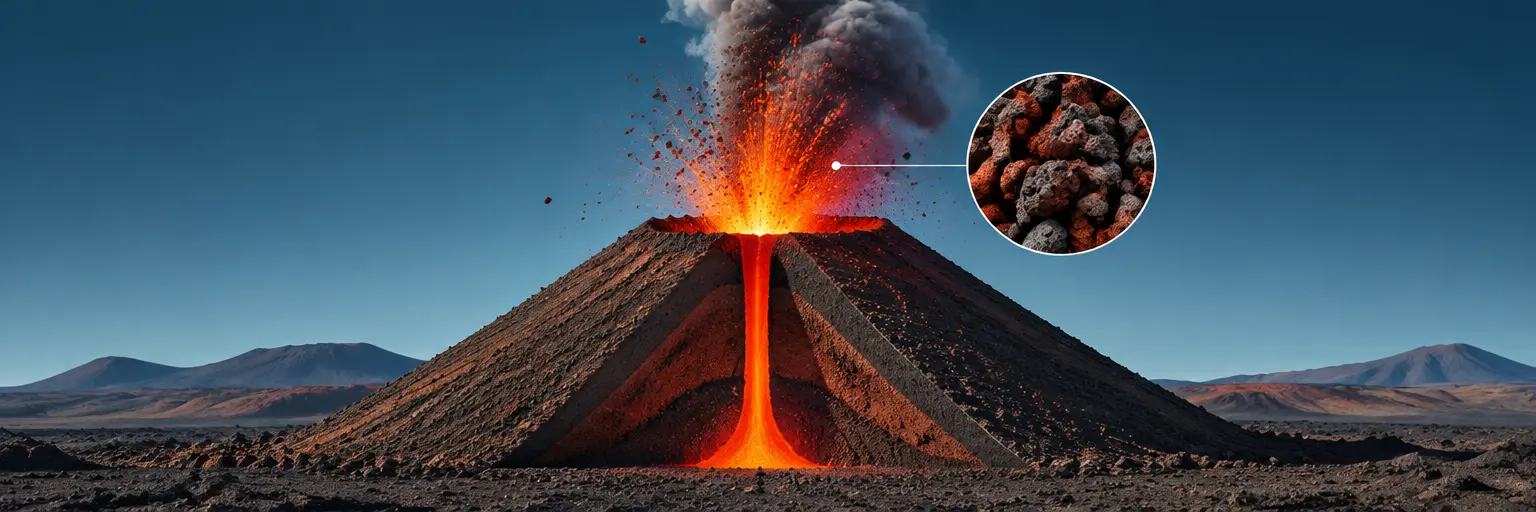
Cinder cones may be the smallest of Earth’s volcanic structures, but don’t let their size fool you—these steep, bowl-shaped hills pack an explosive punch that can reshape landscapes in mere weeks. Formed when gas-charged lava erupts into the air and falls as chunky cinders and ash, they build symmetrical slopes that are often overlooked during hikes. While their eruptions are rarely deadly, they can produce spectacular fire fountains and lava flows that threaten nearby trails and roads. From Paricutín’s sudden birth in a Mexican cornfield to the iconic Sunset Crater in Arizona, these volcanic marvels offer a front-row seat to raw geological power—ideal for curious travelers, geology students, and volcano chasers eager to witness nature’s speed and intensity.
Witness nature's fiery artistry! Discover fascinating cinder cone volcano facts and explore the explosive power behind these stunning formations at VolcanoExplorers.org. Uncover…
Read article
VolcanoExplorers.org unveils the enigmatic world of cinder cone volcanoes. Despite their seemingly simple structure, these fascinating formations hold surprising Cinder Cone Volcano…
Read article
Uncover the explosive power of cinder cone volcano eruptions! VolcanoExplorers.org reveals the hidden drama behind these miniature volcanoes, exploring their formation and…
Read article
Discover the explosive power of cinder cone volcanoes! VolcanoExplorers.org unveils the unique characteristics of these miniature marvels, exploring their formation and the…
Read article
Uncover the secrets of cinder cone volcanoes! VolcanoExplorers.org reveals these aren't just "small" volcanoes; understanding their formation and behavior is key to…
Read articleWelcome to VolcanoExplorers.org, where we unpack the fiery world of volcanic landforms. Among the most common yet misunderstood volcanic structures are cinder cones—steep, conical hills built from loose volcanic fragments. Though often modest in height, these “small but explosive” volcanoes pack a surprising punch, producing some of the most dramatic and accessible eruptions on Earth. This guide dives deep into their formation, structure, global examples, and why they matter for both science and safety. Whether you’re a student, traveler, or volcano enthusiast, you’ll leave with a clearer picture of these fascinating features and their explosive nature.
Cinder cones, also known as scoria cones, are the simplest and most common volcanic landforms. They form when gas-charged lava erupts violently, fragmenting into small, porous pieces called cinders or scoria. These fragments fall back to Earth around a central vent, building a steep, bowl-shaped hill with slopes typically between 30 and 40 degrees. Unlike shield volcanoes or stratovolcanoes, cinder cones rarely exceed 300 meters in height, making them appear modest—but their eruptions can be surprisingly explosive.
What sets them apart is their short-lived but intense activity. A single cinder cone often erupts for weeks to a few years, then goes quiet forever. Their structure is loose and permeable, so lava often breaks through the base to form longer flows. This combination of steep slopes, violent initial bursts, and rapid formation makes cinder cones perfect natural laboratories for understanding volcanic processes without the complexity of larger systems. For visitors, their symmetrical shapes and dark, rocky surfaces are unmistakable landmarks in volcanic landscapes.
The birth of a cinder cone begins when magma rises through a conduit and encounters water or depressurization, causing volatile gases to expand rapidly. This expansion creates a fountain of lava, spraying molten blobs into the air. As these blobs cool mid-flight, they solidify into cinders ranging from pea-sized to basketball-sized. The wind plays a critical role, depositing most fragments on the downwind side, which is why many cinder cones have a pronounced asymmetry in their rim heights.
Over time, repeated fountaining builds the cone layer by layer. The angle of repose—the steepest angle loose material can hold—dictates the final slope. Occasionally, the vent shifts, creating multiple craters or a breached rim where lava pours out. Some cones form on the flanks of larger volcanoes, like those on Mauna Loa in Hawaii, while others stand alone in volcanic fields. Understanding this process helps volcanologists predict eruption styles and assess hazards, especially because cinder cones can appear suddenly in populated areas.
Earth hosts thousands of cinder cones, but a few stand out for their size, history, or accessibility. Sunset Crater in Arizona, USA, erupted around 1085 AD and is one of the youngest in the continental US. Its 300-meter-high cone and dramatic lava flows attract over 200,000 visitors annually. Paricutín in Mexico is legendary—it grew from a crack in a cornfield in 1943 and reached 424 meters in just a year, burying two villages and becoming a classic study in cinder cone evolution.
Other notable examples include Cerro Negro in Nicaragua, known for frequent eruptions and volcano boarding, and Puu Oo on Hawaii’s Kilauea, which built a massive cone over 35 years before collapsing. In Europe, Monte Nuovo near Naples formed in 1538 in a single week, reshaping the coastline. Each of these cones tells a story of rapid, localized but powerful volcanic activity, reminding us that even “small” volcanoes can dramatically alter landscapes and human lives.
To appreciate cinder cones, it’s helpful to contrast them with their larger cousins. Shield volcanoes like Mauna Loa are broad and gentle, built from fluid lava flows, while stratovolcanoes like Mount St. Helens are tall and layered from alternating lava and pyroclastic material. Cinder cones differ by being monogenetic—they typically erupt once and then cease, unlike polygenetic volcanoes that erupt repeatedly over millennia. Their eruptions are also more gas-rich, leading to higher explosivity relative to their size.
This explosiveness means cinder cones pose unique hazards. While lava flows are slow, ballistic projectiles and ash fall can endanger nearby areas. However, their short activity windows allow for easier risk management. For geologists, cinder cones offer a snapshot of mantle composition and eruption dynamics in a single event. For tourists, they offer manageable hiking experiences with crater views unmatched by larger, more dangerous peaks. Understanding these differences is key to appreciating the diversity of volcanic phenomena.
Though cinder cones are often viewed as benign, they can erupt with little warning. In 1977, Ukinrek Maars in Alaska—not technically cinder cones but similar—erupted without prior signs. Monitoring networks track ground deformation, gas emissions, and seismic activity around known cones. For communities near active fields, like the San Francisco Volcanic Field in Arizona, hazard maps identify likely vent locations, and public education campaigns stress evacuation routes. Because eruptions are typically short, rapid response is more feasible than with long-lived systems.
Visitors should always heed warnings from local authorities. Hiking to a crater rim is generally safe when the volcano is dormant, but loose cinders make footing treacherous. Always carry water, wear sturdy boots, and avoid areas with fresh ash or sulfuric odors. Remember, cinder cones can be unpredictable—even “extinct” cones can reactivate after centuries. Respecting their power is essential, as history shows that small cones can cause big disruption, from ruining crops to forcing evacuations.
For photographers and travelers, cinder cones offer striking visuals—their dark, oxidized red and black slopes contrast vividly with surrounding terrain. The best time to shoot is during golden hour, when low light accentuates texture and shadow. Wide-angle lenses capture the full cone, while macro shots reveal the porous, glassy texture of scoria. Many cones are accessible via maintained trails, such as the Lava Butte in Oregon, which has a paved road to the summit and interpretive signs.
When planning a visit, check for volcanic activity alerts on VolcanoExplorers.org or local geological surveys. Spring and fall offer mild temperatures, while summer heat on bare rock can be intense. Always carry a map, as GPS signals can be unreliable in remote areas. For a unique experience, consider visiting Cerro Negro in Nicaragua during a quiet period—you can sled down its ash-covered slopes. Respect local regulations, stay on marked paths, and leave no trace so future explorers can enjoy these explosive wonders safely.
Cinder cones can be dangerous during active eruptions, primarily due to ballistic blocks, ash clouds, and fast-moving lava flows. However, their eruptions are usually short-lived and localized. Most cones are dormant or extinct, making them safe to visit. Always check current volcanic activity and follow local advisories. The main hiking hazard is loose, unstable cinder surfaces, which can cause slips and falls if you aren’t cautious.
Most cinder cone eruptions last between a few weeks and a few years. Paricutín, for example, erupted for nine years, but many cones finish their activity in under a month. Once the magma supply depletes or the gas is exhausted, the eruption ceases permanently. This makes them monogenetic, meaning they typically erupt only once in their lifetime, unlike larger volcanoes that can reactivate repeatedly.
Yes, cinder cones can form underwater during submarine volcanic eruptions. However, the high pressure and rapid cooling alter their shape, often producing more fragmented deposits called hyaloclastites. Submarine cinder cones are less studied due to difficulty accessing them, but they exist along mid-ocean ridges and seamounts. Their formation processes are similar, but water interaction changes the resulting rock textures and cone morphology significantly.
A cinder cone is built from cooled, fragmented cinders that are loose and porous, while a spatter cone forms from molten blobs that weld together upon landing. Spatter cones are typically smaller and steeper, with smooth, fused surfaces. Cinder cones have higher eruption fountains that cool material before deposition, while spatter cones result from lower, hotter fountains. Both can occur at the same vent during different eruption phases.
Most cinder cones have a prominent, bowl-shaped crater at their summit, formed as ejected material builds a rim around the central vent. However, some cones may have multiple craters or a breached rim where lava escaped, creating a horseshoe shape. Wind can also affect rim height, making one side higher. If the vent shifts during the eruption, a cone may lack a classic single crater or have a collapsed, irregular top.