
From Mantle Plume to Volcano: The Birth Story of a Shield Volcano

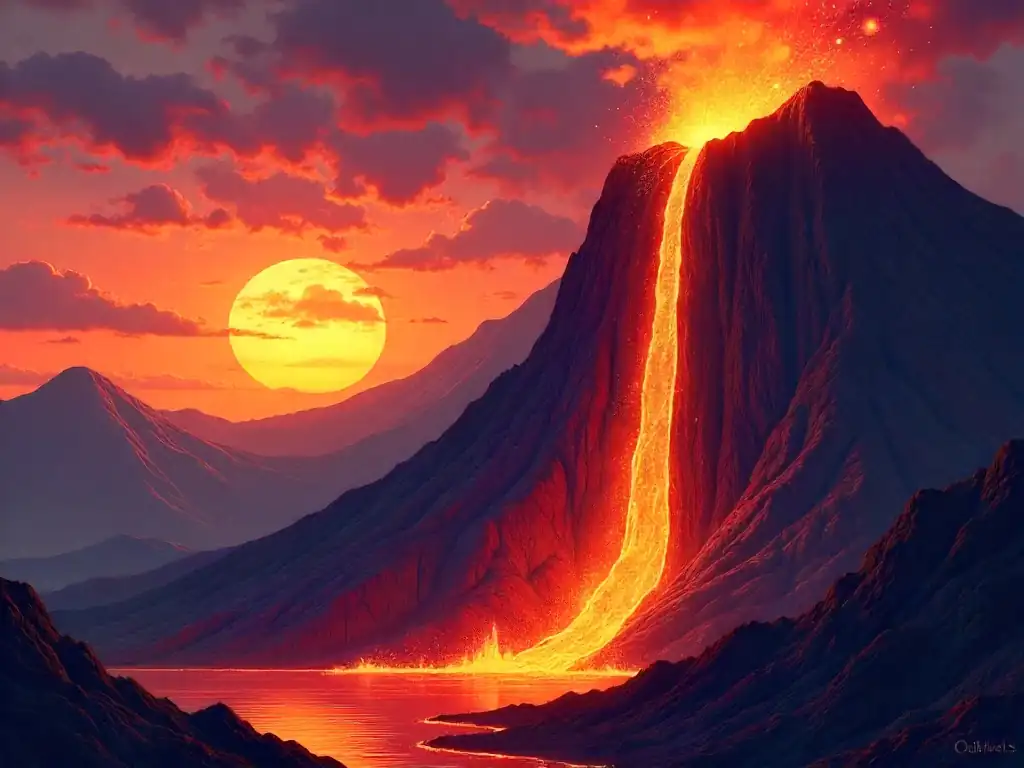
Welcome to Volcano Explorers, where we unearth the secrets of the Earth's fiery giants. Ever wondered about the gentle giants of the volcanic world? Prepare to journey deep, as we ignite your curiosity with a fascinating exploration of how shield volcanoes form. Get ready to discover the slow, steady, and ultimately powerful processes that build these colossal landforms – it's a story millions of years in the making, and it starts right here...
- Understanding Shield Volcano Formation: An Introduction
- The Crucial Role of Mantle Plumes in Shield Volcano Genesis
- Magma Generation: The First Step in Shield Volcano Development
- Eruptive Styles and Lava Flows: Building the Shield Volcano
- The Gradual Growth of a Shield Volcano: A Layered Structure
- Examples of Shield Volcanoes Around the World
- How Shield Volcanoes Impact the Landscape and Environment
- Monitoring Shield Volcano Activity: Predicting Eruptions
- Conclusion: The Enduring Legacy of Shield Volcanoes
- Frequently Asked Questions
- Final Reflection: The Enduring Power of Volcanic Creation
- Unearth Your Inner Volcanologist!
Understanding Shield Volcano Formation: An Introduction
Shield volcanoes, those broad, gently sloping giants of the volcanic world, stand in stark contrast to their steep-sided stratovolcano cousins. Their immense size and distinctive shape are a direct result of the unique processes that govern their formation. Unlike volcanoes born from the collision of tectonic plates, shield volcanoes typically arise from hotspots – stationary plumes of magma originating deep within the Earth's mantle.
Understanding how shield volcanoes form is crucial to appreciating not only their geological significance but also the profound impact they have on landscapes and ecosystems around the globe. This article will delve into the fascinating journey from the depths of the mantle to the creation of these remarkable volcanic edifices, exploring the key stages and geological phenomena involved in the birth of a shield volcano.
The Crucial Role of Mantle Plumes in Shield Volcano Genesis
What are Mantle Plumes and How Do They Fuel Volcanism?
Mantle plumes are upwellings of abnormally hot rock within the Earth’s mantle. These plumes are thought to originate deep within the mantle, possibly at the core-mantle boundary, and rise buoyantly towards the surface. Unlike plate tectonic volcanism, which occurs at plate boundaries, mantle plumes are considered to be largely independent of plate tectonics.
They are stationary relative to the moving tectonic plates above, acting as fixed sources of heat and magma. As a tectonic plate moves over a mantle plume, a chain of volcanoes can be formed over millions of years, with the currently active volcano situated directly above the plume. This process is responsible for some of the most iconic volcanic island chains in the world, such as the Hawaiian Islands.
The heat from mantle plumes is the primary driving force behind the volcanism associated with shield volcano formation. The elevated temperature causes the surrounding mantle rock to melt, generating magma. This magma, being less dense than the surrounding solid rock, then begins to ascend towards the Earth’s surface.
The consistent and long-lived nature of mantle plumes ensures a continuous supply of magma over vast geological timescales, which is essential for the protracted process of shield volcano construction. The longevity of these plumes, potentially lasting for tens to hundreds of millions of years, explains the immense size that shield volcanoes can attain.
The Composition of Mantle Plumes and Its Impact on Magma Type
The composition of mantle plumes plays a critical role in determining the type of magma generated and, consequently, the characteristics of the resulting shield volcano. Mantle plumes are generally believed to be composed of material that is slightly different in composition from the surrounding ‘normal’ mantle. This material is often enriched in certain elements and volatile components, which influence the melting process and the properties of the magma formed. Specifically, mantle plumes often produce magma that is relatively low in silica and rich in iron and magnesium.
This compositional characteristic is crucial because it leads to the generation of basaltic magma, which is the foundation of shield volcanoes. Basaltic magma is less viscous than the silica-rich magma associated with stratovolcanoes. Its lower viscosity allows it to flow more easily and travel greater distances across the surface.
Furthermore, basaltic magma tends to have a lower gas content compared to more explosive magmas. This lower gas content contributes to the effusive, non-explosive eruptions that are typical of shield volcanoes, allowing for the gradual accumulation of lava flows that build their characteristic broad, shield-like shape. The specific composition of the mantle plume, therefore, dictates the fundamental style of volcanism and the resulting volcanic landform.
Magma Generation: The First Step in Shield Volcano Development
Decompression Melting: Creating Magma from the Mantle Plume
The journey from mantle plume to shield volcano begins with the generation of magma through a process called decompression melting. Deep within the Earth, the mantle is primarily solid rock due to the immense pressure exerted by the overlying layers. However, the exceptionally hot material rising within a mantle plume experiences a decrease in pressure as it ascends towards the surface. This reduction in pressure, while the temperature remains high, lowers the melting point of the mantle rock. As the plume material rises and the pressure decreases, the rock begins to partially melt.
This decompression melting process is highly efficient in generating magma in mantle plume settings. Unlike melting caused by adding heat or changing the composition, decompression melting is driven by the upward movement of hot material. The extent of melting is directly related to the depth of origin and the temperature of the plume. In typical mantle plume scenarios, decompression melting can generate significant volumes of basaltic magma. This magma, now less dense than the surrounding solid mantle, is buoyant and starts to ascend towards the Earth's crust, initiating the next phase in the shield volcano's formation.
The Ascent of Magma: From Deep Within to the Earth's Surface
Once magma is generated through decompression melting within the mantle plume, it embarks on a journey upwards towards the Earth's surface. This ascent is driven by the density difference between the molten magma and the surrounding solid rock. Magma, being less dense, is buoyant and rises through the mantle and into the Earth's crust. The pathway magma takes is not always a direct, straight line. It often navigates through a complex network of fractures and weaknesses in the surrounding rock.
As magma ascends, it can accumulate in magma chambers within the crust. These chambers act as temporary storage reservoirs, where magma can undergo further evolution through processes like fractional crystallization and assimilation of surrounding crustal rocks. However, in the context of shield volcanoes formed by mantle plumes, the magma often ascends relatively rapidly and directly to the surface.
This is because the sustained magma supply from the plume maintains pressure and facilitates a continuous pathway. Eventually, the magma reaches the surface, erupting to begin building the volcanic edifice. The efficiency of magma ascent from the mantle plume is a key factor in the large volumes of lava erupted and the rapid growth of shield volcanoes.
Eruptive Styles and Lava Flows: Building the Shield Volcano
Effusive Eruptions: The Hallmark of Shield Volcano Activity
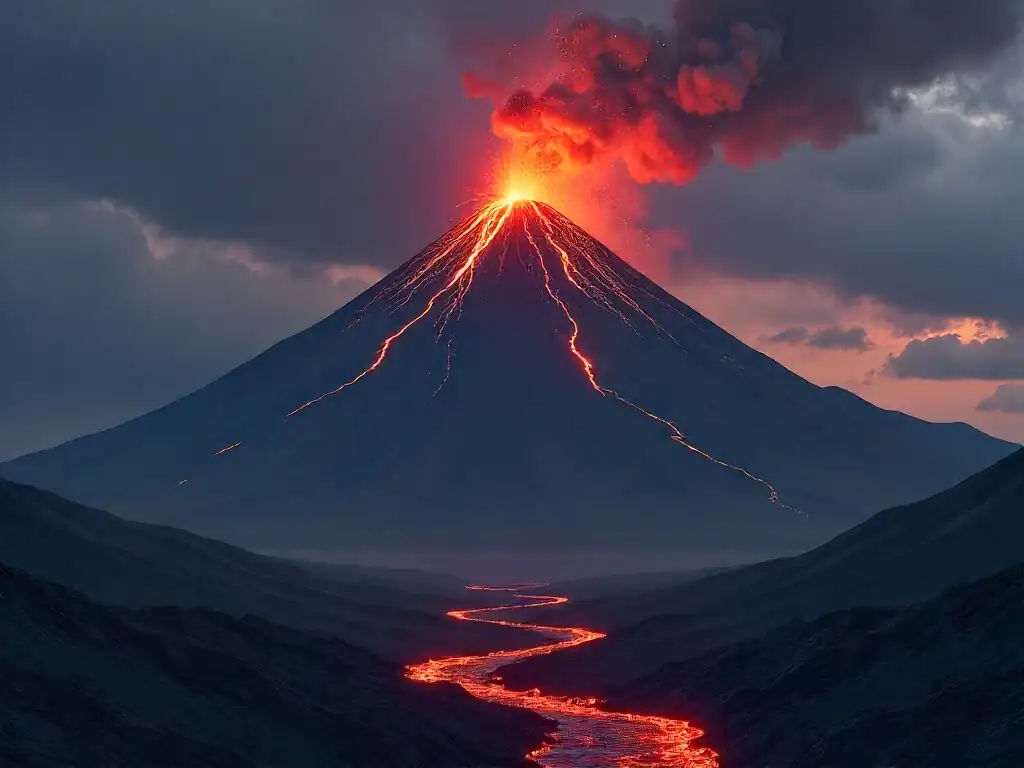
Shield volcanoes are predominantly characterized by effusive eruptions. In contrast to the explosive eruptions of stratovolcanoes, effusive eruptions are relatively gentle and involve the outpouring of lava onto the Earth’s surface. This style of eruption is directly linked to the low viscosity and low gas content of basaltic magma, which is typical of shield volcanoes. Because basaltic magma flows easily, the gas within it can escape more readily and gradually, preventing pressure from building up to explosive levels.
Effusive eruptions can manifest in various forms, including lava flows, lava fountains, and lava lakes. Lava flows are the most significant in building the structure of a shield volcano, as they spread out over large areas and solidify to form layers of rock. Lava fountains, while visually dramatic, are less impactful in terms of volume.
They occur when dissolved gases in the magma expand rapidly as it nears the surface, propelling molten rock into the air. Lava lakes are pools of molten lava that can form within volcanic craters or depressions, representing a continuous outpouring of magma. The predominantly effusive nature of shield volcano eruptions is what allows them to grow into their distinctive broad and gently sloping shape.
Basaltic Lava Flows: The Building Blocks of Shield Volcanoes
Basaltic lava flows are the fundamental building blocks of shield volcanoes. The vast majority of the volume of a shield volcano is composed of solidified basaltic lava. These flows originate from effusive eruptions and can travel considerable distances from the vent due to the low viscosity of basaltic magma. The fluidity of basaltic lava allows it to spread out thinly over the surrounding terrain, covering large areas before cooling and solidifying.
The composition of basaltic lava is relatively uniform, consisting mainly of silicate minerals rich in iron and magnesium. This composition contributes to its dark color and relatively high density. When basaltic lava cools, it typically solidifies into a dark, fine-grained rock.
The repeated accumulation of numerous basaltic lava flows, one on top of another over thousands or even millions of years, gradually constructs the massive, layered structure of a shield volcano. The thickness of individual lava flows can vary from a few centimeters to several meters, and their extent can range from meters to tens of kilometers, depending on the eruption rate, lava viscosity, and topography.
Pahoehoe vs. A'a: Understanding Different Lava Flow Textures
While all lava flows from shield volcanoes are broadly basaltic, they can exhibit different surface textures, primarily classified as pahoehoe and a'a. These textural differences arise from variations in lava viscosity, cooling rate, and gas content. Pahoehoe lava is characterized by its smooth, ropy, or billowy surface. It forms from hotter, more fluid lava that cools slowly, allowing the surface to wrinkle and fold as the molten interior continues to flow. Pahoehoe flows often advance in lobes or toes, creating intricate patterns on the solidified surface.
A'a lava, in contrast, has a rough, jagged, and clinkery surface. It forms from slightly cooler, more viscous lava that cools and solidifies more rapidly. As the lava flows, the surface crust breaks apart into sharp, angular fragments, creating the characteristic rubble-like texture of a'a.
A'a flows tend to be thicker and move more slowly than pahoehoe flows. Both pahoehoe and a'a lava flows are commonly found on shield volcanoes and often transition from one type to another within the same eruption. Understanding these textural differences provides insights into the eruptive conditions and the flow dynamics of the lava that shapes shield volcanoes.
The Gradual Growth of a Shield Volcano: A Layered Structure
Formation of the Broad, Gently Sloping Shield Shape
The characteristic broad, gently sloping shield shape of these volcanoes is a direct consequence of the effusive eruption style and the properties of basaltic lava. The highly fluid basaltic lava flows spread out extensively from the vent, covering vast areas with thin layers of solidified rock. Because the lava flows easily and travels far, it does not pile up steeply around the vent like the viscous lava of stratovolcanoes. Instead, each successive lava flow adds a thin, gently inclined layer to the volcano's flanks, gradually expanding its base and increasing its overall diameter.
This process of lateral spreading and layering leads to the formation of the shield shape, which resembles a warrior's shield laid flat on the ground – hence the name "shield volcano". The slopes of shield volcanoes are typically very gentle, ranging from just a few degrees near the summit to less than ten degrees on the lower flanks. This gentle slope is a defining feature and a direct result of the fluid nature of the lava and the effusive eruptive style that builds these volcanic giants.
The Role of Repeated Eruptions in Volcano Growth
Shield volcanoes are not formed by a single, massive eruption, but rather through countless repeated eruptions over long periods, often hundreds of thousands or even millions of years. Each eruption contributes a layer of basaltic lava to the volcano's structure. The cumulative effect of these numerous eruptions is the gradual build-up of a massive volcanic edifice. Between eruptions, the volcano may remain dormant for years, decades, or even centuries, but the underlying mantle plume continues to supply magma, setting the stage for future activity.
The repeated eruptions are often not centered at a single vent but can occur from different locations on the summit or flanks of the volcano. This distributed pattern of eruptions further contributes to the broad, shield-like shape, as lava is added across a wide area rather than concentrated around a single point. The long lifespan and sustained eruptive activity, driven by the persistent mantle plume, are essential for shield volcanoes to attain their immense size. The layered structure, built over time by countless lava flows, is a testament to the prolonged and gradual process of shield volcano growth.
Examples of Shield Volcanoes Around the World
Mauna Loa: A Classic Example of a Shield Volcano in Hawaii
Mauna Loa, located on the Big Island of Hawaii, is often cited as the quintessential example of a shield volcano. It is the largest active volcano on Earth in terms of volume and area, rising approximately 4,170 meters (13,680 feet) above sea level, and extending many kilometers below sea level to the ocean floor. Its immense size and gently sloping flanks perfectly exemplify the classic shield volcano morphology. Mauna Loa is part of the Hawaiian-Emperor seamount chain, formed by the Hawaiian hotspot mantle plume.
Mauna Loa's eruptions are characterized by effusive flows of basaltic lava, which have built up the massive structure over hundreds of thousands of years. Historical eruptions, recorded since the early 19th century, have primarily consisted of lava flows emanating from the summit caldera and rift zones that extend down its flanks. The most recent eruption of Mauna Loa began in November 2022, after a 38-year period of quiescence, reminding us of its continued activity and the ongoing processes that shape shield volcanoes. Mauna Loa serves as a living laboratory for volcanologists studying shield volcano formation and behavior.
Skjaldbreiður: A Shield Volcano in Iceland
Skjaldbreiður, located in Iceland, is another excellent example of a shield volcano, though less active than Mauna Loa in recent times. Its name, translating to "broad shield" in Icelandic, perfectly describes its classic shield shape. Skjaldbreiður is characterized by its exceptionally well-preserved shield morphology, with very gentle slopes and a large summit caldera. It formed during the early Holocene epoch, after the last glacial period, and its pristine shape is largely due to the lack of significant erosion since its formation.
Like Mauna Loa, Skjaldbreiður is built from basaltic lava flows erupted effusively. Its formation is linked to the Iceland hotspot, a mantle plume responsible for Iceland's volcanic activity. Skjaldbreiður’s caldera is believed to have formed through magma chamber drainage following a large eruption. While Skjaldbreiður itself is not currently active, it stands as a remarkable geological monument to the processes of shield volcano formation and the power of effusive volcanism in shaping landscapes.
Erta Ale: An Active Shield Volcano in Ethiopia
Erta Ale, situated in the Afar Region of Ethiopia, presents a contrasting example of a shield volcano – one that is continuously active and hosts a persistent lava lake. This basaltic shield volcano is relatively low in elevation compared to Mauna Loa, but its significance lies in its persistent volcanic activity. Erta Ale is part of the East African Rift System, a tectonically active region, although its volcanism is still ultimately linked to a mantle plume influence.
Erta Ale is famous for its long-lived lava lake, one of only a few in the world. This lava lake, often overflowing, is a direct expression of the ongoing magma supply from the mantle source. Eruptions at Erta Ale are predominantly effusive, with lava flows emanating from the summit crater and surrounding fissures.
The continuous activity and the presence of the lava lake offer unique opportunities to study the dynamics of magma systems and the surface expression of mantle plume volcanism in real-time. Erta Ale demonstrates that shield volcanoes can exhibit a spectrum of activity levels, from episodic eruptions to near-continuous lava effusion.
How Shield Volcanoes Impact the Landscape and Environment
The Geological Effects of Shield Volcano Eruptions
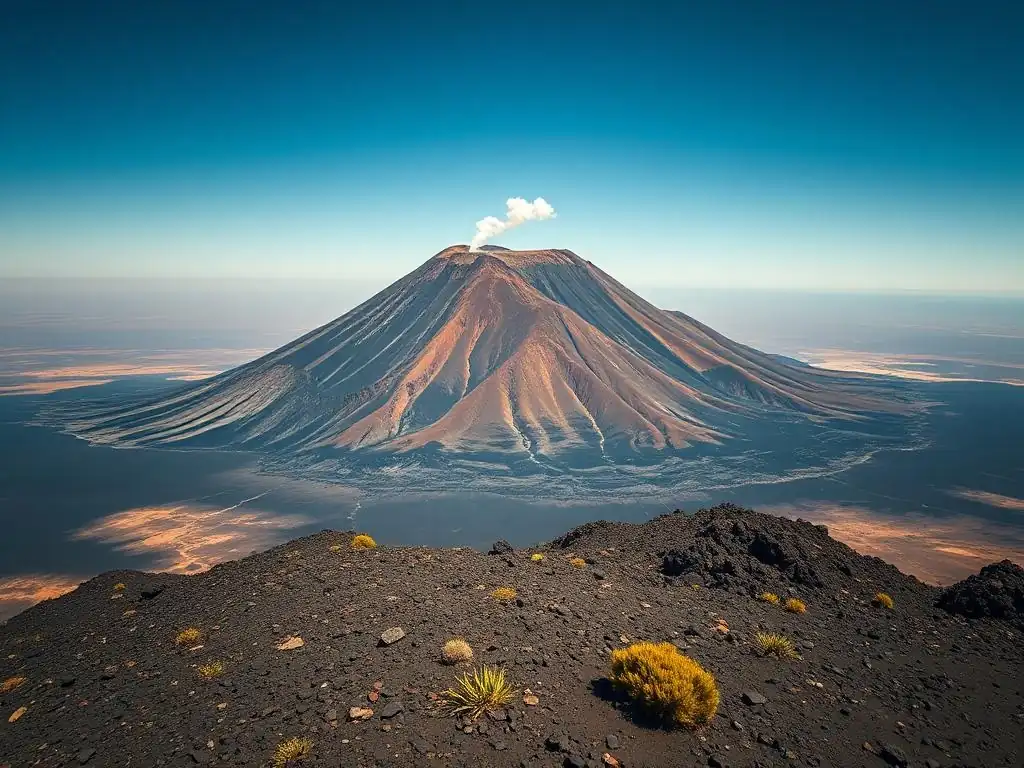
Shield volcano eruptions, while generally effusive, exert significant geological impacts on the landscape. The most obvious effect is the creation of vast volcanic landforms themselves. Shield volcanoes can cover enormous areas, reshaping the terrain and creating new land, particularly in oceanic settings where they can form islands. The immense weight of these volcanic structures can also cause subsidence of the underlying crust, further modifying the geological landscape.
Lava flows from shield volcanoes can inundate and bury existing landforms, altering drainage patterns and creating new topographic features. The solidified lava flows form extensive basalt plains and plateaus. Over time, erosion by water and wind sculpts these volcanic landscapes, carving valleys and shaping distinctive volcanic features. Volcanic gases released during eruptions, even effusive ones, can contribute to atmospheric changes and acid rain, affecting weathering processes and altering rock formations over geological timescales. The long-term geological legacy of shield volcano eruptions is profound and enduring.
The Biological Impact: Life Adapting to Volcanic Environments
While volcanic eruptions are initially destructive, they also play a crucial role in shaping ecosystems and fostering biological diversity over time. The immediate impact of lava flows is often devastating to existing vegetation and animal life in the affected area. However, volcanic landscapes are not sterile wastelands for long. Volcanic rocks weather and break down to form fertile soils, rich in minerals essential for plant growth. This newly formed soil can be rapidly colonized by pioneer plant species, initiating ecological succession.
Volcanic areas often exhibit unique and specialized ecosystems, with plants and animals adapted to the challenging conditions of volcanic environments. These adaptations can include tolerance to high temperatures, poor soils, and volcanic gases. Volcanic islands, formed by shield volcanoes, are often hotspots of biodiversity, with unique species evolving in isolation. Geothermal features associated with volcanic activity, such as hot springs and fumaroles, can also create unique habitats supporting specialized microbial communities and other life forms. Thus, while initially destructive, shield volcano eruptions ultimately contribute to the renewal and diversification of life on Earth.
Monitoring Shield Volcano Activity: Predicting Eruptions
Volcanological Techniques for Monitoring Shield Volcanoes
Monitoring shield volcano activity is crucial for hazard assessment and eruption forecasting. Volcanologists employ a range of techniques to track changes in volcanic systems that may indicate an impending eruption. Seismic monitoring is a primary tool, using seismometers to detect earthquakes and volcanic tremor, which are often precursors to eruptions. Changes in the frequency, intensity, and location of seismic activity can signal magma movement and pressure build-up within the volcano.
Ground deformation monitoring is another vital technique. Shield volcanoes often inflate or bulge as magma accumulates beneath the surface prior to an eruption. Tiltmeters and GPS instruments are used to measure subtle changes in ground surface elevation and slope. Gas monitoring measures the composition and flux of volcanic gases released from vents and fumaroles.
Changes in gas emissions, particularly increases in sulfur dioxide or carbon dioxide, can indicate changes in magma degassing and activity. Thermal monitoring, using infrared cameras and satellite imagery, detects changes in surface temperature, which can indicate increased heat flow and potential eruptive activity. Combining these monitoring techniques provides a comprehensive picture of a shield volcano's state and helps in forecasting potential eruptions.
Interferometric Synthetic Aperture Radar (InSAR) for Ground Deformation Monitoring
Interferometric Synthetic Aperture Radar (InSAR) has become an invaluable tool for monitoring ground deformation at shield volcanoes. InSAR uses radar signals from satellites to measure changes in the Earth's surface with millimeter-scale precision over large areas. By comparing radar images acquired at different times, InSAR can detect subtle ground movements, such as inflation or deflation of a volcano, which are often associated with magma accumulation or withdrawal.
InSAR is particularly effective for monitoring shield volcanoes due to their broad extent and the often subtle nature of their deformation. It can provide a spatially continuous map of ground deformation across the entire volcano, revealing patterns that might be missed by traditional ground-based instruments like GPS.
InSAR data can help volcanologists identify areas of magma accumulation, track the evolution of magma reservoirs, and assess the potential for future eruptions. The ability of InSAR to provide synoptic and high-resolution deformation data has significantly enhanced our understanding of shield volcano dynamics and improved our ability to monitor and forecast their activity.
Conclusion: The Enduring Legacy of Shield Volcanoes
The birth story of a shield volcano, from the depths of a mantle plume to the creation of a massive volcanic edifice, is a testament to the powerful and enduring forces shaping our planet. These broad, gently sloping giants, built layer upon layer by countless effusive eruptions of basaltic lava, stand as iconic landforms across the globe, from the Hawaiian Islands to Iceland and beyond.
How shield volcanoes form is a process driven by deep mantle processes, magma generation through decompression melting, and the unique properties of basaltic lava that allow it to flow and spread, gradually constructing these remarkable volcanic shields.
The legacy of shield volcanoes extends beyond their impressive geological forms. They create new land, shape landscapes, and influence ecosystems. While their eruptions can be disruptive, they also contribute to the renewal of landscapes and the creation of fertile soils, supporting diverse biological communities. Through ongoing monitoring and research, scientists continue to unravel the complexities of shield volcano behavior, striving to better understand and predict their activity. Shield volcanoes, therefore, are not just geological wonders but dynamic and integral components of our planet's ever-evolving story.
Frequently Asked Questions
How do shield volcanoes form?
Shield volcanoes form from fluid, basaltic lava that flows easily over long distances. This allows the lava to spread out, creating a broad, gently sloping structure, resembling a shield.
What is a mantle plume, and how does it relate to shield volcano formation?
A mantle plume is an upwelling of abnormally hot rock within the Earth's mantle. When this plume reaches the surface, it can melt, producing magma that feeds the continuous lava flows characteristic of shield volcanoes.
What type of lava is most commonly associated with shield volcanoes, and why?
Basaltic lava is the type of lava most commonly associated with shield volcanoes. Its low viscosity allows it to flow readily, creating the wide, shallow slopes that define these volcanoes.
Are shield volcanoes typically explosive?
Shield volcanoes are generally not very explosive compared to other types of volcanoes. Their basaltic lava has a low gas content, which allows the gas to escape easily, preventing the build-up of pressure that leads to explosive eruptions.
Where are shield volcanoes typically located?
Shield volcanoes are often found in hotspot locations, such as Hawaii, and along divergent plate boundaries, like Iceland. These areas provide the necessary conditions for the continuous magma supply required for their formation.
Final Reflection: The Enduring Power of Volcanic Creation
The journey from a deep-seated mantle plume to the majestic form of a shield volcano is a testament to the Earth's raw, creative power. Understanding how shield volcanoes form is not just an academic exercise; it's a window into the very processes that shape our planet and influence life itself. These gentle giants, built layer upon layer from fluid lava flows, remind us of the slow, persistent forces that sculpt the world around us, forces that continue to operate even now.
This exploration of shield volcano formation has profoundly impacted my own understanding of geological time and the interconnectedness of Earth's systems. It's humbling to consider that these landforms, seemingly permanent, are merely snapshots in a dynamic planetary process. The mountains are calling and I must go,
- John Muir. This quote resonates deeply when considering the allure and the immense timescale of volcanic activity, a call to understand and respect the forces that shape our world.
Now, I invite you to consider the implications of this knowledge. How does understanding the formation of shield volcanoes change your perspective on the Earth's dynamism? How can we, as stewards of this planet, better appreciate and protect these natural wonders and the environments they create? Let the story of the shield volcano inspire you to look deeper, to question further, and to connect with the powerful forces that shape our world, both above and below the surface.
Unearth Your Inner Volcanologist!
Thank you for journeying with us into the fiery heart of shield volcano formation! We hope you now have a deeper understanding of the incredible forces shaping our planet. Ready to take your exploration further?
Here are a few ways to ignite your passion for volcanology:
- Become a Citizen Scientist: Join the Volcano Explorers network and report your own observations of volcanic activity, contributing directly to real-world research.
- Dive Deeper: Explore our interactive map of the world's active shield volcanoes and compare their unique geological features.
- Share the Fire: Spread the knowledge by sharing this article with fellow Earth enthusiasts and spark a conversation about the wonders beneath our feet.
What hidden volcanic landscapes are you now eager to explore, and what questions do you have about the forces shaping them? Let us know in the comments below!