
Mud Volcanoes vs. Magma Volcanoes: What's the Real Difference?

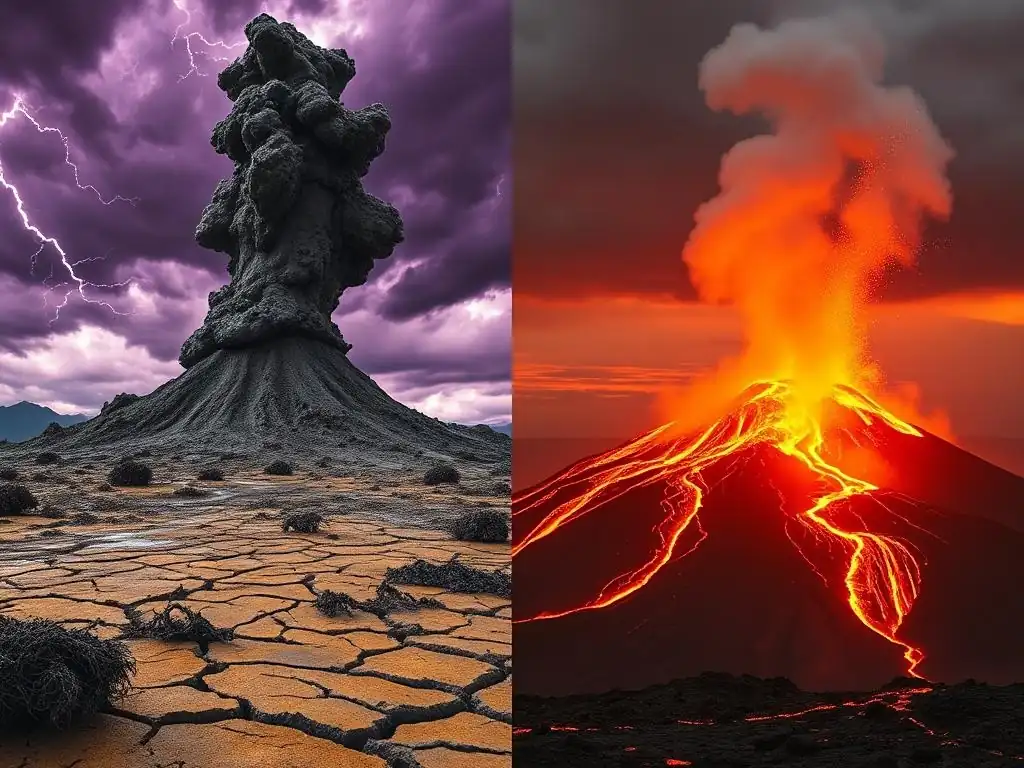
Welcome to Volcano Explorers!
Prepare to uncover the hidden secrets bubbling beneath the surface. Ever wondered what truly separates a seemingly harmless mud volcano from its fire-breathing, magma-spewing cousin? Our latest exploration, " Mud Volcanoes vs. Magma Volcanoes: What's the Real Difference?" dives deep into the fascinating world of these geological marvels. The answers might surprise you... Ready to explore the stark contrasts and surprising similarities?
- Introduction: Exploring the Contrasting Worlds of Mud and Magma Volcanoes
- Understanding Magma Volcanoes: Formation, Eruption, and Characteristics
- Unveiling Mud Volcanoes: Origin, Composition, and Eruptive Behavior
- Mud Volcanoes vs Magma Volcanoes Comparison: A Detailed Analysis
- Key Indicators: How to Identify Mud Volcanoes and Magma Volcanoes in the Field
- Environmental Impact: Comparing the Effects of Mud and Magma Volcanoes
- Global Distribution: Mapping the Locations of Mud and Magma Volcanoes Worldwide
- Why Study Both Types of Volcanoes? Insights into Earth's Processes
- Conclusion: Appreciating the Unique Nature of Mud and Magma Volcanoes
-
Frequently Asked Questions
- What is the fundamental difference between a mud volcano and a magma volcano?
- Are mud volcanoes and magma volcanoes formed by the same geological processes?
- What is the typical composition of the "mud" erupted from a mud volcano?
- Are mud volcanoes as dangerous as magma volcanoes?
- Can mud volcanoes provide insights into geological processes?
- Final Reflection: Unearthing Earth's Fiery Secrets
- Unearth Your Inner Volcanologist!
Introduction: Exploring the Contrasting Worlds of Mud and Magma Volcanoes
Volcanoes, in their most iconic form, conjure images of fiery mountains spewing molten rock and ash into the sky. These are, of course, magma volcanoes, driven by the intense heat and pressure deep within the Earth. However, the volcanic world is far more diverse than just these fiery giants.
A less known, yet equally fascinating type of volcano exists – the mud volcano. While both are geological features that expel materials onto the Earth's surface, their origins, processes, and compositions are vastly different. Understanding these distinctions is crucial to appreciating the full spectrum of volcanic phenomena and their impact on our planet.
This article will embark on a comparative journey, dissecting the fundamental differences between mud volcanoes and magma volcanoes. We will delve into their formation mechanisms, explore their unique compositions, and analyze their contrasting eruptive behaviors. By examining these key aspects, we aim to provide a comprehensive understanding of what sets these two types of volcanoes apart and why studying both is essential for a complete picture of Earth's dynamic processes. This exploration will highlight the fascinating diversity of volcanic activity, showcasing how Earth's internal energy manifests in strikingly different, yet equally compelling ways.
Understanding Magma Volcanoes: Formation, Eruption, and Characteristics
What are Magma Volcanoes? Defining Igneous Volcanic Activity
Magma volcanoes, often simply referred to as volcanoes, are geological structures formed by the eruption of molten rock, known as magma when beneath the surface and lava when erupted. These are the classic volcanoes that come to mind when we think of volcanic activity, driven by the Earth's internal heat and the movement of tectonic plates.
The term "igneous" associated with magma volcanoes directly points to their origin from fire, emphasizing the high-temperature processes involved in their formation and eruption. Magma volcanoes are a direct manifestation of the Earth's dynamic interior, constantly reshaping landscapes and influencing the planet's geology and atmosphere over millions of years.
The study of magma volcanoes is central to volcanology, providing insights into plate tectonics, mantle dynamics, and the planet's thermal evolution. These volcanoes are responsible for creating new land, forming volcanic islands like Hawaii and Iceland, and contributing significantly to the Earth's crustal composition. Their eruptions, while potentially hazardous, are also vital for releasing heat and gases from the Earth's interior, playing a crucial role in the planet's overall geochemical cycles. Understanding magma volcanoes, therefore, is fundamental to comprehending Earth's geological history and its ongoing evolution.
The Formation of Magma Volcanoes: A Deep Dive into the Earth's Mantle
The formation of magma volcanoes begins deep within the Earth's mantle, where temperatures are high enough to partially melt rocks, creating magma. This magma, being less dense than the surrounding solid rock, starts to ascend towards the surface. The ascent is often facilitated by tectonic plate movements. At divergent plate boundaries, like the Mid-Atlantic Ridge, plates move apart, reducing pressure on the underlying mantle and causing decompression melting. Conversely, at convergent plate boundaries, where one plate subducts beneath another, water released from the subducting plate lowers the melting point of the mantle wedge above, leading to magma generation.
As magma rises, it accumulates in magma chambers beneath the Earth's surface. The pressure within these chambers builds up due to the continuous influx of magma and the gases dissolved within it, such as water vapor, carbon dioxide, and sulfur dioxide. Eventually, when the pressure exceeds the strength of the surrounding rocks, or when a pathway to the surface is created by fracturing, an eruption occurs.
The erupted material, now called lava, along with volcanic gases and pyroclastic debris, builds up around the vent over time, constructing the characteristic cone shape of a magma volcano. The specific type of volcano formed (e.g., shield volcano, stratovolcano, cinder cone) depends on factors like magma composition, gas content, and eruption style.
Eruption Styles of Magma Volcanoes: From Effusive to Explosive
Magma volcanoes exhibit a wide range of eruption styles, broadly categorized as effusive and explosive. Effusive eruptions are characterized by the relatively gentle outpouring of lava flows. These eruptions are typically associated with basaltic magma, which has low viscosity and gas content. Lava flows can travel considerable distances, creating broad, gently sloping shield volcanoes like Mauna Loa in Hawaii. Effusive eruptions, while destructive to infrastructure in their path, generally pose less immediate danger to human life compared to explosive eruptions, allowing for evacuations and monitoring.
Explosive eruptions, on the other hand, are driven by the rapid expansion of gases within viscous magma, often andesitic or rhyolitic in composition, which are rich in silica. This high viscosity traps gases, leading to a buildup of pressure. When this pressure is suddenly released, it results in violent explosions that can eject ash, volcanic bombs, and pyroclastic flows – fast-moving currents of hot gas and volcanic debris.
Examples of explosive eruptions include the 1980 eruption of Mount St. Helens and the catastrophic eruption of Mount Vesuvius in 79 AD. Explosive eruptions are far more hazardous due to their speed, intensity, and widespread impact, causing significant destruction and posing severe risks to life and property.
Key Characteristics of Magma Volcanoes: Lava Flows, Ash Clouds, and Pyroclastic Flows
Magma volcanoes are defined by several key characteristics directly related to their igneous origin. Lava flows are a primary feature, ranging from slow-moving, thick flows of viscous lava to fast-flowing rivers of basaltic lava. These flows solidify to form various volcanic rock types, contributing to the volcano's structure and the surrounding landscape.
Ash clouds are another hallmark, especially of explosive eruptions. These clouds, composed of fine volcanic ash, can reach high altitudes and spread over vast areas, disrupting air traffic, affecting climate, and causing respiratory problems. The 2010 eruption of Eyjafjallajökull in Iceland demonstrated the far-reaching impact of ash clouds on global air travel.
Pyroclastic flows represent one of the most dangerous aspects of magma volcanoes. These are high-density mixtures of hot gas, ash, and rock fragments that travel down volcanic slopes at high speeds, often exceeding 100 km/h and reaching temperatures of hundreds of degrees Celsius.
They are generated by the collapse of eruption columns or lava domes, and their devastating power is well-documented in historical eruptions like that of Mount Vesuvius, which buried Pompeii and Herculaneum. Other characteristics include volcanic gases, such as sulfur dioxide, which can contribute to acid rain and have long-term environmental effects, and the overall conical shape of many magma volcanoes, built up over time by successive eruptions of lava and pyroclastic material.
Unveiling Mud Volcanoes: Origin, Composition, and Eruptive Behavior
What are Mud Volcanoes? Exploring Non-Igneous Volcanic Features
Mud volcanoes, in stark contrast to their magma-driven counterparts, are non-igneous volcanic features. This means they are not formed by the eruption of molten rock from the Earth's mantle. Instead, mud volcanoes are geological formations that result from the expulsion of mud, water, and gases from subsurface sources.
They are often associated with sedimentary basins and tectonically active regions, but their driving force is not magma but rather the pressure buildup from underground fluids and gases. While they share the term "volcano" due to their cone-like shape and eruptive behavior, their origin and composition are fundamentally different from magma volcanoes.
The study of mud volcanoes offers a unique window into subsurface geological processes, particularly fluid flow and hydrocarbon migration. They are often found in regions rich in oil and gas deposits, and their erupted materials can provide valuable information about the composition and pressure conditions of the deep subsurface. Mud volcanoes are also significant geomorphological features, shaping landscapes and influencing local hydrology and ecosystems. Their occurrence and activity patterns are closely linked to tectonic stresses and sedimentary basin evolution, making them important indicators of subsurface dynamics.
The Formation of Mud Volcanoes: A Geological Perspective
The formation of mud volcanoes is a process driven by the accumulation of overpressured fluids and gases within sedimentary basins. These basins, often containing thick sequences of sediments rich in organic matter, can generate significant amounts of natural gas, primarily methane, as well as water and fine-grained sediments like clay and silt. As these fluids and gases are generated at depth, they are less dense than the surrounding rocks and tend to migrate upwards. This upward migration is often facilitated by geological faults and fractures, which act as conduits for fluid flow.
Over time, the pressure of these trapped fluids and gases can build up significantly, especially if they are confined by impermeable layers of rock or sediment. When the pore fluid pressure exceeds the lithostatic pressure (the pressure exerted by the overlying rocks), the ground can fracture, creating a pathway for the pressurized mixture to erupt onto the surface. The eruption process is typically less violent than that of magma volcanoes, but it can still involve the rapid expulsion of mud, water, gases, and sometimes rock fragments.
The repeated eruptions of mud and fluids gradually build up cone-shaped structures, resembling miniature volcanoes, hence the name "mud volcanoes". Tectonic activity, sedimentation rates, and the presence of hydrocarbon deposits all play a role in the formation and distribution of mud volcanoes.
Composition of Mud Volcanoes: Mud, Gases, and Brine
The composition of mud volcanoes is markedly different from that of magma volcanoes, reflecting their non-igneous origin. The primary erupted material is mud, a mixture of fine-grained sediments like clay, silt, and water. This mud is typically cold or only slightly warm, as it originates from relatively shallow subsurface depths compared to magma. However, the mud can contain a wide range of minerals and chemical compounds depending on the geological setting and the source rocks from which it is derived.
Gases are another significant component of mud volcano emissions. Methane is usually the dominant gas, often accompanied by smaller amounts of carbon dioxide, nitrogen, and hydrogen sulfide. The presence of methane makes mud volcanoes of interest in the context of greenhouse gas emissions and climate change. In addition to mud and gases, mud volcanoes often expel brine, highly saline water that originates from deep sedimentary formations.
This brine can contain dissolved salts, minerals, and trace elements, providing clues about the subsurface geochemical environment. Occasionally, mud volcanoes may also erupt rock fragments, known as mud breccia, which are pieces of rock ripped up from the subsurface during the eruption process. The specific composition of mud volcano emissions varies geographically and geologically, offering insights into the subsurface conditions of different sedimentary basins.
Eruptive Behavior of Mud Volcanoes: Gentle Flows vs. Sudden Bursts
The eruptive behavior of mud volcanoes is generally less dramatic and violent than that of magma volcanoes, but it can still exhibit a range of styles, from gentle seepage to sudden bursts. Many mud volcanoes exhibit continuous or semi-continuous seepage of mud and gas, forming mud pools or flows that slowly spread across the surrounding terrain. These gentle flows are often characterized by bubbling and degassing, as gases escape from the mud. The rate of mud and gas emission can vary over time, influenced by factors like subsurface pressure changes and tectonic activity.
However, mud volcanoes can also experience more energetic eruptions, characterized by sudden bursts of mud, gas, and sometimes flames. These more explosive events are typically triggered by a rapid buildup of pressure beneath the surface. The erupted material can be ejected to heights of tens or even hundreds of meters, and mud flows can spread rapidly, covering significant areas.
While not as destructive as pyroclastic flows from magma volcanoes, these sudden bursts can still pose hazards, particularly in areas close to the vent. The eruptive behavior of mud volcanoes is influenced by factors such as gas pressure, mud viscosity, and the presence of subsurface geological structures that control fluid flow and pressure release. Monitoring mud volcano activity is important for understanding their dynamics and assessing potential hazards, particularly in populated areas.
Mud Volcanoes vs Magma Volcanoes Comparison: A Detailed Analysis
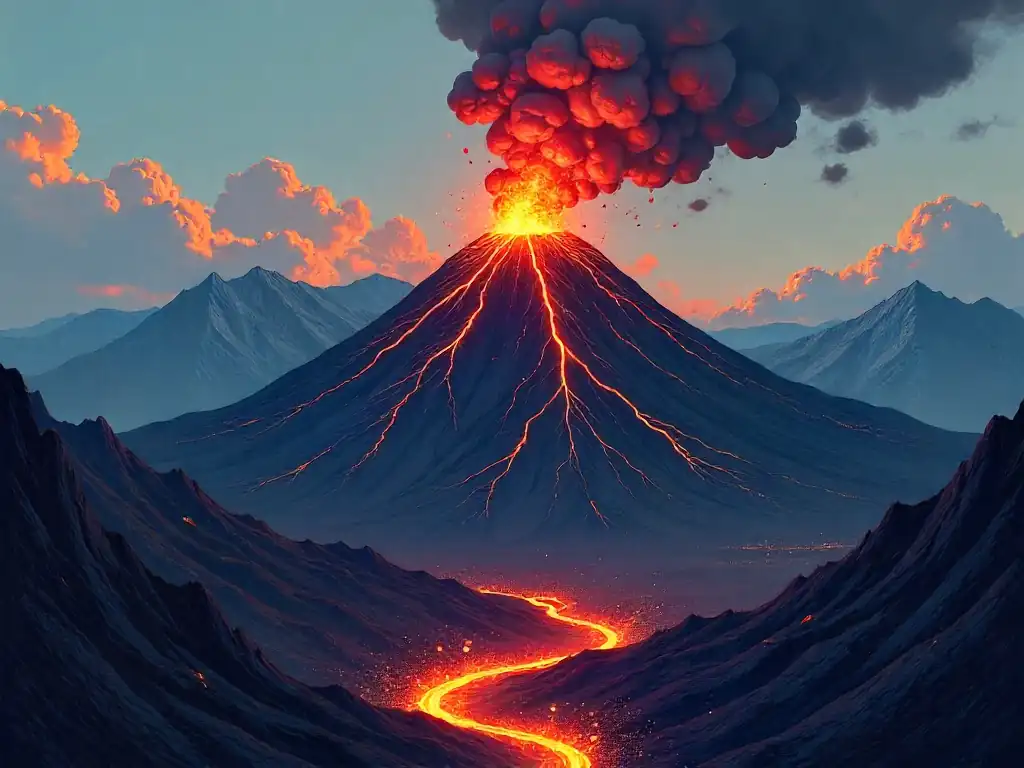
Core Differences Between Mud Volcanoes and Magma Volcanoes: A Head-to-Head Comparison
The fundamental difference between mud volcanoes and magma volcanoes lies in their origin and the materials they erupt. Magma volcanoes are driven by molten rock (magma) originating from deep within the Earth's mantle, a process fueled by intense heat and pressure. Mud volcanoes, conversely, are formed by the expulsion of mud, water, and gases from shallower subsurface sources within sedimentary basins, driven by pressure buildup from trapped fluids and gases, not magmatic heat. This distinction in origin leads to a cascade of differences in their composition, temperature, eruption styles, and geological settings.
In essence, magma volcanoes are a manifestation of Earth's internal heat engine and deep geological processes, while mud volcanoes are surface expressions of sedimentary basin dynamics and fluid flow in the upper crust. Understanding this core difference is crucial for appreciating the distinct nature of these two volcanic phenomena and for correctly interpreting their geological significance and potential hazards. The Mud Volcanoes vs Magma Volcanoes Comparison highlights two very different ways in which the Earth releases internal energy and materials to the surface.
Compositional Contrasts: Mud vs. Magma
The compositional differences between mud volcanoes and magma volcanoes are striking. Magma volcanoes primarily erupt molten rock, which solidifies into igneous rocks like basalt, andesite, and rhyolite. These rocks are rich in silicate minerals and have a complex chemical composition reflecting their mantle origin. They also release volcanic gases such as water vapor, carbon dioxide, sulfur dioxide, and hydrogen sulfide, which are derived from the magma itself.
Mud volcanoes, on the other hand, erupt a slurry of mud, water, and gases. The mud is composed of fine-grained sediments, primarily clay and silt, along with various minerals and organic matter depending on the source rocks. The dominant gas in mud volcano emissions is typically methane, often accompanied by other hydrocarbons and gases like carbon dioxide and nitrogen. Brine, or highly saline water, is also a common component. Therefore, the composition of magma volcanoes is dominated by silicate rocks and magmatic gases, while mud volcanoes are characterized by a mixture of mud, sedimentary gases (especially methane), and brine.
Temperature Variations: Cold Mud vs. Hot Magma
Temperature is another key differentiating factor between mud volcanoes and magma volcanoes. Magma erupted from magma volcanoes is extremely hot, typically ranging from 700°C to 1300°C (1292°F to 2372°F), depending on its composition. This high temperature is a direct consequence of the magma's origin from the Earth's mantle and its ascent from depth. Lava flows and pyroclastic flows from magma volcanoes can incinerate anything in their path due to their intense heat.
In contrast, mud erupted from mud volcanoes is generally cold or only slightly warmer than the surrounding surface temperature. Mud volcano temperatures are typically close to ambient temperatures, ranging from around 10°C to 30°C (50°F to 86°F), although slightly elevated temperatures up to 100°C (212°F) have been recorded in some cases, particularly in association with hydrothermal activity. The relatively low temperature of mud volcano emissions reflects their origin from shallower subsurface sources and the lack of direct magmatic heat input. This temperature difference is a crucial distinguishing feature when observing or studying these volcanic features in the field.
Eruption Styles Compared: Gentle Seepage vs. Violent Explosions
The eruption styles of mud volcanoes and magma volcanoes also differ significantly. Magma volcanoes exhibit a wide spectrum of eruption styles, ranging from effusive eruptions characterized by relatively gentle lava flows to highly explosive eruptions that produce ash clouds, pyroclastic flows, and volcanic bombs. Explosive eruptions are driven by the rapid expansion of gases within viscous magma and can be extremely violent and destructive. The 1980 eruption of Mount St. Helens is a stark example of the explosive power of magma volcanoes.
Mud volcanoes, in comparison, generally exhibit less violent eruptive behavior. Their eruptions range from gentle, continuous seepage of mud and gas to more energetic bursts of mud and gas. While mud volcano eruptions can be sudden and produce mud flows that can spread over considerable distances, they are not typically associated with the same level of explosivity and destructive power as the major eruptions of magma volcanoes.
The eruption intensity of mud volcanoes is primarily governed by the pressure of trapped fluids and gases, rather than the volatile content and viscosity of magma. However, it's important to note that some larger mud volcano eruptions can still be quite significant, creating large craters and mud flows that impact the surrounding environment.
Geological Settings: Where Mud and Magma Volcanoes Form
The geological settings in which mud volcanoes and magma volcanoes are found are distinct and reflect their different formation mechanisms. Magma volcanoes are predominantly associated with plate tectonic boundaries and mantle plumes (hotspots). They are common along convergent plate boundaries, where subduction leads to magma generation, forming volcanic arcs like the Andes and the Japanese archipelago.
They are also found at divergent plate boundaries, such as mid-ocean ridges and rift valleys, where plate separation allows magma to rise from the asthenosphere, creating features like Iceland and the East African Rift Valley. Hotspot volcanoes, like those in Hawaii, are formed by plumes of hot mantle material rising independently of plate boundaries.
Mud volcanoes, on the other hand, are typically found in sedimentary basins, particularly in tectonically active regions with high sedimentation rates and hydrocarbon deposits. They are often associated with compressional tectonic settings, such as fold-and-thrust belts and accretionary wedges, where sedimentary layers are deformed and overpressured fluids are generated.
Regions rich in oil and gas reserves, like Azerbaijan, Trinidad, and Indonesia, are known for their numerous mud volcanoes. Mud volcanoes are less directly linked to plate boundaries in the same way as magma volcanoes but are more closely tied to the geological processes within sedimentary basins and the migration of subsurface fluids.
Key Indicators: How to Identify Mud Volcanoes and Magma Volcanoes in the Field
Visual Cues: Distinguishing Mud Volcanoes from Magma Volcanoes
Distinguishing between mud volcanoes and magma volcanoes in the field relies on observing several key visual cues. Magma volcanoes are typically larger and more imposing landforms, often forming high, conical mountains with steep slopes. They may exhibit evidence of past lava flows, ash deposits, and volcanic craters. The presence of dark-colored volcanic rocks like basalt or andesite is a strong indicator of a magma volcano. Active magma volcanoes often display visible signs of high temperature, such as glowing lava, steam plumes, and fumaroles emitting hot gases.
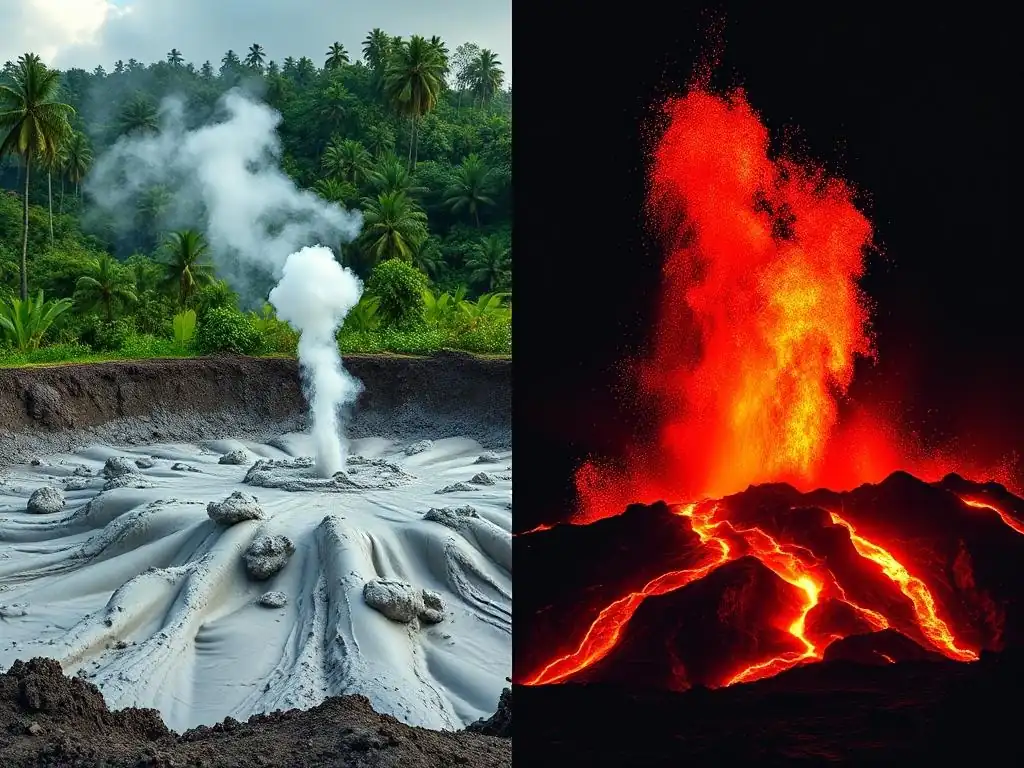
Mud volcanoes, in contrast, are generally smaller features, often resembling mounds or cones of mud. They are typically less prominent in the landscape and may be found in relatively flat or gently undulating terrain. The erupted material is visibly mud, often gray or brownish in color, and may be accompanied by bubbling water and gas emissions.
The surrounding area may be characterized by mud flows and mud pools. Vegetation is often sparse or absent around active mud volcanoes due to the continuous deposition of mud and gas emissions. A key visual cue is the absence of dark volcanic rocks and the presence of mud as the dominant surface material.
Geological Clues: Identifying the Underlying Processes
Beyond visual observation, geological clues can further help in differentiating mud volcanoes from magma volcanoes by revealing the underlying processes at play. The geological context is crucial. Magma volcanoes are typically located in areas associated with plate tectonic boundaries or hotspots, often characterized by regional volcanism and faulting related to magmatic activity. Geological maps may show the presence of volcanic rocks and tectonic features indicative of magmatic processes. Geophysical surveys, such as seismic studies, can reveal magma chambers and crustal structures associated with magma volcanoes.
Mud volcanoes, conversely, are often found in sedimentary basins, particularly in regions known for hydrocarbon exploration and production. Geological maps may indicate sedimentary formations, faults, and folds associated with sedimentary basin development. Subsurface data from well logs and seismic surveys can reveal the presence of overpressured zones, gas accumulations, and fault systems that facilitate fluid migration and mud volcano formation.
Geochemical analysis of erupted materials can also provide crucial insights. Magma volcano rocks will exhibit igneous compositions, while mud volcano mud and gases will show characteristics of sedimentary basin fluids and gases, including the presence of methane and other hydrocarbons. Analyzing the geological setting and subsurface data alongside surface observations provides a comprehensive approach to distinguishing between these two types of volcanoes.
Environmental Impact: Comparing the Effects of Mud and Magma Volcanoes
Environmental Impact of Magma Volcanoes: Ashfall, Gas Emissions, and Climate Change
Magma volcanoes exert a significant environmental impact on both local and global scales. Explosive eruptions can deposit vast quantities of volcanic ash over wide areas, disrupting ecosystems, damaging infrastructure, and impacting agriculture. Ashfall can contaminate water sources, cause respiratory problems, and lead to building collapses due to its weight. The 1991 eruption of Mount Pinatubo in the Philippines deposited ash over hundreds of kilometers, causing widespread disruption.
Volcanic gas emissions from magma volcanoes, particularly sulfur dioxide, can have a profound effect on the atmosphere and climate. Sulfur dioxide reacts with water vapor in the atmosphere to form sulfate aerosols, which can reflect sunlight back into space, leading to a temporary cooling effect on global climate. The Mount Pinatubo eruption is estimated to have caused a global cooling of about 0.5°C for several years.
Volcanic eruptions also release carbon dioxide, a greenhouse gas, but on geological timescales, the CO2 released by volcanoes is generally balanced by CO2 removed from the atmosphere through weathering processes. However, large eruptions can still contribute to short-term fluctuations in atmospheric CO2 levels. Furthermore, volcanic eruptions can trigger other environmental hazards such as lahars (volcanic mudflows), landslides, and tsunamis, further exacerbating their environmental impact.
Environmental Impact of Mud Volcanoes: Land Deformation and Methane Release
Mud volcanoes, while generally less destructive than magma volcanoes, also have notable environmental impacts, primarily related to land deformation and gas emissions. Mud volcano eruptions can cause significant land deformation, including subsidence, uplift, and the formation of new mud flows and craters. Large mud flows can bury vegetation, alter drainage patterns, and damage infrastructure. The 2006 eruption of the Lusi mud volcano in Indonesia caused widespread land subsidence and displacement, forcing the evacuation of thousands of people and inundating villages.
The release of gases from mud volcanoes, particularly methane, is a significant environmental concern. Methane is a potent greenhouse gas, with a global warming potential much higher than carbon dioxide over a shorter timeframe. Mud volcanoes are estimated to be a substantial natural source of atmospheric methane, contributing to global greenhouse gas emissions and climate change.
Studies suggest that mud volcanoes globally release millions of tons of methane annually. In addition to methane, mud volcanoes can also emit other gases like hydrogen sulfide, which can be toxic and contribute to air pollution. The environmental impact of mud volcanoes is therefore focused on land surface changes and their contribution to greenhouse gas emissions, particularly methane.
Global Distribution: Mapping the Locations of Mud and Magma Volcanoes Worldwide
Where to Find Magma Volcanoes: Hotspots and Plate Boundaries
Magma volcanoes are not randomly distributed across the globe; their locations are closely tied to specific geological settings, primarily plate boundaries and hotspots. The Pacific Ring of Fire is a prime example of a region with a high concentration of magma volcanoes.
This zone encircles the Pacific Ocean and is characterized by numerous convergent plate boundaries where subduction occurs, leading to the formation of volcanic arcs like the Andes Mountains in South America, the Cascade Range in North America, and the volcanic islands of Japan, the Philippines, and Indonesia. These regions are prone to frequent volcanic eruptions and earthquakes due to the intense tectonic activity.
Divergent plate boundaries, such as the Mid-Atlantic Ridge and the East African Rift Valley, are also sites of magma volcanism. Iceland, situated on the Mid-Atlantic Ridge, is a volcanically active island formed by the upwelling of magma along this spreading plate boundary. Hotspot volcanoes, like the Hawaiian Islands and the Galapagos Islands, are found in intraplate settings, away from plate boundaries.
These volcanoes are believed to be formed by mantle plumes, columns of hot material rising from deep within the Earth's mantle. Magma volcanoes are therefore concentrated in specific zones related to plate tectonics and mantle dynamics, making their global distribution predictable based on our understanding of these geological processes.
Where to Find Mud Volcanoes: Sedimentary Basins and Tectonic Zones
Mud volcanoes exhibit a different global distribution pattern compared to magma volcanoes, primarily concentrated in sedimentary basins, especially those located in tectonically active regions. The circum-Mediterranean region, including countries like Italy, Greece, Romania, and Azerbaijan, is known for its numerous mud volcanoes. Azerbaijan, in particular, is estimated to have the highest concentration of mud volcanoes in the world, with hundreds of active and dormant features. These mud volcanoes are associated with the oil and gas-rich sedimentary basins of the Caspian Sea region.
Other regions with significant mud volcano occurrences include Trinidad and Tobago in the Caribbean, Indonesia, Pakistan, Iran, Myanmar, and Taiwan. These areas are characterized by thick sedimentary sequences, active tectonics, and often the presence of hydrocarbon deposits. Mud volcanoes are commonly found in compressional tectonic settings, such as fold-and-thrust belts and accretionary wedges, where sedimentary layers are deformed and overpressured fluids are generated.
Their distribution is therefore closely linked to the global distribution of sedimentary basins and tectonic zones that promote fluid flow and pressure buildup within the Earth's crust. Unlike magma volcanoes, mud volcanoes are not directly associated with plate boundaries in the same way but are more related to the geological processes within sedimentary basins.
Why Study Both Types of Volcanoes? Insights into Earth's Processes
Understanding Earth's Dynamics Through Volcano Research
Studying both mud volcanoes and magma volcanoes is crucial for gaining a comprehensive understanding of Earth's dynamic processes. While they differ significantly in origin and mechanism, both types of volcanoes provide valuable insights into the planet's interior and its surface evolution. Magma volcanoes are direct windows into the Earth's mantle, revealing information about mantle composition, temperature, and dynamics.
Their eruptions are fundamental processes in plate tectonics, contributing to crustal growth, continental drift, and the cycling of elements between the Earth's interior and atmosphere. The study of magma volcanoes helps us understand the forces that shape continents, create ocean basins, and drive global geological cycles.
Mud volcanoes, on the other hand, offer a unique perspective on subsurface fluid flow, sedimentary basin evolution, and hydrocarbon systems. They act as natural conduits for fluids and gases from deep sedimentary formations, allowing us to sample and analyze materials from depths that are often inaccessible by direct drilling.
Studying mud volcanoes helps us understand the processes of gas generation, migration, and release within sedimentary basins, which is crucial for both resource exploration and environmental management. By investigating both magma and mud volcanoes, we gain a more holistic view of Earth's internal processes, from the deep mantle to the shallow crust, and their interconnectedness in shaping the planet we live on.
The Significance of Studying Mud Volcanoes: Understanding Subsurface Fluid Flow
The study of mud volcanoes is particularly significant for understanding subsurface fluid flow in sedimentary basins. Mud volcanoes are essentially natural laboratories for investigating how fluids and gases migrate through the Earth's crust. They provide direct evidence of overpressure conditions, fluid pathways, and the composition of deep subsurface fluids. Analyzing the erupted materials – mud, water, and gases – allows scientists to characterize the geochemical properties of subsurface reservoirs and track the movement of fluids along geological faults and fractures.
Understanding subsurface fluid flow is critical for various applications, including hydrocarbon exploration and production, geothermal energy development, and groundwater management. Mud volcanoes can provide valuable clues about the location and characteristics of oil and gas reservoirs, as well as the potential for geopressured geothermal resources. They also shed light on the processes of contaminant transport and the potential for natural hazards related to fluid release, such as landslides and subsidence.
Furthermore, the study of mud volcano gas emissions, particularly methane, is important for understanding the global carbon cycle and the role of natural gas seeps in climate change. Mud volcanoes, therefore, are invaluable natural features for advancing our knowledge of subsurface hydrology and fluid dynamics in sedimentary basins.
The Significance of Studying Magma Volcanoes: Understanding Mantle Dynamics
The study of magma volcanoes is paramount for understanding mantle dynamics and the deep Earth processes that drive plate tectonics and volcanism. Magma erupted from magma volcanoes originates from the Earth's mantle, providing direct samples of this otherwise inaccessible region. Analyzing the composition of volcanic rocks and gases allows geologists to infer the composition and physical conditions of the mantle, including its temperature, pressure, and chemical makeup. Different types of magma volcanoes, such as mid-ocean ridge basalts, island arc volcanoes, and hotspot volcanoes, sample different parts of the mantle and provide insights into its heterogeneity and complex dynamics.
Magma volcanoes are also crucial for studying the processes of magma generation, ascent, and eruption. Monitoring volcanic activity, including seismic activity, ground deformation, and gas emissions, helps scientists understand the pre-eruptive processes and improve volcanic hazard assessments. The study of magma volcanoes is essential for understanding the fundamental forces that shape our planet, from the movement of continents to the formation of mountain ranges and ocean basins.
It provides insights into the Earth's thermal evolution, the cycling of elements between the mantle and crust, and the long-term geological history of our planet. Magma volcanoes are, therefore, key to unraveling the mysteries of the Earth's deep interior and its dynamic evolution.
Conclusion: Appreciating the Unique Nature of Mud and Magma Volcanoes
While both mud volcanoes and magma volcanoes share the name "volcano," they are fundamentally different geological phenomena. Magma volcanoes are born from the Earth's fiery depths, driven by molten rock and intense heat, shaping landscapes with lava flows, ash clouds, and pyroclastic fury. Mud volcanoes, in contrast, emerge from the Earth's sedimentary layers, propelled by pressurized mud, water, and gases, offering a gentler, yet equally informative, window into subsurface processes. The Mud Volcanoes vs Magma Volcanoes Comparison reveals a fascinating dichotomy within the realm of volcanism.
Appreciating the unique nature of both types of volcanoes is essential for a complete understanding of Earth's dynamic systems. Magma volcanoes reveal the workings of the deep mantle and the forces of plate tectonics, while mud volcanoes illuminate the complexities of sedimentary basins and subsurface fluid flow. Both contribute significantly to shaping our planet's surface, influencing its environment, and providing valuable resources. Studying these contrasting volcanic features enriches our knowledge of Earth science and underscores the diverse and powerful ways in which our planet expresses its internal energy.
Frequently Asked Questions
What is the fundamental difference between a mud volcano and a magma volcano?
The key difference lies in the material ejected. Mud volcanoes primarily erupt mud, clay, and water, while magma volcanoes erupt molten rock or magma. This drastically affects the eruption style and composition of the volcano.
Are mud volcanoes and magma volcanoes formed by the same geological processes?
No, they are not. Magma volcanoes are formed by plate tectonics and the movement of molten rock. Mud volcanoes are typically formed by hydrothermal activity and the release of subsurface fluids and gases.
What is the typical composition of the "mud" erupted from a mud volcano?
The mud erupted from mud volcanoes is a mixture of water, clay, silt, and various gases, including methane. It can also contain oil and other hydrocarbons.
Are mud volcanoes as dangerous as magma volcanoes?
While mud volcanoes can pose hazards like landslides and gas releases, they are generally less dangerous than magma volcanoes. Magma volcanoes are associated with explosive eruptions and lava flows, which can cause significant destruction.
Can mud volcanoes provide insights into geological processes?
Yes, mud volcanoes can provide valuable insights into subsurface geological activity, including hydrocarbon reservoirs and geothermal systems. They can act as natural vents for fluids and gases from deep within the Earth.
Final Reflection: Unearthing Earth's Fiery Secrets
The exploration of mud volcanoes and magma volcanoes, as we've seen, reveals a fascinating dichotomy in Earth's geological processes. Understanding these differences is more crucial than ever, as it allows us to better interpret geological formations, predict potential hazards, and gain a deeper appreciation for the dynamic forces shaping our planet. The contrast between the slow, sedimentary eruptions of mud volcanoes and the explosive, molten fury of their magma-fueled counterparts highlights the diverse ways in which the Earth releases internal pressure.
The distinction between these volcanic forms extends beyond mere geological curiosity; it influences our understanding of resource exploration, environmental impact, and even the potential for life on other planets. My own fascination with these geological wonders stems from the realization that even seemingly inert landscapes hold secrets waiting to be unlocked. The Earth is a book, and each geological formation is a page.
This quote resonates deeply, reminding us that by studying these natural phenomena, we are essentially reading the Earth's history and anticipating its future.
As we conclude this comparison, I invite you to consider the implications of this knowledge in your own life. What other seemingly disparate elements in the world around you might hold hidden connections and surprising revelations? Let the contrasting nature of mud volcanoes and magma volcanoes inspire you to delve deeper, question assumptions, and appreciate the intricate beauty and power of the natural world. Embrace curiosity, and you, too, can unearth Earth's fiery secrets.
Unearth Your Inner Volcanologist!
Thanks for exploring the fascinating world of volcanoes with us! We hope you've gained a newfound appreciation for the differences between mud and magma volcanoes. Ready to take your knowledge further?
Here are a few ways to continue your volcanic adventure:
- Share a photo on social media of a local geological feature that reminds you of a mud or magma volcano, using #VolcanoExplorers. Let's build a virtual volcanic landscape together!
- Dive deeper into the science by researching the geological processes that create mud volcanoes in a region that interests you.
- Subscribe to our Volcano Explorers newsletter for exclusive content, eruption updates, and future exploration opportunities.
What surprising geological formation will you explore next? Share your thoughts in the comments below!