From Mantle Plume to Volcano: The Birth Story of a Shield Volcano
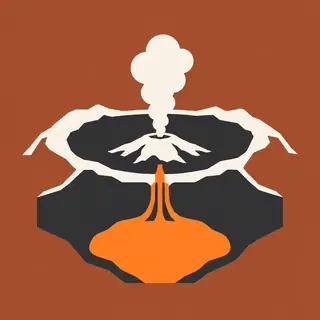
Uncover the secrets of shield volcano formation! VolcanoExplorers.org reveals the journey from deep mantle plumes to the majestic volcanic landscapes we see…
Read article
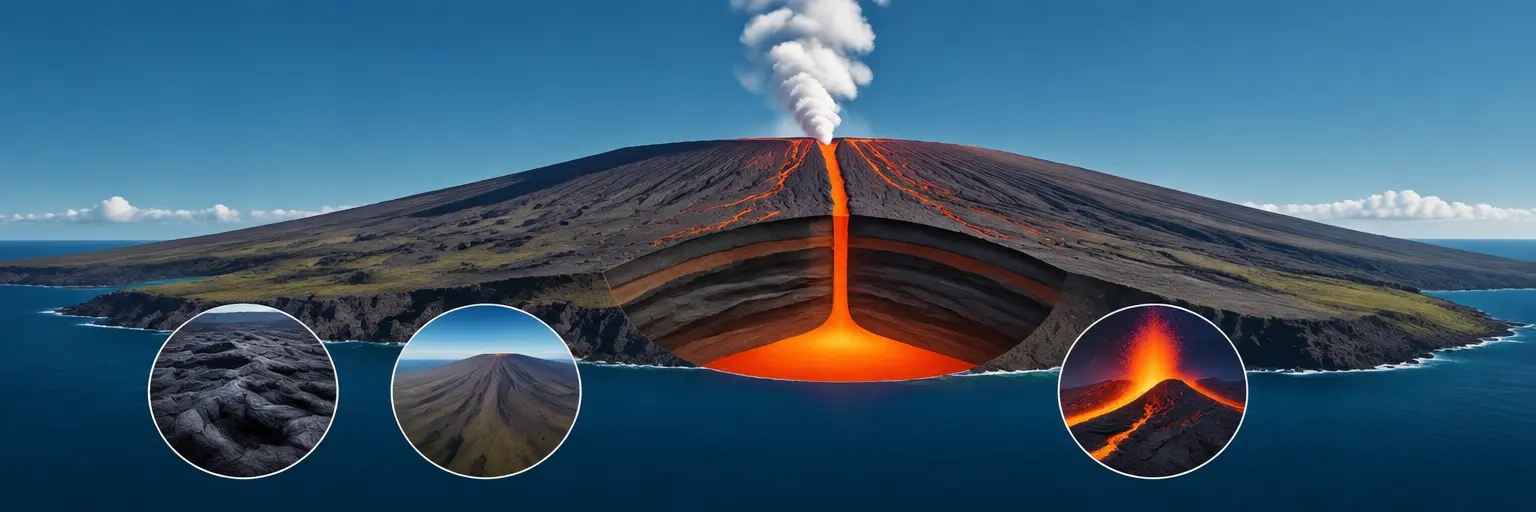
Discover the colossal beauty of shield volcanoes — Earth’s largest and most gentle giants 🌋. Unlike their explosive cousins, these broad, dome-shaped mountains are built by low-viscosity basaltic lava that flows in thin, fluid sheets, creating their iconic, sloping profiles that resemble a warrior’s shield. On this page, we unpack their defining characteristics, from their calm, effusive eruptions to their rift zones and summit calderas, and explore famous examples like Hawaii’s Mauna Loa and Kīlauea, along with Iceland’s Eyjafjallajökull. Perfect for geology enthusiasts, students, or curious travelers, you’ll learn how these volcanic titans form over hotspots and tectonic fissures, why their eruptions are less deadly but still hazardous, and where to see them in person. Whether you’re researching volcano types or planning a bucket-list trip, this guide offers clear, science-backed insights into the world’s most massive — and surprisingly peaceful — volcanic landforms. Dive in to understand what truly sets shield volcanoes apart and why they dominate the landscape of our planet’s oceanic islands and continental rifts.
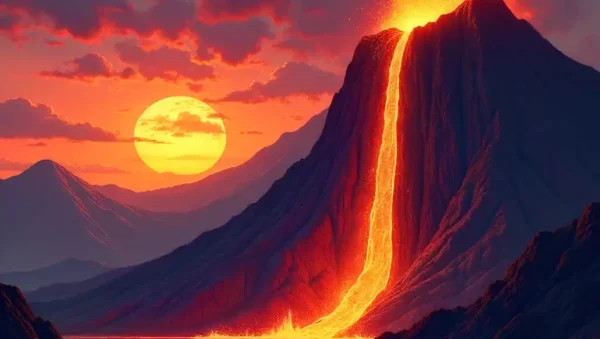
Uncover the secrets of shield volcano formation! VolcanoExplorers.org reveals the journey from deep mantle plumes to the majestic volcanic landscapes we see…
Read article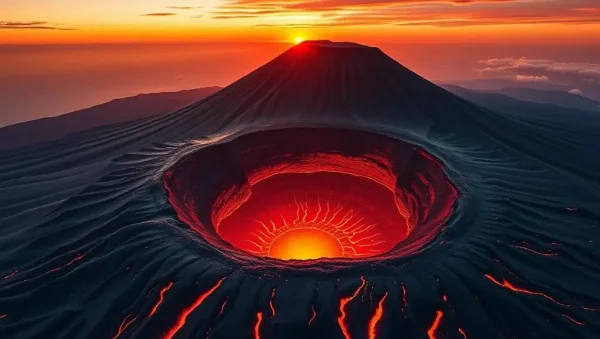
Uncover the secrets of shield volcano anatomy explained! VolcanoExplorers.org reveals the inner workings of these majestic formations, from summit caldera to magma…
Read article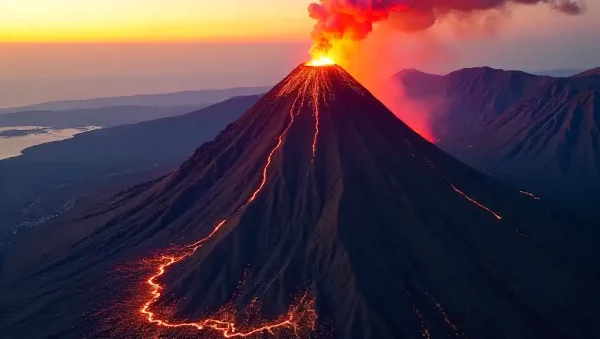
Discover the defining Characteristics of shield volcanoes—their gentle slopes and vast size—on VolcanoExplorers.org. Learn how these majestic formations are built by countless…
Read article
VolcanoExplorers.org reveals the thrilling possibility of shield volcanoes beyond Earth. Explore the science behind these majestic formations, both terrestrial and potentially extraterrestrial,…
Read article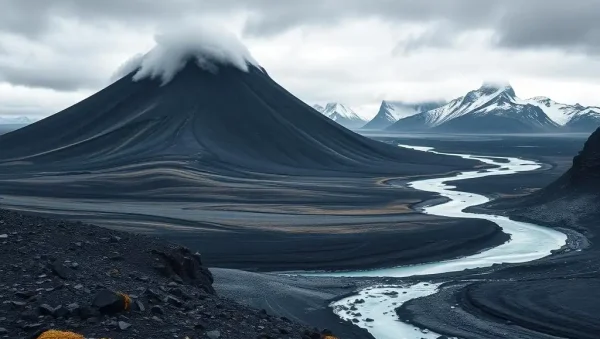
Explore Iceland's dramatic volcanic shield formations on VolcanoExplorers.org. Discover how fire and ice sculpted this unique landscape, learn about volcanic processes, and…
Read articleWelcome to Volcano Explorers, where we dive deep into the world of volcano types and features. Among the most fascinating yet often misunderstood geological formations are shield volcanoes. Unlike their explosive counterparts, shield volcanoes are vast, gently sloping giants built by successive, fluid lava flows. In this dedicated subcategory, we unravel their unique characteristics, from their broad, dome-like shapes to their role in shaping planetary landscapes. Whether you are a student, an enthusiast, or a traveler, this page offers an in-depth, SEO-rich guide to understanding these incredible natural structures, complete with real-world examples and expert insights.
Shield volcanoes are defined by their low-profile, convex shape, resembling a warrior’s shield lying flat on the ground. This morphology results from the eruption of low-viscosity basaltic lava, which flows easily and spreads over vast distances before cooling. Key characteristics include gentle slopes of just 2–10 degrees, a summit caldera often formed by collapse, and a continuous, non-explosive eruption style. Unlike stratovolcanoes that build steep cones with alternating layers, shield volcanoes grow incrementally through countless thin lava flows. Their structure is primarily composed of tholeiitic basalt, which contributes to their wide, expansive base, sometimes spanning over 100 kilometers. This unique architecture allows them to store and release enormous amounts of heat, making them subjects of intense volcanological study.
Another defining feature is the type of eruption—generally Hawaiian-type eruptions, which produce spectacular lava fountains and rivers rather than violent ash explosions. The lava’s low gas content and high temperature (around 1100–1200°C) enable it to travel quickly, creating pahoehoe (smooth, ropy) and aa (rough, blocky) surfaces. Shield volcanoes also exhibit extensive rift zones—linear fractures that radiate from the summit—through which lava escapes laterally. These features, combined with their immense size, distinguish them clearly from other volcanic types. For example, the Hawaiian Islands are a prime showcase, where Mauna Loa and Kilauea display perfect shield geometry, offering researchers and visitors a living laboratory to observe these processes in action.
When discussing shield volcanoes, Mauna Loa in Hawaii immediately comes to mind—the largest volcano on Earth by volume and area. Rising over 9 kilometers from the ocean floor, its mass dwarfs Mount Everest if measured from its base. Its gentle slopes are punctuated by a summit caldera called Mokuaweoweo, and its eruptions have historically threatened nearby towns while also creating new land. Another Hawaiian giant, Kilauea, is among the world’s most active volcanoes, continuously erupting since 1983. Its ongoing activity has produced dramatic lava lakes and coastal deltas, attracting scientists and tourists alike. Beyond Hawaii, Iceland’s Skjaldbreiður and the massive Bárðarbunga system exemplify shield volcanoes in a divergent plate boundary setting, where hot plumes interact with the Mid-Atlantic Ridge.
Other notable examples include Mount Wrangell in Alaska, one of the largest shield volcanoes in North America, and Erta Ale in Ethiopia, famous for its persistent lava lake. In the Pacific Northwest, Newberry Volcano in Oregon showcases a shield’s broad base with a caldera housing two crater lakes. Even more intriguing are Olympus Mons on Mars—the tallest volcano in the solar system—which is a shield volcano, proving that these formations are not exclusive to Earth. By studying these diverse examples, we understand how magma composition, tectonic settings, and eruption history shape each shield volcano’s identity. This knowledge aids in hazard assessment, geothermal energy exploration, and even in interpreting volcanic landscapes on other planets.
The formation of a shield volcano begins deep within the Earth’s mantle, where mantle plumes—columns of hot, buoyant rock—rise toward the crust. As the plume nears the surface, decreased pressure triggers partial melting, producing basaltic magma with low silica content (about 45–52%). This magma is less viscous than andesitic or rhyolitic melts, meaning it flows easily and releases gas readily. When it reaches the surface through fissures or a central vent, it spreads out laterally, building the characteristic shield shape over tens of thousands to millions of years. The rate of eruption is typically low, but the volume is immense, with individual eruptions lasting for years or even decades.
The tectonic setting plays a crucial role. In hotspot environments like Hawaii, the Pacific Plate moves slowly over a fixed plume, creating a chain of shield volcanoes. In divergent boundaries like Iceland, mantle upwelling is continuous, sustaining frequent eruptions. The magma’s low gas content means effusive eruptions dominate, but occasional explosive events can occur if water interacts with lava or if gas accumulates. Over time, these volcanoes can reach colossal heights—Mauna Kea, currently dormant, is over 10,000 meters from base to summit. Understanding this formation process is vital for predicting eruption behavior, assessing volcanic hazards, and locating geothermal resources. Recent studies using seismic imaging and GPS data have refined our models, revealing how magma chambers feed these giants and why some become unstable.
Shield volcanoes are not evenly distributed; they are concentrated in intraplate hotspots and oceanic rift zones. The Pacific Ocean hosts the most famous clusters, including the Hawaiian–Emperor seamount chain, which stretches over 6,000 kilometers. The Galápagos Islands are another hotspot location, with Wolf and Fernandina volcanoes showing active shield morphology. In the Atlantic, Iceland sits atop the Mid-Atlantic Ridge, featuring hundreds of shield volcanoes, many hidden under ice caps. East Africa’s Afar Triangle is a continental rift where shield volcanoes like Erta Ale and Ardoukôba emerge, offering rare examples of shield formation on continental crust. Additionally, Antarctica hosts shield volcanoes like Mount Erebus, which has a persistent lava lake, proving activity in extreme climates.
Even excluding Earth, shield volcanoes dominate volcanic landscapes on Mars and Venus. Olympus Mons, with its width exceeding 600 kilometers, is the largest known shield volcano. Its formation required relatively stationary plates, which allowed lava to pile up in one place. On Venus, more than 1,000 shield volcanoes have been identified from radar images, indicating a planet-wide process. Back on Earth, these spatial patterns are essential for geological mapping, disaster planning, and even tourism. Nations like the United States, Italy (Mount Etna, often classified as a shield-stratovolcano hybrid), and New Zealand monitor these sites closely. For travelers, visiting a shield volcano offers a rare chance to witness primordial Earth processes, from glowing lava tubes to steam vents, all within a relatively safe, non-explosive environment.
Despite their destructive potential, shield volcanoes create incredibly fertile soils. Basaltic lava weathers rapidly in humid climates, releasing minerals like potassium and phosphorus, which nourish lush rainforests. The Hawaiian archipelago is a prime example: the older, deeply weathered islands support diverse flora, while newer lava flows remain barren for centuries. This soil fertility has shaped human settlement and agriculture, with volcanic slopes supporting coffee, macadamia nuts, and tropical fruits. Additionally, the porous nature of lava rock creates unique aquifers, storing freshwater that is essential for island communities. However, eruptions can devastate ecosystems by covering vast areas with new flows, yet life often returns quickly through pioneer species like ferns and lichens, followed by shrubs and trees.
The geothermal energy associated with shield volcanoes is another environmental benefit, with Iceland harnessing steam from volcanic heat to generate electricity and heat homes. This renewable resource reduces reliance on fossil fuels. Conversely, volcanic gases such as sulfur dioxide and carbon dioxide can affect air quality and contribute to acid rain, but in shield volcanoes, emissions are generally lower than in explosive types. Long-term ecosystem dynamics are also fascinating—lava tubes create habitats for unique cave-adapted species, and coastal lava deltas expand land, creating new niches. For conservationists, shield volcanic regions often contain endemic species found nowhere else, making them biodiversity hotspots. Understanding these impacts is crucial for sustainable development, especially as climate change alters precipitation and vegetation patterns in volcanic regions.
Visiting a shield volcano can be a life-changing experience, but it requires respect for the landscape. The main hazards include lava flows, which can advance unpredictably, and volcanic gases like sulfur dioxide that are toxic at high concentrations. Always check local advisories and park regulations—for instance, the USGS provides real-time updates for Hawaiian volcanoes, including threat levels and open zones. When hiking, stay on marked trails, carry a gas mask if advisable, and wear sturdy footwear as lavas can be sharp and unstable. Night viewing of lava lakes is spectacular, but it demands preparation: bring headlamps, extra batteries, and plenty of water. Observing from a safe distance, ideally at designated viewpoints, is the best way to absorb the majesty without risking life.
For those interested in scientific observation, shield volcanoes are excellent field laboratories. Amateur volcanologists can participate in citizen science programs, such as photo monitoring of eruption plumes or collecting gas samples (with proper training). Universities and geological surveys often offer guided lectures or field trips to sites like Kilauea’s calm down areas. Ahead of any visit, research the volcano’s current activity status: an “alert level” system exists, from green (normal) to red (eruption imminent). Always have a contingency plan and know evacuation routes, especially if staying near the coast where lava deltas could collapse. By following these safety protocols, you can enjoy and study these natural wonders while preserving their integrity for future generations.
Shield volcanoes have gentle slopes, broad bases, and are built by fluid basaltic lava flows, leading to effusive, non-explosive eruptions. Stratovolcanoes, like Mount Fuji, are steep, symmetrical cones made of alternating layers of lava and ash, producing highly explosive eruptions due to more viscous, gas-rich magma. This difference in composition and eruption style determines their shapes and hazard profiles.
Yes, although rare, shield volcanoes can produce explosive eruptions, especially when lava interacts with water, ice, or groundwater. This is called a phreatomagmatic eruption. Historical examples include Kilauea’s 1790 event and Iceland’s Eyjafjallajökull (though partly strato), which created ash plumes. However, such events are less frequent and smaller than stratovolcano eruptions, but still require hazard monitoring.
Mauna Loa in Hawaii is the largest active shield volcano by volume and area. It rises about 17 kilometers from its base on the ocean floor to its summit, and its volume is approximately 75,000 cubic kilometers. It last erupted in 2022, and its ongoing activity makes it a key site for volcanic research and monitoring.
Absolutely. Mars hosts Olympus Mons, the largest volcano in the solar system, which is a shield volcano due to its low-viscosity lava and lack of plate tectonics, allowing massive accumulation. Venus also has thousands of shield volcanoes, identified through radar imaging. These extraterrestrial shields provide crucial comparisons for understanding volcanic processes under different gravity and atmospheric conditions.
Shield volcanoes have shallow magma chambers and high heat flow near the surface, making them excellent sources of geothermal energy. For example, Iceland harnesses steam from volcanoes to produce electricity and heat. The porous basalt also allows for efficient water circulation, which can be extracted as hot brine or steam, offering a renewable, low-carbon energy source.