Discover the Power of Calderas and Supervolcanoes
Welcome to Calderas: Formation and Supervolcanoes—your gateway to understanding Earth's most colossal volcanic phenomena. While classic cone-shaped volcanoes capture our imagination, calderas are the quiet giants that can alter global climate and reshape continents. Here, you’ll explore how these massive depressions form, what makes a volcano a supervolcano, and why scientists monitor them with such urgency. Whether you’re a geology enthusiast, a student, or a curious traveler, this section demystifies the science behind explosive eruptions that dwarf anything in recorded history.
🌋 How Calderas Form: From Collapse to Crater
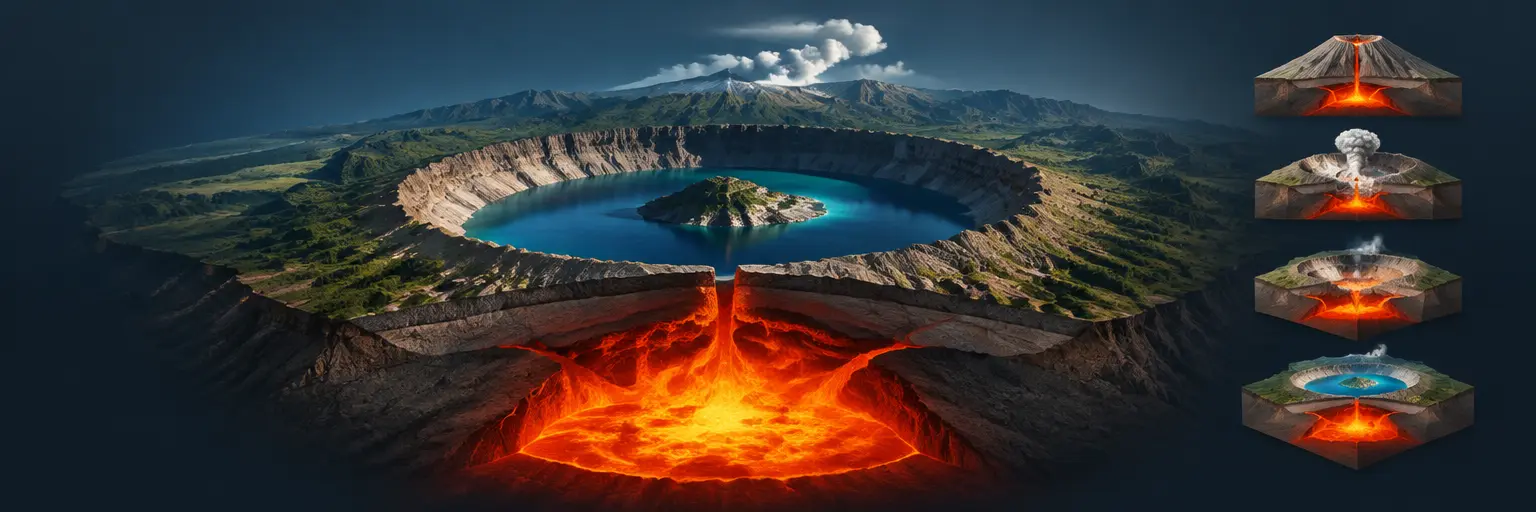
A caldera isn’t a crater from a single blast—it’s a collapse feature that occurs when a volcano empties its magma chamber so rapidly that the overlying ground sinks. During a massive eruption, lava and ash shoot out at rates of thousands of cubic meters per second, leaving a void beneath. Without support, the rock above fractures and drops, creating a bowl-shaped depression that can span 10 to 60 kilometers across. This process often triggers secondary eruptions along ring fractures, adding complexity to the landscape.
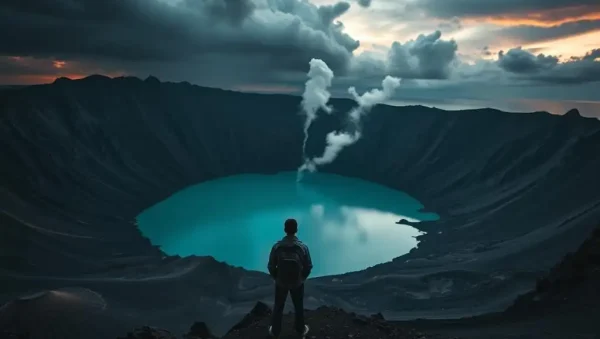
For visitors, understanding this mechanism is key to spotting calderas in the wild. Unlike stratovolcanoes with steep peaks, calderas appear as flat-floored basins often filled with lakes, such as Crater Lake in Oregon. The formation sequence—pre-eruption swelling, explosive venting, then collapse—can repeat over millions of years, meaning a single caldera system can produce multiple catastrophic events. Our guides break down this lifecycle, helping you recognize the subtle signs of a restless caldera in satellite imagery and on foot.
🏔️ The Supervolcano Checklist: What Makes a Volcano “Super”?
Not every caldera is a supervolcano—the term is reserved for eruptions with a Volcanic Explosivity Index (VEI) of 8, ejecting more than 1,000 cubic kilometers of material. That’s over 100 times the volume of Mount St. Helens’ 1980 blast. Only about 20 known supervolcanoes exist, including Yellowstone, Toba, and Taupo. Their eruptions can inject sulfur aerosols into the stratosphere, causing global cooling, crop failures, and even short-term ice ages. The distinction matters because supervolcanoes don’t always erupt catastrophically; they simmer for millennia with hot springs and geysers.
This section provides a practical checklist for identifying supervolcano traits: large caldera size, high silica magma, and a history of repeated giant eruptions. We also debunk common myths—like that Yellowstone is overdue for an imminent eruption—by explaining the geological timeframes involved. For travelers, this knowledge transforms a visit to Yellowstone from a scenic stop into a lesson in planetary power. You’ll leave with the confidence to explain why “super” refers to scale, not speed, and what experts actually watch for.
🔍 Famous Calderas You Can Visit or Study
Some of the world’s most breathtaking landscapes are calderas, offering unique tourism and research opportunities. Yellowstone Caldera in the USA is the most famous, spanning 64 kilometers and hosting half of the world’s geysers. Lake Toba in Indonesia is the largest volcanic lake on Earth, formed 74,000 years ago by an eruption that may have caused a human population bottleneck. Santorini, Greece, is another caldera—its eruption around 1600 BCE destroyed the Minoan civilization and inspired the Atlantis legend. Each site offers accessible trails, museums, and interpretive centers.
For those seeking off-the-beaten-path destinations, we cover Ngorongoro Crater in Tanzania, a caldera that’s now a wildlife haven, and Kilauea’s caldera in Hawaii, which showcases active volcanic activity. Our profiles include practical advice on viewing platforms, safety rules, and the best seasons to visit. A special emphasis is placed on how these sites balance tourism with scientific monitoring, so you can explore responsibly while appreciating the dynamic forces still shaping these depressions.
📡 Monitoring Supervolcanoes: How Scientists Predict the Next Big One
Calderas are notoriously unpredictable, but modern monitoring has transformed our ability to detect early warning signs. Volcanologists use seismometers to track ground vibrations, GPS stations to measure ground deformation, and gas sensors to detect rising sulfur dioxide. At Yellowstone, for example, ground swelling and small earthquake swarms are common—but statistically, the chance of a VEI-8 eruption in the next century is less than 0.1%. Researchers now model magma chamber reservoirs and use computer simulations to understand how pressure builds and releases.
Our content explains the technology in plain language, including how satellite radar (InSAR) detects millimeter-scale uplift from space. We also discuss the “supervolcano early warning system”—a global network that shares data in real time. This isn’t just academic; it helps local governments prepare response plans, and it reassures residents that they’re not helpless. Whether you’re a student seeking a career in volcanology or a resident near a caldera, you’ll find practical insights into what to expect from monitoring agencies and how to interpret alerts.
🌍 The Global Impact of Caldera Eruptions on Climate and History
Supervolcano eruptions don’t just reshape their immediate surroundings—they alter the planet. The Toba eruption (74,000 years ago) released enough ash to create a volcanic winter that may have lasted six years, potentially reducing human populations to a few thousand. The Taupo eruption (around 230 CE) in New Zealand darkened skies over Rome and China. Such events inject sulfuric acid aerosols into the stratosphere, reflecting sunlight and cooling global temperatures by 3–5°C for several years. This affects agriculture, ocean currents, and even political stability, as crop failures can trigger famines and migrations.
Our deep-dive articles connect geology with history and social science, showing how ancient civilizations interpreted these cataclysms as divine punishment. We also explore the long-term recovery: ecosystems rebound, ash soils become fertile, and new lakes form. By understanding past events, climate models improve, aiding disaster preparedness. This section is perfect for readers who want to grasp the “big picture” of why calderas matter beyond their local landforms.
Frequently Asked Questions
What is the difference between a crater and a caldera?
A crater is a small, bowl-shaped pit at the summit of a volcano, usually less than 1 kilometer wide, formed by explosive activity. A caldera is much larger, often exceeding 10 kilometers, and forms when the ground collapses into an emptied magma chamber. Craters are typically active vents, while calderas may host multiple vents and lakes.
Can a supervolcano eruption happen without warning?
No—there are always precursors. Scientists monitor seismic swarms, ground uplift, and gas emissions for months to years before a major eruption. However, the exact timing of a VEI-8 event is unpredictable, and warning signs may be subtle. That said, no supervolcano is currently showing signs of imminent eruption.
Where is the best place to see a caldera in the United States?
Yellowstone National Park is the most accessible and famous, with its massive caldera visible from drives like the Grand Loop. Crater Lake in Oregon offers a stunning blue lake inside a collapsed caldera. Long Valley Caldera in California is another well-monitored site with interpretive trails.
What are the chances of a supervolcano eruption in my lifetime?
Very low. The global recurrence rate is roughly one VEI-8 eruption every 50,000 years. Current estimates suggest less than a 0.1% chance of such an event within the next century at any specific known supervolcano. Monitoring systems add an extra layer of safety, but there’s no cause for alarm.
How do calderas affect the surrounding wildlife and vegetation?
After an eruption, the immediate area is barren, but over centuries, calderas become unique ecosystems. Ash-rich soils are highly fertile, and lakes support diverse aquatic life. For example, Yellowstone’s caldera hosts hydrothermal ecosystems with thermophilic bacteria, while Ngorongoro Crater is a dense wildlife habitat. Recovery depends on climate and precipitation.