Lava Domes: When Volcanoes Grow From Within
Welcome to our focused guide on lava domes, a fascinating subcategory of volcano types where thick, viscous lava builds up gradually, creating bulbous, steep-sided mounds rather than explosive eruptions. These formations are among the most intriguing yet unpredictable volcanic features, often forming inside craters or on the flanks of larger volcanoes. Here, we’ll explore how they grow, why they behave so differently from other volcanoes, and the unique hazards they pose, all while helping you understand the science that volcanologists use to monitor them.
🔍 What Exactly Defines a Lava Dome?
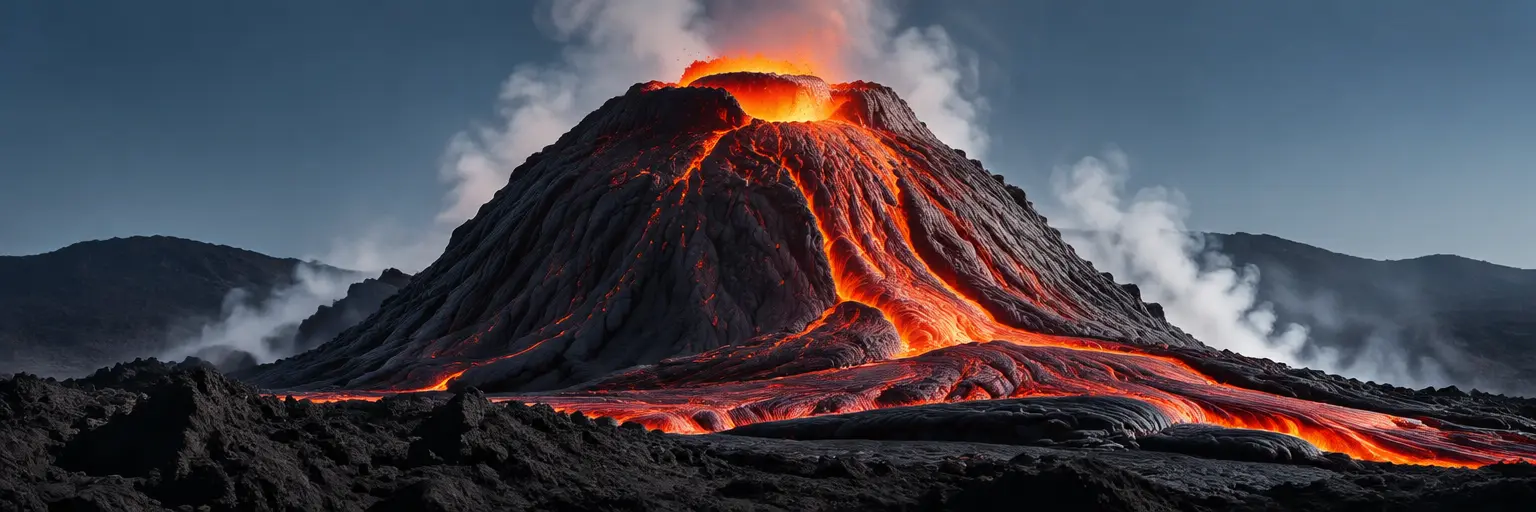
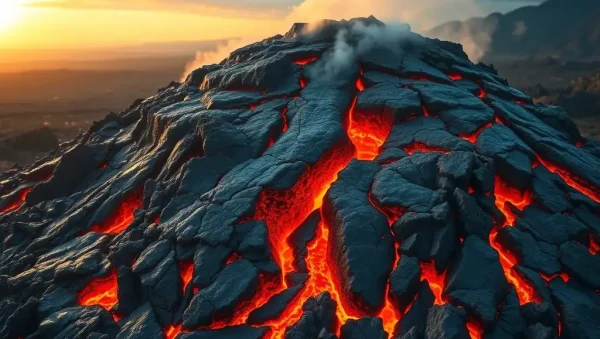
Unlike shield volcanoes with their runny basalt flows, lava domes are formed from highly viscous lava—typically dacite, rhyolite, or andesite—that is too thick to flow far. As magma pushes up from below, it piles up around the vent, cooling and hardening into a steep-sided, often lobate structure. The dome’s shape can vary from a smooth, rounded mound to a jagged, spiny mass, depending on the lava’s composition and the rate of extrusion.
Growth is rarely continuous; it often occurs in episodic pulses triggered by increased magma pressure. These domes can also collapse or explode after becoming unstable. Typically, they are found within the craters of stratovolcanoes, but they can also form on the flanks or even as isolated features. Understanding this process is key to predicting hazards, as even a seemingly quiet dome can lead to deadly pyroclastic flows.
🌋 The Mechanics of Dome Growth: Swelling and Spines
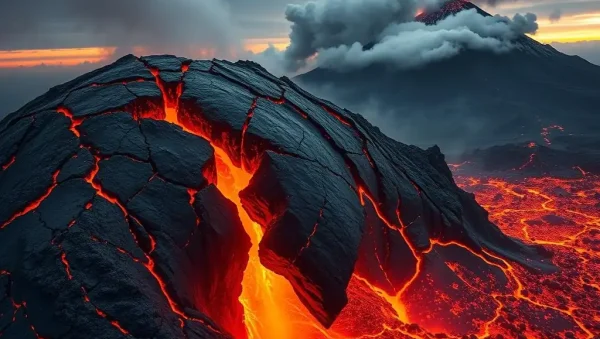
Dome growth is a slow, yet powerful process. When magma ascends, it can inflate the dome from within, causing the outer surface to crack and crumble into talus slopes. Sometimes, a volcanic spine—a solid, vertical column of lava—is pushed upward, like a giant tooth. This occurred dramatically at Mount St. Helens in the 1980s, where spines rose hundreds of meters before breaking apart.
Because viscous lava doesn’t degas easily, pressure builds internally. This can lead to explosive dome destruction, where the entire structure is blasted apart. Alternatively, a dome collapse—where a portion of the over-steepened mass breaks off—is common. These collapses produce avalanches of hot rock and gas, known as pyroclastic flows, which are the primary hazard associated with these features. Continuous GPS and seismic monitoring help scientists track subtle ground deformation indicating imminent growth or collapse.
⚠️ Why Are Lava Domes Dangerous? Hazard Profiles
The primary danger of a lava dome isn’t the lava itself—it’s the instability it creates. As the dome grows, its slopes become steeper than the angle of repose for loose rock, making frequent collapses inevitable. These collapses can generate block-and-ash flows that travel distances of several kilometers, setting everything in their path ablaze. They are fast, hot, and often impossible to outrun.
Moreover, a growing dome can plug a volcanic vent, trapping pressurized gas below. When this pressure overcomes the structural strength of the dome, a violent explosion occurs, sending debris and ash high into the atmosphere. This explosion can also expose fresh magma, triggering a new cycle of growth. For communities living near such volcanoes, understanding these cyclic hazards is critical for evacuation planning and early-warning systems.
🌍 Famous Lava Dome Formations Around the World
Several iconic lava domes have captured scientific attention. The Novarupta Dome in Alaska formed during the 1912 eruption, the largest of the 20th century, and fills the Katmai caldera. Merapi in Indonesia is world-famous for its frequent and devastating dome collapses. Mount Unzen in Japan, which erupted in 1991, produced a pyroclastic flow that killed 43 people, including volcanologists Katia and Maurice Krafft.
Closer to home, the Lassen Peak in California is the largest lava dome on Earth, having grown during eruptions about 1,100 years ago and again in 1915. These examples show that while domes are often smaller than stratovolcanoes, their destructiveness is disproportionate to their size. Their study provides insights into magma viscosity and Earth’s internal dynamics that are otherwise difficult to observe.
📡 Monitoring Techniques Unique to Domes
Monitoring a lava dome requires specialized tools beyond standard seismographs. Thermal imaging from satellites can detect hotspots on the dome surface, indicating fresh lava extrusion. Tiltmeters and GPS arrays measure minute changes in the dome’s slope caused by internal inflation. Gas sensors track emissions of sulfur dioxide, which often spike before explosive events.
Vulcanologists also use UAV (drone) surveys to capture high-resolution photos and 3D models of the dome, calculating the exact volume and growth rate. Additionally, infrasound microphones can hear low-frequency rumblings from thousands of kilometers away, helping detect collapses even in remote areas. This data is integrated into hazard maps that local authorities use to establish exclusion zones, balancing the risk with the economic needs of nearby communities.
📖 Learning Through Case Studies: Unzen and Merapi
Case studies of Unzen’s Heisei eruption (1990-1995) showed how repeated dome growth and collapse led to over 10,000 pyroclastic flows. The dome, called Fugen-dake, grew at the summit, and sectors of it continuously broke off, sending deadly flows down the Mizunashi River valley. The tragedy was that many residents were caught off guard despite warnings, highlighting the need for public education.
Similarly, Merapi’s eruption in 2010 produced a massive dome collapse that generated a pyroclastic flow nearly 18 km long, killing over 300 people. However, the event also proved that real-time monitoring and quick evacuation orders saved thousands more. These case studies teach that slice-and-dice dynamics—where a dome partially collapses repeatedly—can persist for years or even decades, making them persistent threats. The key takeaway is that domes are not static; they are a dynamic, ever-changing interplay of magma, gravity, and pressure.
Frequently Asked Questions
What causes a lava dome to form?
Lava domes form when viscous, silica-rich magma (like dacite or rhyolite) is extruded gently onto the surface. Because this magma is very thick, it does not flow away, instead piling up in a rounded mass over the vent. The slow extrusion rate and high viscosity cause the lava to cool and solidify quickly into a dome.
How hot is the lava inside a dome?
The temperature of lava within a dome is typically between 800°C and 1,100°C (1,470°F to 2,010°F). However, surface temperatures cool rapidly once exposed, often dropping to hundreds of degrees lower. The interior remains molten longer, which is why thermal cameras detect glowing hotspots on cracks or fumaroles.
Can a lava dome destroy a city?
Yes, but more through pyroclastic flows than the lava itself. A collapsing dome can generate deadly flows that travel several kilometers, destroying everything in their path. For example, the 1902 eruption of Pelée on Martinique, caused by a dome, killed 30,000 people in St. Pierre. Modern monitoring can help establish exclusion zones to mitigate this risk.
Are lava domes different from lava plugs?
A lava dome is an accumulation of viscous lava, while a lava plug is a solidified mass filling a volcanic vent. A plug can form after a dome’s lava completely solidifies in the conduit, blocking future eruptions. Sometimes the surrounding rock erodes, leaving a tall, resistant spine or plug like the Puy de Dôme in France.
What should I do if I live near a lava dome?
Stay informed with your local volcano observatory’s alerts and follow evacuation orders immediately. Avoid valleys or low-lying areas where pyroclastic flows can travel. You should also prepare a go-bag with masks (to protect from ash), water, food, and important documents, plus have a communication plan with family. Never climb onto a lava dome, as it is extremely unstable and hot.