Exploring Fissure Volcanoes: The Power of Linear Eruptions
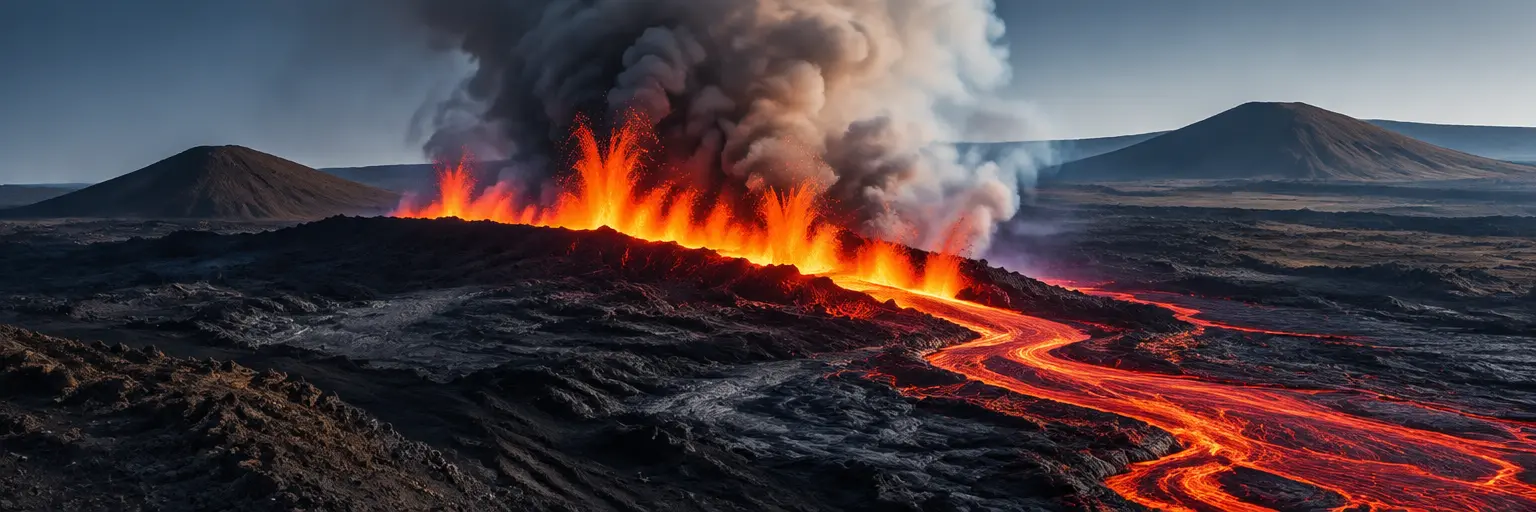
Fissure volcanoes, also known as fissure vents or linear eruptions, are among the most visually striking yet least understood volcanic phenomena. Unlike the iconic cone-shaped stratovolcanoes, fissure eruptions occur when magma rises through long cracks in the Earth’s crust, producing curtains of fire and vast lava fields. At VolcanoExplorers.org, we dive deep into the mechanics, history, and impact of these linear eruptions, offering you a comprehensive guide to one of nature’s most powerful forces. From Icelandic fissures like Laki to Hawaiian rift zones, this subcategory reveals how these eruptions shape landscapes, affect climate, and challenge our understanding of volcanic behavior.
🌋 How Fissure Eruptions Work: The Science Behind Linear Vents
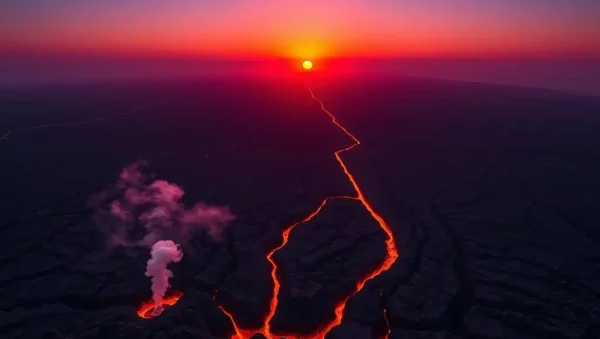
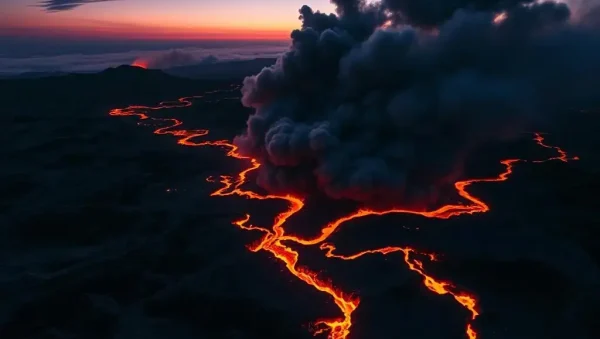
Fissure eruptions begin when magma, under immense pressure, forces its way through vertical cracks rather than a central conduit. These cracks, often stretching for kilometers, allow lava to emerge along the entire length, creating fountains of fire that can reach hundreds of meters high. The process is driven by tectonic plate movements, particularly at divergent boundaries like the Mid-Atlantic Ridge, where the Earth’s crust is pulled apart. Understanding this mechanism is crucial for predicting eruption styles and hazards in fissure-prone regions.
Readers should expect to learn the geological triggers behind linear eruptions, including how magma composition influences the explosivity and flow. We explain the role of basaltic lava, which is typically low in silica, resulting in fluid flows that can travel vast distances. Unlike pyroclastic explosions, fissure eruptions often produce effusive activity, but they can also generate phreatomagmatic bursts when lava interacts with water. This foundational knowledge helps you grasp why fissure volcanoes are both awe-inspiring and potentially devastating to nearby communities.
🏞️ Iconic Fissure Eruptions: Case Studies from Iceland and Hawaii
Iceland’s Laki eruption of 1783 is a historical benchmark, releasing an estimated 14 cubic kilometers of lava over eight months. This event not only reshaped the landscape but also triggered a famine and climate anomalies across Europe, illustrating the far-reaching effects of fissure volcanism. Similarly, Hawaii’s Kīlauea volcano features prominent fissure systems along its East Rift Zone, where eruptions like the 2018 lower Puna event destroyed hundreds of homes while creating new land. These case studies provide real-world examples of how linear eruptions unfold and their socio-economic consequences.
By examining these examples, you’ll gain insight into the variability of fissure eruptions, from short-lived single-vent episodes to long-lived swarms. We highlight the monitoring techniques used by volcanologists, such as ground deformation sensors and gas emissions tracking, which help forecast potential hazards. The lessons from Laki and Kīlauea emphasize the importance of preparedness and the delicate balance between volcanic risk and the incredible fertility that lava brings to soils, making these regions both hazardous and agriculturally rich.
🌍 Global Distribution: Where Fissure Volcanoes Are Found
Fissure volcanoes are not random; they cluster along divergent plate boundaries and hotspots. The most famous is Iceland’s Reykjanes Peninsula, where the Mid-Atlantic Ridge surfaces above sea level, offering a natural laboratory for studying linear eruptions. East Africa’s Great Rift Valley, the Afar Triangle, and the Galápagos Islands also exhibit active fissure systems, each with unique characteristics. Additionally, submarine fissure eruptions along mid-ocean ridges create new oceanic crust, though they are rarely observed directly. This global perspective helps readers appreciate the planetary scale of fissure volcanism.
For the curious traveler or aspiring geologist, we provide a map-like overview of accessible fissure sites, including safety tips for visiting active or dormant areas. You’ll discover how volcanic activity in these regions shapes local ecosystems, from pioneer plant colonization on fresh lava to thermal vents supporting unique life forms. Understanding where fissure volcanoes occur also aids in assessing global volcanic hazards, as these systems can remain dormant for centuries before reactivating, challenging long-term risk assessments.
🔥 Lava Flow Dynamics: Basaltic Floods and Channelized Streams
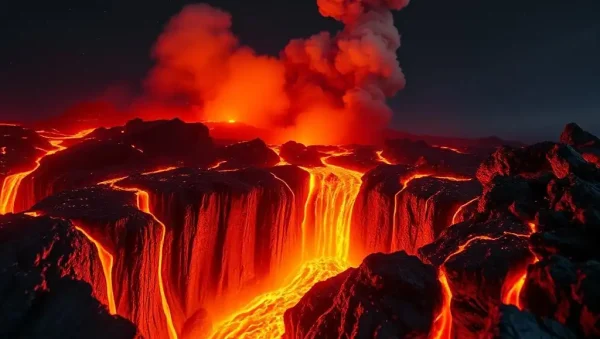
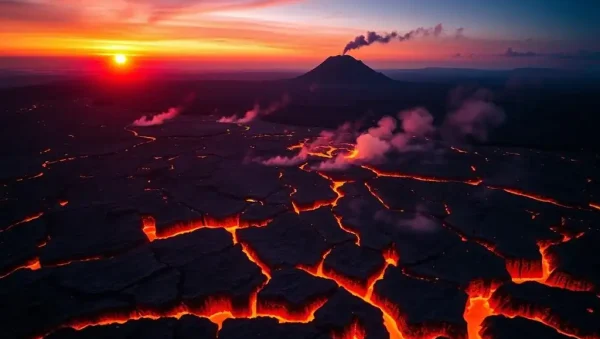
The lava flows from fissure eruptions are predominantly basaltic, characterized by low viscosity and high temperature (often exceeding 1100°C). This allows lava to flow rapidly, forming expansive flood basalt provinces over time, such as the Deccan Traps in India or the Columbia River Basalts in the U.S. However, flow dynamics vary based on eruption rate, topography, and cooling rates, producing a range of surface textures like pahoehoe (smooth) and a‘a (rough). These flows can also develop lava channels and tubes, which insulate the molten interior and extend the reach of eruptions.
This section delves into the physical processes that govern lava propagation, including the role of effusion rates and slope gradients. Readers will learn how to interpret flow features in the field, aiding in hazard mapping and evacuation planning. We also discuss the hazards of lava flows, such as burning infrastructure and creating toxic gas plumes, alongside their benefits, like creating new land for tourism and real estate. By understanding these dynamics, you’ll be better equipped to appreciate the dual nature of fissure eruptions—both destructive and transformative.
🛡️ Hazards and Preparedness for Living Near Fissure Zones
Living near a fissure volcano brings unique challenges, as eruptions can occur without clear warning signs from a central vent. The primary hazards include lava flow inundation, fissure opening beneath buildings, and emission of sulfur dioxide and other volcanic gases. Additionally, fissure eruptions can ignite fires, contaminate water supplies, and cause infrastructure damage through ground cracking. Preparedness strategies involve zoning laws that restrict construction in high-risk areas, early warning systems, and community education on evacuation routes and emergency kits.
Our safety guide provides actionable advice for residents and travelers, including how to interpret volcanic alerts and what to do during an eruption. We emphasize the importance of having a preparedness plan that includes monitoring local authorities’ updates, securing important documents, and recognizing signs of impending activity like increased seismic tremor and ground swelling. By demystifying the risks, we empower readers to make informed decisions, whether they are permanent residents or temporary visitors to fissure-prone regions across the globe.
🔍 Future Research and Monitoring of Fissure Volcanoes
Advancements in technology are revolutionizing our ability to predict and understand fissure eruptions. Satellite-based interferometric synthetic aperture radar (InSAR) measures ground deformation with millimeter precision, while drone surveys provide high-resolution imagery of active fissures. Machine learning algorithms analyze seismic data to detect precursor patterns, improving eruption forecasts. Collaborative efforts among international volcanological organizations enhance data sharing and crisis response, ensuring that knowledge gained from one eruption benefits global preparedness.
Readers will discover how emerging research is addressing key questions, such as why some fissure eruptions become massive while others peter out. Studies on magma ascent rates and crustal stress fields are offering new insights into the triggering mechanisms. Additionally, the exploration of subglacial and submarine fissure eruptions is expanding our understanding of these cryptic environments. We highlight how citizen science programs allow volunteers to contribute observations, making volcanic monitoring a community-driven effort. This forward-looking perspective underscores the dynamic nature of volcano science and its practical applications for society.
Frequently Asked Questions
What is the difference between a fissure volcano and a shield volcano?
A fissure volcano is not a specific mound but a linear vent system where lava erupts from cracks, while a shield volcano is a broad, gently sloping dome built by repeated fluid lava flows from a central vent or flank fissures. Fissure eruptions often feed shield volcanoes over time, but they can also occur independently in rift zones. The key distinction is eruption geometry: linear versus centralized output.
Can fissure eruptions be predicted in advance?
Yes, but with limited precision. Volcanologists monitor earthquake swarms, ground deformation, and gas emissions, which often increase days to weeks before a fissure eruption. However, the exact location of new fissures remains uncertain, as they can open unpredictably. Real-time data from GPS and InSAR helps narrow down the likely zone, but warnings are often general rather than site-specific.
Are fissure eruptions always effusive, or can they be explosive?
Most fissure eruptions are effusive, producing lava flows due to low-viscosity basaltic magma. However, explosive activity can occur if magma interacts with groundwater or if the magma becomes more silica-rich through crustal contamination. Examples include phreatomagmatic bursts at Grímsvötn or the 2011 fissure at Pu‘u ‘Ō‘ō, which emitted ash plumes. Thus, the style depends on local conditions, not just the vent geometry.
What is the largest fissure eruption in recorded history?
The Laki eruption in Iceland during 1783-84 is the largest in recent history, erupting about 14 cubic kilometers of lava and producing a massive aerosol cloud that affected Northern Hemisphere climate. It led to a famine that killed roughly 20% of Iceland’s population. However, ancient eruptions like the Siberian Traps were far larger, though not directly observed.
Can fissure volcanoes create new land that is habitable?
Yes, lava flows eventually weather into fertile soil, as seen in Hawaii and Iceland, supporting agriculture and settlements. However, habitation is risky until the lava is fully cooled and hazard maps are updated. In many cases, local communities rebuild on fresh lava fields, but structural design must account for future fissure openings. Landscaping and zoning can minimize risks while enabling sustainable living.