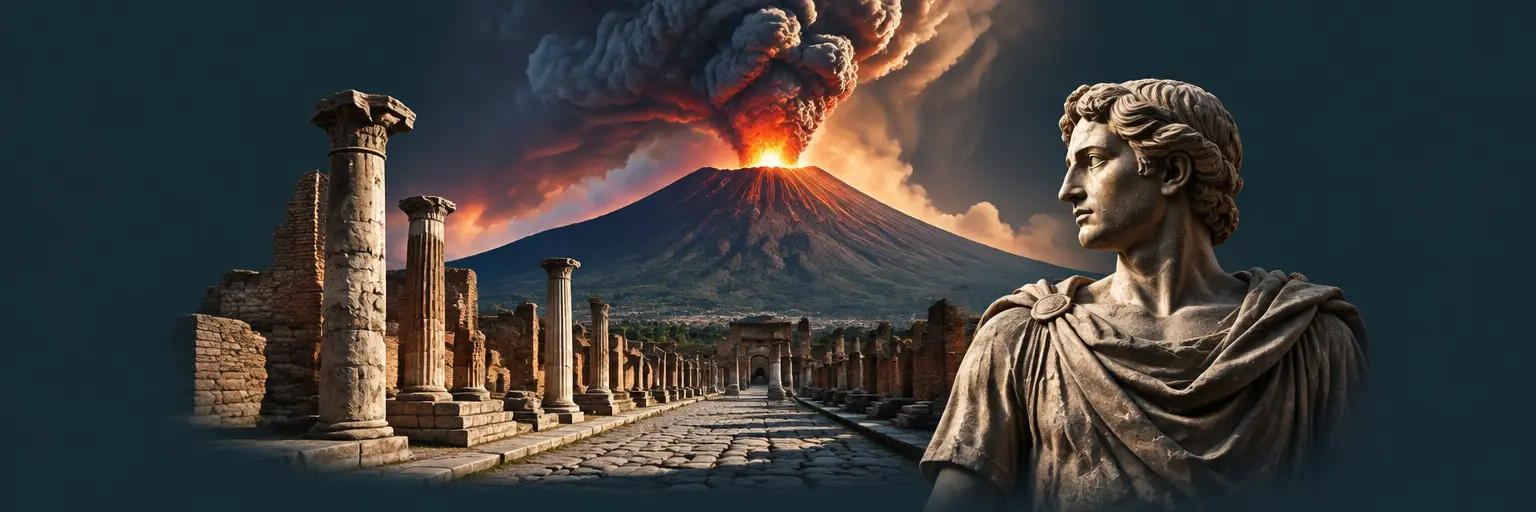
Explore the Catastrophic Day That Buried Pompeii and Mount Vesuvius
Step back to 79 AD, when Mount Vesuvius unleashed one of history's most infamous eruptions, freezing the Roman city of Pompeii under layers of ash and pyroclastic surges. This subcategory is your definitive portal into the science, archaeology, and human drama of that apocalyptic event. Whether you're a student, traveler, or volcano enthusiast, you'll discover how Vesuvius remains Europe's ticking time bomb and why Pompeii's tragedy is now an unparalleled window into ancient life. Expect immersive research, survivor stories, and modern risk insights.
🌋 The Geology of Vesuvius: A Sleeping Giant’s Anatomy
Understanding Vesuvius’s structure is key to grasping why its eruption was so lethal. Unlike shield volcanoes, Vesuvius is a stratovolcano—steep, layered, and composed of alternating ash, lava, and pumice. Its magma chamber sits just 5-8 kilometers below the surface, rich in gas and silica, making eruptions violently explosive. The 79 AD event produced a Plinian column reaching 33 kilometers high, followed by deadly pyroclastic flows that surged at 100 km/h. Here, you’ll decode the tectonic collision of the African and Eurasian plates that fuels this fiery threat.
For geology buffs, we break down the eruption sequence—from the initial phreatomagmatic blasts to the final ash fall that buried Pompeii under 4-6 meters of debris. You’ll learn about tephra, lahars, and the volcanic explosivity index (VEI) that classifies Vesuvius as a VEI 5 event. We also compare it to other famous eruptions, such as Mount St. Helens or Krakatoa, to highlight unique regional hazards. By the end, you’ll appreciate why Vesuvius is monitored 24/7 by the Vesuvius Observatory, the world’s oldest volcano research center.
🏛️ Pompeii’s Last Day: Life, Death, and Ash Preservation
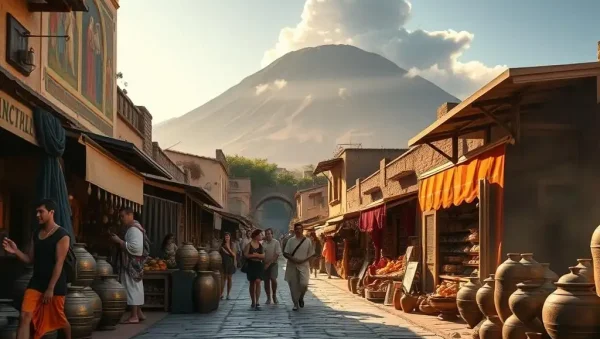
The human tragedy of Pompeii is what makes this eruption timelessly haunting. When Vesuvius erupted, Pompeii’s 12,000 residents had only hours to flee. Excavations reveal a frozen tableau: bakers caught in their ovens, families huddled in cellars, and gladiators locked in barracks. The famous plaster casts—created by pouring liquid plaster into ash cavities—show final agonies, with one victim clutching a child. This section details daily Roman life, from thermopolium fast-food counters to frescoed villas, abruptly encased in pumice and poisonous gases like carbon monoxide.
You’ll also explore Herculaneum, Pompeii’s wealthier neighbor, where pyroclastic flows baked organic materials, preserving wooden furniture and even scrolls. Recent scientific breakthroughs, including DNA analysis of skeletal remains, reveal the victims’ diets, health, and social status. We include interactive timelines and site maps so you can virtually walk the cobblestones, understanding exactly where each artifact was found. This is a must-read for history lovers seeking visceral connection to antiquity’s most dramatic catastrophe.
🕰️ Ancient Eyewitnesses: Pliny the Younger’s Account and Modern Revelations
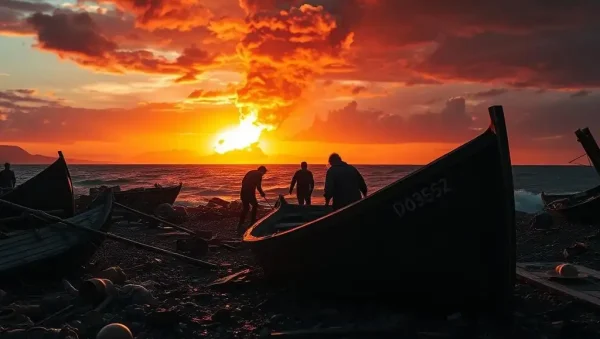
One of history’s greatest volcanic documents comes from a seventeen-year-old boy. Pliny the Younger’s two letters to Tacitus provide the only first-hand description of Vesuvius’s eruption, including the mushroom-shaped cloud and the desperate sea evacuation. He also records the heroic death of his uncle, Pliny the Elder, who led a rescue fleet and suffocated on the beach at Stabiae. Our page juxtaposes this ancient narrative with modern volcanological data, confirming that the eruption began around 1 PM on August 24 (or possibly October 24) with devastating precision.
Beyond Pliny, researchers have uncovered eruption dynamics using ash stratigraphy and tree-ring analysis. We translate these technical findings into an accessible story of hour-by-hour catastrophe. You’ll learn about the six major pyroclastic surges that destroyed every structure in their path, and why those who survived the initial pumice fall were still doomed by heat and gas. This blend of historical letters and hard science gives you a uniquely multi-perspective view of the disaster—an approach rarely found on other geology websites.
🏺 The Forgotten Rediscovery: From Ruins to UNESCO World Heritage
Pompeii vanished for over 1,500 years until its accidental rediscovery in 1748. Early treasure hunters looted artifacts, but systematic excavation under archaeologists like Giuseppe Fiorelli in the 1860s revolutionized preservation. This section traces the slow unearthing of the buried city—initially mistaken for Stabiae—and the evolution of excavation techniques, from tunnel digging to precise stratigraphic analysis. Now a UNESCO World Heritage site, Pompeii attracts over 2.5 million visitors annually, yet 44 hectares remain unexcavated, preserving secrets for future science.
We also spotlight recent conservation projects and digital reconstructions, including 3D scans of entire insulae (city blocks) and virtual reality tours. Learn about the ongoing struggle against weather, mass tourism, and illegal looting that threaten fragile frescoes and graffiti. The site’s “Great Pompeii Project” uses drones and laser mapping to stabilize structures, but funding remains scarce. By understanding the archaeological journey from rediscovery to modern tech, you’ll appreciate why Pompeii is not just a relic, but a live research laboratory for disaster archaeology.
⚠️ Living Under Vesuvius: Today’s Threat and Evacuation Plans
Mount Vesuvius is still an active stratovolcano, with 3 million people in its “red zone.” The regional government has classified Vesuvius as one of the most dangerous volcanoes globally, with a 12-kilometer exclusion zone. While the last major eruption was in 1944 (during WWII, causing damage to B-25 bombers), geophysicists warn that the volcano’s magma chamber is recharging. In this section, we analyze the National Emergency Plan, which splits the region into zones (red, yellow, blue) and prescribes evacuation to other Italian regions within 72 hours of an alert.
You’ll also explore seismic monitoring systems, ground deformation sensors, and gas emission tracking used by the Vesuvius Observatory to detect early warnings. However, experts debate whether a forecasting window of only 20 hours is realistic for mass evacuation. We examine case studies like the 1984 Pozzuoli crisis, when the nearby Phlegraean Fields was evacuated prematurely, and how that informs current protocols. For residents, tourists, and policymakers, this content offers pragmatic safety knowledge, balanced with honest uncertainty about future eruptive behavior.
📸 Travel Guide: Experiencing Pompeii and Climbing Vesuvius
Plan your pilgrimage to the world’s most dramatic archaeological site. Start in Naples, the historic port city, then reach Pompeii via the Circumvesuviana train or guided tours. Preserving your visit, we recommend entering at Porta Marina, walking the Via dell’Abbondanza, and not missing the Villa dei Misteri’s red frescoes. After three to four hours exploring the ruins, drive to the Vesuvius crater—now a national park—where you can hike a 3.5-mile loop trail to the summit plateau. Bring sturdy shoes; the path is steep volcanic scree, and the view into the fuming crater is unforgettable.
For practical tips, we cover best times to visit (spring/autumn to avoid heat and crowds), ticket pricing and combo passes with Herculaneum, and accessibility options for disabled travelers. We also warn against unofficial “skip-the-line” vendors and highlight authentic local pizzas and wines from Vesuvian vineyards. Whether you’re a photographer seeking sunrise shots or a family needing shade breaks, our guide balances history with logistics, ensuring your trip to Pompeii and Vesuvius is safe, educational, and awe-inspiring—without falling for tourist traps.
Frequently Asked Questions
Is it safe to visit Pompeii and climb Mount Vesuvius?
Yes, both sites are open to the public and monitored constantly. Vesuvius has a volcanic alert level of green, meaning no immediate eruption risk. The crater hike is physically moderate but safe, with designated paths. However, you must follow park rules—stay on trails, avoid leaning over edges, and carry water. In case of increased seismic activity, authorities would close the crater, but such closures are rare.
What was the most lethal aspect of the 79 AD eruption?
The pyroclastic surges were the deadliest, not the ash fall. These superheated avalanches of gas and solid fragments traveled at over 100 km/h and reached temperatures of 300-500°C. They hit Pompeii in waves, stopping hearts and boiling flesh instantly. Most victims suffocated from ash inhalation or died of thermal shock before being buried, as proven by skeletal fractures and carbonized remains.
How were the plaster casts of Pompeii victims made?
In 1863, archaeologist Giuseppe Fiorelli discovered that decomposed bodies left voids in compacted ash. He injected liquid plaster into these cavities, let it harden, then removed the surrounding tephra. The casts preserve not only human forms but also facial expressions, clothing folds, and even jewelry. Modern conservationists use epoxy resin instead of plaster to better withstand humidity and exposure.
How long did Pompeii stay buried before excavation?
Pompeii was abandoned after the eruption and remained untouched for roughly 1,690 years. Rediscovery began in 1748 under Spanish engineer Roque Joaquín de Alcubierre, who was digging a canal. Buried under 4-6 meters of pumice and ash, the city’s preservation was so perfect that food, wooden objects, and even a loaf of bread were found intact.
Will Mount Vesuvius erupt again soon?
Geophysicists cannot predict precise eruption dates, but Vesuvius is considered one of the world’s most hazardous volcanoes, with unrest signs like increased gas emissions and micro-earthquakes. Historically, it erupts every 20-40 years, last in 1944. The next eruption is “certain” in the long term, but not necessarily imminent. Continuous monitoring aims to give a 20-hour warning before a major blast, though evacuation plans face logistical challenges for 3 million residents.