Mount Pelée and the Destruction of Saint-Pierre: A Catastrophic Turning Point
Few volcanic events have captured the world’s imagination like the 1902 eruption of Mount Pelée on the Caribbean island of Martinique. This subcategory within Famous Eruptions explores the catastrophic pyroclastic flow that obliterated the city of Saint-Pierre in minutes, killing approximately 30,000 people. Here, you will uncover the geological setting, the tragic human stories, the scientific breakthroughs born from the disaster, and the enduring legacy of one of the deadliest eruptions of the 20th century. Dive into a narrative that blends raw natural power with profound historical consequence.
🌋 The Anatomy of the 1902 Eruption: From Rumbles to Cataclysm
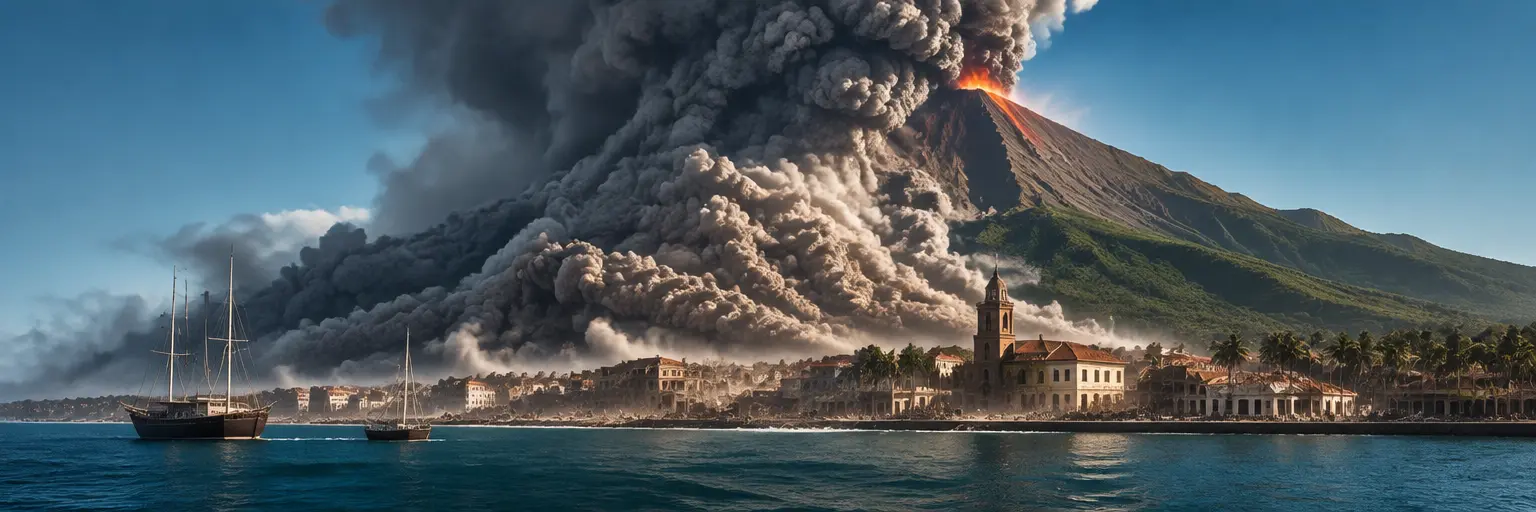
The eruption on May 8, 1902, was not a sudden surprise—it was the climax of weeks of escalating activity. Mount Pelée, a stratovolcano on the northern tip of Martinique, had been emitting steam and ash since April. However, authorities downplayed the danger to avoid disrupting the upcoming elections, a decision with fatal results. On that fateful morning, a lateral blast—a pyroclastic surge—raced down the mountain at over 400 km/h, hotter than 1,000°C. It struck Saint-Pierre, three miles away, in under two minutes, flattening buildings and igniting everything flammable.
What makes this event scientifically vital is that it introduced the term nuée ardente (glowing cloud) to volcanology. The eruption’s low-angle blast, rather than a vertical column, was unusual for the time. This subcategory details the precursory signals—phreatic explosions, lahars, and ashfall—that pointed to impending doom. You’ll learn how the volcano’s viscous andesitic magma trapped gases, creating the pressure that fueled the lethal lateral explosion. This event forever changed how volcanologists interpret dome-collapse and gravitational column-collapse hazards.
🏚️ The Destruction of Saint-Pierre: A City Erased in an Instant
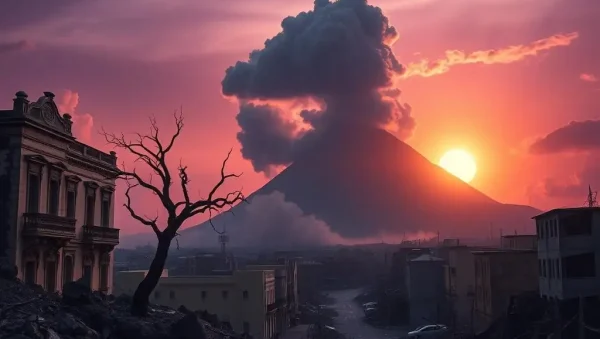
Saint-Pierre, known as the “Paris of the Caribbean,” was Martinique’s cultural and commercial capital. With a population of about 26,000, it boasted theaters, a botanical garden, and a bustling harbor. The eruption’s surge spared almost nothing—only a few structures remained standing, including the stone-walled prison where a single inmate, Louis-Auguste Cyparis, miraculously survived. Ships in the harbor, like the Roddam, were capsized or burned, their crews incinerated. Eyewitness accounts from surviving sailors describe a wall of fire descending the mountain, followed by darkness and suffocating heat.
This section goes beyond statistics, using survivor testimonies and archaeological findings to reconstruct the final minutes. The surge’s temperature vaporized limbs, yet some victims were found with lungs full of ash—evidence of rapid asphyxiation. Contemporary photographs and lithographs show the eerie stillness of a city turned to grey rubble. Understanding the scale of loss is crucial because it underscores how volcanic risk is often underestimated in populated areas, a lesson still relevant for cities like Naples or Seattle.
🔬 Scientific Legacy: How Pelée Revolutionized Volcanic Hazard Assessment
The Saint-Pierre catastrophe was a brutal teacher. Before 1902, volcanic fatalities were largely attributed to lava flows or ashfall—hazards that often allow for evacuation. The Pelée disaster proved that pyroclastic density currents (PDCs) are the deadliest volcanic phenomenon, traveling fast and far with little warning. This led to the formal classification of PDCs and the integration of volcano monitoring into civil defense. The eruption also prompted the creation of the Volcanological Observatory of Martinique in 1903, one of the world’s first dedicated volcano monitoring stations.
Furthermore, the disaster highlighted the need for risk communication. Pre-eruption signs—such as mudslides and ash emissions—had been ignored due to political pressure. Modern volcanology now emphasizes hazard mapping, evacuation drills, and transparent public information. This subcategory also explores the development of the Volcanic Explosivity Index (VEI), which classifies eruptions by magnitude; Pelée’s 1902 event is rated VEI-4. You’ll see how this single eruption shaped funding for monitoring in the Caribbean and inspired protocols used by agencies like USGS and IPGP today.
📖 Human Stories and Eyewitness Accounts: Voices from the Ashes
Beyond the science, this subcategory honors the human dimension. Louis-Auguste Cyparis, a prisoner in a subterranean cell, survived with severe burns and later toured with the Barnum & Bailey circus as “The Prisoner of Saint-Pierre.” Another survivor, Léon Compère-Léandre, a shoemaker, was badly scalded but lived, his story providing visceral details of the blast’s heat. These accounts humanize the statistics, reminding readers that each of the nearly 30,000 victims had a life, a family, and a future erased in moments. You’ll read letters from residents describing the ominous ashfall days before—normalized as “nuisance” rather than warning.
This section also examines the role of colonial politics. French administrators feared that evacuating might panic the population and allow rival powers to gain economic advantage. The result was a fatal delay. By focusing on these narratives, the content aims to foster empathy and caution, bridging the gap between geological abstraction and personal tragedy. It encourages readers to reflect on how modern society might respond to similar warning signs—an essential exercise in disaster psychology and civic preparedness.
🌍 Broader Impacts and Comparative Eruptions: Placing Pelée in Context
Mount Pelée did not erupt in a vacuum—it was part of a regional seismic and volcanic crisis. In 1902, Santa María in Guatemala and Soufrière in Saint Vincent also erupted, suggesting a possible tectonic link. This subcategory compares Pelée’s style with other deadly blasts like Vesuvius (79 AD) and Krakatoa (1883), highlighting both similarities and differences. Crucially, it discusses the post-eruption development: the city was not rebuilt in the same location, serving as a permanent warning monument. Today, the mountain remains active, with monitoring and exclusion zones in place.
For modern travelers and researchers, this historical case informs hazard mitigation in the Lesser Antilles arc. The lesson is that complacency is the greatest enemy—Pelée is a prime example of how a volcano can shift from fumarolic activity to catastrophic explosion in weeks. By examining these comparative eruptions, readers gain a broader understanding of volcanic risk worldwide, from the Cascades to Indonesia. This section ties the local tragedy to global volcanology, making it relevant for students, planners, and anyone fascinated by the dynamic Earth.
Frequently Asked Questions
1. What exactly caused the Mount Pelée eruption to be so deadly?
The primary cause was a pyroclastic surge—a fast-moving cloud of hot gas and volcanic fragments. Unlike a vertical eruption column, Pelée’s blast was directed laterally, hugging the ground on its way to Saint-Pierre. This surge, at temperatures exceeding 1,000°C, asphyxiated and incinerated nearly everyone in its path within minutes. The city was only 3 km away, leaving no time for escape.
2. Were there any warnings before the eruption?
Yes, but they were largely ignored. Starting in April 1902, the volcano emitted ash, steam, and small mudflows. A phreatic explosion on May 5 killed a few workers, yet officials downplayed the danger to avoid disrupting elections. This political decision is widely condemned as a failure of disaster management. Modern protocols would have triggered evacuation based on such clear precursory activity.
3. How did anyone survive the destruction of Saint-Pierre?
Survivors were rare and extraordinary. Louis-Auguste Cyparis, a prisoner in a thick-walled, underground cell, survived with severe burns—the cell’s solid structure protected him from the surge’s heat and force. Léon Compère-Léandre, living at the city’s edge, was badly burned but escaped. A few sailors on ships in the harbor survived by diving overboard, though most were caught by the blast.
4. What is a nuée ardente, and how is it different from a lava flow?
A nuée ardente (French for “glowing cloud”) is a turbulent pyroclastic flow composed of gas, ash, and rock fragments that travels at high speed along the ground. It is not a liquid lava flow; lava is molten rock that moves slowly and predictably. The deadly nature of a nuée ardente lies in its speed, temperature, and toxicity, which makes it far more hazardous to life.
5. Is Mount Pelée still dangerous today?
Yes, Mount Pelée is an active stratovolcano. The last eruption occurred from 1929 to 1932, producing minor dome formations, but no major blast since 1902. Today, it is closely monitored by the Observatoire Volcanologique et Sismologique de Martinique. Exclusion zones and evacuation plans are in place, though the population around the volcano remains vulnerable—a constant reminder of the 1902 tragedy.