
Pompeii's Jewelry: Adornments Frozen in Time

Welcome to Volcano Explorers!
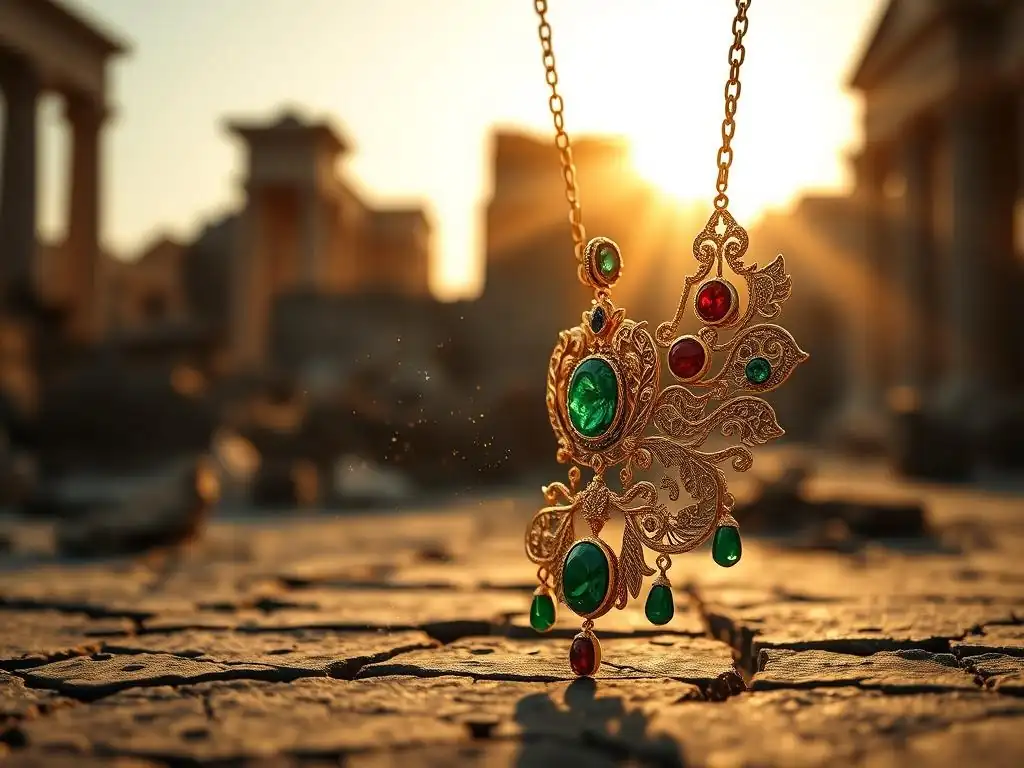
Imagine time standing still, forever preserving the beauty of a moment. That's the chilling reality unveiled in the ashes of Pompeii. Prepare to be captivated as we journey back to AD 79 and explore the Pompeii jewelry's historical significance. What secrets do these ancient adornments hold about the lives and loves of a civilization swallowed by Vesuvius? Uncover the stories etched in gold, silver, and gemstone, and discover how these exquisite artifacts offer a glimpse into a world tragically lost. Intrigued? Let's delve deeper...
- Introduction: Unveiling Pompeii's Timeless Treasures
- The Jewelry of Pompeii: A Glimpse into Roman Life
- The Historical Significance of Pompeii Jewelry
- Preserving and Studying Pompeii's Jewelry: Insights for Today
- The Eruption of Vesuvius and its Impact on Pompeii's Jewelry
- The Enduring Legacy of Pompeii Jewelry
- Conclusion: Appreciating the Beauty and Historical Value of Pompeii's Jewelry
-
Frequently Asked Questions
- What makes Pompeii's jewelry historically significant?
- What materials were commonly used in Pompeii jewelry?
- What styles and designs were popular in Pompeii jewelry?
- What can Pompeii's jewelry tell us about social status?
- How does the preservation of Pompeii's jewelry contribute to our understanding of Roman history?
- Final Reflection: Echoes of Beauty in Ash
- Unearth Your Own Connection to Pompeii's Past!
Introduction: Unveiling Pompeii's Timeless Treasures
Pompeii and Mount Vesuvius: A Moment Suspended in History
In 79 AD, the vibrant Roman city of Pompeii, nestled in the shadow of Mount Vesuvius, was a bustling hub of commerce and culture. Life in Pompeii proceeded with the rhythm of any thriving Roman settlement – markets overflowed with goods, citizens engaged in political discourse, and families went about their daily routines. This ordinary existence, however, was abruptly and catastrophically halted by the furious eruption of Vesuvius.
In a matter of hours, the city and its inhabitants were buried under layers of volcanic ash and pumice, effectively freezing a moment in time for nearly two millennia. This cataclysmic event, while tragic, paradoxically became Pompeii’s preservation, sealing within its ruins an unparalleled snapshot of Roman life, including the personal adornments cherished by its people.
The Significance of Jewelry in Understanding Pompeii's Past
Among the myriad artifacts unearthed from Pompeii’s volcanic tomb, jewelry stands out as particularly poignant and informative. These were not just objects of beauty; they were deeply personal items worn daily, reflecting the tastes, status, beliefs, and even fears of Pompeian society. Unlike grand public monuments or civic structures, jewelry offers an intimate glimpse into the lives of individuals, from wealthy patricians to more modest citizens.
The materials, craftsmanship, and styles of Pompeii jewelry provide invaluable insights into the economic prosperity of the city, the artistry of Roman goldsmiths, the prevalent fashion trends of the 1st century AD, and the personal expressions of those who perished in the eruption. By studying these adornments, we can piece together a richer and more nuanced understanding of Pompeii and its people, moving beyond the grand narrative of disaster to appreciate the individual stories embedded within these timeless treasures.
The Jewelry of Pompeii: A Glimpse into Roman Life
Materials and Craftsmanship of Pompeii's Adornments
The jewelry discovered in Pompeii showcases the remarkable skill and artistry of Roman craftsmen. A diverse range of materials were utilized, reflecting both the availability of resources and the social strata of the wearers. Gold, a symbol of wealth and prestige, was frequently employed, often meticulously worked into delicate chains, intricate pendants, and substantial rings. Silver, a more accessible precious metal, was also common, offering a slightly less opulent alternative. Bronze, sometimes gilded to mimic gold, served as a more affordable option, particularly for fibulae (brooches) and simpler ornaments.
Beyond metals, gemstones played a crucial role in Pompeian jewelry. Carnelian, agate, amethyst, garnet, and emeralds were popular choices, often imported from various parts of the Roman Empire, indicating extensive trade networks. These stones were not merely decorative; many were believed to possess protective or auspicious qualities.
Glass, both opaque and translucent, was another significant material, skillfully molded into beads, pendants, and inlays, demonstrating Roman mastery over glassworking techniques. Ivory and bone were also utilized, particularly for pins, hair ornaments, and simpler bracelets, often carved with intricate designs. The craftsmanship evident in Pompeii's jewelry reveals a high level of technical skill, with techniques such as granulation, filigree, and repoussé employed to create elaborate and visually stunning pieces.
Exploring the Types of Jewelry Found in Pompeii: Rings, Necklaces, Bracelets, and Amulets
The variety of jewelry types uncovered in Pompeii provides a comprehensive overview of Roman personal adornment in the 1st century AD. Rings were ubiquitous, worn by both men and women, serving as symbols of status, betrothal, or simply personal style. Signet rings, used for sealing documents, often featured engraved gemstones with personal emblems or family crests. Necklaces ranged from simple gold chains to elaborate pieces adorned with gemstones, glass beads, or pendants. Pendants often carried symbolic meaning, depicting deities, mythological figures, or protective symbols.
Bracelets were popular arm and wrist adornments, crafted from gold, silver, bronze, or glass. Some were rigid bangles, while others were flexible chains or beaded strands. Anklets, though less common, have also been found, suggesting a more subtle form of adornment. Amulets, distinct from purely decorative jewelry, were particularly significant.
These were objects believed to possess magical protective powers against misfortune or illness. They were often made of bronze, bone, or gemstones and could take various forms, including phallic symbols (believed to ward off the evil eye), animal figures, or representations of deities associated with protection, like Hercules or Fortuna. The presence of numerous amulets in Pompeii underscores the pervasive role of superstition and belief in protective magic in Roman daily life.
The Historical Significance of Pompeii Jewelry
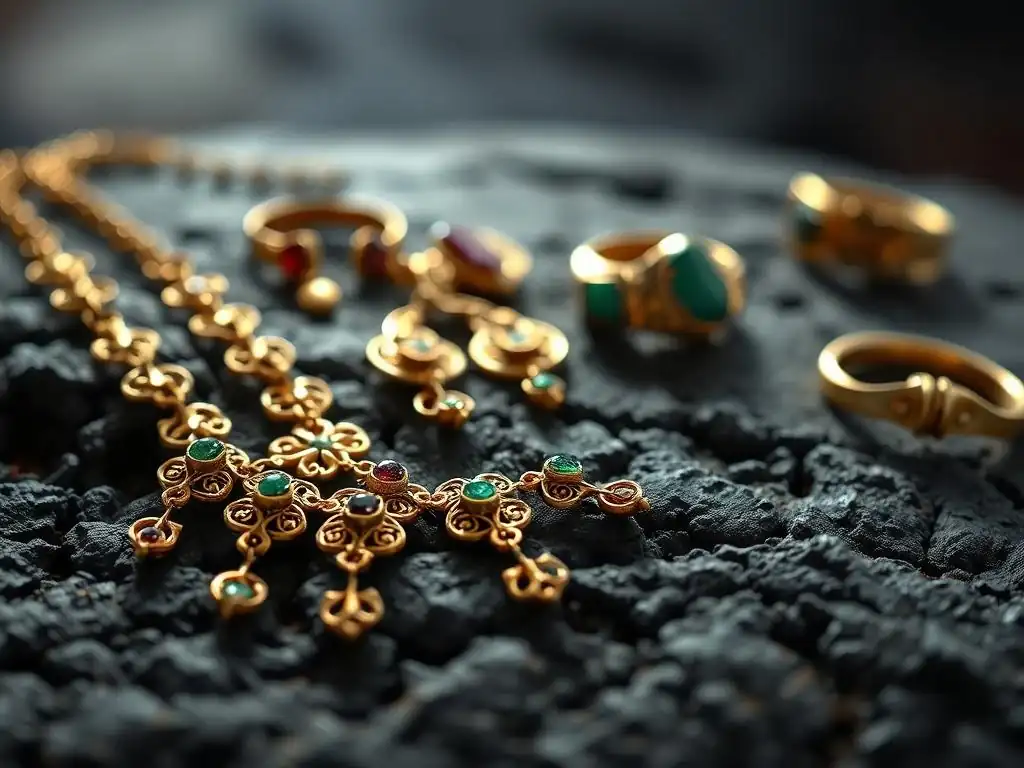
Pompeii jewelry serves as a tangible and direct indicator of social status and wealth within the ancient city. The materials used, the intricacy of craftsmanship, and the sheer quantity of jewelry found in different contexts all point to the wearer's position in Pompeian society. Gold jewelry, particularly elaborate pieces with large gemstones, was undoubtedly a marker of affluence and high social standing.
Wealthy patrician families likely possessed and displayed significant amounts of gold jewelry, passing down heirlooms through generations. The discovery of substantial gold jewelry in opulent villas, like the Villa of the Mysteries or the House of the Vettii, reinforces this connection between precious metals and elite status.
Silver jewelry, while still valuable, likely indicated a slightly lower, though still comfortable, social position. Bronze and glass jewelry, and simpler designs in silver, were probably worn by individuals of more modest means, including freedmen, merchants, and artisans. While less lavish, these pieces still demonstrate a desire for personal adornment across different social strata.
The absence of elaborate jewelry in certain dwellings, conversely, might suggest a lower economic status or a lifestyle less focused on outward displays of wealth. Therefore, analyzing the type, quantity, and context of jewelry finds across Pompeii provides valuable insights into the city's social hierarchy and economic distribution.
Pompeii Jewelry and Roman Fashion: Trends of the 1st Century AD
The styles and designs of Pompeii jewelry align closely with broader Roman fashion trends prevalent in the 1st century AD, confirming Pompeii's integration into the wider Roman world. Archaeological evidence and depictions in Roman art from this period, including frescoes and sculptures, corroborate the types of jewelry found in Pompeii. For instance, the popularity of gold chains, gemstone rings (especially with cabochon-cut stones), and snake bracelets in Pompeii is consistent with jewelry styles seen across the Roman Empire during the early Imperial era.
The use of specific gemstones, like carnelian and garnet, which were fashionable in the 1st century AD, further connects Pompeii's adornments to contemporary Roman tastes. The influence of Greek and Hellenistic jewelry traditions is also discernible, particularly in the delicate goldwork and classical motifs found in some pieces. However, Roman jewelry of this period developed its own distinct characteristics, including a preference for bolder designs and the incorporation of Roman symbols and motifs.
Pompeii jewelry, therefore, offers a localized snapshot of Roman fashion, demonstrating how imperial trends were adopted and expressed within a specific urban context. It reveals that Pompeians, despite living in a provincial city, were actively participating in and reflecting the broader aesthetic currents of the Roman world.
The Symbolic Meaning of Pompeii's Jewelry: Beliefs and Superstitions Reflected
Beyond mere ornamentation, Pompeii jewelry frequently carried symbolic meanings, reflecting the beliefs and superstitions prevalent in Roman society. Amulets, as previously mentioned, are a prime example, directly embodying the wearer's desire for protection from harm or bad luck. The phallic fascinus, a common amulet form, was believed to ward off the evil eye and bring good fortune. Other amulets depicted deities like Fortuna (goddess of fortune) or Hercules (associated with strength and protection), invoking their divine favor.
Gemstones themselves were often imbued with symbolic properties. Amethyst, for instance, was believed to prevent drunkenness, while carnelian was thought to bring courage and vitality. The choice of gemstones in rings and pendants might thus reflect not just aesthetic preference but also a desire to harness these perceived magical qualities.
Certain motifs and designs incorporated into jewelry could also carry symbolic weight. Snakes, for example, represented healing and regeneration in Roman culture, while depictions of cornucopias symbolized abundance and prosperity. Therefore, Pompeii jewelry is not just aesthetically pleasing; it is also a rich repository of Roman beliefs and superstitions, providing insights into the worldview and anxieties of the people who wore these adornments.
Preserving and Studying Pompeii's Jewelry: Insights for Today
Archaeological Discoveries: Specific Villa Finds and Context
The archaeological excavation of Pompeii has yielded a wealth of jewelry finds, with specific villas and areas proving particularly rich sources of these precious artifacts. The House of the Menander, for example, famous for its opulent frescoes and silver hoard, also yielded significant jewelry, including gold rings and bracelets, demonstrating the wealth of its inhabitants.
The Villa of the Mysteries, another grand suburban villa, has produced jewelry finds that reflect the luxurious lifestyle of its occupants. Even in more modest dwellings within Pompeii, jewelry has been discovered, albeit often of less precious materials, indicating that personal adornment was a widespread practice across different social levels.
Crucially, the context of these discoveries is paramount for understanding their significance. Jewelry found on skeletons provides direct information about the individuals who wore them in their final moments. Jewelry discovered within strongboxes or hidden locations reveals insights into storage practices and perhaps attempts to safeguard valuables during the eruption. Jewelry unearthed alongside other artifacts, such as mirrors, cosmetic containers, or clothing fragments, helps reconstruct personal grooming habits and daily routines. The meticulous recording of find spots and associations is thus essential for extracting the maximum historical information from Pompeii's jewelry.
The Role of Pompeii Jewelry in Reconstructing Daily Life
Pompeii jewelry plays a vital role in reconstructing the daily lives of the city’s inhabitants. By studying these personal adornments, archaeologists and historians gain insights into various facets of Pompeian life that might not be evident from larger architectural remains or public inscriptions. Jewelry reveals information about personal aesthetics and fashion choices, demonstrating what Pompeians considered beautiful and desirable. It illuminates social customs related to adornment, such as who wore what types of jewelry and on what occasions.
The presence of imported gemstones and materials in Pompeii jewelry sheds light on trade networks and economic connections, indicating the city's participation in regional and long-distance exchange systems. The symbolic motifs and amuletic forms reflect religious beliefs and superstitious practices prevalent in Pompeian society.
Furthermore, the very act of wearing jewelry speaks to a level of personal expression and self-identity, even in the face of daily life's challenges. Therefore, Pompeii jewelry, though seemingly small and personal, provides a powerful lens through which to examine the nuances of daily life in this ancient Roman city, enriching our understanding beyond grand historical narratives.
National Archaeological Museum of Naples: Housing Pompeii's Treasures
The vast majority of jewelry and other artifacts unearthed from Pompeii are now housed in the National Archaeological Museum of Naples in Italy. This museum serves as the primary repository for the treasures of Pompeii and Herculaneum, offering visitors and researchers unparalleled access to these remarkably preserved remnants of Roman life. The Pompeii collection within the museum includes an extensive array of jewelry, meticulously cataloged and displayed, allowing for detailed study and public appreciation.
The museum’s collection encompasses the full spectrum of Pompeian jewelry, from magnificent gold necklaces and gemstone rings to simpler bronze bracelets and glass beads. Exhibits often contextualize the jewelry within broader displays of Pompeian life, showcasing how these adornments relate to other aspects of the city's culture, art, and daily practices.
The National Archaeological Museum of Naples plays a crucial role in preserving, researching, and presenting Pompeii's jewelry to the world, ensuring that these invaluable historical objects continue to educate and inspire future generations. For anyone seeking to understand the beauty and historical significance of Pompeii jewelry, a visit to this museum is an essential and enriching experience.
The Eruption of Vesuvius and its Impact on Pompeii's Jewelry
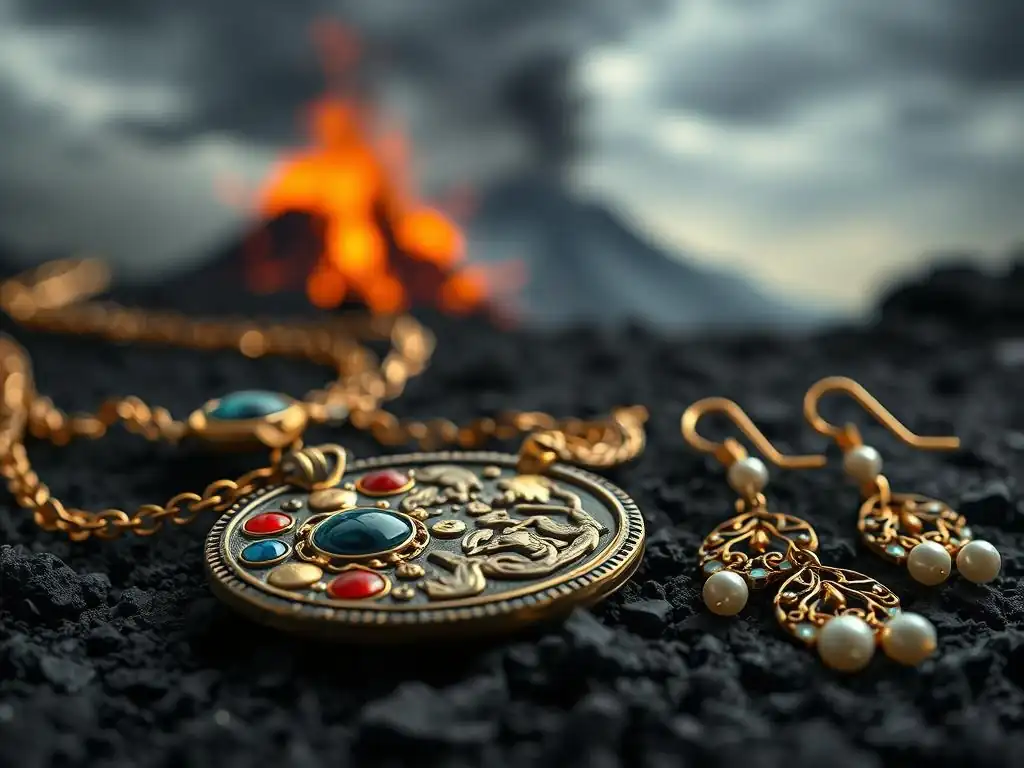
How the Eruption Preserved Pompeii Jewelry
The catastrophic eruption of Mount Vesuvius in 79 AD, while devastating for Pompeii, paradoxically became the agent of preservation for the city and its artifacts, including its jewelry. The layers of volcanic ash and pumice that buried Pompeii acted as a protective shroud, sealing the city from the elements and preventing the decay and decomposition that would typically occur over millennia. The fine volcanic ash, in particular, infiltrated buildings and spaces, encasing objects and even the forms of bodies, creating molds that preserved intricate details.
The suddenness of the eruption also played a crucial role in preservation. Life in Pompeii was abruptly frozen in time, with objects left in situ, exactly where they were in the moments leading up to the disaster. Jewelry, often worn on the body or kept in personal boxes within homes, was thus preserved in its original context, offering invaluable archaeological information. The lack of subsequent rebuilding or major disturbance at the site further contributed to the exceptional preservation of Pompeii, making it a unique time capsule of Roman life, where even delicate jewelry survived the passage of centuries.
The Jewelry as a Time Capsule: What the Volcanic Ash Reveals
Pompeii jewelry, preserved by volcanic ash, functions as a remarkable time capsule, offering direct insights into the lives and times of the individuals who wore it during the fateful eruption. The jewelry found on skeletons provides poignant evidence of individuals caught in the disaster, sometimes still adorned with their cherished possessions. The location of jewelry within homes, shops, or public spaces reveals patterns of daily life and activities interrupted by the eruption. For instance, jewelry found in workshops might indicate the possessions of artisans, while jewelry discovered near market areas could suggest lost or traded goods.
The volcanic ash itself, while destructive, also provides valuable information. The chemical composition of the ash can be analyzed to understand the nature of the eruption and its impact on different materials, including jewelry. The layers of ash stratigraphy help date the finds and establish a chronological context for the artifacts. Therefore, Pompeii jewelry, embedded within its volcanic matrix, serves as a multi-layered time capsule, revealing not only the objects themselves but also crucial contextual information about the eruption and the lives of Pompeians in 79 AD.
The Enduring Legacy of Pompeii Jewelry
The Influence of Pompeii Jewelry on Modern Design
The exquisite craftsmanship and timeless beauty of Pompeii jewelry have exerted a subtle yet persistent influence on modern jewelry design. The classical motifs, elegant forms, and use of vibrant gemstones found in Pompeii pieces have resonated across centuries, inspiring contemporary designers and artisans. The rediscovery of Pompeii in the 18th century, in particular, sparked a renewed interest in classical aesthetics, influencing Neoclassical and later jewelry styles.
Modern jewelers sometimes draw direct inspiration from Pompeian designs, replicating or reinterpreting ancient forms. More broadly, the principles of balance, proportion, and the emphasis on natural materials evident in Pompeii jewelry continue to inform contemporary design sensibilities. The enduring appeal of gold, gemstones, and handcrafted details in modern jewelry can be seen as a legacy, in part, of the artistic traditions exemplified by the adornments of Pompeii. The timeless elegance of Pompeii jewelry ensures its continued relevance as a source of inspiration for designers seeking to create pieces that are both beautiful and imbued with historical resonance.
Pompeii Jewelry: A Reminder of Human Life Interrupted
Beyond its aesthetic and historical value, Pompeii jewelry serves as a powerful and poignant reminder of human life interrupted. Each piece, once cherished and worn by an individual in a vibrant Roman city, now stands as a silent testament to the sudden and tragic end of Pompeii and its inhabitants. These were not just decorative objects; they were personal possessions, imbued with memories, meanings, and perhaps hopes for the future. The discovery of jewelry on the skeletons of victims, frozen in volcanic ash, evokes a profound sense of empathy and connection to these ancient individuals.
Pompeii jewelry humanizes the historical narrative of the eruption, reminding us that behind the grand scale of the disaster were countless individual lives, each with their own stories and experiences. These adornments, preserved through tragedy, allow us to glimpse those lives and to reflect on the fragility of human existence in the face of natural forces. In this sense, Pompeii jewelry transcends its material value, becoming a powerful symbol of remembrance and a poignant meditation on the passage of time.
New Technologies and Future Analysis of Pompeii's Jewelry
Modern scientific advancements are continuously enhancing our ability to analyze and understand Pompeii jewelry, promising new insights into its composition, craftsmanship, and historical context. Non-destructive techniques, such as X-ray fluorescence (XRF) and Raman spectroscopy, allow researchers to analyze the elemental composition of jewelry materials and gemstones without causing damage, providing valuable information about provenance and manufacturing techniques.
Advanced imaging technologies, like 3D scanning and digital microscopy, enable detailed examination of intricate details and surface features, revealing previously unseen aspects of craftsmanship and wear patterns. Isotopic analysis can further pinpoint the geographic origins of metals and gemstones, refining our understanding of trade routes and resource acquisition in the Roman world. Future research, employing these and other emerging technologies, will undoubtedly continue to unlock new secrets from Pompeii's jewelry, further enriching our knowledge of this remarkable archaeological treasure and the lives of the people who adorned themselves with these timeless pieces.
Conclusion: Appreciating the Beauty and Historical Value of Pompeii's Jewelry
Pompeii's jewelry is far more than just ancient adornment; it is a collection of frozen moments in time, revealing the artistry, fashion, beliefs, and social structures of a vibrant Roman city abruptly silenced by Vesuvius. These meticulously crafted rings, necklaces, bracelets, and amulets, fashioned from gold, silver, gemstones, and glass, offer an intimate glimpse into the lives of Pompeians across different social strata.
Their preservation by volcanic ash is a historical anomaly, allowing us to study 1st-century AD Roman jewelry in unparalleled detail. Beyond their aesthetic appeal, these pieces hold immense historical significance, serving as indicators of social status, reflections of Roman fashion trends, and embodiments of prevailing beliefs and superstitions.
Housed primarily in the National Archaeological Museum of Naples, Pompeii's jewelry continues to captivate and educate, reminding us of the beauty of Roman craftsmanship, the poignant fragility of human life, and the enduring power of the past to speak to the present. Appreciating Pompeii's jewelry means recognizing its dual nature: both as exquisite artifacts of a bygone era and as silent witnesses to a moment in history frozen in time by the dramatic forces of Mount Vesuvius.
Frequently Asked Questions
What makes Pompeii's jewelry historically significant?
Pompeii's jewelry offers a unique glimpse into Roman society and fashion. The preservation by volcanic ash allows detailed study of materials, craftsmanship, and personal adornment habits of the time.
What materials were commonly used in Pompeii jewelry?
Common materials included gold, silver, bronze, glass, and gemstones like carnelian, amethyst, and garnet. These materials show the wealth and access to resources within Pompeian society.
What styles and designs were popular in Pompeii jewelry?
Popular styles included necklaces, bracelets, rings, and earrings featuring motifs like animals, deities, and geometric patterns. These designs reflect Roman beliefs, aesthetics, and cultural influences.
The quality and quantity of jewelry often indicated social status and wealth in Pompeii. Elaborate pieces with precious materials were likely worn by the elite members of society.
How does the preservation of Pompeii's jewelry contribute to our understanding of Roman history?
The exceptional preservation provides direct evidence of Roman artistry and daily life, unlike other archaeological finds. It allows for a detailed reconstruction of Roman fashion and social customs, adding invaluable context to historical texts.
Final Reflection: Echoes of Beauty in Ash
The rediscovery and study of Pompeii's jewelry offer more than just glimpses into ancient fashion; they provide invaluable insights into the lives, values, and social structures of a civilization tragically frozen in time. The enduring allure of these adornments lies in their ability to connect us directly to the individuals who wore them, revealing intimate details about their personal stories and the world they inhabited.
The impact of Pompeii's jewelry extends far beyond the realm of archaeology. It continues to shape our understanding of Roman culture and influences contemporary design and aesthetics. The delicate craftsmanship and symbolic meanings embedded within each piece resonate deeply, reminding us of the enduring human desire for beauty and self-expression. The beauty of art is that it can speak to people of all times and all places.
- Unknown. This sentiment perfectly encapsulates the power of Pompeii's jewelry to transcend centuries and connect with us on a fundamental level.
As we contemplate the exquisite artistry and historical significance of Pompeii's jewelry, let us also reflect on the fragility of life and the enduring power of human creativity. Consider how these ancient adornments, unearthed from the ashes of tragedy, can inspire us to appreciate the beauty around us and to create our own lasting legacies. What stories will your adornments tell?
Unearth Your Own Connection to Pompeii's Past!
Thank you for exploring the captivating world of Pompeii's jewelry with us! We hope you enjoyed this glimpse into the lives and styles frozen in time. Now, it's your turn to connect with history.
Here are a few ways you can continue your exploration:
- Visit a local museum or gallery to see artifacts from Pompeii and other ancient civilizations. Experience the power of these objects up close.
- Delve deeper by researching the symbolism and craftsmanship of Roman jewelry and share your findings with other Volcano Explorers enthusiasts in the comments section.
- Get creative! Try sketching your own interpretation of a Pompeiian jewelry piece, imagining what it might look like today.
What piece of ancient jewelry, after learning about Pompeii, inspires you the most and why? We'd love to hear your thoughts!