Historical Accounts of Volcanic Eruptions in Ancient Texts
Delve into the raw power of the Earth as chronicled by those who witnessed it firsthand. This subcategory of Famous Eruptions at VolcanoExplorers.org unearths the primary sources—from Roman letters and Greek histories to Icelandic sagas and Mesoamerican codices—that recorded volcanic catastrophes before modern science. These narratives are not mere curiosities; they are critical data points for reconstructing past events and understanding human resilience. By examining ancient texts, we gain a unique lens on how cultures interpreted divine wrath, natural omens, and the terrifying rebirth of landscapes, while also providing valuable context for contemporary volcanic risk assessment.
📜 The Eruption of Vesuvius in 79 AD: Pliny the Younger’s Eye-Witness Letters
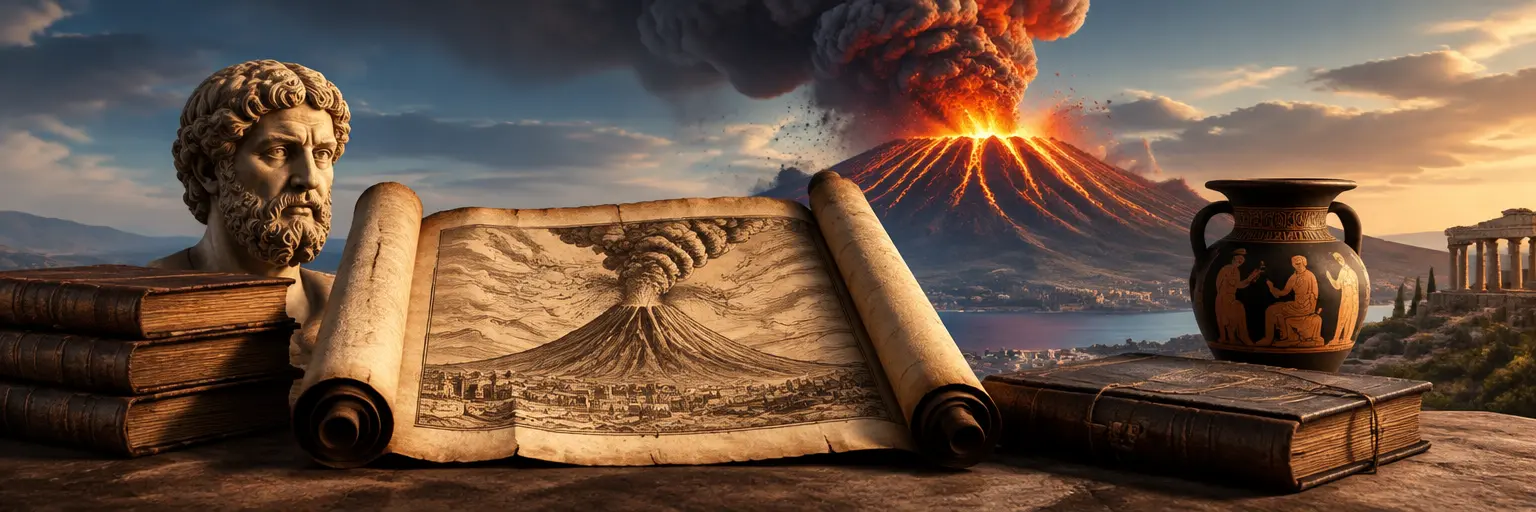
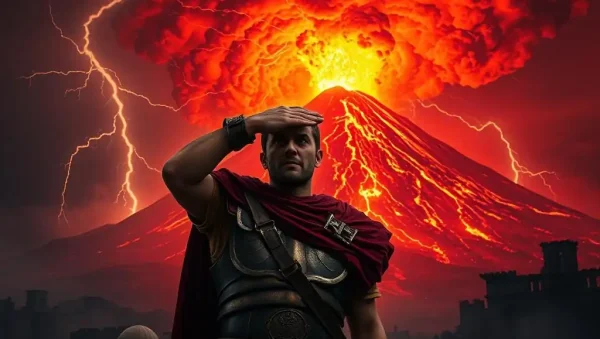
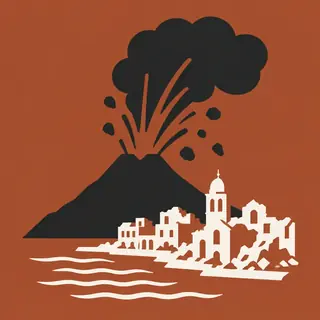
The most famous ancient account of a volcanic eruption comes from Pliny the Younger, whose two letters to Tacitus describe the catastrophic eruption of Mount Vesuvius that destroyed Pompeii and Herculaneum. These documents are foundational for both volcanology and history, offering a rare, minute-by-minute narrative of the eruption column, pyroclastic flows, and the panic of those fleeing. Pliny’s descriptions of the “umbrella pine” shaped cloud and the darkened skies directly inform the modern term Plinian eruption, a classification still used today. For readers, this section provides a translation analysis, explaining how the text was preserved and its scientific reinterpretation over centuries.
Beyond the science, these letters reveal a personal tragedy—the death of Pliny the Elder, who perished during a rescue mission. The account humanizes the disaster, giving us raw emotion alongside geological detail. For SEO purposes, this content targets keywords like “Pliny the Younger letters,” “Vesuvius 79 AD account,” and “ancient eruption descriptions.” By breaking down the language and historical context, we help readers understand how a single ancient document can anchor our knowledge of a supervolcanic event, bridging the gap between classical literature and modern geological research.
🌋 Thucydides and the Sicilian Eruption of Etna (425 BC)
The Greek historian Thucydides, in his History of the Peloponnesian War, provides one of the earliest written records of an erupting volcano in the Western world—Mount Etna’s activity in 425 BC. Although brief, his mention is crucial because it establishes a timeline for Etna’s frequent eruptions and connects the event to the broader conflict of the era. This passage is a primary source that volcanologists use to date past lava flows and understand the volcano’s long-term behavior. For readers, we parse the Greek original’s nuances, showing how phrases like “fire burst forth” were interpreted by subsequent historians and scientists.
This section also explores how Thucydides’ account influenced later classical writers, from Virgil’s Aeneid to Diodorus Siculus, who embellished the eruption with mythological giants buried under the mountain. We examine the intersection of history and myth, explaining why ancient people often saw eruptions as divine punishment or battles of their gods. Keywords here include “Thucydides Etna eruption,” “Sicilian volcano ancient record,” and “Greek historical descriptions of volcanoes.” Understanding these ancient perspectives enriches our appreciation of how early societies coped with unpredictable natural forces, a theme that echoes in modern disaster communication.
🗿 Icelandic Sagas: The Medieval Chronicles of Laki and Hekla
Moving to the medieval North, the Icelandic sagas and annals provide vivid, under-translated records of volcanic activity, particularly for Mount Hekla and the 1783 Laki eruption. Though technically early modern, the saga tradition extends back to the Settlement Era (9th–10th centuries), describing eruptions as journeys to the underworld or gates to hell. For example, the Landnámabók (Book of Settlements) references volcanic landscapes in ways that allow geologists to reconstruct which lava fields existed at the time of Norse settlement. These texts are not scientific treatises but offer invaluable chronological anchors for tephrochronology—dating via volcanic ash layers—and are essential for mapping Iceland’s eruption history.
This subcategory highlights how medieval scribes recorded ashfall effects on livestock, famine, and travel disruptions, paralleling modern Volcanic Explosivity Index (VEI) assessments. We analyze key passages from the Sturlunga saga and later official records, translating them for a broader audience. Target keywords include “Icelandic saga volcanic eruption,” “Hekla medieval records,” and “Laki eruption historical account.” By contrasting these northern texts with classical Greco-Roman ones, readers see a stark difference in style—where southern writers emphasized nobility and drama, northern chroniclers focused on practical survival, reflecting and shaping distinct cultural attitudes toward volcanoes and their environmental impact.
🌀 Mesoamerican Codices and the Popol Vuh: Mythical Volcanic Landscapes
While often overlooked in Western-centric volcanology, Mesoamerican ancient texts, including the Maya Popol Vuh and Aztec codices, contain profound references to volcanic eruptions, usually embedded in creation myths and cosmological narratives. For instance, the Popol Vuh describes the attempt to create humans and the destruction of a wooden race by a flood and fire, which some scholars link to eruptions of Volcán de Fuego or Pacaya in Guatemala. These texts are complex—they mix supernatural elements with observable phenomena like ash clouds, glowing lava, and earthquakes. They provide a unique cultural lens, showing how indigenous peoples integrated volcanic disasters into religious worldviews, often as acts of gods demanding respect or sacrifice.
We decode these symbolic references using ethnohistorical methods, comparing codex illustrations with geological evidence from specific eruptions. This section addresses the challenge of interpreting metaphors, but also shows how such texts can help date major events when combined with ice core or lake sediment data. For SEO, we focus on “Mesoamerican volcanic eruption myths,” “Popol Vuh volcano,” and “Aztec codex eruption.” Readers will gain a broader appreciation of how, across continents, ancient peoples used storytelling to encode vital warnings and memories of catastrophe, ensuring that future generations remained vigilant against the next eruption—a practice whose legacy persists in local oral traditions.
🏛️ Ancient Chinese and Japanese Annals: Seismic and Volcanic Records
East Asian chronicles, particularly Chinese dynastic histories and Japanese imperial records, offer some of the longest continuous observational records of volcanic activity—dating back over 2,000 years. For example, the Shiji (Records of the Grand Historian) and various Book of Han entries document eruptions, often combined with astronomical and weather observations, across regions like the Changbai Mountains (Paektu) and Hainan Island. These texts were meticulously maintained by court astronomers, providing exact dates, ashfall directions, and even descriptions of lightning within eruption clouds. For volcanologists, such annals are goldmines for calibrating dendrochronology and ice-core records, allowing precise reconstruction of major eruptions like the 946 AD Paektu event.
Similarly, Japanese texts like the Nihon Shoki (720 AD) describe the catastrophic eruption of Mount Fuji in 864 AD, naming the date, casualties, and even the flow paths—details that help modern modelers validate lava-flow simulations. In this section, we translate and contextualize these official records, showing how state-sponsored documentation served both administrative and spiritual purposes. Keywords include “ancient Chinese volcanic records,” “Mount Fuji 864 AD Nihon Shoki,” and “modern use of historical eruption data.” By highlighting these non-Western sources, we demonstrate how ancient texts are not relics but live datasets, integral to hazard assessment and volcano forecasting in rapidly developing regions.
Frequently Asked Questions
Why are ancient eruption accounts still scientifically useful?
Ancient texts provide exact dates, locations, and qualitative descriptions like ashfall thickness or flow direction. These allow scientists to calculate long-term eruption frequencies, correlate events with tree-ring or ice-core signals, and improve hazard maps. They also help validate climate models by linking eruptions to historical famines or unusual weather patterns.
What is the oldest known written record of a volcanic eruption?
The oldest known written record is a Sumerian tablet from around 2500 BC, but the earliest detailed Western account is the eruption of Thera (Santorini) described in Egyptian inscriptions and later Greek traditions. The best continuous ancient source is Pliny the Younger’s 79 AD letter, though Chinese or Japanese annals may hold earlier systematic notes.
How do historians verify the accuracy of ancient volcano descriptions?
Historians cross-reference multiple independent texts, archaeological layers of ash, and radiocarbon dating of charred organic material. They also match described phenomena (e.g., “the sun turned dark”) with modern knowledge of volcanic aerosols. Geolinguistic analysis of place names helps identify older eruption sites, while sediment cores provide physical proof.
Did ancient cultures correctly understand volcanic eruptions?
Most did not understand the geological origin, attributing eruptions to gods, demons, or mythical battles. However, some cultures, like the Greeks, hypothesized that trapped winds or underground fires caused them. Practical knowledge was often accurate—many coastal communities learned to evacuate after recognizing precursor earthquakes or sea retreats, as seen in Pliny’s account.
Can I read original translations of these ancient texts online?
Yes, many public-domain translations are available through university libraries, Perseus Digital Library, and the Internet Sacred Text Archive. For example, Pliny’s letters and Thucydides’ history are fully accessible. However, for those with specialized jargon (like Mesoamerican codices), scholarly editions with annotations are recommended for accurate interpretation.