La Palma 2021: Long-lasting Eruption on a Canary Island
Welcome to Volcano Explorers’ deep dive into the 2021 Cumbre Vieja eruption on La Palma, one of the most significant volcanic events of the 21st century. This subcategory unpacks the 85-day eruption that began on September 19, 2021, reshaping the island’s landscape and captivating global audiences. From the science of the lava flows to the human and economic toll, this page offers a comprehensive resource for students, travelers, and volcano enthusiasts. Explore how this fissure eruption on a Canary Island became a case study in resilience, monitoring, and the raw power of nature.
🌋 The Eruption Timeline: 85 Days of Lava and Ash
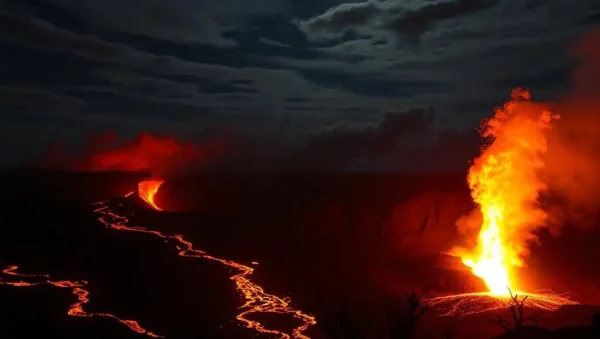
The 2021 La Palma eruption began with a series of earthquakes, or “earthquake swarms,” that intensified over a week, leading to the opening of a fissure on the Cumbre Vieja ridge. Within hours, multiple vents erupted, producing lava fountains that reached hundreds of meters and ash columns that disrupted air traffic. The eruption persisted for 85 days until December 13, 2021, making it the longest-recorded eruption on La Palma in over a century. This timeline is crucial for understanding how prolonged volcanic activity impacts both local infrastructure and scientific monitoring efforts.
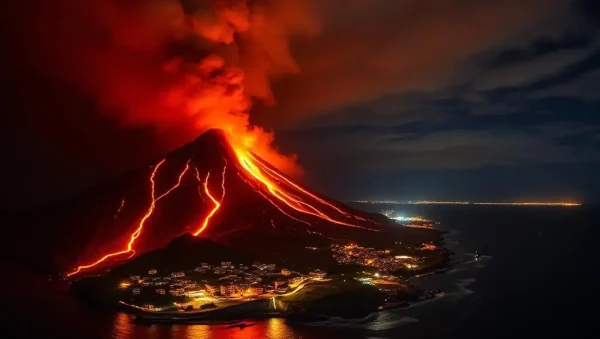
During these weeks, lava flows advanced and retreated, eventually covering over 1,200 hectares and destroying more than 1,600 buildings, including homes, schools, a cement plant, and banana plantations. The flows created a new lava delta, known as “Cumbre Vieja’s new land,” extending the island’s coastline by several hundred meters. For volcanologists, the timeline provided rare, real-time data on magmatic migration and eruption dynamics, making La Palma 2021 a benchmark for future eruption forecasting in volcanic islands.
📡 Scientific Monitoring and Prediction Success
One of the standout aspects of the La Palma eruption was the successful evacuation of over 7,000 residents, thanks to advanced seismic monitoring and early warning systems. Ground deformation, measured via GPS and satellite radar (InSAR), helped scientists track magma movement days before the fissure opened. This subcategory highlights how Spain’s Instituto Geográfico Nacional (IGN) and other agencies used real-time data to issue timely alerts, showcasing the power of modern volcanology. For visitors and researchers, this is a prime example of how science and technology can save lives.
Key takeaway: La Palma 2021 demonstrated that integrating seismic, geochemical, and satellite data improves hazard assessment. The eruption also inspired new research into “sustained basaltic eruptions,” which differ from short-lived events. By studying the eruption’s 85-day activity, scientists have refined models for lava flow direction, gas emission rates, and ash dispersion, helping future responses in similar volcanic island settings like the Azores or Hawaii. This section is essential for anyone interested in the practical applications of volcano monitoring.
🏠 Impact on Local Communities and Economy
The eruption’s long duration turned a geological event into a humanitarian crisis. Entire neighborhoods like Todoque were buried under lava, and over 300 hectares of agricultural land, vital for La Palma’s banana exports, were lost. The island’s tourism sector, a mainstay of the economy, suffered a sharp decline, though it eventually recovered as the eruption ended. This subcategory explores the social fabric of La Palma—how residents coped with displacement, the role of local solidarity, and the psychological toll of living under constant volcanic threat. It also examines government compensation schemes, which have become a model for disaster recovery in remote regions.
Beyond immediate damages, the eruption forced a rethinking of land-use planning on volcanic islands. Long-lasting eruptions like this one reveal that “short-term” evacuations may become months-long relocations. The economic ripple effects—from insurance claims to reconstruction costs—are detailed here, providing a realistic view of how such events reshape regional economies. For policymakers and community planners, La Palma serves as a cautionary tale and a blueprint for resilient rebuilding, including relocating critical services and designing new housing away from active rift zones.
📸 La Palma Volcano Tourism and Photography
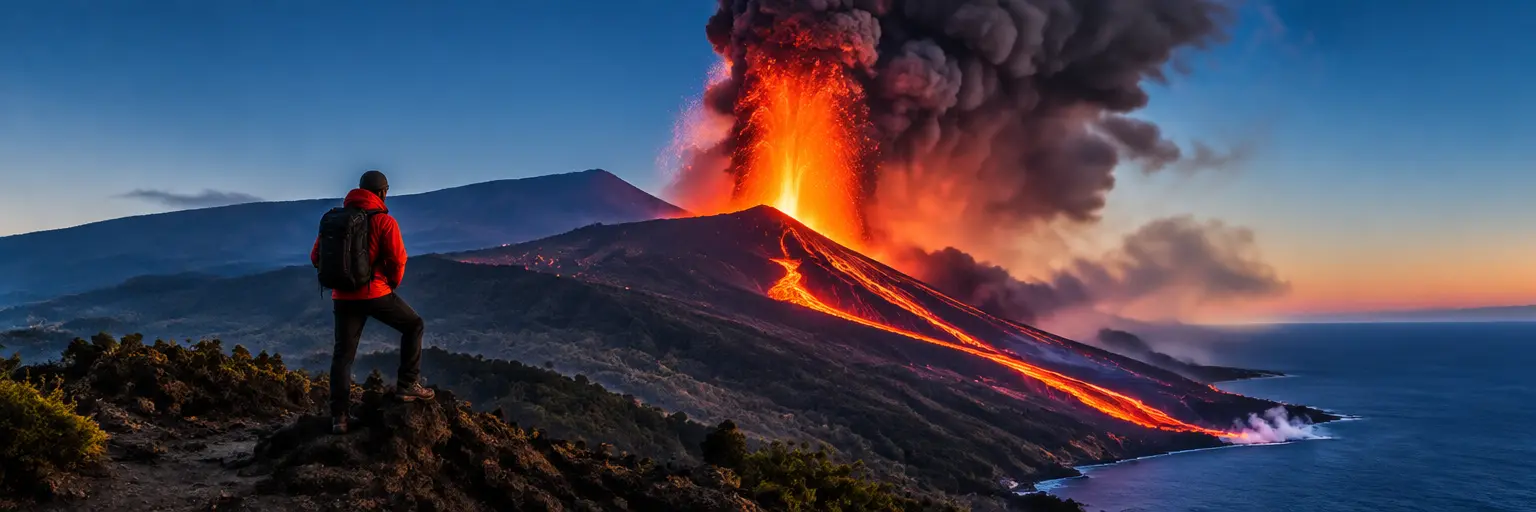
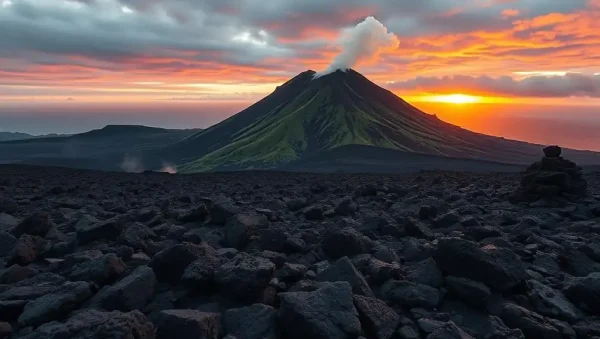
Despite the destruction, the eruption drew global attention from photographers, filmmakers, and volcano tourists. The spectacle of glowing lava meeting the Atlantic Ocean created mesmerizing steam plumes and new black sand beaches. This subcategory offers travel tips for visiting the eruption’s aftermath, including the Roque de los Muchachos Observatory viewpoint—a prime spot for viewing the now-crusted lava fields. We cover ethical tourism practices, such as respecting exclusion zones and supporting local businesses, while also highlighting how volcanic landscapes become natural laboratories for volcanic tourism.
Photographically, the eruption delivered iconic images of “lava trees,” spatter cones, and the dramatic lava-ocean interaction, which are now part of volcano photography canon. We explain how to capture these landscapes safely, what gear is essential, and the best times of day for light and temperature. For travel enthusiasts, this section balances the allure of volcanic awe with the responsibility of visiting disaster-affected areas, ensuring that your exploration contributes positively to La Palma’s recovery and its growing reputation as a volcano destination.
🔍 Comparison with Other Canary Island Eruptions
La Palma 2021 sits within a historical context of Canary Islands eruptions, including the 2011–2012 El Hierro submarine eruption and the 1971 Teneguía eruption on La Palma itself. This comparison helps readers understand regional volcanic patterns—why La Palma’s southern ridge is the most active zone, and how the style of these eruptions (shallow explosive and effusive) differs from the hotspot volcanoes of Hawaii. We also contrast the 2021 event with the more destructive 1706 Garachico eruption on Tenerife, which buried a major port city, showing that Canary Islands eruptions are both frequent and potentially devastating.
By studying these previous events, scientists predicted that Cumbre Vieja would produce long-lasting effusive activity with low gas explosivity. This subcategory details the geological similarities and differences, including lava composition (tephritic to basanitic) and eruption rates. For geology enthusiasts, this comparative analysis deepens understanding of how island volcanoes evolve, why some eruptions last days while others persist for months, and how global volcano databases can use historical analogies to improve hazard assessments. It’s a fascinating scholarly perspective that enriches the La Palma 2021 narrative.
Frequently Asked Questions
How long did the La Palma 2021 eruption last?
The eruption on Cumbre Vieja lasted exactly 85 days, from September 19 to December 13, 2021. This duration made it the longest volcanic eruption on La Palma since the 1585 Tajuya eruption, and one of the most prolonged effusive events recorded on the Canary Islands in modern history.
What caused the La Palma eruption?
The eruption was triggered by a magma intrusion that ascended through the Earth’s crust beneath the Cumbre Vieja ridge. A week of intense earthquake activity, or a seismic swarm, preceded the fissure opening, as magma pushed upward through fractures. The lava was of basaltic composition, rich in gases, which fueled sustained lava fountains and flows.
Was there any loss of life during the eruption?
Remarkably, no direct fatalities were recorded due to the eruption. However, one person died from carbon monoxide poisoning after inhaling gases near a lava flow, underscoring the invisible dangers of volcanic emissions. The successful evacuation orders and scientific monitoring were critical in preventing a larger tragedy.
How has La Palma recovered after the eruption?
Recovery has been gradual, with over 1,500 new homes and infrastructure being planned or built on safe, unaffected land. The island’s tourism and banana industries have rebounded, with new lava fields becoming a major attraction. Authorities have also implemented long-term hazard maps to guide future construction and land use.
Can I visit the site of the La Palma eruption now?
Yes, many parts of the eruption site are open to the public, including viewpoints that overlook the lava fields and new delta. However, access to some areas remains restricted due to unstable terrain and possible gas emissions. Guided tours from local operators are recommended for safe, informative visits that support the island’s economy.