
The Doors of Pompeii: Thresholds to a Lost World

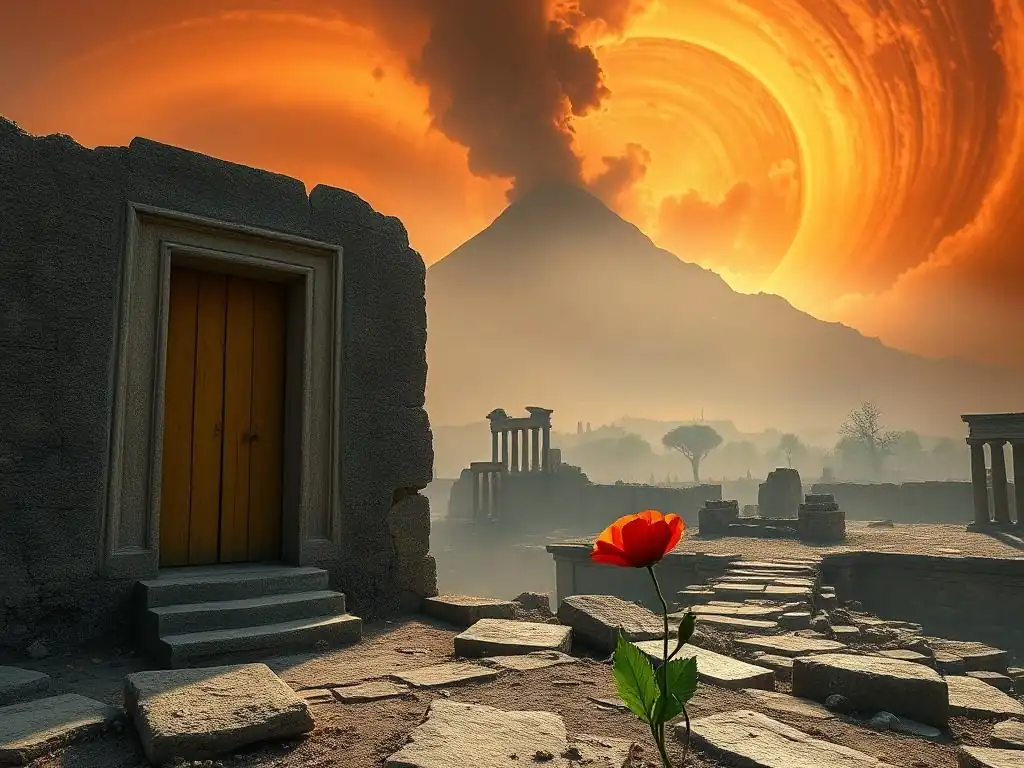
Welcome to Volcano Explorers!
Unravel the mysteries of the Earth's fiery heart and prepare to be captivated. What secrets lie buried beneath the ash of Vesuvius? Delve into the Pompeii volcanic eruption history and uncover the dramatic story of a city frozen in time, and the cataclysmic forces that sealed its fate. Your journey into the heart of volcanic history begins now...
- Introduction: Unveiling Pompeii Through its Doorways
- The Significance of Pompeii's Doorways in Understanding Roman Society
- Architectural Styles and Materials of Pompeii's Doors
- Pompeii's Doorways as Preserved by the Eruption of Mount Vesuvius
- Case Studies: Notable Doors and Doorways in Pompeii
- What Pompeii's Doors Tell Us About Life During the Eruption
- Conservation Efforts: Preserving Pompeii's Doorways for Future Generations
- The Enduring Legacy of Pompeii's Doorways: A Window into the Past
- Frequently Asked Questions
- Final Reflection: Echoes of Pompeii's Resilience
- Reopen the Past: Your Pompeii Adventure Starts Now!
Introduction: Unveiling Pompeii Through its Doorways
A Glimpse into Daily Life Before the Eruption of Mount Vesuvius
The ancient Roman city of Pompeii, frozen in time by the catastrophic eruption of Mount Vesuvius in 79 AD, offers an unparalleled window into the past. While the city itself is a treasure trove of information about Roman life, the doorways of Pompeii stand out as particularly eloquent storytellers.
These thresholds, once points of entry and exit for bustling daily life, now serve as silent witnesses to a vibrant society abruptly halted by the volcanic disaster. Examining Pompeii's doors allows us to visualize not just the architecture of the city, but also the routines, social structures, and even the final moments of its inhabitants before the infamous Pompeii volcanic eruption history unfolded.
Before the devastating event, Pompeii was a thriving commercial and residential hub. Its doorways were integral to the rhythm of daily life. From the grand entrances of wealthy villas to the simple openings of workshops and taverns, each doorway played a crucial role.
Imagine the sounds of Pompeii before the eruption: merchants calling out from their shop doorways, families greeting each other on thresholds of their homes, and the general hustle and bustle flowing through these passages. The doors of Pompeii were not merely functional; they were active participants in the city’s dynamic social and economic interactions prior to the Pompeii volcanic eruption history that would forever change its destiny.
Why Pompeii's Doors Offer Unique Insights into Roman History
Pompeii's doors are not just remnants of ancient architecture; they are exceptionally preserved artifacts that provide unique insights into Roman history unlike almost any other archaeological site. The volcanic ash that buried Pompeii acted as a remarkable preservative, encapsulating organic materials that would have otherwise decayed over millennia. This includes wooden doors, door frames, and even traces of decorations that adorned these thresholds. In many other Roman sites, wood and other perishable materials have long vanished, leaving gaps in our understanding of daily life.
The preservation at Pompeii offers an almost photographic snapshot of a Roman city in the first century AD. Doors, as integral parts of buildings and daily routines, are key to understanding the layout of homes, shops, and public spaces. They reveal details about construction techniques, material availability, and even social customs.
For example, the positioning and ornamentation of a doorway could indicate the status of the occupant, the type of business conducted within, or the level of public accessibility. Thus, the doors of Pompeii are more than just entrances; they are direct links to understanding Roman society and the dramatic Pompeii volcanic eruption history that preserved them for us to study today.
The Significance of Pompeii's Doorways in Understanding Roman Society
Beyond Physical Barriers: Doors as Symbols of Status in Pompeii
In ancient Pompeii, doorways were far more than mere physical barriers; they were potent symbols of social status and identity. The design, size, and ornamentation of a doorway often served as a public declaration of the occupant's wealth, profession, and place within Pompeian society. A grand, elaborately decorated doorway signaled affluence and importance, while a simple, unadorned entrance suggested a more modest existence. These architectural cues were readily understood by the inhabitants of Pompeii, contributing to a visual language of social hierarchy within the city.
The concept of privacy and public display was also intricately linked to doorways. Wealthy households often featured imposing doorways that both separated their private lives from the public street and simultaneously showcased their status to passersby. Conversely, shops and workshops often had doorways that were more open and inviting, encouraging trade and interaction.
The threshold itself, the liminal space between the street and the interior, held symbolic significance, representing the boundary between the public and private realms. Therefore, studying Pompeii’s doorways provides valuable insights into the social dynamics and status consciousness prevalent in Roman society prior to the Pompeii volcanic eruption history.
The correlation between social status and doorway design in Pompeii is evident throughout the excavated city. The homes of the elite, such as the House of the Faun or the House of the Vettii, boasted impressive doorways that reflected their owners' wealth and influence. These doorways were often characterized by the use of expensive materials like marble or imported stone for frames, intricate carvings, and imposing sizes that commanded attention. Bronze fittings and decorative elements further enhanced the grandeur of these entrances.
In contrast, the doorways of less affluent homes, workshops, and taverns were typically much simpler in design and construction. They often featured wooden frames and doors, sometimes with minimal or no ornamentation. The size of these doorways was also generally smaller, reflecting the more modest scale of these dwellings and businesses.
However, even within these simpler designs, variations could be observed, hinting at subtle differences in status within the lower and middle classes. For instance, a slightly wider or more decorated doorway for a shop might indicate a more prosperous business compared to a simple dwelling. The nuances in doorway design across Pompeii underscore the stratified nature of Roman society and how architectural elements served as visible markers of social standing in the context of Pompeii volcanic eruption history.
Architectural Styles and Materials of Pompeii's Doors
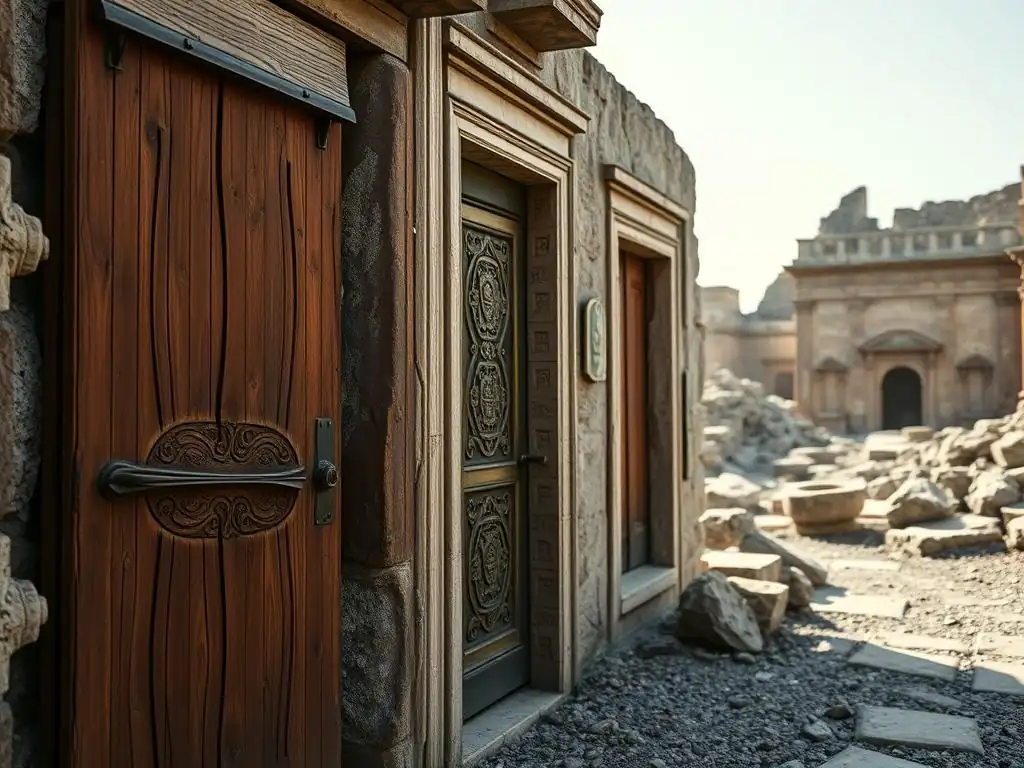
Examining the Construction Techniques of Roman Doors
Roman door construction in Pompeii showcased a blend of practicality and craftsmanship. Doors were typically constructed using mortise and tenon joints, a robust woodworking technique that ensured strength and stability. Frames were often made of sturdy timber, sometimes reinforced with stone or brick elements, particularly for larger and more elaborate doorways. Doors themselves could be single or double-leaf, depending on the size of the opening and the function of the building. Pivot hinges, often made of bronze or iron, were commonly used, allowing the doors to swing smoothly within their frames.
The Romans were skilled in carpentry and stonework, and this expertise is evident in the surviving doorways of Pompeii. Door frames were carefully crafted and often integrated seamlessly with the surrounding walls. For larger doorways, lintels – horizontal beams spanning the opening – were crucial for structural support, and these were often made of stone or reinforced wood.
The precision and durability of Roman door construction are remarkable, especially considering the tools and techniques available at the time. The enduring presence of these doorways, even after the devastating Pompeii volcanic eruption history, speaks volumes about the quality of Roman craftsmanship.
The Use of Wood, Stone, and Bronze in Pompeii Doorways
The materials used in Pompeii doorways varied depending on the status of the building and the resources of the owner. Wood was the most common material for the doors themselves, with various types of timber used, including oak, elm, and fir. These woods were chosen for their durability and workability. Door frames, particularly in more prestigious buildings, were often constructed from stone, such as local volcanic stone or imported travertine. Stone frames provided greater permanence and allowed for more elaborate decorative carvings.
Bronze played a significant role in Pompeii doorways, primarily for fittings and decorative elements. Bronze hinges, handles, and studs were common, adding both functionality and visual appeal. Bronze was valued for its strength, resistance to corrosion, and aesthetic qualities. In some wealthier homes, bronze sheeting or plaques might have been used to adorn door surfaces, further enhancing their opulence. While wood and stone provided the structural basis of Pompeii's doorways, bronze added a touch of refinement and indicated the wealth and status of the occupants before the Pompeii volcanic eruption history tragically struck.
Pompeii's Doorways as Preserved by the Eruption of Mount Vesuvius
How the Volcanic Ash Preserved Pompeii's Doors
The eruption of Mount Vesuvius, while catastrophic for the inhabitants of Pompeii, ironically became the agent of preservation for much of the city, including its doorways. The pyroclastic flows and volcanic ash that engulfed Pompeii created a unique environment that protected organic materials from the usual processes of decay. As the city was buried under meters of volcanic debris, air and moisture were largely excluded, slowing down decomposition significantly. This is particularly crucial for the preservation of wooden elements, which are highly susceptible to rot and insect infestation in normal circumstances.
The fine volcanic ash essentially entombed the doors and doorways of Pompeii, creating molds around the original structures. When organic materials like wood eventually decayed over time, the hardened ash retained the shape and even some surface details of the doors.
Archaeologists have been able to exploit these molds by carefully injecting plaster or resin to recreate the original forms of doors and other perishable items. This process has allowed us to see not just the outlines of doorways, but also, in some cases, intricate details of their construction and decoration, providing invaluable insights into Pompeii’s architectural heritage and the events of the Pompeii volcanic eruption history.
The Role of Excavation in Revealing Pompeii's Architectural Heritage
The rediscovery and excavation of Pompeii starting in the 18th century have been instrumental in revealing the city's remarkably preserved architectural heritage, including its doorways. Systematic excavations have unearthed buildings layer by layer, carefully removing the solidified volcanic ash to expose the structures beneath. As excavators cleared away the debris, doorways emerged as key features, often still standing in their original positions, albeit sometimes partially damaged or collapsed.
Archaeological techniques have evolved over time, becoming increasingly sophisticated in extracting information from the excavated remains. Early excavations focused primarily on recovering artifacts, but modern approaches emphasize meticulous documentation and preservation in situ. The excavation process involves careful recording of the position and orientation of doorways, analysis of the materials used, and the study of any associated artifacts found nearby. This detailed work has allowed archaeologists to reconstruct the original appearance of Pompeii's doorways and to interpret their significance within the broader context of the city and its Pompeii volcanic eruption history.
Case Studies: Notable Doors and Doorways in Pompeii
The Door of the House of the Vettii: Priapus Painting and Mercantile Status
The House of the Vettii, renowned for its well-preserved frescoes and layout, features a particularly notable doorway adorned with a painting of Priapus, the Roman god of fertility, gardens, and male genitalia. This prominent depiction of Priapus, positioned directly to the right of the entrance, is believed to have served as a symbol of prosperity and good fortune for the household. The House of the Vettii is thought to have belonged to wealthy merchants, and the Priapus painting likely acted as a visual declaration of their mercantile success and aspirations for continued wealth.
The doorway itself is relatively simple in construction, suggesting that the emphasis was placed on the symbolic imagery rather than elaborate architectural features. The painting, however, is striking and immediately draws attention to the entrance. This case study illustrates how even seemingly simple doorways in Pompeii could be imbued with significant symbolic meaning, reflecting the beliefs and social standing of the occupants. The Priapus painting at the House of the Vettii doorway provides a fascinating glimpse into the intersection of commerce, religion, and social display in Pompeii before the Pompeii volcanic eruption history.
The Entrance to the Stabian Baths: Public Access and Architectural Grandeur
The Stabian Baths, one of Pompeii's largest and oldest public bath complexes, are characterized by a grand and imposing entrance that reflects the public importance of this institution. The doorway to the Stabian Baths is significantly larger and more architecturally elaborate than those of private residences, designed to facilitate the flow of large numbers of citizens and to convey the grandeur of the public baths. The entrance likely featured multiple doorways or arched openings, creating a welcoming and impressive approach to the bathing facilities.
While the original doors themselves may not have survived in their entirety, the stone frames and architectural structure of the entrance remain, showcasing the scale and design of this public space. The use of durable materials like stone and brick for the entrance ensured its longevity and reinforced its status as a significant public building.
The Stabian Baths doorway serves as a prime example of how doorways in Pompeii varied in style and scale according to their function, with public buildings like bathhouses employing grand entrances to signify their importance in civic life prior to the Pompeii volcanic eruption history.
The House of the Faun, one of the largest and most lavish residences in Pompeii, features multiple doorways that collectively reflect the immense wealth and high social standing of its inhabitants. The house occupies an entire city block and boasts several entrances, each designed with varying degrees of grandeur and functionality. The main entrance, likely intended for formal visitors and public display, would have been particularly imposing, potentially featuring a monumental doorway with expensive materials and elaborate decorations.
Secondary entrances, perhaps for household staff or deliveries, would have been more functional and less ornate. Analyzing the different doorways of the House of the Faun provides insights into the spatial organization of this vast residence and the various levels of access and privacy within. The opulence and scale of the doorways, in conjunction with the overall size and decoration of the House of the Faun, underscore the extreme social stratification in Pompeii and the conspicuous consumption of the wealthy elite just before the Pompeii volcanic eruption history.
What Pompeii's Doors Tell Us About Life During the Eruption
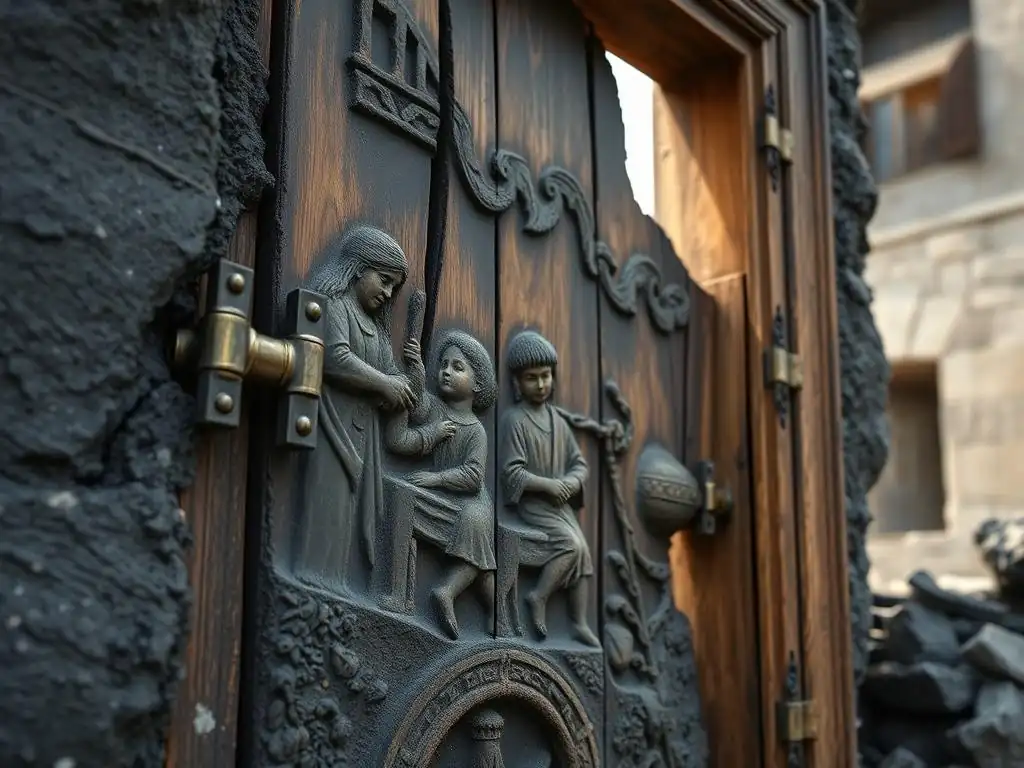
Evidence of Hasty Exits and Blocked Passages
Pompeii's doorways, in their preserved state, offer poignant evidence of the chaos and panic that ensued during the eruption of Mount Vesuvius. Archaeological findings around doorways often reveal signs of hasty exits and desperate attempts to escape the unfolding disaster. Doors found ajar or forced open suggest that residents were fleeing in such haste that they did not take the time to properly close and secure their homes. In some cases, doors may have been left open in anticipation of a quick return, a tragically miscalculated assumption.
Furthermore, the discovery of blocked doorways and passages provides chilling accounts of the eruption's impact. Some doorways were found obstructed by debris from collapsing buildings or by the accumulating volcanic ash itself, trapping those inside. The positions of skeletal remains found near doorways sometimes indicate individuals who were overcome while attempting to flee or seek shelter, highlighting the desperate struggle for survival during the Pompeii volcanic eruption history.
Insights into the Final Moments Before the Catastrophe
The doorways of Pompeii, in their final state of preservation, offer haunting insights into the final moments before the catastrophe engulfed the city. Objects left behind near doorways, such as tools, personal belongings, or even food, suggest that daily routines were abruptly interrupted by the eruption.
The positions of doors – whether open, closed, or jammed – can provide clues about the actions and decisions of the inhabitants in the face of imminent danger. A door left wide open might indicate a hurried escape, while a closed door could suggest an attempt to secure a building, perhaps in a futile effort to seek refuge.
The layers of volcanic ash deposited around doorways also offer a chronological record of the eruption's progression. By analyzing the stratigraphy of the ash deposits, archaeologists can reconstruct the sequence of events and understand how quickly the city was overwhelmed. The doorways, therefore, are not just static architectural features; they are dynamic indicators of the human drama that unfolded during the Pompeii volcanic eruption history, preserving a snapshot of the city's final moments.
Conservation Efforts: Preserving Pompeii's Doorways for Future Generations
Challenges in Conserving Ancient Wood and Stone
Conserving Pompeii's doorways presents significant challenges due to the delicate nature of the ancient materials and the long period of burial and subsequent exposure. Wood, even when preserved by volcanic ash, becomes fragile and susceptible to decay upon excavation and exposure to air and moisture. The process of carbonization, while preserving the form of the wood, also weakens its structural integrity. Stone, while more durable than wood, can also suffer from weathering, erosion, and the effects of salt crystallization, particularly after centuries underground.
Furthermore, past conservation attempts, sometimes using less sophisticated techniques, may have inadvertently caused damage or introduced unsuitable materials. Modern conservation efforts must address these pre-existing issues while also implementing preventative measures to protect the doorways from further deterioration. The fluctuating environmental conditions at the archaeological site, including temperature changes, humidity, and rainfall, also pose ongoing threats to the preservation of Pompeii’s doorways and other architectural elements affected by the Pompeii volcanic eruption history.
Modern Techniques Used to Protect Pompeii's Architectural Heritage
Modern conservation of Pompeii's doorways employs a range of advanced techniques aimed at stabilizing, consolidating, and protecting these fragile artifacts. For wooden elements, conservation often involves careful cleaning, consolidation with resins to strengthen the wood structure, and protective coatings to minimize moisture absorption and biological attack. In some cases, severely deteriorated wooden doors may be replaced with replicas, with the original fragments preserved for study and display in controlled museum environments.
Stone doorways undergo similar treatments, including cleaning to remove surface dirt and biological growth, consolidation to reinforce weakened stone, and the application of protective coatings to prevent further weathering and erosion. Laser cleaning techniques are sometimes used to precisely remove encrustations without damaging the underlying surface. Environmental monitoring and control are also crucial aspects of modern conservation, with efforts to manage humidity, temperature, and sunlight exposure at the site. These comprehensive strategies aim to ensure that Pompeii's doorways, and the broader architectural heritage preserved by the Pompeii volcanic eruption history, are protected for future generations to study and appreciate.
The Enduring Legacy of Pompeii's Doorways: A Window into the Past
Reconstructing Daily Life in Pompeii Through Architectural Analysis
The doorways of Pompeii, far from being mere architectural details, are invaluable tools for reconstructing the daily life of this ancient Roman city. By studying the design, materials, and locations of doorways, archaeologists and historians can glean insights into the social organization, economic activities, and domestic routines of Pompeian society before the Pompeii volcanic eruption history. The size and ornamentation of doorways reveal social hierarchies, while the types of businesses indicated by shop entrances illuminate the city's commercial landscape.
Doorways also provide clues about the internal layout of buildings and the flow of movement within Pompeian homes and public spaces. Analyzing the thresholds and access points helps us understand how people navigated the city, interacted with each other, and structured their daily lives. The preservation of doorways, along with the surrounding buildings, offers a unique opportunity to step back in time and visualize the bustling activity that once characterized Pompeii, making the city’s doorways powerful portals to the past.
Connecting with History Through the Thresholds of Pompeii
Standing before the doorways of Pompeii today is a profoundly moving experience. These thresholds, once crossed by countless individuals going about their daily lives, now stand as silent witnesses to a lost world. They are tangible links to the past, allowing us to connect with the human stories of Pompeii on a deeply personal level. By examining these doorways, we are not just studying ancient architecture; we are engaging with the remnants of human lives interrupted by a catastrophic event.
The doorways of Pompeii invite us to imagine the people who passed through them, the conversations that took place on their thresholds, and the everyday moments that unfolded within their frames. They serve as poignant reminders of the fragility of life and the enduring power of history. Through these thresholds, we can step into the past, contemplate the dramatic Pompeii volcanic eruption history, and gain a greater appreciation for the lives and legacy of those who inhabited this remarkable city.
Frequently Asked Questions
What caused the destruction of Pompeii?
The destruction of Pompeii was caused by the eruption of Mount Vesuvius in 79 AD. The city was buried under layers of ash and pumice, preserving it for centuries.
When did the Pompeii volcanic eruption occur?
The Pompeii volcanic eruption that destroyed the city occurred in 79 AD. This event is a significant part of Pompeii's history.
What type of volcanic eruption destroyed Pompeii?
The eruption was a Plinian eruption, characterized by a powerful explosion and a sustained column of ash and pumice. This type of eruption is known for its devastating effects.
How did the volcanic eruption preserve Pompeii?
The thick layers of ash and pumice effectively sealed Pompeii, protecting it from the elements and decay. This created a unique time capsule, preserving buildings and even the forms of the victims.
What can we learn from the Pompeii volcanic eruption history?
The Pompeii eruption provides invaluable insights into Roman life, volcanic processes, and the impact of natural disasters. Studying this event helps us understand and prepare for future volcanic hazards.
Final Reflection: Echoes of Pompeii's Resilience
The narrative of Pompeii, forever etched in time by the cataclysmic eruption of Vesuvius, remains profoundly relevant today. The echoes of that ancient tragedy serve as a stark reminder of nature's power and the fragility of human existence, urging us to learn from the past to better navigate the uncertainties of our present and future. The meticulous preservation of Pompeii, particularly its doorways, offers invaluable insights into the daily lives, societal structures, and artistic sensibilities of a civilization abruptly frozen in time.
The enduring fascination with Pompeii stems not just from the spectacle of its destruction, but from the palpable connection we feel to its inhabitants. Walking through those ancient doorways, we glimpse a world both familiar and foreign, a testament to the enduring human spirit. The doors themselves, silent witnesses to countless comings and goings, whisper stories of love, loss, commerce, and community. The past is never dead. It's not even past.
- William Faulkner. This quote encapsulates the power of Pompeii to transport us, to make us feel the pulse of a world long gone, and to understand that the human experience, in its essence, transcends time.
As we contemplate the doors of Pompeii and the volcanic eruption history that sealed its fate, let us not only marvel at the archaeological wonders but also reflect on our own lives. What thresholds do we cross each day? What legacy will we leave behind? Let the story of Pompeii inspire you to live with intention, to cherish the present moment, and to build a future worthy of remembrance, even in the face of unforeseen challenges.
Reopen the Past: Your Pompeii Adventure Starts Now!
Thank you for exploring the captivating world of Pompeii with us! We hope you've gained a new appreciation for the lives lost to Vesuvius's eruption. Now, let's bring that inspiration to life.
Here are a few ways to continue your exploration:
- Create your own virtual tour of Pompeii! Use online resources like Google Street View to revisit specific houses and streets mentioned in the article and design your own itinerary.
- Delve deeper into the daily lives of Pompeii's citizens by researching their food, clothing, and professions to better understand their lost culture.
- Share your favorite moment from the article on social media using #VolcanoExplorers and invite others to join the discussion!
Which aspect of Pompeii most captivated you, and what question would you ask a Pompeian resident if given the chance?