Discover How Volcanoes Shape Earth's Carbon Cycle
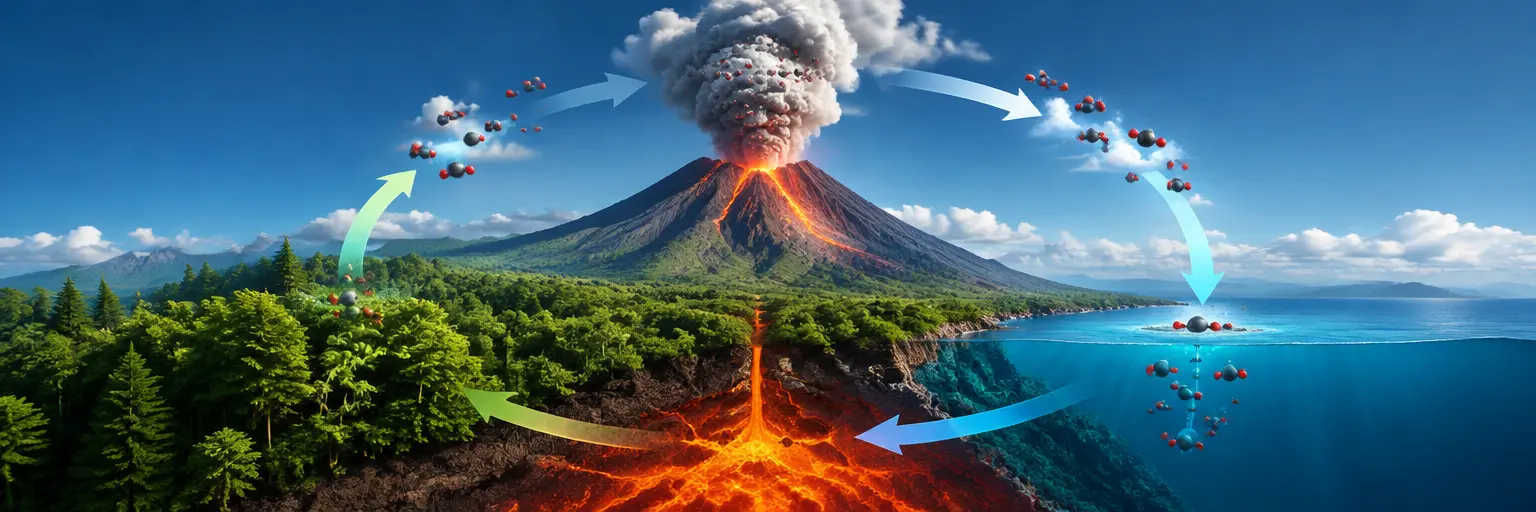
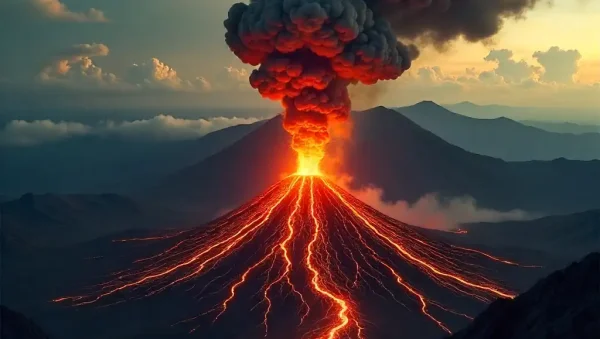
Volcanoes are often seen only as destructive forces, but they play a fundamental role in regulating our planet's climate and carbon balance. In this subcategory, we explore how volcanic eruptions release carbon dioxide (CO₂) and other gases from deep within the Earth, connecting the geosphere, atmosphere, and biosphere. You’ll gain a deeper understanding of how these fiery giants influence global warming, ocean chemistry, and even the long-term habitability of Earth.
🌋 Volcanic CO₂ Emissions: A Natural Source
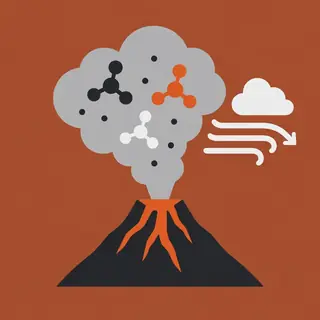
Volcanic eruptions emit significant amounts of CO₂, but their annual contribution is far less than human activities. Submarine volcanoes and active subaerial vents release carbon stored in magma, which originates from the mantle and recycled crust. This process is part of the long-term carbon cycle, balancing carbon subducted into the mantle with carbon released back into the atmosphere.
When you explore this section, expect to learn how scientists measure volcanic CO₂ using tools like remote sensing and gas sampling. You'll also see why volcanic emissions are crucial for understanding natural vs. anthropogenic climate drivers. Volcanic carbon acts as a baseline for climate models, helping researchers isolate human-induced changes.
🌍 Subduction Zones and Carbon Recycling
Subduction zones are where tectonic plates sink into the mantle, carrying carbon-rich sediments and oceanic crust. This carbon is partially released through arc volcanoes, while the rest is deeply buried. This dynamic process is vital for the Earth's carbon budget, as it removes carbon from the surface and returns it over millions of years.
Here, you’ll delve into case studies like the Pacific Ring of Fire, where subduction-driven volcanism returns carbon to the atmosphere. We explain how high-pressure metamorphism transforms carbonate minerals, and why some carbon remains trapped. This knowledge is key for understanding the Earth's long-term thermostat and the stability of our climate over geological time.
🌊 Ocean-Volcano Interactions and Carbon Storage
Underwater volcanoes, especially at mid-ocean ridges, release CO₂ that dissolves into seawater, affecting ocean acidity and marine life. Hydrothermal vents also interact with seawater, creating chemical reactions that can either release or absorb carbon. These processes influence the ocean's capacity to store carbon, acting as both source and sink.
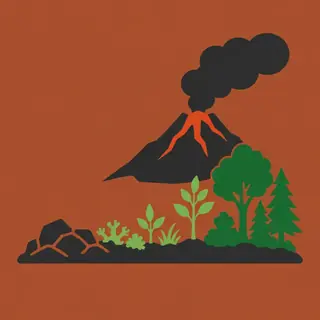
Expect to discover how deep-sea volcanic activity affects the biological pump, where plankton and marine organisms transport carbon to the ocean floor. We also discuss the role of volcanic ash in fertilizing surface waters, boosting primary productivity and enhancing CO₂ uptake. This section is perfect for those interested in marine geology and climate feedback loops.
⏳ Volcanism and Climate Over Geological Time
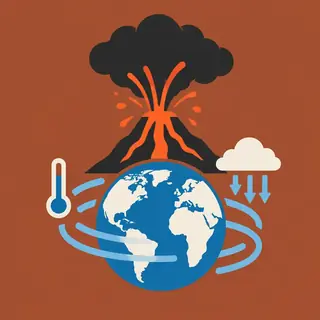
Massive volcanic eruptions, like those of the Deccan Traps or Siberian Traps, have coincided with major climate shifts and mass extinctions. These flood basalts emitted enormous volumes of CO₂ and other greenhouse gases, leading to warming events. But volcanic aerosols can also cause short-term cooling, creating complex climate responses.
In this section, you’ll learn how geologists use proxy records like ice cores and sedimentary rock to reconstruct past carbon levels. We’ll compare ancient volcanic crises with modern human emissions, offering perspective on timescales and magnitudes. Understanding these historical events helps us predict potential climate tipping points and informs future climate policy.
🔬 Measuring and Monitoring Volcanic Carbon
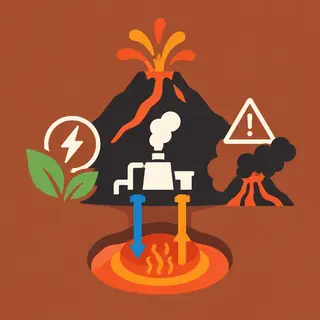
Volcanologists deploy cutting-edge technology to monitor carbon emissions, including ground-based gas sensors, drones, and satellite instruments. Continuous monitoring helps predict eruptions and quantify carbon fluxes. Citizen science programs also contribute data, expanding our global understanding of volcanic carbon output.
You will gain insight into the challenges of measuring volatile gases like CO₂, which is diluted by winds and requires careful modeling. We showcase real-world examples, such as monitoring at Kīlauea or Etna, to illustrate practical applications. This knowledge empowers you to understand air quality impacts and the broader implications for global carbon accounting.
❓ Frequently Asked Questions
Do volcanoes emit more CO₂ than human activities?
No, human activities emit roughly 60-100 times more CO₂ than all active volcanoes combined. Global volcanic emissions are estimated at about 0.1-0.3 gigatons per year, while humans emit over 36 gigatons annually. This highlights the dominant role of fossil fuels in modern climate change.
How do volcanoes remove carbon from the atmosphere?
Volcanoes help remove carbon indirectly through silicate weathering. When volcanic rocks like basalt are exposed to air and water, they react with CO₂, forming carbonate minerals. This process, called enhanced weathering, locks carbon into solid rock over millennia. However, volcanic eruptions themselves mostly add carbon.
Can volcanic eruptions cool the planet?
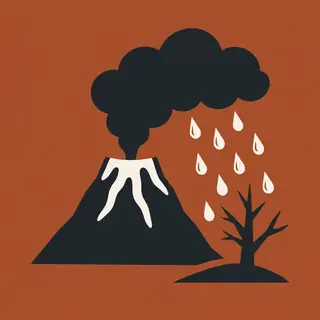
Yes, large eruptions eject sulfur dioxide into the stratosphere, which reflect sunlight and cause temporary cooling for 1-3 years. For example, the 1991 Mount Pinatubo eruption cooled Earth by about 0.5°C. This cooling is separate from carbon's long-term warming effect, which persists for decades to centuries.
What happens to carbon in subducting oceanic plates?
When an oceanic plate subducts, its sediments and altered crust contain carbonates and organic carbon. Most of this carbon is subducted deep into the mantle, while 20-30% returns to the surface via arc volcanoes. The rest remains locked in the mantle for millions of years, part of Earth's deep carbon cycle.
Why is the volcanic carbon cycle important for climate predictions?
Because volcanic carbon emissions are natural and relatively constant over short timescales, they provide a baseline for comparing human impacts. Understanding this cycle helps scientists distinguish between natural variability and anthropogenic forcing. It also improves models that forecast long-term climate trends and Earth's habitability over geological epochs.