
Volcanic Islands: Carbon Hotspots in the Ocean?


Welcome to Volcano Explorers, where the Earth's fiery heart meets cutting-edge science. Ever wondered if those idyllic volcanic islands hide a darker secret beneath their beauty? Dive in as we unravel the surprising truth behind carbon emissions volcanic islands and their impact on our oceans. Could these seemingly pristine paradises actually be carbon hotspots? Prepare to have your perception of volcanic landscapes forever changed...
- Introduction: Unveiling the Carbon Footprint of Volcanic Islands
- The Geology of Carbon on Volcanic Islands: A Primer
- Quantifying Carbon Emissions from Volcanic Islands: Challenges and Methodologies
- The Oceanic Impact: How Volcanic Islands Alter Marine Carbon Dynamics
- Carbon Sequestration Potential on Volcanic Islands: Natural and Engineered Approaches
- Case Studies: Examining Carbon Dynamics on Specific Volcanic Islands
- The Global Significance: Volcanic Islands in the Context of Climate Change
- Conclusion: Balancing the Carbon Equation on Volcanic Islands
-
Frequently Asked Questions
- What role do volcanic islands play in global carbon emissions?
- How do carbon emissions from volcanic islands compare to other sources, like fossil fuels?
- What factors influence the amount of carbon emitted from a volcanic island?
- Are there any mechanisms by which volcanic islands can reduce carbon emissions?
- What is the significance of studying carbon emissions from volcanic islands?
- Final Reflection: Islands of Carbonic Consequence
- Ignite Your Curiosity: Explore the Volcanic World!
Introduction: Unveiling the Carbon Footprint of Volcanic Islands
Exploring the Role of Volcanic Islands in Regional and Global Carbon Cycles
Volcanic islands, born from the Earth's fiery depths, are often perceived as pristine paradises. However, beneath their idyllic surfaces lies a complex interplay with the global carbon cycle. These geological formations, scattered across the world's oceans, are not merely passive recipients of atmospheric carbon; they are active participants, both emitting and sequestering carbon in significant ways.
Understanding their role is crucial for a comprehensive grasp of regional and global carbon budgets, especially in the context of climate change. While often overshadowed by anthropogenic emissions, the contribution of volcanic islands to carbon fluxes, particularly through both volcanic degassing and weathering processes, warrants closer examination.
The influence of volcanic islands extends beyond direct emissions from volcanic vents. Their unique geology, characterized by basaltic rocks and hydrothermal systems, fosters a range of processes that impact carbon cycling. For instance, the weathering of volcanic rocks, particularly basalt, is a natural mechanism for long-term carbon dioxide removal from the atmosphere through mineral carbonation.
Conversely, volcanic activity releases substantial amounts of greenhouse gases, including carbon dioxide, into the atmosphere and ocean. The balance between these emission and sequestration processes on volcanic islands is a critical factor in determining their net carbon footprint and their overall impact on the climate system. Furthermore, the oceanic setting of these islands introduces another layer of complexity, as interactions between volcanic processes and marine carbon dynamics play a significant role in regional and potentially global carbon cycles.
The Geology of Carbon on Volcanic Islands: A Primer
Magmatic Degassing and Initial Carbon Release: Source Processes
The story of carbon emissions from volcanic islands begins deep within the Earth's mantle, where magma is generated. This molten rock, a complex mixture of silicates, oxides, and dissolved gases, is the primary source of carbon released by volcanoes. Carbon exists in magma predominantly as carbon dioxide (CO2), along with smaller amounts of other carbon-bearing species.
As magma ascends towards the surface, the pressure decreases, causing dissolved gases to exsolve, a process known as degassing. This degassing is the primary mechanism for the initial release of carbon into the atmosphere and hydrosphere from volcanic systems. The composition of the magma, particularly its volatile content, and the style of volcanic eruption (effusive or explosive) significantly influence the rate and magnitude of carbon release.
The amount of carbon released during magmatic degassing varies widely depending on the tectonic setting and the type of volcano. For instance, mid-ocean ridge volcanoes, which are responsible for creating most of the oceanic crust, are characterized by relatively low carbon emissions per unit volume of magma erupted. In contrast, arc volcanoes, often associated with explosive eruptions, tend to release more significant amounts of carbon.
Studies using melt inclusions, tiny pockets of magma trapped within crystals, have provided valuable insights into the pre-eruptive volatile content of magmas, allowing for better estimations of carbon emissions from different volcanic settings. The continuous, albeit often subtle, degassing from volcanic islands, even during periods of quiescence, contributes to the overall carbon budget.
Weathering Processes and Carbon Sequestration on Volcanic Terrains: Mineral Carbonation
While volcanic islands are sources of carbon emissions, they also possess a remarkable capacity for carbon sequestration through weathering processes. The bedrock of most volcanic islands is primarily composed of basalt, a volcanic rock rich in calcium and magnesium silicates. When basalt interacts with rainwater and atmospheric carbon dioxide, a series of chemical reactions occur, collectively known as chemical weathering.
This weathering process breaks down the basaltic minerals, releasing calcium and magnesium ions that react with dissolved carbon dioxide to form stable carbonate minerals like calcite and magnesite. This process, called mineral carbonation, effectively sequesters carbon dioxide from the atmosphere in solid form.
The efficiency of mineral carbonation on volcanic islands is enhanced by several factors. The fractured and porous nature of basaltic rocks provides a large surface area for weathering reactions. The warm and humid climates prevalent in many volcanic island regions accelerate chemical weathering rates.
Furthermore, the presence of volcanic ash and glass, which are more reactive than crystalline basalt, further promotes carbon sequestration. Estimates suggest that basalt weathering globally sequesters a significant amount of carbon dioxide annually, potentially offsetting a portion of volcanic and even anthropogenic carbon emissions. The long-term geological storage of carbon through mineral carbonation on volcanic islands represents a crucial natural carbon sink, playing a vital role in regulating Earth's climate over geological timescales.
Quantifying Carbon Emissions from Volcanic Islands: Challenges and Methodologies
Measuring Direct Carbon Dioxide (CO2) Fluxes from Volcanic Vents: Techniques and Limitations
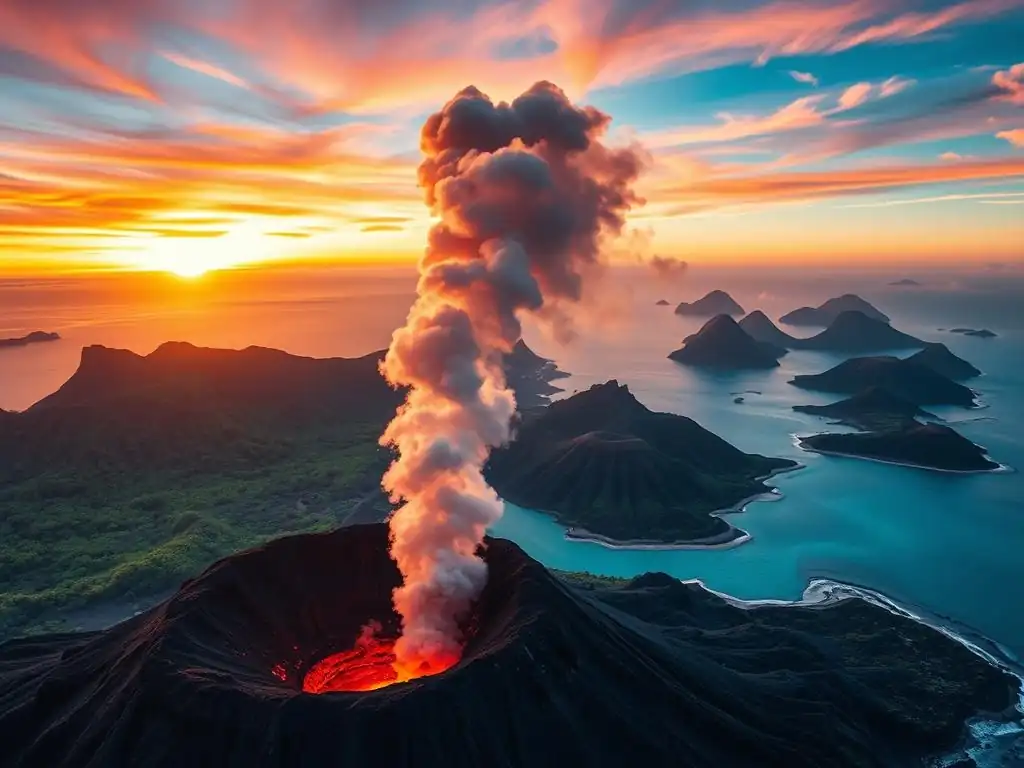
Accurately quantifying carbon emissions from volcanic islands is a complex endeavor, fraught with methodological challenges. Measuring direct carbon dioxide (CO2) fluxes from volcanic vents, the most obvious source of volcanic gas release, is a primary approach. Techniques employed include direct sampling of volcanic gases using specialized probes and gas collection systems. These samples are then analyzed in laboratories using gas chromatography and other spectroscopic methods to determine the concentration of CO2 and other gases. Another common method is the use of spectroscopic instruments deployed near volcanic vents, such as infrared gas analyzers, which can measure CO2 concentrations in real-time.
However, measuring vent fluxes accurately presents several limitations. Volcanic gas emissions are often spatially and temporally variable, making it challenging to obtain representative measurements. Accessibility to volcanic vents, especially those located in remote or hazardous areas, can be restricted.
Furthermore, the presence of other gases and aerosols in volcanic plumes can interfere with measurements. Techniques like flux chambers, which isolate a specific area of gas emission to measure flux rates, can be employed, but these are limited to accessible and relatively small areas. Despite these limitations, direct vent measurements provide crucial insights into the composition and magnitude of volcanic gas emissions, contributing to overall carbon emission estimates.
Assessing Diffuse Carbon Emissions Across Island Landscapes: Soil CO2 Efflux
Beyond direct vent emissions, volcanic islands also release carbon dioxide diffusely across their landscapes, primarily through soil CO2 efflux. This diffuse degassing, often less visually striking than vent emissions, can contribute significantly to the total carbon budget. Soil CO2 efflux is generated by a combination of processes, including microbial respiration in soils, degassing from shallow magma reservoirs, and the interaction of groundwater with volcanic rocks.
Measuring soil CO2 efflux requires different techniques than those used for vent emissions. The most common method involves using soil CO2 flux chambers, which are placed on the soil surface to capture the CO2 emitted from the soil over a defined period.
These measurements are typically conducted at multiple locations across the island landscape to account for spatial variability in soil CO2 efflux. Factors such as soil type, vegetation cover, temperature, and proximity to volcanic activity can influence soil CO2 fluxes. Isotope analysis of carbon in soil gas samples can help differentiate between different sources of CO2, such as biogenic respiration versus volcanic degassing.
While soil CO2 efflux measurements provide valuable information on diffuse carbon emissions, they are also subject to limitations, including spatial heterogeneity of fluxes, temporal variability related to environmental factors, and potential disturbance of soil processes by the measurement technique itself. Integrating soil CO2 efflux measurements with vent flux data is essential for a comprehensive assessment of total carbon emissions from volcanic islands.
Remote Sensing Techniques for Monitoring Carbon Plumes: Satellite-Based Observations
Remote sensing techniques, particularly satellite-based observations, offer a powerful tool for monitoring carbon plumes and assessing volcanic carbon emissions on a larger scale and over time. Satellites equipped with specialized sensors can detect and measure the concentration of carbon dioxide and other gases in volcanic plumes from space. Instruments such as infrared spectrometers can identify the spectral signature of CO2, allowing for the estimation of plume concentrations and spatial extent. Satellite data can provide synoptic views of volcanic plumes, capturing emissions from remote and inaccessible volcanoes, and enabling the monitoring of volcanic activity over extended periods.
Satellite-based measurements are particularly useful for tracking large eruptions and assessing their contribution to atmospheric carbon dioxide. For instance, satellite data played a crucial role in quantifying the sulfur dioxide and CO2 emissions from the 2010 Eyjafjallajökull eruption in Iceland. However, satellite remote sensing of volcanic carbon emissions also has limitations.
The accuracy of measurements can be affected by atmospheric conditions, cloud cover, and the altitude of the volcanic plume. Furthermore, satellites typically measure the total column abundance of CO2, requiring atmospheric models to separate the volcanic contribution from the background atmospheric CO2. Despite these limitations, satellite remote sensing provides a valuable complement to ground-based measurements, offering a broader perspective on volcanic carbon emissions and their temporal dynamics.
The Oceanic Impact: How Volcanic Islands Alter Marine Carbon Dynamics
Volcanic Island Hydrothermal Systems and Dissolved Inorganic Carbon (DIC): Localized Alterations
Volcanic islands are often characterized by hydrothermal systems, where seawater interacts with hot volcanic rocks beneath the seafloor. These hydrothermal systems play a significant role in altering the marine carbon dynamics in the vicinity of volcanic islands. As seawater circulates through the hot volcanic crust, it leaches minerals and gases from the rocks, including dissolved inorganic carbon (DIC).
Hydrothermal vents, located on the seafloor around volcanic islands, discharge this DIC-enriched fluid back into the ocean. The composition of hydrothermal vent fluids is complex and varies depending on the temperature, pressure, and rock type, but they generally contain elevated concentrations of DIC, along with other dissolved elements and gases.
The release of DIC from hydrothermal vents can lead to localized increases in DIC concentrations in the surrounding seawater. This can affect the local carbonate chemistry, potentially influencing ocean acidification and the availability of carbonate ions for marine organisms that build shells and skeletons.
However, hydrothermal systems also release other elements, such as iron and methane, which can have complex effects on marine biogeochemical cycles. The overall impact of volcanic island hydrothermal systems on regional and global DIC budgets is still a subject of ongoing research, but it is clear that they represent a significant pathway for carbon exchange between the volcanic crust and the ocean.
The Influence of Volcanic Ash on Marine Productivity and Carbon Uptake: Iron Fertilization
Volcanic eruptions, particularly explosive ones, release vast quantities of volcanic ash into the atmosphere, a portion of which eventually settles into the ocean. Volcanic ash is rich in various elements, including iron, a micronutrient that is often limiting for phytoplankton growth in many ocean regions. When volcanic ash is deposited into the ocean, it can act as a source of iron fertilization, stimulating phytoplankton blooms.
Phytoplankton are microscopic marine algae that carry out photosynthesis, absorbing carbon dioxide from the atmosphere and incorporating it into their biomass. Increased phytoplankton productivity due to iron fertilization can enhance the biological carbon pump, the process by which carbon is transferred from the surface ocean to the deep ocean.
The iron fertilization effect of volcanic ash deposition has been observed in several ocean regions following volcanic eruptions. For example, the Kasatochi volcano eruption in 2008 in the Aleutian Islands resulted in a significant phytoplankton bloom in the North Pacific Ocean. This bloom led to enhanced carbon uptake from the atmosphere and increased carbon export to the deep ocean.
However, the magnitude and duration of the iron fertilization effect are variable and depend on factors such as the composition of the ash, the oceanographic conditions, and the existing nutrient levels. While volcanic ash deposition can enhance marine productivity and carbon uptake in the short term, the long-term implications for the marine carbon cycle are still being investigated.
Ocean Acidification Around Volcanic Islands: A Regional Assessment
While volcanic islands can promote carbon sequestration through weathering and iron fertilization, they can also contribute to ocean acidification, particularly in their immediate vicinity. Ocean acidification is the ongoing decrease in the pH of the ocean, primarily caused by the absorption of anthropogenic carbon dioxide from the atmosphere. Volcanic emissions, both subaerial and submarine, release carbon dioxide and other acidic gases into the ocean, potentially exacerbating ocean acidification in localized areas around volcanic islands. Submarine volcanic eruptions and hydrothermal vents directly release volcanic gases into the seawater, increasing the concentration of dissolved carbon dioxide and lowering the pH.
Additionally, the weathering of volcanic rocks, while a long-term carbon sink, can initially release acidity into the surrounding waters. The magnitude of ocean acidification around volcanic islands is likely to be spatially variable, with areas closer to active vents and volcanic coastlines experiencing more pronounced effects. The impact of ocean acidification on marine ecosystems around volcanic islands is a concern, particularly for organisms that are sensitive to changes in pH, such as corals and shellfish. Regional assessments of ocean acidification around volcanic islands are crucial to understand the potential ecological consequences and to inform conservation efforts.
Carbon Sequestration Potential on Volcanic Islands: Natural and Engineered Approaches
Enhanced Weathering: Accelerating Carbon Capture through Basalt Weathering
Given the natural capacity of basalt weathering to sequester carbon dioxide, enhanced weathering strategies are being explored to accelerate this process on volcanic islands and other basalt-rich regions. Enhanced weathering involves increasing the surface area of basalt exposed to weathering agents, such as rainwater and atmospheric carbon dioxide, to accelerate mineral carbonation. This can be achieved by grinding basalt rock into fine particles and spreading it over land or in coastal environments. The increased surface area of the finely ground basalt enhances the rate of chemical reactions, leading to faster carbon dioxide removal from the atmosphere.
Volcanic islands, with their abundant basalt bedrock and often favorable climatic conditions, are potential locations for implementing enhanced weathering. Studies have shown that spreading basalt powder on agricultural lands can not only sequester carbon dioxide but also improve soil fertility and crop yields by releasing essential nutrients.
Coastal enhanced weathering, where basalt is deployed in nearshore environments, is also being investigated as a potential approach. While enhanced weathering holds promise as a carbon dioxide removal technology, challenges remain in terms of the energy and resources required for basalt mining and grinding, as well as potential environmental impacts of large-scale basalt deployment.
Blue Carbon Ecosystems: Mangroves and Seagrass Beds on Volcanic Coastlines: Carbon Burial
Volcanic coastlines, often characterized by sheltered bays and estuaries, can support blue carbon ecosystems, such as mangroves and seagrass beds. These coastal ecosystems are highly efficient carbon sinks, sequestering carbon dioxide from the atmosphere and storing it in their biomass and sediments. Mangroves, with their dense root systems and waterlogged soils, trap large amounts of organic carbon. Seagrass beds, similarly, accumulate carbon in their rhizomes and sediments. Blue carbon ecosystems on volcanic islands contribute to carbon sequestration through the long-term burial of organic carbon in coastal sediments.
Protecting and restoring blue carbon ecosystems on volcanic islands can enhance their carbon sequestration capacity. Mangrove forests, in particular, provide multiple benefits, including coastal protection from erosion and storm surges, habitat for biodiversity, and carbon sequestration. Seagrass beds also play a vital role in coastal ecosystems, supporting fisheries and improving water quality, in addition to carbon sequestration. Conservation and restoration efforts targeting blue carbon ecosystems on volcanic islands can contribute to both climate change mitigation and coastal resilience. The carbon stored in these ecosystems, often referred to as "blue carbon," represents a valuable natural carbon sink.
Ocean Alkalinity Enhancement: Carbon Removal Strategies
Ocean alkalinity enhancement is another carbon dioxide removal strategy that is being explored for potential application in marine environments around volcanic islands. This approach aims to increase the alkalinity of seawater, enhancing its capacity to absorb and store carbon dioxide from the atmosphere. Alkalinity can be increased by adding alkaline substances to seawater, such as crushed silicate rocks or lime. When alkalinity is increased, it shifts the equilibrium of the ocean's carbonate system, promoting the uptake of atmospheric carbon dioxide and its conversion into bicarbonate and carbonate ions, which are forms of dissolved inorganic carbon stored in the ocean.
Volcanic islands, with their basaltic rocks and proximity to ocean waters, are potential locations for ocean alkalinity enhancement experiments and deployments. Basalt dissolution releases alkalinity into seawater, mimicking natural weathering processes. Ocean alkalinity enhancement can potentially remove significant amounts of carbon dioxide from the atmosphere and help mitigate ocean acidification. However, the environmental impacts of large-scale ocean alkalinity enhancement need to be carefully assessed, including potential effects on marine ecosystems and biogeochemical cycles. Research is ongoing to evaluate the feasibility, effectiveness, and safety of ocean alkalinity enhancement as a carbon dioxide removal strategy.
Case Studies: Examining Carbon Dynamics on Specific Volcanic Islands
Iceland: A Geothermal Powerhouse and Its Carbon Balance: Carbon Capture Projects
Iceland, a volcanic island nation in the North Atlantic, provides a compelling case study for examining carbon dynamics on volcanic islands. Iceland is renowned for its extensive geothermal resources, harnessed for electricity generation and heating. Geothermal energy, considered a renewable energy source, offers a lower carbon footprint compared to fossil fuels. However, geothermal power plants in Iceland do emit some greenhouse gases, including carbon dioxide and hydrogen sulfide, released from geothermal reservoirs. Despite these emissions, Iceland's overall carbon balance is significantly influenced by its volcanic geology and carbon sequestration potential.
Iceland is actively pursuing carbon capture and storage (CCS) technologies to mitigate emissions from geothermal power plants and other industrial sources. The CarbFix project in Iceland is a pioneering example of CCS, where carbon dioxide is captured from a geothermal power plant and injected into basaltic rocks underground. The injected CO2 reacts with the basalt, undergoing rapid mineral carbonation and permanently locking away the carbon as solid minerals.
The success of the CarbFix project demonstrates the potential of basaltic rocks for carbon storage and highlights Iceland's commitment to reducing its carbon footprint. Iceland's experience provides valuable insights into balancing energy needs with carbon mitigation strategies on volcanic islands.
Hawaii: Volcanic Activity, Carbon Storage, and Ecosystem Impacts: Carbon Footprint Analysis
Hawaii, a volcanic archipelago in the Pacific Ocean, presents another intriguing case study. Hawaii is characterized by ongoing volcanic activity, with Kilauea volcano being one of the most active volcanoes in the world. Volcanic eruptions in Hawaii release significant amounts of carbon dioxide and other gases into the atmosphere. However, Hawaii's volcanic landscapes also exhibit carbon storage potential through weathering processes and ecosystem development. The lush rainforests and volcanic soils of Hawaii act as carbon sinks, absorbing carbon dioxide from the atmosphere through plant growth and soil organic matter accumulation.
Carbon footprint analyses of Hawaii need to consider both volcanic emissions and carbon sequestration processes. The carbon footprint of tourism, agriculture, and energy consumption on the islands also needs to be factored in. Studies have investigated the potential for enhanced weathering of volcanic rocks in Hawaii to sequester carbon dioxide and improve soil health.
The unique ecosystems of Hawaii, including coral reefs and coastal wetlands, are also affected by carbon dynamics, including ocean acidification and sea-level rise. Understanding the complex interplay of carbon emissions, carbon sequestration, and ecosystem impacts in Hawaii is crucial for sustainable development and conservation on volcanic islands.
The Canary Islands: Carbon Emissions and Carbon Sink Processes
The Canary Islands, a Spanish archipelago off the coast of Northwest Africa, offer a contrasting case study with different volcanic characteristics and carbon dynamics. The Canary Islands are volcanic islands with varying degrees of volcanic activity. Teide volcano on Tenerife, the highest peak in Spain, is an active volcano. While volcanic emissions occur in the Canary Islands, they may be less intense compared to Iceland or Hawaii. The climate of the Canary Islands is drier than Iceland or Hawaii, which may influence weathering rates and carbon sequestration processes.
The vegetation of the Canary Islands is adapted to drier conditions, with unique ecosystems such as laurel forests and Canary Island pine forests. These ecosystems contribute to carbon sequestration through biomass accumulation. The coastal waters around the Canary Islands are also important for carbon cycling, supporting marine ecosystems and carbon uptake.
Studies on the Canary Islands can provide insights into carbon dynamics in volcanic islands with drier climates and different volcanic activity levels. Comparing carbon emissions and carbon sink processes across different volcanic island settings, such as Iceland, Hawaii, and the Canary Islands, can enhance our understanding of the global role of volcanic islands in the carbon cycle.
The Global Significance: Volcanic Islands in the Context of Climate Change
Comparing Carbon Emissions from Volcanic Islands to Other Anthropogenic Sources: Scale and Relevance
When considering carbon emissions in the context of climate change, it is crucial to compare volcanic island emissions to anthropogenic sources. While volcanic eruptions can release significant amounts of carbon dioxide, the total annual carbon emissions from all volcanoes globally are estimated to be significantly smaller than anthropogenic emissions from fossil fuel combustion, deforestation, and industrial processes.
Estimates suggest that annual volcanic carbon dioxide emissions are in the range of 0.26 to 0.44 gigatons of CO2, whereas anthropogenic emissions are currently around 40 gigatons of CO2 per year. This means that anthropogenic emissions are approximately 100 times larger than volcanic emissions.
Despite the smaller scale of volcanic emissions compared to anthropogenic emissions, volcanic islands still play a relevant role in the global carbon cycle. Volcanic emissions are a natural component of the Earth's carbon cycle, and they have influenced climate over geological timescales. Furthermore, volcanic eruptions can have short-term impacts on climate, such as cooling effects from volcanic aerosols.
Understanding the magnitude and variability of volcanic carbon emissions is important for accurately modeling the Earth's climate system and predicting future climate change. While mitigating anthropogenic emissions remains the primary focus for addressing climate change, recognizing the role of natural carbon sources like volcanic islands provides a more complete picture of the global carbon cycle.
Modeling the Long-Term Impact of Volcanic Island Carbon on Global Climate: Climate Feedbacks
Modeling the long-term impact of volcanic island carbon on global climate requires considering complex climate feedbacks. Climate feedbacks are processes that can amplify or dampen the initial climate response to a forcing, such as changes in greenhouse gas concentrations. Volcanic carbon emissions can influence various climate feedbacks, including the carbon cycle feedback, the water vapor feedback, and the ice-albedo feedback.
For example, increased atmospheric carbon dioxide from volcanic emissions can enhance plant growth, leading to increased carbon uptake by vegetation, a negative carbon cycle feedback. However, warming caused by volcanic carbon emissions can also accelerate the melting of ice and snow, reducing Earth's albedo (reflectivity) and leading to further warming, a positive ice-albedo feedback.
The net effect of these climate feedbacks on the long-term climate response to volcanic carbon emissions is complex and depends on various factors, including the magnitude and duration of volcanic activity, the initial climate state, and the sensitivity of the climate system. Climate models are used to simulate these complex interactions and to assess the long-term climate impacts of volcanic carbon.
These models incorporate our understanding of volcanic emissions, carbon cycle processes, and climate feedbacks to project future climate scenarios. Improving the representation of volcanic processes and climate feedbacks in climate models is crucial for enhancing the accuracy of climate projections and understanding the long-term role of volcanic islands in the global climate system.
The Need for Further Research and Monitoring of Volcanic Island Carbon Cycles: Data Gaps
Despite advancements in our understanding of volcanic island carbon cycles, significant data gaps and research needs remain. Accurate quantification of volcanic carbon emissions, particularly diffuse degassing and submarine emissions, is still challenging. Long-term monitoring of volcanic gas emissions and soil CO2 efflux on volcanic islands is needed to better understand temporal variability and trends. More research is required to assess the carbon sequestration potential of volcanic islands through weathering, blue carbon ecosystems, and engineered approaches. The impacts of volcanic activity on marine carbon dynamics, including hydrothermal systems and iron fertilization, need further investigation.
Improved understanding of climate feedbacks associated with volcanic island carbon emissions is crucial for accurate climate modeling. Data gaps exist in our knowledge of the carbon cycle processes in specific volcanic island regions, such as the tropics and the Southern Ocean. Interdisciplinary research, integrating volcanology, geochemistry, oceanography, ecology, and climate modeling, is essential to address these data gaps and advance our understanding of volcanic island carbon cycles.
International collaborations and sustained funding are needed to support long-term research and monitoring efforts on volcanic islands worldwide. Addressing these data gaps will improve our ability to assess the role of volcanic islands in the global carbon cycle and their significance in the context of climate change.
Conclusion: Balancing the Carbon Equation on Volcanic Islands
Acknowledging the Complexities of Carbon Dynamics in Volcanic Environments: Integrated Assessment
The carbon dynamics of volcanic islands are undeniably complex, involving a delicate balance between carbon emissions and sequestration processes. Volcanic islands are not simply carbon emitters; they are dynamic geological systems that both release and absorb carbon dioxide through a variety of interconnected processes. An integrated assessment of volcanic island carbon dynamics requires considering volcanic degassing, weathering processes, marine interactions, and ecosystem contributions. Understanding the spatial and temporal variability of these processes is crucial for accurately assessing the net carbon footprint of volcanic islands.
The geological context, climate, and ecosystem characteristics of each volcanic island influence its specific carbon dynamics. Generalizations across all volcanic islands should be made cautiously, as significant regional variations exist. Integrated approaches, combining field measurements, remote sensing data, laboratory analyses, and numerical modeling, are essential for unraveling the complexities of volcanic island carbon cycles. A holistic perspective, considering both natural processes and potential human interventions, is needed to effectively manage carbon dynamics on volcanic islands.
Emphasizing the Importance of Sustainable Management and Conservation Efforts: Policy Implications
Given the multifaceted role of volcanic islands in the carbon cycle, sustainable management and conservation efforts are paramount. While volcanic emissions are a natural phenomenon that cannot be directly controlled, mitigating anthropogenic carbon emissions remains crucial in the context of climate change. Volcanic islands, like all regions, need to contribute to global efforts to reduce greenhouse gas emissions and transition to a low-carbon economy. Harnessing geothermal energy resources sustainably, where available, can reduce reliance on fossil fuels. Protecting and restoring blue carbon ecosystems on volcanic coastlines can enhance carbon sequestration and provide co-benefits for coastal communities.
Implementing enhanced weathering strategies and exploring other carbon dioxide removal technologies on volcanic islands may offer additional pathways for carbon mitigation. Policies and regulations should be implemented to promote sustainable land use practices, conserve natural ecosystems, and minimize pollution on volcanic islands. International cooperation and knowledge sharing are essential for effective management of volcanic island environments and their carbon dynamics. Recognizing the unique vulnerabilities and ecological significance of volcanic islands, sustainable development and conservation efforts should be prioritized to ensure the long-term health and resilience of these fascinating and dynamic landscapes.
Frequently Asked Questions
What role do volcanic islands play in global carbon emissions?
Volcanic islands can act as significant carbon sources, releasing CO2 from underground magma chambers and hydrothermal vents. This release contributes to the overall carbon cycle, although the exact impact is still being studied.
How do carbon emissions from volcanic islands compare to other sources, like fossil fuels?
While volcanic islands emit CO2, the amount is generally considered much smaller than emissions from human activities, such as burning fossil fuels. The key is understanding the long-term balance between emissions and carbon sequestration.
What factors influence the amount of carbon emitted from a volcanic island?
Several factors play a role, including the volcano's activity level, the composition of the magma, and the presence of hydrothermal systems. These influence the quantity of carbon released into the atmosphere and ocean.
Are there any mechanisms by which volcanic islands can reduce carbon emissions?
Yes, certain processes can lead to carbon sequestration. The weathering of volcanic rocks can absorb CO2 from the atmosphere, and oceanic absorption is also a factor.
What is the significance of studying carbon emissions from volcanic islands?
Understanding these emissions is crucial for building a complete carbon budget of our planet. It helps us to model climate change more accurately and assess the impact of natural processes on the environment.
Final Reflection: Islands of Carbonic Consequence
The exploration of volcanic islands as potential carbon emission hotspots underscores a critical, often overlooked, aspect of our planet's carbon cycle. While we often focus on terrestrial and industrial sources, the significant contribution of these seemingly isolated ecosystems demands immediate attention. Understanding the magnitude and mechanisms of carbon release from volcanic islands is not just an academic exercise; it's a crucial step towards building a more comprehensive and accurate model of global carbon fluxes, essential for effective climate change mitigation strategies.
This investigation into volcanic islands has profoundly shifted my perspective on the interconnectedness of Earth's systems. It highlights the importance of considering all sources, both natural and anthropogenic, when assessing carbon emissions. The realization that these vibrant ecosystems, teeming with life, can also be significant carbon contributors is a sobering reminder of the complexity of our planet. We are just beginning to understand the intricate web of interactions that govern the Earth's carbon cycle, and volcanic islands represent a fascinating and potentially crucial piece of this puzzle.
Now, as you consider the implications of these findings, I urge you to reflect on your own carbon footprint and the choices you make that contribute to it. The story of volcanic islands reminds us that even seemingly remote and isolated places can have a profound impact on the global climate. Let this knowledge inspire you to seek out sustainable practices, advocate for responsible environmental policies, and become a more conscious steward of our planet. The future of our climate depends on our collective understanding and action.
Ignite Your Curiosity: Explore the Volcanic World!
Thank you for reading about the crucial role volcanic islands play in the ocean's carbon cycle. We hope this article illuminated a fascinating aspect of our planet's interconnected ecosystems. Ready to learn more?
Here's how you can continue your journey:
- Dive deeper into the science by exploring publicly available carbon emissions data for volcanic islands. Understanding local impacts is crucial to grasping the global picture.
- Share this article with fellow ocean enthusiasts and environmental advocates to help spread awareness about the vital role volcanic islands play.
- Tell us about your favorite volcanic island in the comments! Share any unique ecological features or research initiatives you know of.
What will you do next to better understand the carbon dynamics of volcanic islands?