
Volcanic Carbon in Different Tectonic Settings: Subduction Zones vs. Rifts

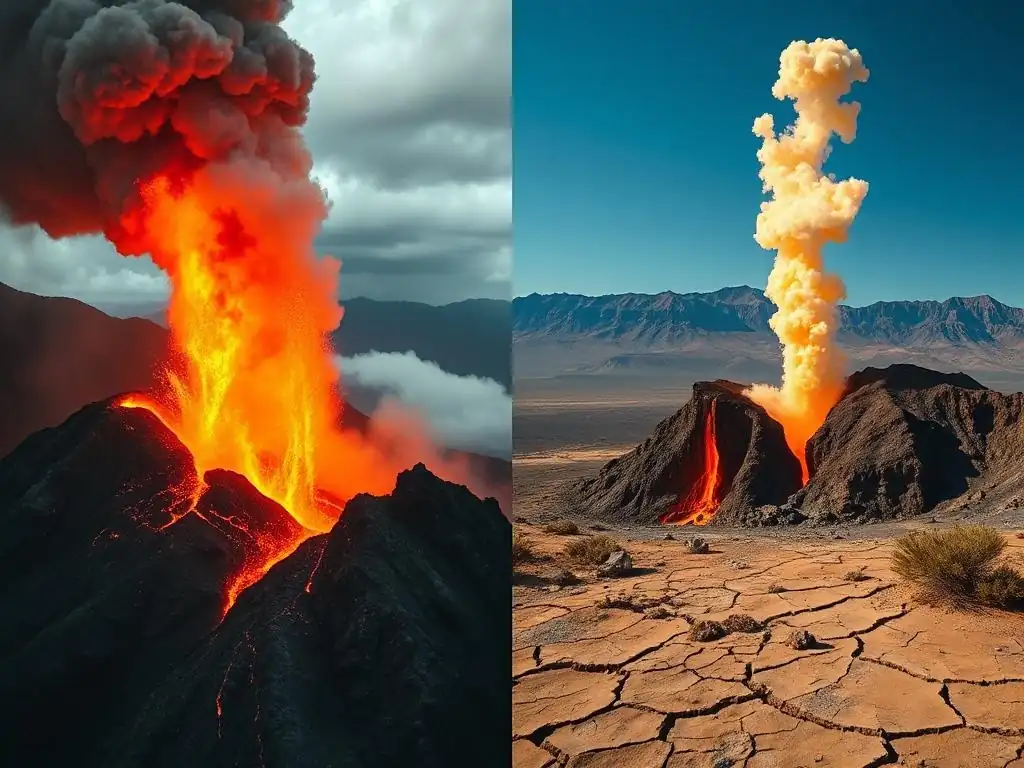
Welcome to Volcano Explorers!
Beneath our feet, a hidden world of molten rock and immense pressure shapes our planet. Prepare to journey into the heart of volcanic activity, where we unravel the mysteries of volcanic carbon subduction rift comparison. What happens to carbon in the fiery crucible of a subduction zone versus a continental rift? The answer might surprise you, and it holds crucial clues to understanding our planet's climate and geological evolution. Delve deeper to uncover the fascinating science behind these contrasting tectonic settings and their impact on the global carbon cycle. The earth is waiting to be explored.
- Introduction: Unveiling the Role of Volcanic Carbon in Global Tectonics
-
Frequently Asked Questions
- What is the primary difference in volcanic carbon release between subduction zones and rift zones?
- How does the tectonic setting influence the source of volcanic carbon?
- What role does carbon subduction play in the global carbon cycle?
- Can a comparison of volcanic gas compositions help differentiate between subduction zone and rift zone volcanoes?
- How does the rate of carbon release from volcanoes in subduction zones compare to that in rift zones?
- Final Reflection: The Breath of the Earth - A Carbon Legacy
- Unleash Your Inner Volcano Geologist!
Introduction: Unveiling the Role of Volcanic Carbon in Global Tectonics
Understanding the Significance of Volcanic Carbon Emissions
Volcanoes, often perceived for their dramatic eruptions and immediate impact on surrounding landscapes, play a far more subtle yet crucial role in Earth's long-term carbon cycle. Volcanic activity releases carbon dioxide (CO2) and other carbon-bearing gases from the Earth's interior into the atmosphere and hydrosphere. This process, known as volcanic outgassing, is a fundamental component of the planet's natural carbon cycle, influencing climate patterns and the overall carbon budget over geological timescales. Understanding the magnitude and dynamics of volcanic carbon emissions is essential for comprehending Earth's climate history and predicting future climate scenarios.
Volcanic carbon emissions, while dwarfed by anthropogenic emissions in recent times, have been a continuous geological process for billions of years. These emissions represent a critical part of the slow carbon cycle, which operates over millions of years and involves the exchange of carbon between rocks, oceans, atmosphere, and living organisms.
Unlike the fast carbon cycle, which involves rapid exchanges between the atmosphere, oceans, and biosphere on timescales of years to centuries, the slow carbon cycle regulates Earth’s climate over geological time. Volcanic carbon, therefore, is not just a geological curiosity but a key factor in the long-term habitability of our planet.
Overview: Comparing Carbon Release in Subduction Zones and Rifts
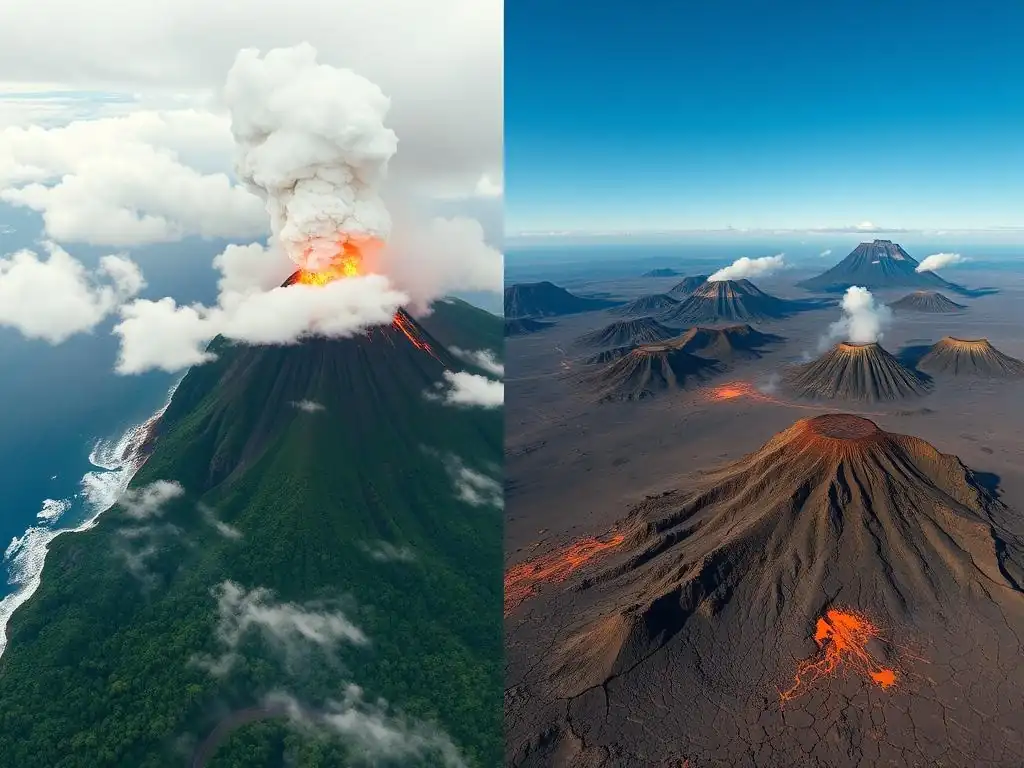
Volcanic carbon emissions are not uniform across the globe. They vary significantly depending on the tectonic setting in which volcanoes are located. Two of the most important tectonic settings for volcanism are subduction zones and rift zones.
Subduction zones occur where tectonic plates collide, and one plate slides beneath another back into the Earth's mantle. In contrast, rift zones are areas where tectonic plates are pulling apart, leading to the thinning of the crust and the upwelling of mantle material. These distinct geological environments result in different types of magmatism, magma compositions, and ultimately, different characteristics of volcanic carbon release.
This article will delve into a comparative analysis of volcanic carbon emissions in subduction zones and rift zones. We will explore the geological processes that control carbon release in each setting, examine the sources of carbon in their respective magmas, and quantify the carbon fluxes associated with these volcanic systems.
By contrasting subduction zone and rift zone volcanism, we aim to provide a comprehensive understanding of how tectonic settings influence the global volcanic carbon budget and the broader carbon cycle. We will use real-world examples and case studies to illustrate these differences and highlight the importance of studying volcanic carbon in diverse geological contexts.
Frequently Asked Questions
What is the primary difference in volcanic carbon release between subduction zones and rift zones?
Subduction zones generally release carbon through arc volcanism, where carbon is recycled from the subducting plate. Rift zones, on the other hand, release carbon through mantle upwelling and the melting of the asthenosphere.
How does the tectonic setting influence the source of volcanic carbon?
In subduction zones, the carbon source is largely derived from sediments and altered oceanic crust carried down by the subducting plate. In rift zones, the carbon source is more likely derived from the Earth's mantle.
What role does carbon subduction play in the global carbon cycle?
Carbon subduction effectively removes carbon from the surface environment and stores it in the Earth's interior. It counteracts the release of carbon via volcanism and other processes, helping to regulate long-term climate.
Can a comparison of volcanic gas compositions help differentiate between subduction zone and rift zone volcanoes?
Yes, analyzing the isotopic ratios and abundance of carbon-bearing gases (e.g., CO2) can often distinguish between the two. Subduction zone volcanoes tend to have higher proportions of certain isotopes.
How does the rate of carbon release from volcanoes in subduction zones compare to that in rift zones?
Generally, subduction zones are thought to release a larger overall volume of carbon per year compared to rift zones, although this can vary significantly. More research is required for a more definitive comparison.
Final Reflection: The Breath of the Earth - A Carbon Legacy
The intricate dance of carbon between the Earth's interior and atmosphere, particularly through volcanic activity in diverse tectonic settings, remains a critical piece of the climate puzzle. Understanding the nuances of carbon release from subduction zones and rifts is not merely an academic exercise; it's a vital step in comprehending our planet's past, present, and future climate dynamics, especially as we grapple with anthropogenic carbon emissions.
The ongoing influence of volcanic carbon, shaped by tectonic forces, continues to mold our world. This exploration into subduction and rift volcanism has deepened my appreciation for the Earth's complex systems and the delicate balance that sustains life. The Earth does not belong to us: we belong to the Earth.
- Chief Seattle. This quote underscores the profound responsibility we have to understand and protect the intricate processes that govern our planet, including the volcanic carbon cycle.
Now, consider the implications of this knowledge. How can a deeper understanding of volcanic carbon emissions inform our strategies for mitigating climate change? What role can we play in supporting research and innovation that enhances our ability to monitor and model these natural carbon fluxes? Let us each strive to be informed stewards of our planet, recognizing the power and fragility of the Earth's systems and working towards a sustainable future.
Unleash Your Inner Volcano Geologist!
Thank you for exploring the fascinating world of volcanic carbon with us! We hope you gained a new understanding of the carbon cycle's complex relationship with tectonic settings. Now, let's put that knowledge to use.
Here are some ways to continue your volcanic exploration:
- Find a nearby volcano and investigate its tectonic setting—is it located in a subduction zone or a rift valley? Research its estimated carbon dioxide emissions.
- Share this article with friends or colleagues interested in geology or environmental science. Let's spread the word about volcanic carbon!
- Join the Volcano Explorers forum and share your thoughts on the differences in carbon emissions between volcanoes in subduction zones and rift valleys. What discoveries have you made?
What's the most surprising thing you learned about volcanic carbon emissions today, and how will you apply this knowledge to better understand our planet?