Exploring Geothermal Energy from Volcanic Areas: Benefits and Risks
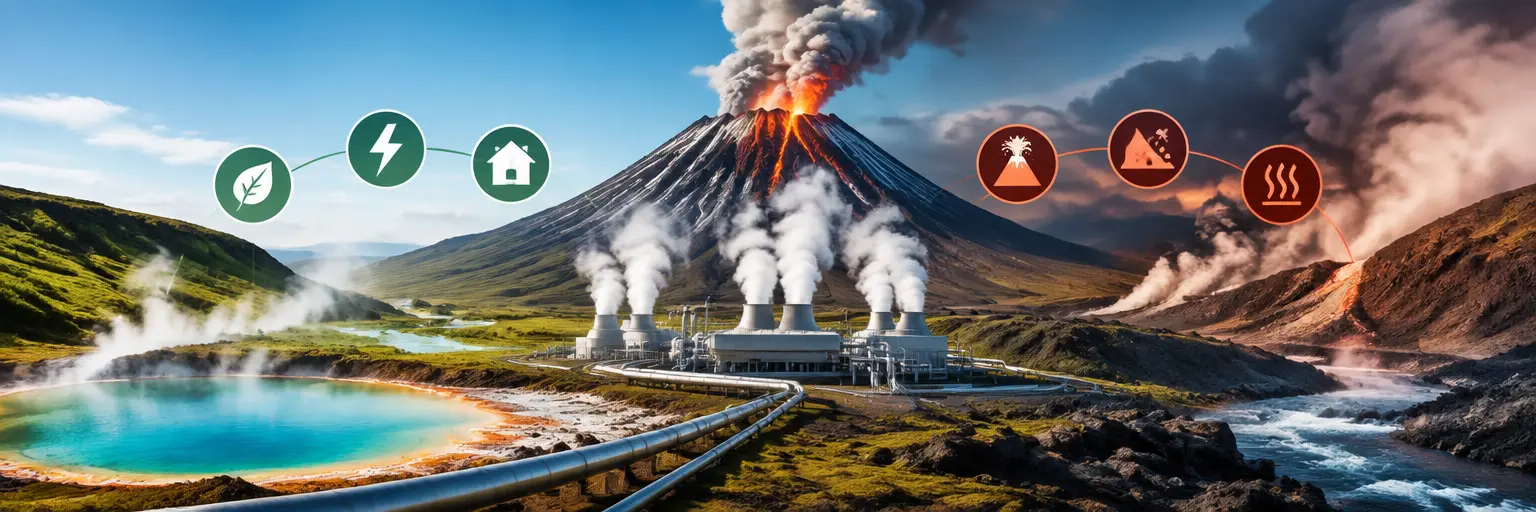
Volcanic regions are not just landscapes of destruction—they are also treasure troves of clean, renewable energy. Geothermal energy from volcanic areas harnesses the Earth's internal heat, offering a powerful alternative to fossil fuels. This subcategory on Volcano Explorers dives deep into how magma and hot rock beneath the surface create vast reservoirs of steam and hot water, which can be tapped for electricity generation and direct heating. Yet, this incredible resource comes with significant challenges, including environmental impacts, seismic risks, and high upfront costs. Here, we break down the dual nature of volcanic geothermal power, empowering you with knowledge about its promise and its pitfalls.
🌋 How Volcanic Geothermal Systems Work
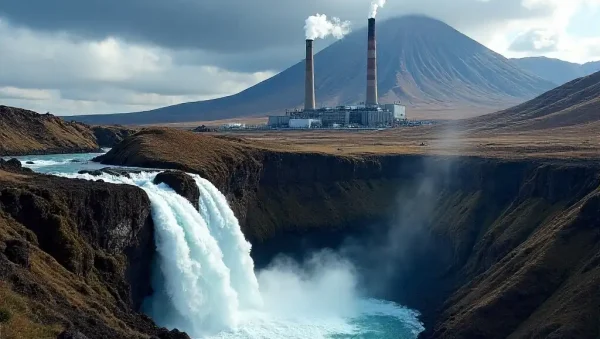
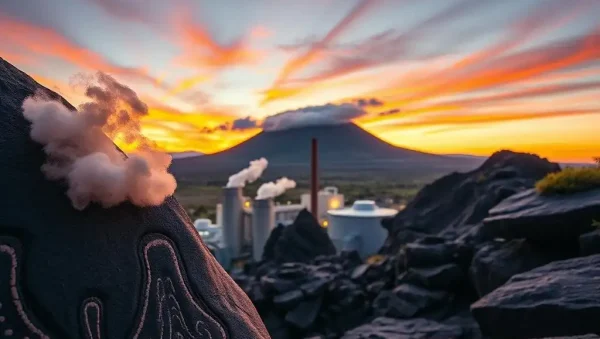
Geothermal energy in volcanic zones relies on the intense heat from magma chambers that sit just kilometers below the surface. When groundwater seeps into fractured rock heated by magma, it turns into superheated steam or hot brine. Wells drilled into these reservoirs bring the fluid to the surface, where it spins turbines to generate electricity. This process is remarkably efficient—volcanic systems can produce up to 10 megawatts per well, enough to power thousands of homes. Unlike solar or wind, geothermal offers a constant, baseload supply, making it a cornerstone of renewable energy portfolios in countries like Iceland, Indonesia, and New Zealand.
However, not every volcanic area is viable. The best sites feature high-temperature reservoirs (above 180°C) and permeable rock formations. Developers use geophysical surveys, geochemical sampling, and exploratory drilling to assess potential. Emerging technologies like Enhanced Geothermal Systems (EGS) aim to create artificial reservoirs by injecting water into hot, dry rock, expanding possibilities beyond natural hydrothermal fields. For visitors and enthusiasts, understanding the mechanics clarifies why volcanic hotspots are prized—yet fragile—assets.
♻️ Environmental Benefits of Geothermal Power
Geothermal energy from volcanic areas is one of the cleanest power sources available. It emits only a fraction of the carbon dioxide compared to coal or natural gas—roughly 50 grams per kilowatt-hour versus 900 grams for coal. The land footprint is small, often requiring just a few hectares per plant, preserving surrounding ecosystems. Additionally, geothermal plants operate 24/7, reducing reliance on battery storage and stabilizing grids against fluctuations in solar and wind output. In volcanic regions, this energy also displaces imported fuels, boosting energy independence for island nations.
Beyond electricity, cascading uses include district heating for nearby towns, greenhouse agriculture, fish farming, and even spa tourism in volcanic hot springs. Excess heat can be repurposed for drying crops or industrial processes, creating circular economic benefits. For communities near volcanoes, geothermal development can transform a hazard into a resource, fostering sustainable growth while supporting climate goals. Yet, these advantages must be weighed against potential harm to fragile volcanic ecosystems, groundwater chemistry changes, and the risk of triggering minor seismicity.
⚠️ Key Risks and Mitigation Strategies
Despite its green credentials, geothermal development in volcanic zones is not without danger. The primary risks include induced seismicity—small earthquakes from fluid injection or withdrawal—which, though usually imperceptible, can sometimes cause local damage. Another concern is surface subsidence, as removing underground fluids can cause land to sink. Additionally, geothermal fluids often contain dissolved minerals like silica, arsenic, and mercury, which must be safely disposed of or reinjected to prevent water contamination. A worst-case scenario is a well blowout, releasing toxic gases like hydrogen sulfide, which requires rigorous safety protocols.
Mitigation strategies are evolving rapidly. Modern plants use closed-loop systems that reinject spent fluids, minimizing surface discharge and subsidence. Real-time seismic monitoring networks allow operators to alter injection rates if earthquakes exceed safe thresholds. Deep well casing and blowout preventers reduce leak risks. For residents, transparency in hazard assessments and emergency response plans is vital. Governments and companies must collaborate to set strict environmental limits, ensuring that geothermal growth doesn't compromise the very landscapes it seeks to protect. Understanding these risks is essential for policymakers, investors, and local communities.
💰 Economic Viability and Job Creation
Geothermal projects in volcanic areas require substantial initial investments—often $2–5 million per megawatt of installed capacity—due to drilling and exploration costs. However, once operational, they enjoy exceptionally low operational expenses, with fuel costs of zero and maintenance costs roughly $0.01 per kilowatt-hour. Over a 30-year lifespan, geothermal plants are often cheaper than coal when accounting for carbon pricing and subsidies. Iceland, for example, produces over 70% of its electricity from geothermal, achieving electricity prices among the lowest in Europe. This economic model attracts private investors and provides stable returns.
Job creation is another major benefit. Each 100-megawatt plant creates around 300 direct jobs in drilling, engineering, operations, and maintenance, plus many more in indirect services like catering and transport. In rural volcanic areas, this can revitalize local economies and stem outmigration. Furthermore, geothermal royalties can fund public services, schools, and infrastructure for indigenous communities. However, the boom-bust nature of drilling, with exploration success rates near 30%, means early-stage investments carry high financial risk. Government-backed geoscientific surveys and insurance schemes can de-risk initial phases, making the sector more attractive to lenders and developers.
🌍 Global Examples and Future Potential
Around the world, volcanic geothermal energy is transforming energy landscapes. Iceland’s Hellisheiði Power Station, the third-largest in the world, generates 303 megawatts while supplying hot water to Reykjavik’s district heating network. Kenya’s Olkaria fields, nestled in the East African Rift, provide over 800 megawatts, now making up 30% of the nation’s electricity. In the United States, The Geysers in California, a volcanic-derived steam field, produces 725 megawatts, enough for 725,000 homes. These case studies demonstrate scalability across different geological settings, from subduction zones to rift valleys.
The future of volcanic geothermal is bright, with untapped potential estimated at over 200 gigawatts globally. Advances in drilling technology, like laser or plasma drills, could cut costs by half within a decade. Supercritical CO₂-based systems promise even higher efficiency at extreme depths. Moreover, geothermal could pair with lithium extraction from brines, providing dual revenue streams for critical battery metals. For tropical island nations like the Philippines and Indonesia, scaling up geothermal could slash diesel imports and bolster climate resilience. As the world races to decarbonize, volcanic regions will play a starring role in sustainable energy transitions.
Frequently Asked Questions
Can geothermal energy from volcanoes cause volcanic eruptions?
No, geothermal extraction does not trigger volcanic eruptions. The pressure within magma chambers is far greater than any changes induced by removing steam or water. However, injection of fluids can alter pore pressure in shallow rock, potentially inducing small earthquakes, but these are typically below magnitude 3 and not linked to magmatic activity.
How long can a volcanic geothermal field last?
Well-managed fields can produce for 30–50 years as long as the heat source remains active. Since volcanic magma chambers cool slowly over thousands of years, the heat supply is essentially infinite in human timescales. Proper reinjection of fluids maintains pressure and extends the life of the reservoir, sometimes indefinitely.
What are the main greenhouse gas emissions from geothermal plants?
Geothermal plants release small amounts of carbon dioxide, methane, and hydrogen sulfide—around 5% of coal emissions. Most gases are naturally present in the reservoir and are reinjected after turbine use. Some plants use carbon capture systems to turn emissions into benign minerals, further reducing their footprint.
Is geothermal energy viable only in volcanic regions?
No, but volcanic regions offer the highest temperatures and most accessible reservoirs. Non-volcanic geothermal uses low-to-medium temperature gradients, common in sedimentary basins or deep fault zones, which can heat buildings or produce power with binary cycle technology. Still, volcanic areas remain the most cost-effective for high-output electricity.
What happens to local hot springs and geysers when a plant is built?
Over-extraction can reduce water levels or temperature in nearby surface features, which is why environmental impact assessments are mandatory. Modern plants monitor protected features, and operators often adjust production rates to preserve them. In several cases, such as Wairakei in New Zealand, careful management has maintained geysers and hot springs for decades.