Long-Term Ecological Recovery in Volcanic Landscapes
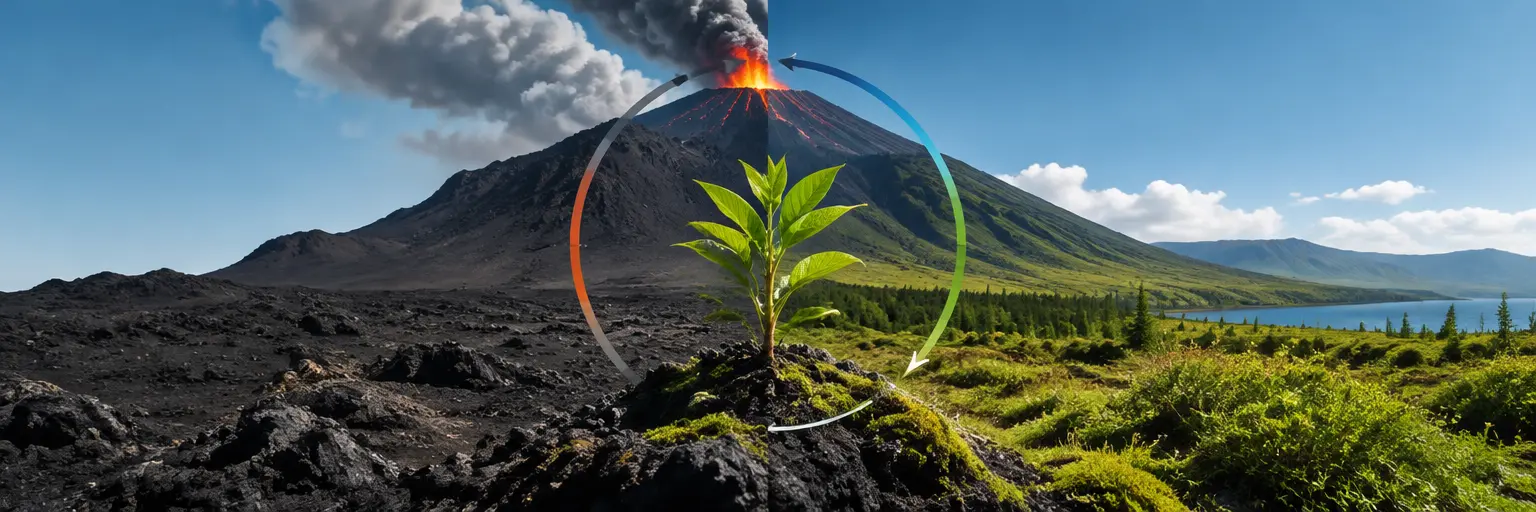
When a volcano erupts, it may seem like life is obliterated—but nature has an incredible capacity to rebound over decades and centuries. This subcategory of VolcanoExplorers.org focuses on the slow, fascinating process of ecological succession after lava flows, ashfalls, and pyroclastic surges. You’ll learn how pioneer species like lichens and mosses colonize bare rock, how soil forms from volcanic minerals, and how forests and animal communities eventually return. For hikers, scientists, or nature lovers, understanding this recovery is key to appreciating the resilience of life in even the most hostile environments.
🌱 Primary Succession: The First Pioneers on Bare Lava
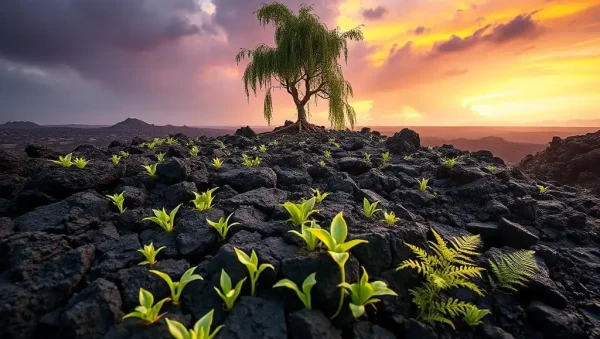
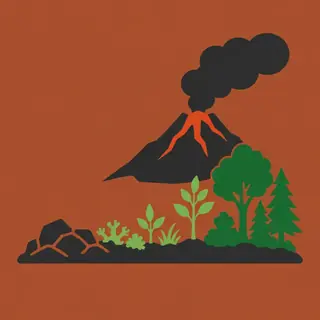
Primary succession begins on entirely new surfaces—cooled lava fields, ash deserts, or pumice plains—where no soil exists. The first colonizers are usually cyanobacteria, lichens, and mosses that can cling to rock and extract nutrients from air and rain. Over time, their acids break down basalt and andesite, creating tiny pockets of organic matter. These pioneering species are essential because they stabilize the surface and kick-start soil formation, which later allows ferns and grasses to take root.
As decades pass, wind-blown seeds and spores from nearby ecosystems arrive, and small herbaceous plants begin to flourish. This stage is slow, often taking 50–200 years in temperate climates, but in tropical volcanic areas like Hawaii, recovery can be faster due to warmth and moisture. Volcano Explorers’ guides highlight specific sites, such as the 1959 Kīlauea Iki crater, where visitors can walk across solidified lava and witness these initial recovery stages firsthand.
🦠 Soil Development and Nutrient Cycling After Eruption
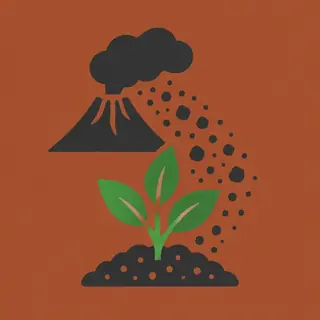
Volcanic ash and lava are rich in minerals like phosphorus, potassium, and calcium, but these are locked in forms unavailable to plants initially. Soil formation requires biological weathering—root exudates, fungal hyphae, and decomposing organic matter gradually convert rock into fertile earth. Nitrogen, often scarce, is fixed by legumes and free-living bacteria, enriching the substrate over time. This process determines how quickly higher plants can establish, and it varies with climate, parent rock, and time since eruption.
In nutrient-poor volcanic deserts, recovery can stall for centuries, while in ash-rich loess, soil may become productive within a few years. Volcanic soils, called Andisols, are famous for their ability to hold water and nutrients once formed, making them some of the most fertile on Earth. Our content breaks down the chemistry and biology of this process, including case studies from Mount St. Helens (1980) and the Aeolian Islands, where researchers track changes in soil carbon and nitrogen over decades.
🌿 Plant Community Assembly and Forest Regeneration
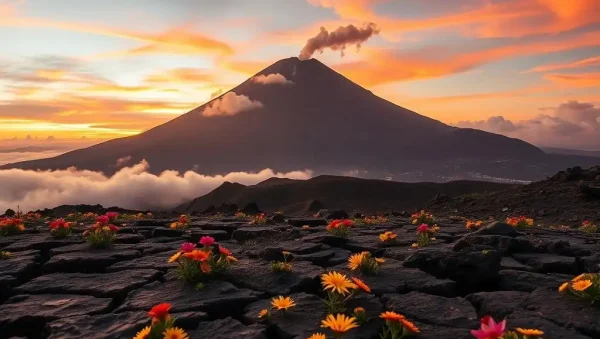
As soil thickens, shrubs and fast-growing trees like alders, willows, or Metrosideros polymorpha in Hawaii establish, creating shade and further altering microclimates. These pioneer trees facilitate the arrival of later-successional species by providing shelter, fixing nitrogen, and increasing leaf litter. Over 100–500 years, a secondary forest may replace the pioneer stands, with species composition depending on elevation, rainfall, and distance from intact forests.
Long-term monitoring at Krakatoa (erupted 1883) shows a dramatic return of over 200 plant species by the 1930s, but full canopy forest took a century. VolcanoExplorers.org provides interactive timelines and vegetation maps, allowing readers to see how different landscapes evolve. We also discuss the role of animal seed dispersal—birds, bats, and rats—which often accelerates recovery by introducing seeds from adjacent ecosystems, demonstrating that recovery is not just passive but driven by complex ecological interactions.
🐾 Fauna Recolonization and Trophic Cascade Effects
Insects are usually the first animals to return to volcanic terrain, followed by herbivores and then predators. Arthropods, like spiders and beetles, depend on windborne plant material and quickly colonize even barren ash. Birds arrive as soon as perches and seeds appear, while ground-dwelling mammals may take centuries, especially if soil burrowing is required. The return of certain species can alter recovery—for example, introduced deer or rabbits may retard forest regrowth by browsing.
On Surtsey island (erupted 1963–67), Iceland’s protected volcanic island, researchers have documented seabird colonies establishing by the 1990s, which then fertilized soils with guano, boosting plant diversity. This top-down control shows how fauna not only recolonize but also shape the recovery trajectory. Our guides explain how conservation efforts sometimes accelerate faunal recovery through reintroductions, and how invasive species can disrupt natural succession—offering practical insights for ecologists and park managers.
⏳ Timescales and Observable Milestones of Recovery
Recovery is not linear—it can be punctuated by disturbances like minor eruptions, droughts, or landslides that reset the clock. Typical milestones include: 1–10 years for cryptogamic crusts, 10–50 years for herbaceous pioneers, 50–150 years for shrublands, and 150–500 years for mature forests in temperate zones. In tropical climates, timescales shorten by half, while in arid or alpine settings, recovery may take thousands of years, if it occurs at all.
VolcanoExplorers.org offers clear comparative charts and photo galleries showing the same sites at different points post-eruption. For example, the devastation of Mount Pinatubo (1991) had visible grasses by 1995 and dense shrubs by 2010, yet full dipterocarp forest is expected only after 300 years. By understanding these timescales, readers can better interpret current landscapes and anticipate future changes, making this subcategory valuable for science educators and curious travelers alike.
🌍 Conservation and Restoration Lessons from Volcanic Recovery
Volcanic eruptions offer natural laboratories for restoration ecology, revealing how ecosystems rebuild without human intervention. Lessons from such sites guide reforestation projects in degraded areas elsewhere, from replanting native species to enhancing nutrient banks. However, climate change may alter recovery trajectories—warmer temperatures can speed growth, but also allow invasive species to outcompete natives. Conservation efforts on volcanic islands often focus on removing invasive rats or plants to help native species thrive.
For instance, on La Palma’s 2021 eruption site, authorities are monitoring natural colonizers while controlling exotic species to preserve the unique Canarian flora. Our content also covers community-based restoration projects, where local volunteers assist in planting endemics. By showcasing these examples, we hope to inspire readers to see volcanic recovery as both a natural wonder and a practical template for ecological healing in a changing world.
Frequently Asked Questions
How long does it take for life to return after a volcanic eruption?
It depends on climate and soil type. In tropical areas, pioneer mosses appear within months, shrubs in 10–20 years, and forests in 100–200 years. In temperate or dry regions, recovery may take 500–1,000 years. Full soil development can require millennia, but visible green growth usually occurs within the first few decades.
What are the first organisms to colonize new lava flows?
The first colonizers are cyanobacteria, lichens, and mosses. These organisms can survive on bare rock, secreting acids that break down minerals. They also capture organic matter from dust, creating a thin layer of soil that allows ferns and later grasses to establish.
Can volcanic eruptions ever benefit ecosystems in the long term?
Yes, volcanic deposits often contain rich minerals that become highly fertile soil after weathering. For example, Andisols are among the most productive soils globally. Over centuries, volcanic eruptions can create diverse habitats and increase biodiversity, as seen in the high species endemism on many volcanic islands.
How do animals return to a volcanic wasteland?
Insects like beetles and spiders arrive first, carried by wind or on driftwood. Birds follow once seeds and perches appear. Mammals often come later, unless they can burrow into soft ash. The process is accelerated by animal droppings that fertilize soil, as observed on Surtsey island.
What is primary vs. secondary succession in volcanic areas?
Primary succession occurs on newly exposed rock or lava with no soil, starting from lichens and mosses. Secondary succession happens where soil remains, such as after an ashfall that kills vegetation but leaves the substrate intact. Secondary recovery is faster because roots and seeds may persist beneath the surface.