
Seeds of Hope: How Plant Dispersal Shapes Volcanic Landscape Recovery

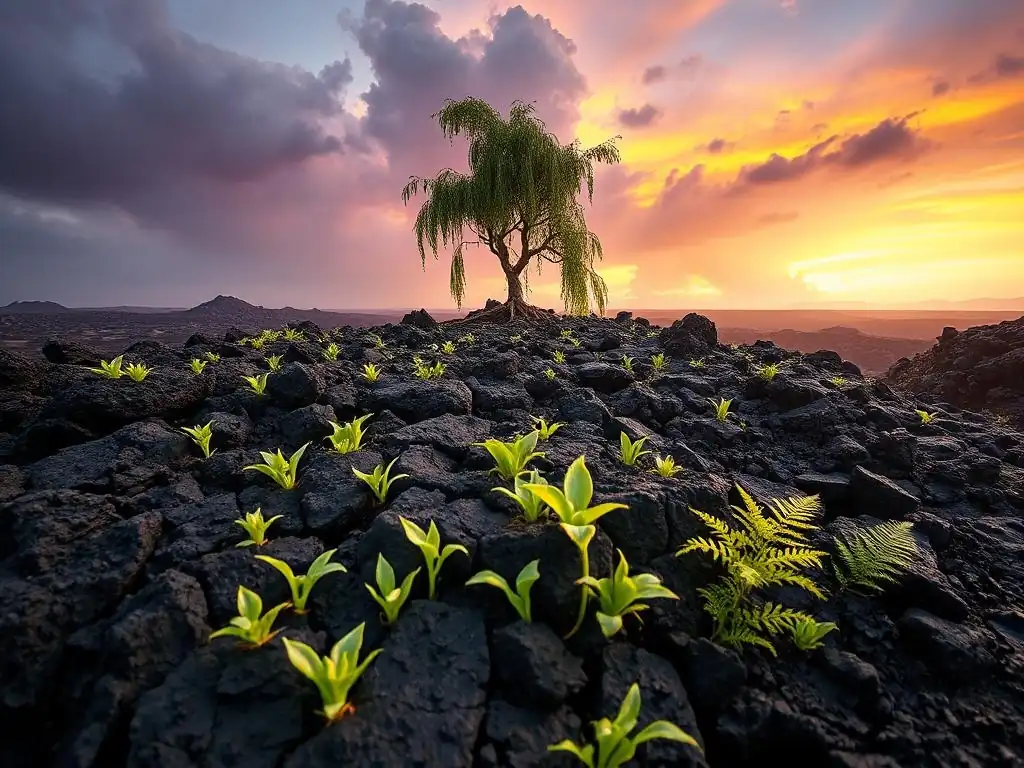
Welcome to Volcano Explorers, where the Earth breathes fire and beauty intertwine. Ever wondered how life returns to landscapes scarred by unimaginable heat? Dive into Seeds of Hope: How Plant Dispersal Shapes Volcanic Landscape Recovery and discover the ingenious and surprising strategies plants use to reclaim these dramatic terrains. What secrets do these resilient pioneers hold, and what can they teach us about the power of renewal? Your exploration begins now...
- Introduction: The Vital Role of Plant Dispersal in Volcanic Recovery
- The Harsh Reality: Challenges to Plant Life on Volcanic Landscapes
- Seed Dispersal Strategies: Nature's Ingenious Solutions for Volcanic Colonization
- Case Studies: Successful Examples of Plant Dispersal and Volcanic Landscape Recovery
- Human Intervention: Assisting Natural Seed Dispersal for Accelerated Volcanic Landscape Recovery
- Conclusion: The Enduring Power of Plant Dispersal in Shaping Volcanic Ecosystems
-
Frequently Asked Questions
- What is the main focus of the "Seeds of Hope" article?
- Why is plant recovery important in volcanic landscapes?
- What are some of the main methods of plant dispersal discussed in the article?
- How does the article relate to the overall mission of VolcanoExplorers.org?
- What can readers learn about "Volcanic landscape recovery strategies" from this article?
- Final Reflection: Nurturing Life from Ash
- Ignite Your Inner Botanist: Witness Volcanic Rebirth!
Introduction: The Vital Role of Plant Dispersal in Volcanic Recovery
Understanding Long-Term Ecological Succession on Volcanic Terrain
Volcanic eruptions are among the most dramatic and transformative events on our planet, capable of instantaneously reshaping landscapes. The immediate aftermath of an eruption leaves behind a seemingly barren terrain, often characterized by volcanic rock, ash, and pumice. However, even in these seemingly desolate environments, the seeds of life are sown, initiating a process known as ecological succession.
This long-term process describes the gradual and predictable changes in plant and animal communities in an area over time. In volcanic landscapes, primary succession begins from bare rock, a stark contrast to secondary succession which occurs on previously vegetated land disturbed by events like fire or storms. Understanding the nuances of ecological succession on volcanic terrain is crucial for comprehending the remarkable resilience of nature and the mechanisms that drive the return of life to these dynamic environments.
The initial stages of ecological succession on volcanic terrain are critically dependent on the arrival and establishment of pioneer species. These hardy plants are adapted to survive in harsh conditions and play a pivotal role in modifying the environment, making it more habitable for subsequent species.
The process is not immediate; it unfolds over decades and even centuries, influenced by factors such as the type of volcanic material, climate, proximity to seed sources, and importantly, the efficiency of seed dispersal mechanisms. The journey from barren volcanic rock to a complex and thriving ecosystem is a testament to the power of ecological succession, driven significantly by the ability of plants to disperse their seeds into these newly formed landscapes.
The Importance of Seed Dispersal Mechanisms After Volcanic Eruptions
Following a volcanic eruption, the capacity of plants to effectively disperse their seeds is paramount for the initiation of volcanic landscape recovery. Seeds are the primary means by which plants colonize new areas, and in the context of a recently erupted volcano, these areas represent entirely new habitats devoid of established vegetation. The landscape is effectively a blank slate, presenting both challenges and opportunities for plant life. Efficient seed dispersal mechanisms are the bridge that allows plants to overcome the spatial separation from existing vegetation and reach these newly available, albeit harsh, environments.
The success of volcanic landscape recovery is intrinsically linked to the diversity and effectiveness of seed dispersal strategies. Different plant species employ a variety of methods to distribute their seeds, including wind, water, animals, and even self-propelled mechanisms. Each of these methods plays a unique role in the colonization process, influencing the speed and pattern of vegetation establishment.
For instance, wind-dispersed seeds can travel long distances, reaching isolated volcanic islands or distant slopes, while animal-dispersed seeds may be deposited in nutrient-rich locations or areas sheltered from harsh weather. Understanding these dispersal mechanisms is not just an academic exercise; it is fundamental to developing effective volcanic landscape recovery strategies and conservation efforts in these dynamic ecosystems.
The Harsh Reality: Challenges to Plant Life on Volcanic Landscapes
Nutrient-Poor Soils: A Major Obstacle to Vegetation Establishment
Volcanic landscapes, while visually striking, present formidable challenges to plant life, particularly in their nascent stages. One of the most significant obstacles is the inherent lack of nutrients in newly formed volcanic soils. Fresh volcanic materials, such as basalt rock and pumice, are initially devoid of the organic matter and essential nutrients like nitrogen, phosphorus, and potassium that plants require for growth. The process of soil development, known as pedogenesis, is slow and gradual, especially in volcanic environments where the parent material is often resistant to weathering.
The scarcity of nutrients in volcanic soils directly impacts seed germination, seedling survival, and overall plant establishment. Without sufficient nitrogen, for example, plants struggle to synthesize proteins and chlorophyll, limiting their photosynthetic capacity and growth. Phosphorus deficiency can hinder root development and energy transfer within the plant. These nutrient limitations create a stressful environment for pioneer species, demanding specialized adaptations to cope with these impoverished conditions. Volcanic landscape recovery is therefore often a slow process, heavily influenced by the gradual accumulation of organic matter and the cycling of nutrients within the developing ecosystem.
Extreme Temperatures and Weather Conditions on Volcanic Slopes
Beyond nutrient scarcity, volcanic landscapes are often characterized by extreme temperature fluctuations and harsh weather conditions that pose significant challenges to plant life. The dark volcanic rock and ash surfaces absorb and radiate heat intensely, leading to scorching temperatures during the day, especially in direct sunlight. Conversely, at night, these surfaces can cool down rapidly, resulting in significant temperature drops. These diurnal temperature swings create physiological stress for plants, impacting processes like photosynthesis, respiration, and water balance.
Furthermore, volcanic slopes are frequently exposed to strong winds, heavy rainfall, and even snowfall, depending on their geographical location and altitude. These extreme weather events can physically damage young seedlings, erode topsoil, and further exacerbate the already challenging growing conditions. The combination of extreme temperatures and weather conditions creates a selective pressure, favoring plant species with specific adaptations to withstand these stresses. Volcanic landscape recovery is thus not only a matter of nutrient availability but also a testament to the resilience of plants capable of tolerating and even thriving in these demanding environments.
The Impact of Volcanic Ash on Seed Germination and Plant Growth
Volcanic ash, a ubiquitous product of explosive eruptions, presents a complex and multifaceted challenge to plant life and volcanic landscape recovery. While initially, a thin layer of ash can act as a mulch, conserving moisture and providing some mineral nutrients over time, thick ash deposits can be detrimental to seed germination and plant growth. The physical properties of volcanic ash, such as its particle size, density, and chemical composition, play a crucial role in its impact on vegetation.
Thick ash layers can impede seed germination by creating a physical barrier, preventing seedlings from emerging and accessing sunlight and air. The fine particles of ash can also clog stomata, the pores on plant leaves responsible for gas exchange, hindering photosynthesis and respiration. Furthermore, some volcanic ash can be chemically reactive, releasing toxic elements or altering soil pH, further stressing plant life.
However, it is also important to note that over longer timescales, the weathering of volcanic ash contributes to soil development, releasing essential minerals and gradually improving soil fertility. The impact of volcanic ash is therefore a dynamic factor in volcanic landscape recovery, varying depending on the thickness and composition of the ash deposit, and the resilience of plant species to these initial challenges.
Seed Dispersal Strategies: Nature's Ingenious Solutions for Volcanic Colonization
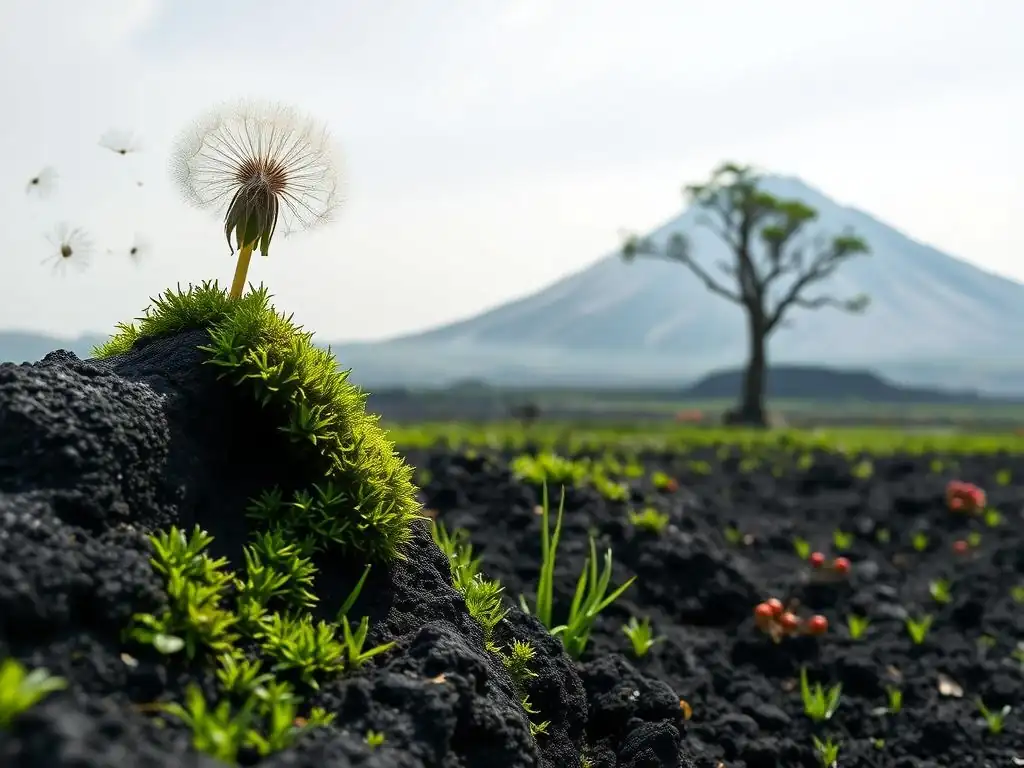
Wind Dispersal (Anemochory): Lightweight Seeds Taking Flight
Wind dispersal, or anemochory, is a highly effective strategy for plant colonization of volcanic landscapes, particularly in the early stages of succession. This method relies on the wind to carry lightweight seeds over considerable distances, enabling plants to reach remote and isolated volcanic areas. Plants adapted for wind dispersal typically produce seeds with specialized structures that enhance their buoyancy and air resistance, such as wings, plumes, or hairs. These adaptations allow seeds to remain airborne for extended periods, increasing their dispersal range and the probability of reaching suitable colonization sites.
The effectiveness of wind dispersal in volcanic environments is amplified by the often-exposed and windswept nature of these landscapes. Volcanic slopes and plateaus, lacking dense vegetation in the initial stages, offer minimal obstruction to wind currents, facilitating long-distance seed transport. Furthermore, the lightweight nature of wind-dispersed seeds is advantageous in nutrient-poor volcanic soils, as it reduces the energetic cost of seed production, allowing pioneer species to allocate resources to other survival mechanisms. Anemochory is therefore a cornerstone of volcanic landscape recovery, enabling the rapid colonization of newly formed terrains by wind-dispersed pioneer plants.
Examples of Wind-Dispersed Plants in Volcanic Regions: Epilobium angustifolium (Fireweed)
Epilobium angustifolium, commonly known as fireweed, is a quintessential example of a wind-dispersed plant that thrives in volcanic and other disturbed landscapes. Its name itself hints at its affinity for fire-affected areas, which share ecological similarities with newly erupted volcanic zones in terms of habitat disturbance and open space. Fireweed produces copious quantities of small, lightweight seeds, each equipped with a silky parachute of hairs. This pappus acts like a miniature parachute, allowing the seeds to be carried by even gentle breezes over considerable distances.
Following the 1980 eruption of Mount St. Helens in Washington State, fireweed was among the first plant species to colonize the devastated landscape. Its wind-dispersed seeds readily reached the ash-covered slopes, and its ability to tolerate nutrient-poor soils and harsh conditions allowed it to establish quickly. Fireweed's rapid colonization played a crucial role in initiating the process of ecological succession at Mount St. Helens, demonstrating the effectiveness of wind dispersal as a volcanic landscape recovery strategy. Its vibrant magenta flowers carpeting the recovering landscape became a symbol of resilience and hope in the face of volcanic devastation.
Animal Dispersal (Zoochory): The Role of Wildlife in Seed Distribution
Animal dispersal, or zoochory, represents another vital strategy for plant colonization in volcanic landscapes, often complementing wind dispersal and contributing to the diversity of plant communities. This method relies on animals to transport seeds, either externally (epizoochory) by clinging to fur, feathers, or skin, or internally (endozoochory) after being consumed and subsequently defecated. Zoochory can be particularly important in volcanic environments as animals can transport seeds to specific locations, such as nutrient-rich microsites or areas sheltered from harsh weather, potentially enhancing seedling establishment success.
The effectiveness of animal dispersal in volcanic regions depends on the presence and activity of animal vectors, which can include birds, mammals, insects, and even reptiles. These animals may visit volcanic landscapes for various reasons, such as foraging for food, seeking shelter, or as migratory stopover points.
As they move across the landscape, they inadvertently or intentionally transport seeds, contributing to the spatial distribution of plants and accelerating the process of volcanic landscape recovery. Zoochory adds a layer of complexity to seed dispersal patterns, often leading to more clustered or patchy vegetation establishment compared to the more uniform dispersal patterns associated with wind.
Birds as Seed Dispersers: Carrying Seeds Across Volcanic Barren Lands
Birds are significant seed dispersers in many ecosystems, and their role in volcanic landscape recovery is particularly noteworthy. Their mobility allows them to traverse vast distances and transport seeds across otherwise barren volcanic terrain, connecting isolated patches of vegetation and facilitating gene flow between plant populations. Birds can disperse seeds through both endozoochory and epizoochory. Fleshy fruits, attractive to birds, are consumed, and the seeds are later deposited in their droppings, often at considerable distances from the parent plant. Alternatively, seeds can adhere to feathers or mud on birds' feet and be transported externally.
In volcanic regions, birds can play a crucial role in bringing seeds from surrounding undisturbed areas into the newly formed volcanic landscape. Migratory birds, in particular, can act as long-distance dispersal agents, carrying seeds across geographical barriers and contributing to the colonization of volcanic islands or isolated volcanic peaks.
Studies following volcanic eruptions have documented birds carrying seeds of various plant species, including shrubs and trees, into the recovering areas, highlighting their importance in the initial stages of volcanic landscape recovery. The presence of birds is not just a sign of ecosystem health but also an active driver of vegetation re-establishment.
Mammals and Insects: Unsung Heroes of Volcanic Ecosystem Restoration
While birds often receive considerable attention as seed dispersers, mammals and insects also play crucial, though sometimes less obvious, roles in volcanic ecosystem restoration. Mammals, ranging from small rodents to larger herbivores, can contribute to seed dispersal through various mechanisms. Rodents, such as mice and voles, may hoard seeds in caches, some of which are forgotten and subsequently germinate, leading to localized seed dispersal. Larger mammals, like deer or rabbits, can disperse seeds epizoochorously, with seeds clinging to their fur as they move across the landscape.
Insects, particularly ants, are also important seed dispersers in certain volcanic environments. Ants exhibit a behavior called myrmecochory, where they collect seeds with elaiosomes – fleshy, oil-rich appendages – for food. After consuming the elaiosome, ants often discard the seed in their nests or nearby, effectively dispersing the seed and sometimes even planting it in a nutrient-enriched environment within the ant nest. These often-overlooked contributions of mammals and insects underscore the complex web of interactions that drive volcanic landscape recovery and highlight the importance of considering the entire faunal community when studying and managing these dynamic ecosystems.
Water Dispersal (Hydrochory): Seeds Floating to New Shores
Water dispersal, or hydrochory, is a significant seed dispersal mechanism in volcanic landscapes, particularly in regions with abundant rainfall, streams, or coastal proximity. This method relies on water currents to transport seeds, enabling plants to colonize areas along waterways, shorelines, or downstream from existing vegetation. Plants adapted for water dispersal often produce seeds that are buoyant, water-resistant, or equipped with structures that aid in flotation, such as air-filled cavities or waxy coatings.
In volcanic environments, hydrochory can facilitate the colonization of valleys, floodplains, and coastal zones. Volcanic slopes often channel rainwater into streams and rivers, which can transport seeds from higher elevations to lower areas, or even across larger distances to new volcanic islands or coastal stretches. The effectiveness of water dispersal is influenced by factors such as seed buoyancy, water current velocity, and the presence of suitable deposition sites along waterways. Hydrochory adds another dimension to seed dispersal patterns in volcanic landscapes, often leading to linear or riparian corridors of vegetation establishment.
Streams and Runoff: Transporting Seeds Down Volcanic Slopes
Streams and runoff play a critical role in water dispersal of seeds on volcanic slopes, particularly in areas experiencing substantial rainfall. Rainwater flowing down volcanic slopes can pick up seeds from existing vegetation or from seed banks in the soil and transport them downstream. This process is especially effective for plants growing along stream banks or in riparian zones, as their seeds are readily accessible to water currents. The force of runoff can carry seeds considerable distances, distributing them to new locations further down the volcanic slope or into adjacent valleys.
The topography of volcanic landscapes, with its characteristic slopes, gullies, and drainage channels, naturally facilitates water dispersal. Streams act as conduits for seed transport, channeling seeds along specific pathways and influencing the spatial pattern of vegetation establishment. Furthermore, flood events can significantly enhance water dispersal, carrying large quantities of seeds and plant propagules across broader areas and contributing to rapid colonization following volcanic disturbances. Streams and runoff are therefore crucial agents of seed dispersal, shaping the vegetation dynamics of volcanic landscapes and contributing to volcanic landscape recovery strategies.
Ballistic Dispersal (Autochory): Plants Propelling Seeds into the Unknown
Ballistic dispersal, or autochory, represents a fascinating and often overlooked seed dispersal strategy in volcanic environments. This method involves plants actively ejecting or propelling their seeds away from the parent plant, utilizing mechanical force rather than external agents like wind, water, or animals. Ballistic dispersal is typically achieved through specialized seed pods or fruits that build up internal pressure and then explosively rupture, scattering seeds in the vicinity.
While ballistic dispersal may not result in long-distance seed transport compared to wind or animal dispersal, it can be advantageous in volcanic landscapes by enabling plants to colonize areas immediately surrounding the parent plant, expanding their local distribution and establishing new populations in close proximity. This can be particularly important for pioneer species colonizing nutrient-poor or harsh volcanic soils, as it allows offspring to establish in similar microenvironments to the parent plant, potentially increasing their chances of survival. Ballistic dispersal adds another layer of complexity to seed dispersal patterns in volcanic environments, contributing to localized colonization and population expansion.
Explosive Seed Pods: A Unique Adaptation for Volcanic Environments
Plants employing ballistic dispersal often possess explosive seed pods as a key adaptation for seed ejection. These seed pods are structurally designed to build up tension as they dry and mature. Upon reaching a critical point, the pod dehisces or splits open explosively, forcefully launching seeds away from the parent plant. The distance seeds are propelled can vary depending on the plant species and the force of the explosion, ranging from a few centimeters to several meters.
In volcanic environments, explosive seed pods can be particularly effective in distributing seeds in the immediate vicinity of established plants. This can be beneficial for colonizing microsites within a volcanic landscape, such as cracks in rocks, small depressions, or areas sheltered from harsh winds. While the dispersal range may be limited compared to other methods, ballistic dispersal provides a reliable mechanism for local seed distribution, contributing to the patchiness and diversity of vegetation in volcanic landscapes. This adaptation highlights the diverse strategies plants employ to overcome the challenges of colonization and contribute to volcanic landscape recovery.
Case Studies: Successful Examples of Plant Dispersal and Volcanic Landscape Recovery
Mount St. Helens: A Testament to Natural Regeneration
Mount St. Helens, in Washington State, USA, provides a compelling case study of volcanic landscape recovery following a catastrophic eruption. The 1980 eruption devastated a vast area, leaving behind a landscape blanketed in ash and pumice, and initially appearing devoid of life. However, within years, and certainly decades, the landscape began a remarkable process of natural regeneration, driven significantly by plant dispersal and ecological succession. Mount St. Helens stands as a powerful testament to the resilience of nature and the effectiveness of natural volcanic landscape recovery strategies.
The recovery at Mount St. Helens was not immediate or uniform. It began with the arrival of pioneer species, many of which were wind-dispersed, such as fireweed ( Epilobium angustifolium) and pearly everlasting ( Anaphalis margaritacea). These hardy plants established in the nutrient-poor ash, initiating soil development and creating more favorable conditions for subsequent species. The process of volcanic landscape recovery at Mount St. Helens has been extensively studied, providing valuable insights into the mechanisms of ecological succession in volcanic environments and the crucial role of plant dispersal.
The Role of Pioneer Species in Rebuilding the Ecosystem
Pioneer species played a foundational role in rebuilding the Mount St. Helens ecosystem. These early colonizers, adapted to harsh conditions, acted as ecosystem engineers, modifying the environment in ways that facilitated the establishment of other plant and animal species. For example, pioneer plants contributed organic matter to the initially barren volcanic soils, improving soil structure and nutrient availability. Their roots also helped stabilize the ash and pumice slopes, reducing erosion and creating microhabitats.
Nitrogen-fixing plants, such as lupines ( Lupinus lepidus), were particularly important pioneer species at Mount St. Helens. These plants have symbiotic relationships with nitrogen-fixing bacteria in their roots, enabling them to convert atmospheric nitrogen into a form usable by plants. This nitrogen enrichment of the soil was crucial for supporting the growth of other plant species and driving the process of ecological succession. The success of volcanic landscape recovery at Mount St. Helens is inextricably linked to the pioneering efforts of these hardy plant species and their effective seed dispersal mechanisms.
Long-Term Monitoring of Plant Community Development
Mount St. Helens has become a natural laboratory for studying long-term ecological succession in volcanic landscapes. Researchers have been monitoring plant community development at Mount St. Helens since the 1980 eruption, providing a wealth of data on the rates and patterns of volcanic landscape recovery. Long-term studies have revealed the gradual increase in plant species diversity and vegetation cover over time, as well as the shifts in plant community composition as succession progresses.
Monitoring efforts have also tracked the spread of different plant functional groups, such as grasses, shrubs, and trees, and their contributions to ecosystem functions. These long-term datasets are invaluable for understanding the dynamics of volcanic landscape recovery, validating ecological theories, and informing conservation and management strategies in volcanic regions worldwide. The ongoing research at Mount St. Helens continues to provide crucial insights into the enduring processes of natural regeneration following volcanic disturbances.
Surtsey, Iceland: Plant Colonization After a Recent Eruption
Surtsey, a volcanic island that emerged from the sea off the coast of Iceland in 1963, offers a unique opportunity to study plant colonization from its very beginnings. The island, formed by a submarine volcanic eruption, was initially barren rock, providing a pristine setting to observe primary succession in action. Surtsey has been designated a nature reserve and a UNESCO World Heritage Site, with scientific research, particularly on plant and animal colonization, being a primary focus.
The colonization of Surtsey has been meticulously documented, revealing the pathways and mechanisms of plant dispersal to a newly formed volcanic island. Wind and water dispersal were initially the dominant mechanisms, bringing seeds from Iceland and potentially even further afield. Birds also played a crucial role, carrying seeds and contributing to nutrient input through their droppings. Surtsey provides an unparalleled natural experiment for understanding the early stages of volcanic landscape recovery and the factors that influence plant community assembly on newly formed volcanic terrain.
Analyzing Seed Dispersal Patterns in the Early Stages of Succession
Research on Surtsey has focused extensively on analyzing seed dispersal patterns in the early stages of succession. Studies have tracked the arrival and establishment of plant species, identifying the dispersal vectors responsible for their colonization. Wind-dispersed seeds were among the first to arrive, followed by seeds dispersed by seabirds and, later, by migratory land birds. The proximity of Surtsey to Iceland, and the prevailing wind and ocean currents, have influenced the species pool available for colonization.
Analysis of seed dispersal patterns on Surtsey has revealed the importance of both long-distance and short-distance dispersal mechanisms. While wind and birds facilitated the initial arrival of species from distant sources, subsequent colonization within the island has involved a combination of wind, water, and potentially animal dispersal. Surtsey's ongoing colonization provides valuable insights into the relative contributions of different dispersal mechanisms to volcanic landscape recovery and the factors shaping plant community structure in newly formed volcanic ecosystems.
Identifying Key Plant Species Contributing to Landscape Recovery
Identifying key plant species contributing to landscape recovery is another important aspect of research on Surtsey. While numerous plant species have colonized the island, some have played more significant roles in driving ecological succession than others. Pioneer species, such as sea sandwort ( Honckenya peploides) and Lyme grass ( Leymus arenarius), were among the first to establish and stabilize the sandy and gravelly substrates of Surtsey.
These early colonizers modified the environment, creating more sheltered and nutrient-enriched microsites that facilitated the establishment of other plant species. As succession progressed, other species, including willows ( Salix herbacea) and various mosses and lichens, have become increasingly important components of the developing plant community. Identifying these key species and understanding their ecological roles is crucial for comprehending the dynamics of volcanic landscape recovery on Surtsey and for informing conservation efforts in similar volcanic environments.
Human Intervention: Assisting Natural Seed Dispersal for Accelerated Volcanic Landscape Recovery
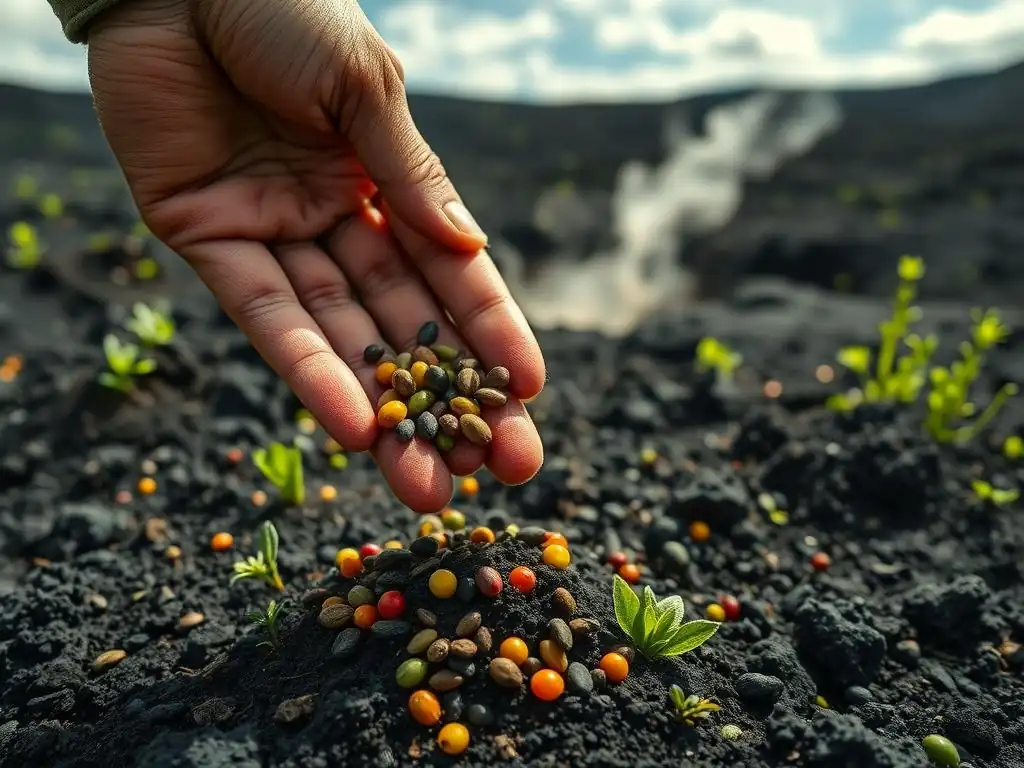
Reforestation Efforts: Planting Native Species to Enhance Seed Sources
While natural seed dispersal is a powerful force in volcanic landscape recovery, human intervention can sometimes accelerate the process, particularly in areas where natural regeneration is slow or limited. Reforestation efforts, involving the planting of native plant species, can be a valuable tool for enhancing seed sources and promoting vegetation establishment in degraded volcanic landscapes. Strategic planting can introduce key pioneer species or species that are slow to colonize naturally, thereby jumpstarting the process of ecological succession.
Reforestation in volcanic areas requires careful planning and species selection. Native species, adapted to the local volcanic environment, are crucial for ensuring long-term success and maintaining ecosystem integrity. Planting efforts should focus on species that contribute to soil development, nutrient cycling, and habitat creation for other organisms. Furthermore, reforestation should be integrated with other volcanic landscape recovery strategies, such as soil enrichment and invasive species management, to maximize its effectiveness.
Soil Enrichment Techniques: Improving Conditions for Seed Germination
Soil nutrient limitations are a major constraint on plant establishment and volcanic landscape recovery. Human intervention can address this challenge through soil enrichment techniques, aimed at improving soil fertility and creating more favorable conditions for seed germination and plant growth. Various methods can be employed, including the addition of organic matter, such as compost or mulch, and the application of fertilizers, particularly nitrogen and phosphorus, which are often deficient in volcanic soils.
Soil enrichment techniques can be particularly beneficial in the early stages of volcanic landscape recovery, providing a boost to pioneer species and accelerating vegetation establishment. However, it is important to apply soil amendments judiciously and consider potential long-term effects on ecosystem dynamics. Over-fertilization, for example, can favor certain plant species over others and potentially disrupt natural succession processes. Soil enrichment should be viewed as a tool to assist natural volcanic landscape recovery, rather than a complete substitute for natural processes.
Managing Invasive Species: Protecting Native Plant Communities
Invasive plant species can pose a significant threat to volcanic landscape recovery, potentially outcompeting native species and altering ecosystem trajectory. Volcanic landscapes, particularly those disturbed by human activities or located near populated areas, are vulnerable to invasion by non-native plants. Effective management of invasive species is therefore crucial for protecting native plant communities and ensuring successful volcanic landscape recovery.
Invasive species management strategies in volcanic areas may include manual removal, herbicide application, or biological control methods. Early detection and rapid response are essential for preventing invasive species from becoming established and widespread. Monitoring for invasive species and implementing control measures are ongoing efforts required to maintain the integrity of recovering volcanic ecosystems and support long-term volcanic landscape recovery strategies.
Conclusion: The Enduring Power of Plant Dispersal in Shaping Volcanic Ecosystems
The Future of Volcanic Landscape Restoration: A Focus on Seed Dispersal Research
Plant dispersal is undeniably a fundamental process shaping volcanic ecosystems and driving their recovery after eruptions. Understanding the intricacies of seed dispersal mechanisms, patterns, and limitations is crucial for effective volcanic landscape restoration and conservation efforts. Future research should continue to focus on seed dispersal ecology in volcanic environments, addressing key questions related to dispersal distances, dispersal vectors, seed viability, and the influence of environmental factors on dispersal success.
Advancements in seed dispersal research, including the use of remote sensing technologies, genetic analyses, and ecological modeling, can provide valuable insights into the dynamics of volcanic landscape recovery and inform more targeted and effective restoration strategies. A deeper understanding of seed dispersal will be essential for predicting vegetation responses to future volcanic eruptions and for managing volcanic landscapes in a changing world.
Volcanic landscape recovery strategies: Utilizing Mycorrhizal Inoculation
Volcanic landscape recovery strategies can be further enhanced by considering the role of mycorrhizal fungi, which form symbiotic associations with plant roots. These fungi improve nutrient uptake, particularly phosphorus, and can enhance plant tolerance to stress conditions often found in volcanic soils. Mycorrhizal inoculation, the introduction of beneficial mycorrhizal fungi into volcanic soils, is emerging as a promising approach to accelerate volcanic landscape recovery.
Research has shown that mycorrhizal inoculation can improve seedling establishment, plant growth, and overall vegetation cover in volcanic environments. Selecting appropriate mycorrhizal fungi species and application methods is crucial for maximizing the benefits of this strategy. Integrating mycorrhizal inoculation with other volcanic landscape recovery strategies, such as reforestation and soil enrichment, holds significant potential for promoting more rapid and sustainable recovery of volcanic ecosystems. Mycorrhizal inoculation represents a nature-based solution that complements the enduring power of seed dispersal in shaping volcanic landscapes and ensuring their long-term resilience.
Frequently Asked Questions
What is the main focus of the "Seeds of Hope" article?
The article primarily focuses on how plant dispersal plays a crucial role in the recovery of volcanic landscapes after eruptions. It highlights the ways in which seeds are transported to these devastated areas.
Why is plant recovery important in volcanic landscapes?
Plant recovery is important because it helps stabilize the nutrient-poor soil, prevents erosion, and paves the way for the return of animal life and a more diverse ecosystem.
What are some of the main methods of plant dispersal discussed in the article?
The article likely discusses various methods, including wind dispersal, animal dispersal (where animals carry seeds), and potentially even water dispersal, all contributing to recolonization after volcanic events.
How does the article relate to the overall mission of VolcanoExplorers.org?
The article aligns with the site's mission by exploring the science behind volcanic activity and its effects on the environment, specifically focusing on the ecological recovery processes that follow eruptions.
What can readers learn about "Volcanic landscape recovery strategies" from this article?
Readers can learn about the natural strategies that plants employ to recolonize volcanic landscapes, which is a key component in understanding long-term ecosystem recovery and informing potential human-assisted restoration efforts.
Final Reflection: Nurturing Life from Ash
The journey from barren volcanic landscapes to thriving ecosystems is a testament to nature's resilience, and as we've explored, plant dispersal is the unsung hero of this transformation. The strategies discussed are not merely academic exercises; they are vital tools for understanding and accelerating the recovery of environments devastated by volcanic activity, a reality increasingly relevant in our changing world.
This intricate dance between wind, water, animals, and the tenacity of life profoundly shapes our understanding of ecological succession. Witnessing the first tenacious seedlings emerge from volcanic ash is a powerful reminder of the enduring power of hope and renewal. The ultimate test of a moral society is the kind of world that it leaves to its children.
- Dietrich Bonhoeffer. This quote resonates deeply, urging us to consider our role in fostering environments where future generations can witness and benefit from such natural miracles.
As we conclude this exploration, let us carry forward the lessons learned from these resilient landscapes. Consider the seeds of hope you can sow in your own life, whether through environmental stewardship, supporting conservation efforts, or simply appreciating the intricate beauty of the natural world. The future of our planet depends on our collective commitment to nurturing life, even in the most challenging of environments.
Ignite Your Inner Botanist: Witness Volcanic Rebirth!
Thank you for delving into the remarkable journey of plant dispersal and its vital role in shaping the recovery of volcanic landscapes. Now, armed with newfound appreciation for these resilient ecosystems, it's time to get involved!
Here's how you can continue to explore the powerful story of life after volcanic eruption:
- Become a citizen scientist: Report any unique plant sightings you encounter on recent volcanic sites using the Volcano Explorers observation form (available in your area, find it at local community centers, or on our website at volcanoxplorers.org/observations). Every observation helps us understand these fragile ecosystems better.
- Dive deeper: Explore our archives to find detailed guides on identifying pioneer plant species thriving in volcanic regions.
- Share the story: Spark conversations about the tenacity of life by sharing this article with your network. Let others marvel at nature's resilience.
What surprising adaptation have you seen in plants overcoming harsh environments? Share your insights in the comments below!