Tambora's Plume: Reconstructing the Anatomy of a MegaEruption
Uncover the anatomy of the Tambora eruption in this detailed study! VolcanoExplorers.org reveals the catastrophic scale and inner workings of this mega-eruption,…
Read article
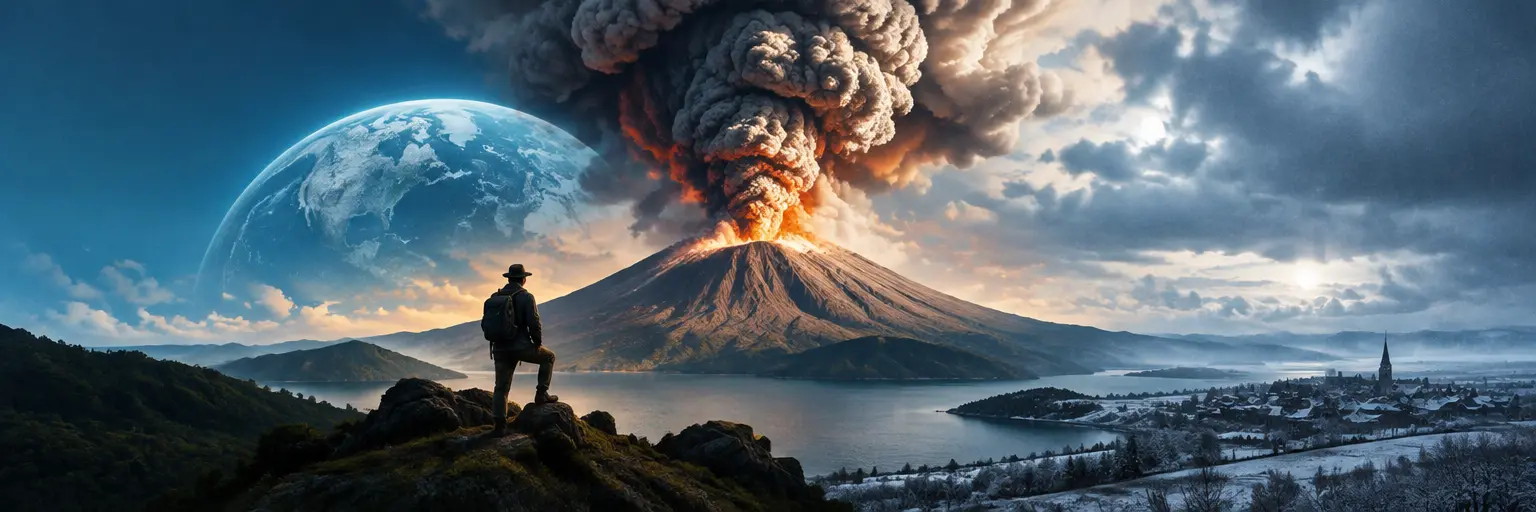
Mount Tambora’s cataclysmic eruption in April 1815 remains the most powerful in recorded history, a colossal blast that not only obliterated the Indonesian island’s summit but also unleashed a global climatic anomaly: the infamous Year Without a Summer in 1816. As the massive plume of ash and sulfur dioxide circled the Earth, it dimmed sunlight, dropped temperatures, and spawned crop failures, famine, and eerie red sunsets from Europe to North America. This subcategory on VolcanoExplorers.org dives deep into the science, the eyewitness accounts, and the far-reaching human impact of that single explosion—a stark reminder of how one volcano can alter the course of civilization. From the volcanic winter’s role in sparking Mary Shelley’s “Frankenstein” to the chilling effect on global harvests, discover how Tambora’s fury rewrote weather patterns and history itself. Explore the volcanic winter mechanism, the tragic toll on local Sumbawa and Lombok populations, and the ongoing research that helps us understand seismic giants. Whether you’re a geology enthusiast or a history buff, this page connects the raw power of the Earth’s interior to the fragile fabric of human society.
Uncover the anatomy of the Tambora eruption in this detailed study! VolcanoExplorers.org reveals the catastrophic scale and inner workings of this mega-eruption,…
Read article
Uncover the chilling impact of Tambora's 1815 eruption. VolcanoExplorers.org explores the devastating Tambora volcanic winter effects, revealing a global catastrophe that reshaped…
Read article
1816: "The Year Without a Summer" blamed on a comet? VolcanoExplorers.org debunks this myth, exploring the true impact of the devastating Tambora…
Read article
1815: The Tambora eruption's climate effects reverberated globally, plunging the world into a "year without a summer." Discover how this colossal event…
Read article
1815's Tambora eruption devastated Indonesia. VolcanoExplorers.org explores the harrowing accounts of survivors, offering insights into resilience and the crucial importance of understanding…
Read article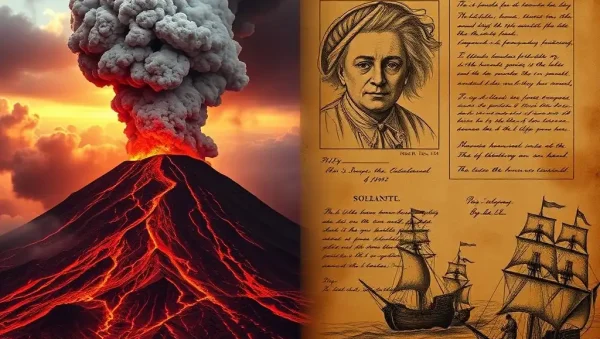
Uncover the truth behind the infamous Tambora eruption. VolcanoExplorers.org separates fact from fiction in 1816's historical accounts, revealing the eruption's true impact…
Read article
Uncover the chilling truth behind Tambora's 1815 eruption! Did this colossal event, with its "year without summer," inspire Mary Shelley's Frankenstein and…
Read articleWelcome to Volcano Explorers’ deep dive into the cataclysmic eruption of Mount Tambora in 1815 and the subsequent global climate anomaly known as the “Year Without a Summer.” This subcategory unravels the science, human impact, and lasting legacy of one of the most powerful volcanic events in recorded history. Here, you’ll explore how a single eruption on a remote Indonesian island altered weather patterns across the globe, triggered famines and disease, and even inspired dark and haunting art. Whether you are a student, a history buff, or a volcano enthusiast, this resource offers a comprehensive, SEO-rich exploration of Tambora’s far-reaching effects.
The April 1815 eruption of Mount Tambora, located on Sumbawa Island in Indonesia, is classified as a VEI-7 event, making it the most explosive eruption in the last 10,000 years. The blast ejected an estimated 160 cubic kilometers of material into the atmosphere, with ash columns reaching over 40 kilometers high. The immediate devastation was staggering: pyroclastic flows and tsunamis wiped out entire villages, and an estimated 10,000 people died instantly, with another 80,000 succumbing to starvation and disease in the aftermath.
What made Tambora’s eruption particularly significant was its sulfur dioxide output, which formed sulfate aerosols in the stratosphere. These aerosols acted as a global sunshield, reflecting sunlight and cooling the Earth’s surface. This volcanic winter was not a localized event but a planetary phenomenon, leading to dramatic temperature drops across Europe, North America, and Asia. For visitors, this section details the eruption’s mechanics, its unprecedented scale, and the immediate geological and humanitarian crises it triggered, setting the stage for the climate chaos that followed.
The term “Year Without a Summer” refers to 1816, when the effects of Tambora’s aerosols caused crop failures, freezing summer temperatures, and disrupted monsoons worldwide. In the United States, snow fell in New England in June, and lakes froze in July, while Europe endured relentless rain and cold that destroyed harvests. This resulted in the worst famine of the 19th century, with food riots in France, Switzerland, and the British Isles, and a typhus epidemic in Ireland that claimed thousands of lives.
This section explores the detailed climatological data reconstructed from tree rings, ice cores, and historical records, illustrating how a single volcanic event can alter weather patterns for up to three years. It also examines the scientific term “volcanic winter” and compares Tambora’s impact to other eruptions like Krakatoa and Pinatubo, helping readers understand the mechanics of stratospheric aerosol dispersion and radiative forcing. By the end, you’ll grasp how a distant volcano can bring snow to summer skies and famine to the world’s breadbaskets.
The Year Without a Summer had profound socioeconomic impacts, reshaping demographics and political landscapes. In Europe, agricultural collapse led to skyrocketing grain prices, sparking civil unrest and migration. In China, the climate anomaly caused flooding along the Yangtze River and a devastating famine in Yunnan province, killing over 100,000 people. In India, the failure of the summer monsoon produced severe drought and cholera outbreaks, showing that Tambora’s reach extended far beyond the Atlantic world.
This H3 section combines historical epidemiology, economic history, and disaster studies to show how volcanic climate forcing interacts with existing social vulnerabilities. It highlights the relationship between food scarcity, disease outbreaks, and governmental responses, using primary sources like diary entries and government records. For history enthusiasts and researchers, this is a rich vein of interdisciplinary knowledge that connects natural science with human tragedy, offering lessons on modern climate resilience and food security that remain relevant today.
The gloomy and eerie conditions of 1816 gave birth to a uniquely dark artistic movement. Most famously, the “Year Without a Summer” inspired Mary Shelley’s Frankenstein, written during a stay at Lake Geneva where continuous rain and cold kept the group indoors. Lord Byron’s poem Darkness reflected the apocalyptic mood, while J.M.W. Turner’s dramatic, hazy landscapes are now attributed to the vivid sunsets caused by volcanic aerosols. These cultural outputs serve as historical documentaries of a world living beneath a perpetual veil.
This section investigates the direct and indirect links between the volcanic eruption and artistic creativity, analyzing how climate anomalies shaped literary themes and visual aesthetics. It also discusses the psychological impact of persistent overcast skies, crop failure, and social instability on European intellectuals. By examining letters, travel journals, and art critiques, readers will appreciate how Tambora not only altered weather but also altered the human imagination, leaving an indelible mark on the Romantic era and beyond.
Mount Tambora is a case study for modern volcanology, offering insights into the mechanisms of super-eruptions and their global impact. The 1815 event prompted the development of the Volcanic Explosivity Index (VEI) and renewed interest in climate modeling, especially the role of sulfur aerosols in precipitation patterns. Today, scientists use Tambora as a benchmark for risks posed by similar caldera-forming volcanoes, such as Yellowstone and Toba, to calculate potential societal disruption.
This H3 section distills cutting-edge research on gas emissions, magma chamber dynamics, and eruption forecasting, using Tambora as a real-world testbed. It also explores how climate models simulate aerosol cooling and their verification against 1816 temperature datasets. For students and professionals, this content bridges historical records with modern geophysical monitoring, highlighting why Tambora remains a critical reference for disaster preparedness and climate policy debates.
The most intense cooling occurred in 1816, but the effects persisted for several years. Temperature anomalies of 1–3°C were recorded for up to three years, with some regions experiencing colder conditions until 1819. The aerosols gradually settled, but the agricultural and social recovery took much longer.
Estimates vary, but approximately 10,000 people were killed instantly by pyroclastic flows and tsunamis. Famine and disease over the following months raised the total to between 71,000 and 91,000 deaths, making it one of the deadliest eruptions in history.
Yes, super-eruption-capable volcanoes like Toba and Yellowstone pose a similar threat, though probabilities are low per century. Modern monitoring and climate modeling would allow earlier warnings, but the global impacts would still be severe, especially for agriculture and air travel.
Surprisingly, the cold summer led to advancements in agricultural research, such as the development of hardier crop varieties. It also sparked the bicycle craze in Europe as many horses died due to feed shortages, and it influenced the invention of the séance in some communities.
The U.S. experienced snow in June and killing frosts in July and August, devastating crops in New England and the Ohio Valley. This prompted westward migration as farmers sought milder climates, and it contributed to an economic depression, but it also accelerated the growth of midwestern states.