
Tambora's Roar: A Volcanic Winter That Gripped the Globe

Welcome to Volcano Explorers!
Prepare to be captivated by the raw power and breathtaking beauty of volcanoes. But beneath the fiery spectacle lies a chilling reality. Ever heard of a year without a summer? Our deep dive into the Tambora volcanic winter effects reveals how one eruption plunged the world into chaos, triggering a cascade of events that reshaped history. Dare to uncover the secrets hidden within Tambora's roar and discover how its legacy continues to echo today.
- Introduction to the 1815 Tambora Eruption and its Global Impact
- The Science Behind Tambora's Volcanic Winter Effects
- Global Climatic and Environmental Consequences of the Tambora Eruption
- Societal Impacts of the Tambora Volcanic Winter Effects
- Regional Impacts: Specific Examples of Tambora's Effects
- Tambora's Influence on Art, Literature, and Culture
- Lessons Learned from the Tambora Eruption
- Comparing Tambora to Other Significant Volcanic Eruptions
- Conclusion: The Enduring Significance of Tambora's Volcanic Winter
-
Frequently Asked Questions
- What were the Tambora volcanic winter effects on global temperatures?
- How did the Tambora volcanic winter effects impact agriculture and food supplies?
- What is the connection between the Tambora volcanic winter effects and the spread of disease?
- Besides temperature drops and food shortages, what other Tambora volcanic winter effects were observed?
- How do scientists study the Tambora volcanic winter effects today?
- Final Reflection: Echoes of Tambora's Legacy
- Relive History: Unearth Tambora's Secrets!
Introduction to the 1815 Tambora Eruption and its Global Impact
Setting the Stage: The Eruption of Mount Tambora
Mount Tambora, located on the island of Sumbawa in present-day Indonesia, was not always recognized as a towering threat. Before 1815, it stood as one of the tallest peaks in the Indonesian archipelago, a majestic presence in a region known for its volcanic activity. The local populations, primarily the Tamboran people, lived relatively peaceful lives in the shadow of this giant, unaware of the cataclysm that was brewing beneath their feet.
Geological evidence suggests that Tambora had been building up pressure for decades, perhaps even centuries. Minor eruptions and seismic activity might have been present, but they were likely perceived as normal volcanic rumblings, not harbingers of an unprecedented global event. The rich volcanic soils around Tambora supported agriculture, and the mountain itself was likely considered a vital part of the local ecosystem, providing resources and shaping the landscape.
The eruption of Mount Tambora in April 1815 was not a sudden, unexpected event in terms of geological timescales. Preceding the massive explosion, there were noticeable increases in volcanic activity. In 1812, and again in 1814, smaller eruptions served as ominous precursors.
These earlier events, while significant to the local population, did not fully signal the magnitude of what was to come. By April 5, 1815, the volcano began to erupt more violently, sending ash plumes and pyroclastic flows down its slopes. However, even this was just the beginning.
The climax occurred on April 10, 1815. In what is considered one of the most powerful volcanic eruptions in recorded history, Tambora unleashed its fury, ejecting colossal volumes of ash, gas, and rock into the atmosphere. The explosions were heard thousands of kilometers away, and the immediate impact on Sumbawa and surrounding islands was devastating, marking the beginning of a global climate anomaly.
Introducing the "Year Without a Summer": 1816
The year 1816 became infamously known as the "Year Without a Summer," a chilling testament to the far-reaching consequences of the Tambora eruption. While the immediate aftermath of the eruption was catastrophic for the Indonesian archipelago, the global repercussions unfolded more gradually, becoming starkly apparent in the months that followed. Across vast stretches of the globe, particularly in the Northern Hemisphere, normal seasonal weather patterns were disrupted.
Spring turned into a prolonged winter, summer offered only fleeting moments of warmth, and autumn arrived prematurely, bringing with it early frosts. Reports from Europe and North America detailed unusual phenomena: persistent dry fogs that obscured the sun, unusually colored sunsets, and significantly lower temperatures than average.
The dramatic climatic shifts of 1816 manifested in a series of agricultural disasters. In New England, for instance, snow fell in June, and killing frosts ravaged crops throughout the summer months. Similar conditions prevailed across Europe, where unusually cold temperatures and incessant rainfall led to widespread crop failures.
Grain harvests were decimated, and essential food sources dwindled rapidly. The consequences were not limited to immediate food shortages; they sparked widespread famine, disease outbreaks, and economic instability across continents. The "Year Without a Summer" was a stark reminder of the interconnectedness of the global climate system and the profound impact a single, massive volcanic event could have on societies thousands of miles away, demonstrating the true scope of the Tambora volcanic winter effects.
The Lasting Legacy of Tambora's Eruption on Global Climate
The Tambora eruption and the subsequent "Year Without a Summer" left an indelible mark on human history and scientific understanding. Beyond the immediate devastation and societal disruption, the event served as a crucial, albeit tragic, natural experiment demonstrating the profound influence of volcanic eruptions on global climate. The experience of 1816 highlighted the vulnerability of agricultural systems and societies to abrupt climate changes.
It spurred early scientific inquiry into the mechanics of volcanic impacts on the atmosphere and laid the groundwork for modern volcanology and climate science. The observable global cooling effect directly linked to Tambora's aerosol emissions provided some of the earliest empirical evidence of the potential for atmospheric particles to alter global temperatures.
Furthermore, the Tambora event underscored the importance of monitoring and understanding volcanic activity, not just for local safety, but for global well-being. The widespread famine and societal upheaval triggered by the Tambora volcanic winter effects emphasized the need for better preparedness and resilience in the face of natural disasters. The lessons learned from Tambora contributed to the development of early warning systems for volcanic eruptions and a greater appreciation for the interconnectedness of global systems.
In contemporary times, as we grapple with human-induced climate change, the study of Tambora's volcanic winter remains profoundly relevant, offering insights into the complexities of Earth's climate system and the potential for sudden, impactful global climate shifts. It serves as a historical case study of a natural climate forcing event, providing valuable data for climate models and risk assessments in a world increasingly facing environmental challenges.
The Science Behind Tambora's Volcanic Winter Effects
Understanding Volcanic Explosivity Index (VEI) and Tambora's VEI 7 Rating
The Volcanic Explosivity Index, or VEI, is a logarithmic scale used to measure the explosivity of volcanic eruptions. Developed by volcanologist Chris Newhall and Stephen Self in the 1980s, the VEI quantifies the magnitude of an eruption based on factors like the volume of erupted material, the height of the eruption column, and the duration of the eruption. The scale ranges from VEI 0, for non-explosive eruptions, to VEI 8, representing the most catastrophic eruptions imaginable.
Each increment on the VEI scale represents roughly a tenfold increase in explosivity. For example, a VEI 4 eruption is approximately ten times more explosive than a VEI 3 eruption. This index provides a standardized way to compare the size and impact of different volcanic events throughout history.
The 1815 eruption of Mount Tambora is classified as a VEI 7 eruption, placing it among the most powerful volcanic events of the last few millennia. Only a handful of eruptions in the Holocene epoch, such as the AD 180 Taupo eruption and the 1257 Samalas eruption, are believed to have reached VEI 7 or higher. Tambora's VEI 7 rating signifies an eruption that ejected over 100 cubic kilometers of volcanic material into the atmosphere, reaching an eruption column height of over 20 kilometers.
The explosive force was immense, causing widespread devastation in the immediate vicinity and injecting vast quantities of gas and ash into the stratosphere. This stratospheric injection was crucial because, unlike tropospheric aerosols that are quickly washed out by rain, stratospheric aerosols can persist for months or even years, spreading globally and influencing the Earth's radiative balance, leading to the Tambora volcanic winter effects.
Aerosols and Atmospheric Blocking: How Tambora Affected Sunlight
Volcanic eruptions, particularly those of VEI 6 and above, can inject massive amounts of gases and particles, collectively known as aerosols, into the Earth's atmosphere. These aerosols play a critical role in altering atmospheric conditions and, in the case of large eruptions like Tambora, can lead to significant climate perturbations. The primary way Tambora’s eruption affected sunlight was through the scattering and absorption of solar radiation by these volcanic aerosols, primarily sulfate aerosols.
Upon reaching the stratosphere, sulfur dioxide gas (SO2) released during the eruption undergoes chemical reactions to form sulfuric acid (H2SO4) droplets. These droplets are extremely small, typically in the micrometer range, and can remain aloft in the stratosphere for extended periods.
These sulfate aerosols act as a veil in the upper atmosphere, reflecting incoming solar radiation back into space. This process reduces the amount of sunlight reaching the Earth's surface, leading to a decrease in global average temperatures. The effect is analogous to a global dimming effect, where less solar energy is available to warm the planet. In the case of Tambora, the sheer volume of sulfur dioxide injected into the stratosphere was unprecedented in recent history.
Estimates suggest that Tambora released between 30 to 50 million tons of sulfur dioxide. This massive injection resulted in a significant increase in stratospheric aerosol optical depth, meaning the atmosphere became much less transparent to sunlight. The consequence was a noticeable reduction in solar radiation reaching the surface, directly contributing to the global cooling and the phenomena associated with the Tambora volcanic winter effects.
Sulfate Aerosols: The Key to Global Cooling
While volcanic ash is a prominent and visible product of eruptions, it is relatively short-lived in the atmosphere. Larger ash particles fall out quickly due to gravity, and even finer ash is typically removed within weeks by precipitation. The key to the long-lasting cooling effect of eruptions like Tambora lies in the sulfate aerosols.
These aerosols, formed from sulfur dioxide gas emitted during the eruption, have a much longer residence time in the stratosphere compared to ash, typically lasting for one to three years after a major eruption. The extended lifespan of sulfate aerosols is critical for their climate-altering impact.
Sulfur dioxide (SO2) is a relatively minor component of volcanic gas compared to water vapor and carbon dioxide. However, its role in climate forcing is disproportionately large. Once in the stratosphere, SO2 reacts with water vapor and hydroxyl radicals (OH) through a series of complex chemical reactions to form sulfuric acid (H2SO4).
This sulfuric acid then condenses into tiny sulfate aerosol particles. These particles are highly reflective to sunlight, effectively scattering incoming solar radiation back into space. The effectiveness of sulfate aerosols in reflecting sunlight is further enhanced by their size, which is optimally within the range to interact with and scatter visible light.
The Tambora eruption’s massive sulfur dioxide emission led to a substantial increase in stratospheric sulfate aerosols, creating a prolonged period of reduced solar radiation at the Earth's surface. This radiative forcing, the imbalance in Earth's energy budget, is the primary driver behind the global cooling and the Tambora volcanic winter effects observed in 1816 and the years following the eruption.
Global Climatic and Environmental Consequences of the Tambora Eruption
Temperature Anomalies and the "Year Without a Summer"
The most striking consequence of the Tambora eruption was the significant drop in global temperatures, most notably during 1816, the "Year Without a Summer." While the global average temperature decrease is estimated to be between 0.4 to 0.7 °C (0.7 to 1.3 °F), this average masks more pronounced regional variations and seasonal impacts. The Northern Hemisphere experienced the most severe temperature anomalies.
Regions like North America and Europe witnessed significantly colder than average temperatures throughout the year, particularly during the summer months. In parts of Europe, average temperatures during the summer of 1816 were as much as 2 to 3 °C (3.6 to 5.4 °F) below the long-term average.
These temperature anomalies were not uniform across the year. While winters were also cold, the most devastating impact was on the summer growing season. Late frosts in spring and early frosts in autumn drastically shortened the growing season in many regions. In New England, for example, there were reports of frost in every month of the year, including June and July.
The persistent cold temperatures severely hampered crop development and maturation. Historical records and proxy data, such as tree rings and ice cores, corroborate the widespread cooling, confirming that 1816 was indeed one of the coldest years in centuries for many parts of the world. This widespread and prolonged cooling, directly attributable to the Tambora volcanic winter effects, had devastating consequences for agriculture and society.
Extreme Weather Events: Frosts, Floods, and Droughts
Beyond the general cooling, the Tambora eruption and the resulting volcanic winter triggered a cascade of extreme weather events across the globe. The altered atmospheric circulation patterns and temperature gradients led to increased climate variability and more frequent and intense extreme weather. Frosts were a pervasive problem, as already mentioned, devastating crops across North America and Europe.
These unseasonal frosts occurred throughout the growing season, repeatedly damaging or destroying crops that had managed to sprout. In addition to frosts, many regions experienced unusually heavy rainfall and prolonged periods of cloud cover. This excessive precipitation contributed to widespread flooding in parts of Europe and Asia.
Conversely, other regions suffered from severe droughts. The disrupted monsoon patterns in Asia, potentially linked to the volcanic forcing, led to reduced rainfall in some areas, causing drought conditions and further exacerbating agricultural distress. The combination of extreme temperatures, frosts, floods, and droughts created a volatile and unpredictable weather environment.
These extreme events were not isolated occurrences; they persisted throughout 1816 and, in some cases, continued into subsequent years. The frequency and intensity of these weather anomalies were far beyond the typical climate variability of the time, and they are directly linked to the atmospheric perturbations caused by the Tambora volcanic winter effects.
Impact on Agriculture: Crop Failures and Famine
The most devastating and immediate consequence of the Tambora volcanic winter effects was the widespread agricultural crisis. The combination of reduced sunlight, lower temperatures, unseasonal frosts, and extreme weather events wreaked havoc on agricultural production across the Northern Hemisphere, and likely in other regions to varying degrees. The shortened growing season was a major factor. Crops that require a certain number of warm days to mature failed to ripen before the onset of early autumn frosts.
Grain crops, such as wheat, rye, and barley, were particularly vulnerable. In Europe, grain harvests were catastrophically low, with some regions experiencing near-total crop failures. Potato crops, a relatively new but increasingly important food source in Europe, also suffered significant losses due to frost and blight.
Similar agricultural disasters unfolded in North America. The unusual cold and persistent frosts decimated corn crops and other staples. The inability to produce sufficient food led directly to widespread famine. Food prices skyrocketed, making basic necessities unaffordable for many.
The famine was not limited to a single year; crop failures continued in some regions into 1817 and even 1818, as the climate system gradually recovered. The agricultural crisis triggered by the Tambora volcanic winter effects resulted in immense human suffering, with widespread starvation, malnutrition, and increased vulnerability to disease. The impact on agriculture was the primary driver of the societal and economic disruptions that followed.
Societal Impacts of the Tambora Volcanic Winter Effects
Famine and Disease Outbreaks in Europe and Beyond
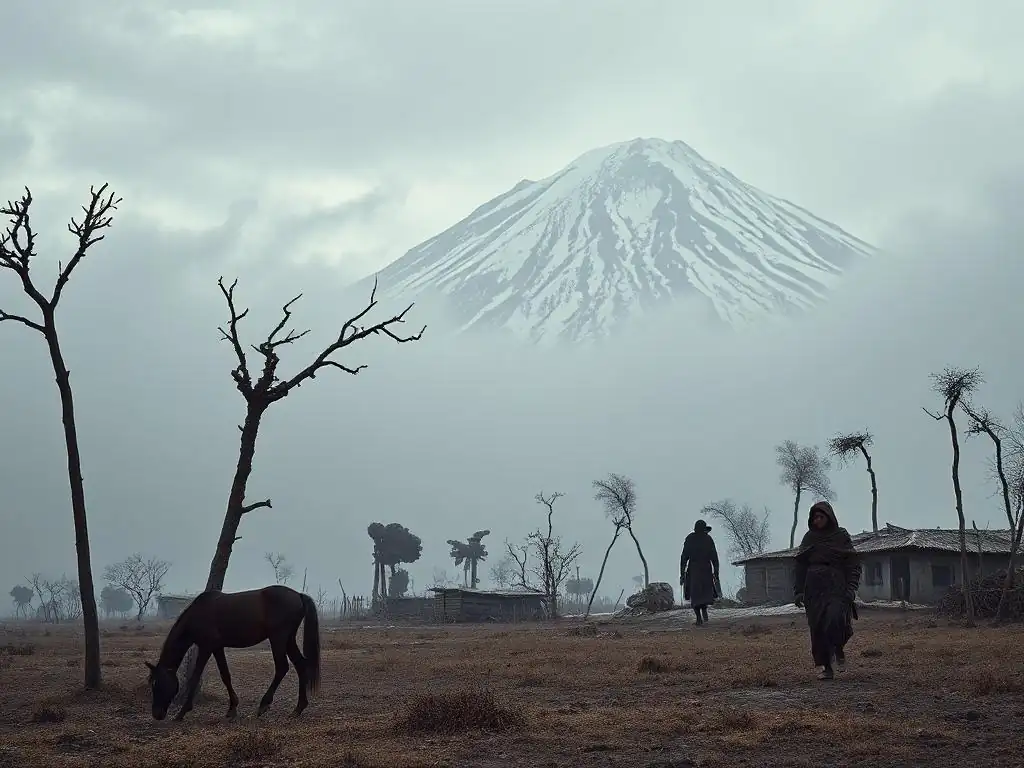
The widespread crop failures triggered by the Tambora volcanic winter effects led to severe famine across Europe and parts of Asia. The immediate consequence of failed harvests was a drastic shortage of food, driving up prices to unaffordable levels for the majority of the population. Grain prices in Europe soared, in some cases doubling or tripling, putting immense strain on already impoverished populations.
The famine was particularly acute in regions that were heavily reliant on agriculture and lacked food reserves or effective distribution systems. Switzerland, for example, was severely affected, with widespread starvation reported. Ireland, already facing food insecurity, also experienced significant hardship.
The famine conditions weakened populations, making them more susceptible to disease. Malnutrition compromises the immune system, and crowded, unsanitary living conditions, often exacerbated by famine, facilitate the spread of infectious diseases. Outbreaks of typhus, dysentery, and cholera were reported in various parts of Europe during and after the "Year Without a Summer."
These disease outbreaks further increased mortality rates and compounded the suffering caused by famine. The combination of starvation and disease created a demographic crisis in many regions. While precise mortality figures directly attributable to the Tambora volcanic winter effects are difficult to ascertain, it is clear that the famine and disease outbreaks led to a significant increase in death rates across Europe and contributed to social unrest and instability.
The Tambora volcanic winter effects had far-reaching economic consequences, disrupting trade, commerce, and industry across Europe and beyond. The agricultural crisis directly impacted economies that were heavily reliant on agriculture. Crop failures led to a decline in agricultural output, reducing income for farmers and agricultural laborers.
The soaring food prices also reduced consumer spending on non-essential goods and services, impacting other sectors of the economy. Trade was disrupted as food shortages and economic instability hampered transportation and commerce. The impact extended beyond agriculture; for instance, the price of oats, essential for horses used in transportation and agriculture, rose dramatically, further straining economic activity.
The economic hardship and social unrest were intertwined. Famine and poverty fueled social tensions. Food riots and protests erupted in several European countries as people desperate for food took to the streets.
Governments struggled to cope with the crisis, and the perceived inadequacy of their responses further fueled discontent. While the Tambora volcanic winter effects were not the sole cause of social unrest in the early 19th century, they undoubtedly exacerbated existing social and economic inequalities and contributed to a climate of instability. The economic disruptions and social unrest underscored the vulnerability of societies to climate shocks and the importance of resilient economic and social systems in mitigating the impacts of such events.
Migration and Displacement Due to Environmental Catastrophe
The severe environmental and economic stresses caused by the Tambora volcanic winter effects prompted migration and displacement in some regions. While not on the scale of modern climate-induced migration, the hardship of the "Year Without a Summer" and subsequent years did lead to population movements as people sought to escape famine and poverty.
In regions particularly hard-hit by crop failures, such as parts of Switzerland and Germany, some people migrated in search of food or better economic opportunities. Migration was often localized, with people moving from rural areas to towns or to regions perceived to be less affected by the famine.
There is also evidence of transatlantic migration being influenced, in part, by the conditions in Europe. While complex factors drive migration decisions, the "Year Without a Summer" and the subsequent economic downturn likely contributed to increased emigration from Europe to North America in the years following 1816. The environmental catastrophe acted as a "push" factor, driving people to seek better prospects elsewhere.
These migrations, while relatively small in scale compared to the overall population, represent a significant societal impact of the Tambora volcanic winter effects. They highlight how environmental disasters can trigger population movements and reshape demographic patterns, underscoring the link between environmental change and human migration.
Regional Impacts: Specific Examples of Tambora's Effects
North America: Persistent Dry Fogs and Reduced Sunlight
North America experienced a range of unusual weather phenomena during the "Year Without a Summer," directly linked to the Tambora volcanic winter effects. One of the most striking reports was the prevalence of "dry fogs" across the northeastern United States and eastern Canada. These fogs were described as being persistent and unlike typical fog, often obscuring the sun and giving the sky a hazy, reddish or brownish hue.
These dry fogs were likely caused by the stratospheric aerosols from Tambora scattering sunlight and reducing visibility. Contemporary accounts also mention unusually colored sunsets, another visual manifestation of the altered atmospheric conditions caused by the volcanic aerosols.
Beyond the dry fogs, North America experienced significant temperature anomalies. The spring of 1816 was unusually cold and delayed, and summer brought little relief. Frosts were reported throughout the summer months, even in June and July, across New England and other regions.
These frosts devastated crops, particularly corn, which was a staple food source. Reduced sunlight due to the volcanic aerosols further hampered plant growth. While the temperature drops in North America may not have been as extreme as in some parts of Europe, the persistent cold and the unusual atmospheric phenomena, like the dry fogs, had a significant impact on agriculture and daily life, making the Tambora volcanic winter effects palpable across the continent.
Europe: Widespread Crop Failures and Elevated Food Prices
Europe bore the brunt of the Tambora volcanic winter effects, experiencing the most severe agricultural and societal consequences. The continent was already recovering from the Napoleonic Wars, and the added stress of the volcanic winter exacerbated existing vulnerabilities. Widespread crop failures were the defining characteristic of 1816 in Europe. The unusually cold temperatures and incessant rainfall ruined harvests across the continent.
Grain crops, potatoes, and other essential food sources were decimated. Regions like Switzerland, Germany, France, and Great Britain were particularly hard-hit. Contemporary reports detail fields of grain failing to ripen, potatoes rotting in the ground, and widespread despair among farming communities.
The crop failures led to a dramatic surge in food prices. Grain prices in many European markets doubled or tripled, making food unaffordable for the poor. The elevated food prices triggered widespread famine and social unrest.
Food riots broke out in several countries as people protested the lack of food and the high prices. Governments struggled to respond effectively to the crisis, and the famine contributed to political instability in some regions. The Tambora volcanic winter effects in Europe were a stark reminder of the fragility of agricultural systems and the devastating societal consequences that can follow widespread crop failures, highlighting the profound impact of the eruption on European societies.
Asia: Altered Monsoon Patterns and Regional Famine
While Europe and North America are often the focus when discussing the Tambora volcanic winter effects, Asia also experienced significant impacts, although perhaps less well-documented in Western historical records. One of the key ways Tambora affected Asia was through alterations to monsoon patterns. Volcanic aerosols can influence atmospheric circulation and precipitation patterns, and there is evidence suggesting that the Tambora eruption disrupted the Asian monsoon system. Changes in sea surface temperatures and atmospheric pressure gradients, driven by the volcanic forcing, may have led to weaker or altered monsoon rains in some parts of Asia.
Disrupted monsoon rains can have devastating consequences for agriculture in monsoon-dependent regions. Reduced or erratic rainfall can lead to drought conditions and crop failures. Historical accounts and climate reconstructions suggest that parts of Asia, including India and China, experienced famine conditions in the years following the Tambora eruption.
While direct attribution to Tambora alone is complex due to other factors influencing Asian climates, the eruption likely played a significant role in exacerbating existing vulnerabilities and contributing to agricultural distress in some regions. Further research into Asian climate records from the early 19th century continues to reveal the broader global reach of the Tambora volcanic winter effects, extending beyond Europe and North America.
Tambora's Influence on Art, Literature, and Culture
The Romantic Era and the Inspiration of Darkness
The "Year Without a Summer," born from the Tambora volcanic winter effects, coincided with the flourishing of the Romantic era in art and literature. The pervasive gloom, the altered landscapes, and the sense of societal unease created by the environmental catastrophe arguably resonated with and influenced the themes and aesthetics of Romanticism. Romanticism, in part, was a reaction against the Enlightenment's emphasis on reason and order, embracing emotion, imagination, and the sublime power of nature.
The darkness and uncertainty of the post-Tambora world provided fertile ground for these Romantic sensibilities. The altered atmospheric conditions, with hazy skies and blood-red sunsets, created a dramatic and often unsettling visual backdrop that may have influenced artistic perceptions of nature.
The sense of despair and uncertainty prevalent during the famine years also found expression in Romantic literature and art. Themes of melancholy, isolation, and the fragility of human existence, already present in Romanticism, may have been amplified by the widespread hardship and sense of environmental disruption.
The volcanic winter, in a way, provided a real-world manifestation of the sublime and terrifying aspects of nature that Romantic artists and writers explored in their works. While direct cause-and-effect is difficult to prove, the confluence of the Tambora volcanic winter effects and the Romantic era suggests a potential interplay between environmental upheaval and cultural expression, where the darkness of the era may have, in part, fueled the Romantic fascination with shadow and the darker aspects of human experience.
Mary Shelley's Frankenstein: A Product of the Volcanic Winter?
One of the most intriguing connections between the Tambora volcanic winter effects and cultural output is the potential link to Mary Shelley's seminal novel, Frankenstein. In the summer of 1816, Mary Shelley, Percy Bysshe Shelley, Lord Byron, and others were famously gathered at Villa Diodati near Lake Geneva. The summer of 1816 in Switzerland was exceptionally cold and gloomy, with persistent rain and overcast skies, conditions directly attributable to the Tambora volcanic winter effects.
Confined indoors due to the inclement weather, the group famously challenged each other to write ghost stories. It was during this period of enforced isolation and gloomy atmosphere that Mary Shelley conceived and began writing Frankenstein.
The dark and brooding atmosphere of the "Year Without a Summer" and the sense of societal anxiety prevalent at the time may have indirectly influenced the themes and tone of Frankenstein. The novel explores themes of creation, monstrosity, and the limits of human ambition, set against a backdrop of a world seemingly out of balance.
The environmental disruption caused by Tambora, while not explicitly mentioned in Frankenstein, might have contributed to a general sense of unease and societal fragility that resonated with the novel's themes. While Frankenstein is a complex work with multiple layers of interpretation, the context of its creation during the "Year Without a Summer" offers a compelling perspective on how environmental events can subtly shape artistic imagination and literary expression, making it a fascinating example of the potential cultural reach of the Tambora volcanic winter effects.
The Impact on Landscape Painting and Artistic Expression
The altered atmospheric conditions caused by the Tambora volcanic winter effects, characterized by hazy skies, muted sunlight, and unusually vibrant sunsets, may have influenced landscape painting and artistic expression in the early 19th century. The persistent volcanic aerosols in the stratosphere would have changed the way light interacted with the atmosphere, affecting color palettes and visual perceptions of landscapes. Artists working during this period might have been unconsciously or consciously influenced by these altered visual conditions. The hazy skies and muted light may have contributed to a softer, more atmospheric quality in some landscape paintings of the era.
Furthermore, the reports of unusually vivid sunsets, often described as reddish or orange due to the scattering of light by volcanic aerosols, might have inspired artists to incorporate these dramatic colors into their work. While direct evidence linking specific paintings to the Tambora eruption is scarce, art historians have noted a shift in color palettes and atmospheric effects in landscape painting during the early 19th century that could potentially be related to the volcanic winter conditions.
The altered visual environment created by the Tambora volcanic winter effects provides a fascinating, if subtle, example of how large-scale environmental events can indirectly influence artistic trends and aesthetic sensibilities, demonstrating the broad and often unseen reach of the eruption's global impact.
Lessons Learned from the Tambora Eruption
Understanding the Potential of Volcanic Eruptions to Alter Global Climate
The Tambora eruption and the subsequent "Year Without a Summer" provided a stark and unforgettable lesson in the capacity of volcanic eruptions to profoundly alter global climate. Before Tambora, the understanding of the link between volcanoes and climate was limited.
While some anecdotal observations might have existed, the scale and global impact of Tambora's eruption provided the first clear and compelling evidence of the potential for large volcanic events to trigger significant and widespread climate changes. The observable global cooling following the eruption directly demonstrated the role of volcanic aerosols, particularly sulfate aerosols, in reflecting sunlight and reducing global temperatures.
This understanding was crucial in shaping the early development of climate science. The Tambora event served as a natural experiment, highlighting the sensitivity of the Earth's climate system to external forcings, such as volcanic eruptions. It demonstrated that natural events could cause rapid and significant climate shifts, challenging the prevailing view of a static and unchanging climate.
The lessons learned from Tambora continue to be relevant today. In an era of human-induced climate change, understanding the natural drivers of climate variability, including volcanic eruptions, is essential for developing accurate climate models and predicting future climate scenarios. Tambora serves as a historical benchmark for assessing the potential climate impacts of large volcanic eruptions and for understanding the complex interplay between volcanic activity and the Earth's climate system.
Improving Volcanic Monitoring and Early Warning Systems
The devastating global impacts of the Tambora eruption underscored the critical need for improved volcanic monitoring and early warning systems. While predicting the precise timing of a volcanic eruption remains a challenge, monitoring volcanic activity and identifying signs of unrest can provide valuable lead time for evacuation and preparedness efforts. Before Tambora, volcanic monitoring was rudimentary, if it existed at all, in most parts of the world. The event highlighted the global reach of volcanic hazards and the necessity of a more proactive and systematic approach to volcanic risk management.
In the centuries since Tambora, significant advancements have been made in volcanic monitoring technology and techniques. Seismic networks, ground deformation measurements, gas monitoring, and satellite observations are now routinely used to track volcanic activity around the world. These monitoring systems allow volcanologists to detect subtle changes in volcanic behavior that may precede an eruption, providing crucial information for issuing warnings and mitigating potential hazards.
The lessons learned from Tambora have contributed to the development of more sophisticated and effective volcanic monitoring networks, helping to reduce the risks associated with volcanic eruptions and improving the safety of populations living near active volcanoes. Continued investment in and advancement of volcanic monitoring technologies remain crucial for mitigating future volcanic hazards and reducing the potential for events like the Tambora volcanic winter effects to cause widespread devastation.
Preparing for Future Volcanic Events and their Potential Impacts
The Tambora eruption and its global consequences serve as a powerful reminder of the ongoing threat posed by large volcanic eruptions and the importance of preparedness. While the timing of future large eruptions is unpredictable, geological records indicate that VEI 7 or greater eruptions occur periodically in Earth's history. Understanding the potential impacts of such eruptions is crucial for developing effective strategies to mitigate their effects and enhance societal resilience. Preparation for future volcanic events involves a multi-faceted approach, including improved volcanic monitoring, early warning systems, emergency planning, and public education.
Developing robust emergency plans that address the potential for volcanic ashfall, pyroclastic flows, lahars, and, in the case of large eruptions, global climate impacts, is essential. Public education campaigns can raise awareness about volcanic hazards and preparedness measures, empowering communities to respond effectively during volcanic crises. Furthermore, considering the potential for volcanic eruptions to disrupt global food systems and economies is crucial for developing strategies to enhance food security and economic resilience in the face of such events.
The lessons learned from Tambora highlight the need for a proactive and comprehensive approach to volcanic risk management, recognizing that large volcanic eruptions are a natural hazard with the potential for significant global consequences. Investing in preparedness and mitigation efforts is essential to minimize the impacts of future volcanic events and protect lives and livelihoods from Tambora volcanic winter effects or similar events.
Comparing Tambora to Other Significant Volcanic Eruptions
Krakatoa vs. Tambora: A Comparison of Impacts
Both Krakatoa (1883) and Tambora (1815) are iconic examples of powerful volcanic eruptions that had significant global impacts, but they differed in their scale, nature of impact, and the societal context in which they occurred. Both eruptions were VEI 6 or higher, injecting massive amounts of ash and gas into the stratosphere. However, Tambora was significantly larger, estimated to be a VEI 7 eruption compared to Krakatoa's VEI 6.
This difference in magnitude translated to a greater volume of erupted material and a more prolonged period of global cooling for Tambora. While Krakatoa caused a noticeable global temperature decrease, estimated at around 0.2 to 0.3 °C, the cooling effect of Tambora was more pronounced and longer-lasting, leading to the "Year Without a Summer."
Krakatoa's immediate impact was characterized by the devastating tsunami that killed tens of thousands of people in the Sunda Strait, a direct and catastrophic local effect. Tambora's immediate impact was also devastating locally, but its global impact was primarily through climate disruption, leading to famine and disease outbreaks. In terms of societal context, Krakatoa occurred in a more interconnected and scientifically advanced world than Tambora.
The telegraph allowed for rapid dissemination of news about Krakatoa's eruption globally, and scientific understanding of volcanic processes and their impacts had advanced considerably by 1883. While both eruptions were globally significant, Tambora's volcanic winter effects had a more profound and prolonged impact on global climate and society due to its larger magnitude and the vulnerability of societies in the early 19th century.
Pinatubo and Tambora: Understanding Differences in Atmospheric Effects
The 1991 eruption of Mount Pinatubo in the Philippines is another significant volcanic event that provides a useful comparison to Tambora. Pinatubo was a VEI 6 eruption, injecting a substantial amount of sulfur dioxide into the stratosphere, estimated at around 20 million tons. This injection led to a measurable global cooling of approximately 0.5 °C (0.9 °F) in the years following the eruption, demonstrating the continued relevance of volcanic eruptions as climate-forcing agents.
While Pinatubo's sulfur dioxide injection was substantial, it was still less than the estimated 30 to 50 million tons released by Tambora. Consequently, the global cooling effect of Pinatubo was less pronounced and shorter-lived than that of Tambora.
One key difference in understanding the atmospheric effects of Pinatubo compared to Tambora is the availability of modern scientific tools and monitoring capabilities. In 1991, satellite observations, atmospheric measurements, and sophisticated climate models were available to study the eruption's impact in real-time and with unprecedented detail. This allowed scientists to directly observe the formation and dispersal of sulfate aerosols, track the global cooling effect, and refine climate models to better understand volcanic forcing.
For Tambora, scientific understanding is based on historical records, proxy data, and retrospective analysis. Comparing Pinatubo and Tambora highlights both the similarities in the fundamental mechanisms of volcanic climate forcing and the advancements in our ability to observe, understand, and model these effects in the modern era, allowing for a more nuanced understanding of Tambora volcanic winter effects through the lens of contemporary volcanology.
Lessons from History: Applying Knowledge to Future Volcanic Threats
Comparing Tambora to other significant volcanic eruptions, such as Krakatoa and Pinatubo, reinforces the crucial lessons learned from volcanic history and their relevance to future volcanic threats. These historical eruptions demonstrate that large volcanic events are a recurring natural hazard with the potential for global impacts. Studying past eruptions provides valuable insights into the range of potential volcanic hazards, the mechanisms of volcanic climate forcing, and the societal vulnerabilities to volcanic disasters. By analyzing the impacts of past eruptions, scientists can improve volcanic hazard assessments, refine climate models, and develop more effective strategies for volcanic risk mitigation and preparedness.
The lessons from Tambora, Krakatoa, and Pinatubo collectively emphasize the importance of continuous volcanic monitoring, robust early warning systems, and comprehensive emergency planning. Understanding the potential for volcanic eruptions to trigger climate change, disrupt global food systems, and cause widespread societal disruption is essential for building resilient communities and reducing vulnerability to future volcanic events. Applying the knowledge gained from historical volcanic eruptions to contemporary volcanic risk management is crucial for minimizing the potential for future Tambora volcanic winter effects or similar catastrophes and ensuring that societies are better prepared for the inevitable challenges posed by volcanic activity.
Conclusion: The Enduring Significance of Tambora's Volcanic Winter
Reflecting on the Magnitude of the 1815 Tambora Eruption
The 1815 eruption of Mount Tambora stands as a monumental event in both geological and human history. Its VEI 7 rating places it among the largest volcanic eruptions of the Holocene epoch, and its global reach and societal consequences were profound and far-reaching. The sheer volume of erupted material, the explosive force, and the massive injection of sulfur dioxide into the stratosphere combined to create a volcanic winter that gripped the globe.
The "Year Without a Summer" of 1816 serves as a stark reminder of the immense power of nature and the interconnectedness of the Earth's systems. The magnitude of the Tambora eruption is not just measured in geological terms; it is also reflected in the widespread famine, disease outbreaks, economic disruptions, and societal unrest that followed in its wake.
The Tambora event was a truly global catastrophe, affecting regions thousands of kilometers away from the eruption site. It underscored the vulnerability of agricultural systems and societies to abrupt climate changes and highlighted the potential for natural disasters to trigger widespread human suffering.
Reflecting on the magnitude of the Tambora eruption compels us to recognize the ongoing threat posed by large volcanic events and the importance of understanding and preparing for such occurrences. It serves as a humbling reminder of humanity's place within the forces of nature and the need for respect, vigilance, and proactive measures to mitigate volcanic risks, especially considering the potential for future Tambora volcanic winter effects.
The Importance of Studying Past Volcanic Events
The study of past volcanic events, like the Tambora eruption, is of paramount importance for understanding present and future volcanic hazards and their potential global impacts. Historical eruptions provide invaluable data for volcanologists, climate scientists, and disaster risk reduction experts. By analyzing the geological records, historical accounts, and proxy data associated with past eruptions, scientists can gain insights into eruption dynamics, volcanic climate forcing mechanisms, and the range of potential societal consequences. Studying past events like Tambora allows for the calibration and validation of climate models, improving their predictive capabilities for future volcanic eruptions and other climate change scenarios.
Furthermore, historical eruptions provide crucial lessons for volcanic hazard assessment and risk management. Analyzing the societal responses to past volcanic disasters, both successes and failures, can inform the development of more effective emergency plans and preparedness strategies.
Understanding the long-term impacts of volcanic eruptions on economies, societies, and environments helps to build resilience and reduce vulnerability to future events. The study of past volcanic events, therefore, is not merely an academic exercise; it is a vital tool for enhancing our understanding of volcanic processes, mitigating volcanic risks, and preparing for the challenges posed by future volcanic eruptions, ensuring we learn from the Tambora volcanic winter effects and other historical events.
Preparing for Future Volcanic Events and Mitigating their Effects on our Planet
The Tambora eruption and its volcanic winter serve as a critical case study for understanding the potential impacts of large volcanic eruptions on our planet and human societies. The lessons learned from Tambora underscore the ongoing need for vigilance, preparedness, and proactive measures to mitigate the risks associated with future volcanic events. Investing in continuous volcanic monitoring, developing robust early warning systems, and implementing comprehensive emergency plans are essential steps in reducing volcanic vulnerability. Furthermore, enhancing global food security, strengthening economic resilience, and promoting public awareness about volcanic hazards are crucial for building more resilient societies capable of withstanding the challenges posed by volcanic eruptions.
As we face the complexities of a changing climate and increasing environmental challenges, the lessons from Tambora remain profoundly relevant. Understanding the natural drivers of climate variability, including volcanic eruptions, is essential for developing effective strategies for climate change adaptation and mitigation. Preparing for future volcanic events is not just about mitigating immediate volcanic hazards; it is also about building a more sustainable and resilient future for our planet, acknowledging the potential for future Tambora volcanic winter effects and proactively working to minimize their impact on human civilization and the Earth's delicate ecosystems.
Frequently Asked Questions
What were the Tambora volcanic winter effects on global temperatures?
The eruption of Mount Tambora in 1815 caused a significant drop in global temperatures, leading to what's known as the "Year Without a Summer." This was due to the massive amount of sulfur dioxide released into the atmosphere, which blocked sunlight. Average temperatures plummeted by as much as 0.4–0.7 °C (0.7–1.3 °F).
How did the Tambora volcanic winter effects impact agriculture and food supplies?
The unusually cold weather and reduced sunlight drastically impacted agriculture worldwide. Crop failures were widespread, leading to severe food shortages and famine in many regions, particularly in Europe and North America.
What is the connection between the Tambora volcanic winter effects and the spread of disease?
The famine and malnutrition caused by crop failures weakened populations, making them more vulnerable to disease. This contributed to the spread of diseases like typhus and cholera, resulting in increased mortality rates in many areas.
Besides temperature drops and food shortages, what other Tambora volcanic winter effects were observed?
Other effects included abnormal weather patterns such as heavy rainfall, flooding, and unusual frosts. Also noted were vivid sunsets and sunrises due to the increased atmospheric aerosols from the eruption.
How do scientists study the Tambora volcanic winter effects today?
Scientists study the event through ice core analysis, which reveals the levels of sulfur dioxide deposited in the atmosphere. They also examine historical records, diaries, and weather data to reconstruct the climate and societal impacts of the eruption.
Final Reflection: Echoes of Tambora's Legacy
The chilling narrative of Mount Tambora's eruption and its subsequent "Year Without a Summer" serves as a stark reminder of nature's immense power and our planet's interconnectedness. The Tambora volcanic winter effects, though felt two centuries ago, resonate profoundly today as we grapple with the realities of climate change and the potential for unforeseen global disruptions. Understanding the past, particularly events of such magnitude, is crucial for navigating the uncertainties of our future.
The impact of Tambora extended far beyond immediate devastation, shaping agricultural practices, migration patterns, and even artistic expressions. The sheer scale of human suffering and adaptation during that period underscores our resilience but also highlights our vulnerability to environmental shifts. The summer of 1816 was a cold and wet one. The sun was often obscured by a thick haze, and the temperature rarely rose above freezing.
- A contemporary account, reflecting the pervasive gloom and hardship. This serves as a poignant reminder of the fragility of our ecosystems and the importance of proactive environmental stewardship.
As we reflect on Tambora's roar and its enduring legacy, let us consider the lessons learned. What steps can we take, both individually and collectively, to mitigate the risks posed by natural disasters and to build a more sustainable and resilient future? Let the memory of Tambora inspire us to act with foresight, compassion, and a deep respect for the delicate balance of our planet.
Relive History: Unearth Tambora's Secrets!
Thank you for exploring the devastating impact of the Tambora eruption. We hope you gained a deeper understanding of the volcano's global reach and the resilience of communities facing such a monumental disaster. Now, let's put that knowledge to use!
Here are a few next steps:
- Research how past volcanic eruptions affected your local climate. What changes occurred? This will directly connect what you've learned to your own area.
- Share this article with friends and family to spread awareness of nature's power and the importance of understanding volcanic activity.
- Explore the Volcano Database on Volcano Explorers for further research into past and present volcanic eruptions, or leave your comments about Tambora on the blog.
What is the most relevant lesson from Tambora's eruption regarding today's climate challenges?