
The Year the Seasons Reversed: Tambora's Climate Chaos

Welcome to Volcano Explorers!
Prepare to journey into the heart of Earth's fiery giants. What if a single eruption could plunge the world into a year without summer? Delve into the chilling aftermath of the Tambora eruption, and uncover the unforeseen climate effects that reshaped history. The secrets to understanding this global catastrophe await... Are you ready to explore?
- Introduction: Mount Tambora's Devastating 1815 Eruption
- Mount Tambora: A Volcanic Giant Awakens
- The Cataclysm: The Explosive 1815 Tambora Eruption
- Tambora Eruption Climate Effects: A Global Chill
- Global Consequences of Tambora's Climate Impact
- Understanding the Science: How Tambora Affected Global Climate
- Long-Term Effects and Lessons Learned from Tambora
- Mount Tambora Today: Monitoring and Research
- Conclusion: Tambora's Enduring Impact on Climate and Society
-
Frequently Asked Questions
- What was the Tambora eruption, and why is it significant?
- How did the Tambora eruption affect global temperatures?
- What is meant by "The Year Without a Summer" in relation to Tambora?
- Besides temperature, what other climate effects did the Tambora eruption cause?
- Can another eruption like Tambora happen again, and what would be the likely consequences?
- Final Reflection: Echoes of a Silent Spring
- Unearth the Secrets of Tambora's Legacy!
Introduction: Mount Tambora's Devastating 1815 Eruption
Setting the Stage: The World Before Tambora
The year 1815 dawned on a world still recovering from the Napoleonic Wars, a period of significant upheaval and change across Europe. While the echoes of conflict were slowly fading, and societies began to rebuild, an unseen force was stirring in the distant lands of the Dutch East Indies, present-day Indonesia. Unbeknownst to the populations in Europe and North America, a volcanic giant was about to unleash its fury, setting in motion a chain of events that would dramatically alter global weather patterns and lead to widespread suffering.
Scientific understanding of volcanoes at the time was rudimentary compared to modern volcanology. While people recognized eruptions as powerful natural phenomena, the concept of a volcano's ability to influence global climate was not yet established. The world was largely unprepared for the silent, invisible climate disruption that Mount Tambora was about to unleash.
VolcanoExplorers.org: Unveiling the Power of Volcanoes
VolcanoExplorers.org invites you to journey back to this pivotal moment in history, exploring the profound impact of the Mount Tambora eruption. Our mission is to illuminate the dramatic and often devastating power of volcanoes, not just as geological events, but as forces capable of reshaping our world on a global scale.
Through detailed articles, educational resources, and compelling narratives, VolcanoExplorers.org seeks to deepen your understanding of volcanic science, from the mechanics of eruptions to the far-reaching consequences of events like the Tambora eruption climate effects. We aim to provide insights into famous eruptions, safety measures for those living near active volcanoes, and the sheer awe and wonder these geological marvels inspire.
Mount Tambora: A Volcanic Giant Awakens
Tambora's Pre-Eruption State: A Geological Overview
Mount Tambora, situated on Sumbawa Island in present-day Indonesia, was a majestic stratovolcano before its cataclysmic eruption. Rising to an estimated height of around 4,300 meters (approximately 14,100 feet), it dominated the landscape, a verdant peak in a tropical archipelago. The volcano was formed by layers of hardened lava, volcanic ash, and tephra, typical of stratovolcanoes found in subduction zones.
Surrounding Tambora, the island was likely fertile and densely vegetated, supporting local populations who relied on the rich volcanic soils for agriculture. Prior to 1815, Tambora was considered dormant, although not entirely inactive, with historical records suggesting smaller eruptions in previous centuries.
The Build-Up to Disaster: Signs of Impending Eruption
While the massive eruption of April 1815 seemed sudden to the wider world, Mount Tambora had been showing signs of unrest for several years. Beginning in 1812, residents near the volcano reported increased seismic activity and steam venting. In 1814, a moderate eruption occurred, producing ash plumes and explosions that were noticeable regionally.
These events, while significant, were not fully recognized as precursors to a much larger event. Local populations may have interpreted these as typical volcanic activity, unaware of the immense pressure building deep within Tambora's magma chamber. These preliminary eruptions, however, were a clear indication to geologically informed observers, had they been present and understood the signs, that Tambora was awakening from a period of quiescence, heading towards a far more violent phase.
The Cataclysm: The Explosive 1815 Tambora Eruption
Describing the Eruption: Scale and Intensity
The eruption of Mount Tambora in April 1815 was one of the most powerful volcanic events in recorded history. It reached a staggering Volcanic Explosivity Index (VEI) of 7, the second-highest level on the scale, classifying it as a "super-colossal" eruption. The main explosive phase commenced on April 10th, with detonations so loud they were heard as far away as Sumatra, over 2,000 kilometers (1,200 miles) to the west.
Eyewitness accounts describe towering eruption columns reaching tens of kilometers into the atmosphere, accompanied by pyroclastic flows cascading down the volcano's flanks and widespread ashfall blanketing surrounding islands. The sheer volume of material ejected was estimated to be around 160 cubic kilometers (38 cubic miles), dwarfing even the infamous eruption of Vesuvius that buried Pompeii.
Immediate Impact: Local Devastation and Loss of Life
The immediate consequences of the Tambora eruption were catastrophic for the local population. Pyroclastic flows, searing hot mixtures of gas and volcanic debris, swept down Tambora's slopes, incinerating everything in their path. Massive tsunamis, triggered by the eruption and caldera collapse, crashed into the coastlines of surrounding islands, adding to the destruction. Heavy ashfall, several centimeters thick in some areas, collapsed buildings, poisoned water sources, and devastated agricultural lands.
Darkness shrouded the region for days, disrupting daily life and causing widespread panic. It is estimated that tens of thousands of people perished directly from the eruption and its immediate aftermath, primarily due to pyroclastic flows, tsunamis, and ash suffocation. The vibrant communities that once thrived around Mount Tambora were decimated, their livelihoods and homes obliterated in a matter of days.
Tambora Eruption Climate Effects: A Global Chill
Atmospheric Impact: Ash and Aerosols in the Stratosphere
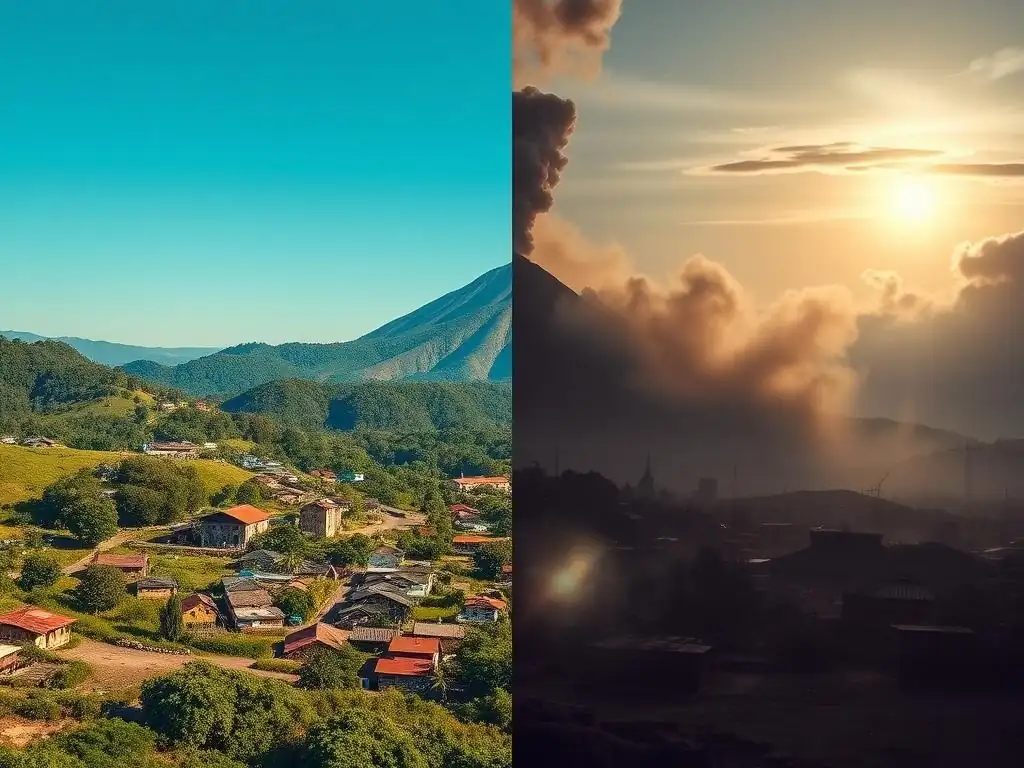
Beyond the immediate devastation, the 1815 Tambora eruption unleashed a far-reaching and insidious consequence: a global climate disruption. The eruption injected an unprecedented amount of sulfur dioxide gas into the stratosphere, the layer of the atmosphere above the troposphere. It is estimated that around 40 to 50 million tons of sulfur dioxide were lofted high into the atmosphere, far above where rain could wash it out.
Once in the stratosphere, this sulfur dioxide underwent chemical reactions, transforming into sulfate aerosols – tiny droplets of sulfuric acid and water. These sulfate aerosols are highly effective at reflecting incoming sunlight back into space. This process reduced the amount of solar radiation reaching the Earth's surface, initiating a global cooling effect.
The "Year Without a Summer": 1816's Unnatural Weather
The year 1816 became known as the "Year Without a Summer" due to the profound Tambora eruption climate effects. Across vast swathes of the globe, particularly in North America and Europe, temperatures plummeted to record lows. Spring arrived late, and summer never truly materialized. Frosts occurred in almost every month, even into July and August, regions typically experiencing warm summers were gripped by unseasonal cold.
Snowfall was reported in June in New England and other parts of eastern North America. The disrupted weather patterns were not limited to just temperature drops; they also included persistent heavy rains, widespread flooding, and unusual dryness in other regions. These extreme and erratic weather conditions were directly attributable to the sunlight-reflecting sulfate aerosols from the Tambora eruption, a chilling testament to the volcano's global reach.
Global Consequences of Tambora's Climate Impact
North America's Frozen Summer: Crop Failures and Famine
In North America, particularly in New England, eastern Canada, and parts of the Mid-Atlantic states, the "Year Without a Summer" brought agricultural disaster. The unusually cold temperatures and persistent frosts decimated crops. Corn, a staple crop, failed to ripen due to the shortened growing season and lack of heat. Wheat harvests were also severely reduced.
These widespread crop failures led to significant food shortages and soaring food prices. Many farmers faced ruin, and communities struggled to survive the harsh conditions. Historical accounts detail widespread hardship, hunger, and even famine in some areas as a direct consequence of the Tambora eruption climate effects on North American agriculture.
Europe, still recovering from the Napoleonic Wars, was plunged into further crisis by the Tambora-induced climate anomaly. Western Europe experienced exceptionally cold and wet weather throughout 1816. Like North America, Europe suffered widespread crop failures, particularly of wheat and other grains. The already strained food supplies dwindled, leading to famine in some regions and widespread food shortages across the continent.
Food prices skyrocketed, causing immense hardship for the poor and working classes. The food shortages fueled social unrest and exacerbated existing economic problems in post-war Europe. Riots and protests erupted in several countries as people desperately sought food and relief, highlighting the profound social and political impact of the Tambora eruption climate effects.
Asia's Plight: Monsoon Disruptions and Disease
The Tambora eruption climate effects extended far beyond the immediate regions of North America and Europe, impacting Asia as well. While the effects in Asia are less well-documented in Western historical records compared to Europe and North America, evidence suggests significant disruptions to monsoon patterns. The altered atmospheric circulation and global temperature changes likely disrupted the normal timing and intensity of monsoons in South and Southeast Asia.
This resulted in crop failures in regions heavily reliant on monsoon rains for agriculture. Furthermore, the climate disruptions and associated famines weakened populations and contributed to the spread of diseases, including cholera, which began to spread globally around this time. The Tambora eruption's reach was truly global, impacting weather patterns and livelihoods across continents.
Understanding the Science: How Tambora Affected Global Climate
Volcanic Explosivity Index (VEI): Measuring Tambora's Power
The Volcanic Explosivity Index (VEI) is a logarithmic scale used to measure the explosivity of volcanic eruptions. It ranges from 0 to 8, with each increment representing a tenfold increase in the volume of ejected material. The 1815 Tambora eruption is classified as a VEI 7, placing it among the most powerful eruptions in human history.
To put this in perspective, the 1980 eruption of Mount St. Helens was a VEI 5, and the Krakatoa eruption of 1883, also famous for its global impact, is estimated to have been a VEI 6. The VEI 7 rating for Tambora underscores the immense scale of the eruption and the vast quantities of volcanic material and gases injected into the atmosphere, directly contributing to the significant Tambora eruption climate effects.
Climate Modeling: Reconstructing Tambora's Impact
Modern climate science utilizes sophisticated climate models to understand and reconstruct the impacts of past volcanic eruptions like Tambora. These models simulate the Earth's climate system, taking into account factors like atmospheric composition, solar radiation, and ocean currents. By inputting data about the Tambora eruption, such as the estimated amount of sulfur dioxide released, scientists can use these models to simulate the global climate response.
These simulations have confirmed that the Tambora eruption's sulfate aerosols caused a significant global cooling effect, consistent with historical observations of the "Year Without a Summer". Climate modeling provides valuable insights into the mechanisms of Tambora eruption climate effects and helps us understand the potential climate impacts of future large volcanic eruptions.
Sulfur Dioxide and Global Cooling: The Key Mechanism
The primary driver of the Tambora eruption climate effects was the massive release of sulfur dioxide (SO2). While volcanic ash also contributes to atmospheric effects, it generally falls out of the atmosphere relatively quickly. Sulfur dioxide, however, is different. Once in the stratosphere, it reacts with water vapor to form sulfuric acid aerosols (sulfates).
These sulfate aerosols are highly reflective, scattering incoming sunlight back into space. This effectively reduces the amount of solar energy reaching the Earth's surface, leading to a decrease in global average temperatures. The long residence time of these aerosols in the stratosphere, typically lasting for one to two years after a major eruption like Tambora, is why the cooling effect can persist for an extended period, resulting in phenomena like the "Year Without a Summer" and highlighting the significant role of sulfur dioxide in volcanic-induced climate change.
Long-Term Effects and Lessons Learned from Tambora
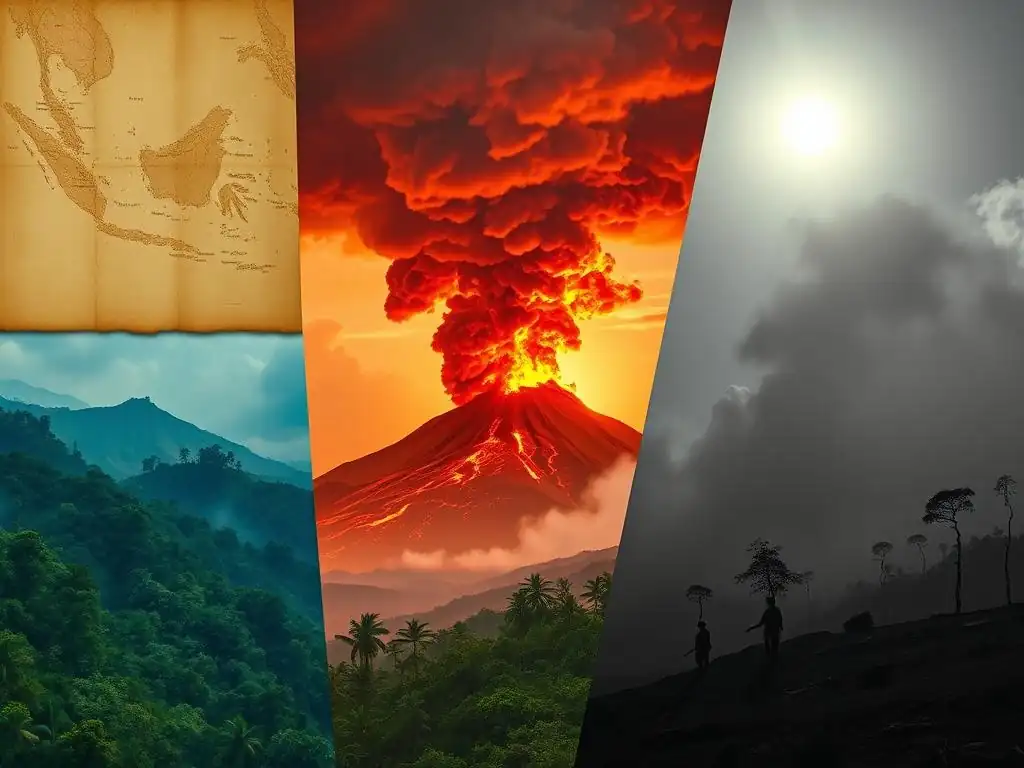
The Tambora eruption climate effects triggered a cascade of long-term economic and social transformations. The widespread crop failures and food shortages led to economic downturns in many regions. Agricultural economies suffered severely, and trade was disrupted.
In some areas, the crisis fueled migration as people sought better conditions elsewhere. The social unrest and political instability that arose in Europe during this period were partly attributed to the economic hardships exacerbated by the climate shock. The "Year Without a Summer" serves as a stark reminder of how a single natural event can have far-reaching and long-lasting ripple effects on global economies and societies, demonstrating the interconnectedness of climate, economy, and social stability.
Tambora's Legacy: A Reminder of Volcanic Power
Tambora's eruption and its subsequent climate impacts left an indelible legacy, serving as a potent reminder of the immense power of nature, specifically volcanic power. It highlighted the capacity of a single volcanic eruption to disrupt global climate patterns and cause widespread human suffering. The "Year Without a Summer" became a historical benchmark, illustrating the potential for volcanic eruptions to induce significant climate change on a global scale, even in the absence of human-induced factors. Tambora's legacy underscores the importance of understanding and monitoring volcanoes, not just as geological hazards, but as agents of global environmental change.
Preparing for the Future: Volcanic Hazard Mitigation and Climate Change
The lessons learned from the Tambora eruption are profoundly relevant today, particularly in the context of volcanic hazard mitigation and climate change. Understanding the Tambora eruption climate effects has enhanced our appreciation of the global reach of volcanic eruptions and their potential to trigger rapid climate shifts. Modern volcanology emphasizes the importance of volcano monitoring to detect signs of unrest and provide early warnings of potential eruptions.
Furthermore, studying Tambora's impact provides valuable insights into the complex interactions between volcanic eruptions and the climate system, which is crucial for understanding both natural climate variability and the potential impacts of future large eruptions in a world already grappling with anthropogenic climate change. Preparedness for volcanic hazards and understanding their climate implications are essential for building resilient societies.
Mount Tambora Today: Monitoring and Research
Modern Volcanology: Studying Tambora's Activity
Today, Mount Tambora is actively monitored by volcanologists using a range of modern techniques. Seismic monitoring networks track ground deformation and earthquake activity, which can indicate magma movement beneath the surface. Gas monitoring stations measure volcanic gas emissions, changes in which can signal changes in volcanic activity. Satellite-based instruments are used to observe ground deformation and thermal anomalies.
Ongoing research at Tambora focuses on understanding its magmatic system, eruption history, and potential for future eruptions. By studying Tambora, volcanologists aim to improve eruption forecasting and hazard assessments for this and other volcanoes around the world. Understanding Tambora's past and present activity is crucial for mitigating future volcanic risks.
The Local Community: Living with Tambora's Shadow
Despite the devastating history, communities have re-established themselves around Mount Tambora. Living in the shadow of an active volcano requires resilience and adaptation. Local populations are aware of the volcanic risks and have developed coping mechanisms. Volcano monitoring information and hazard maps are crucial for local preparedness. Education and community-based disaster preparedness programs help to build resilience and reduce vulnerability to future volcanic events. The local community's experience living with Tambora serves as a case study in human adaptation to volcanic environments and the importance of integrating scientific knowledge with local resilience strategies.
Conclusion: Tambora's Enduring Impact on Climate and Society
Remembering the Victims: The Human Cost of Volcanic Eruptions
The 1815 Tambora eruption was a tragedy of immense proportions, resulting in the deaths of tens of thousands of people directly from the eruption and many more from the subsequent famine and disease exacerbated by the Tambora eruption climate effects. Remembering the victims of this catastrophe is a crucial aspect of understanding the human cost of volcanic eruptions and the importance of learning from the past. Honoring their memory underscores the need for continued efforts in volcanic hazard mitigation and disaster preparedness to protect vulnerable populations in volcanic regions worldwide.
The Future of Volcanic Exploration and Climate Research at VolcanoExplorers.org
VolcanoExplorers.org is committed to continuing to explore the fascinating and often perilous world of volcanoes. We aim to provide accessible and informative resources on volcanic science, famous eruptions like Tambora, and the crucial link between volcanoes and climate. By promoting understanding and awareness, we hope to contribute to a more informed public and support efforts in volcanic hazard mitigation and climate research. Join us at VolcanoExplorers.org as we delve deeper into the Earth's volcanic wonders and strive to unravel the complex interplay between volcanoes, climate, and society.
Frequently Asked Questions
What was the Tambora eruption, and why is it significant?
The Tambora eruption was a massive volcanic event in 1815, ranking as a VEI-7 eruption. Its significance lies in its profound and widespread climate effects on a global scale.
How did the Tambora eruption affect global temperatures?
The eruption injected vast amounts of sulfur dioxide into the stratosphere. This formed a haze that reflected sunlight, causing a significant drop in global average temperatures.
What is meant by "The Year Without a Summer" in relation to Tambora?
"The Year Without a Summer" refers to 1816, the year following the Tambora eruption. Due to the volcanic dust veil in the atmosphere, many regions experienced abnormally cold weather, crop failures, and widespread famine.
Besides temperature, what other climate effects did the Tambora eruption cause?
The eruption led to altered precipitation patterns worldwide, including unusual monsoon seasons, severe droughts in some areas, and excessive rainfall in others. This resulted in agricultural disasters and widespread hardship.
Can another eruption like Tambora happen again, and what would be the likely consequences?
Yes, eruptions of similar magnitude are possible. The consequences would likely include significant global cooling, widespread agricultural disruption, and potential societal unrest due to food shortages and climate-related disasters.
Final Reflection: Echoes of a Silent Spring
The chilling narrative of 1816, the "Year Without a Summer," serves as a stark reminder that volcanic eruptions possess the power to reshape our world in profound and unpredictable ways. The Tambora eruption's climate effects, though felt centuries ago, resonate with increasing urgency today as we grapple with our own era of climate instability, forcing us to confront the fragility of our ecosystems and the interconnectedness of global weather patterns.
The legacy of Tambora extends beyond historical records and scientific data; it has seeped into our cultural consciousness, influencing art, literature, and even our understanding of resilience. Personally, contemplating the sheer scale of Tambora's impact underscores the importance of proactive environmental stewardship and the need to learn from the past to safeguard our future. The only thing new in the world is the history you don't know.
- Harry S. Truman. This quote encapsulates the vital lesson Tambora teaches us: ignoring the lessons of history leaves us vulnerable to repeating its mistakes.
Let us not forget the lessons etched in the frozen fields of 1816. Consider how the Tambora eruption climate effects, once a distant historical event, now serve as a potent metaphor for the potential consequences of unchecked environmental disruption. Reflect on your own role in shaping a more sustainable future, and ask yourself: what steps can you take, however small, to mitigate the risks and ensure that the echoes of Tambora serve as a warning, not a prophecy?
Unearth the Secrets of Tambora's Legacy!
Thanks for exploring the chilling story of Tambora's impact on the global climate. You've learned about a volcanic eruption that dramatically altered weather patterns and reshaped the world. Now, let's put this knowledge to use!
Here are some ways to continue learning about Tambora's powerful influence:
- Become a Climate Advocate: Investigate how modern volcanic activity could affect our current climate. Understanding this is crucial for our planet's future.
- Share this article with friends and family to spark a conversation about the unpredictable power of nature and the importance of climate awareness.
- Explore more of the Volcano Explorers archives to uncover other hidden histories of volcanic events that have shaped our world.
What surprised you most about Tambora's impact, and how can we use this knowledge to better prepare for future climate challenges? Share your thoughts in the comments!