Pinatubo 1991: Global Cooling – The Eruption That Chilled the Planet
Welcome to Volcano Explorers’ deep dive into the Pinatubo 1991 eruption, a landmark event that not only devastated the Philippines but also demonstrably altered global temperatures for years. This subcategory explores how a single volcanic explosion injected millions of tons of sulfur dioxide into the stratosphere, creating a veil of aerosol particles that reflected sunlight and cooled Earth by about 0.5°C (0.9°F) between 1991 and 1993. Here, you’ll uncover the science, the human impact, and the lasting legacy of one of the 20th century’s most significant volcanic events, all tailored for enthusiasts, students, and safety-conscious readers.
🌋 The Mechanics of Global Cooling – How Pinatubo Changed the Climate
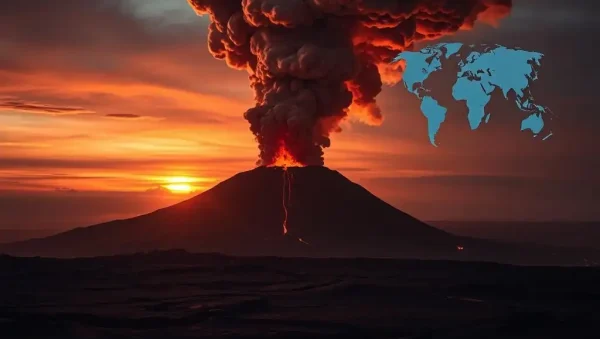
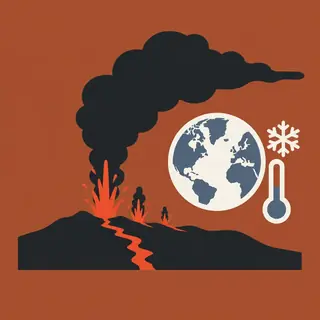
Pinatubo’s eruption on June 15, 1991, was a VEI 6 event, ejecting roughly 20 million tons of sulfur dioxide—a staggering amount that reached 35 kilometers into the stratosphere. Once there, the gas reacted with water vapor to form sulfate aerosols, microscopic droplets that spread globally within weeks. These particles acted like a planetary sunscreen, scattering incoming solar radiation back into space while absorbing and re-emitting heat, which cooled the lower atmosphere. The result was a measurable drop in global mean surface temperatures, a phenomenon scientists tracked with satellites and ground stations.
This cooling wasn’t uniform; it was most pronounced over land in the Northern Hemisphere, with regions like North America experiencing a 0.5–0.7°C drop in summer temperatures. The aerosol layer also disrupted atmospheric circulation, leading to a stronger polar vortex and a warmer winter in some areas, while others saw unusual frosts. For volcanologists, Pinatubo became a natural laboratory—it validated climate models and underscored how volcanic aerosols, not just greenhouse gases, can drive short-term climate variability. Understanding this mechanism helps forecast future eruptions’ potential climatic impacts, making this subcategory essential for anyone curious about Earth’s interconnected systems.
📉 The Aerosol Veil – Measuring the Sunlight Blocking Effect
What made Pinatubo’s cooling so pronounced was the sheer persistence of its stratospheric aerosols. Unlike tropospheric pollution that rains out quickly, the sulfate particles stayed aloft for nearly two years, circling the globe at altitudes of 20–30 kilometers. Scientists used lidar (light detection and ranging) and satellite imagery to track the aerosol optical depth—a measure of how much sunlight was being blocked—which peaked at 0.6 to 1.0 in the months after the eruption, a level not seen since the 1883 Krakatoa eruption. This dense shroud reduced direct solar radiation by up to 5% in some regions.
The cooling had profound biological effects, too. Photosynthesis rates in forests and crops slightly declined during 1992 and 1993 due to the reduced light, although this was partly offset by cooler temperatures that reduced plant respiration. Meanwhile, stratospheric ozone depletion was temporarily accelerated, as the aerosol surfaces facilitated chemical reactions that broke down ozone molecules, leading to record-high Antarctic ozone holes in 1992–1993. For researchers, this episode offered a critical chance to study the interplay between volcanism, radiative forcing, and atmospheric chemistry—a cornerstone topic for anyone studying global cooling dynamics or climate intervention proposals.
🌍 Global Impact – How the Cooling Affected Weather and Agriculture
Pinatubo’s cooling didn’t just show up in temperature records; it reshaped weather patterns worldwide. In 1992, the United States experienced its coldest summer in over a decade, with a 0.8°C drop in average temperatures, while parts of Europe saw unusually wet and chilly conditions. The cooling also influenced monsoons—the Indian summer monsoon weakened by about 5–10% in 1992, leading to reduced rainfall in some regions and localized droughts, though other areas received excess rain due to altered jet streams. These shifts disrupted agriculture, hurting grain yields in North America and Asia, and prompted studies linking volcanic aerosols to food security.
Beyond weather, the global cooling sparked curiosity about geoengineering—could humans deliberately inject aerosols into the stratosphere to mimic this effect and combat global warming? Pinatubo provided the only natural precedent at that scale, and debates since have used its data to model the risks and benefits of solar radiation management. For readers, this section connects a Philippine volcano’s eruption to global food prices, climate policy, and the ethical dilemmas of tinkering with Earth’s thermostat. It highlights how a single event can ripple through ecosystems and economies, making this a critical read for climate change enthusiasts and policymakers alike.
🌤️ Regional Climate Anomalies – The Pinatubo Signature in Local Weather
While the global average cooling was relatively modest, regional anomalies were dramatic and varied. In the Northern Hemisphere, 1992 brought a notable “Pinatubo winter” to some areas—for example, the United States witnessed a coldwave in July 1992, with frosts reported in parts of the Midwest. Conversely, Europe saw a milder, wetter summer, and Siberia experienced unusual warmth, as the altered atmospheric circulation patterns shifted heat distribution. These regional quirks were driven by changes in the polar vortex and storm tracks, which relocated due to the temperature gradient changes imposed by the aerosol layer.
For the Philippines, the immediate aftermath was catastrophic—not from cooling but from pyroclastic flows, lahars, and ashfall that buried entire towns and displaced over 200,000 people. Yet the cooling tail had a silver lining for some: the reduced solar radiation slowed evaporation, temporarily preserving soil moisture in some tropical regions, though this was negligible compared to the devastation. Studying these regional fingerprints helps meteorologists refine seasonal forecasts and helps disaster planners understand that volcanic effects are never uniform. This subcategory is a treasure trove for weather buffs seeking to see how global forces translate into local extremes.
🔍 Lessons for the Future – Pinatubo’s Role in Climate Modeling and Hazard Prep
Pinatubo remains the benchmark for volcanic climate impacts because it was the first major eruption observed with modern satellite technology and a dense network of ground-based instruments. Climate models that correctly predicted the global cooling signature have since been trusted for other scenarios, including future large eruptions like a potential Yellowstone supereruption. Moreover, the eruption taught volcanologists that early warning saves lives—Pinatubo had weeks of precursors, including earthquakes and small ash emissions, which allowed for a successful evacuation of over 60,000 people before the main blast, reducing fatalities to under 1,000 despite the chaos.
The legacy also extends to aviation safety, as Pinatubo’s ash clouds highlighted the vulnerability of jet engines to ash ingestion, prompting the creation of Volcanic Ash Advisory Centers (VAACs) that now monitor eruptions globally. For communities near volcanoes, the Pinatubo experience reinforced the need for lahar mitigation structures and land-use planning, which are now standard in hazard zones. This section offers a practical bridge between pure science and applied risk reduction, making it invaluable for students, emergency managers, and anyone interested in how we turn disaster data into proactive resilience. It’s a story of both catastrophe and hard-won wisdom.
Frequently Asked Questions
How much did Pinatubo’s eruption cool the Earth?
Pinatubo’s eruption in June 1991 cooled global average temperatures by about 0.5°C (0.9°F) during 1991–1993. This cooling was driven by sulfate aerosols in the stratosphere that reflected sunlight back into space. The effect peaked in 1992, with some regions, like North America, experiencing drops up to 0.7°C in summer temperatures.
Why did Pinatubo’s eruption produce such a strong cooling effect?
Pinatubo ejected an exceptionally large amount of sulfur dioxide—about 20 million tons—into the stratosphere, where it converted to sulfate aerosols. Unlike ash, these particles remained aloft for nearly two years, spreading globally and creating a thick, persistent layer that scattered sunlight, resulting in a measurable cooling effect.
Did the global cooling from Pinatubo affect weather patterns?
Yes, the cooling altered atmospheric circulation significantly. It weakened the Indian summer monsoon in 1992, caused a colder summer in the U.S., and shifted storm tracks across Europe and Asia. These changes led to localized droughts and unusual rainfall, affecting agriculture and regional climates for about two years after the eruption.
What lessons did scientists learn from Pinatubo about volcanic climate impacts?
Pinatubo provided the first modern satellite-verified data on volcanic aerosols and global cooling, validating climate models. It also demonstrated that sulfate aerosols can temporarily accelerate stratospheric ozone depletion. Scientists now use these findings to predict impacts of future eruptions and to study geoengineering proposals like solar radiation management.
How does Pinatubo’s history help current volcanic hazard preparedness?
Pinatubo’s successful evacuation, based on precursor signs like earthquakes and small eruptions, saved many lives, highlighting the value of monitoring. Its ash clouds led to the creation of Volcanic Ash Advisory Centers for aviation safety, and lahar mitigation techniques were refined. These practices are now standard in volcanic hazard planning worldwide.