
The 1991 Cold Snap: Attributing the Global Temperature Drop to the Pinatubo Eruption


Welcome to Volcano Explorers, where we uncover the secrets held within Earth's fiery giants. Ever wondered why a single eruption could send ripples across the entire planet's climate? Prepare to journey back to 1991 and discover how the colossal Pinatubo eruption triggered a global cold snap. What exactly caused this dramatic shift in temperature, and what can we learn from it today? Dive in to unravel the fascinating science behind one of history's most impactful volcanic events...
- Introduction: The Powerful 1991 Eruption of Mount Pinatubo and Its Global Impact
- Understanding the Volcanic Eruption of Mount Pinatubo in 1991
- Global Temperature Drop Following the 1991 Pinatubo Eruption: Evidence and Data
- The Science Behind Volcanic Eruptions and Global Cooling: How Pinatubo Affected the Climate
- Distinguishing Pinatubo's Influence from Other Climate Factors in 1991
- Regional Variations in Temperature Change After the Pinatubo Eruption
- The Short-Term Nature of Pinatubo's Global Cooling Effect
- Pinatubo Eruption Global Temperature Effects: Long-Term Implications and Lessons Learned
- Conclusion: The Pinatubo Eruption - A Significant Event in Climate History
-
Frequently Asked Questions
- What was the Pinatubo eruption and when did it occur?
- How did the Pinatubo eruption affect global temperatures?
- What is a "sulfate aerosol layer" and how does it cool the Earth?
- How long did the cooling effect from the Pinatubo eruption last?
- Are volcanic eruptions a reliable way to combat climate change?
- Final Reflection: The Enduring Chill of Pinatubo
- Unearth the Secrets of Volcanic Climate Impact!
Introduction: The Powerful 1991 Eruption of Mount Pinatubo and Its Global Impact
The year 1991 witnessed one of the most significant volcanic eruptions of the 20th century: the cataclysmic eruption of Mount Pinatubo in the Philippines. This colossal event not only devastated the surrounding region but also had profound global repercussions, most notably a discernible drop in global average temperatures. Often referred to as the "1991 cold snap" in climate discussions, the period following the eruption saw a temporary but significant cooling effect across the planet, providing a real-world demonstration of the powerful influence volcanoes can exert on Earth's climate system.
This article will delve into the scientific evidence linking the Pinatubo eruption to this global temperature decrease. We will explore the mechanisms by which volcanic eruptions can trigger such climate responses, examining the atmospheric processes involved and the data that supports the connection between Pinatubo's activity and the subsequent cooling. By analyzing temperature records and scientific studies, we aim to understand the magnitude and duration of the Pinatubo eruption global temperature effects, and to place this event within the broader context of volcanic influences on Earth's climate history.
Understanding the Volcanic Eruption of Mount Pinatubo in 1991
The Scale and Intensity of the Pinatubo Eruption
The eruption of Mount Pinatubo on June 15, 1991, was a VEI 6 (Volcanic Explosivity Index) event, ranking it among the largest eruptions of the 20th century, second only to the 1912 eruption of Novarupta in Alaska. The eruption involved a Plinian/Ultraplinian type of explosion, characterized by a sustained eruptive column that reached heights of up to 40 kilometers (25 miles) into the stratosphere.
The sheer volume of material ejected was estimated at around 10 cubic kilometers (2.4 cubic miles) of ash, pumice, and volcanic rock. This immense outpouring of material dramatically altered the landscape surrounding Pinatubo and had far-reaching atmospheric consequences.
The explosivity of the Pinatubo eruption was fueled by the interaction of magma with groundwater, leading to phreatomagmatic explosions. These types of eruptions are known for their powerful dispersal of ash and gases high into the atmosphere. The eruption sequence was preceded by months of increasing volcanic activity, including steam explosions and seismic unrest, which allowed for some level of evacuation and mitigation efforts. However, the magnitude of the climactic eruption on June 15th still surpassed expectations, releasing energy equivalent to tens of megatons of TNT and leaving a lasting imprint on the global climate system.
Atmospheric Injection of Aerosols and Gases during the Pinatubo Eruption
Beyond the ash and rock, the Pinatubo eruption was particularly notable for the massive quantities of gases it injected into the stratosphere. Of particular importance was sulfur dioxide (SO₂), estimated to be around 20 million tons. This massive release of SO₂ was significantly larger than that from most volcanic eruptions in recent history and played a crucial role in the subsequent global cooling. Other gases, such as water vapor, carbon dioxide, and hydrogen sulfide, were also released, but sulfur dioxide is the key component responsible for the climate-altering effects of volcanic eruptions.
The stratospheric injection was critical because the stratosphere is a stable atmospheric layer above the troposphere, where most weather occurs. Material injected into the stratosphere tends to persist for much longer periods, as it is not readily washed out by rain or other tropospheric processes. The high altitude reached by the Pinatubo eruption column ensured that the volcanic gases and aerosols were effectively dispersed globally by stratospheric winds, creating a worldwide veil that would influence solar radiation and global temperatures for several years.
Global Temperature Drop Following the 1991 Pinatubo Eruption: Evidence and Data
Documenting the Global Cooling Effect: Temperature Records and Anomalies
Following the June 1991 eruption of Mount Pinatubo, global average temperatures began to demonstrably decrease. Analysis of global temperature records from various sources, including ground-based weather stations, sea surface temperature measurements, and satellite data, consistently shows a clear dip in global temperatures in the months and years following the eruption. These records reveal a distinct negative temperature anomaly, meaning temperatures were significantly lower than the long-term average for that period.
Specifically, 1992 and 1993 were notably cooler years globally compared to the trend of warming observed in the late 20th century. Temperature anomalies, which represent deviations from the average, reached a peak negative value in late 1992 and early 1993. This cooling signal was not just a minor fluctuation; it was a statistically significant and globally coherent event, clearly distinguishable from natural climate variability. The consistency of the cooling signal across different datasets and geographic locations strongly supports the link to the Pinatubo eruption.
Measuring the Magnitude of the Post-Pinatubo Temperature Reduction
The magnitude of the global cooling attributed to the Pinatubo eruption is estimated to be around 0.4 to 0.6 degrees Celsius (0.7 to 1.1 degrees Fahrenheit) in terms of global average surface temperature. This represents a substantial short-term cooling effect on a global scale. While this temperature reduction might seem small in everyday experience, it is significant when considering global climate averages and their sensitivity to radiative forcing changes.
The cooling was most pronounced in the year following the eruption, with the peak cooling occurring approximately 12 to 18 months after the June 1991 event. The temperature reduction was not uniform across the globe, with regional variations in the magnitude of cooling, as we will discuss later. However, the overall global average temperature decrease clearly demonstrated the potent influence of a major volcanic eruption on the planet's energy balance and temperature. This measurable temperature drop provides compelling evidence of the Pinatubo eruption global temperature effects.
The Science Behind Volcanic Eruptions and Global Cooling: How Pinatubo Affected the Climate
Sulfur Dioxide Emissions and the Formation of Sulfate Aerosols
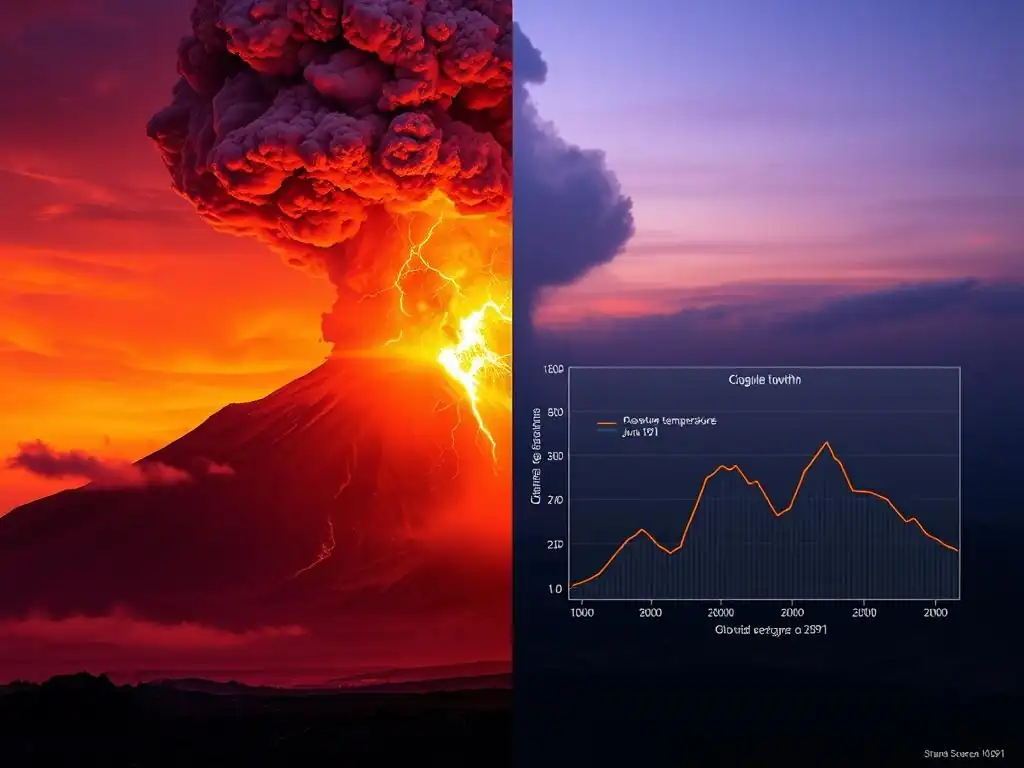
The key mechanism behind the Pinatubo eruption's cooling effect lies in the sulfur dioxide (SO₂) gas it injected into the stratosphere. Once in the stratosphere, SO₂ undergoes a series of chemical reactions, primarily with water vapor and hydroxyl radicals (OH), to form sulfuric acid (H₂SO₄). These sulfuric acid molecules then condense and combine with water vapor to form sulfate aerosols, tiny droplets or particles suspended in the air. This process of aerosol formation is not instantaneous but takes place over weeks and months after the eruption, contributing to the delayed peak cooling effect.
These sulfate aerosols are not like typical dust or ash particles. They are much smaller and have specific optical properties that are crucial for their climate impact. The Pinatubo eruption produced a vast cloud of these sulfate aerosols that spread globally within months, creating a stratospheric aerosol layer that encircled the planet. The formation of these aerosols was the critical step in translating the volcanic gas emissions into a climate-altering event, initiating the process of reducing incoming solar radiation.
Aerosol Scattering and Absorption of Solar Radiation: Reducing Sunlight
The sulfate aerosols formed in the stratosphere after the Pinatubo eruption have two primary effects on solar radiation: scattering and absorption. Scattering refers to the redirection of sunlight in various directions, including back into space. A significant portion of incoming solar radiation is scattered back to space by these aerosols, effectively reducing the amount of sunlight reaching the Earth's surface and lower atmosphere. This reduction in incoming solar radiation is the primary driver of the volcanic cooling effect.
In addition to scattering, sulfate aerosols also absorb some solar radiation. However, the scattering effect is generally dominant for sulfate aerosols from volcanic eruptions like Pinatubo. The net effect is a reduction in the amount of solar energy absorbed by the Earth-atmosphere system, leading to a cooling of the planet. This process is analogous to a global-scale "sunshade" effect, where the aerosol layer acts to partially block sunlight and cool the surface below. The efficiency of these aerosols in scattering sunlight is what makes volcanic eruptions a potent, albeit temporary, climate forcing agent.
The Role of Volcanic Aerosols in the Stratosphere
The stratospheric location of the volcanic aerosol layer is crucial for its prolonged climate impact. Unlike aerosols in the troposphere, which are quickly removed by precipitation and other weather processes (with a typical residence time of days to weeks), stratospheric aerosols can persist for much longer periods – typically one to two years after a major eruption like Pinatubo. This longer residence time allows the cooling effect to last for several years, influencing global temperatures over an extended period.
The stratosphere's relative stability and lack of precipitation contribute to the longevity of these aerosols. They are eventually removed through a slow process of gravitational settling and transport to the troposphere at higher latitudes, particularly in the polar regions. This gradual removal explains why the cooling effect of the Pinatubo eruption was not permanent but rather a transient climate perturbation. The stratospheric aerosol layer acted as a temporary veil, gradually thinning out over time as the aerosols were removed from the atmosphere, allowing global temperatures to eventually rebound.
Distinguishing Pinatubo's Influence from Other Climate Factors in 1991
Natural Climate Variability vs. Volcanic Forcing
While the global cooling following the Pinatubo eruption is well-documented, it's important to distinguish this volcanic forcing from natural climate variability. Natural climate variability refers to inherent fluctuations in the Earth's climate system that occur without external forcing factors, such as volcanic eruptions or human-caused greenhouse gas emissions. These variations can arise from complex interactions within the atmosphere, oceans, and land surface, and can cause year-to-year temperature fluctuations.
To isolate the Pinatubo eruption global temperature effects, climate scientists use statistical methods and climate models to separate the volcanic signal from the background noise of natural climate variability. By analyzing temperature records and comparing them to model simulations that include and exclude volcanic forcing, researchers can confidently attribute a significant portion of the observed cooling in the early 1990s to the Pinatubo eruption, rather than just random climate fluctuations. The magnitude and global coherence of the cooling signal, as well as its timing after the eruption, are key indicators that point to volcanic forcing as the primary cause.
Analyzing the Quasi-Biennial Oscillation (QBO) and its Influence
Another factor that can influence stratospheric aerosols and potentially interact with volcanic effects is the Quasi-Biennial Oscillation (QBO). The QBO is a periodic oscillation in the zonal winds in the equatorial stratosphere, with a cycle of roughly 28 months. The phase of the QBO can affect the transport and distribution of stratospheric aerosols. For example, some studies suggest that the QBO phase during the Pinatubo eruption may have influenced the dispersal of volcanic aerosols and contributed to the magnitude or spatial pattern of the cooling.
While the QBO can modulate the effects of volcanic eruptions, it is not the primary driver of the global cooling. The large injection of sulfur dioxide by Pinatubo was the dominant forcing factor. However, understanding the interplay between volcanic eruptions and natural climate modes like the QBO is important for refining climate models and improving our ability to predict the climate response to future volcanic events. Research continues to explore the complex interactions between these different factors in shaping Earth's climate.
Comparing Pinatubo's Impact to Other Major Volcanic Eruptions
To further contextualize the Pinatubo eruption global temperature effects, it is helpful to compare it to other major volcanic eruptions in history. The eruption of Tambora in Indonesia in 1815, for example, was a VEI 7 eruption and is considered one of the largest in recorded history. Tambora's eruption led to the "Year Without a Summer" in 1816, with widespread crop failures and famine in many parts of the world. The global cooling from Tambora is estimated to have been even more significant than that from Pinatubo, possibly exceeding 1 degree Celsius.
Other notable eruptions that have caused global cooling include Krakatoa in 1883 and Agung in 1963. While each eruption has its unique characteristics and atmospheric impact, they all share the common mechanism of injecting sulfur dioxide into the stratosphere, leading to sulfate aerosol formation and subsequent cooling. Comparing the magnitude and duration of cooling from different eruptions helps scientists to better understand the relationship between volcanic eruption characteristics (such as SO₂ emission amount and altitude) and the resulting climate response. Pinatubo serves as a well-documented modern example that strengthens our understanding of volcanic forcing on climate.
Regional Variations in Temperature Change After the Pinatubo Eruption
Cooling Patterns in the Northern Hemisphere
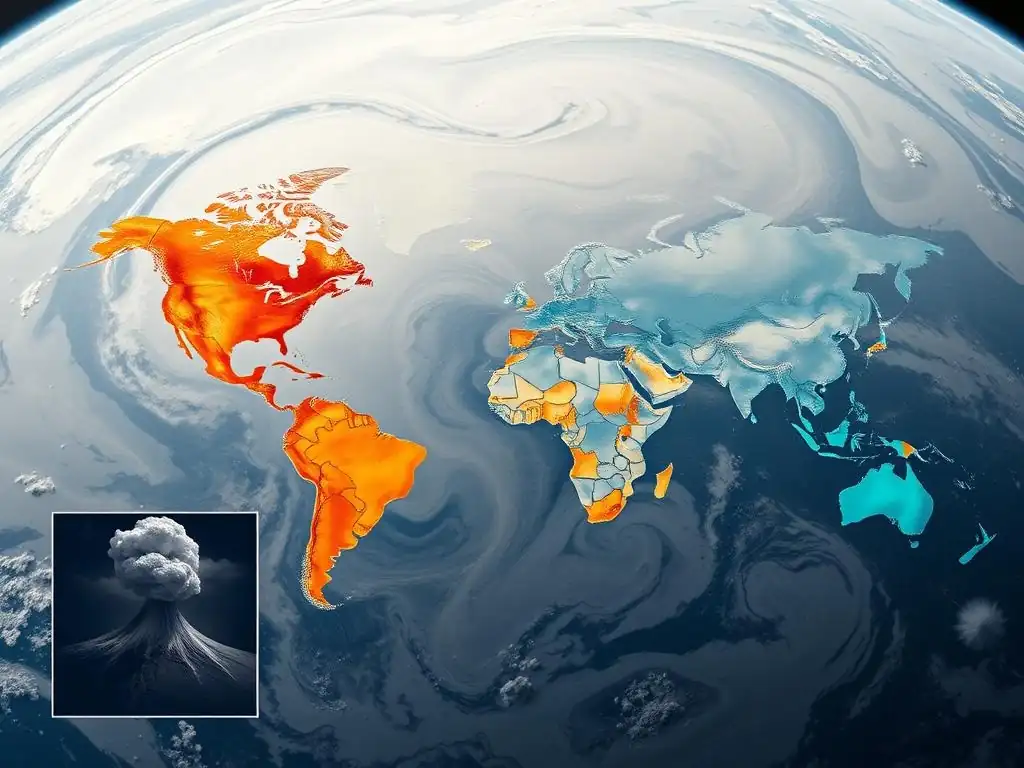
The global cooling following the Pinatubo eruption was not uniformly distributed across the planet. The Northern Hemisphere generally experienced a more pronounced cooling effect compared to the Southern Hemisphere. This hemispheric asymmetry is partly attributed to the distribution of landmasses and the patterns of atmospheric circulation. Land areas tend to cool more rapidly than oceans due to their lower thermal inertia. Since the Northern Hemisphere has a larger proportion of landmass, it exhibited a stronger cooling signal.
Within the Northern Hemisphere, the mid-latitudes of North America and Eurasia experienced significant cooling, particularly during the winters following the eruption. Some regions saw temperature reductions exceeding 1 degree Celsius during specific seasons. These regional cooling patterns were influenced by changes in atmospheric circulation and weather patterns induced by the volcanic aerosols. The cooling effect was also modulated by regional climate variability and other factors, leading to a complex spatial pattern of temperature changes.
Temperature Effects in the Southern Hemisphere
While the Southern Hemisphere also experienced cooling after the Pinatubo eruption, the magnitude of the temperature reduction was generally less pronounced than in the Northern Hemisphere. This is partly due to the larger proportion of ocean area in the Southern Hemisphere, which moderates temperature changes. Ocean waters have a high heat capacity and respond more slowly to radiative forcing changes compared to land surfaces.
Nevertheless, temperature records from the Southern Hemisphere show a discernible cooling signal, particularly in mid-latitude regions. Southern continents like Australia and South America, as well as parts of the Southern Ocean, experienced temperature reductions, although generally smaller in magnitude compared to the Northern Hemisphere mid-latitudes. The global nature of the aerosol dispersal ensured that both hemispheres were affected, albeit to varying degrees, by the Pinatubo eruption global temperature effects.
Impact on Monsoon Systems and Precipitation Patterns
Beyond temperature changes, the Pinatubo eruption also influenced regional precipitation patterns and monsoon systems. Volcanic aerosols can alter atmospheric circulation and stability, affecting rainfall distribution. Studies have indicated that the Pinatubo eruption may have contributed to changes in monsoon rainfall in some regions, particularly in Asia and Africa. However, the effects on precipitation are generally more complex and regionally variable compared to the relatively more straightforward global cooling effect.
Some research suggests that the eruption might have weakened the Asian monsoon in the years following 1991, leading to reduced rainfall in certain areas. Other regions may have experienced changes in precipitation timing or intensity. The impact of volcanic eruptions on monsoon systems and precipitation is an area of ongoing research, as these effects are crucial for agriculture and water resources in many parts of the world. Understanding these regional climate responses is essential for a comprehensive assessment of the broader impacts of volcanic eruptions.
The Short-Term Nature of Pinatubo's Global Cooling Effect
The Residence Time of Volcanic Aerosols in the Atmosphere
The global cooling caused by the Pinatubo eruption was a temporary phenomenon, primarily due to the limited residence time of sulfate aerosols in the stratosphere. As discussed earlier, stratospheric aerosols are gradually removed from the atmosphere through processes like gravitational settling and transport to the troposphere. The typical residence time for sulfate aerosols from a major volcanic eruption like Pinatubo is about one to two years. This means that approximately half of the aerosols are removed within this timeframe, leading to a gradual decline in the aerosol loading and their radiative forcing effect.
The rate of aerosol removal is influenced by factors such as aerosol size, stratospheric circulation patterns, and interactions with other atmospheric constituents. Over time, the stratospheric aerosol layer thins out, allowing more solar radiation to reach the Earth's surface. This gradual reduction in the aerosol "sunshade" effect leads to a recovery of global temperatures towards pre-eruption levels. The transient nature of stratospheric aerosols is a key reason why volcanic eruptions cause short-term climate cooling rather than long-term climate shifts.
Recovery of Global Temperatures to Pre-Eruption Levels
Following the peak cooling in 1992-1993, global temperatures began to gradually rebound. By the mid-1990s, global average temperatures had largely recovered to pre-eruption levels, and the volcanic cooling signal became less discernible in temperature records. The recovery timescale is consistent with the residence time of stratospheric aerosols. As the aerosol layer dissipated, the Earth's energy balance returned to a state closer to pre-eruption conditions, and temperatures responded accordingly.
The recovery of global temperatures after Pinatubo demonstrates the relatively short-lived climate impact of even a large volcanic eruption compared to long-term climate change drivers like greenhouse gas emissions. While volcanic eruptions can cause significant short-term cooling, their effects are transient due to the natural removal processes of stratospheric aerosols. In contrast, greenhouse gases have much longer atmospheric lifetimes and their cumulative effect leads to a persistent warming trend. The Pinatubo eruption provides a valuable case study for understanding the temporal characteristics of volcanic climate forcing and its contrast with other climate change mechanisms.
Pinatubo Eruption Global Temperature Effects: Long-Term Implications and Lessons Learned
Understanding Volcanic Forcing and Climate Models
The Pinatubo eruption and its observed global cooling have been instrumental in advancing our understanding of volcanic forcing on climate and improving climate models. The eruption provided a real-world test case to validate climate models' ability to simulate the climate response to volcanic aerosols. By comparing model simulations with observed temperature changes after Pinatubo, scientists have been able to refine model parameters and improve their representation of volcanic aerosol processes and their radiative effects.
The Pinatubo event has also highlighted the importance of accurately representing stratospheric aerosol chemistry and microphysics in climate models. Simulations of volcanic eruptions require detailed modeling of SO₂ oxidation, sulfate aerosol formation, aerosol size distribution, and their optical properties. The Pinatubo case study has driven advancements in these aspects of climate modeling, leading to more realistic simulations of past and future volcanic climate impacts. Furthermore, it has emphasized the need for continued monitoring of volcanic emissions and stratospheric aerosol properties to improve climate predictions.
The Role of Volcanic Eruptions in Earth's Climate History
Volcanic eruptions have played a significant role in Earth's climate history over geological timescales. Large volcanic eruptions, particularly those releasing massive amounts of sulfur gases, have likely caused periods of global cooling and climate disruptions in the past. Evidence from ice cores and geological records indicates that past volcanic events have been associated with climate anomalies, although the magnitude and duration of these effects can vary depending on the eruption characteristics and background climate conditions.
While individual eruptions like Pinatubo cause relatively short-term cooling, periods of enhanced volcanic activity over longer timescales (decades to centuries) could potentially have more sustained climate impacts. Understanding the role of volcanism in Earth's past climate is crucial for interpreting paleoclimate records and for assessing the natural range of climate variability. Volcanic eruptions are a natural forcing factor that has shaped Earth's climate history, and studying their effects helps us to better understand the complex interplay of natural and anthropogenic influences on the climate system.
Monitoring Present-Day Volcanic Activity for Climate Change Research
Continuous monitoring of present-day volcanic activity is essential for climate change research and monitoring. While large eruptions like Pinatubo are relatively infrequent, smaller eruptions occur more regularly and can still inject aerosols into the stratosphere, albeit in smaller quantities. Even these smaller eruptions can have a measurable, though minor, cooling effect on global temperatures. Monitoring volcanic emissions, particularly SO₂, and tracking stratospheric aerosol concentrations are important for assessing the ongoing volcanic contribution to the Earth's radiation budget.
Satellite observations, ground-based measurements, and volcanic monitoring networks provide valuable data for tracking volcanic activity and its potential climate impacts. This information is crucial for climate models to accurately account for volcanic forcing and to improve projections of future climate change. In the context of human-caused climate warming, understanding the natural cooling influence of volcanic eruptions is also important for disentangling anthropogenic and natural climate signals and for refining our understanding of the overall climate system response.
Conclusion: The Pinatubo Eruption - A Significant Event in Climate History
The 1991 eruption of Mount Pinatubo stands as a landmark event in climate history, vividly demonstrating the capacity of volcanic eruptions to influence global temperatures. The massive injection of sulfur dioxide into the stratosphere led to the formation of a global aerosol layer that effectively reduced incoming solar radiation, resulting in a measurable and significant global cooling of approximately 0.4 to 0.6 degrees Celsius. This "1991 cold snap," directly attributable to the Pinatubo eruption global temperature effects, provided invaluable real-world data that validated scientific understanding of volcanic forcing and its mechanisms.
While the cooling effect was temporary, lasting for a few years due to the limited residence time of stratospheric aerosols, the Pinatubo eruption served as a powerful reminder of the interconnectedness of Earth's systems and the ability of natural events to perturb global climate. The event has significantly advanced climate science, improving climate models and our understanding of volcanic impacts on climate.
As we continue to grapple with the challenges of anthropogenic climate change, the lessons learned from the Pinatubo eruption remain highly relevant, underscoring the importance of considering both natural and human influences in shaping our planet's climate future.
Frequently Asked Questions
What was the Pinatubo eruption and when did it occur?
The Pinatubo eruption was a major volcanic event that occurred in the Philippines in June 1991. It was one of the largest eruptions of the 20th century and had significant global effects.
How did the Pinatubo eruption affect global temperatures?
The eruption injected massive amounts of sulfur dioxide into the stratosphere. This formed a sulfate aerosol layer that reflected sunlight, leading to a temporary drop in global temperatures.
What is a "sulfate aerosol layer" and how does it cool the Earth?
It's a layer of tiny particles made mostly of sulfur compounds, high in the atmosphere. These particles reflect incoming sunlight back into space, reducing the amount of solar radiation that reaches the Earth's surface, thus cooling the planet.
How long did the cooling effect from the Pinatubo eruption last?
The global cooling effect was most pronounced in the year or two following the eruption. Temperatures gradually returned to normal over the next few years as the aerosols settled out of the atmosphere.
Are volcanic eruptions a reliable way to combat climate change?
No, relying on volcanic eruptions for climate control is not a viable strategy. The cooling is temporary and unpredictable, and the eruptions also release other gases that can contribute to long-term warming.
Final Reflection: The Enduring Chill of Pinatubo
The narrative of the 1991 Cold Snap, meticulously detailed in this article, serves as a potent reminder of the profound and lasting impact of natural events on our global climate. While decades have passed since the Pinatubo eruption, its influence on global temperatures remains a crucial case study, informing our understanding of volcanic forcing and its complex interplay with other climate drivers in our increasingly volatile world.
The eruption's impact extends beyond mere scientific data; it underscores the interconnectedness of our planet and the vulnerability of its delicate ecosystems. Witnessing the tangible effects of a single volcanic event on a global scale fosters a deeper appreciation for the power of nature and the urgency of addressing climate change. The eruption of Mount Pinatubo was a dramatic reminder of the power of volcanoes to influence global climate.
- Richard A. Kerr, Science Magazine. This quote encapsulates the awe and concern that followed the eruption, a sentiment that resonates even more strongly today.
As we navigate an era defined by unprecedented environmental challenges, let us remember the lessons etched in the ash of Pinatubo. Let us reflect on the fragility of our climate and the responsibility we share in safeguarding it. Consider how the knowledge gained from understanding the Pinatubo eruption's global temperature effects can inform our actions today, empowering us to mitigate future climate risks and build a more sustainable future for generations to come.
Unearth the Secrets of Volcanic Climate Impact!
Thanks for exploring the fascinating connection between the 1991 Pinatubo eruption and the unusually cold snap that year! We hope you gained a new understanding of volcanoes' significant role in shaping our global climate. Now, let's put that knowledge to use:
- Expand your knowledge by researching other major volcanic eruptions and their documented effects on global temperatures. Become a volcanic climate expert!
- Share this article with friends and family to spark discussions about the long-term climate impacts of volcanic events. Help raise awareness of this often-overlooked factor.
- Challenge: Create a visual timeline of major volcanic eruptions and their climate impacts, and share it on social media using #VolcanoClimate.
What other lesser-known volcanic events do you think significantly impacted global climate, and why? Share your thoughts below!