
Pinatubo's Climate Secret: Unmasking the Volcanic Gases That Chilled the Planet

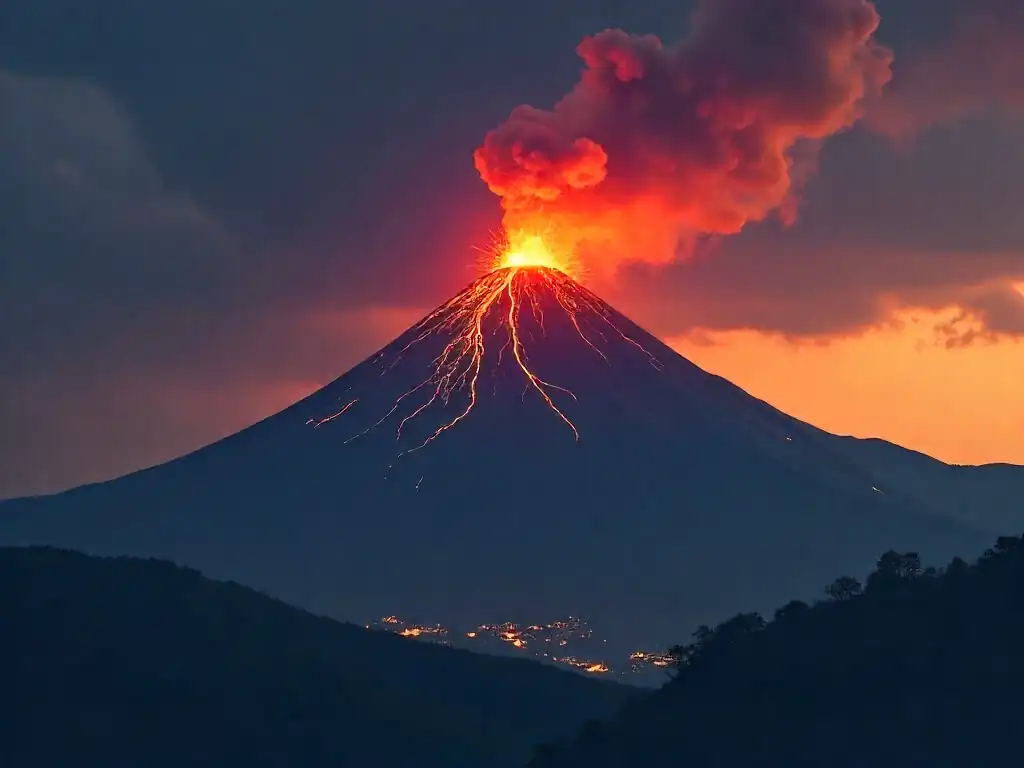
Welcome to Volcano Explorers, where the Earth's fiery heart beats loud! Ever wondered how a single eruption could alter the planet's climate? Prepare to be amazed as we uncover the secrets of Mount Pinatubo's chilling legacy. Dive in to discover the surprising Pinatubo volcanic gas effects that rippled across the globe, and learn how this catastrophic event continues to shape our understanding of volcanic power. But that's just the beginning... what other volcanic gases are silently influencing our world today? Read on to find out!
- Introduction: The 1991 Pinatubo Eruption and its Global Impact
- The Science of Volcanic Gases and Climate Cooling
- Pinatubo's Sulfur Dioxide Cloud: A Global Sunscreen
- Regional Variations in Pinatubo's Climate Impact
- Pinatubo's Legacy: Lessons for Understanding Future Volcanic Climate Forcing
- The Short-Term Nature of Volcanic Cooling: A Temporary Climate Intervention
- Conclusion: Pinatubo's Enduring Influence on Climate Science.
-
Frequently Asked Questions
- What types of volcanic gases were released during the Pinatubo eruption, and which had the most significant impact on climate?
- How did the Pinatubo eruption's volcanic gases contribute to global cooling?
- How long did the cooling effect caused by Pinatubo's volcanic gases last?
- Besides cooling, what other environmental effects did the volcanic gases from Pinatubo cause?
- How do scientists measure and monitor the impact of volcanic gases on the climate?
- Final Reflection: The Enduring Chill of Pinatubo
- Ignite Your Curiosity: Explore More Volcanoes!
Introduction: The 1991 Pinatubo Eruption and its Global Impact
The year 1991 witnessed one of the most significant volcanic eruptions of the 20th century: the cataclysmic explosion of Mount Pinatubo in the Philippines. While the immediate devastation in the surrounding regions was immense, with pyroclastic flows and lahar burying landscapes, the eruption's reach extended far beyond the local area. In fact, the Pinatubo eruption triggered a measurable, albeit temporary, shift in global climate patterns.
This wasn't due to the ash and debris that rained down closer to the volcano, but rather a less visible, yet far-reaching consequence: the release of vast quantities of volcanic gases into the stratosphere. These gases, particularly sulfur dioxide, initiated a chain of atmospheric processes that ultimately led to a period of global cooling, demonstrating the profound influence of volcanic gas effects on our planet's climate system.
The Science of Volcanic Gases and Climate Cooling
The link between volcanic eruptions and climate cooling might seem counterintuitive at first. After all, volcanoes are associated with heat and fiery lava. However, the key to understanding this phenomenon lies in the composition of volcanic gases. While eruptions are famously characterized by lava flows and ash plumes, they also expel significant amounts of gases into the atmosphere.
These gases, invisible to the naked eye, play a critical role in modulating Earth's energy balance and, consequently, its temperature. The most climatically significant volcanic gas is sulfur dioxide (SO2), but volcanoes also release water vapor (H2O), carbon dioxide (CO2), hydrogen sulfide (H2S), and other trace gases. While CO2 is a well-known greenhouse gas, the impact of volcanic SO2, especially during large eruptions like Pinatubo, is to cause a cooling effect, counteracting the warming influence of greenhouse gases, at least in the short term.
Understanding Volcanic Gas Composition: Beyond Lava and Ash
Volcanic eruptions are complex events, expelling a mixture of molten rock, fragmented rock particles (ash and tephra), and various gases. While the visual spectacle of lava flows and ash clouds captures immediate attention, the invisible component of volcanic gas is crucial for understanding the broader, often global, impacts of eruptions. The composition of volcanic gases is dominated by water vapor, which typically constitutes the largest proportion.
Carbon dioxide is another significant component, though generally, volcanoes release far less CO2 annually than human activities. However, it is sulfur-containing gases, primarily sulfur dioxide (SO2), that are most relevant to volcanic climate effects. Pinatubo, for instance, injected an estimated 20 million tons of sulfur dioxide into the stratosphere.
Other gases, such as hydrogen sulfide, also contribute to sulfur emissions, but SO2 is the most abundant and reactive sulfur gas released in explosive eruptions. The precise mixture of gases varies depending on the volcano's location, magma composition, and eruptive style, making each volcanic event a unique chemical release into the atmosphere.
From Eruption Cloud to Global Haze: The Journey of Pinatubo's Gases
For volcanic gases to exert a global climate influence, they must reach the stratosphere, the layer of the atmosphere above the troposphere, which is where weather occurs. Pinatubo's explosive eruption was powerful enough to loft its gas plume far into the stratosphere, reaching altitudes of over 30 kilometers (19 miles). Once in the stratosphere, these gases are less susceptible to being washed out by rain, unlike gases in the troposphere. The sulfur dioxide released by Pinatubo underwent a crucial transformation.
Through chemical reactions with water vapor and other atmospheric constituents, SO2 converted into sulfate aerosols, tiny droplets of sulfuric acid and water. These sulfate aerosols dispersed globally by stratospheric winds, forming a thin, planet-encircling haze layer. This haze, invisible to the naked eye from the ground under normal conditions, acted as a global veil, intercepting incoming sunlight before it could reach the Earth's surface.
Pinatubo's Sulfur Dioxide Cloud: A Global Sunscreen

The massive amount of sulfur dioxide injected into the stratosphere by the Pinatubo eruption created what can be effectively described as a global 'sunscreen'. This wasn't a physical barrier, but rather a layer of sulfate aerosols that altered the Earth's radiative balance. Before the eruption, sunlight would largely pass through the atmosphere, warming the Earth's surface.
However, the Pinatubo aerosol cloud increased the atmosphere's reflectivity, a property known as albedo. This enhanced albedo meant that a greater proportion of incoming solar radiation was reflected back into space, preventing it from reaching and warming the Earth's surface. The concept is analogous to applying sunscreen to your skin to block harmful UV rays; in Pinatubo's case, the volcanic aerosols acted as a planetary sunscreen, reducing the amount of solar energy reaching the lower atmosphere and surface.
SO2 Conversion to Sulfate Aerosols: Reflecting Sunlight Back to Space
The cooling effect of Pinatubo's eruption hinges on the transformation of sulfur dioxide (SO2) into sulfate aerosols. This conversion is not instantaneous but occurs through a series of chemical reactions in the stratosphere. SO2 molecules react with hydroxyl radicals (OH) and other oxidants present in the stratosphere, eventually forming sulfuric acid (H2SO4). These sulfuric acid molecules then condense with water vapor to form sulfate aerosols, which are microscopic particles suspended in the air.
These sulfate aerosols are highly effective at scattering incoming solar radiation. They preferentially scatter sunlight back out to space, reducing the amount of solar energy absorbed by the Earth's atmosphere and surface. The effectiveness of sulfate aerosols as reflectors of sunlight depends on their size and concentration, both of which were significantly increased by the Pinatubo eruption, leading to a measurable decrease in global average temperatures.
Measuring the Global Cooling Effect: Temperature Drops After Pinatubo
The global cooling effect following the 1991 Pinatubo eruption was not just a theoretical concept; it was directly observed and measured by scientists worldwide. Global average temperatures decreased by approximately 0.4 to 0.6 degrees Celsius (0.7 to 1.1 degrees Fahrenheit) in the year following the eruption. This might seem like a small number, but in terms of global climate averages, it is a significant and rapid change.
The cooling was most pronounced in the Northern Hemisphere, particularly in continental interiors during the summer months. Satellite measurements and ground-based observations confirmed a reduction in incoming solar radiation reaching the Earth's surface.
The cooling effect persisted for about two to three years, as the sulfate aerosols gradually settled out of the stratosphere, highlighting the transient nature of volcanic climate forcing. The Pinatubo eruption provided a real-world, large-scale demonstration of the impact of volcanic gas effects on global temperatures and served as a valuable case study for climate scientists.
Regional Variations in Pinatubo's Climate Impact
While the Pinatubo eruption led to a global average cooling, the temperature changes were not uniform across the planet. The distribution of sulfate aerosols and the resulting climate impacts varied regionally due to complex atmospheric circulation patterns and geographical factors. Some areas experienced more pronounced cooling than others, while a few regions even saw slight warming in specific seasons. Understanding these regional variations is crucial for a comprehensive picture of Pinatubo's climate influence and highlights the intricate nature of atmospheric responses to volcanic forcing.
Differential Cooling Patterns: Not All Regions Cool Equally
The cooling induced by Pinatubo's eruption was not evenly distributed across the globe. The largest temperature decreases were generally observed over landmasses, particularly in the mid-latitudes of the Northern Hemisphere. Continental interiors, like North America and Eurasia, experienced more significant cooling during summer than coastal regions and oceans. The tropics saw a less pronounced cooling effect compared to higher latitudes.
Some studies even indicated slight warming in specific regions, such as parts of the Arctic in winter, possibly due to changes in atmospheric circulation patterns induced by the aerosol cloud. Factors contributing to these differential cooling patterns include the uneven distribution of aerosols, variations in cloud cover, and changes in atmospheric and oceanic circulation. For example, the North Atlantic Oscillation, a major atmospheric pressure pattern, exhibited changes after Pinatubo, which influenced regional temperature and precipitation patterns in Europe and North America.
The Impact on Precipitation Patterns: Changes in Rainfall and Drought
Beyond temperature changes, the Pinatubo eruption also influenced global precipitation patterns. The altered radiative balance and atmospheric circulation led to shifts in rainfall distribution in various regions. Some areas experienced reduced rainfall, leading to increased drought conditions, while others saw increases in precipitation. For instance, parts of Africa and Asia experienced decreased monsoon rainfall in the years following the eruption.
Conversely, some studies suggest that certain regions, like parts of South America, may have experienced increased rainfall. The El Niño-Southern Oscillation (ENSO), a major climate pattern affecting tropical Pacific sea surface temperatures and global weather, was also potentially influenced by the Pinatubo eruption, further complicating the regional precipitation responses. These changes in precipitation patterns, while less widely publicized than the cooling effect, had significant impacts on agriculture, water resources, and ecosystems in various parts of the world.
Pinatubo's Legacy: Lessons for Understanding Future Volcanic Climate Forcing

The 1991 Pinatubo eruption serves as a crucial case study for understanding the impact of volcanic eruptions on global climate. It provided invaluable observational data and insights into the processes by which volcanic gases, particularly sulfur dioxide, can influence Earth's climate system. Pinatubo's legacy extends beyond its immediate climate effects, shaping our understanding of natural climate variability and informing climate models used to predict future climate change scenarios.
Volcanic Eruptions as Natural Climate Experiments
Large volcanic eruptions like Pinatubo offer unique opportunities to study the Earth's climate system in action. They act as natural climate experiments, injecting a known quantity of aerosols into the stratosphere and allowing scientists to observe and measure the resulting climate responses. The Pinatubo eruption provided a wealth of data on aerosol formation, radiative transfer, atmospheric circulation changes, and temperature and precipitation responses.
This data has been instrumental in validating and improving climate models. By comparing model simulations with observed climate changes following Pinatubo, scientists can refine their understanding of climate processes and enhance the accuracy of climate predictions. These "natural experiments" are particularly valuable because they allow us to isolate the effects of a specific forcing agent (volcanic aerosols) and observe the system's response in a relatively controlled setting, albeit on a planetary scale.
Predicting Future Volcanic Impacts: Challenges and Uncertainties
While Pinatubo provided valuable insights, predicting the climate impacts of future volcanic eruptions remains a complex challenge. Several uncertainties exist, including the timing, magnitude, and location of future eruptions, as well as the composition of volcanic gases released. The amount of sulfur dioxide injected into the stratosphere is a critical factor determining the cooling effect, and this can vary significantly between eruptions.
Furthermore, the background climate state, which is increasingly influenced by human-caused climate change, can modulate the response to volcanic forcing. Predicting the regional distribution of volcanic aerosols and their impact on precipitation patterns also remains challenging due to the complexities of atmospheric circulation and aerosol-cloud interactions. Despite these uncertainties, ongoing research and improved monitoring capabilities are continually enhancing our ability to anticipate and understand the potential climate consequences of future volcanic eruptions.
The Short-Term Nature of Volcanic Cooling: A Temporary Climate Intervention
It is crucial to emphasize that the cooling effect induced by volcanic eruptions like Pinatubo is temporary. Unlike long-term climate changes driven by greenhouse gas emissions, volcanic cooling is a transient phenomenon. The sulfate aerosols responsible for the cooling have a relatively short lifespan in the stratosphere, leading to a natural decline in their concentration and a gradual return to pre-eruption temperatures. Understanding this temporal aspect is essential for contextualizing volcanic climate forcing within the broader framework of climate change.
Aerosol Lifetime in the Stratosphere: A Relatively Quick Removal Process
The reason for the short-lived nature of volcanic cooling lies in the relatively rapid removal of sulfate aerosols from the stratosphere. These aerosols are primarily removed through a process called gravitational settling, where they slowly descend through the stratosphere and eventually enter the troposphere. Once in the troposphere, they are more readily washed out by precipitation.
The typical stratospheric lifetime of sulfate aerosols from large volcanic eruptions is estimated to be about one to two years. After this period, the aerosol concentration in the stratosphere decreases significantly, and the cooling effect diminishes. In the case of Pinatubo, the global cooling peaked in the year following the eruption and largely dissipated within two to three years, demonstrating the temporary nature of volcanic climate intervention.
Volcanoes and Climate Change: A Complex Interplay
While volcanic eruptions can temporarily cool the planet, it's crucial to understand that they are not a solution to long-term climate change driven by human activities. The cooling effect of even a large eruption like Pinatubo is short-lived and ultimately overshadowed by the persistent warming trend caused by increasing greenhouse gas concentrations. In fact, the temporary cooling from volcanic eruptions can mask the underlying warming trend for a few years. Furthermore, while volcanoes release CO2, their annual contribution is dwarfed by human emissions from burning fossil fuels and deforestation.
The interplay between volcanic eruptions and human-caused climate change is complex. Volcanic eruptions introduce natural variability into the climate system, which needs to be considered when analyzing long-term climate trends. Climate models now increasingly incorporate volcanic forcing to better simulate past climate variations and improve future climate projections.
Conclusion: Pinatubo's Enduring Influence on Climate Science.
The eruption of Mount Pinatubo in 1991 stands as a landmark event in climate science. It provided a real-world demonstration of the potent, yet temporary, influence of volcanic gases on global climate. The Pinatubo volcanic gas effects, primarily driven by sulfur dioxide and its conversion to sulfate aerosols, led to a measurable period of global cooling, altered regional climate patterns, and provided invaluable data for validating and refining climate models.
Pinatubo's legacy extends beyond its immediate climatic impact, profoundly shaping our understanding of natural climate variability and underscoring the complex interplay between volcanic eruptions and the Earth's climate system. It remains a cornerstone case study for researchers investigating volcanic climate forcing and continues to inform our understanding of how natural events can interact with and modify the trajectory of both natural and human-influenced climate change.
Frequently Asked Questions
What types of volcanic gases were released during the Pinatubo eruption, and which had the most significant impact on climate?
The Pinatubo eruption released various gases including sulfur dioxide (SO2), water vapor, and carbon dioxide. Sulfur dioxide had the most significant impact, reacting in the atmosphere to form sulfate aerosols. These aerosols reflected sunlight, leading to global cooling.
How did the Pinatubo eruption's volcanic gases contribute to global cooling?
The sulfur dioxide released formed sulfate aerosols in the stratosphere. These aerosols acted like a reflective shield, blocking sunlight and reducing the amount of solar radiation reaching the Earth's surface, thus causing a temporary global cooling effect.
How long did the cooling effect caused by Pinatubo's volcanic gases last?
The global cooling effect from the Pinatubo eruption was most pronounced in the years following the eruption (1991-1993). The effect gradually diminished as the sulfate aerosols were removed from the atmosphere, with the climate returning to its pre-eruption state within a few years.
Besides cooling, what other environmental effects did the volcanic gases from Pinatubo cause?
Besides global cooling, the sulfate aerosols contributed to ozone depletion, particularly in polar regions. Acid rain was also a localized effect.
How do scientists measure and monitor the impact of volcanic gases on the climate?
Scientists use satellite observations, ground-based instruments, and atmospheric models to track the spread and concentration of volcanic gases. These measurements allow them to assess the impact on solar radiation, temperature, and atmospheric composition, providing valuable data for climate research.
Final Reflection: The Enduring Chill of Pinatubo
The eruption of Mount Pinatubo in 1991 wasn't just a geological event; it was a stark reminder of the Earth's power to influence global climate. The enduring legacy of Pinatubo lies in its volcanic gases, particularly sulfur dioxide, which triggered a measurable cooling effect across the planet. Understanding these "Pinatubo volcanic gas effects" is more crucial than ever, as we grapple with the complexities of anthropogenic climate change and seek to comprehend the full spectrum of factors shaping our world's temperature.
The impact of Pinatubo extends beyond scientific data; it has subtly shaped our collective understanding of climate systems. It serves as a natural experiment, demonstrating the potent, albeit temporary, influence of aerosols on global temperatures. This understanding is not just academic; it informs our climate models and helps us better predict the consequences of both natural and human-induced atmospheric changes. The Pinatubo eruption provided a unique opportunity to study the climate system's response to a large, transient radiative forcing.
- Susan Solomon, atmospheric chemist.
As we navigate the uncertainties of a changing climate, let us remember the lessons of Pinatubo. Consider the delicate balance of our atmosphere and the profound impact of even seemingly isolated events. Let the "Pinatubo volcanic gas effects" inspire you to become a more informed and engaged steward of our planet, advocating for responsible environmental practices and a deeper understanding of the forces that shape our shared future.
Ignite Your Curiosity: Explore More Volcanoes!
Thank you for joining us on this journey to uncover the climate secrets hidden within Mount Pinatubo's volcanic gases! We hope you’ve gained a new appreciation for the profound impact these natural events have on our planet. Now, let's turn that knowledge into action!
Here are a few ways to delve deeper into the world of volcanology:
- Dive into our extensive archive of volcanic eruptions! Discover how other volcanoes have shaped global climate patterns throughout history.
- Share this article with friends and family to spark conversations about the relationship between volcanic activity and climate change. Help us spread awareness and educate others.
- Consider supporting Volcano Explorers! Your contribution allows us to continue providing free, informative content and explore more of Earth's fiery wonders.
What are some other ways you think volcanic eruptions could be used to study our atmosphere? Share your thoughts in the comments below!