
Pinatubo's Fingerprint on the Climate: Tracing the Global Cooling Anomaly


Welcome!
Ever wonder how a single volcanic eruption can send ripples across the entire planet's climate? Prepare to uncover the secrets behind one of the 20th century's most significant events. Dive into our Pinatubo climate impact analysis and explore the fascinating, and sometimes unsettling, ways this eruption left its mark on global temperatures. What if the chilling effects of Pinatubo hold clues to understanding our climate future? Let's explore!
- Introduction: The 1991 Pinatubo Eruption and its Global Reach
- Understanding the Pinatubo Eruption's Atmospheric Impact
- Pinatubo Climate Impact Analysis: Quantifying the Cooling Effect
- The Science Behind Volcanic Cooling: Aerosols and Solar Radiation
- Pinatubo's Impact on Specific Climate Systems
- Pinatubo Climate Impact Analysis: Modeling and Predictions
- Lessons Learned from Pinatubo: Implications for Future Volcanic Events
-
Frequently Asked Questions
- How did the eruption of Mount Pinatubo affect the global climate?
- What is a "climate forcing" and how did Pinatubo contribute to it?
- How long did the cooling effect from the Pinatubo eruption last?
- What specific data is used in a Pinatubo climate impact analysis?
- Why is understanding Pinatubo's climate impact important today?
- Final Reflection: Echoes of Eruption, Lessons for the Future
- Unleash Your Inner Volcanologist!
Introduction: The 1991 Pinatubo Eruption and its Global Reach
Setting the Stage: Why the Pinatubo Eruption Matters for Climate Science
The 1991 eruption of Mount Pinatubo in the Philippines stands as a pivotal event in climate science, not just volcanology. This colossal eruption, one of the largest of the 20th century, provided scientists with an unprecedented real-world experiment to test theories about the impact of volcanic aerosols on global climate.
Unlike gradual changes driven by greenhouse gases, Pinatubo’s eruption offered a sudden, measurable perturbation to the Earth's radiative balance, allowing researchers to observe and quantify the climate system's response in relatively short order. The event served as a crucial validation point for climate models and deepened our understanding of the complex interplay between volcanic activity and global climate patterns.
Furthermore, the Pinatubo eruption is significant because it offered tangible evidence of a phenomenon predicted by scientists for decades: volcanic eruptions can cause global cooling. Prior to 1991, the cooling effects of volcanoes were largely theoretical and based on historical records of past large eruptions.
Pinatubo provided a modern, well-documented case study, equipped with advanced satellite technology and global monitoring networks, to confirm and refine these theories. The data gathered from this event has been instrumental in shaping our understanding of natural climate variability and distinguishing it from anthropogenic climate change, making it an indispensable reference point for contemporary climate research.
Overview of the Article: Exploring the Pinatubo Climate Impact Analysis
This article delves into the profound climate impact of the 1991 Mount Pinatubo eruption, providing a comprehensive Pinatubo climate impact analysis. We will dissect the mechanisms through which this eruption triggered a noticeable, albeit temporary, global cooling. Starting with an examination of the eruption's scale and atmospheric injection, we will explore the formation of sulfate aerosols and their role in altering Earth's radiative balance. The article will then quantify the observed global temperature anomaly, analyzing regional variations and the duration of the cooling effect.
Beyond temperature, we will investigate Pinatubo's influence on various climate systems, including stratospheric ozone, precipitation patterns, and ocean temperatures. We will also explore how climate models have been used to simulate and understand Pinatubo's effects, assessing the accuracy of these models and their implications for predicting future volcanic climate impacts. Ultimately, this exploration aims to highlight the crucial lessons learned from the Pinatubo event, emphasizing its lasting legacy in climate science and its importance for preparedness in the face of future volcanic eruptions and their potential climatic consequences.
Understanding the Pinatubo Eruption's Atmospheric Impact
The Volcanic Explosivity Index (VEI) and Pinatubo's Ranking
The Volcanic Explosivity Index, or VEI, is a logarithmic scale used to measure the explosivity of volcanic eruptions, ranging from 0 for non-explosive eruptions to 8 for the most cataclysmic events in geological history. The VEI considers factors such as the volume of ejected material, the height of the eruption column, and the duration of the eruption.
The 1991 eruption of Mount Pinatubo was classified as a VEI 6 eruption, placing it in the "Colossal" category. This ranking signifies an extremely powerful explosion that ejected over 10 cubic kilometers of material into the atmosphere, propelling ash and gases to heights exceeding 35 kilometers (approximately 22 miles) into the stratosphere.
To put Pinatubo's VEI 6 into perspective, consider that it was ten times larger than the 1980 Mount St. Helens eruption (VEI 5), although still smaller than the largest eruptions in history, such as the Tambora eruption of 1815 (VEI 7). The VEI 6 classification underscores the sheer magnitude of the Pinatubo eruption and its capacity to inject vast quantities of volcanic gases and ash high into the atmosphere, reaching altitudes where they could be dispersed globally and exert a significant influence on the Earth's climate system.
This high VEI is a primary reason why Pinatubo's climate impact analysis is so significant.
Sulfur Dioxide Injection: The Key to Global Cooling
While volcanic ash can have some localized and short-term effects, the primary driver of global cooling from volcanic eruptions is the injection of sulfur dioxide (SO2) into the stratosphere. Mount Pinatubo's 1991 eruption was exceptional in the amount of SO2 it released, estimated to be around 20 million tons. This massive injection was significantly greater than any volcanic SO2 release observed in the preceding decades and was a crucial factor in the subsequent global cooling. The SO2 gas itself does not directly cause cooling; its impact is indirect, occurring through a series of atmospheric chemical reactions.
Upon reaching the stratosphere, which is above the troposphere where most weather occurs and where rain can wash out pollutants, the SO2 gas undergoes oxidation to form sulfuric acid (H2SO4). This process is relatively slow in the dry stratosphere, allowing the SO2 to disperse globally before being converted.
The conversion to sulfuric acid is critical because sulfuric acid readily condenses with water vapor in the stratosphere to form sulfate aerosols. These aerosols, tiny droplets of sulfuric acid and water, are the key players in volcanic cooling as they have a much longer residence time in the stratosphere compared to ash, which quickly falls out of the atmosphere due to gravity.
Aerosol Formation: Creating a Global Veil
The sulfate aerosols formed from Pinatubo's SO2 injection created a global stratospheric veil, effectively encircling the Earth. These aerosols, typically ranging in size from 0.1 to 1 micrometer in diameter, are highly reflective to incoming solar radiation. Unlike larger ash particles that fall out of the atmosphere within days or weeks, these sulfate aerosols can persist in the stratosphere for one to two years. This prolonged presence is due to the lack of precipitation in the stratosphere, which prevents them from being washed out by rain, and the relatively stable stratospheric circulation patterns that allow for global dispersion.
The formation of this global aerosol veil was extensively monitored by satellites following the Pinatubo eruption. Instruments like the Stratospheric Aerosol and Gas Experiment (SAGE II) provided detailed measurements of aerosol distribution, altitude, and optical depth, confirming the rapid spread of the volcanic cloud around the globe.
Within a few weeks of the eruption, the aerosol cloud had encircled the Earth, reaching both poles and extending throughout the stratosphere. This global veil acted like a giant sunshade, reflecting a portion of incoming solar radiation back into space, thereby reducing the amount of solar energy reaching the Earth's surface and leading to a measurable decrease in global temperatures.
Pinatubo Climate Impact Analysis: Quantifying the Cooling Effect

Global Temperature Anomaly Following the Eruption: Data and Observations
The most immediate and widely recognized consequence of the Pinatubo eruption was a discernible global cooling. Within months of the June 1991 eruption, global average surface temperatures began to decline. The peak cooling effect was observed in 1992 and 1993. According to data from NASA's Goddard Institute for Space Studies (GISS), the global average temperature anomaly in 1992 was approximately -0.4 to -0.6 degrees Celsius (around -0.7 to -1.1 degrees Fahrenheit) relative to the pre-eruption baseline of the late 20th century. This cooling was a significant and measurable deviation from the ongoing trend of global warming.
This temperature drop was not uniform across the globe, but the overall signal was clear and consistent in global temperature records from various sources, including surface weather stations, satellite measurements, and ocean temperature data. The magnitude of the cooling was in line with predictions made by climate models prior to the eruption, based on the estimated amount of SO2 injected into the stratosphere. The Pinatubo eruption provided a real-world confirmation of the theoretical understanding of volcanic aerosols and their influence on global temperatures, strengthening the scientific basis for Pinatubo climate impact analysis.
Regional Variations in Cooling: Northern Hemisphere Land Masses
While the Pinatubo eruption caused a global average cooling, the cooling effect was not evenly distributed across the planet. Regional variations were observed, with the most pronounced cooling occurring over land masses in the Northern Hemisphere. Studies indicate that mid-latitude regions of the Northern Hemisphere experienced temperature reductions exceeding the global average, in some areas reaching up to 1 degree Celsius (1.8 degrees Fahrenheit) or more in the summers of 1992 and 1993. This enhanced cooling over land is attributed to several factors.
Land surfaces generally have a lower heat capacity than oceans, meaning they warm up and cool down more quickly. Additionally, the distribution of landmasses is heavily skewed towards the Northern Hemisphere. The aerosol veil, while global, interacted differently with land and ocean surfaces.
Land surfaces, particularly in mid-latitudes of the Northern Hemisphere, experienced a more direct reduction in incoming solar radiation, leading to more pronounced cooling. In contrast, oceans, with their higher heat capacity and complex mixing processes, exhibited a slightly delayed and less intense cooling response. This regional variation highlights the complexity of the climate system and the nuanced ways in which volcanic eruptions can affect different parts of the world.
Measuring the Duration of the Cooling Anomaly: How Long Did it Last?
The cooling effect from the Pinatubo eruption was not permanent; it was a transient anomaly that gradually diminished over a few years. The sulfate aerosols, responsible for the cooling, had a residence time in the stratosphere of approximately one to two years. As these aerosols slowly coagulated, grew larger, and eventually descended into the troposphere, they were removed by precipitation, effectively clearing the stratospheric veil. Consequently, the global cooling anomaly peaked in 1992-1993 and then gradually faded.
By 1995-1996, global average temperatures had largely returned to pre-eruption levels, and the long-term warming trend, driven by increasing greenhouse gas concentrations, resumed. Studies analyzing the Pinatubo climate impact analysis indicate that the statistically significant cooling signal lasted for about two to three years. This relatively short duration, compared to the long-term effects of greenhouse gases, underscores the transient nature of volcanic forcing on climate. However, the Pinatubo event provided valuable insights into the climate system's response time and its ability to recover from a significant radiative perturbation, offering crucial data for validating climate models and understanding climate variability.
The Science Behind Volcanic Cooling: Aerosols and Solar Radiation
How Sulfate Aerosols Reflect Sunlight Back into Space
The primary mechanism behind volcanic cooling is the ability of sulfate aerosols to reflect incoming solar radiation back into space. These aerosols, composed primarily of sulfuric acid and water, are highly effective at scattering sunlight due to their size and refractive properties. When sunlight, which includes visible light and ultraviolet radiation, encounters these aerosols in the stratosphere, a portion of it is deflected away from the Earth. This process is known as backscattering or reflection, and it reduces the amount of solar energy that reaches the Earth's troposphere and surface.
The efficiency of aerosol reflection depends on factors such as aerosol size, concentration, and refractive index, as well as the wavelength of the incoming radiation. Sulfate aerosols formed after the Pinatubo eruption were particularly effective at scattering solar radiation in the visible and near-infrared portions of the spectrum, which are the most energetic components of sunlight.
By reflecting a portion of this incoming solar energy, the aerosols effectively reduced the amount of energy available to heat the Earth's surface and atmosphere, leading to a net cooling effect. This is the fundamental principle behind the Pinatubo climate impact analysis and volcanic cooling in general.
The Impact on Earth's Energy Budget: A Detailed Explanation
The Earth's climate is governed by a delicate balance between incoming solar radiation and outgoing thermal radiation. This balance is known as the Earth's energy budget. Incoming solar radiation is the primary energy source for the planet, while outgoing thermal radiation, emitted by the Earth and its atmosphere, is how the planet loses energy to space. Volcanic eruptions like Pinatubo disrupt this energy budget by altering the amount of incoming solar radiation that is absorbed by the Earth system.
The sulfate aerosols from Pinatubo increased the Earth's albedo, which is the reflectivity of the planet. A higher albedo means that a larger fraction of incoming solar radiation is reflected back into space, and a smaller fraction is absorbed. By increasing the albedo, Pinatubo's aerosols reduced the amount of solar energy absorbed by the Earth-atmosphere system.
This resulted in a negative radiative forcing, meaning a net reduction in the energy available to warm the planet. This negative radiative forcing, estimated to be several watts per square meter globally in the year following the eruption, shifted the Earth's energy budget towards a cooler state, leading to the observed global temperature decrease.
Pinatubo's Influence on Cloud Formation: Indirect Effects on Climate
Beyond directly reflecting sunlight, Pinatubo's aerosols may have also exerted indirect effects on climate through their influence on cloud formation. Sulfate aerosols can act as cloud condensation nuclei (CCN), which are tiny particles that water vapor can condense onto to form cloud droplets. An increase in CCN can potentially lead to changes in cloud properties, such as cloud droplet size, cloud albedo, and cloud lifetime. However, the exact nature and magnitude of these indirect aerosol effects on clouds are complex and still subject to ongoing research.
While the direct radiative effect of sulfate aerosols reflecting sunlight is considered the dominant mechanism for Pinatubo's cooling effect, some studies suggest that changes in cloud properties induced by volcanic aerosols may have contributed to the overall climate response. For instance, increased concentrations of CCN could potentially lead to brighter clouds with higher albedo, further enhancing the cooling effect. Conversely, some types of aerosols might suppress precipitation, potentially altering cloud lifetime and coverage in complex ways. The precise role of these indirect aerosol-cloud interactions in the Pinatubo climate impact analysis remains an area of active scientific investigation.
Pinatubo's Impact on Specific Climate Systems
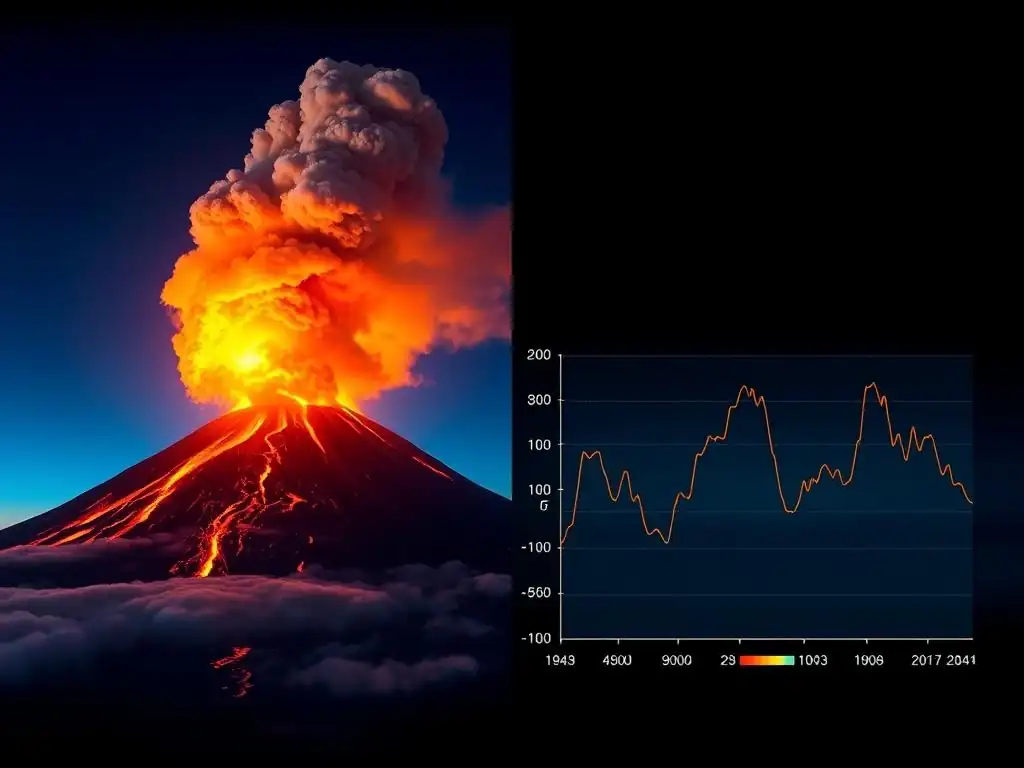
Effects on the Stratosphere: Ozone Depletion and Temperature Changes
The Pinatubo eruption had significant impacts on the stratosphere, the atmospheric layer where the sulfate aerosols resided. One notable effect was the exacerbation of ozone depletion, particularly in polar regions. Sulfate aerosols provide surfaces for heterogeneous chemical reactions that enhance the destruction of stratospheric ozone by chlorine-containing compounds, many of which are of anthropogenic origin (like CFCs). The presence of aerosols increased the efficiency of these ozone-destroying reactions, leading to more pronounced ozone depletion, especially in the Antarctic ozone hole during the years following the eruption.
In addition to ozone depletion, Pinatubo's aerosols also caused a warming of the stratosphere itself. While the surface of the Earth cooled, the stratosphere warmed by several degrees Celsius. This stratospheric warming is due to the absorption of both incoming solar radiation and outgoing thermal radiation by the sulfate aerosols. While the net effect at the surface was cooling due to the reflection of sunlight, the aerosols themselves absorbed some of the radiation, leading to heating in the stratosphere. These stratospheric changes, both in ozone concentration and temperature, are important aspects of the overall Pinatubo climate impact analysis.
Changes in Precipitation Patterns: Reduced Monsoon Rainfall in Asia
The Pinatubo eruption not only affected global temperatures but also had discernible impacts on regional precipitation patterns, particularly in Asia. Several studies have indicated a reduction in monsoon rainfall over parts of Asia in the summers following the eruption. The weakening of the Asian monsoon is linked to the overall cooling effect and changes in atmospheric circulation patterns induced by the volcanic aerosols. The reduced solar radiation reaching the surface can alter land-sea temperature contrasts, which are a key driver of monsoon circulation.
Specifically, a decrease in land surface temperatures relative to ocean temperatures can weaken the pressure gradients that drive the summer monsoon winds. This weakening can lead to reduced moisture transport inland and subsequently decreased rainfall. While the precise magnitude and spatial extent of monsoon rainfall reduction varied, the Pinatubo event provided evidence that large volcanic eruptions can influence regional hydrological cycles and water resources, highlighting another dimension of Pinatubo climate impact analysis beyond temperature alone.
The Influence on Ocean Temperatures: Cooling of Tropical Pacific Waters
The oceans, with their vast heat capacity, respond more slowly to radiative forcing changes than the atmosphere and land surfaces. However, the Pinatubo eruption did lead to observable cooling in ocean temperatures, particularly in the tropical Pacific. While the global average sea surface temperature (SST) cooling was less pronounced than the land surface cooling, the tropical Pacific exhibited a notable cooling anomaly in the years following the eruption. This cooling was not uniform across the Pacific but showed regional variations linked to ocean circulation patterns.
The cooling of tropical Pacific waters can have further implications for global climate as it can influence phenomena like El Niño-Southern Oscillation (ENSO). Some studies suggest that volcanic eruptions can temporarily suppress El Niño events or favor La Niña-like conditions in the Pacific. While the precise link between Pinatubo and ENSO is complex and debated, the observed cooling of tropical Pacific waters underscores the broad reach of volcanic climate impacts, extending beyond atmospheric temperatures to influence oceanic conditions and potentially large-scale climate patterns.
Pinatubo Climate Impact Analysis: Modeling and Predictions
Climate Models and Pinatubo: Validating Climate Change Theories
The Pinatubo eruption provided an invaluable opportunity to test and validate climate models, which are essential tools for understanding and predicting climate change. Prior to the eruption, climate models had been developed based on theoretical understanding of atmospheric physics, chemistry, and radiative transfer. The Pinatubo event offered a real-world scenario to assess how well these models could simulate the climate system's response to a known radiative forcing perturbation – the injection of sulfate aerosols.
Scientists used climate models to simulate the Pinatubo eruption by inputting the estimated amount and distribution of SO2 injected into the stratosphere. These models then simulated the formation of aerosols, their radiative effects, and the resulting changes in temperature, precipitation, and atmospheric circulation.
The Pinatubo event became a benchmark test for climate models, allowing researchers to evaluate their accuracy and identify areas for improvement. The success of climate models in simulating the observed Pinatubo cooling provided strong support for their ability to represent the fundamental processes governing climate and increased confidence in their projections of future climate change due to greenhouse gas increases.
Comparing Model Predictions with Actual Observations: Accuracy Assessment
The comparison between climate model simulations and actual observations following the Pinatubo eruption was largely successful, demonstrating a reasonable level of accuracy in model predictions. Climate models were able to capture the magnitude and timing of the global cooling anomaly, as well as some of the regional variations and the duration of the cooling effect. While models were not perfect, and some discrepancies existed, the overall agreement between simulations and observations was encouraging.
For instance, models generally captured the global average temperature cooling of around 0.4 to 0.6 degrees Celsius in the year or two after the eruption. They also simulated the stronger cooling over Northern Hemisphere landmasses and the stratospheric warming.
Discrepancies were noted in the simulation of regional precipitation changes and some aspects of atmospheric circulation, highlighting areas where model physics and representation of certain processes could be further refined. However, the Pinatubo validation exercise significantly bolstered confidence in the ability of climate models to simulate the climate system's response to radiative forcing changes, including those from both natural and anthropogenic sources.
Using Pinatubo as a Case Study for Future Volcanic Eruptions
The Pinatubo eruption serves as a crucial case study for understanding the potential climate impacts of future volcanic eruptions, particularly large, sulfur-rich eruptions. The detailed observations and modeling analyses conducted for Pinatubo have provided valuable insights into the processes and timescales involved in volcanic climate forcing. This knowledge is essential for assessing the risks and preparing for the potential climate disruptions that future large eruptions could cause.
By studying Pinatubo, scientists have refined their understanding of how much SO2 needs to be injected into the stratosphere to produce a given amount of cooling, how long the cooling effect might last, and what regional climate patterns might be affected. This information can be used to develop scenarios and projections for future volcanic eruptions of varying magnitudes. While predicting the timing and location of future eruptions is not possible, understanding the potential climate consequences based on the Pinatubo case study is crucial for climate risk assessment and preparedness planning.
Lessons Learned from Pinatubo: Implications for Future Volcanic Events
Preparing for Future Volcanic Climate Impacts: Mitigation Strategies
While we cannot prevent volcanic eruptions, understanding their potential climate impacts, as highlighted by the Pinatubo climate impact analysis, is crucial for developing preparedness and mitigation strategies. The temporary global cooling caused by Pinatubo, although short-lived, underscores the potential for large eruptions to disrupt climate on a global scale. Preparing for future volcanic climate impacts involves several aspects, including enhancing monitoring systems, improving climate predictions, and developing societal resilience to climate shocks.
Mitigation in the context of volcanic eruptions primarily focuses on adapting to the temporary climate changes they induce, rather than preventing the eruption itself. Strategies might include planning for potential disruptions to agriculture and food security due to cooler temperatures or altered precipitation patterns. Public health preparedness for potential air quality issues related to volcanic ash and gases is also important. Furthermore, understanding the potential for volcanic eruptions to temporarily mask or offset anthropogenic warming is relevant for long-term climate change planning, as any volcanic cooling would be superimposed on the ongoing warming trend.
Monitoring Volcanic Activity: Early Warning Systems and Climate Preparedness
Enhanced monitoring of volcanic activity is a critical component of climate preparedness. Real-time monitoring of volcanic unrest, gas emissions, and eruption plumes is essential for providing early warnings of potential large eruptions that could have global climate consequences. Satellite-based instruments and ground-based volcano observatories play a vital role in detecting and tracking volcanic activity worldwide. Improved monitoring capabilities can provide more accurate estimates of SO2 injection into the stratosphere, which is crucial for predicting the magnitude of potential climate cooling.
Early warning systems for volcanic eruptions are not only important for local hazard mitigation but also for global climate preparedness. Timely and accurate information about large eruptions can allow for better anticipation of climate impacts and facilitate informed decision-making by governments, international organizations, and various sectors that are climate-sensitive, such as agriculture, water resources, and energy. Investing in and enhancing global volcanic monitoring networks is therefore a key aspect of preparing for future volcanic climate events.
Pinatubo's Legacy: Understanding the Interplay Between Volcanoes and Climate
The 1991 Pinatubo eruption has left a lasting legacy in climate science. It served as a landmark event that significantly advanced our understanding of the interplay between volcanoes and climate. The Pinatubo climate impact analysis has provided robust evidence of the cooling effect of volcanic aerosols, validated climate models, and highlighted the importance of considering natural climate variability alongside anthropogenic climate change. The eruption underscored the interconnectedness of Earth systems and the potential for natural events to cause global-scale climate perturbations.
Pinatubo's legacy extends to ongoing climate research and monitoring efforts. It has motivated continued improvements in climate models, satellite observations of aerosols and volcanic gases, and our overall understanding of stratospheric processes. The lessons learned from Pinatubo remain highly relevant as we face the challenges of understanding and responding to both natural and human-induced climate change. The event serves as a constant reminder of the dynamic nature of the Earth's climate system and the profound influence that volcanic eruptions can exert on global environmental conditions.
Frequently Asked Questions
How did the eruption of Mount Pinatubo affect the global climate?
The 1991 eruption of Mount Pinatubo caused a significant global cooling effect by releasing vast amounts of sulfur dioxide into the stratosphere. This gas formed sulfate aerosols, which reflected sunlight back into space.
What is a "climate forcing" and how did Pinatubo contribute to it?
A climate forcing is any factor that can alter the Earth's energy balance. Pinatubo contributed a negative radiative forcing, meaning it caused a net decrease in incoming solar radiation due to the increased reflection by sulfate aerosols.
How long did the cooling effect from the Pinatubo eruption last?
The most pronounced cooling effect lasted for approximately two to three years. While the aerosols eventually settled out of the atmosphere, their short-term impact on global temperatures was quite noticeable.
What specific data is used in a Pinatubo climate impact analysis?
Analyses typically incorporate data on sulfur dioxide emissions, aerosol optical depth, and global temperature records. Climate models are also used to simulate the atmospheric processes and predict the extent and duration of the cooling.
Why is understanding Pinatubo's climate impact important today?
Studying past volcanic eruptions like Pinatubo provides valuable insights into the climate system's response to large-scale disturbances. This helps refine climate models and improve our understanding of the potential effects of future volcanic eruptions or other climate forcings.
Final Reflection: Echoes of Eruption, Lessons for the Future
The eruption of Mount Pinatubo in 1991 serves as a stark reminder of nature's immense power, and its profound and lasting impact on global climate continues to resonate today. Understanding the intricacies of this event, as explored throughout this analysis, is not merely an academic exercise; it is crucial for predicting and mitigating the effects of future volcanic eruptions in a world increasingly vulnerable to climate change.
The Pinatubo eruption indelibly altered the cultural and scientific landscape, forcing us to confront the interconnectedness of geological events and global weather patterns. The lessons learned from studying its climate impact are invaluable, shaping our understanding of atmospheric processes and informing climate models. The eruption of Mount Pinatubo injected more than 20 million tons of sulfur dioxide into the stratosphere, and this material circled the globe for more than three weeks. The resulting sulfuric acid aerosol reflected a portion of the incoming solar radiation, cooling the Earth's surface for several years.
- USGS. This event underscores the delicate balance of our planet and the far-reaching consequences of even seemingly isolated natural disasters.
Now, consider the implications of Pinatubo's legacy. How can we, as individuals and as a global community, apply the knowledge gained from this event to better prepare for future climate challenges? Let us embrace a spirit of proactive engagement, supporting research, advocating for sustainable practices, and fostering a deeper understanding of the complex interplay between our planet's natural forces and our own actions. The echoes of Pinatubo's eruption serve as a powerful call to action, urging us to safeguard our shared future.
Unleash Your Inner Volcanologist!
Thank you for exploring the fascinating impact of Mount Pinatubo on our global climate! You've gained invaluable insight into the powerful connection between volcanic eruptions and our planet's temperature. Now, let's put that knowledge to the test!
Here are a few things you can do next:
- Explore the interactive climate model on the Volcano Explorers website (volcanoexplorers.org) to simulate the potential cooling effects of a future eruption!
- Share this article with friends and family interested in climate science or geology to spread awareness about the impact of volcanic eruptions.
- Delve deeper by researching the long-term effects of other major volcanic eruptions throughout history—consider their unexpected consequences.
How might a future volcanic eruption unexpectedly impact your local weather? Share your thoughts in the comments below!