
Pinatubo's Gift? How a Catastrophe Briefly Cooled a Warming Planet


Welcome to Volcano Explorers, where Earth's fiery secrets are revealed. Ever wondered how a colossal eruption could briefly alter the global climate? Dive in to explore the chilling truth about the Pinatubo eruption climate impact and discover how this devastating event offered a fleeting, albeit dramatic, respite from a warming world. What secrets did this famous eruption unleash, and could its effects hold lessons for our future?
- Introduction: The 1991 Pinatubo Eruption and its Unexpected Climate Effect
- The Explosive Fury of Mount Pinatubo: A Recap of the Eruption
- Pinatubo's Eruption Climate Impact: Unveiling the Global Cooling Phenomenon
- Quantifying the Cooling: Global Temperature Changes After the Pinatubo Eruption
- Pinatubo's Impact Beyond Temperature: Altering Atmospheric Chemistry
- Pinatubo's Legacy: Lessons for Understanding Volcanic Climate Forcing
- The Pinatubo Eruption Climate Impact in the Context of Modern Climate Change
- Conclusion: Pinatubo – A Volcanic Event That Briefly Rewrote the Climate Narrative
-
Frequently Asked Questions
- What was the Pinatubo eruption and why is it significant?
- How did the Pinatubo eruption affect the global climate?
- What is the relationship between volcanic eruptions and climate change?
- Did the Pinatubo eruption solve the problem of global warming?
- Can we rely on volcanic eruptions to counteract climate change?
- Final Reflection: The Lingering Chill of Pinatubo
- Rediscover Our Planet's Resilient Secrets!
Introduction: The 1991 Pinatubo Eruption and its Unexpected Climate Effect
In June 1991, Mount Pinatubo in the Philippines unleashed one of the largest volcanic eruptions of the 20th century. The eruption was a devastating natural disaster, claiming hundreds of lives and causing widespread destruction across the surrounding regions. Beyond its immediate impact, however, the Pinatubo eruption had a profound and unexpected global consequence: it temporarily cooled the Earth's climate.
This phenomenon, while a tragic byproduct of a catastrophic event, provided scientists with a unique opportunity to study the Earth's climate system and the impact of aerosols on global temperatures. The Pinatubo eruption climate impact became a significant case study in understanding volcanic forcing on climate, revealing the complex interplay between natural events and the planet's delicate atmospheric balance.
The eruption served as a natural experiment, demonstrating how large-scale volcanic events can inject massive quantities of gases and particles into the stratosphere, leading to measurable changes in global climate. While the cooling effect was relatively short-lived, it offered valuable insights into atmospheric processes and reinforced the understanding of the role of aerosols in reflecting sunlight and influencing global temperatures. The event underscored the interconnectedness of Earth systems and highlighted the potential for natural events to temporarily counteract, or at least modulate, long-term climate trends, even in the face of increasing anthropogenic warming.
The Explosive Fury of Mount Pinatubo: A Recap of the Eruption
Precursors to Disaster: Signs of Activity at Mount Pinatubo
Prior to the cataclysmic eruption in June 1991, Mount Pinatubo had been dormant for over 500 years, leading many to believe it was an extinct volcano. However, in April 1991, subtle signs of unrest began to emerge, signaling the volcano’s reawakening. These precursors included a series of steam explosions and small earthquakes centered around the volcano.
Philippine volcanologists, from the Philippine Institute of Volcanology and Seismology (PHIVOLCS), recognized these as early warning signs and began monitoring the volcano closely. Increased steam venting from a thermal area high on the volcano's flank was observed, and sulfurous odors became noticeable in nearby villages, indicating rising magma and increased gas release.
By May, the activity intensified. Thousands of volcanic earthquakes were recorded daily, some strong enough to be felt by local residents. Ground deformation measurements showed the volcano was inflating as magma accumulated beneath the surface. PHIVOLCS raised alert levels, evacuating residents from high-risk zones. The scientific monitoring efforts, coupled with effective communication to the public, played a crucial role in saving thousands of lives when the major eruptions ultimately occurred. The careful observation of these precursors allowed for timely warnings and evacuations, mitigating what could have been an even greater human tragedy.
June 15, 1991: The Climactic Eruption of Pinatubo
The climactic eruption of Mount Pinatubo occurred on June 15, 1991, following several days of increasingly intense explosive activity. This eruption was truly colossal, ranking a powerful 6 on the Volcanic Explosivity Index (VEI). It ejected an estimated 10 cubic kilometers (2.4 cubic miles) of volcanic material into the atmosphere, forming a towering ash plume that reached over 35 kilometers (22 miles) into the stratosphere. Pyroclastic flows, searing hot mixtures of gas and volcanic debris, cascaded down the volcano's slopes at tremendous speeds, devastating everything in their path.
The eruption coincided with Typhoon Yunya, which further exacerbated the disaster. Rain from the typhoon mixed with the volcanic ash, creating heavy, mud-like conditions and triggering widespread lahars – volcanic mudflows – that flowed down river valleys, burying towns and infrastructure. The force of the eruption was immense, reshaping the landscape around Mount Pinatubo dramatically.
The summit caldera collapsed, forming a large crater lake that exists to this day. The sheer scale and intensity of the June 15th eruption solidified its place as one of the most significant volcanic events of the 20th century, leaving a lasting mark on both the physical environment and the global climate.
Immediate Aftermath: Ashfall, Lahars, and Devastation
The immediate aftermath of the Pinatubo eruption was characterized by widespread devastation. Thick ashfall blanketed a vast area, disrupting transportation, collapsing roofs, and contaminating water supplies. Areas hundreds of kilometers away experienced significant ash deposition, impacting agriculture and daily life. The heavy ashfall caused widespread darkness, reducing visibility to near zero in some locations during and immediately after the eruption. The weight of the ash, particularly when wet from Typhoon Yunya, caused buildings to collapse, adding to the destruction.
Lahars continued to be a major hazard for years after the eruption. Rainfall remobilized the vast quantities of volcanic debris deposited on the volcano's flanks, generating destructive mudflows that repeatedly inundated river valleys and surrounding communities. These lahars altered river courses, buried agricultural lands, and destroyed infrastructure, prolonging the recovery process. The eruption fundamentally changed the landscape and the lives of people living near Mount Pinatubo, leaving a long-term legacy of environmental and social challenges. The recovery effort was a massive undertaking, requiring international aid and sustained efforts to rebuild communities and infrastructure.
Pinatubo's Eruption Climate Impact: Unveiling the Global Cooling Phenomenon
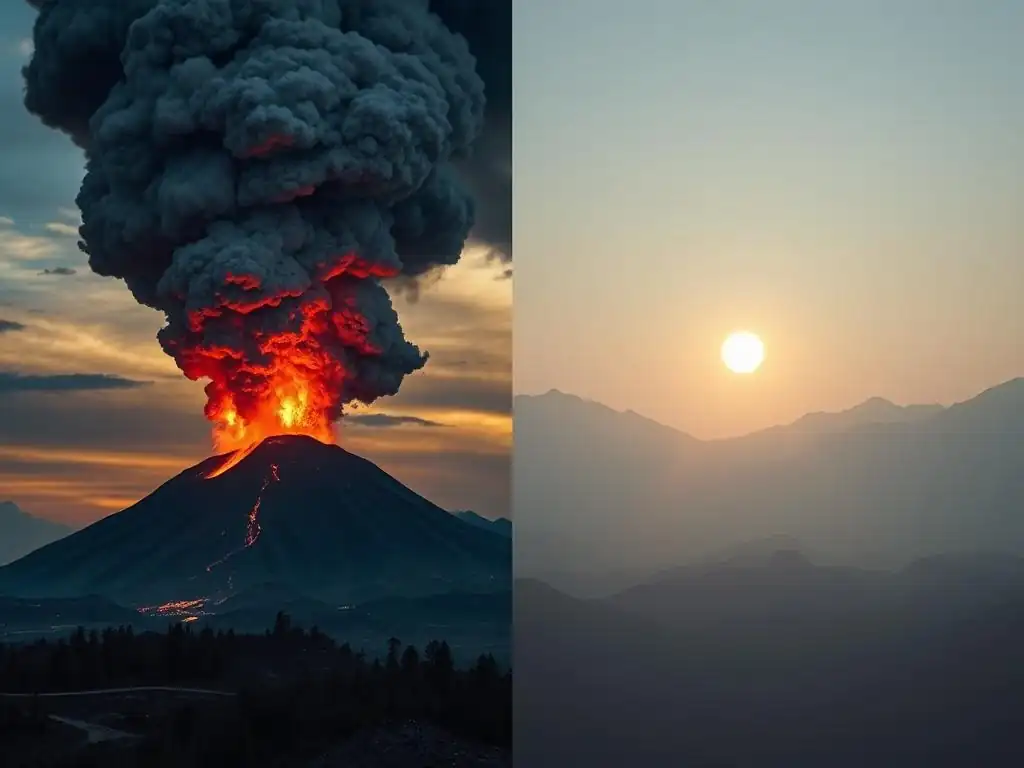
Volcanic Aerosols: How Sulfur Dioxide Reached the Stratosphere
The key to understanding the Pinatubo eruption climate impact lies in the massive amounts of sulfur dioxide (SO2) gas released during the eruption. Pinatubo injected an estimated 20 million tons of SO2 into the stratosphere, a layer of the atmosphere above the troposphere, starting at about 10-16 kilometers (6-10 miles) altitude and extending upwards. Unlike volcanic ash, which is relatively heavy and quickly falls out of the atmosphere within days or weeks, sulfur dioxide gas is lighter and can reach much higher altitudes and remain suspended for much longer periods.
The eruption plume's immense height allowed the SO2 to penetrate well into the stratosphere, where it was shielded from tropospheric weather systems and rainfall that would normally wash out pollutants. Once in the stratosphere, the sulfur dioxide gas underwent a series of chemical reactions, driven by sunlight and other atmospheric constituents. This process transformed the SO2 into sulfate aerosols, tiny droplets of sulfuric acid and water. The efficient injection of SO2 into the stratosphere was crucial for the global cooling effect, as it ensured the formation of a long-lasting stratospheric aerosol layer capable of influencing global radiation balance.
The Formation of Sulfate Aerosols and Their Reflective Properties
The transformation of sulfur dioxide into sulfate aerosols in the stratosphere is a crucial step in understanding the Pinatubo eruption climate impact. Once in the stratosphere, SO2 molecules react with hydroxyl radicals (OH) and ozone (O3), through a complex series of photochemical reactions. These reactions lead to the formation of sulfuric acid (H2SO4) and water vapor, which then condense to form liquid sulfate aerosols. These aerosols are incredibly small, typically ranging in size from about 0.1 to 1 micrometer in diameter, allowing them to remain suspended in the stratosphere for extended periods, typically one to two years.
Sulfate aerosols possess a key property that makes them effective climate-cooling agents: they are highly reflective to incoming solar radiation. These tiny particles act like microscopic mirrors, scattering incoming sunlight back into space before it can reach the Earth's surface and warm the planet. This phenomenon is known as the aerosol direct effect.
The larger the concentration of sulfate aerosols in the stratosphere, the more sunlight is reflected back to space, and consequently, the less solar energy reaches the Earth's surface, leading to a cooling effect. The Pinatubo eruption significantly increased the concentration of these reflective aerosols in the stratosphere, creating a global veil that altered Earth's radiative balance.
Blocking Sunlight: The Mechanism Behind Pinatubo's Cooling Effect
The mechanism behind Pinatubo's cooling effect is directly related to the reflective properties of the sulfate aerosols formed in the stratosphere. These aerosols, acting as a global haze layer, increased the Earth's albedo, which is the measure of how much solar radiation is reflected back to space.
Normally, the Earth's albedo is around 30%, meaning about 30% of incoming solar radiation is reflected. After the Pinatubo eruption, the increased stratospheric aerosol layer boosted the Earth's albedo, causing more incoming sunlight to be reflected back to space, reducing the amount of solar energy absorbed by the Earth's system (atmosphere, oceans, and land surface).
This reduction in absorbed solar energy led to a decrease in global average temperatures. Think of it as a giant, albeit temporary, sunshade for the planet. Less sunlight reaching the surface means less energy available to warm the Earth. The magnitude of the cooling effect was directly related to the amount of sulfate aerosols injected into the stratosphere and their effectiveness in scattering sunlight. The Pinatubo eruption provided a clear and quantifiable example of how volcanic aerosols can perturb the Earth's radiative balance and induce a global cooling response, demonstrating a significant Pinatubo eruption climate impact.
Quantifying the Cooling: Global Temperature Changes After the Pinatubo Eruption
Measuring the Temperature Drop: Data from Satellites and Ground Stations
The global cooling effect following the Pinatubo eruption was meticulously documented by scientists using both satellite and ground-based temperature measurements. Satellite instruments, such as the Advanced Very High Resolution Radiometer (AVHRR), provided global coverage of temperature changes, while networks of ground stations around the world offered detailed regional temperature data. Analysis of these data sets consistently showed a clear and measurable drop in global average temperatures in the months and years following the June 1991 eruption.
Within a few months of the eruption, global average surface temperatures had decreased by approximately 0.4 to 0.6 degrees Celsius (0.7 to 1.1 degrees Fahrenheit). This cooling was evident across different datasets and measurement techniques, providing strong evidence for the Pinatubo eruption climate impact. The temperature anomaly was most pronounced in the Northern Hemisphere, particularly over landmasses, during the summer months following the eruption. The cooling signal was detectable for several years, gradually diminishing as the sulfate aerosols slowly settled out of the stratosphere.
Regional Variations in Cooling: Stronger Cooling Over Landmasses and Northern Hemisphere
While the Pinatubo eruption caused a global average cooling, the temperature decrease was not uniform across the planet. Regional variations in cooling were observed, with some areas experiencing more pronounced cooling than others. In general, the cooling effect was stronger over landmasses compared to oceans, and more pronounced in the Northern Hemisphere than the Southern Hemisphere. This hemispheric asymmetry is partly attributed to the eruption occurring in the Northern Hemisphere tropics, leading to a slightly greater concentration of aerosols in the Northern Hemisphere stratosphere.
The land-ocean contrast in cooling is related to the different thermal inertia of land and water. Land surfaces heat up and cool down more quickly than oceans. Therefore, a reduction in solar radiation leads to a more immediate and noticeable temperature drop over land. Oceans, with their large heat capacity, respond more slowly to changes in radiative forcing. Furthermore, atmospheric circulation patterns and feedback mechanisms can also contribute to regional variations in the cooling response. For example, changes in atmospheric circulation following the eruption may have contributed to enhanced cooling in certain mid-latitude regions.
The Limited Duration of the Cooling Effect: Aerosol Lifetime in the Stratosphere
The cooling effect from the Pinatubo eruption was temporary, lasting for approximately two to three years. This limited duration is due to the natural processes that remove sulfate aerosols from the stratosphere. While the stratosphere is relatively stable, it is not entirely isolated from the troposphere. Over time, stratospheric air gradually mixes with tropospheric air, and the sulfate aerosols are slowly transported downwards.
Once in the troposphere, sulfate aerosols are removed relatively quickly through various mechanisms, primarily through precipitation. Rain and snow effectively wash out aerosols from the lower atmosphere. This process, known as wet deposition, is the dominant removal pathway for aerosols in the troposphere.
Dry deposition, where aerosols settle out of the atmosphere due to gravity, also plays a minor role. The typical lifetime of sulfate aerosols in the stratosphere is about one to two years, which explains why the Pinatubo cooling effect peaked within a year or two after the eruption and then gradually faded as the aerosol layer dissipated. This transient nature underscores that while volcanic eruptions can cause temporary climate perturbations, they are not a long-term climate forcing mechanism.
Pinatubo's Impact Beyond Temperature: Altering Atmospheric Chemistry
Ozone Depletion: The Connection Between Volcanic Aerosols and Ozone Loss
Beyond its direct impact on global temperatures, the Pinatubo eruption also had significant effects on atmospheric chemistry, most notably contributing to ozone depletion. While chlorofluorocarbons (CFCs) are the primary drivers of long-term ozone depletion, volcanic aerosols from Pinatubo exacerbated ozone loss, particularly in the years immediately following the eruption. The sulfate aerosols provide surfaces for chemical reactions that enhance the destruction of ozone in the stratosphere.
Specifically, heterogeneous chemical reactions on the surface of sulfate aerosols convert relatively benign chlorine reservoir species, such as chlorine nitrate (ClONO2) and hydrogen chloride (HCl), into more reactive forms of chlorine that can catalytically destroy ozone molecules. These reactions are particularly efficient in polar regions during winter and spring, contributing to the formation of the Antarctic ozone hole and also enhancing ozone depletion at mid-latitudes. Measurements following the Pinatubo eruption showed a noticeable increase in ozone depletion rates, particularly in the lower stratosphere, highlighting another facet of the Pinatubo eruption climate impact.
Changes in Precipitation Patterns: Reduced Monsoon Intensity in Asia and Africa
The Pinatubo eruption's influence extended beyond temperature and atmospheric chemistry, also impacting global precipitation patterns. Studies suggest that the volcanic aerosols led to a temporary weakening of monsoon systems in Asia and Africa in the years following the eruption. The cooling of the land surface due to the aerosols reduced the land-sea temperature contrast, which is a key driver of monsoon circulation. Monsoon systems are driven by the differential heating of land and ocean, with warmer land in summer drawing in moisture-laden air from the ocean, leading to rainfall.
The Pinatubo aerosols, by reducing land surface temperatures, diminished this temperature gradient, weakening the atmospheric circulation associated with monsoons. This resulted in reduced rainfall in several monsoon regions, including parts of India, Southeast Asia, and the Sahel region of Africa. While the precipitation changes were relatively modest and short-lived, they demonstrate the complex and far-reaching impacts of large volcanic eruptions on global climate and weather patterns. These changes in precipitation patterns further underscore the wide-ranging Pinatubo eruption climate impact, extending beyond just temperature changes.
Impacts on Plant Life and Agriculture: Reduced Photosynthesis and Crop Yields
The global cooling and changes in solar radiation following the Pinatubo eruption had consequences for plant life and agriculture. Reduced sunlight reaching the Earth's surface led to decreased photosynthesis rates in plants, the process by which plants convert sunlight into energy. Diffuse radiation, scattered by the aerosols, increased, which can be beneficial for photosynthesis to some extent, but the overall reduction in total solar radiation outweighed this effect. Studies have indicated a decrease in global terrestrial net primary productivity (NPP) in the years following the Pinatubo eruption, reflecting reduced plant growth.
In agricultural regions, the reduced sunlight and potential changes in precipitation patterns could have impacted crop yields. While the exact magnitude of agricultural impacts is difficult to quantify precisely at a global scale, localized studies and modeling simulations suggest that the Pinatubo eruption may have contributed to reduced crop production in some regions.
The cooling effect, combined with altered precipitation, could have shortened growing seasons and stressed crops, particularly in regions already vulnerable to climate variability. This impact on plant life and agriculture illustrates the cascading effects of the Pinatubo eruption, demonstrating how a volcanic event can have repercussions for biological systems and human food security through its Pinatubo eruption climate impact.
Pinatubo's Legacy: Lessons for Understanding Volcanic Climate Forcing

Volcanic Eruptions as a Natural Climate Regulator
The Pinatubo eruption provided a compelling real-world example of how volcanic eruptions can act as natural climate regulators. By injecting massive quantities of sulfur dioxide into the stratosphere, Pinatubo demonstrated the potential of volcanic aerosols to temporarily offset global warming. While the cooling effect was relatively short-lived, it highlighted the sensitivity of the Earth's climate system to changes in atmospheric aerosol concentrations and provided valuable data for validating climate models. Volcanic eruptions, particularly large explosive eruptions that reach the stratosphere, represent a significant natural forcing on climate, capable of causing detectable global temperature changes on interannual to decadal timescales.
Understanding volcanic climate forcing is crucial for interpreting past climate variations and improving predictions of future climate change. The geological record shows evidence of past large volcanic eruptions that have had substantial and long-lasting impacts on global climate, including triggering periods of cooling and even contributing to mass extinction events. Studying events like the Pinatubo eruption helps scientists better understand the mechanisms of volcanic climate forcing and refine their ability to model the Earth's response to both natural and human-induced climate perturbations.
Comparing Pinatubo to Other Major Volcanic Eruptions: Tambora's "Year Without a Summer" and Krakatoa's Global Effects
The Pinatubo eruption, while significant, is not unique in its climate impact. History is replete with examples of other large volcanic eruptions that have had profound global consequences. Two notable examples are the 1815 Tambora eruption and the 1883 Krakatoa eruption.
The Tambora eruption, also in Indonesia, was even larger than Pinatubo, ranking a VEI 7. It injected an estimated 60 million tons of sulfur dioxide into the stratosphere, resulting in a much more pronounced and prolonged cooling effect. 1816 became known as the "Year Without a Summer" in many parts of the world, with widespread crop failures, famine, and social unrest attributed to the Tambora eruption climate impact.
The 1883 Krakatoa eruption, also in Indonesia, though slightly smaller than Tambora (VEI 6), also had significant global effects. Krakatoa's eruption plume reached similar altitudes to Pinatubo, injecting substantial amounts of sulfur dioxide into the stratosphere. Krakatoa caused global cooling, though less severe than Tambora, and produced spectacular sunsets and atmospheric optical phenomena observed worldwide for years due to the stratospheric aerosol cloud. Comparing Pinatubo to these historical eruptions provides a broader context for understanding the range of volcanic climate impacts and the factors that determine the magnitude and duration of the cooling effect.
Implications for Climate Modeling: Improving Predictions of Future Volcanic Impacts
The Pinatubo eruption provided a valuable test case for climate models, allowing scientists to evaluate and improve their ability to simulate the climate response to volcanic forcing. Climate models were used to predict the cooling effect of Pinatubo based on the estimated sulfur dioxide injection, and these predictions generally agreed well with the observed temperature changes. This validation process increased confidence in the models' ability to simulate the climate effects of volcanic eruptions and other aerosol forcings.
However, the Pinatubo eruption also revealed areas where climate models could be further improved. For example, accurately simulating the regional distribution of aerosols and their interactions with clouds and atmospheric circulation remains a challenge. Ongoing research continues to refine climate models, incorporating more detailed representations of volcanic aerosol processes and their climate feedbacks.
By studying past volcanic eruptions like Pinatubo and comparing model simulations with observational data, scientists are continually improving their ability to predict the climate impacts of future volcanic events and to better understand the role of volcanism in the Earth's climate system. The Pinatubo eruption climate impact serves as a crucial benchmark for advancing climate modeling capabilities.
The Pinatubo Eruption Climate Impact in the Context of Modern Climate Change
A Temporary Reprieve: Pinatubo's Cooling Effect vs. Greenhouse Gas Warming
In the context of modern climate change, driven by increasing greenhouse gas concentrations, the Pinatubo eruption's cooling effect can be seen as a temporary reprieve. While the eruption caused a significant and measurable global cooling, it was a transient effect that lasted only a few years. In contrast, the warming caused by greenhouse gases is a long-term trend, driven by the accumulation of carbon dioxide and other heat-trapping gases in the atmosphere from human activities. The cooling from Pinatubo temporarily masked the underlying warming trend, but it did not fundamentally alter the long-term trajectory of climate change.
Once the Pinatubo aerosols dissipated, global temperatures rebounded, and the warming trend driven by greenhouse gases resumed. In fact, some studies suggest that the temporary cooling from Pinatubo may have even accelerated the rate of warming in subsequent years, as the climate system adjusted to the reduced aerosol forcing. The Pinatubo eruption serves as a clear illustration that while natural events can temporarily modulate global temperatures, they cannot counteract the long-term warming effect of increasing greenhouse gas concentrations. The Pinatubo eruption climate impact was a short-term fluctuation on a long-term warming trend.
The Limitations of Volcanic Eruptions as a Climate Solution
The temporary cooling effect of volcanic eruptions has, in some circles, sparked discussions about the possibility of artificially mimicking volcanic eruptions to geoengineer the climate and counteract global warming. This concept, known as stratospheric aerosol injection, proposes intentionally releasing sulfur dioxide or other aerosols into the stratosphere to reflect sunlight and cool the planet. However, the Pinatubo eruption, while demonstrating the cooling potential of aerosols, also highlights the limitations and potential risks of such geoengineering approaches.
Firstly, the cooling effect of volcanic eruptions is temporary, requiring continuous and repeated injections of aerosols to maintain the cooling. Secondly, volcanic aerosols have side effects, such as ozone depletion and potential changes in precipitation patterns, as demonstrated by the Pinatubo eruption. Furthermore, the regional distribution of cooling from volcanic aerosols is not uniform, and there could be unintended consequences and regional climate disruptions.
Finally, relying on geoengineering as a climate solution does not address the root cause of climate change, which is greenhouse gas emissions. Therefore, while volcanic eruptions provide valuable insights into aerosol climate forcing, they do not offer a viable or sustainable solution to the problem of anthropogenic climate change.
Understanding the Complex Interplay Between Volcanism and the Earth's Climate System
The Pinatubo eruption, and the broader study of volcanic climate forcing, underscores the complex and interconnected nature of the Earth's climate system. Volcanism is just one of many natural factors that influence climate, interacting with other natural variability and anthropogenic forcings. Understanding the interplay between volcanism and the Earth's climate system is crucial for developing a comprehensive picture of climate change and improving our ability to predict future climate scenarios.
Volcanic eruptions can influence not only global temperatures but also atmospheric circulation, precipitation patterns, ocean currents, and even ice sheet dynamics. These complex interactions and feedbacks need to be considered when assessing the overall impact of volcanism on climate and when interpreting past climate records. Furthermore, as the Earth's climate continues to warm due to human activities, the response to future volcanic eruptions may be different than in the pre-industrial era.
For instance, a warming climate may alter the atmospheric lifetime of volcanic aerosols or modify the regional patterns of volcanic cooling. Continued research into the complex interplay between volcanism and the Earth's climate system is essential for a more complete understanding of climate change and its multifaceted impacts.
Conclusion: Pinatubo – A Volcanic Event That Briefly Rewrote the Climate Narrative
The 1991 eruption of Mount Pinatubo was a cataclysmic natural event with far-reaching consequences, extending far beyond the immediate devastation in the Philippines. The eruption's most unexpected legacy was its temporary but significant impact on the global climate. By injecting massive amounts of sulfur dioxide into the stratosphere, Pinatubo demonstrated the power of volcanic aerosols to alter Earth's radiative balance and induce a global cooling. This Pinatubo eruption climate impact provided scientists with an unprecedented opportunity to study volcanic climate forcing in detail, confirming theoretical understanding and refining climate models.
While the cooling effect was transient, it offered valuable insights into the Earth's climate system and highlighted the complex interplay between natural and anthropogenic influences on global temperatures. Pinatubo served as a stark reminder of the Earth's capacity for sudden and dramatic climate shifts, even in the face of long-term warming trends. The eruption's legacy extends beyond the scientific realm, underscoring the interconnectedness of our planet and the profound ways in which natural events can shape the global environment and influence the narrative of climate change, even if only for a brief, but scientifically illuminating, period.
Frequently Asked Questions
What was the Pinatubo eruption and why is it significant?
The Pinatubo eruption was a massive volcanic event in 1991 that injected vast amounts of sulfur dioxide into the stratosphere. This eruption is significant because it had a measurable, though temporary, impact on global climate.
How did the Pinatubo eruption affect the global climate?
The sulfur dioxide from the eruption formed sulfate aerosols in the stratosphere, which reflected sunlight back into space. This resulted in a temporary global cooling of about 0.5°C (0.9°F) for several years.
What is the relationship between volcanic eruptions and climate change?
Large volcanic eruptions can cause temporary cooling by releasing aerosols that reflect sunlight. However, this effect is short-lived compared to the long-term warming trend caused by greenhouse gas emissions.
Did the Pinatubo eruption solve the problem of global warming?
No, the Pinatubo eruption did not solve global warming. The cooling effect was temporary, and the underlying issue of increasing greenhouse gas concentrations remained unaddressed.
Can we rely on volcanic eruptions to counteract climate change?
Relying on volcanic eruptions for climate mitigation is not a viable strategy. The effects are unpredictable, and the environmental consequences of a major eruption can be devastating.
Final Reflection: The Lingering Chill of Pinatubo
The eruption of Mount Pinatubo in 1991, a devastating natural disaster, inadvertently offered a temporary reprieve from the relentless march of global warming. This paradoxical cooling effect underscores the immense power of natural events to influence our climate, even as human activity remains the dominant driver of long-term change. Understanding this brief respite, and the mechanisms behind it, is crucial as we grapple with the escalating climate crisis today.
The story of Pinatubo's impact serves as a stark reminder of the interconnectedness of our planet. It highlights the delicate balance within the Earth's systems and the profound consequences, both intended and unintended, of disrupting that balance. The eruption's temporary cooling effect, while significant, was ultimately a fleeting moment in the face of sustained greenhouse gas emissions. The climate is what you expect, the weather is what you get.
This quote, often attributed to Robert A. Heinlein, perfectly encapsulates the difference between the short-term fluctuations caused by events like Pinatubo and the long-term trends driven by human activity.
As we reflect on the lessons of Pinatubo, let us not mistake a temporary chill for a solution to the warming planet. Instead, let us use this knowledge to fuel our commitment to sustainable practices and innovative solutions. Consider how you can contribute to a future where we mitigate the negative impacts of climate change, not through catastrophic events, but through conscious and deliberate action. Let the memory of Pinatubo serve as a catalyst for positive change, inspiring us to protect the delicate balance of our planet for generations to come.
Rediscover Our Planet's Resilient Secrets!
Thank you for journeying with Volcano Explorers to understand the fascinating, albeit temporary, cooling effect of Mount Pinatubo's eruption. Now that you've seen how even a catastrophe can offer surprising insights into our climate, let's take some action to learn more and protect our world.
- Dive deeper! Explore the scientific papers that documented Pinatubo's impact on global temperatures. Understanding the research is key to appreciating the complexity of climate science.
- Consider this:Could mimicking a volcanic eruption be a valid geoengineering solution? Share your perspective on the ethical implications and potential risks in the comments below!
- Spread the word! Share this article with friends and family who are interested in volcanology and climate science. Let's spark a discussion about Earth's powerful processes.
What other natural phenomena have you noticed offering unexpected benefits to our planet, and how can we learn from them?