
Mount Pelée's Eruption Plume: Reaching the Stratosphere and Beyond

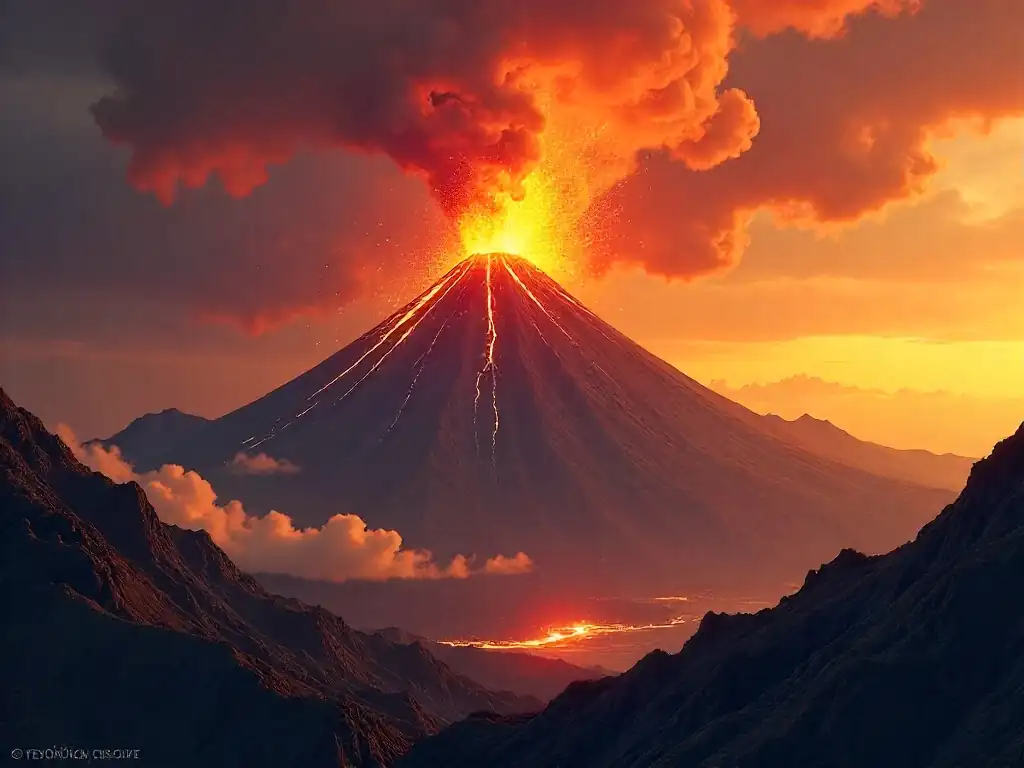
Welcome to Volcano Explorers, where we venture into the heart of Earth's fiery giants. Ever wondered how a single eruption can reshape history and impact the global atmosphere? Dive into our latest exploration of Mount Pelée's eruption impact analysis and uncover the secrets of its devastating plume. What unseen forces propelled it to such extraordinary heights, and what lessons can we learn from this pivotal moment in volcanic history? Join us as we unravel the mysteries of this infamous eruption and its far-reaching consequences.
- Introduction to Mount Pelée's Catastrophic Eruption of 1902
- Understanding the Eruption Plume Dynamics of Mount Pelée
- Stratospheric Injection: Mount Pelée's Plume and its Atmospheric Reach
- Mount Pelée Eruption Impact Analysis: Short-Term Atmospheric Effects
- Long-Term Consequences of the Mount Pelée Eruption Plume
- Mount Pelée's Eruption Plume Compared to Other Major Volcanic Events
- Volcanic Eruption Plume Modeling and Prediction: Lessons from Mount Pelée
- The Human Cost: Mount Pelée's Eruption and its Societal Impact
- Conclusion: Mount Pelée's Legacy and the Importance of Volcanic Plume Research
-
Frequently Asked Questions
- What were the primary causes of the Mount Pelée eruption's devastating impact?
- How high did the eruption plume of Mount Pelée reach during the 1902 eruption?
- What is a pyroclastic flow, and why was it so deadly in the Mount Pelée eruption?
- What kind of impact did the eruption have on the island of Martinique's economy and society?
- How did the Mount Pelée eruption contribute to our understanding of volcanic hazards and risk assessment?
- Final Reflection: Echoes of Pelée, Lessons for Tomorrow
- Unearth Your Inner Volcanologist!
Introduction to Mount Pelée's Catastrophic Eruption of 1902
The Setting: Saint-Pierre and the Imminent Volcanic Threat
At the dawn of the 20th century, Saint-Pierre, Martinique, was known as the "Paris of the Caribbean," a vibrant port city boasting a population of approximately 30,000. Nestled at the foot of Mount Pelée, a volcano that had been dormant for decades, the city thrived as a major commercial and cultural hub.
Unbeknownst to its inhabitants, subtle signs of volcanic unrest began to emerge in the spring of 1902. Steam vents high on the mountain, typically quiet, started to emit stronger fumes, and minor ashfalls dusted the surrounding areas.
These early warnings, though noticeable to some, were largely dismissed or misinterpreted by local authorities and many residents, who were accustomed to the volcano's presence and lacked a deep understanding of volcanic hazards. The prevailing sentiment was one of complacency, fueled by a lack of recent volcanic history and perhaps a degree of denial about the potential danger lurking above the city.
The weeks leading up to the catastrophic eruption saw a gradual escalation of volcanic activity. Sulfurous odors became increasingly pungent, and the rumbling from within Mount Pelée grew louder and more frequent. Small explosions ejected ash and incandescent rocks onto the volcano's slopes, creating a spectacle that drew curious onlookers rather than instilling widespread alarm.
Local newspapers downplayed the risks, and political considerations, including upcoming elections, likely contributed to a reluctance to issue evacuation orders that could disrupt daily life and commerce. This combination of underestimation of volcanic hazards, inadequate risk communication, and perhaps a touch of fatalism set the stage for the impending disaster, as the city remained populated and vulnerable despite the clear and escalating signs from Mount Pelée.
Overview of the 1902 Eruption and its Devastating Impact
On May 8, 1902, Ascension Day, Mount Pelée unleashed its full fury upon Saint-Pierre. At approximately 7:52 AM local time, a massive lateral eruption burst from the volcano's flank, sending a searing pyroclastic flow hurtling down the Vallée de la Rivière Blanche directly towards the city. This was not a typical lava flow, but a superheated mixture of gas, volcanic ash, and rock fragments traveling at speeds potentially exceeding 100 miles per hour and temperatures reaching hundreds of degrees Celsius.
The pyroclastic flow engulfed Saint-Pierre in mere minutes, incinerating everything in its path. Buildings were flattened, set ablaze, and reduced to rubble. Ships anchored in the harbor were overturned, sunk, or consumed by fire.
The devastation was almost total. An estimated 30,000 people perished in the disaster, making it one of the deadliest volcanic eruptions of the 20th century. Only a handful of people in Saint-Pierre survived, mostly those on the fringes of the city or in exceptionally sheltered locations.
Among the few survivors were Léon Compère-Léandre, who lived on the edge of the city, and Ludger Sylbaris, a prisoner held in a poorly ventilated jail cell, whose thick walls offered a degree of protection from the intense heat. The eruption not only obliterated Saint-Pierre but also profoundly impacted the surrounding landscape and had significant atmospheric consequences. The Mount Pelée eruption impact analysis reveals a complex interplay of volcanic processes and their far-reaching effects, particularly concerning the eruption plume that ascended high into the atmosphere.
Understanding the Eruption Plume Dynamics of Mount Pelée
What is an Eruption Plume? Formation and Composition
An eruption plume is a column of hot volcanic gases, ash, and rock fragments ejected into the atmosphere during a volcanic eruption. These plumes are a hallmark of explosive volcanic events, forming as magma, under immense pressure from within the Earth, rapidly decompresses as it nears the surface. This decompression causes dissolved gases within the magma, primarily water vapor, carbon dioxide, and sulfur dioxide, to expand violently.
The force of this expansion, combined with the momentum of the ejected material, propels the plume upwards into the atmosphere. The formation of an eruption plume is a complex process governed by factors such as the eruption rate, the viscosity of the magma, and the atmospheric conditions.
The composition of an eruption plume is highly variable but typically includes several key components. Volcanic gases, predominantly water vapor, make up a significant portion, alongside sulfur dioxide (SO2), carbon dioxide (CO2), hydrogen sulfide (H2S), and hydrogen halides (like HCl and HF). Solid particles within the plume consist of volcanic ash, which are fine fragments of pulverized rock and volcanic glass, as well as larger rock fragments called tephra.
The relative proportions of gas and solid material, along with the temperature and velocity of the plume, determine its buoyancy and how high it will ascend into the atmosphere. Eruption plumes are not merely passive clouds of smoke; they are dynamic systems that play a crucial role in distributing volcanic material and influencing both local and global environments.
Key Factors Influencing Plume Height and Trajectory
Several factors dictate the height and trajectory of an eruption plume, making each volcanic event unique in its atmospheric impact. One of the most critical factors is the Volcanic Explosivity Index (VEI) of the eruption, a scale that quantifies the explosivity of volcanic eruptions. Higher VEI eruptions, like Mount Pelée's estimated VEI 4, generally produce taller eruption plumes due to the greater energy released. The eruption rate, or the volume of material erupted per unit time, is also crucial; a higher eruption rate provides more momentum to drive the plume upwards.
Magma properties, particularly viscosity and gas content, play a significant role. Less viscous magma allows gases to escape more easily, potentially leading to more sustained explosive eruptions and taller plumes. Conversely, highly viscous magma can trap gases, leading to more violent but potentially shorter-duration explosions.
Atmospheric conditions also significantly influence plume behavior. Wind speed and direction at different altitudes can dramatically affect the plume's trajectory, dispersing ash clouds downwind and impacting areas far from the volcano itself. Temperature and atmospheric stability also play a role.
A stable atmosphere, characterized by increasing temperature with height, can inhibit plume rise, while an unstable atmosphere, where temperature decreases rapidly with height, can enhance plume ascent. Furthermore, the presence of moisture in the atmosphere can affect plume dynamics, potentially leading to condensation and precipitation within the plume, impacting ash fallout patterns. Understanding these complex interactions is essential for accurately predicting plume behavior and assessing the atmospheric impact of volcanic eruptions like the Mount Pelée eruption of 1902.
Stratospheric Injection: Mount Pelée's Plume and its Atmospheric Reach
Evidence of Stratospheric Injection During the 1902 Eruption
While direct, real-time measurements of the Mount Pelée eruption plume's height are lacking due to the technology limitations of 1902, historical accounts and subsequent analyses strongly suggest that the plume reached well into the stratosphere. Eyewitness testimonies from ships at sea and distant islands described an exceptionally tall and dark eruption column that ascended to an estimated height of tens of thousands of feet.
Visual observations, though qualitative, are corroborated by the widespread dispersal of volcanic ash. Ashfall was reported across a broad region of the Caribbean, indicating that fine particles were lofted high enough to be transported by upper-level winds, a characteristic of stratospheric injection.
Further indirect evidence comes from the analysis of volcanic deposits from the 1902 eruption. The presence of fine-grained ash layers found far from Mount Pelée, both on land and in marine sediments, points to a significant stratospheric component in the eruption plume. These fine ash particles can remain suspended in the stratosphere for extended periods, traveling long distances before settling out.
Moreover, comparisons with other well-documented volcanic eruptions of similar explosivity, which are known to have injected material into the stratosphere, lend further support to the idea that Mount Pelée's 1902 eruption also achieved stratospheric heights. The scale of the devastation and the sheer volume of erupted material also suggest a highly energetic eruption capable of propelling ash and gases high into the atmosphere, likely reaching the stratosphere and beyond.
Analyzing the Volcanic Ash and Gas Composition in the Upper Atmosphere
Although direct sampling of the Mount Pelée eruption plume in the stratosphere was impossible in 1902, we can infer the likely composition of the volcanic ash and gas that reached these altitudes based on studies of similar eruptions and analyses of volcanic deposits. Volcanic ash in the stratosphere from such eruptions is typically dominated by fine silicate particles, often composed of volcanic glass shards and mineral fragments. These fine particles are crucial for their role in scattering sunlight and influencing atmospheric radiation balance.
In terms of gases, sulfur dioxide (SO2) is of particular significance when considering stratospheric injection. SO2 reacts with water vapor in the stratosphere to form sulfate aerosols, tiny droplets of sulfuric acid that can persist for months or even years.
The analysis of volcanic deposits from Mount Pelée, as well as studies of the volcano's magma composition, suggest that the erupted magma was relatively rich in sulfur. This implies that the eruption plume likely contained a substantial amount of SO2.
Once injected into the stratosphere, this SO2 would have undergone photochemical reactions, converting to sulfate aerosols. These aerosols, being highly reflective, can scatter incoming solar radiation back into space, leading to a temporary cooling effect at the Earth's surface.
Furthermore, the composition of the volcanic ash, particularly its refractive index and size distribution, also influences its radiative properties and its contribution to atmospheric cooling or warming, although sulfate aerosols are generally considered the dominant factor in short-term volcanic climate forcing. While specific measurements from 1902 are absent, our understanding of volcanic processes and the characteristics of Mount Pelée's eruption allows us to deduce the likely composition of the stratospheric plume and its potential atmospheric effects.
Mount Pelée Eruption Impact Analysis: Short-Term Atmospheric Effects
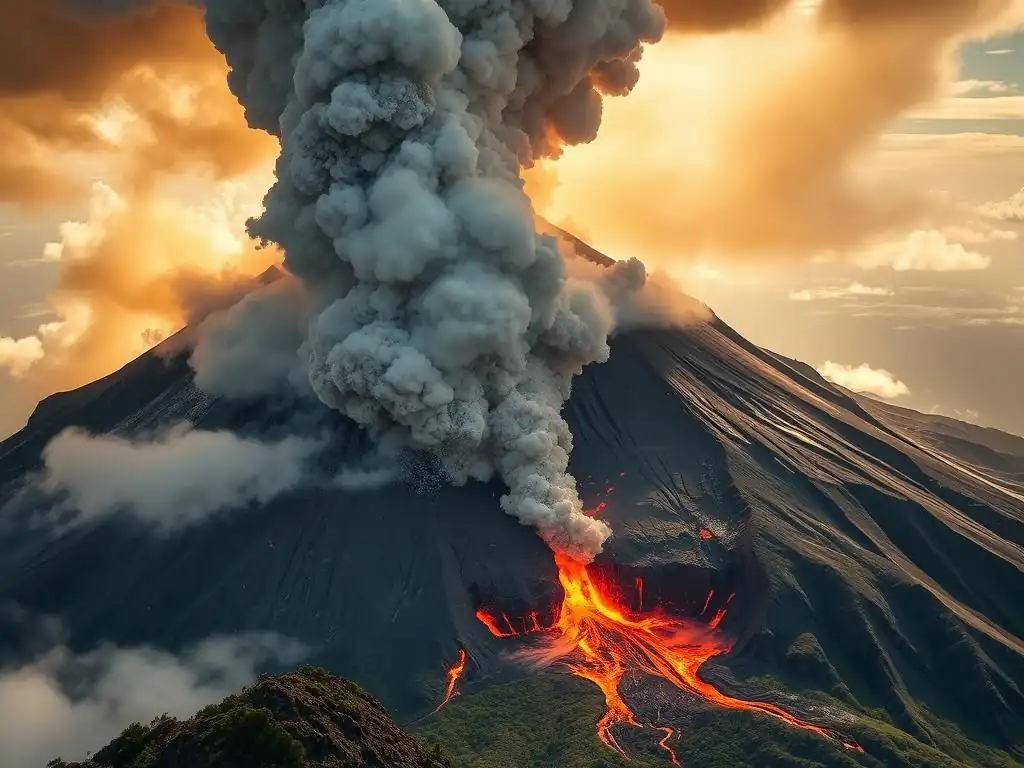
Sulfur Dioxide (SO2) Release and its Impact on Local Climate
The Mount Pelée eruption of 1902, like many explosive volcanic events, released a significant quantity of sulfur dioxide (SO2) into the atmosphere. While precise measurements from that time are unavailable, estimations based on the eruption's scale and magma composition suggest that hundreds of thousands to potentially a few million tons of SO2 may have been injected into the atmosphere, with a substantial portion reaching the stratosphere.
This SO2 release is a key component of the Mount Pelée eruption impact analysis because of its direct influence on atmospheric chemistry and climate. Upon reaching the stratosphere, SO2 undergoes oxidation and reacts with water vapor to form sulfuric acid aerosols, tiny droplets that scatter sunlight.
The immediate impact of this stratospheric SO2 conversion to aerosols is a change in the Earth's radiative balance. These sulfate aerosols increase the atmosphere's reflectivity, or albedo, causing more incoming solar radiation to be reflected back into space before reaching the Earth's surface. This reduction in solar radiation reaching the surface leads to a cooling effect.
Locally, in the Caribbean region and potentially more broadly, the increased aerosol concentration from the Mount Pelée eruption could have resulted in a noticeable decrease in direct sunlight and daytime temperatures in the months following the eruption. While the cooling effect from a single eruption like Mount Pelée is generally regional and relatively short-lived compared to larger volcanic events, it nonetheless represents a significant short-term atmospheric consequence of the eruption.
Aerosol Formation and its Role in Sunlight Reflection
As previously discussed, the sulfur dioxide released during the Mount Pelée eruption played a crucial role in aerosol formation in the stratosphere. The conversion of SO2 to sulfate aerosols is a photochemical process, meaning it is driven by sunlight. Once SO2 reaches the stratosphere, it reacts with hydroxyl radicals (OH) and other atmospheric constituents in the presence of sunlight to form sulfuric acid (H2SO4).
This sulfuric acid then condenses with water vapor to form sulfate aerosols. These aerosols are incredibly small, typically in the sub-micrometer size range, which makes them highly effective at scattering sunlight. Their size is optimal for scattering visible light, the dominant component of solar radiation.
The abundance of these sulfate aerosols in the stratosphere after the Mount Pelée eruption would have created a veil of microscopic particles that reflected a portion of the incoming solar radiation back to space. This phenomenon is often referred to as "solar backscattering." The amount of sunlight reflected depends on the concentration and size distribution of the aerosols.
While the exact aerosol loading from the Mount Pelée eruption is not precisely known, the scale of the eruption and the estimated SO2 release suggest a substantial increase in stratospheric aerosol optical depth, a measure of how much sunlight is blocked by aerosols. This increased optical depth directly translates to a reduction in solar radiation reaching the troposphere and the Earth's surface, driving the short-term cooling effect associated with volcanic eruptions.
Initial Cooling Effects and Subsequent Recovery
The initial cooling effects resulting from the Mount Pelée eruption's stratospheric aerosol injection were likely noticeable, although not as globally significant or long-lasting as those from larger eruptions like Tambora or Krakatoa. The cooling effect is primarily driven by the reduction in incoming solar radiation due to aerosol scattering. Estimates for the global average cooling from eruptions of a similar magnitude to Mount Pelée suggest temperature decreases on the order of a few tenths of a degree Celsius in the months immediately following the eruption.
Regionally, particularly in the Caribbean and potentially broader areas influenced by stratospheric winds, the cooling could have been more pronounced. Historical weather records from the period might reveal subtle temperature anomalies, although isolating the volcanic signal from natural climate variability can be challenging.
However, the atmospheric residence time of sulfate aerosols in the stratosphere is relatively limited, typically on the order of one to two years. This is because stratospheric aerosols are gradually removed through processes like gravitational settling and transport to the troposphere, where they are washed out by precipitation. Therefore, the cooling effect from the Mount Pelée eruption would have been transient.
Within a year or two after the eruption, the stratospheric aerosol loading would have gradually decreased, and the Earth's radiative balance would have returned to near pre-eruption conditions. The climate system would then begin to recover from the volcanic perturbation, with temperatures gradually rebounding to their previous levels. The Mount Pelée eruption impact analysis, in terms of short-term climate effects, highlights the transient nature of volcanic cooling, even though the immediate consequences can be significant on a regional scale.
Long-Term Consequences of the Mount Pelée Eruption Plume
Assessing the Potential for Ozone Depletion
While the short-term climate impact of volcanic eruptions like Mount Pelée is primarily related to cooling due to sulfate aerosols, there are also potential long-term atmospheric consequences, including the possibility of ozone depletion. Sulfuric acid aerosols in the stratosphere can provide surfaces for heterogeneous chemical reactions that enhance the destruction of ozone, particularly in polar regions and during winter and spring. These reactions involve chlorine and bromine compounds, which are already present in the stratosphere due to both natural and anthropogenic sources. The aerosols act as catalysts, accelerating the ozone-depleting reactions.
However, the extent of ozone depletion caused by an eruption like Mount Pelée is likely to be limited compared to the substantial ozone depletion observed due to human-produced chlorofluorocarbons (CFCs). Volcanic eruptions do inject some ozone-depleting substances directly into the stratosphere, such as hydrogen chloride (HCl), but the quantities are generally much smaller than the anthropogenic contribution of chlorine and bromine. Furthermore, the sulfate aerosols themselves are the primary drivers of the heterogeneous reactions, and their lifetime in the stratosphere is relatively short.
Therefore, while Mount Pelée's eruption plume may have contributed to a transient and localized reduction in stratospheric ozone, particularly in the year or two following the eruption, it is unlikely to have caused significant long-term ozone depletion on a global scale. The main long-term ozone depletion issue remains linked to human-produced ozone-depleting substances, although volcanic eruptions can temporarily exacerbate the problem.
Examining the Impact on Global Atmospheric Circulation Patterns
Large volcanic eruptions that inject substantial amounts of aerosols into the stratosphere can potentially influence global atmospheric circulation patterns. The altered radiative balance caused by the aerosols can lead to changes in temperature gradients and atmospheric pressure distributions, which in turn can affect wind patterns and large-scale atmospheric circulation.
Some studies suggest that major volcanic eruptions can influence phenomena like the North Atlantic Oscillation (NAO) and the El Niño-Southern Oscillation (ENSO). For instance, volcanic eruptions have been linked to a tendency towards a positive NAO phase in the winter following the eruption, which can lead to milder winters in Europe and colder winters in Greenland and eastern Canada.
However, the impact of an eruption like Mount Pelée on global atmospheric circulation patterns is expected to be less pronounced and less well-defined compared to larger, more powerful eruptions. The magnitude of the radiative forcing from Mount Pelée was likely smaller than that of eruptions like Tambora or Krakatoa, which have been more clearly associated with changes in global circulation.
Detecting a clear and consistent signal of circulation changes specifically attributable to the Mount Pelée eruption in historical climate records would be challenging due to the eruption's relatively moderate size and the complex interplay of other factors influencing atmospheric circulation. While theoretically possible, any long-term impact on global atmospheric circulation patterns from the Mount Pelée eruption was likely subtle and difficult to isolate from natural climate variability.
Limited Long-Term Impact on Regional Climate
Considering the scale of the Mount Pelée eruption and the transient nature of stratospheric sulfate aerosols, the long-term impact on regional climate in the Caribbean is expected to be limited. While the eruption caused devastating immediate consequences in Saint-Pierre and surrounding areas, and likely induced short-term cooling, the volcanic forcing was not sustained enough to trigger significant long-term climate shifts.
The sulfate aerosols, responsible for the cooling effect, are removed from the stratosphere within a few years, and the climate system tends to revert to its pre-eruption state. Volcanic eruptions, even relatively large ones, are generally considered to be short-term perturbations to the climate system, rather than drivers of long-term climate change.
Natural climate variability, driven by factors such as ocean-atmosphere interactions and solar variations, plays a much more dominant role in shaping long-term regional climate patterns. While the Mount Pelée eruption undoubtedly had a significant and tragic impact on the human population and the immediate environment of Martinique, its influence on the long-term climate of the Caribbean region was likely negligible.
The Mount Pelée eruption impact analysis, when considering long-term climate effects, underscores the distinction between short-term volcanic forcing and the longer-term dynamics of the climate system, highlighting that while volcanic eruptions can cause temporary climate anomalies, they are not primary drivers of long-term climate trends.
Mount Pelée's Eruption Plume Compared to Other Major Volcanic Events
Krakatoa (1883) and Tambora (1815): A Comparative Analysis
Comparing the Mount Pelée eruption plume to those of Krakatoa (1883) and Tambora (1815) provides valuable context for understanding its scale and atmospheric impact. Both Krakatoa and Tambora were significantly larger eruptions than Mount Pelée, with VEI estimates of 6 and 7 respectively, compared to Mount Pelée's VEI 4. Krakatoa's eruption plume is estimated to have reached a height of around 25-30 km, while Tambora's plume likely exceeded 40 km, both considerably taller than Mount Pelée's plume, although precise height measurements for Mount Pelée are less certain.
The larger magnitude of Krakatoa and Tambora resulted in far greater volumes of erupted material and significantly larger SO2 releases into the stratosphere. Tambora, in particular, is estimated to have released an order of magnitude more SO2 than Krakatoa, and likely several times more than Mount Pelée.
The atmospheric consequences of Krakatoa and Tambora were also much more pronounced and longer-lasting than those of Mount Pelée. Krakatoa caused a noticeable global cooling of about 0.4°C for several years, while Tambora triggered the "Year Without a Summer" in 1816, with widespread crop failures and famine in Europe and North America due to a global average cooling of approximately 0.5-0.7°C.
The brilliant sunsets and vivid atmospheric optical phenomena observed globally for years after Krakatoa and Tambora were far more extensive and dramatic than any reported after Mount Pelée. In terms of eruption plume characteristics, both Krakatoa and Tambora produced plumes with a much higher proportion of fine ash and a greater stratospheric injection, leading to a more prolonged and geographically widespread aerosol veil and consequently, a more significant and enduring climate impact compared to the Mount Pelée eruption.
Pinatubo (1991): Modern Observations and Lessons Learned
The 1991 eruption of Mount Pinatubo in the Philippines offers a valuable modern analogue for understanding volcanic eruption plume dynamics and atmospheric impact, particularly in contrast to the 1902 Mount Pelée eruption. Pinatubo was a VEI 6 eruption, considerably larger than Mount Pelée, but smaller than Tambora or Krakatoa. Crucially, Pinatubo occurred in an era of advanced satellite and ground-based monitoring, providing detailed observations of its eruption plume and atmospheric effects.
Satellite measurements confirmed that Pinatubo injected approximately 20 million tons of SO2 into the stratosphere, forming a global sulfate aerosol layer. The Pinatubo eruption plume reached an altitude of about 35 km, well into the stratosphere, and its evolution was tracked in detail using remote sensing techniques.
The Pinatubo eruption caused a global average cooling of about 0.5°C for one to two years, consistent with climate model predictions. The eruption provided invaluable data for validating climate models and improving our understanding of volcanic forcing. Observations from Pinatubo confirmed the role of sulfate aerosols in reflecting sunlight and causing cooling, and also revealed some of the complexities of volcanic aerosol-cloud interactions.
Comparing Pinatubo to Mount Pelée highlights the importance of eruption size in determining atmospheric impact. While both eruptions injected plumes into the stratosphere and caused short-term cooling, the magnitude of the cooling and the duration of the atmospheric perturbation were significantly greater for Pinatubo due to its larger SO2 release and more extensive stratospheric aerosol layer. Pinatubo serves as a benchmark for assessing the atmospheric impact of volcanic eruptions and for refining our models and prediction capabilities.
Differences and Similarities in Plume Behavior and Atmospheric Impact
While Mount Pelée, Krakatoa, Tambora, and Pinatubo eruptions all produced eruption plumes that reached the stratosphere and had atmospheric impacts, there are key differences and similarities in their plume behavior and consequences. A primary difference lies in the scale of the eruptions, as reflected by their VEI and SO2 release.
Tambora and Krakatoa were significantly larger than Mount Pelée and Pinatubo, leading to more massive plumes, greater stratospheric injection, and more pronounced and longer-lasting atmospheric effects. Pinatubo, though smaller than Tambora and Krakatoa, was larger than Mount Pelée and benefited from modern observation techniques, providing detailed insights into plume dynamics and aerosol formation.
Despite the differences in scale, there are also similarities in the fundamental processes. All these eruptions involved explosive release of volcanic gases and ash, formation of eruption plumes driven by buoyancy and momentum, stratospheric injection of SO2, and subsequent sulfate aerosol formation leading to solar backscattering and cooling. The basic physics and chemistry governing plume formation and atmospheric interaction are consistent across these eruptions.
The Mount Pelée eruption impact analysis, when compared to these other major events, reveals that while it was a devastating local disaster with atmospheric consequences, its global atmospheric impact was relatively modest compared to the truly massive eruptions like Tambora and Krakatoa, and even less pronounced than the well-documented effects of Pinatubo. Studying this range of eruptions helps to refine our understanding of the relationship between eruption magnitude, plume characteristics, and atmospheric and climatic consequences.
Volcanic Eruption Plume Modeling and Prediction: Lessons from Mount Pelée
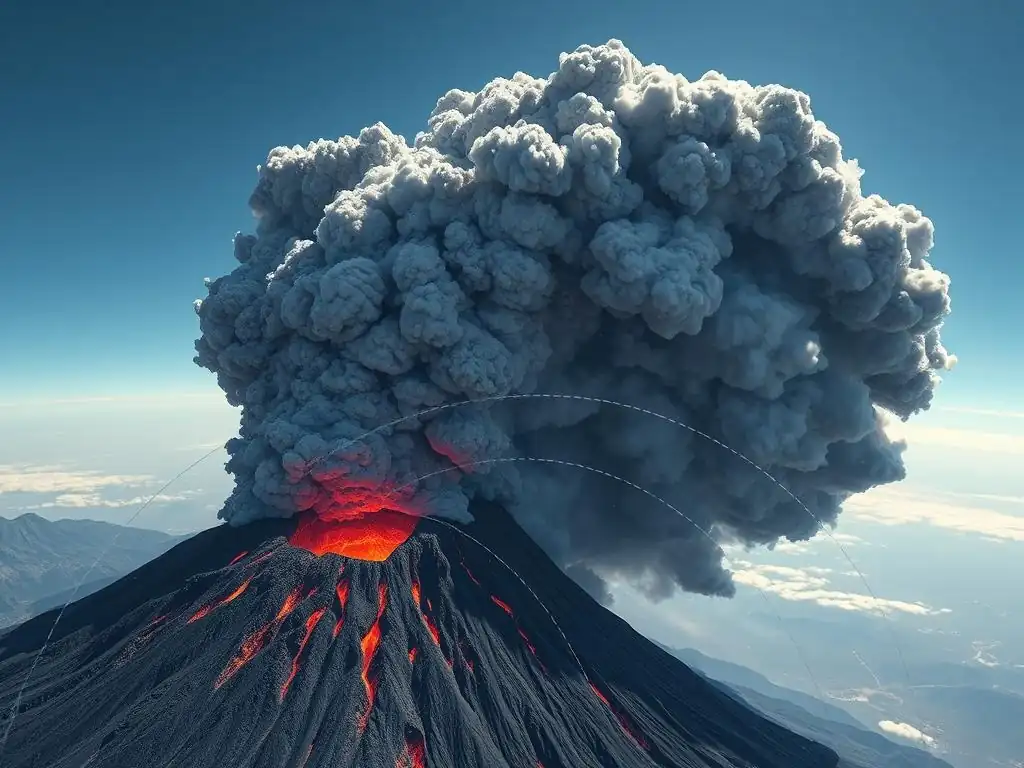
Advancements in Modeling Techniques for Plume Trajectory
The 1902 Mount Pelée eruption, while a tragedy, has contributed to the advancement of volcanology and particularly the modeling of eruption plumes. In the decades since, significant progress has been made in developing sophisticated numerical models to simulate eruption plume dynamics and predict plume trajectory. Early models were relatively simple, often based on empirical relationships or basic plume theory.
However, modern models are far more complex, incorporating computational fluid dynamics, thermodynamics, and atmospheric science principles. These models can simulate the ascent of eruption plumes, taking into account factors like eruption rate, magma properties, atmospheric conditions (wind, temperature, humidity), and particle aggregation and sedimentation processes.
Current eruption plume models can simulate plume rise, spreading, and downwind ash dispersal with increasing accuracy. They can also incorporate the formation of volcanic clouds and the interaction of plumes with atmospheric weather systems. Some models are even capable of predicting the concentration of volcanic ash at different altitudes and locations, which is crucial for aviation hazard assessment.
The development of these models has been driven by both theoretical advancements and the availability of more powerful computers. Data from past eruptions, including historical accounts of Mount Pelée and detailed observations from more recent events like Pinatubo, have been used to validate and refine these models, improving their predictive capabilities.
Using Past Eruptions Like Mount Pelée to Improve Prediction Accuracy
Past volcanic eruptions, such as the Mount Pelée eruption, serve as valuable case studies for improving the accuracy of eruption plume prediction models. Historical accounts, geological deposits, and, where available, early instrumental records from past eruptions provide crucial data for model validation and calibration.
By simulating past eruptions using modern models and comparing the model outputs with historical observations, scientists can assess the strengths and weaknesses of the models and identify areas for improvement. For example, understanding the ash dispersal patterns from the Mount Pelée eruption, even if only qualitatively described in historical reports, can help to test the ability of models to simulate ash transport under different atmospheric conditions.
The Mount Pelée eruption, despite the lack of detailed instrumental data from 1902, still offers valuable insights into the behavior of pyroclastic density currents and their interaction with eruption plumes. Studying the geological deposits from Mount Pelée's 1902 eruption helps to reconstruct the eruption sequence and estimate eruption parameters, which can then be used as inputs for plume models.
Furthermore, comparing model simulations of Mount Pelée with simulations of other eruptions of varying scales and styles allows for a broader understanding of plume behavior and the factors controlling plume height, trajectory, and atmospheric impact. The lessons learned from past eruptions like Mount Pelée are essential for continuously improving the accuracy and reliability of volcanic eruption plume prediction models, which are critical for mitigating volcanic hazards and protecting lives and infrastructure.
Challenges in Predicting the Atmospheric Impact of Future Eruptions
Despite significant advancements in eruption plume modeling and prediction, challenges remain in accurately forecasting the atmospheric impact of future volcanic eruptions. One major challenge is the inherent uncertainty in predicting the characteristics of future eruptions. Volcanic eruptions are complex natural phenomena, and precisely forecasting the timing, magnitude, duration, and style of an eruption is still not possible.
Even with improved monitoring techniques, predicting the exact eruption rate, magma composition, and gas content for a future eruption remains difficult. These eruption parameters are crucial inputs for plume models, and uncertainties in these inputs propagate through the models, affecting the accuracy of atmospheric impact predictions.
Another challenge lies in accurately representing atmospheric conditions in plume models. The atmosphere is a highly dynamic and complex system, and accurately forecasting wind fields, temperature profiles, and humidity at the time of a future eruption is inherently uncertain, especially at the high spatial and temporal resolution required for plume modeling. Furthermore, the interaction between volcanic plumes and atmospheric weather systems is complex and not fully understood.
Processes like plume-induced condensation, ice formation, and electrical charging can influence plume behavior and ash dispersal in ways that are still challenging to model accurately. Despite these challenges, ongoing research and model development are continuously improving our ability to predict the atmospheric impact of volcanic eruptions, but acknowledging the inherent uncertainties remains crucial for effective volcanic hazard mitigation and risk communication.
The Human Cost: Mount Pelée's Eruption and its Societal Impact
The Destruction of Saint-Pierre: A City Buried by Pyroclastic Flows
The 1902 eruption of Mount Pelée stands as a stark reminder of the devastating human cost of volcanic eruptions, particularly the catastrophic power of pyroclastic flows. The destruction of Saint-Pierre was almost complete, a testament to the speed, heat, and destructive force of these volcanic phenomena. Within minutes, the city, once vibrant and thriving, was reduced to smoldering ruins. The pyroclastic flow, surging down the Vallée de la Rivière Blanche, engulfed everything in its path.
Buildings were instantly crushed, burned, or vaporized. The intense heat ignited widespread fires, further contributing to the destruction. Eyewitness accounts, though scarce, paint a picture of unimaginable horror and instantaneous death for most of Saint-Pierre's inhabitants.
The death toll, estimated at around 30,000, underscores the scale of the tragedy. Saint-Pierre was essentially erased from the map. The port, once bustling with ships, became a graveyard of sunken and burned vessels.
The economic and social fabric of Martinique was profoundly disrupted. The destruction of Saint-Pierre was not merely a natural disaster; it was a societal catastrophe, highlighting the vulnerability of human settlements to volcanic hazards, particularly when warnings are ignored or misinterpreted and preparedness is lacking. The Mount Pelée eruption serves as a somber example of the destructive potential of pyroclastic flows and the critical importance of volcanic hazard assessment and risk mitigation strategies.
Lessons Learned in Volcanic Hazard Assessment and Preparedness
The Mount Pelée disaster profoundly impacted the field of volcanology and led to significant advancements in volcanic hazard assessment and preparedness. The eruption and its devastating consequences highlighted the previously underappreciated danger of pyroclastic flows. Prior to 1902, volcanic hazards were often primarily associated with lava flows and ashfall. The Saint-Pierre catastrophe brought pyroclastic flows to the forefront as a major volcanic threat, prompting scientists to study their formation, behavior, and destructive potential in greater detail. The concept of "nuée ardente," a French term describing hot, incandescent pyroclastic flows, became widely recognized in volcanology after the Mount Pelée eruption.
The disaster also underscored the critical importance of effective volcanic monitoring, hazard assessment, and risk communication. The subtle warning signs preceding the eruption, which were largely ignored or misinterpreted, emphasized the need for robust monitoring systems to detect volcanic unrest and for clear and timely communication of volcanic hazards to the public and authorities.
The Mount Pelée eruption contributed to the development of volcano observatories and the establishment of protocols for volcanic hazard assessment and evacuation planning. Lessons learned from Saint-Pierre have informed volcanic hazard mitigation efforts worldwide, leading to improved monitoring capabilities, better understanding of volcanic processes, and enhanced preparedness strategies in volcanically active regions.
Modern Monitoring Systems on Mount Pelée
In the wake of the 1902 disaster, Mount Pelée became a focus for enhanced volcanic monitoring. Today, Mount Pelée is closely monitored by the Institut de Physique du Globe de Paris (IPGP) and the Observatoire Volcanologique et Sismologique de Martinique (OVSM). Modern monitoring systems on Mount Pelée employ a range of sophisticated instruments to detect and track volcanic activity.
Seismic networks continuously monitor ground vibrations, providing early warning of magma movement and potential eruptions. Deformation monitoring using GPS and satellite radar interferometry (InSAR) measures ground swelling or subsidence, which can indicate magma accumulation or withdrawal beneath the volcano. Gas monitoring stations measure the composition and flux of volcanic gases, providing insights into magma degassing and volcanic activity levels.
Thermal monitoring using infrared cameras and satellite thermal imagery detects changes in surface temperatures, which can be indicative of increased volcanic activity. Visual observation, both ground-based and using remote cameras, provides real-time information on steam plumes, ash emissions, and other surface manifestations of volcanic unrest.
Data from these monitoring systems are continuously analyzed by volcanologists at OVSM to assess the volcano's state and provide timely warnings of potential eruptions. These modern monitoring capabilities represent a significant advancement compared to the limited monitoring resources available in 1902, and are crucial for mitigating volcanic hazards and protecting the population living near Mount Pelée.
Conclusion: Mount Pelée's Legacy and the Importance of Volcanic Plume Research
The Enduring Relevance of Studying Past Eruptions
The 1902 eruption of Mount Pelée, despite occurring over a century ago, remains profoundly relevant to volcanology and atmospheric science today. Studying past eruptions like Mount Pelée provides invaluable insights into volcanic processes, eruption plume dynamics, atmospheric impacts, and societal vulnerabilities to volcanic hazards. Historical eruptions serve as natural laboratories, offering opportunities to test and refine our understanding of volcanic behavior and improve our ability to predict and mitigate future volcanic crises. The Mount Pelée eruption, with its devastating pyroclastic flows and significant eruption plume, exemplifies the complex interplay between volcanic activity and its environmental and human consequences.
Analyzing the Mount Pelée eruption impact analysis, including its atmospheric effects, helps to contextualize the potential climate forcing from volcanic eruptions and to better understand the role of volcanoes in Earth's climate system. Lessons learned from the societal impact of the Saint-Pierre disaster continue to inform volcanic hazard assessment, risk communication, and preparedness strategies worldwide.
By studying past eruptions, we can identify recurring patterns, improve our forecasting capabilities, and ultimately reduce the risks associated with future volcanic events. The legacy of Mount Pelée underscores the enduring importance of volcanological research and the need for continued vigilance in volcanically active regions.
Future Directions in Volcanic Plume Research and Monitoring
Volcanic plume research and monitoring are continuously evolving fields, with ongoing efforts to improve our understanding and predictive capabilities. Future directions in volcanic plume research include developing more sophisticated numerical models that can simulate plume dynamics with greater accuracy, incorporating more complex physical and chemical processes.
This includes improving the representation of ash aggregation, ice formation in plumes, volcanic lightning, and the interaction of plumes with atmospheric weather systems. Further research is also needed to better quantify the radiative properties of volcanic aerosols and their impact on climate, as well as to investigate the long-term atmospheric and environmental consequences of volcanic eruptions.
Advancements in monitoring technologies are also crucial. Future monitoring systems will likely incorporate more integrated sensor networks, including drones, autonomous aircraft, and satellite constellations, to provide more comprehensive and real-time observations of volcanic activity and eruption plumes. Improved remote sensing techniques, such as hyperspectral imaging and lidar, will enhance our ability to characterize plume composition and ash dispersal.
Furthermore, developing real-time plume forecasting systems that can assimilate monitoring data and provide timely predictions of ash cloud trajectories and concentrations is a critical area of ongoing research. These advancements in research and monitoring are essential for improving volcanic hazard mitigation and reducing the risks posed by volcanic eruptions in the future.
Continued Monitoring and Mitigation Strategies
Continued monitoring of Mount Pelée and other active volcanoes worldwide is paramount for mitigating volcanic hazards and protecting vulnerable populations. Sustained investment in volcano observatories and monitoring networks is essential for providing early warning of volcanic unrest and potential eruptions. Effective volcanic hazard mitigation requires a multi-faceted approach, including not only robust monitoring and prediction but also comprehensive hazard assessments, land-use planning, infrastructure development, and public education and preparedness programs. Risk communication strategies must be tailored to local contexts and effectively convey volcanic hazards and safety measures to communities at risk.
Community engagement and participation are crucial for successful volcanic hazard mitigation. Building resilience to volcanic hazards requires fostering a culture of preparedness and empowering communities to take proactive steps to reduce their vulnerability. International collaboration and knowledge sharing are also essential, as volcanic hazards are a global issue.
Sharing best practices in monitoring, hazard assessment, and mitigation strategies among volcano observatories and research institutions worldwide is vital for enhancing global volcanic risk reduction efforts. The lessons learned from Mount Pelée and other volcanic disasters underscore the ongoing need for vigilance, scientific advancements, and sustained commitment to volcanic hazard mitigation to protect lives and livelihoods in volcanically active regions.
Frequently Asked Questions
What were the primary causes of the Mount Pelée eruption's devastating impact?
The primary causes were a pyroclastic flow, a superheated avalanche of gas and volcanic debris, and suffocation due to the intense heat and toxic gases released. Poor evacuation planning exacerbated the impact.
How high did the eruption plume of Mount Pelée reach during the 1902 eruption?
The eruption plume reportedly reached the stratosphere, extending far beyond the troposphere. This atmospheric reach contributed to the widespread ashfall.
What is a pyroclastic flow, and why was it so deadly in the Mount Pelée eruption?
A pyroclastic flow is a fast-moving current of hot gas and volcanic matter. It was deadly because of its extreme heat and speed, leaving little chance of survival.
What kind of impact did the eruption have on the island of Martinique's economy and society?
The eruption resulted in economic devastation due to the destruction of Saint-Pierre, the island's commercial center. It also led to a significant loss of life and social disruption.
How did the Mount Pelée eruption contribute to our understanding of volcanic hazards and risk assessment?
The eruption led to a better understanding of pyroclastic flow dynamics and the importance of effective evacuation strategies. It also highlighted the need for improved volcano monitoring.
Final Reflection: Echoes of Pelée, Lessons for Tomorrow
The devastating eruption of Mount Pelée in 1902 serves as a stark reminder of nature's raw power, and its lasting impact on volcanology and disaster preparedness. While the immediate tragedy claimed countless lives, the scientific insights gained from studying Pelée's eruption plume continue to shape our understanding of volcanic hazards and inform mitigation strategies worldwide. The lessons learned are not just historical footnotes; they are vital tools for safeguarding communities living near active volcanoes today.
The eruption's profound influence extends beyond scientific circles, shaping our collective awareness of volcanic risks and influencing how we perceive and respond to natural disasters. The memory of Saint-Pierre's destruction serves as a constant reminder of the importance of vigilance and proactive planning in the face of geological threats. The only thing necessary for the triumph of evil is for good men to do nothing.
- Edmund Burke. This quote resonates deeply when considering the preventable aspects of the Pelée tragedy and underscores the need for informed action and responsible governance in vulnerable regions.
As we reflect on the legacy of Mount Pelée's eruption, let us not only remember the past but also embrace the future with a renewed commitment to safety and resilience. Consider how you can contribute to a more informed and prepared world, whether through supporting scientific research, advocating for responsible land-use planning, or simply educating yourself and others about the risks and realities of living in volcanically active areas. Let the echoes of Pelée inspire us to build a safer and more sustainable future for all.
Unearth Your Inner Volcanologist!
Thank you for joining us on this incredible journey into the heart of Mount Pelée's explosive history. We hope this glimpse into the powerful forces shaping our planet has ignited your curiosity. Now, let's turn that knowledge into action:
- Dive deeper into the world of volcanology! Explore our interactive map of global volcanic activity and uncover the fascinating stories behind each eruption.
- Share this article with your fellow science enthusiasts and spark a conversation about the dramatic impact of volcanic eruptions on our atmosphere.
- Contribute your own observations! If you've witnessed volcanic phenomena firsthand, tell us about your experience in the comments below.
The potential for future stratospheric eruptions and the importance of preparedness are crucial topics for discussion. Let's explore them together!