Submarine Volcanic Ridges and Seamounts: Exploring Earth’s Hidden Fire
Beneath the ocean’s surface lies a vast, fiery world of underwater mountains, ridges, and volcanic peaks that most people never see. Submarine volcanic ridges and seamounts are among the most dynamic geological features on Earth, shaping seafloor topography, supporting unique ecosystems, and even influencing global ocean currents. At VolcanoExplorers.org, we bring these deep-sea marvels to light, offering a comprehensive look at their formation, their role in Earth’s tectonic system, and the incredible life that thrives around hydrothermal vents. Whether you’re a geology enthusiast, a marine biology buff, or a curious traveler, this subcategory will deepen your understanding of the planet’s submerged volcanic activity.
🌋 What Are Submarine Volcanic Ridges and Seamounts?
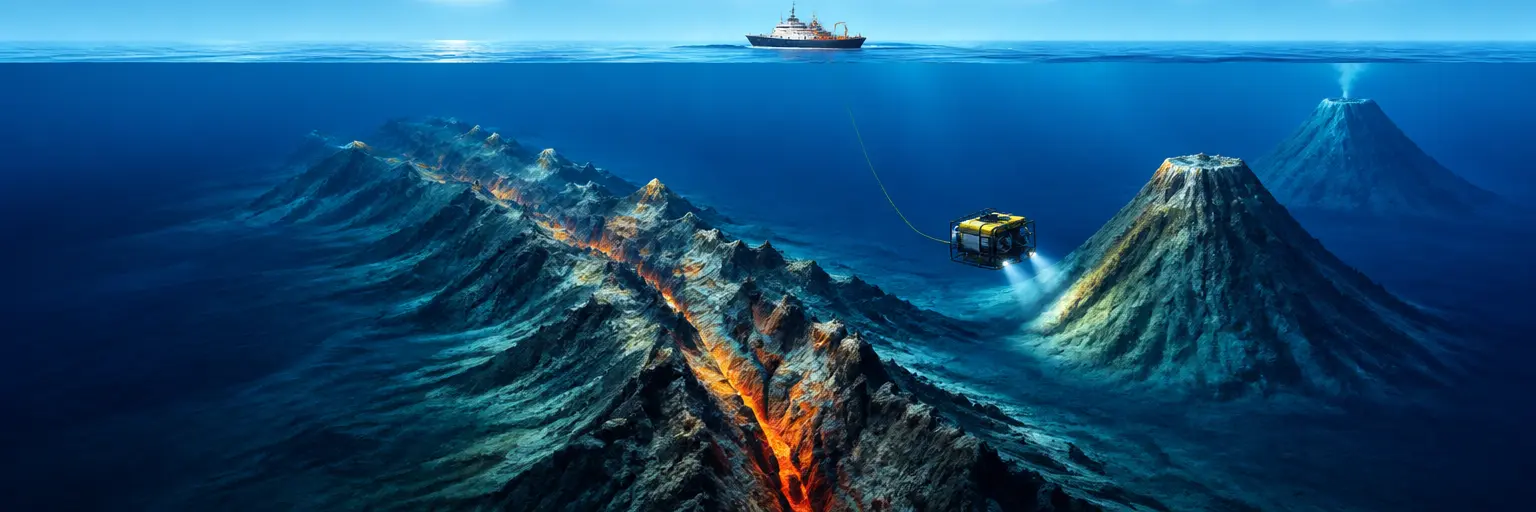
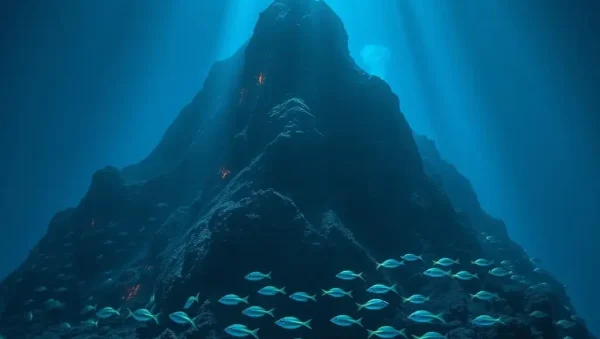
Submarine volcanic ridges are elongated chains of underwater volcanoes formed along mid-ocean ridges, where tectonic plates pull apart and magma rises to create new seafloor. Seamounts, in contrast, are isolated underwater mountains, often volcanic in origin, that rise from the ocean floor but do not reach the surface. These features are typically formed by mantle plumes or hotspot activity, such as the Hawaiian-Emperor seamount chain. Understanding the distinction between ridges and seamounts is essential for grasping seafloor spreading and plate tectonics. The volcanic processes involved are similar to those on land, but the pressure and cold water create unique eruption styles, including pillow lavas and hydrothermal vent systems.
These geological structures cover more than 20 million square kilometers of the ocean floor, yet less than 5% has been mapped in detail. Ridges like the Mid-Atlantic Ridge stretch over 16,000 kilometers, making them the longest mountain chains on Earth, but they remain largely unseen. Seamounts, numbering over 30,000, are biodiversity hotspots, attracting whales, sharks, and deep-sea fish due to upwelling currents that bring nutrients. By exploring this subcategory, you’ll learn how these underwater volcanoes are discovered using sonar mapping, remote-operated vehicles, and satellite altimetry, and why they hold clues to Earth’s geological history.
🌊 How Submarine Eruptions Differ from Land Volcanoes
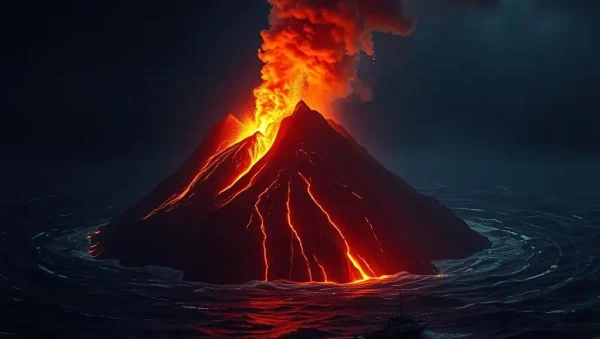
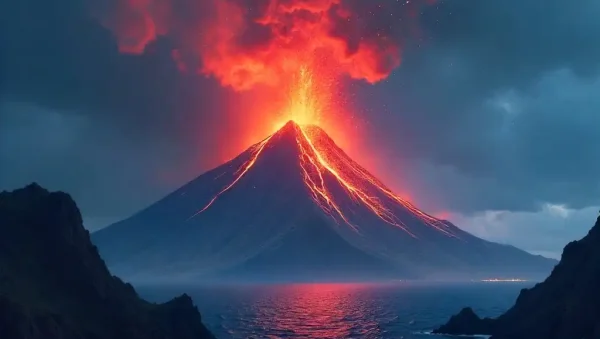
When volcanoes erupt underwater, the behavior of lava and gases dramatically changes because of the immense pressure from the ocean above. Instead of explosive fountains, underwater eruptions typically produce pillow lavas—rounded, bulbous rock formations that form as molten lava rapidly cools in cold seawater. This process is slower and creates distinct morphological features that volcanologists can study to reconstruct past activity. The pressure at depth prevents volcanic gases from expanding violently, so most deep-sea eruptions are effusive rather than explosive, though shallow-water eruptions can still generate steam explosions and tephra. These differences are critical for hazard assessment, especially for island volcanoes that may collapse and trigger tsunamis.
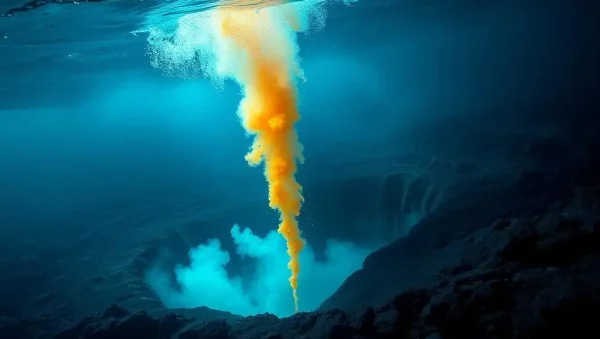
Hydrothermal vents, often found along ridges, are a direct consequence of submarine volcanic activity. Seawater seeps into fractures, is heated by magma, and rises back out, enriched with minerals and gases, creating chimney-like structures called black smokers. These extreme environments support chemosynthetic bacteria, which form the base of a food web that includes giant tube worms, shrimp, and crabs—species found nowhere else on Earth. In this section, you’ll discover how scientists monitor volcanic activity underwater using seismometers, pressure sensors, and underwater microphones, and how recent eruptions like the 2022 eruption near Tonga were detected. Understanding these processes helps us predict potential hazards and appreciate the sheer force shaping our ocean floors.
🐠 Unique Ecosystems Around Submarine Volcanic Ridges and Seamounts
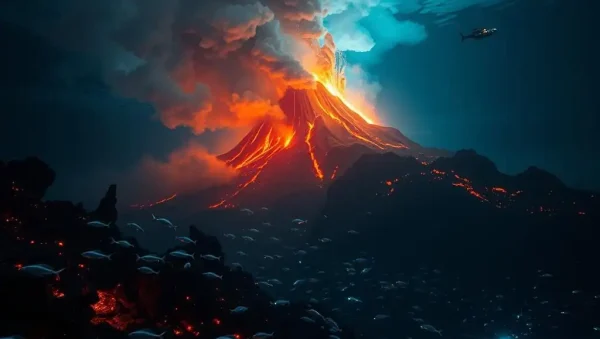
Seamounts and submarine volcanic ridges are oases of life in the deep ocean, supporting some of the most diverse and productive ecosystems on the planet. Because these underwater mountains interrupt ocean currents, they create upwellings that bring cold, nutrient-rich water to the surface, fueling phytoplankton blooms that attract a cascade of marine life. Coral reefs, composed of cold-water corals, thrive on the rocky slopes, providing habitats for fish, invertebrates, and top predators like tuna and sharks. These ecosystems are incredibly sensitive to human activities such as bottom trawling and deep-sea mining, making their conservation a priority for marine biologists and policy makers.
The biodiversity around hydrothermal vents is particularly astonishing—over 300 new species have been discovered in these zones since their first exploration in 1977. These organisms have adapted to survive in complete darkness, high pressure, and toxic chemicals, offering potential benefits for medicine and biotechnology, such as heat-resistant enzymes. In this subcategory, you’ll find detailed guides on the species you can expect to encounter, from the iconic giant tube worm to the eerie yeti crab. We also highlight ongoing research expeditions, citizen science projects, and how you can contribute to mapping these underwater worlds. Learning about these ecosystems underscores why protecting submarine volcanic ridges and seamounts is vital for global ocean health.
🗺️ Famous Submarine Ridges and Seamounts Worth Knowing
Some submarine volcanic formations have achieved scientific fame due to their size, history, or dramatic eruptions. The Mid-Atlantic Ridge, which bisects the Atlantic Ocean, is the most well-known spreading center, with volcanic activity visible at Iceland, where the ridge rises above sea level. The Hawaiian-Emperor seamount chain, stretching over 6,000 kilometers, records millions of years of plate motion over a stationary hotspot, providing a timeline of Pacific Plate movement. Other notable examples include the East Pacific Rise, the fastest-spreading ridge, and the Kermadec-Tonga Arc, home to some of the most active submarine volcanoes and the world’s greatest concentration of submarine eruptions.
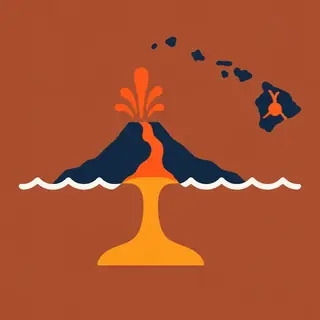
Seamounts like the Great Meteor Tablemount and Loihi, an active submarine volcano off Hawaii, are studied intensively for their geological evolution and potential hazards. Loihi, for instance, is expected to emerge above sea level in tens of thousands of years, making it a natural laboratory for understanding island formation. In this section, we profile these iconic features, including their dimensions, eruption histories, and the expeditions that explored them. You’ll also gain insight into how these formations are named, from Hawaiian gods to mythological figures, and why they matter for understanding plate tectonics and mantle dynamics. Whether you’re planning a virtual voyage or seeking research topics, this resource will guide your exploration of the ocean’s volcanic giants.
🔬 Research Techniques and Technologies for Studying Underwater Volcanoes
Studying submarine volcanic ridges and seamounts requires cutting-edge technology, as direct human observation is impossible at great depths. Research vessels equipped with multibeam sonar can map the seafloor in high resolution, revealing volcanic cones, calderas, and lava flows. Autonomous underwater vehicles (AUVs) and remotely operated vehicles (ROVs) like Jason and Heracles descend to depths of over 4,000 meters, capturing video, collecting rock samples, and deploying sensors. These tools allow scientists to measure temperature, pressure, and chemical composition of vent fluids, providing real-time data on volcanic activity. Satellite altimetry has also revolutionized mapping, allowing scientists to detect the gravitational signatures of large seamounts from space.
Seismometers placed on the ocean floor detect tiny earthquakes associated with magma movement, alerting researchers to potential eruptions. Hydrophones pick up low-frequency sounds from submarine eruptions, which can be heard thousands of kilometers away. This network of monitoring instruments has led to the discovery of new volcanic sites, such as those along the Pacific-Antarctic Ridge. In this subcategory, you’ll learn how to access publicly available datasets from NOAA and USGS, and how citizen scientists can participate in seafloor observation initiatives. We also discuss the challenges of venturing into extreme environments, including pressure, corrosion, and communication delays, and the innovations in robotics that are pushing the boundaries of deep-sea exploration. For aspiring volcanologists, this section offers a roadmap of skills and education needed to enter this exciting field.
🌍 The Role of Submarine Volcanic Ridges in Global Geology and Climate
Submarine volcanic ridges are not just isolated features; they are integral to the Earth’s crustal recycling system. At mid-ocean ridges, the creation of new oceanic crust is balanced by subduction at trenches, where old crust sinks back into the mantle. This process, known as plate tectonics, drives continental drift, earthquakes, and volcanic arcs, including those that form island chains like Japan and the Philippines. Understanding the rate of seafloor spreading helps scientists estimate the age of oceanic crust and reconstruct past supercontinent cycles. Moreover, the geothermal heat released at ridges influences ocean circulation, contributing to deep-sea currents that regulate global climate patterns.
The weathering of submarine volcanic rocks also plays a role in the carbon cycle, as minerals react with seawater to absorb carbon dioxide, acting as a natural carbon sink. Additionally, hydrothermal systems exchange chemicals between the ocean and lithosphere, influencing seawater chemistry over geological timescales. In this section, we explore these processes in depth, linking them to broader topics like climate change and ocean acidification. You’ll also discover how ancient submarine volcanism is preserved in ophiolites—uplifted sections of oceanic crust found on continents—providing clues to past ocean conditions. By understanding these connections, you’ll gain a holistic view of how our planet functions as an integrated system, where even the deepest volcanic features have far-reaching implications.
Frequently Asked Questions
What is the difference between a seamount and a submarine ridge?
A seamount is a single underwater mountain, typically formed by volcanic activity, that does not reach the sea surface. A submarine ridge is a continuous chain of elevated seafloor, usually formed at mid-ocean ridges where tectonic plates diverge. While seamounts can occur individually or in chains, ridges are linear, spreading features that create new oceanic crust. Both are volcanic in origin, but ridges are associated with plate boundaries, whereas seamounts often result from hotspots.
Can submarine volcanic eruptions cause tsunamis?
Yes, submarine volcanic eruptions can trigger tsunamis, especially if they involve caldera collapse, underwater landslides, or explosive eruptions in shallow water. The 2022 Hunga Tonga-Hunga Haʻapai eruption caused a global tsunami that affected coastlines across the Pacific. However, most deep-sea eruptions are effusive and pose little tsunami risk. Monitoring seismic and pressure signals helps issue early warnings for such events.
Are there active volcanoes on the ocean floor today?
Absolutely. The majority of Earth’s volcanic activity occurs underwater, primarily along mid-ocean ridges, with approximately 70-80% of all eruptions happening beneath the sea. Seamounts like Loihi near Hawaii are currently active, and scientists regularly detect eruptions using hydrophones and seismic networks. This ongoing activity continues to shape seafloor topography and create new habitats for marine life.
How do scientists discover new seamounts?
Scientists discover new seamounts using satellite altimetry, which measures variations in sea surface height caused by the gravitational pull of underwater mountains. High-resolution multibeam sonar from research ships confirms their presence and maps their shapes. Dredging and ROV dives collect rock samples to determine age and composition. Public databases like the Seamount Catalog allow researchers to identify and name new features.
What animals live around hydrothermal vents?
Hydrothermal vent ecosystems are teeming with unique life, including giant tubeworms (Riftia), Pompeii worms, vent crabs, shrimp, and mussels. These organisms rely on chemosynthetic bacteria that convert chemicals like hydrogen sulfide into energy. At vents, you’ll also find octopuses, eels, and fish adapted to extreme heat and pressure. These communities are isolated and have evolved with remarkable adaptations to dark, toxic environments.