
The Geological Timekeepers: How Seamounts Record Earth's Past Volcanic Activity

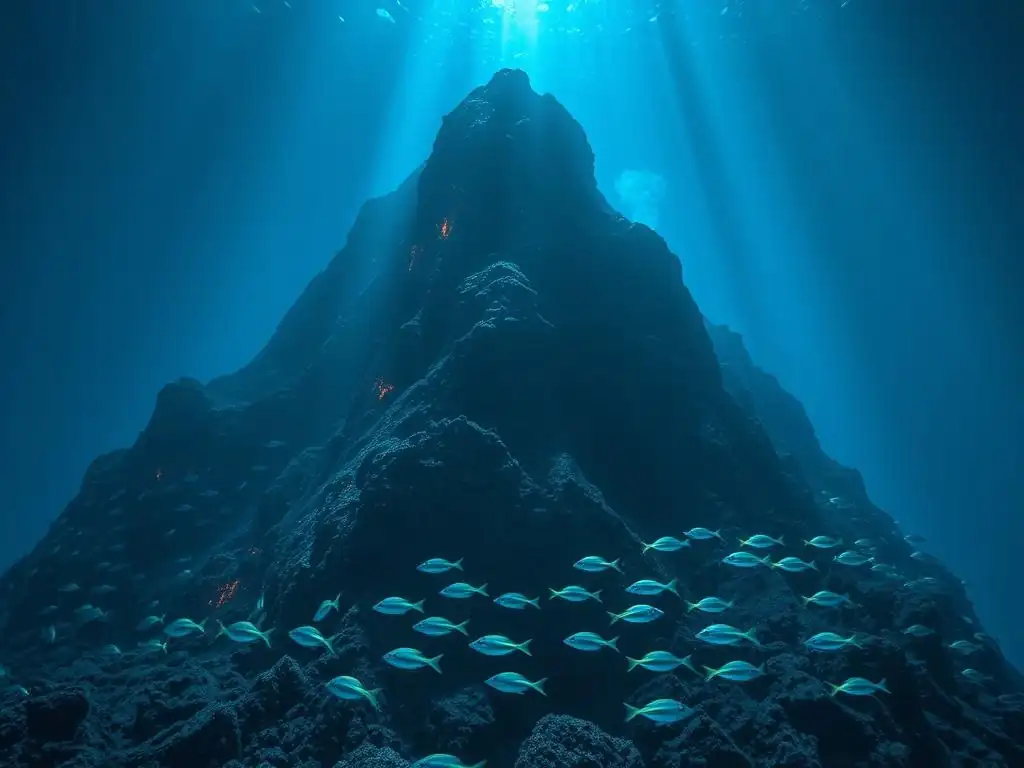
Welcome to Volcano Explorers!
Prepare to journey into the fiery heart of our planet. Ever wondered how underwater mountains whisper tales of Earth's past? Our latest exploration dives deep into the fascinating world of seamounts and volcanic history, revealing how these submerged giants act as geological timekeepers. Uncover the secrets they hold and ignite your curiosity about the dramatic landscapes shaped by volcanic power. The adventure begins now...
- Introduction: Unveiling Earth's Volcanic History Through Seamounts
- Understanding Seamounts: Submarine Volcanoes as Time Capsules
- Seamounts as Archives of Volcanic Eruptions
- The Chemical Composition of Seamount Lavas: Deciphering Magma Sources
- Case Studies: Seamounts Revealing Significant Volcanic Events
- Seamounts and the Evolution of Oceanic Crust
- Seamounts as Habitats: Biodiversity in Volcanic Environments
- Challenges in Studying Seamounts and Submarine Volcanism
- Conclusion: Seamounts – Vital Clues to Earth's Volcanic Past
-
Frequently Asked Questions
- What are seamounts, and how are they related to volcanic activity?
- How do seamounts help us understand Earth's volcanic history?
- Why are seamounts important for scientific research?
- What information can be gathered from studying the rock formations of seamounts?
- Does VolcanoExplorers.org offer more information on seamounts and volcanic history?
- Final Reflection: Echoes of Ancient Fire
- Unearth Earth's Secrets: Become a Volcano Time Detective!
Introduction: Unveiling Earth's Volcanic History Through Seamounts
VolcanoExplorers.org: Journeying into Submarine Volcanic Landscapes
Welcome to VolcanoExplorers.org, your portal to the fascinating realm of volcanoes. Here, we embark on journeys to explore volcanic landscapes across the globe, diving deep beneath the ocean surface to uncover the secrets held by submarine volcanoes, specifically seamounts. These underwater mountains, often overlooked, are not just geological formations; they are invaluable archives of Earth’s volcanic history. Through the study of seamounts, we gain unprecedented insights into the planet’s dynamic past and the processes that have shaped our world over millions of years.
VolcanoExplorers.org is dedicated to bringing you closer to these geological wonders. We aim to educate and inspire, providing detailed explorations of volcanic phenomena, from the fiery eruptions of terrestrial giants to the silent, yet equally impactful, activity of seamounts. Join us as we navigate the depths of the ocean to reveal how these submarine volcanoes act as geological timekeepers, recording Earth's past volcanic history in their very structure and composition.
Understanding Seamounts: Submarine Volcanoes as Time Capsules
What are Seamounts and How are They Formed?
Seamounts are essentially underwater mountains that rise from the ocean floor but do not reach sea level. Defined by oceanographers, they are typically volcanic in origin and stand at least 1,000 meters (3,281 feet) above the surrounding seabed. Globally, it's estimated that there are over 100,000 seamounts, though many remain unexplored. Their formation is primarily linked to plate tectonics and mantle plumes. As tectonic plates move across hotspots—areas of unusually hot mantle—magma rises and erupts onto the ocean floor. Over time, successive eruptions build up layers of volcanic rock, creating the characteristic cone shape of a seamount.
Another significant process in seamount formation is related to mid-ocean ridges, where new oceanic crust is formed. As plates diverge at these ridges, magma upwells and solidifies, creating linear chains of volcanoes. While many of these remain submerged, some, like Iceland, emerge above sea level due to extensive volcanic activity. The age of seamounts can vary dramatically, from relatively young formations near active spreading centers to ancient, eroded structures far from these zones, each holding a piece of Earth’s volcanic history.
The Significance of Seamounts in Studying Past Volcanic Activity
Seamounts are exceptionally valuable for studying past volcanic activity because they provide a continuous record of volcanic eruptions over geological timescales. Unlike land volcanoes, which are often subjected to erosion and alteration by weather and biological processes, seamounts are relatively protected in the deep ocean. The layers of lava flows that constitute a seamount act like pages in a geological history book, each layer representing a distinct eruptive event. By studying these layers, scientists can reconstruct the frequency, intensity, and chemical evolution of volcanic eruptions across vast stretches of time.
Moreover, the location of seamounts often provides crucial context about the tectonic setting and mantle dynamics at the time of their formation. For instance, seamount chains like the Hawaiian-Emperor chain are direct evidence of plate movement over a stationary mantle plume. Analyzing the age progression and volcanic composition along such chains allows geologists to track the direction and rate of plate motion and to understand the long-term behavior of mantle plumes. Therefore, seamounts are not just isolated volcanic features; they are key pieces in the puzzle of understanding Earth’s dynamic volcanic history and plate tectonic evolution.
Seamounts as Archives of Volcanic Eruptions
Layered Lava Flows: Reading the History of Seamount Eruptions
The internal structure of seamounts is largely composed of layered lava flows, making them natural archives of volcanic eruptions. Each layer represents a distinct eruptive phase, with its own unique characteristics in terms of rock type, texture, and chemical composition. When magma erupts underwater, it rapidly cools and solidifies, often forming pillow lavas—bulbous, pillow-shaped rocks characteristic of submarine volcanism. The accumulation of these pillow lavas, along with other volcanic materials like hyaloclastite (fragmented volcanic glass), builds up the seamount over time.
By carefully examining the sequence of these layers, geologists can reconstruct the eruptive history of a seamount. For example, changes in the thickness and composition of lava flows can indicate variations in eruption intensity and magma source over time. The presence of sedimentary layers between lava flows might suggest periods of volcanic quiescence or even subsidence.
Furthermore, the orientation and inclination of lava flows can provide clues about the growth stages of the seamount and any subsequent tectonic tilting or deformation. Analyzing these layered lava flows is akin to reading the rings of a tree, revealing the volcanic history encoded within the seamount's structure.
Dating Volcanic Rocks from Seamounts: Methods and Techniques
To truly unlock the volcanic history recorded in seamounts, it's crucial to accurately date the volcanic rocks. Radiometric dating techniques are the primary tools used for this purpose. These methods rely on the predictable decay of radioactive isotopes in minerals. For seamount rocks, Argon-Argon ( 40 Ar/ 39 Ar) dating and Potassium-Argon (K-Ar) dating are particularly effective. These methods measure the ratio of argon isotopes in volcanic minerals to determine the time elapsed since the rock solidified. These techniques are applicable to a wide range of volcanic rock ages, from thousands to billions of years old.
For younger seamounts, or for dating sediments interbedded with volcanic flows, Carbon-14 ( 14 C) dating can be used, although its effective range is limited to about 50,000 years. Uranium-series dating methods, such as Uranium-Thorium (U-Th) dating, are also valuable for dating calcium carbonate deposits associated with hydrothermal activity on seamounts, providing insights into the timing of fluid flow and biological activity. By applying these dating techniques to samples collected from different layers of a seamount, scientists can construct a chronological framework of its volcanic history, pinpointing the timing of individual eruptions and the overall lifespan of the volcano.
The Chemical Composition of Seamount Lavas: Deciphering Magma Sources
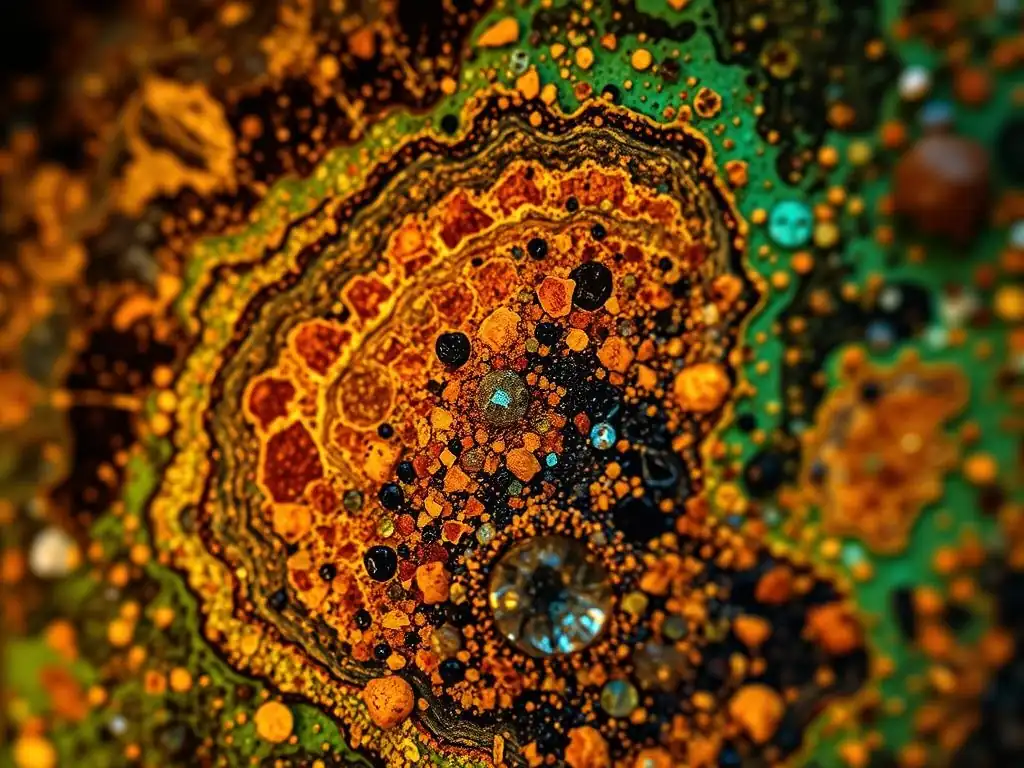
Tracing Magma Origins: Using Geochemical Signatures in Seamount Rocks
The chemical composition of lava rocks from seamounts provides a powerful tool for tracing magma origins and understanding the Earth's mantle. Volcanic rocks are composed of various elements and isotopes, and their relative abundances, known as geochemical signatures, reflect the composition of their source region in the mantle. Seamount lavas, particularly those formed at hotspots and mid-ocean ridges, exhibit distinct geochemical characteristics that can be used to differentiate between different mantle sources. For example, lavas derived from mantle plumes often have higher ratios of helium-3 to helium-4 ( 3 He/ 4 He) and distinct trace element patterns compared to lavas from the upper mantle.
Analyzing the isotopic ratios of elements like strontium (Sr), neodymium (Nd), and lead (Pb) in seamount rocks allows geochemists to identify different mantle components involved in magma generation. These isotopic tracers are like fingerprints, uniquely identifying the source materials that contributed to the magma. By comparing the geochemical signatures of seamount lavas from different locations and ages, scientists can map the distribution of different mantle reservoirs and track changes in mantle composition over geological time. This information is crucial for understanding the dynamics of the Earth's interior and the processes that drive volcanic activity.
Seamount Lava Chemistry and Plate Tectonics: Understanding Earth's Dynamics
The chemistry of seamount lavas is intrinsically linked to plate tectonics, providing insights into the dynamic processes shaping our planet. At mid-ocean ridges, where plates diverge, the chemistry of erupted basalts is relatively uniform, reflecting the composition of the upper mantle that melts to form new oceanic crust. However, seamounts formed away from plate boundaries, especially those associated with hotspots, often exhibit more diverse lava compositions. This diversity arises from the interaction of mantle plumes with the surrounding mantle and crust, leading to variations in magma sources and melting processes.
For instance, the Hawaiian seamount chain, formed by the Pacific Plate moving over the Hawaiian hotspot, shows a systematic variation in lava composition along its length. This geochemical trend reflects changes in the mantle plume source and its interaction with the lithosphere over millions of years. Similarly, studies of seamounts near subduction zones, where one plate dives beneath another, reveal the influence of subducted materials on magma chemistry.
The addition of water and sediments from the subducting plate alters the melting conditions and the composition of the resulting volcanic rocks. Therefore, analyzing seamount lava chemistry provides a window into the complex interplay between plate tectonics, mantle dynamics, and the generation of volcanic activity.
Case Studies: Seamounts Revealing Significant Volcanic Events
The Hawaiian-Emperor Seamount Chain: A Hotspot's Volcanic Legacy
The Hawaiian-Emperor seamount chain stands as a prime example of how seamounts record a hotspot's volcanic legacy. This extensive chain stretches over 5,800 kilometers (3,600 miles) across the Pacific Ocean, from the active volcanoes of Hawaii to the submerged Emperor seamounts near the Aleutian Trench. It is formed by the Pacific Plate moving over the stationary Hawaiian hotspot, a plume of hot mantle material rising from deep within the Earth. As the plate moves, the hotspot punches through, creating a series of volcanoes that progressively age and subside as they drift away from the hotspot source.
Radiometric dating of volcanic rocks along the Hawaiian-Emperor chain has revealed a clear age progression, with the oldest seamounts in the Emperor segment dating back to around 80 million years ago, while the active volcanoes of Hawaii are the youngest. This age progression not only confirms the plate motion over a hotspot model but also provides a detailed record of the Pacific Plate's movement and the long-term activity of the Hawaiian plume.
Furthermore, the bend in the chain, where the Emperor seamounts transition into the Hawaiian Islands, is believed to reflect a change in the direction of Pacific Plate motion around 47 million years ago. The Hawaiian-Emperor seamount chain thus serves as a remarkable geological archive of hotspot volcanism and plate tectonic history, readily accessible for studying Earth's volcanic history.
Bowie Seamount: Unveiling Glacial-Volcanic Interactions
Bowie Seamount, located in the northeast Pacific Ocean off the coast of British Columbia, Canada, presents a fascinating case study of glacial-volcanic interactions. Unlike the hotspot-generated Hawaiian chain, Bowie Seamount is associated with a more complex tectonic setting near the Juan de Fuca Ridge. What makes Bowie Seamount particularly intriguing is its relatively shallow depth and evidence suggesting it was once subaerial or at least significantly shallower during past glacial periods when sea levels were much lower.
Studies of Bowie Seamount have revealed volcanic rocks that show signs of interaction with glacial ice. Hyaloclastites and pillow lavas are intermixed with glacial sediments, indicating eruptions occurred in close proximity to or even beneath ice sheets. The timing of these eruptions, dated to the Pleistocene epoch, coincides with periods of extensive glaciation in North America.
This suggests that ice loading and unloading during glacial cycles might have influenced volcanic activity at Bowie Seamount. Furthermore, the unique biological communities found on Bowie Seamount today may also be linked to its glacial volcanic history, as periods of shallow water or subaerial exposure could have facilitated colonization and diversification. Bowie Seamount thus offers a unique window into the interplay between volcanism, glaciation, and biological evolution in a dynamic oceanic environment, adding another dimension to understanding Earth's complex volcanic history.
Seamounts and the Evolution of Oceanic Crust
Seamount Formation and Seafloor Spreading: A Connected History
The formation of seamounts is intimately connected to the process of seafloor spreading and the evolution of oceanic crust. Mid-ocean ridges, where new oceanic crust is created, are also regions of significant seamount volcanism. As tectonic plates diverge at these ridges, magma upwells from the mantle and solidifies, forming not only the linear ridges themselves but also numerous smaller volcanoes and seamounts along their flanks. These ridge-flank seamounts represent off-axis volcanism, occurring away from the main axis of magma accretion at the ridge crest.
Studies have shown that a substantial portion of the oceanic crust is punctuated by seamounts, particularly in areas of slow to intermediate spreading rates. These seamounts contribute significantly to the overall volume and heterogeneity of the oceanic crust. Their formation is influenced by factors such as mantle temperature variations, magma supply, and the stress regime in the lithosphere.
Furthermore, seamount volcanism can play a role in hydrothermal circulation within the oceanic crust, influencing the chemical exchange between the oceans and the Earth's interior. Understanding the relationship between seamount formation and seafloor spreading is crucial for comprehending the overall evolution and structure of oceanic crust, which constitutes the majority of our planet's surface and records a long volcanic history.
The Role of Seamounts in Shaping Ocean Basins
Seamounts, although submerged, play a significant role in shaping the topography and bathymetry of ocean basins. Their sheer abundance and widespread distribution across the ocean floor mean they exert considerable influence on ocean currents, sediment distribution, and even the Earth's gravity field. Large seamount chains, like the Emperor seamounts, can act as barriers or deflectors for deep ocean currents, altering circulation patterns and potentially impacting global heat distribution.
Seamounts also influence sediment accumulation in ocean basins. They can act as traps for sediments, accumulating thick sequences of pelagic and hemipelagic deposits on their flanks and summits. These sediment caps can further modify the seamount's shape and influence the biological communities that colonize them.
Moreover, the gravitational pull of massive seamounts can create subtle but measurable variations in the geoid, the Earth's equipotential gravitational surface. These gravity anomalies are used by geophysicists to study the density structure of the seamounts and the underlying lithosphere. Therefore, seamounts are not just geological curiosities; they are active agents in shaping the physical and geological landscape of ocean basins, contributing to the broader Earth system dynamics and its long volcanic history.
Seamounts as Habitats: Biodiversity in Volcanic Environments
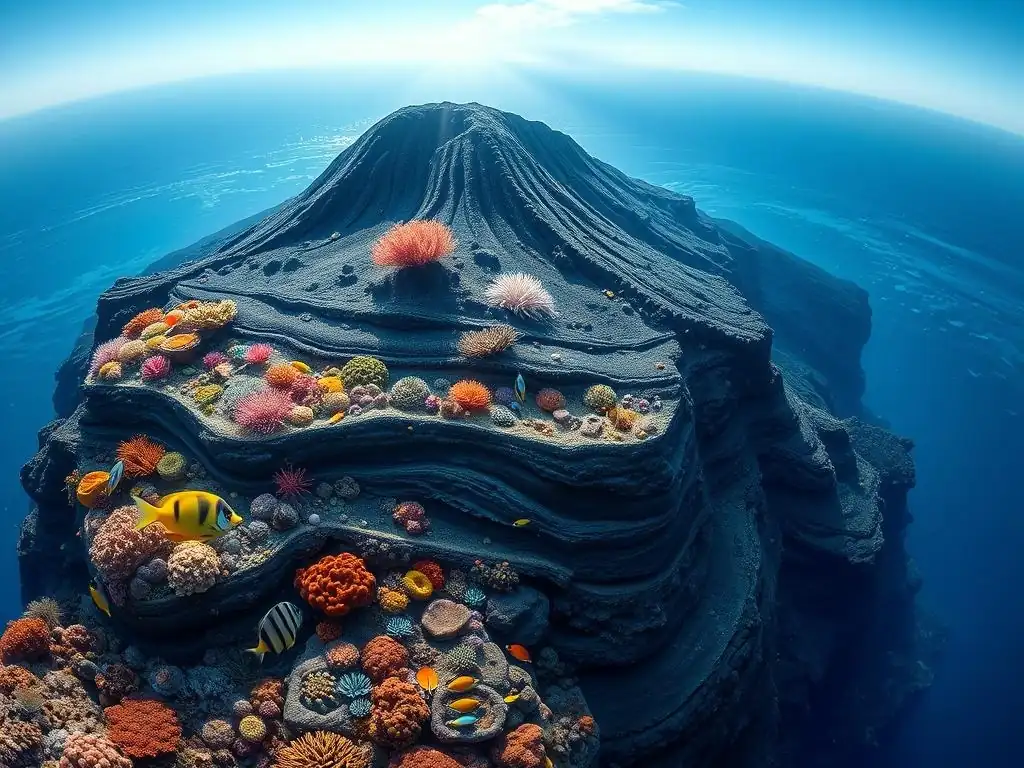
Unique Ecosystems Thriving on Seamounts: Chemosynthesis and Volcanic Activity
Seamounts are not just geological features; they are also vibrant ecosystems teeming with life, often harboring unique biodiversity compared to the surrounding deep-sea environment. These underwater volcanoes provide hard substrate in the otherwise sediment-dominated abyssal plains, offering attachment points for a variety of benthic organisms, including corals, sponges, and anemones. Furthermore, hydrothermal vents, often associated with active or recently active seamounts, support chemosynthetic communities. These ecosystems thrive on chemical energy released from the Earth's interior, rather than sunlight, forming the base of food webs that are independent of photosynthesis.
Chemosynthesis, driven by the oxidation of chemicals like hydrogen sulfide and methane emanating from hydrothermal vents, supports specialized bacteria and archaea. These microorganisms, in turn, are consumed by a variety of invertebrates, such as tube worms, clams, and shrimp, forming complex and highly productive ecosystems. The interplay between volcanic activity, hydrothermal venting, and chemosynthesis creates unique habitats on seamounts that are hotspots of biodiversity in the deep ocean. Studying these ecosystems provides insights into the adaptability of life in extreme environments and the potential for discovering novel species and biological processes linked to volcanic history.
The Importance of Protecting Seamount Ecosystems
The unique ecosystems found on seamounts are increasingly recognized for their ecological importance and vulnerability. Many seamount communities are slow-growing and long-lived, making them particularly susceptible to disturbance from human activities. Deep-sea fishing, especially bottom trawling, can cause significant damage to fragile seamount habitats, destroying coral gardens and sponge reefs that provide shelter and food for a wide range of species. Mining exploration for polymetallic nodules and crusts on seamounts also poses a threat to these ecosystems.
Recognizing the ecological significance of seamounts, conservation efforts are underway to protect these underwater biodiversity hotspots. Marine protected areas (MPAs) are being established around some seamounts to limit or prohibit destructive activities like bottom fishing. International agreements and regulations are also being developed to manage human impacts on seamount ecosystems in the high seas.
Protecting seamount ecosystems is not only crucial for conserving biodiversity but also for maintaining the ecological functions these environments provide, including carbon sequestration and nutrient cycling. Understanding the delicate balance of these ecosystems, shaped in part by volcanic history, is essential for their effective conservation and long-term sustainability.
Challenges in Studying Seamounts and Submarine Volcanism
Technological Advancements in Seamount Exploration: ROVs and Submersibles
Studying seamounts and submarine volcanism presents significant challenges due to the remote and deep-sea environment. Direct observation and sampling require specialized technologies capable of operating under extreme pressure and in complete darkness. Remotely Operated Vehicles (ROVs) and manned submersibles are indispensable tools for seamount exploration. ROVs, tethered to a surface vessel, are equipped with cameras, sensors, robotic arms, and sampling devices, allowing scientists to explore seamounts in detail and collect samples of rocks, sediments, and biological specimens. Submersibles, like the Alvin and Jason, offer even greater capabilities, allowing for direct human observation and intervention at great depths.
Advancements in underwater imaging, sonar technology, and autonomous underwater vehicles (AUVs) are further revolutionizing seamount research. High-resolution multibeam sonar mapping provides detailed bathymetric charts of seamounts, revealing their shape and structure. AUVs, capable of operating independently for extended periods, can conduct surveys over large areas and collect data in remote locations. These technological advancements are enabling scientists to explore previously inaccessible seamounts, gather crucial data on submarine volcanism, and unlock the secrets of Earth's volcanic history recorded in these underwater mountains.
Current Research and Future Directions in Seamount Studies
Current research on seamounts is focused on a wide range of topics, from understanding the processes of submarine volcanism to exploring the biodiversity of seamount ecosystems. Geological studies are investigating the formation and evolution of seamounts, the dynamics of mantle plumes and hotspots, and the relationship between seamount volcanism and plate tectonics. Geochemical analyses of seamount rocks are providing insights into magma sources, mantle composition, and the Earth's deep carbon cycle. Biological research is focused on characterizing seamount ecosystems, understanding the adaptations of deep-sea organisms, and assessing the impacts of human activities on these fragile habitats.
Future directions in seamount studies include expanding exploration to poorly known seamount regions, developing new technologies for deep-sea observation and sampling, and integrating geological, geochemical, and biological data to gain a holistic understanding of seamount systems. There is also growing interest in using seamounts as natural laboratories to study climate change impacts, ocean acidification, and the potential for deep-sea resource extraction. Continued research on seamounts is essential for advancing our knowledge of Earth's volcanic history, ocean processes, and the biodiversity of the deep sea, ensuring we can sustainably interact with these fascinating underwater landscapes.
Conclusion: Seamounts – Vital Clues to Earth's Volcanic Past
The Ongoing Significance of Seamount Research for Understanding Volcanic Hazards
Seamount research, while often focused on understanding Earth's past, has direct relevance to understanding present-day volcanic hazards. Studying the eruption history and magma dynamics of seamounts provides valuable insights into the behavior of volcanoes in general, both submarine and subaerial. Understanding the frequency and intensity of past eruptions, as recorded in seamount lava layers, can help refine models for predicting future volcanic activity. Furthermore, studying the tectonic settings of seamounts, particularly those near plate boundaries and subduction zones, can improve our understanding of earthquake and tsunami hazards associated with submarine volcanism.
While large-scale explosive eruptions from seamounts are relatively rare, submarine volcanic eruptions can still pose hazards to seafloor infrastructure, such as communication cables and pipelines, and can generate localized tsunamis. Hydrothermal vents associated with active seamounts can also release toxic gases and alter seawater chemistry.
By continuing to study seamounts and submarine volcanism, we can improve our ability to monitor and forecast volcanic activity, assess potential hazards, and develop mitigation strategies to protect both human lives and the marine environment. The geological timekeepers of the deep, seamounts, thus hold vital clues not only to Earth's volcanic history but also to its potentially hazardous volcanic future.
VolcanoExplorers.org: Continuing the Exploration of Submarine Volcanoes
VolcanoExplorers.org remains committed to bringing you the latest discoveries and insights from the world of volcanology, with a continued focus on the crucial role of seamounts in understanding Earth's volcanic history. As technology advances and new research expeditions venture into the deep ocean, we will continue to explore these underwater volcanic landscapes, unveiling more secrets held within these geological time capsules.
Join us as we delve deeper into the fascinating world of seamounts, sharing the knowledge gained from these remarkable archives of Earth's past and present volcanic activity. Together, we can explore, learn, and appreciate the awe-inspiring power and beauty of volcanoes, both above and below the waves.
Frequently Asked Questions
Seamounts are undersea mountains formed by volcanic activity. They are essentially extinct volcanoes that rise from the ocean floor but don't reach sea level, providing a geological record of past eruptions.
How do seamounts help us understand Earth's volcanic history?
Seamounts act as geological timekeepers because their formation and composition record the Earth's past volcanic activity. Scientists can analyze the lava flows and rock samples to determine eruption dates and magma composition.
Why are seamounts important for scientific research?
Seamounts provide valuable insights into plate tectonics, mantle plumes, and hotspot volcanism. Studying them helps scientists understand the processes that shape the Earth's surface and the evolution of oceanic crust.
What information can be gathered from studying the rock formations of seamounts?
Analyzing the rock formations can reveal the age of the seamount, the type of volcanic eruption that formed it, and the chemical composition of the magma that fueled the eruption. This data helps reconstruct past volcanic events.
Does VolcanoExplorers.org offer more information on seamounts and volcanic history?
Yes, VolcanoExplorers.org provides educational content on various types of volcanoes, including seamounts, and explores famous eruptions and the science behind volcanic activity. It also features sections dedicated to photography, travel, and the cultural significance of volcanoes.
Final Reflection: Echoes of Ancient Fire
The study of seamounts, as we've explored, isn't just about mapping underwater mountains; it's about deciphering the Earth's fiery past and predicting its volatile future. Understanding the volcanic history etched into these geological timekeepers is more crucial than ever, as we grapple with the consequences of a changing climate and the potential for future eruptions.
The impact of seamounts extends far beyond the scientific community. Their role in shaping ocean currents, fostering biodiversity hotspots, and preserving records of past volcanic events underscores their profound influence on our planet's health. As we learn more about these underwater sentinels, we gain a deeper appreciation for the interconnectedness of Earth's systems. The past is never dead. It's not even past.
- William Faulkner. This quote resonates deeply when considering seamounts; they are living archives, constantly reminding us of the powerful forces that have shaped our world and continue to do so.
Now, consider the implications of what we've learned. How can you, in your own life, become a better steward of our planet? How can you support research and conservation efforts that protect these vital ecosystems and unlock the secrets they hold? Let the echoes of ancient fire inspire you to learn more, to advocate for change, and to appreciate the incredible power and fragility of our Earth.
Unearth Earth's Secrets: Become a Volcano Time Detective!
Thank you for diving into the fascinating world of seamounts and their volcanic history. You've now seen how these underwater mountains act as remarkable geological timekeepers, preserving crucial data about our planet's past. It's time to take that knowledge and turn it into action!
Here are a few ways you can continue your exploration:
- Analyze: Find an interactive map of seamounts (search "seamount database interactive map") and try to pinpoint areas with high concentrations of volcanic activity. Can you deduce anything about the tectonic plate boundaries in those regions?
- Share: Spread the word! Tell three friends about the incredible geological secrets held within seamounts and challenge them to learn more.
- Volunteer: Look for local organizations that are dedicated to ocean research or conservation. Even a small contribution can make a big difference.
What unique geological insights did you gain from learning about seamounts, and what further questions does it spark about our planet's volcanic past?