
Volcanoes of the Deep: A Journey into the Unexplored Realm of Submarine Volcanism

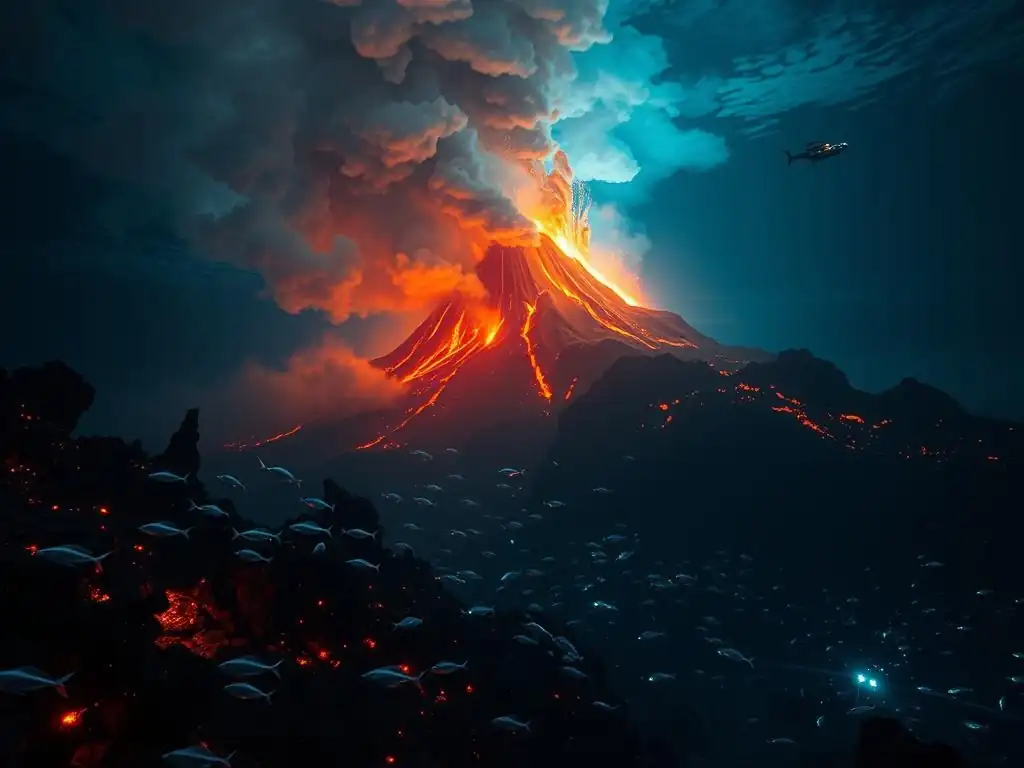
Welcome to Volcano Explorers, where the Earth's fiery heart is laid bare!
Imagine a world hidden beneath the waves, where volcanoes erupt in silent, breathtaking displays. Are you ready to plunge into the unexplored depths? Our latest article, "Volcanoes of the Deep," ignites an investigation into the captivating world of submarine volcanic activity exploration. Prepare to be amazed as we uncover the secrets of these underwater giants and the profound impact they have on our planet. The adventure begins now...
- Submarine Volcanic Activity Exploration: An Introduction
- The Undiscovered World of Submarine Volcanoes: A Deep Dive
- Submarine Volcanic Ridges and Seamounts: Shaping the Ocean Floor
- Exploring the Science of Submarine Volcanic Eruptions
- The Unique Ecosystems Around Submarine Volcanoes
- Techniques for Submarine Volcanic Activity Exploration
- The Significance of Studying Submarine Volcanism
- Famous Examples of Submarine Volcanic Ridges and Seamounts
- The Future of Submarine Volcanic Activity Exploration
- Frequently Asked Questions
- Final Reflection: Unveiling Earth's Hidden Fires
- Unleash Your Inner Explorer: Dive Deeper into Volcanic Mysteries!
Submarine Volcanic Activity Exploration: An Introduction
Beneath the familiar waves and coastlines, a realm of intense geological activity unfolds. Submarine volcanic activity, often hidden from direct observation, is a fundamental force shaping our planet. Vast underwater mountain ranges are forged, new ocean crust is created, and unique ecosystems thrive in the vicinity of these submerged fire mountains.
The exploration of submarine volcanic activity is not just a scientific endeavor; it's a journey into the heart of our planet's dynamic processes, revealing secrets about Earth's formation, its climate, and the very origins of life. This article embarks on an exploration of this deep-sea volcanism, venturing into the realms of submarine volcanic ridges and seamounts, and unraveling the science behind these awe-inspiring geological phenomena.
The Undiscovered World of Submarine Volcanoes: A Deep Dive
The ocean depths, covering over 70% of Earth’s surface, are far from inert. They are a landscape sculpted by relentless volcanic forces, a world where eruptions occur more frequently than on land, yet remain largely unseen and unexplored. While terrestrial volcanoes dramatically alter landscapes above sea level, submarine volcanoes quietly, but powerfully, mold the ocean floor and influence global ocean chemistry.
Exploring submarine volcanic activity requires venturing into extreme environments, battling crushing pressures and navigating the darkness of the deep sea. Despite these challenges, the pursuit of understanding these underwater giants is crucial for comprehending our planet's geological evolution and its interconnected systems.
What are Submarine Volcanoes? Defining Underwater Volcanic Formations
Submarine volcanoes are, in essence, fissures in the Earth's crust on the ocean floor from which magma erupts. These geological formations are analogous to their terrestrial counterparts but exist in a vastly different environment, submerged under immense water pressure. When molten rock, or magma, rises from the Earth's mantle beneath the ocean crust, it can break through the seafloor, resulting in a submarine volcanic eruption.
The erupted material, primarily lava, cools rapidly in the surrounding water, solidifying to form various volcanic structures. Unlike the often conical shape of land volcanoes, submarine volcanoes can take diverse forms, including shield volcanoes with gentle slopes, steep-sided cones, and extensive lava flows that spread across the seabed.
The definition of a submarine volcano also encompasses a range of associated features. Hydrothermal vents, for instance, are a direct consequence of submarine volcanic activity. These vents release superheated, chemically enriched water into the ocean, creating unique habitats. Furthermore, the term "submarine volcano" is not limited to active erupting sites. It also includes dormant and extinct underwater volcanoes, which, though no longer actively erupting, contribute significantly to the topography and geological makeup of the ocean floor. Studying these formations is key to understanding the history of submarine volcanic activity and its long-term impact on the marine environment.
The Prevalence of Submarine Volcanism: Where are Submarine Volcanoes Located?
Submarine volcanoes are far more common than terrestrial volcanoes, with estimates suggesting that there may be over a million submarine volcanoes globally, although only a fraction have been mapped and studied. A significant proportion of these are located along mid-ocean ridges, the longest mountain range on Earth, stretching over 65,000 kilometers.
These ridges are divergent plate boundaries where tectonic plates are moving apart, allowing magma to rise from the mantle and create new oceanic crust. The Mid-Atlantic Ridge and the East Pacific Rise are prime examples of such volcanically active ridge systems, characterized by frequent submarine eruptions and hydrothermal vent activity.
Beyond mid-ocean ridges, submarine volcanoes are also found in intraplate settings, often associated with hotspots, areas where plumes of hot mantle material rise to the surface. These hotspots can create chains of volcanic islands and seamounts as tectonic plates move over them. The Hawaiian Islands, formed by the Hawaiian hotspot, are a surface manifestation of extensive submarine volcanism.
Furthermore, subduction zones, where one tectonic plate slides beneath another, are also regions of intense submarine volcanic activity. The Pacific Ring of Fire, known for its high concentration of both terrestrial and submarine volcanoes and earthquakes, is largely defined by subduction zones and associated arc volcanism, demonstrating the widespread distribution and geological significance of submarine volcanic activity exploration.
Submarine Volcanic Ridges and Seamounts: Shaping the Ocean Floor
The architecture of the ocean floor is profoundly shaped by submarine volcanic activity, primarily through the formation of submarine volcanic ridges and seamounts. These features are not merely geological curiosities; they are fundamental components of the Earth's geosphere, influencing ocean currents, marine ecosystems, and the planet's overall tectonic framework. Understanding their formation and characteristics is crucial for comprehending the broader context of submarine volcanism.
Formation of Submarine Volcanic Ridges: A Geological Perspective
Submarine volcanic ridges are linear chains of underwater mountains, predominantly formed at divergent plate boundaries, such as mid-ocean ridges. The process begins with the upwelling of magma from the Earth's mantle into the space created as tectonic plates pull apart. This magma, primarily basaltic in composition, erupts onto the seafloor and solidifies, adding new crust to the edges of the diverging plates. This continuous process of magma upwelling and solidification over millions of years builds up the extensive, linear mountain ranges that characterize mid-ocean ridges.
The morphology of submarine volcanic ridges is influenced by several factors, including the rate of plate spreading and the volume of magma supply. Slow-spreading ridges, like the Mid-Atlantic Ridge, tend to be characterized by rugged terrain with deep rift valleys and relatively spaced volcanic peaks. Fast-spreading ridges, such as the East Pacific Rise, typically exhibit smoother topography with broad, gently sloping volcanic edifices.
Hydrothermal vent systems are commonly associated with submarine volcanic ridges, particularly along the rift valleys where tectonic activity and magma intrusion are concentrated. These ridges represent zones of intense submarine volcanic activity and are key areas for studying the creation of new oceanic crust and the interaction between the geosphere and hydrosphere.
Seamounts: Isolated Underwater Mountains of Volcanic Origin
Seamounts are isolated underwater mountains of volcanic origin, rising abruptly from the seafloor. Unlike the linear nature of volcanic ridges, seamounts are typically conical or irregularly shaped and are distributed across all ocean basins. They are formed through various volcanic processes, including hotspot volcanism, off-axis volcanism near mid-ocean ridges, and volcanic activity associated with subduction zones. Hotspot seamounts, like those forming the Hawaiian-Emperor seamount chain, are created as the oceanic plate moves over a stationary plume of hot mantle material, resulting in a linear progression of volcanic edifices of varying ages.
Seamounts are significant geological features, often rising thousands of meters above the surrounding seafloor. For example, the seamount Bowie Seamount in the Pacific Ocean rises over 3,000 meters from the ocean floor. They play a crucial role in oceanography and marine biology.
Seamounts can influence ocean currents, creating upwelling zones that bring nutrient-rich waters to the surface, supporting enhanced biological productivity. They also provide unique habitats for diverse marine species, often harboring endemic communities distinct from the surrounding deep-sea environment. The study of seamounts is vital for understanding intraplate volcanism, deep-sea biodiversity, and the role of these underwater mountains in ocean ecosystems.
The Role of Tectonic Plates in Submarine Volcanic Ridges and Seamount Development
Tectonic plates are the fundamental drivers behind the distribution and formation of both submarine volcanic ridges and seamounts. The movement and interaction of these plates dictate where and how submarine volcanic activity manifests. At divergent plate boundaries, the separation of plates creates pathways for magma to ascend, leading to the formation of mid-ocean ridges. The consistent spreading and volcanic activity at these boundaries continuously generate new oceanic crust and maintain the global mid-ocean ridge system.
In contrast, seamounts often form within tectonic plates, away from plate boundaries. Hotspot volcanism is a prime example of intraplate volcanic activity. As a tectonic plate moves over a stationary mantle plume, a series of volcanoes are created, forming chains of seamounts and volcanic islands. The age of these volcanic features increases progressively away from the hotspot, reflecting the direction and rate of plate motion.
Subduction zones, where plates converge and one descends beneath another, also contribute to seamount formation through arc volcanism. The descending plate releases fluids that trigger melting in the overlying mantle wedge, leading to the formation of volcanic arcs and associated submarine volcanoes and seamounts. Therefore, the dynamics of tectonic plates are inextricably linked to the processes of submarine volcanic activity and the creation of these major ocean floor features.
Exploring the Science of Submarine Volcanic Eruptions
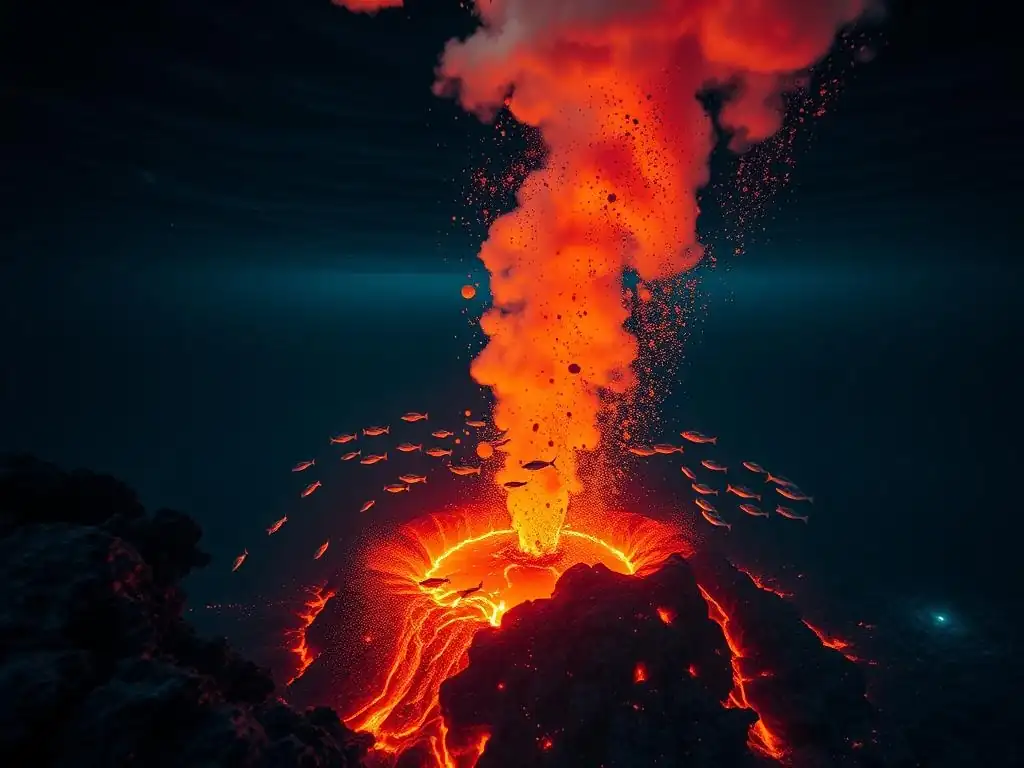
Submarine volcanic eruptions, though hidden from direct view, are powerful geological events with unique characteristics dictated by the underwater environment. The science of submarine volcanic eruptions delves into the composition of magma, the styles of eruption, and the fascinating phenomena associated with these underwater explosions, such as hydrothermal vents and the influence of water pressure.
Magma Composition and Eruption Styles in Underwater Volcanoes
The composition of magma erupted from submarine volcanoes is predominantly basaltic, similar to that of many terrestrial shield volcanoes. Basaltic magma is relatively low in silica content and viscosity, leading to effusive eruptions characterized by lava flows. However, the underwater environment introduces complexities to eruption styles. The rapid cooling of lava by seawater leads to the formation of pillow lavas, bulbous, pillow-shaped structures that are characteristic of submarine eruptions. These pillow lavas accumulate to build up volcanic edifices on the seafloor.
While effusive eruptions are common, explosive eruptions can also occur in submarine settings, particularly in shallower waters or with magmas richer in dissolved gases. When magma interacts with seawater, rapid vaporization can occur, leading to phreatomagmatic explosions. The depth of the water column significantly influences the explosivity of submarine eruptions.
At great depths, the immense hydrostatic pressure suppresses the formation of gas bubbles, reducing the likelihood of explosive eruptions. However, in shallower waters, the pressure is lower, allowing for more vigorous degassing and potentially more explosive events. The study of magma composition and eruption styles is crucial for understanding the dynamics of submarine volcanic activity and its impact on the surrounding environment.
Hydrothermal Vents: A Consequence of Submarine Volcanic Heat
Hydrothermal vents are remarkable features directly linked to submarine volcanic activity. Seawater percolates down through fractures in the ocean crust near active volcanic zones, where it is heated by underlying magma chambers or hot rocks. This superheated water, now chemically enriched through reactions with the surrounding rocks, rises back to the seafloor and is discharged through hydrothermal vents. These vents are often found along mid-ocean ridges and near seamounts where volcanic activity is prevalent.
Hydrothermal vents release plumes of hot water, often laden with dissolved minerals such as sulfides, iron, and manganese. "Black smokers" are a dramatic type of hydrothermal vent that emits dark plumes rich in sulfide minerals, whereas "white smokers" release lighter-colored plumes with higher concentrations of barium, calcium, and silicon.
The temperature of vent fluids can range from relatively low temperatures to over 400°C. Hydrothermal vents are not only geological phenomena but also the foundation of unique deep-sea ecosystems, supporting chemosynthetic life forms that thrive in the absence of sunlight, making them a significant area of study in submarine volcanic activity exploration.
The Impact of Water Pressure on Submarine Volcanic Explosions
Water pressure exerts a profound influence on submarine volcanic explosions. The immense hydrostatic pressure in the deep ocean significantly alters the behavior of erupting magma and the nature of explosive events. As depth increases, water pressure rises dramatically, effectively suppressing the formation and expansion of gas bubbles within magma. This pressure inhibits the violent degassing that drives explosive eruptions in terrestrial volcanoes.
At depths greater than approximately 1-2 kilometers, the pressure is so high that explosive eruptions are largely suppressed. Instead, submarine eruptions at these depths tend to be effusive, with lava flowing out onto the seafloor. However, in shallower waters, particularly at depths less than 1 kilometer, the lower pressure allows for more vigorous degassing and the potential for explosive eruptions.
Even in these shallower settings, the interaction of magma with water can lead to different types of explosions compared to subaerial eruptions. Phreatomagmatic explosions, driven by the rapid vaporization of water upon contact with hot magma, can occur, but the overall explosivity is still generally dampened by the surrounding water pressure. Understanding the role of water pressure is crucial for interpreting the diverse styles of submarine volcanic eruptions and assessing the potential hazards associated with them.
The Unique Ecosystems Around Submarine Volcanoes
Submarine volcanoes are not barren landscapes; they are hotspots of biological activity, particularly in the vicinity of hydrothermal vents. These underwater volcanic environments support unique ecosystems that thrive in the absence of sunlight, relying on chemosynthesis rather than photosynthesis. The exploration of these ecosystems reveals remarkable adaptations of life to extreme conditions and highlights the profound influence of submarine volcanic activity on marine life.
Chemosynthesis: Life Without Sunlight Near Hydrothermal Vents
Chemosynthesis is the process by which certain microorganisms, primarily bacteria and archaea, produce energy from chemical reactions, rather than from sunlight as in photosynthesis. Hydrothermal vents provide the chemical energy needed for chemosynthesis. Vent fluids are rich in reduced chemical compounds, such as hydrogen sulfide, methane, and hydrogen, which are released from the Earth's interior through submarine volcanic activity. Chemosynthetic microorganisms utilize these chemicals as energy sources, oxidizing them to produce organic matter.
These chemosynthetic microbes form the base of the food web in hydrothermal vent ecosystems. They exist as free-living organisms or in symbiotic relationships with larger animals. Tube worms, for example, harbor chemosynthetic bacteria within their tissues, relying on them for nutrition. Giant clams and mussels also engage in symbiosis with chemosynthetic bacteria. Chemosynthesis allows life to flourish in the dark, nutrient-poor deep sea around hydrothermal vents, creating oases of biological productivity in an otherwise sparsely populated environment. This process fundamentally shapes the unique ecosystems associated with submarine volcanic activity.
Deep-Sea Biodiversity: Unique Species Adapted to Volcanic Environments
Hydrothermal vent ecosystems associated with submarine volcanoes are characterized by high biodiversity and endemism. Many species found in these environments are unique to vent systems and are highly adapted to the extreme conditions, including high temperatures, high pressure, and the presence of toxic chemicals. Examples of vent-endemic fauna include tube worms ( Riftia pachyptila), vent mussels ( Bathymodiolus thermophilus), and vent crabs ( Kiwa hirsuta).
The biodiversity of vent ecosystems is influenced by factors such as vent fluid chemistry, temperature gradients, and the geological history of the vent field. Different vent fields can harbor distinct communities, reflecting variations in environmental conditions and geographical isolation. Seamounts, also formed by submarine volcanic activity, can also support unique deep-sea communities, although they may differ from vent ecosystems.
Seamount ecosystems often exhibit enhanced biodiversity compared to the surrounding deep seafloor due to the topographic complexity and the influence of seamounts on ocean currents. Exploring the biodiversity of submarine volcanic environments is crucial for understanding the diversity of life on Earth and the evolutionary adaptations of organisms to extreme habitats.
The Influence of Submarine Volcanic Activity on Marine Life
Submarine volcanic activity has a multifaceted influence on marine life, ranging from providing habitat and energy sources to posing potential hazards. Hydrothermal vents, as discussed, create unique habitats that support chemosynthetic ecosystems and high biodiversity. These vent systems are oases of life in the deep sea, attracting and sustaining specialized communities of organisms. The chemical fluxes from hydrothermal vents also influence the chemistry of the surrounding ocean, contributing to the global cycling of elements.
However, submarine volcanic eruptions can also have negative impacts on marine life, at least in the short term. Explosive eruptions can directly kill organisms in the immediate vicinity. Large lava flows can smother benthic communities.
The release of volcanic gases and ash can alter water chemistry and reduce water quality. Despite these potential negative impacts, vent ecosystems are remarkably resilient and can recover relatively quickly after volcanic disturbances. In the long term, submarine volcanic activity is a fundamental process that shapes the deep-sea environment and supports unique forms of life, highlighting the complex and dynamic interplay between geological and biological processes in the ocean depths.
Techniques for Submarine Volcanic Activity Exploration
Exploring submarine volcanic activity presents significant technological challenges due to the extreme conditions of the deep sea. However, advancements in marine technology have enabled scientists to develop sophisticated techniques for mapping the ocean floor, observing eruptions, and studying vent ecosystems. These techniques are essential for advancing our understanding of submarine volcanism.
Sonar Mapping: Creating Images of the Ocean Floor
Sonar mapping is a fundamental technique for exploring submarine volcanic activity. Sonar (Sound Navigation and Ranging) systems use sound waves to create images of the ocean floor. Multibeam sonar, in particular, is widely used for high-resolution mapping of bathymetry, providing detailed topographic maps of submarine volcanoes, ridges, and seamounts.
A ship equipped with a multibeam sonar system emits multiple beams of sound that spread out across a wide swath of the seafloor. By measuring the time it takes for the sound waves to travel to the seafloor and back, and by analyzing the reflected signals, sonar systems can generate detailed three-dimensional maps of the underwater terrain.
Sonar mapping has been instrumental in discovering and characterizing numerous submarine volcanoes and ridge systems. It allows scientists to identify volcanic cones, lava flows, fault lines, and other geological features associated with submarine volcanic activity exploration. Sonar data is also crucial for planning and conducting more detailed investigations using remotely operated vehicles (ROVs) and submersibles, providing a comprehensive overview of the geological context before deploying more specialized equipment.
Remotely Operated Vehicles (ROVs): Exploring Submarine Volcanoes Up Close
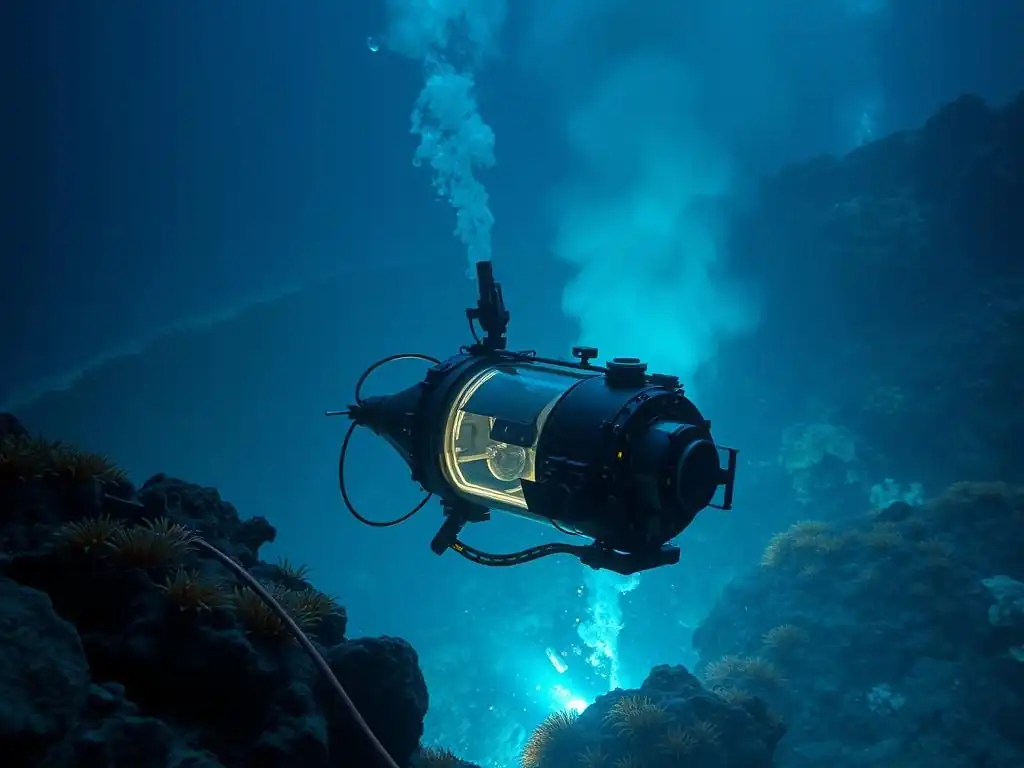
Remotely Operated Vehicles (ROVs) are unmanned, tethered robots that are deployed from research vessels to explore submarine volcanoes up close. ROVs are equipped with cameras, lights, sensors, and robotic arms, allowing scientists to observe and sample the seafloor in real-time. They are controlled remotely by pilots on the surface ship, enabling detailed exploration of volcanic features, hydrothermal vents, and deep-sea ecosystems.
ROVs can collect samples of rocks, sediments, and vent fluids. They can deploy instruments to measure temperature, pressure, chemical composition, and other environmental parameters. High-definition cameras on ROVs provide stunning visual imagery of submarine volcanic landscapes and the unique organisms that inhabit these environments. ROVs are essential tools for studying active submarine volcanic activity, monitoring hydrothermal vent systems, and collecting samples for laboratory analysis. Examples of widely used ROVs for submarine volcanic exploration include Jason, Alvin (when used in ROV mode), and Hercules.
Deep-Sea Submersibles: Human Exploration of Underwater Volcanic Sites
Deep-sea submersibles are manned vehicles that allow scientists to directly explore submarine volcanic sites and hydrothermal vent systems. These submersibles are designed to withstand the extreme pressures of the deep ocean and provide a platform for direct observation and sample collection. The Alvin submersible, operated by the Woods Hole Oceanographic Institution, is one of the most iconic and widely used deep-sea submersibles for submarine volcanic activity exploration.
Submersibles offer unique advantages for scientific research. Human observers can make direct visual observations, deploy instruments with precision, and collect samples selectively. Submersibles are particularly valuable for studying complex geological structures, observing dynamic processes like volcanic eruptions and vent fluid flow, and conducting biological surveys in vent ecosystems. While ROVs offer longer endurance and greater operational flexibility, submersibles provide an irreplaceable human presence in the deep sea, enabling detailed and nuanced scientific investigations of submarine volcanic environments.
The Significance of Studying Submarine Volcanism
The study of submarine volcanism is not merely an academic pursuit; it has profound implications for understanding Earth's fundamental processes, addressing global challenges like climate change, and potentially accessing valuable mineral resources. The insights gained from exploring submarine volcanic activity are crucial for a comprehensive understanding of our planet.
Understanding Earth's Mantle and Crust Through Submarine Volcanic Analysis
Submarine volcanism plays a key role in shaping the Earth's crust and providing insights into the composition and dynamics of the Earth's mantle. The magma erupted at mid-ocean ridges originates from the upper mantle, providing direct samples of the mantle's composition and melting processes. Analysis of submarine volcanic rocks, particularly basalts from mid-ocean ridges, has been fundamental in developing our understanding of mantle heterogeneity, mantle plumes, and the processes of magma generation.
Submarine volcanic ridges are the primary sites of new oceanic crust formation. Studying the processes of crustal accretion at mid-ocean ridges helps us understand the structure and evolution of the oceanic lithosphere. Seamounts, formed in various tectonic settings, provide information about intraplate volcanism and mantle hotspots. By analyzing the geochemistry and geophysics of submarine volcanic features, scientists can gain valuable insights into the workings of the Earth's interior, including mantle convection, plate tectonics, and the cycling of elements between the mantle, crust, and oceans. Submarine volcanic activity exploration is therefore essential for advancing our knowledge of Earth's deep processes.
Submarine Volcanoes and Climate Change: Investigating the Connection
Submarine volcanoes are increasingly recognized as potentially significant players in the global climate system. While terrestrial volcanoes are known to release gases that can affect climate, the role of submarine volcanism is more complex and less well understood. Submarine volcanoes release volcanic gases, including carbon dioxide (CO2), sulfur dioxide (SO2), and other trace gases into the ocean. The magnitude of gas release from submarine volcanism and its impact on ocean and atmospheric chemistry are areas of ongoing research.
Hydrothermal vents associated with submarine volcanoes also release chemically modified fluids into the ocean, altering ocean chemistry and potentially influencing global biogeochemical cycles. Some studies suggest that submarine volcanic activity may contribute to the long-term carbon cycle and ocean acidification. Furthermore, massive submarine eruptions, although rare, could potentially release large volumes of gases that could have short-term or long-term climate impacts.
Investigating the connection between submarine volcanoes and climate change is crucial for understanding the Earth's climate system and predicting future climate scenarios. Further research is needed to quantify the fluxes of gases and heat from submarine volcanism and to assess their role in global climate regulation.
The Potential for Mineral Resources from Submarine Volcanic Deposits
Submarine volcanic activity is responsible for the formation of valuable mineral deposits on the ocean floor, particularly around hydrothermal vents. Hydrothermal vent systems precipitate sulfide minerals rich in metals such as copper, zinc, gold, and silver. These seafloor massive sulfide (SMS) deposits are attracting increasing interest as potential sources of mineral resources. The high-grade nature of some SMS deposits and the declining availability of terrestrial mineral resources have spurred exploration and research into the feasibility of deep-sea mining.
Polymetallic nodules, another type of deep-sea mineral deposit, are also found in areas influenced by submarine volcanic activity, although they form through different processes. These nodules contain manganese, nickel, copper, and cobalt. The potential for exploiting mineral resources from submarine volcanic environments raises both economic opportunities and environmental concerns. Sustainable and responsible deep-sea mining practices are essential to minimize environmental impacts on fragile vent ecosystems and the broader deep-sea environment. Exploration of submarine volcanic activity not only advances scientific knowledge but also has implications for resource management and sustainable development.
Famous Examples of Submarine Volcanic Ridges and Seamounts
To illustrate the diverse manifestations of submarine volcanism, it is helpful to examine some famous examples of submarine volcanic ridges and seamounts that have been extensively studied. These examples showcase the geological significance and ecological importance of these underwater volcanic features.
The Mid-Atlantic Ridge: A Prime Example of Submarine Volcanism
The Mid-Atlantic Ridge (MAR) is a prime example of a slow-spreading mid-ocean ridge and one of the most extensively studied submarine volcanic ridge systems. It stretches for over 16,000 kilometers down the center of the Atlantic Ocean, marking the divergent boundary between the North American and Eurasian plates, and the South American and African plates. The MAR is characterized by a rugged topography with a deep rift valley, transform faults, and numerous volcanic peaks.
Extensive submarine volcanic activity occurs along the MAR, with frequent eruptions and hydrothermal vent systems. Several vent fields have been discovered and studied along the MAR, including the Lost City Hydrothermal Field, an off-axis vent field known for its alkaline vent fluids and unique microbial communities. The MAR is a key site for studying the processes of seafloor spreading, oceanic crust formation, and the interaction between volcanism, tectonics, and hydrothermal circulation. Research on the MAR has significantly advanced our understanding of submarine volcanic ridges and their role in global geological processes.
Loihi Seamount: The Next Hawaiian Island in Formation
Loihi Seamount is an active submarine volcano located off the southeast coast of the Island of Hawaii. It is the youngest volcano in the Hawaiian-Emperor seamount chain and is currently building the next Hawaiian island. Loihi is a hotspot volcano, formed by the Hawaiian hotspot mantle plume. It is characterized by frequent submarine volcanic eruptions, seismicity, and hydrothermal activity.
Loihi is a well-studied seamount, providing a unique opportunity to observe the early stages of island formation. It is located about 975 meters below sea level, and its summit is gradually rising due to ongoing volcanic eruptions. Scientists monitor Loihi closely using seafloor observatories, ROVs, and submersibles to study its volcanic activity, hydrothermal vents, and developing ecosystems.
The Puna Ridge, a submarine extension of Kilauea volcano on the Big Island of Hawaii, connects to Loihi, forming a complex volcanic system. Loihi serves as a natural laboratory for studying seamount volcanism, hotspot processes, and the evolution of submarine volcanoes into islands.
Axial Seamount: A Well-Studied Active Submarine Volcano
Axial Seamount is an active submarine volcano located on the Juan de Fuca Ridge, approximately 480 kilometers off the coast of Oregon in the Pacific Ocean. It is situated at the intersection of the Juan de Fuca Ridge and the Cobb-Eickelberg Seamount chain, a region of intense tectonic and volcanic activity. Axial Seamount is one of the most well-studied submarine volcanoes globally, with a long history of monitoring and research.
Axial Seamount has experienced several well-documented submarine eruptions, including eruptions in 1998, 2011, and 2015. These eruptions have been monitored in real-time using seafloor observatories and acoustic sensors. Axial Seamount hosts a diverse array of hydrothermal vent systems and chemosynthetic ecosystems. The Ocean Observatories Initiative (OOI) cabled observatory is deployed at Axial Seamount, providing continuous, long-term data on volcanic activity, hydrothermal vent dynamics, and oceanographic conditions. Axial Seamount serves as a model system for studying active submarine volcanism, eruption dynamics, and the response of vent ecosystems to volcanic disturbances.
The Future of Submarine Volcanic Activity Exploration
The future of submarine volcanic activity exploration is poised for significant advancements, driven by technological innovations, ongoing research initiatives, and a growing recognition of the importance of understanding these hidden geological realms.
Technological Advancements in Deep-Sea Exploration
Technological advancements are continuously expanding our capabilities for deep-sea exploration and submarine volcanic activity exploration. Improved sonar technology, including higher-resolution multibeam systems and autonomous underwater vehicles (AUVs) equipped with sonar, will enable more detailed and efficient mapping of the ocean floor. Advances in ROV and submersible technology, including greater depth capabilities, longer endurance, and enhanced sensor suites, will allow for more detailed and comprehensive studies of submarine volcanoes and hydrothermal vent systems.
Developments in seafloor observatories, including cabled and autonomous observatories, will provide continuous, real-time data on volcanic activity, hydrothermal vent dynamics, and deep-sea ecosystems. These observatories will enable long-term monitoring of submarine volcanoes and the detection of subtle changes that may precede eruptions. Miniaturization of sensors and instruments, coupled with advancements in data transmission and analysis, will further enhance our ability to explore and understand submarine volcanic activity in remote and challenging deep-sea environments.
Ongoing Research and Monitoring Efforts
Ongoing research and monitoring efforts are crucial for advancing our understanding of submarine volcanism. International scientific programs, such as the Integrated Ocean Drilling Program (IODP) and the Ocean Observatories Initiative (OOI), are conducting extensive research on submarine volcanoes, ridge systems, and hydrothermal vents. These programs involve collaborative efforts from scientists worldwide and utilize advanced drilling technology, seafloor observatories, and deep-sea vehicles.
Long-term monitoring of active submarine volcanoes, such as Axial Seamount and Loihi Seamount, is essential for understanding eruption cycles, predicting volcanic hazards, and studying the response of vent ecosystems to volcanic events. Research efforts are also focused on investigating the role of submarine volcanism in climate change, the formation of mineral resources, and the biodiversity and biogeography of deep-sea ecosystems. Continued funding and support for submarine volcanic activity exploration are vital for addressing fundamental scientific questions and for informing policy decisions related to deep-sea resource management and environmental protection.
The Importance of Protecting Submarine Volcanic Ecosystems
The unique ecosystems associated with submarine volcanoes, particularly hydrothermal vent ecosystems, are increasingly recognized as valuable and vulnerable environments that require protection. These ecosystems harbor high biodiversity, including many endemic species, and play a critical role in deep-sea biogeochemical cycles. However, they are also threatened by potential human activities, such as deep-sea mining and bottom trawling.
The International Seabed Authority (ISA) is responsible for regulating deep-sea mining activities in international waters, and efforts are underway to develop environmental regulations to protect vent ecosystems and other sensitive deep-sea habitats. Marine protected areas (MPAs) are being established in some regions to conserve hydrothermal vent fields and seamount ecosystems.
Further research is needed to understand the resilience of vent ecosystems to disturbances and to develop effective strategies for their long-term protection. Raising public awareness about the importance of submarine volcanic ecosystems and promoting responsible deep-sea stewardship are crucial for ensuring the conservation of these unique and valuable environments for future generations.
Frequently Asked Questions
What is submarine volcanic activity?
Submarine volcanic activity refers to volcanic eruptions that occur underwater, typically on the ocean floor. These eruptions can create new landforms and hydrothermal vents.
How is submarine volcanic activity explored?
Exploration often involves using remotely operated vehicles (ROVs), autonomous underwater vehicles (AUVs), and specialized sensors to study the seafloor. Researchers also analyze seawater samples for chemical signatures of volcanic activity.
What are the key differences between submarine and land-based volcanoes?
Submarine volcanoes erupt under immense water pressure, which can influence the style of eruption and the formation of unique volcanic structures like pillow lavas. Land-based volcanoes erupt directly into the atmosphere.
What are the potential dangers associated with submarine volcanic activity?
While less directly dangerous to humans, large-scale submarine eruptions can cause tsunamis, release harmful gases into the ocean, and disrupt marine ecosystems.
Why is the exploration of submarine volcanic activity important?
Studying submarine volcanoes provides insights into Earth's geological processes, the formation of new crust, and the potential for unique life forms to thrive in extreme environments.
The exploration of submarine volcanism, as we've seen, is not merely an academic pursuit; it's a crucial endeavor for understanding our planet's dynamic processes. The secrets held within these underwater volcanoes directly impact our understanding of ocean chemistry, biodiversity, and even global climate patterns. Ignoring this hidden realm would be akin to only studying the tip of an iceberg – missing the vast and powerful forces shaping the world beneath the surface.
The ongoing exploration of submarine volcanoes has profoundly influenced our perception of Earth's interconnected systems. It's humbling to realize how much remains undiscovered, and how these seemingly remote environments are intimately linked to our own lives. The potential for groundbreaking discoveries in fields ranging from medicine to materials science is immense. The sea, once it casts its spell, holds one in its net of wonder forever.
- Jacques Cousteau. This quote perfectly encapsulates the allure and importance of venturing into the unknown depths to uncover the mysteries of submarine volcanism.
Now, consider the implications of what we've explored. How can you, in your own life, embrace the spirit of exploration and discovery? Perhaps it's through supporting scientific research, advocating for ocean conservation, or simply cultivating a deeper appreciation for the natural world. Let the fiery depths of submarine volcanoes ignite your curiosity and inspire you to seek out the hidden wonders that surround us, both above and below the waves.
Unleash Your Inner Explorer: Dive Deeper into Volcanic Mysteries!
Thank you for joining us on this incredible journey into the depths of submarine volcanism! We hope you've gained a newfound appreciation for the power and beauty hidden beneath the waves. Now, it's time to take your exploration even further!
Here are a few ways you can continue to uncover the secrets of these underwater giants:
- Become a Citizen Scientist: Explore our interactive map and contribute to our growing database by reporting any underwater volcanic activity you've observed, even minor tremors or unusual water discoloration. Your observations help us paint a clearer picture of these dynamic environments!
- Share the wonder: Spark curiosity by sharing this article with your friends, family, and fellow volcano enthusiasts. Let's spread awareness about the fascinating world beneath the ocean surface.
- Go beyond the basics: Check out our resources page for more in-depth readings about submarine volcanoes, how the erupt and the organisms that can survive in those conditions.
What small step will you take today to further your understanding and appreciation of the captivating world of submarine volcanoes? Let us know in the comments!