
Volcanic Islands in the Making: Witnessing the Growth of New Land from Submarine Volcanoes

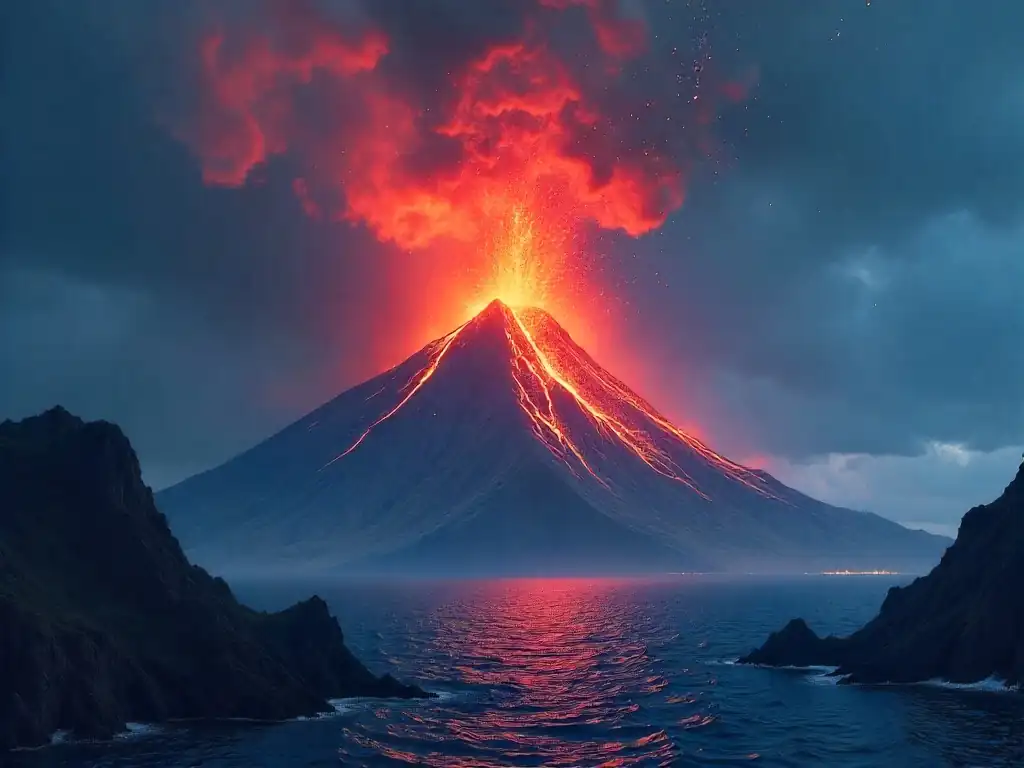
Welcome to Volcano Explorers, where the Earth's fiery heart beats! Imagine witnessing the birth of an island, forged in the crushing depths of the ocean by the relentless power of a submarine volcano. Are you ready to explore the fascinating process of submarine volcanoes creating islands and witness the raw, untamed beauty of our planet in action? Dive in and uncover the secrets hidden beneath the waves!
- Introduction: The Dynamic World of Submarine Volcanism and Island Formation
- The Science Behind Submarine Volcanoes Creating Islands
- Stages of Island Formation: From Submerged Volcano to Emerging Landmass
- Case Studies: Examples of Islands Formed by Submarine Volcanic Activity
- The Unique Ecosystems of Newly Formed Volcanic Islands
- Challenges and Risks Associated with Submarine Volcanic Island Formation
- The Future of Volcanic Island Formation: What to Expect
- Conclusion: Appreciating the Power and Beauty of Submarine Volcanoes and their Role in Island Creation
-
Frequently Asked Questions
- What are submarine volcanoes, and how do they relate to island formation?
- How common is the formation of new islands from submarine volcanoes?
- What are some of the biggest dangers associated with submarine volcanic eruptions that lead to island formation?
- What types of volcanic material are typically involved in the creation of islands from submarine volcanoes?
- How do volcanologists study submarine volcanoes creating islands?
- Final Reflection: The Earth's Sculpting Hand
- Unleash Your Inner Explorer: Dive Deeper into Volcanic Wonders!
Introduction: The Dynamic World of Submarine Volcanism and Island Formation
The Allure of Underwater Volcanoes: A Realm of Creation and Destruction
Submarine volcanoes, hidden beneath the ocean's surface, represent one of Earth's most dramatic and mysterious geological phenomena. These underwater giants are responsible for shaping the ocean floor and, in some spectacular instances, creating entirely new landmasses. Imagine the immense power at play, where molten rock erupts into the cold, dark depths, building colossal structures unseen by most of humanity.
This realm of creation is intertwined with destruction, as these eruptions can be violently explosive, reshaping the seabed and influencing ocean chemistry on a vast scale. The allure of submarine volcanoes lies in their enigmatic nature, their capacity to both build and obliterate, all while operating largely out of sight, yet profoundly impacting our planet.
The study of submarine volcanoes offers a unique window into Earth's internal processes. Unlike their terrestrial counterparts, submarine volcanoes interact intensely with seawater, leading to unique eruption styles and geological formations. Their activity is a critical component of plate tectonics, driving the creation of new oceanic crust and contributing significantly to the global carbon cycle.
Understanding these underwater behemoths is not just about unraveling geological mysteries; it is crucial for assessing geohazards, understanding marine ecosystems, and appreciating the dynamic forces that continually reshape our world. The very notion that new islands can emerge from the depths, born from the fiery breath of submarine volcanoes, is a testament to the Earth's relentless creativity.
How Submarine Volcanoes Contribute to Island Formation: An Overview
The process of submarine volcanoes creating islands is a fascinating journey from the seabed to the surface. It begins with volcanic activity deep beneath the waves, often along mid-ocean ridges or at volcanic hotspots. Magma, molten rock from the Earth's mantle, rises due to pressure differences and buoyancy, accumulating beneath the seafloor.
When this pressure exceeds the strength of the overlying crust, eruptions occur. These eruptions can be effusive, characterized by slow lava flows, or explosive, involving the violent ejection of ash, gas, and rock fragments. Over countless eruptions, the volcanic material builds up layer upon layer, gradually constructing a volcanic edifice from the ocean floor.
As the submarine volcano grows in height and volume, it eventually reaches a critical point: sea level. This is the moment of island birth. Once the volcanic cone breaches the ocean surface, it becomes exposed to atmospheric processes, further shaping its landscape. The interaction between lava and seawater is a defining characteristic of this process.
Rapid cooling of lava by water results in the formation of pillow lavas, bulbous rock structures that are a hallmark of submarine eruptions. Continued eruptions above sea level can then deposit subaerial lava flows and pyroclastic materials, expanding the island's size and complexity. The entire process, from initial eruption to island emergence, can take thousands to millions of years, showcasing the immense timescales of geological processes and the patient power of submarine volcanoes in island creation.
The Science Behind Submarine Volcanoes Creating Islands
Understanding Plate Tectonics and Volcanic Hotspots: The Foundation for Island Genesis
The genesis of islands from submarine volcanoes is deeply rooted in the theory of plate tectonics. Earth's lithosphere, its rigid outer shell, is fragmented into several tectonic plates that are constantly in motion. These plates interact at their boundaries – diverging, converging, or sliding past each other.
Many submarine volcanoes, and subsequently volcanic islands, are formed at divergent plate boundaries, specifically mid-ocean ridges. Here, plates are moving apart, allowing magma from the asthenosphere (the upper layer of Earth's mantle) to rise and fill the gap, creating new oceanic crust. Iceland, for instance, sits atop the Mid-Atlantic Ridge, a prime example of an island nation built by volcanism at a divergent plate boundary.
Another crucial mechanism for submarine island formation is volcanic hotspots. Hotspots are locations where plumes of unusually hot mantle material rise from deep within the Earth. These mantle plumes are stationary relative to the moving tectonic plates above them. As a plate drifts over a hotspot, a chain of volcanoes is formed, with the youngest volcano directly above the plume and progressively older volcanoes trailing behind.
The Hawaiian Islands are a classic example of a hotspot volcanic chain. Each island in the Hawaiian archipelago was formed sequentially as the Pacific Plate moved over the Hawaiian hotspot. Therefore, understanding plate tectonics and the concept of mantle plumes and hotspots is fundamental to comprehending where and why submarine volcanoes emerge, ultimately leading to the creation of volcanic islands across the globe.
Magma Composition and Eruption Styles: Key Factors in Island Building
The composition of magma erupted from submarine volcanoes and their eruption styles are critical factors determining the shape, size, and longevity of the islands they create. Magma composition largely dictates its viscosity and gas content, which in turn influence eruption explosivity. Basaltic magma, common at mid-ocean ridges and hotspots, is relatively low in silica and gas content, leading to generally effusive eruptions. These eruptions are characterized by the outpouring of lava flows that spread and solidify, gradually building broad, shield-shaped volcanoes. The Hawaiian Islands are primarily composed of basaltic lava flows, reflecting their origin from effusive eruptions.
However, submarine volcanoes can also erupt more viscous, gas-rich magmas, such as andesitic or rhyolitic compositions, particularly in subduction zones where one tectonic plate slides beneath another. These magmas are prone to explosive eruptions. The interaction of magma with seawater further intensifies explosivity, leading to phreatomagmatic eruptions.
These eruptions involve the rapid heating and vaporization of seawater, generating powerful explosions that fragment magma into ash and pyroclastic debris. While effusive eruptions build islands gradually with lava flows, explosive eruptions can contribute to island building through the deposition of pyroclastic materials, but also pose significant hazards. The combination of magma type and eruption style dictates the pace and nature of island construction by submarine volcanoes, resulting in diverse volcanic island landscapes.
The Role of Seawater Interaction in Submarine Volcanic Processes
Seawater plays a profound and multifaceted role in the processes of submarine volcanism and island formation. The most immediate effect of seawater is the rapid cooling of erupted lava. When hot magma encounters the cold ocean water, it undergoes rapid solidification, forming distinctive structures known as pillow lavas.
These pillow-shaped formations are created as the outer surface of the lava flow quenches instantly upon contact with water, while the molten interior continues to push outwards, creating a series of interconnected, pillow-like lobes. Pillow lavas are a ubiquitous feature of submarine volcanic landscapes and constitute a significant portion of the edifice of submarine volcanoes.
Beyond cooling, seawater also influences eruption styles. As mentioned previously, the interaction between magma and water can lead to phreatomagmatic eruptions. When magma comes into contact with water, it causes instantaneous vaporization, generating steam explosions that can be far more violent than purely magmatic eruptions. These explosions fragment magma into fine ash and eject pyroclastic debris into the water column and sometimes into the atmosphere if the volcano is shallow enough.
Furthermore, seawater influences the hydrothermal systems associated with submarine volcanoes. Heated seawater circulating through the volcanic edifice leaches minerals from the rocks and vents them back into the ocean as hydrothermal fluids. These hydrothermal vents support unique chemosynthetic ecosystems and contribute to the chemical exchange between the oceanic crust and the ocean itself. Therefore, seawater is not merely an external factor but an active participant in shaping submarine volcanic processes and the creation of volcanic islands.
Stages of Island Formation: From Submerged Volcano to Emerging Landmass
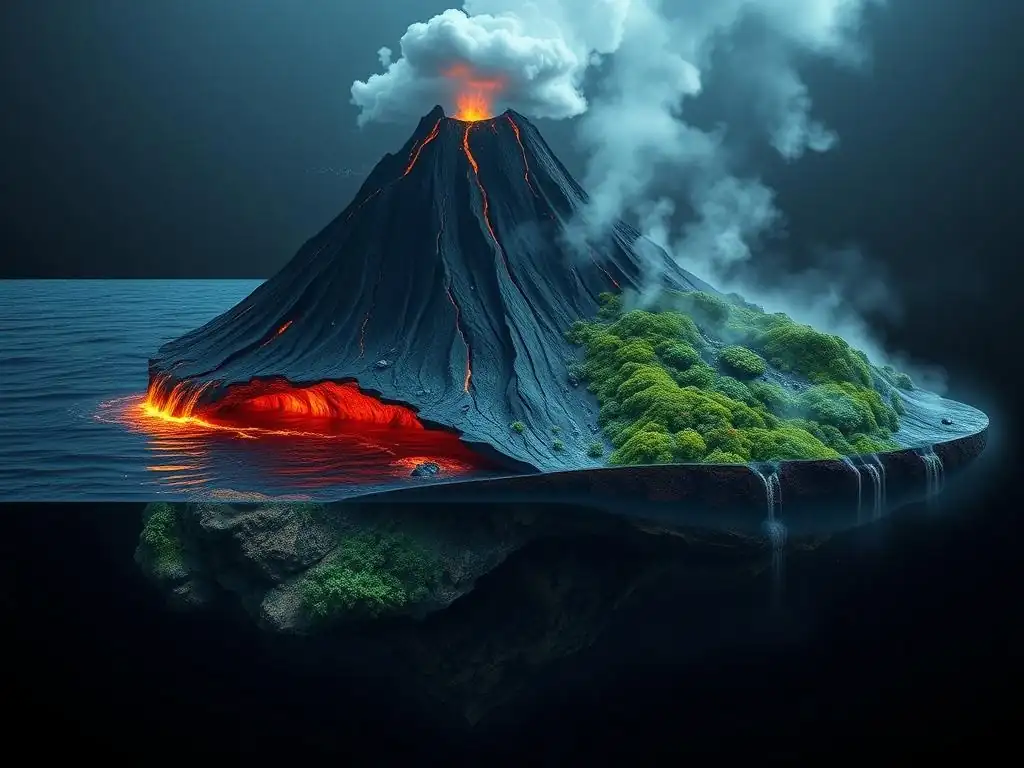
Initial Eruptions and Pillow Lava Formation: The Underwater Foundation
The journey of island formation from submarine volcanoes begins deep beneath the ocean surface with the onset of volcanic eruptions. These initial eruptions, often occurring at significant depths, are crucial for laying the underwater foundation upon which an island will eventually be built. At these depths, the immense pressure of the overlying water column suppresses explosive activity, favoring effusive eruptions of basaltic lava. As magma erupts onto the seabed, it encounters the frigid seawater, triggering the rapid formation of pillow lavas. These pillow lavas accumulate and interlock, creating a stable, albeit underwater, volcanic structure.
This process of pillow lava formation is fundamental to the early stages of island building. Each eruption adds layers of pillow lavas, gradually increasing the height and breadth of the submarine volcano. Over time, countless eruptions contribute to the construction of a substantial volcanic edifice rising from the ocean floor.
The initial shape of the volcano is largely determined by the accumulation of these pillow lavas, forming a broad, gently sloping base. This underwater foundation, built patiently over geological timescales through numerous effusive eruptions and pillow lava accumulation, is the essential first step in the remarkable process of submarine volcanoes creating islands.
Building the Volcanic Cone: Accumulation of Pyroclastic Material and Lava Flows
Once the underwater foundation of pillow lavas is established, subsequent eruptions contribute to building the volcanic cone upwards. As the volcano grows closer to the surface, the eruptive style might transition from purely effusive to include explosive phases, particularly if the magma becomes more gas-rich or if water interaction becomes more significant in shallower depths. Pyroclastic materials, such as volcanic ash, lapilli, and volcanic bombs, are ejected during explosive eruptions and accumulate around the vent, contributing to the steepening of the volcanic cone's slopes.
Interspersed with explosive eruptions, effusive eruptions continue to play a role in shaping the volcano. Lava flows, both pillow lavas underwater and subaerial lava flows as the volcano nears sea level, cascade down the flanks of the cone, solidifying and adding to its volume and structural integrity. The interplay between the accumulation of pyroclastic material and the emplacement of lava flows determines the overall morphology of the volcanic cone.
In some cases, repeated explosive eruptions can build steep-sided cones primarily composed of pyroclastic deposits. In other cases, extensive lava flows can create broader, more gently sloping shields. This phase of volcanic cone construction is a dynamic process, shaped by the interplay of eruption styles and the nature of the erupted materials, bringing the submarine volcano closer to its eventual emergence as an island.
Emergence Above Sea Level: The Birth of a New Island
The culmination of the island formation process is the dramatic moment when the submarine volcano finally emerges above sea level. This marks the birth of a new island, a tangible testament to the power of submarine volcanism. Emergence occurs when the accumulated volcanic material, built up over countless eruptions, reaches a height exceeding the average sea level.
The first glimpse of land breaking the ocean surface is often marked by intense phreatomagmatic explosions as magma interacts violently with seawater at shallow depths. These explosions can eject ash and steam plumes high into the atmosphere, announcing the arrival of new land.
Once a portion of the volcanic cone rises permanently above sea level, it is no longer solely shaped by underwater processes. Subaerial erosion by wind and rain begins to sculpt the newly formed island, alongside continued volcanic activity. Initial eruptions above sea level might deposit lava flows and pyroclastic material on the emergent land, expanding its size and shaping its initial landscape.
The birth of a new island is not the end of the process, but rather a transition to a new phase of island evolution. The island becomes subject to atmospheric and biological processes, paving the way for colonization by life and the development of unique ecosystems on this newly created volcanic landmass.
Case Studies: Examples of Islands Formed by Submarine Volcanic Activity
Surtsey, Iceland: A Classic Example of Island Formation Observed in Real-Time
Surtsey, a volcanic island located off the southern coast of Iceland, stands as a remarkable and well-documented example of island formation by submarine volcanic activity observed in real-time. The eruption that gave birth to Surtsey began on November 14, 1963, in relatively shallow waters about 130 meters deep. Initially, the eruption was highly explosive due to the interaction of magma with seawater, producing spectacular steam and ash plumes. Over time, as a cone of pyroclastic material built up around the vent, the eruption transitioned to become more effusive.
Scientists were able to study the island's formation from its very inception. They witnessed firsthand the phreatomagmatic explosions, the accumulation of tephra, and the eventual emergence of the island above sea level just a few days after the eruption began. Surtsey rapidly grew in size during the initial months of the eruption.
Lava flows began to cap the pyroclastic cone, making it more resistant to erosion. The main phase of subaerial eruptions lasted until 1967, by which time Surtsey had reached a maximum size of about 2.7 square kilometers. Surtsey serves as a living laboratory for studying volcanic island formation and ecological succession, providing invaluable insights into the processes of submarine volcanoes creating islands and the subsequent colonization of new land by life.
Nishinoshima, Japan: A Recent and Rapidly Growing Volcanic Island
Nishinoshima, a volcanic island in the Ogasawara Islands of Japan, offers a compelling case study of recent and ongoing island formation by submarine volcanic activity. Prior to 2013, Nishinoshima was a small, uninhabited islet. In November 2013, a new submarine eruption began just offshore of Nishinoshima. This eruption rapidly built a new volcanic island adjacent to the old islet. Initially, the new island was formed primarily from pyroclastic material, but as the eruption continued, lava flows began to dominate, welding the pyroclastic cone and making it more resistant to erosion.
The remarkable aspect of Nishinoshima's formation is its rapid growth. Within a few years, the new island merged with the original Nishinoshima islet, significantly expanding the landmass. As of recent observations, volcanic activity continues at Nishinoshima, with ongoing lava flows and occasional explosive eruptions further modifying the island's shape and size.
Nishinoshima's growth provides a modern example of how quickly submarine volcanoes can create new land. It also demonstrates the dynamic nature of volcanic islands, constantly being reshaped by ongoing eruptions and erosional processes. The evolution of Nishinoshima is closely monitored by scientists, offering valuable data on the processes of island building in real-time.
Comparing Island Formation Processes Across Different Geological Settings
While Surtsey and Nishinoshima exemplify island formation at specific locations, comparing island formation processes across different geological settings reveals both commonalities and variations. Iceland, like Surtsey, is situated on a mid-ocean ridge, characterized by divergent plate boundaries and basaltic volcanism. Island formation in Iceland is largely driven by effusive eruptions of basaltic lava, building shield volcanoes and lava plateaus over extended periods.
The Hawaiian Islands, in contrast, are formed by a hotspot, also characterized by basaltic volcanism but with a different tectonic context. The hotspot mechanism leads to the formation of island chains as the Pacific Plate moves over the stationary plume, with islands forming sequentially and exhibiting a clear age progression.
In subduction zones, where one plate descends beneath another, island arcs are formed by arc volcanism. These volcanic islands, such as those in Japan, the Philippines, and the Aleutian Islands, often exhibit more explosive eruption styles due to the involvement of water-rich and more viscous magmas.
The formation of island arcs is linked to the release of water from the subducting plate, which lowers the melting point of the mantle wedge above, generating magma. Comparing these different geological settings – mid-ocean ridges, hotspots, and subduction zones – highlights that while the fundamental principle of submarine volcanism creating islands remains consistent, the specific processes, eruption styles, magma compositions, and resulting island morphologies can vary significantly depending on the tectonic context.
The Unique Ecosystems of Newly Formed Volcanic Islands
Colonization by Pioneer Species: The First Inhabitants of Volcanic Land
Newly formed volcanic islands, initially barren landscapes of volcanic rock and ash, present a unique opportunity to study ecological colonization from the very beginning. The first inhabitants of these islands are pioneer species, organisms capable of surviving and establishing themselves in harsh, nutrient-poor environments. These pioneers play a crucial role in initiating soil development and creating conditions suitable for subsequent colonization by other species.
Often, the first colonizers are microbes – bacteria, fungi, and archaea – transported by wind and ocean currents. These microorganisms begin the process of breaking down volcanic rock, releasing minerals and initiating the formation of rudimentary soil.
Following microbes, plants and animals begin to arrive, also typically transported by wind, water, or birds. Pioneer plants are often hardy species adapted to dispersal and nutrient-poor conditions, such as lichens, mosses, ferns, and certain grasses and shrubs. They contribute to soil development by trapping organic matter, further weathering rock, and adding organic carbon to the nascent soil.
Animals, often invertebrates like insects and spiders, are also among the early colonizers, arriving as windblown individuals or on floating debris. These pioneer species, although often inconspicuous, are essential for initiating ecological succession on newly formed volcanic islands, paving the way for the development of more complex ecosystems.
Development of Soil and Vegetation: Transforming Barren Rock into Fertile Ground
The transformation of barren volcanic rock into fertile ground on newly formed islands is a gradual process driven by both physical and biological weathering. Physical weathering, including temperature fluctuations, freeze-thaw cycles (in colder climates), and wind erosion, breaks down volcanic rock into smaller fragments. Chemical weathering, involving reactions between rock minerals and water, air, and organic acids produced by pioneer organisms, further decomposes the rock and releases essential nutrients. However, the most significant driver of soil development is biological weathering.
Pioneer plants and microorganisms play a vital role in soil formation. Lichens and mosses secrete acids that dissolve rock minerals, while plant roots physically break apart rock and stabilize soil particles. As pioneer vegetation grows and dies, organic matter accumulates in the developing soil.
This organic matter improves soil structure, water retention, and nutrient availability, making the soil more hospitable for a wider range of plant species. Over time, as soil depth and fertility increase, vegetation becomes more diverse and complex, progressing from pioneer communities to more established plant communities like grasslands, shrublands, or forests, depending on climate and other environmental factors. This ecological succession, driven by soil development and vegetation establishment, transforms initially barren volcanic islands into biodiverse ecosystems.
Endemic Species and Evolutionary Adaptations on Volcanic Islands
Volcanic islands, often isolated from continents by vast stretches of ocean, are hotspots for evolution and the development of endemic species – species found nowhere else in the world. The isolation of islands limits immigration from mainland areas, creating unique evolutionary pressures and opportunities.
Species that successfully colonize volcanic islands often undergo rapid adaptive radiation, diversifying into a variety of forms to exploit different ecological niches available on the island. This process is particularly evident in groups like Darwin's finches in the Galapagos Islands and honeycreepers in Hawaii, where a single ancestral species has diversified into numerous species with specialized beak shapes and feeding habits.
The unique environmental conditions on volcanic islands, such as volcanic soils, diverse microclimates, and limited resources, also drive evolutionary adaptations. Island species may evolve distinct traits compared to their mainland relatives, such as gigantism or dwarfism in animals, loss of dispersal ability in plants (e.g., flightlessness in birds, heavier seeds in plants), and increased competitive ability in resource-limited environments. Volcanic islands serve as natural laboratories for studying evolution in action. The isolation and unique environments of these islands promote the emergence of remarkable biodiversity and endemic species, highlighting the power of evolutionary processes in shaping life on Earth.
Challenges and Risks Associated with Submarine Volcanic Island Formation
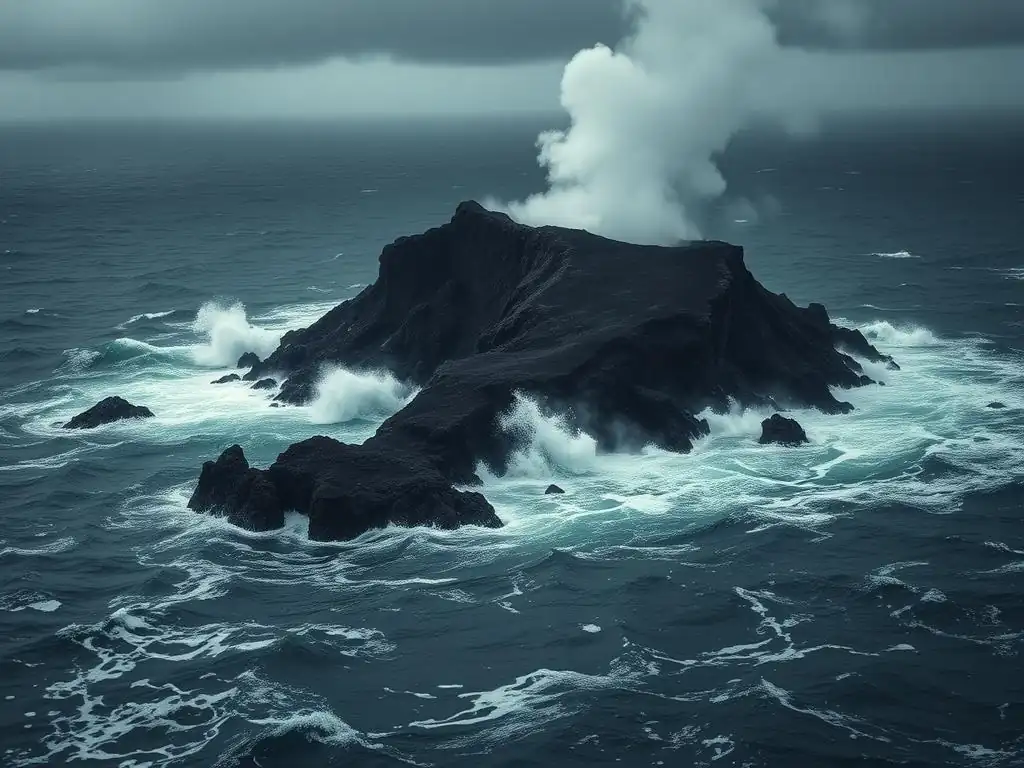
Explosive Eruptions and Tsunamis: The Dangers of Underwater Volcanic Activity
While the formation of volcanic islands is a fascinating and creative geological process, it is also associated with significant challenges and risks, particularly from explosive eruptions and tsunamis. Submarine volcanic eruptions, especially in shallow water, can be highly explosive due to the rapid vaporization of seawater. These phreatomagmatic eruptions can generate powerful explosions, ejecting large volumes of ash, pumice, and volcanic bombs into the water and air. The explosive force can also create shockwaves in the water, potentially triggering underwater landslides and tsunamis.
Tsunamis generated by submarine volcanic eruptions can be particularly dangerous as they can travel rapidly across oceans and impact distant coastlines with little warning. The Krakatoa eruption in 1883 is a devastating example of a volcanic eruption that generated a catastrophic tsunami, causing widespread destruction and loss of life in the surrounding region. Even smaller submarine eruptions can pose localized hazards to shipping, coastal communities, and infrastructure.
Volcanic ash clouds from explosive submarine eruptions can disrupt air traffic and impact human health. Therefore, understanding and monitoring the potential for explosive eruptions and tsunami generation from submarine volcanoes is crucial for mitigating these risks and ensuring the safety of coastal populations.
Monitoring Submarine Volcanoes: Predicting and Mitigating Potential Hazards
Given the potential hazards associated with submarine volcanoes, monitoring these underwater giants is essential for predicting eruptions and mitigating potential risks. However, monitoring submarine volcanoes presents significant technical challenges due to their remote locations and the difficulty of deploying and maintaining instruments in harsh underwater environments. Nevertheless, various technologies are employed to monitor submarine volcanic activity. Seismic monitoring is a primary tool, using hydrophones (underwater microphones) to detect earthquake swarms and volcanic tremors that often precede eruptions. Changes in seafloor deformation can be measured using pressure sensors and GPS buoys, indicating magma movement beneath the volcano.
Chemical monitoring of seawater can detect changes in gas emissions and hydrothermal activity, providing further clues about volcanic unrest. Satellite-based techniques, such as thermal infrared imaging and radar interferometry, can detect surface deformation and temperature changes associated with shallow submarine volcanism. Ocean bottom observatories, equipped with a range of sensors, provide continuous, real-time data from the seafloor.
Data from these monitoring systems are analyzed to assess the state of volcanic activity, identify signs of potential eruptions, and provide warnings to relevant authorities and communities. Improving submarine volcano monitoring capabilities is crucial for enhancing our ability to predict eruptions and reduce the risks associated with these powerful natural phenomena.
Impact of Volcanic Ash and Gas Emissions on Ocean Chemistry
Submarine volcanic eruptions, beyond their immediate hazards, can have significant impacts on ocean chemistry and marine ecosystems. Explosive eruptions release vast quantities of volcanic ash and gas into the water column and atmosphere. Volcanic ash, composed of fine particles of rock and glass, can blanket large areas of the ocean surface, reducing sunlight penetration and potentially impacting phytoplankton productivity, the base of the marine food web. Ash deposition can also smother benthic organisms and disrupt marine habitats.
Volcanic gas emissions from submarine volcanoes, particularly sulfur dioxide (SO2) and carbon dioxide (CO2), can alter ocean chemistry. SO2 reacts with seawater to form sulfuric acid, leading to ocean acidification in the vicinity of eruptions. While volcanic CO2 emissions contribute to the overall global carbon cycle, large-scale submarine eruptions can release significant amounts of CO2 into the ocean, potentially exacerbating ocean acidification on a regional scale.
Hydrothermal vents associated with submarine volcanoes also release various chemicals into the ocean, including metals and dissolved gases, influencing local and potentially regional ocean chemistry. Understanding the impacts of volcanic ash and gas emissions on ocean chemistry is crucial for assessing the broader environmental consequences of submarine volcanism and its role in Earth's systems.
The Future of Volcanic Island Formation: What to Expect
Climate Change and Sea Level Rise: Impacts on Volcanic Island Stability
Climate change and associated sea level rise pose significant challenges to the future stability and longevity of volcanic islands, particularly newly formed ones. Sea level rise directly increases coastal erosion, inundating low-lying areas and threatening coastal infrastructure and ecosystems. Volcanic islands, often characterized by steep slopes and limited coastal plains, are particularly vulnerable to erosion. Increased wave energy and storm surge associated with climate change can accelerate coastal erosion, further jeopardizing island stability.
Changes in precipitation patterns and storm intensity due to climate change can also indirectly impact volcanic island stability. Increased rainfall intensity can lead to greater runoff and erosion rates, while more frequent and intense storms can exacerbate coastal erosion and trigger landslides on volcanic slopes. For newly formed islands, which are often composed of unconsolidated volcanic materials, erosion can be particularly rapid.
Sea level rise and climate change are projected to intensify in the coming decades, posing increasing threats to the stability and habitability of many volcanic islands worldwide. Understanding and mitigating these climate change impacts are crucial for ensuring the future resilience of volcanic island ecosystems and communities.
Advancements in Submarine Volcano Monitoring Technology
The future of submarine volcano monitoring is likely to be shaped by advancements in technology, leading to more comprehensive and real-time observations of underwater volcanic activity. Developments in autonomous underwater vehicles (AUVs) and remotely operated vehicles (ROVs) are enabling more detailed exploration and monitoring of submarine volcanoes. These vehicles can deploy sensors, collect samples, and conduct visual surveys in areas that are difficult or dangerous for human divers or manned submersibles to access. Improvements in underwater sensor technology are leading to more sensitive and robust instruments for detecting seismic activity, seafloor deformation, and chemical changes associated with volcanic unrest.
The expansion of ocean bottom observatories, providing continuous, real-time data from the seafloor, is another promising trend in submarine volcano monitoring. Satellite-based monitoring techniques are also becoming more sophisticated, offering broader spatial coverage and the ability to detect subtle changes in surface deformation and thermal activity.
The integration of data from multiple monitoring platforms and the development of advanced data analysis techniques, including machine learning, are enhancing our ability to detect precursory signals of volcanic eruptions and improve eruption forecasting. These technological advancements hold the potential to revolutionize submarine volcano monitoring, leading to more effective hazard assessment and mitigation strategies.
The Enduring Power of Submarine Volcanism to Reshape Our Planet
Despite the challenges posed by climate change and other environmental factors, the enduring power of submarine volcanism to reshape our planet remains undeniable. Submarine volcanoes are a fundamental force in plate tectonics, continuously creating new oceanic crust at mid-ocean ridges and contributing significantly to global geochemical cycles.
The formation of volcanic islands by submarine volcanoes is a testament to Earth's dynamic nature and its capacity for geological creation. Even as existing volcanic islands face threats from erosion and sea level rise, new submarine volcanoes will continue to emerge, building new landmasses and shaping the Earth's surface in the long term.
The ongoing volcanic activity at places like Nishinoshima demonstrates that island formation is not just a process of the distant past but a continuous geological reality. Submarine volcanoes will continue to erupt, creating new seafloor, hydrothermal vents, and occasionally, new islands, for as long as Earth remains geologically active. Appreciating the immense timescales of geological processes and the persistent power of submarine volcanism provides a broader perspective on the dynamic evolution of our planet and the ongoing creation and destruction that characterize Earth's geological history.
Conclusion: Appreciating the Power and Beauty of Submarine Volcanoes and their Role in Island Creation
The Significance of Submarine Volcanoes in Earth's Geological Processes
Submarine volcanoes are far more than just underwater mountains; they are a fundamental component of Earth's geological processes and play a crucial role in shaping our planet. They are the primary sites of new oceanic crust formation at mid-ocean ridges, contributing to plate tectonics and the continuous recycling of Earth's lithosphere. Submarine volcanism influences global geochemical cycles by releasing vast quantities of heat, chemicals, and gases into the ocean and atmosphere. Hydrothermal vents associated with submarine volcanoes support unique chemosynthetic ecosystems and play a role in regulating ocean chemistry.
The formation of volcanic islands by submarine volcanoes is a spectacular manifestation of Earth's internal energy and geological creativity. These islands, born from the depths of the ocean, provide habitats for unique ecosystems, serve as stepping stones for biological dispersal, and offer valuable records of Earth's geological history. Understanding submarine volcanoes is not only essential for comprehending Earth's dynamic processes but also for assessing geohazards, managing marine resources, and appreciating the interconnectedness of Earth's systems. The study of submarine volcanoes provides insights into the fundamental forces that shape our planet and sustain life.
Exploring the Wonders of Volcanic Landscapes: A Call to Adventure
Volcanic landscapes, both above and below the sea, offer unparalleled opportunities for exploration, discovery, and adventure. Volcanic islands, with their dramatic scenery, unique ecosystems, and active volcanoes, are captivating destinations for scientific research and ecotourism. Exploring the underwater realm of submarine volcanoes, although challenging, is becoming increasingly accessible with advancements in underwater technology. Submersible dives, remotely operated vehicles, and ocean bottom observatories are allowing scientists and explorers to witness firsthand the wonders of submarine volcanic landscapes and hydrothermal vents.
The ongoing formation of new volcanic islands, like Surtsey and Nishinoshima, provides a rare glimpse into the dynamic processes that shape our planet. These volcanic landscapes are not only scientifically fascinating but also aesthetically breathtaking, showcasing the raw power and beauty of nature.
Whether exploring the rugged terrain of a volcanic island or venturing into the depths to study submarine volcanoes, these landscapes offer a profound sense of wonder and a deeper appreciation for the dynamic Earth we inhabit. Let us continue to explore, study, and protect these remarkable volcanic landscapes, recognizing their scientific significance, ecological value, and inherent beauty.
Frequently Asked Questions
What are submarine volcanoes, and how do they relate to island formation?
Submarine volcanoes are underwater volcanoes. When they erupt, the lava can accumulate over time. Eventually, this accumulated material can rise above sea level, creating new islands.
How common is the formation of new islands from submarine volcanoes?
While submarine volcanic activity is relatively common, the formation of a permanent island is less so. Many eruptions are short-lived, and the resulting landmass may erode quickly or be submerged again.
What are some of the biggest dangers associated with submarine volcanic eruptions that lead to island formation?
Dangers include violent explosions, tsunamis caused by the sudden displacement of water, and the release of toxic gases into the atmosphere.
What types of volcanic material are typically involved in the creation of islands from submarine volcanoes?
The material typically includes basaltic lava, ash, and pyroclastic debris. Over time, these materials can solidify and build up, forming a volcanic cone that eventually emerges from the sea.
How do volcanologists study submarine volcanoes creating islands?
Volcanologists use a variety of techniques, including sonar mapping, remote sensing (satellite imagery), and direct observation from ships and submersibles, to monitor activity and study the formation process.
Final Reflection: The Earth's Sculpting Hand
The journey through the formation of volcanic islands, as explored in this article, isn't just a geological lesson; it's a powerful reminder of the Earth's dynamic nature and its constant state of creation. The birth of new land from submarine volcanoes is a testament to the raw, untamed power that shapes our planet, a process that continues to unfold even as we observe and document it. This ongoing creation underscores the fragility and impermanence of the landscapes we often take for granted.
The impact of these volcanic events extends far beyond the scientific realm. Witnessing the emergence of new islands evokes a sense of wonder and humility, forcing us to reconsider our place within the grand scheme of geological time. The creation of these islands isn't merely a scientific phenomenon; it's a story of resilience, adaptation, and the potential for life to flourish in even the most extreme environments. The sea, once it casts forth a man helpless to contend with it, threatens to devour him; so do the forces of nature threaten to devour us all.
- James Baldwin, reminding us of nature's power and our vulnerability.
As you consider the implications of submarine volcanoes creating islands, I invite you to reflect on the forces that shape your own life. Just as these volcanic processes build new landscapes, consider what "volcanic" forces are at play in your own journey, shaping your character, your perspectives, and your future. Embrace the dynamism of life, the potential for unexpected creation, and the enduring power of resilience. Let the story of these islands inspire you to find strength in change and to appreciate the constant evolution that defines both our planet and ourselves.
Unleash Your Inner Explorer: Dive Deeper into Volcanic Wonders!
Thank you for exploring the breathtaking power of nature's land-building processes with Volcano Explorers. Now that you've learned how volcanic islands are formed, continue fueling your passion for these geological marvels.
Here's how you can continue your exploration:
- Track Current Eruptions! Follow our live feed of global volcanic activity on volcanoexplorers.org to witness real-time eruptions that may create new land formations.
- Research the local geology in your area. You might be surprised by the volcanic history hidden nearby!
- Share this article with fellow adventurers and geology enthusiasts to inspire others to appreciate the dynamic forces shaping our planet.
What fascinating volcanic formation will you explore next, and what secrets do you hope to uncover? Let us know in the comments below!