
The Birth of Islands: How Submarine Volcanoes Emerge from the Abyss

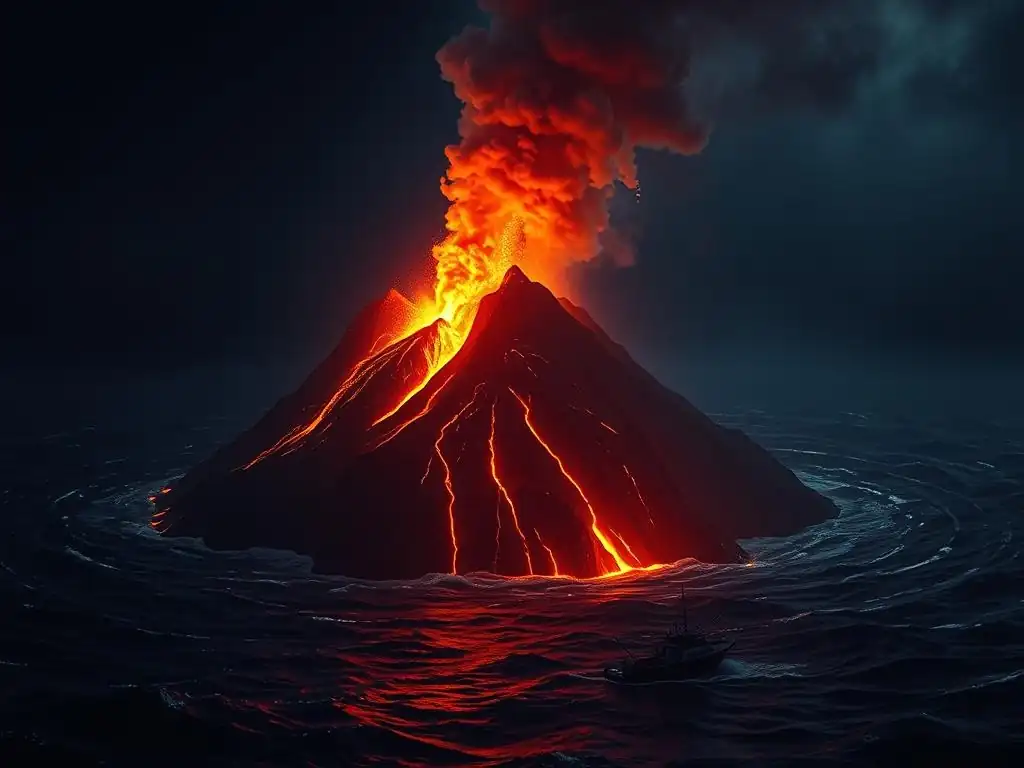
Welcome to Volcano Explorers, where the earth whispers its fiery secrets. Ever wondered how new lands rise from the ocean's depths? Prepare to be amazed as we unveil the captivating process of submarine volcano island formation. Journey with us into the abyss and discover how these underwater behemoths sculpt our world, one eruption at a time. What hidden forces drive these volcanic titans? Dive in to uncover the extraordinary tale of island genesis!
- Understanding Submarine Volcano Island Formation
- The Underwater Eruption Process: From Magma Chamber to Seafloor
- Stages of Submarine Volcano Island Formation
- Factors Influencing Submarine Volcano Island Development
- Case Studies: Iconic Islands Formed by Submarine Volcanoes
- The Geological Significance of Submarine Volcano Islands
- Monitoring Submarine Volcanoes and Predicting Island Formation
- The Future of Submarine Volcano Island Formation
-
Frequently Asked Questions
- What is a submarine volcano, and how does it differ from a volcano on land?
- How does a submarine volcano eventually form an island?
- What factors influence the shape and size of an island formed by a submarine volcano?
- Are islands formed by submarine volcanoes stable, or are they prone to erosion?
- What are some famous examples of islands formed by submarine volcanoes?
- Final Reflection: The Enduring Power of Creation
- Witness Earth's Raw Power: Plan Your Virtual Expedition!
Understanding Submarine Volcano Island Formation
Introduction to Submarine Volcanism and Island Creation
Submarine volcanism, the underwater eruption of volcanoes, is a fundamental geological process that shapes our planet. Vast portions of the Earth's volcanic activity occur beneath the ocean's surface, along mid-ocean ridges and at hotspots far from land. These underwater eruptions are not merely a hidden phenomenon; they are responsible for creating a significant portion of the Earth's crust and, in spectacular cases, give birth to volcanic islands. The process of submarine volcano island formation is a dramatic interplay between molten rock, seawater, and geological time, resulting in the emergence of new landmasses from the ocean depths.
The creation of islands from submarine volcanoes is a testament to the immense power of geological forces. Imagine molten rock, or magma, rising from deep within the Earth's mantle, pushing through the ocean floor, and erupting in an environment of immense pressure and cold temperatures.
Over countless eruptions, layer upon layer of volcanic material accumulates, building upwards from the seabed. This process, while often unseen by human eyes until the final stages, is a continuous cycle of construction, driven by the Earth's internal heat and tectonic movements, ultimately leading to the breathtaking moment when a submarine volcano breaches the surface and becomes an island.
The Role of Submarine Volcanic Ridges and Seamounts in Island Genesis
Submarine volcanic ridges and seamounts are crucial geological features in understanding submarine volcano island formation. Mid-ocean ridges, the longest mountain ranges on Earth, are underwater volcanic systems where tectonic plates diverge, allowing magma to rise and create new oceanic crust. Seamounts, on the other hand, are isolated underwater mountains, many of volcanic origin, that dot the ocean floor. Both ridges and seamounts act as the foundational structures for island formation. They represent the initial stages of volcanic buildup beneath the waves.
Many volcanic islands owe their existence to these underwater structures. For instance, Iceland sits atop the Mid-Atlantic Ridge, a prime example of an island born from ridge volcanism. Similarly, the Hawaiian Islands are formed by a hotspot, a plume of hot mantle material, which has created a chain of seamounts that progressively emerged above sea level as the Pacific Plate moved over it.
Without the initial construction of these vast submarine volcanic edifices – the ridges and seamounts – the dramatic emergence of volcanic islands would be far less frequent. They are the unseen architects, patiently building the foundations upon which islands are eventually raised.
The Underwater Eruption Process: From Magma Chamber to Seafloor
Magma Generation and Ascent Beneath the Ocean Floor
The journey of a submarine volcano island begins deep within the Earth's mantle, where magma is generated. This molten rock is formed through processes like decompression melting at mid-ocean ridges or the addition of volatiles (like water) at subduction zones. The density difference between the hot, less dense magma and the surrounding solid mantle drives its ascent towards the surface. This buoyant rise is not a gentle drift; it's a powerful geological force pushing magma through the Earth's crust.
As magma ascends beneath the ocean floor, it accumulates in magma chambers, reservoirs within the crust where molten rock can pool and differentiate. The pressure within these chambers builds as more magma enters, eventually overcoming the strength of the surrounding rocks. This pressure release triggers eruptions, sending magma surging through fissures and conduits towards the seabed. The depth of the ocean at the eruption site significantly influences the style and characteristics of these submarine volcanic eruptions, determining everything from the explosivity to the shape of the resulting volcanic structures.
Hydrothermal Venting and Submarine Volcanic Activity
Hydrothermal venting is a significant and visually striking manifestation of submarine volcanic activity. As magma nears the surface and erupts underwater, it interacts intensely with the surrounding seawater. This interaction heats the water, which then becomes chemically enriched as it leaches minerals from the hot volcanic rocks. This superheated, mineral-rich water is then expelled back into the ocean through hydrothermal vents, often dramatically visible as "black smokers" or "white smokers".
These vents are not just passive releases of hot water; they are dynamic systems directly linked to the underlying magma chambers and ongoing submarine volcanism. The chemical composition of vent fluids, the temperature, and the rate of venting can provide valuable insights into the state of the magma chamber and the likelihood of future eruptions.
Furthermore, hydrothermal vents support unique ecosystems, chemosynthetic communities that thrive in the absence of sunlight, drawing energy from the chemicals dissolved in the vent fluids. They are a testament to the interconnectedness of geological and biological processes in the deep ocean, all driven by submarine volcanic activity.
Pillow Lava Formation: Building Blocks of Submarine Volcanoes
Pillow lava is a distinctive volcanic rock formation that is characteristic of submarine volcanic eruptions and a fundamental building block of submarine volcanoes. When hot lava erupts onto the cold ocean floor, the rapid cooling by seawater causes the lava surface to solidify almost instantly, forming a glassy skin. As more lava flows from beneath this skin, it inflates into pillow-shaped lobes that stack upon each other. This process is repeated countless times during an eruption, creating vast piles of interconnected pillow lavas.
The formation of pillow lava is crucial to the construction of submarine volcanoes. The rapid cooling and solidification prevent the lava from flowing over long distances, causing it to pile up directly around the eruption vent. This localized accumulation is what allows submarine volcanoes to grow vertically from the seabed.
The glassy outer crust of pillow lavas also helps to insulate the molten interior, allowing the lava to travel further and build more extensive structures. The shape and size of pillow lavas can even provide clues about the eruption rate and water depth at the time of their formation, making them valuable tools for volcanologists studying submarine volcano island formation.
Stages of Submarine Volcano Island Formation
Initial Eruptions and Seamount Development
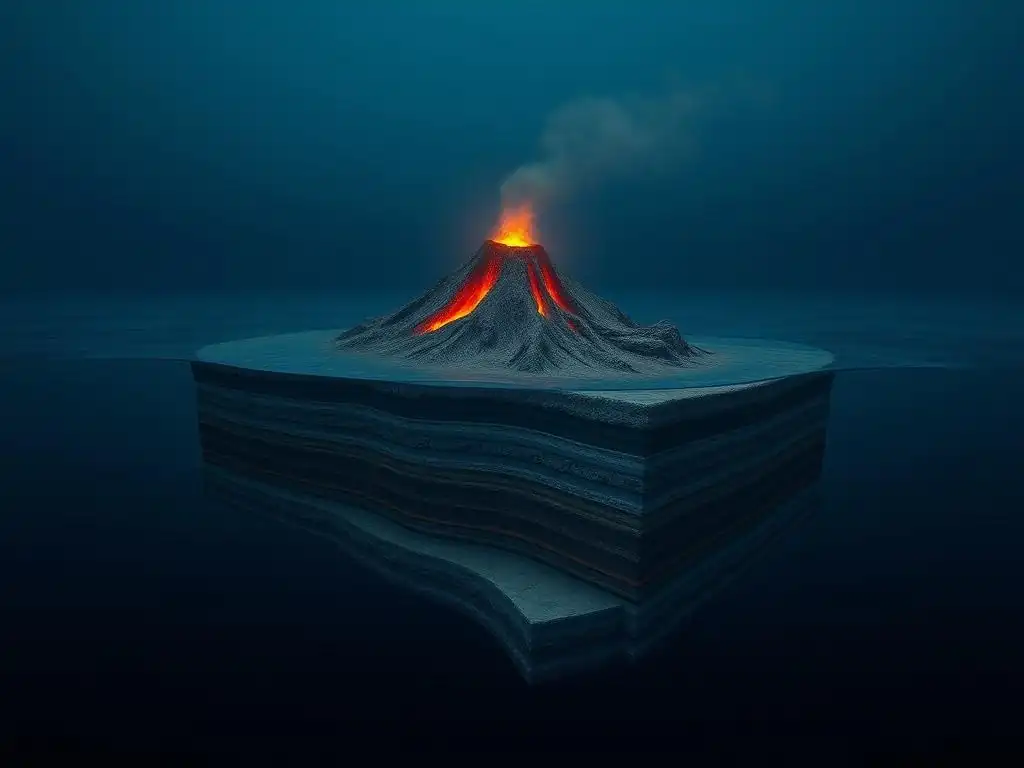
The journey towards island formation begins with initial submarine volcanic eruptions on the ocean floor. These early eruptions are often characterized by effusive activity, where lava flows steadily rather than explosively, due to the immense pressure of the overlying water column which suppresses gas expansion. Over time, repeated eruptions lead to the gradual accumulation of volcanic material – primarily pillow lavas and volcanic breccia (fragmented volcanic rock) – building a submarine mountain known as a seamount.
These seamounts are the nascent forms of potential volcanic islands. They can range in size from small hills on the seabed to massive underwater mountains thousands of meters high. The growth process is slow and incremental, often taking tens of thousands to millions of years.
The rate of growth depends on factors such as the magma supply rate, the eruption frequency, and the stability of the underlying crust. Many seamounts never reach the surface, remaining as permanent underwater features, but some, under the right conditions and continued submarine volcanic activity, continue to grow towards the critical threshold of sea level.
The Critical Threshold: Reaching Sea Level
Reaching sea level is the pivotal moment in submarine volcano island formation. As a seamount grows taller through continued eruptions, it eventually approaches the ocean surface. The environment around the volcano changes dramatically as it enters shallower water. The immense pressure that previously suppressed explosive eruptions begins to decrease, and the interaction between magma and seawater becomes more energetic.
This transition is critical because it marks the shift from purely submarine volcanism to a phase where the volcano interacts directly with the atmosphere. The reduced water pressure allows dissolved gases in the magma to exsolve and expand more readily, potentially leading to more explosive eruption styles. The shallow water also introduces new complexities, such as wave erosion and interaction with near-surface groundwater. The moment a submarine volcano breaks the surface is not just a geographical milestone; it's a transformation in the volcanic processes and the environmental forces shaping the newly emergent land.
Surtseyan Eruptions: The Violent Birth of a New Island
Surtseyan eruptions are a particularly dramatic and often violent type of submarine volcanic eruption that is intimately associated with the birth of new volcanic islands. These eruptions occur when magma interacts with shallow seawater or saturated sediments. The heat from the magma rapidly vaporizes the water, causing explosive steam bursts that fragment the magma into fine ash and debris. This process is far more explosive than typical deep-sea submarine eruptions due to the efficient heat transfer and rapid expansion of steam in shallow water.
The name "Surtseyan" comes from the island of Surtsey, which emerged off the coast of Iceland in 1963 in a classic example of this eruption style. Surtseyan eruptions are characterized by towering plumes of ash and steam, often creating a cone-shaped island made of tuff (consolidated volcanic ash). These eruptions are crucial in the final stages of submarine volcano island formation, as they rapidly build land above sea level. However, the newly formed islands are also vulnerable to erosion by waves and currents, highlighting the dynamic and sometimes destructive forces at play in the birth of a volcanic island.
Factors Influencing Submarine Volcano Island Development
Magma Composition and Eruption Style
Magma composition is a primary control on the style of submarine volcanic eruptions and, consequently, on the development of volcanic islands. Magma with high silica content (rhyolitic to andesitic) tends to be more viscous and gas-rich, leading to more explosive eruptions, even underwater, particularly as a volcano approaches the surface. Basaltic magma, with lower silica content, is less viscous and typically results in more effusive eruptions, characterized by lava flows.
The eruption style, dictated by magma composition and gas content, directly influences the shape and structure of a submarine volcano island. Effusive eruptions build broad, gently sloping shield volcanoes, while explosive eruptions tend to create steeper-sided stratovolcanoes or tuff cones.
The explosivity also affects the rate of island building; highly explosive eruptions can deposit large volumes of ash and pumice quickly, but these deposits are often less stable and more susceptible to erosion than solid lava flows. Thus, the type of magma and the resulting eruption style are fundamental factors in determining the morphology and longevity of a submarine volcano island.
Water Depth and Environmental Conditions
Water depth is a critical environmental factor that profoundly influences submarine volcano island formation. In deep water, the immense hydrostatic pressure suppresses the expansion of volcanic gases, favoring effusive eruptions and the formation of pillow lavas. As a submarine volcano grows and water depth decreases, the pressure reduction allows for more gas release and potentially more explosive eruptions, especially in shallow water environments.
Beyond pressure, seawater temperature and currents also play roles. Cold seawater rapidly quenches lava, influencing pillow lava formation. Strong ocean currents can erode newly formed volcanic structures, particularly loose ash deposits from Surtseyan eruptions, hindering island growth or reshaping existing islands. Furthermore, the presence of ice sheets or glaciers in polar regions can interact with submarine volcanic activity, leading to unique eruption styles (like subglacial volcanism) and influencing the morphology of volcanic islands in those areas. Therefore, the surrounding marine environment exerts significant control over the processes and outcomes of submarine volcano island formation.
Tectonic Setting and Plate Boundaries
The tectonic setting is a fundamental geological control on the location and frequency of submarine volcano island formation. Most submarine volcanism, and consequently, most volcanic islands, are associated with plate boundaries. Divergent plate boundaries, like mid-ocean ridges, are zones where plates are moving apart, allowing mantle magma to upwell and create new oceanic crust and volcanic ridges, which can give rise to islands like Iceland.
Convergent plate boundaries, where plates collide and one subducts beneath the other, are also major sites of volcanism. The subduction process releases water into the mantle wedge, lowering its melting point and generating magma that rises to form volcanic arcs. These island arcs, such as Japan, the Philippines, and the Aleutian Islands, are chains of volcanic islands created by submarine volcanic activity related to subduction.
Hotspots, plumes of hot mantle material rising independently of plate boundaries, are another tectonic setting responsible for island formation, creating island chains like Hawaii as plates move over stationary hotspots. The specific tectonic setting dictates the type of volcanism, the magma composition, and the overall geological context in which submarine volcano island formation occurs.
Case Studies: Iconic Islands Formed by Submarine Volcanoes
Surtsey, Iceland: A Living Laboratory of Volcanic Island Formation
Surtsey, Iceland, is perhaps the most iconic example of recent submarine volcano island formation. Born from a series of Surtseyan eruptions that began in November 1963, Surtsey emerged from the North Atlantic Ocean off the southern coast of Iceland. The eruption, lasting until 1967, provided scientists with an unprecedented opportunity to witness island birth and early ecological succession in real-time. The rapid formation of the tuff cone island, the dynamic interplay between volcanic eruptions and wave erosion, and the subsequent colonization by plants and animals have made Surtsey a living laboratory for geological and biological studies.
The island's formation process vividly demonstrated the power of Surtseyan eruptions in building land quickly. However, it also revealed the vulnerability of young volcanic islands to erosion. Since its emergence, Surtsey has been continuously monitored, providing invaluable data on volcanic island evolution, including the consolidation of volcanic materials, the development of hydrothermal systems, and the processes of erosion and deposition. Surtsey remains a crucial case study for understanding the birth and early life of submarine volcano islands.
Nishinoshima, Japan: A Growing Volcanic Island
Nishinoshima, Japan, offers a compelling contemporary example of a growing volcanic island formed by submarine volcanism. The island's story began with submarine eruptions in 2013 that broke the surface of the ocean, creating a new island adjacent to the pre-existing, much smaller Nishinoshima islet. Continued eruptions from the new vent have since dramatically expanded the island, engulfing the older islet and creating a significantly larger landmass. The growth of Nishinoshima is a dynamic and ongoing process, showcasing the power of sustained submarine volcanic activity to reshape landscapes in relatively short timescales.
Scientists have closely monitored Nishinoshima's growth using satellite imagery, drone observations, and occasional on-site surveys. The island's evolution provides insights into the processes of volcanic island construction, lava flow dynamics, and the interaction between volcanic activity and marine environments. Nishinoshima serves as a remarkable natural laboratory to observe island building in action and to study the long-term geological and ecological implications of submarine volcano island formation.
Hunga Tonga-Hunga Ha'apai: Recent Eruption and Island Formation
The Hunga Tonga-Hunga Ha'apai volcano in Tonga experienced a colossal eruption in January 2022, dramatically reshaping the landscape of this volcanic island arc. While the eruption was incredibly destructive, causing a devastating tsunami and global atmospheric disturbances, it also significantly modified the volcanic island that had formed from previous submarine volcanic activity. Prior to the eruption, Hunga Tonga-Hunga Ha'apai was a young island created by eruptions in 2014-2015, connecting two older islands, Hunga Tonga and Hunga Ha'apai.
The 2022 eruption, though largely submarine, had a profound impact on the emergent island. Much of the newly formed landmass was destroyed or submerged by the explosive forces and subsequent tsunami. However, parts of the older islands remained, and post-eruption surveys revealed that new volcanic features had also been created, including potential new vents and areas of volcanic deposition. The Hunga Tonga-Hunga Ha'apai eruption, while destructive, underscores the dynamic and often unpredictable nature of submarine volcano island formation and evolution, highlighting how quickly these landscapes can be both created and reshaped by volcanic forces.
The Geological Significance of Submarine Volcano Islands
Biodiversity Hotspots: Colonization and Evolution
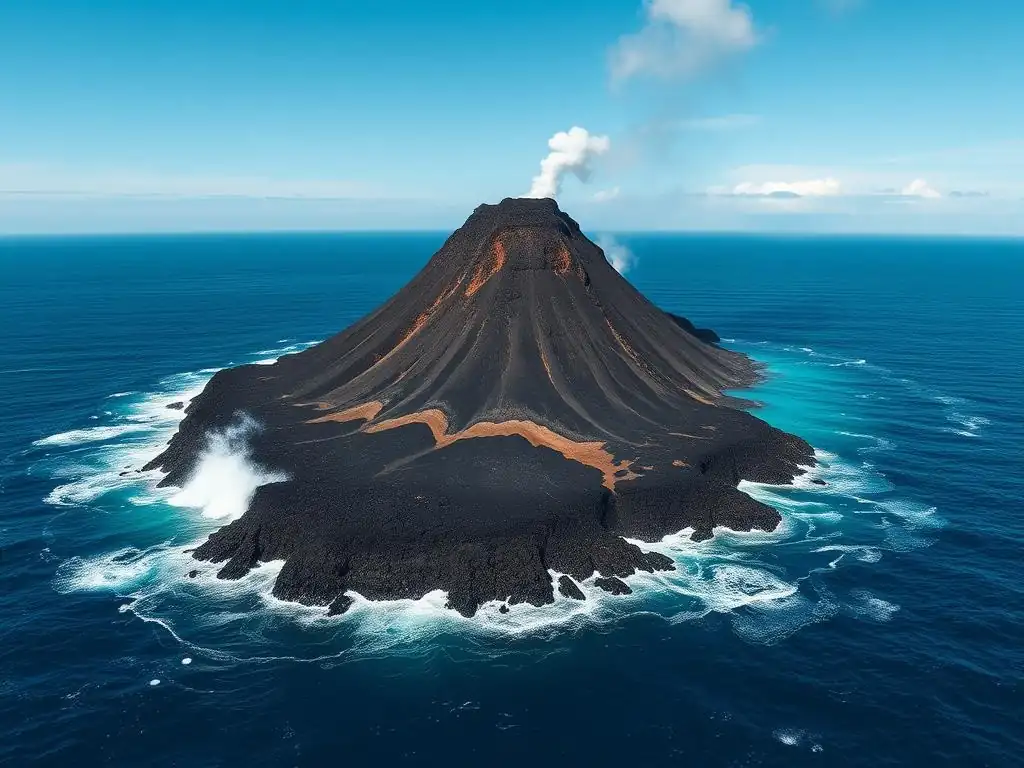
Volcanic islands, especially those formed by submarine volcano island formation, are often considered biodiversity hotspots. Emerging from the ocean as pristine landmasses devoid of terrestrial life, they provide unique opportunities for colonization and evolution. Plants, animals, and microorganisms arrive via wind, water, or on flying organisms, initiating ecological succession on these new lands. Due to their isolation, volcanic islands often foster unique evolutionary pathways, leading to high levels of endemism – the development of species found nowhere else on Earth.
The Galapagos Islands, the Hawaiian Islands, and many other volcanic island archipelagos are prime examples of biodiversity hotspots. The unique environmental conditions on these islands, combined with evolutionary processes, have resulted in extraordinary assemblages of species adapted to island life. Studying the biodiversity of volcanic islands provides valuable insights into ecological colonization, adaptive radiation, and the processes that shape life on Earth. The very act of submarine volcano island formation sets the stage for new ecosystems to arise and flourish in isolation.
Volcanic Hazards and Risk Assessment
While submarine volcano islands are fascinating and beautiful, they also present significant volcanic hazards. Active volcanoes, whether submarine or emergent, pose risks from eruptions, including lava flows, ashfall, pyroclastic flows, and volcanic gases. Volcanic islands are particularly vulnerable to tsunamis generated by submarine eruptions or caldera collapses. The 2022 Hunga Tonga-Hunga Ha'apai eruption tragically demonstrated the devastating potential of volcano-generated tsunamis, even from relatively small volcanic islands.
Risk assessment for volcanic islands is crucial for the safety of nearby populations and infrastructure. This involves monitoring volcanic activity, studying past eruption history, and developing hazard maps to identify areas at risk. Early warning systems, evacuation plans, and public education are essential components of volcanic hazard mitigation in regions with submarine volcano islands. Understanding the specific volcanic hazards associated with each island and implementing appropriate preparedness measures are vital for minimizing the potential impact of future eruptions.
The Long-Term Stability of Volcanic Islands: Erosion and Subsidence
Despite their dramatic birth through submarine volcano island formation, volcanic islands are not permanent features. They are subject to various geological processes that contribute to their long-term instability and eventual demise. Erosion, driven by wave action, rainfall, and weathering, constantly wears down the volcanic edifice. Subsidence, the sinking of the island due to the weight of the volcano pressing down on the oceanic crust and the cooling and contraction of the lithosphere, is another significant factor.
Over geological timescales, erosion and subsidence can significantly reduce the size and elevation of volcanic islands, eventually leading to their disappearance beneath the waves. Many former volcanic islands now exist as seamounts or submerged banks, remnants of once-emergent landmasses. The lifespan of a volcanic island is a balance between the rate of volcanic construction and the rate of destructive processes like erosion and subsidence. Understanding these long-term geological cycles is crucial for appreciating the ephemeral nature of submarine volcano islands and the dynamic evolution of the Earth's surface.
Monitoring Submarine Volcanoes and Predicting Island Formation
Seabed Mapping and Remote Sensing Techniques
Monitoring submarine volcanoes is a challenging but essential task, especially for predicting potential island formation or assessing volcanic hazards. Seabed mapping techniques, such as multibeam sonar, are crucial for creating detailed bathymetric maps of the ocean floor, revealing the morphology of submarine volcanoes, locating active vents, and tracking changes in seafloor topography over time. These maps provide a baseline for understanding the structure and evolution of submarine volcanic systems.
Remote sensing techniques, including satellite imagery and radar interferometry, are also increasingly valuable for monitoring submarine volcanoes. Satellites can detect thermal anomalies associated with submarine volcanic activity, track changes in sea surface temperature, and measure subtle ground deformation on volcanic islands that may indicate magma movement beneath the surface. Combining seabed mapping with remote sensing data provides a comprehensive approach to monitoring these often-hidden volcanic systems.
Acoustic Monitoring of Submarine Eruptions
Acoustic monitoring is a powerful tool for detecting and studying submarine volcanic eruptions, particularly in remote ocean areas. Underwater microphones, or hydrophones, deployed in the ocean can detect the sounds generated by volcanic eruptions, including explosions, submarine landslides, and magma movement. Acoustic signals can travel vast distances underwater, allowing for the detection of eruptions even far from monitoring stations.
Analyzing the characteristics of acoustic signals, such as their frequency, amplitude, and duration, can provide information about the type and intensity of submarine volcanic activity. Acoustic monitoring networks are used to track eruption frequency, locate eruption sources, and even estimate eruption magnitudes. This technology is particularly important for detecting and characterizing submarine eruptions that might otherwise go unnoticed, contributing to a better understanding of global submarine volcanism and its potential for island formation.
Challenges in Monitoring Submarine Volcanoes
Despite advancements in monitoring technologies, significant challenges remain in studying submarine volcanoes. The deep ocean environment is inherently difficult to access and work in, making direct observation and instrument deployment logistically complex and expensive. The vastness of the ocean and the remoteness of many submarine volcanoes make continuous, real-time monitoring challenging to achieve on a global scale.
Furthermore, predicting the precise location and timing of submarine volcano island formation is still a complex task. While monitoring techniques can detect signs of increasing volcanic activity, forecasting the exact moment a seamount will breach the surface and the characteristics of the subsequent island-building eruptions remains a scientific frontier. Improving our ability to monitor and interpret data from submarine volcanoes is crucial for enhancing our understanding of these dynamic geological systems and for mitigating potential volcanic hazards associated with island formation.
The Future of Submarine Volcano Island Formation
Potential for New Island Formation in the World's Oceans
The Earth remains geologically active, and the processes of submarine volcano island formation continue in various parts of the world's oceans. Regions with active mid-ocean ridges, subduction zones, and hotspots are potential sites for future island creation. The Pacific Ring of Fire, in particular, with its high concentration of submarine volcanoes and island arcs, is likely to witness further island formation events in the geological future.
While predicting the exact location and timing is impossible, areas with known submarine volcanic activity and seamounts that are close to sea level are prime candidates for potential island emergence. Continued exploration and monitoring of these regions are crucial for identifying areas where new volcanic islands might be born. The ongoing geological dynamism of our planet ensures that the process of submarine volcano island formation will continue to shape coastlines and create new landmasses for millennia to come.
Climate Change and its Impact on Submarine Volcanic Activity
The potential impact of climate change on submarine volcanic activity and island formation is an area of ongoing research and some speculation. Changes in sea level due to melting glaciers and thermal expansion could influence the pressure on submarine volcanoes, potentially affecting eruption styles and frequencies, particularly in shallow submarine environments. Ocean warming and acidification might also alter hydrothermal vent activity and the chemical weathering of volcanic rocks on newly formed islands.
Furthermore, changes in ice sheet stability and glacial meltwater discharge could influence mantle pressure and magma generation in polar regions, potentially impacting submarine volcanism in these areas. However, the precise nature and magnitude of climate change's influence on submarine volcanic activity are still uncertain and require further investigation. Understanding these potential interactions is crucial for assessing future volcanic hazards and the long-term evolution of volcanic islands in a changing climate.
Conclusion: The Dynamic Dance of Earth and Water
The birth of islands from submarine volcanoes is a spectacular and ongoing testament to the dynamic interplay between Earth's internal geological forces and the vastness of the oceans. From the generation of magma deep within the mantle to the violent eruptions that breach the sea surface, the process of submarine volcano island formation is a complex and fascinating geological phenomenon. These new landmasses, sculpted by fire and water, become cradles for new ecosystems and reminders of the Earth's ever-changing surface.
Understanding submarine volcano island formation not only expands our knowledge of planetary processes but also highlights the interconnectedness of geological, oceanographic, and biological systems. As we continue to explore and monitor these underwater giants, we gain deeper insights into the Earth's dynamic nature and the powerful forces that shape our world, creating new lands from the depths of the abyss.
Frequently Asked Questions
What is a submarine volcano, and how does it differ from a volcano on land?
A submarine volcano is simply a volcano located underwater. Unlike volcanoes on land, they erupt in an environment of immense pressure and are cooled rapidly by water.
How does a submarine volcano eventually form an island?
Over time, repeated eruptions of lava and ash from the submarine volcano can build up. Eventually, the accumulated material rises above sea level, creating a new island.
What factors influence the shape and size of an island formed by a submarine volcano?
The shape and size are influenced by several factors, including the eruption rate, the composition of the lava, and the depth of the volcano beneath the sea.
Are islands formed by submarine volcanoes stable, or are they prone to erosion?
Newly formed volcanic islands are often unstable and vulnerable to erosion from waves and weathering. Geological processes and plant life can help stabilize the island over time.
What are some famous examples of islands formed by submarine volcanoes?
Examples include Surtsey in Iceland, which emerged in 1963, and Nishinoshima in Japan, which continues to grow. These islands offer unique opportunities to study new ecosystems and volcanic processes.
Final Reflection: The Enduring Power of Creation
The journey from molten rock deep beneath the ocean's surface to the verdant peaks of a newly formed island is a testament to the Earth's raw power and relentless creativity. The process of submarine volcano island formation, once a mystery shrouded in the abyss, is now understood as a fundamental force shaping our planet's geography and even influencing its climate. Understanding this process allows us to appreciate the dynamic nature of our world and the constant cycle of destruction and creation that defines it.
This understanding extends beyond scientific curiosity; it touches upon our own human experience. Witnessing the birth of an island, even vicariously through research and imagery, reminds us of the potential for renewal and the enduring spirit of life that can emerge from the most challenging environments. As Rachel Carson eloquently stated, The more clearly we can focus our attention on the wonders and realities of the universe about us, the less taste we shall have for destruction.
This quote encapsulates the profound respect and awe that studying these geological marvels inspires.
Now, consider the implications of this knowledge. How can we apply this understanding of resilience and creation to our own lives? Let the story of the submarine volcano, rising from the depths to become a beacon of life, inspire you to embrace challenges, to find strength in adversity, and to believe in the possibility of new beginnings. Just as these islands emerge from the unknown, so too can you rise above your own challenges and create something beautiful and enduring.
Witness Earth's Raw Power: Plan Your Virtual Expedition!
Thank you for exploring the fascinating world of submarine volcanoes and island formation. You've gained a unique perspective on the planet's dynamic forces. Now, let's continue exploring!
Here are a few ways you can further engage with the incredible power of volcanoes:
- Explore the Unseen: Use online geological survey maps to identify potential submarine volcanic hotspots. Even though they're hidden beneath the waves, their presence significantly shapes the ocean floor.
- Share the Wonder: Spread the word! Share this article with anyone you think would be fascinated by the incredible power of volcanoes.
- Join the Conversation: Share your questions, thoughts, or experiences in the comments below. Join our community of Volcano Explorers at volcanoexplorers.org.
What intrigues you most about the formation of new land from the ocean depths? Share your thoughts below – we'd love to hear them!