
Unveiling the Gentle Giants: What Defines a Shield Volcano?

Welcome to Volcano Explorers!
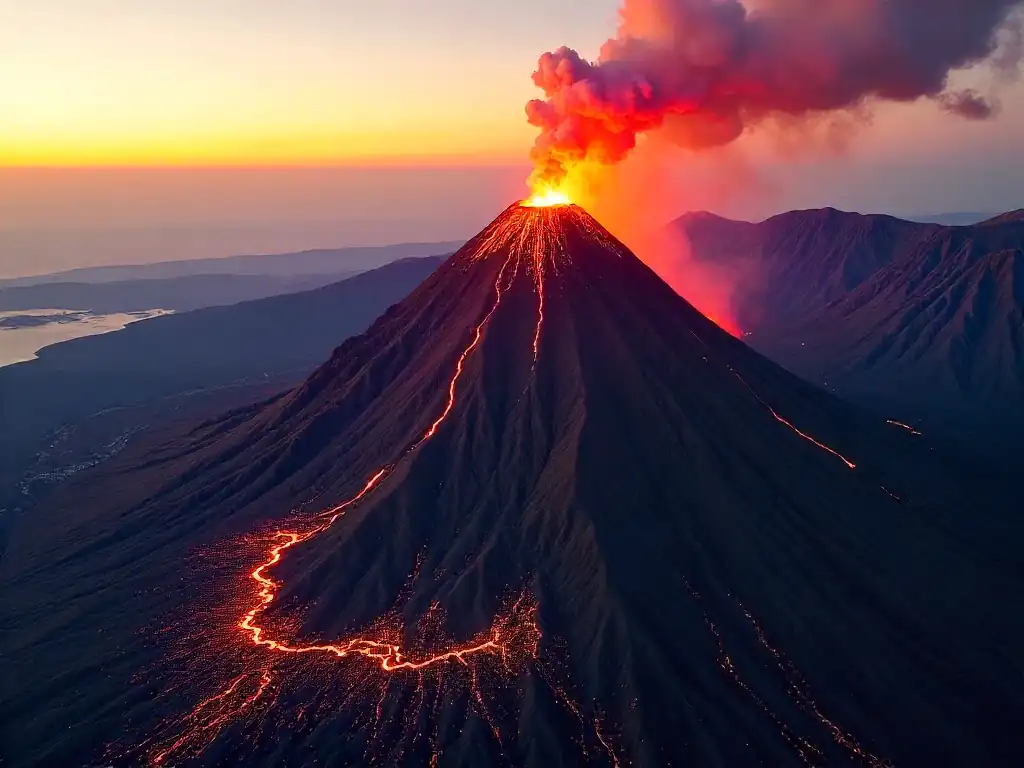
Ever wondered how a mountain can be both a force of destruction and a testament to nature's artistry? Prepare to journey into the fascinating realm of volcanoes, where fire meets earth and landscapes are forever changed. This isn't just about fiery eruptions; it's about understanding the very heartbeat of our planet. But what makes each volcano unique? Dive in to discover the characteristics of shield volcanoes, those gentle giants that quietly shape our world, and unlock the secrets hidden within their broad, sloping forms. Are they truly as passive as they seem? Let's find out!
- Introduction to Shield Volcanoes: An Overview for Volcano Enthusiasts
- Defining Characteristics of Shield Volcanoes
- Formation of Shield Volcanoes: A Step-by-Step Process
- Distinctive Features of Shield Volcanoes: A Deep Dive
- Lava Types Common in Shield Volcanoes
- Size and Scale of Shield Volcanoes: Comparing to Other Types
- Examples of Famous Shield Volcanoes Around the World
- The Eruptive Style of Shield Volcanoes: Relatively Calm and Predictable?
- The Longevity of Shield Volcanoes: Building Over Time
- Conclusion: Appreciating the Unique Nature of Shield Volcanoes
-
Frequently Asked Questions
- What is the primary characteristic of a shield volcano?
- How does the lava of a shield volcano differ from that of other volcano types?
- Are shield volcanoes known for explosive eruptions?
- Where are shield volcanoes typically found?
- What makes shield volcanoes "gentle giants" compared to other volcano types?
- Final Reflection: Embracing the Earth's Quiet Power
- Ignite Your Inner Vulcanologist!
Introduction to Shield Volcanoes: An Overview for Volcano Enthusiasts
VolcanoEnthusiasts.com: Your Guide to Understanding Volcanic Formations
Welcome to VolcanoEnthusiasts.com, your premier online destination for exploring the fascinating world of volcanoes! Today, we embark on a journey to understand one of the most captivating and widespread types of volcanic formations: shield volcanoes. Often referred to as "gentle giants," these colossal structures stand in stark contrast to their explosively violent cousins. Shield volcanoes are characterized by their broad, gently sloping sides and are built up over time by successive flows of fluid lava. Unlike the steep, cone-shaped stratovolcanoes, shield volcanoes present a more subdued, yet equally impressive, volcanic landscape.
In this article, we will delve into the defining characteristics of shield volcanoes, unraveling the secrets behind their unique shapes, formation processes, and eruptive behaviors. We will explore the science that dictates their gentle slopes, the types of lava that construct them, and compare them to other volcanic forms. From the towering majesty of Mauna Loa to the fiery landscapes of Iceland, shield volcanoes offer a compelling study in the power and beauty of geological forces. Join us as we uncover the essential features that make shield volcanoes a truly distinctive and important part of our planet's volcanic heritage.
Defining Characteristics of Shield Volcanoes
What Makes a Volcano a Shield Volcano? Key Features
The term "shield volcano" aptly describes the appearance of these volcanic edifices. Imagine a warrior's shield laid flat on the ground – this is the general shape that defines these geological wonders. The primary characteristic of a shield volcano is its broad, gently sloping profile, resembling a shield in cross-section. This distinctive shape is a direct consequence of the type of lava that erupts from them: low-viscosity basaltic lava. This highly fluid lava flows easily and spreads out over vast distances before solidifying, gradually constructing the volcano's expansive, gently inclined flanks.
Another defining characteristic of shield volcanoes is their eruptive style. They are predominantly associated with effusive eruptions, meaning eruptions characterized by the outpouring of lava flows rather than violent explosions. While gas can be present in the magma and drive lava fountains, the eruptions are generally less explosive compared to stratovolcanoes.
This effusive nature is due to the lower silica content of basaltic magma, which allows gases to escape more readily, reducing the pressure build-up that leads to explosive eruptions. Therefore, the combination of low-viscosity lava and predominantly effusive eruptions are key in shaping the gentle slopes and broad bases that are the hallmark of shield volcanoes.
Formation of Shield Volcanoes: A Step-by-Step Process
The Role of Low-Viscosity Lava in Shield Volcano Formation
The formation of a shield volcano is a testament to the power of persistent, yet relatively gentle, volcanic activity. The process begins with magma, molten rock beneath the Earth's surface, rising towards the surface. In the case of shield volcanoes, this magma is typically basaltic, originating from the Earth's mantle. Basaltic magma is known for its low silica content, which directly translates to low viscosity.
Viscosity, in simple terms, is the resistance of a fluid to flow. Think of honey (high viscosity) versus water (low viscosity). Basaltic lava, being low viscosity, flows much like honey compared to more viscous lavas associated with other volcano types.
This low viscosity is crucial to understanding the formation of shield volcanoes. When basaltic lava erupts, it can travel significant distances away from the vent. Imagine lava flowing down a slope – the less viscous it is, the farther and faster it will spread. This ability to flow over large areas is the primary reason why shield volcanoes develop their characteristic broad and flat shape. Instead of piling up steeply around the vent, the lava flows outwards, solidifying in thin layers that gradually accumulate over time, expanding the volcano's footprint horizontally rather than vertically.
Effusive Eruptions and Gradual Shield Building
The construction of a shield volcano is a slow and steady process, primarily driven by countless effusive eruptions. Unlike the dramatic, explosive eruptions that characterize stratovolcanoes, shield volcano eruptions are typically characterized by the relatively quiet outpouring of lava. These eruptions can last for days, weeks, months, or even years, allowing vast quantities of lava to flow and spread. The lava may erupt from a central vent at the summit or from fissures and cracks on the volcano's flanks, further contributing to its broad growth.
As each lava flow cools and solidifies, it adds a new layer to the volcano's structure. Over hundreds of thousands or even millions of years, these successive lava flows accumulate, layer upon layer, building up the massive, gently sloping shield shape.
This gradual, layer-by-layer construction process is analogous to adding thin coats of paint to a canvas – each layer contributes to the final form, and in the case of shield volcanoes, these layers create truly immense geological structures. The relatively predictable and non-explosive nature of these effusive eruptions allows for a continuous building process, shaping the landscape in a unique and distinctive way.
Distinctive Features of Shield Volcanoes: A Deep Dive
Gentle Slopes: The Hallmark of a Shield Volcano
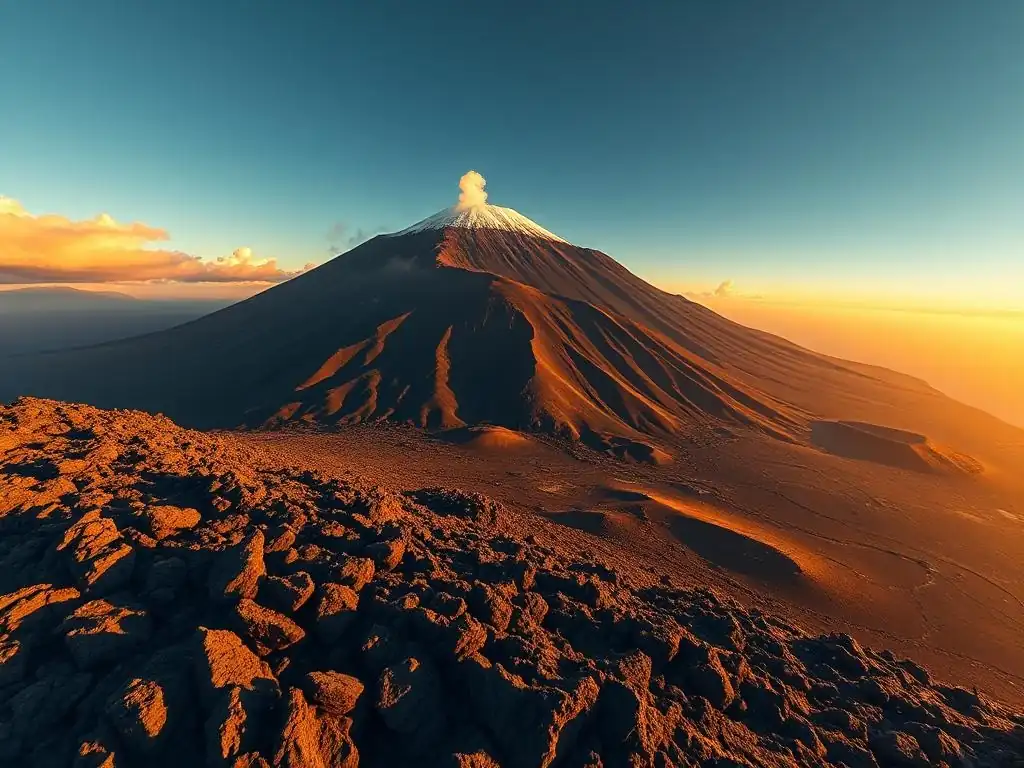
Perhaps the most immediately recognizable characteristic of a shield volcano is its gentle slope. These volcanoes typically exhibit slopes that are remarkably shallow, usually ranging from just 2 to 10 degrees. This gentle inclination is in stark contrast to the steep slopes of stratovolcanoes, which can reach angles of 30 degrees or more. The reason for these gentle slopes, as we've discussed, lies in the low viscosity of the basaltic lava that forms shield volcanoes.
The highly fluid lava flows effortlessly down the volcano's flanks, spreading out widely before solidifying. This extensive lateral flow prevents the lava from piling up steeply near the vent. Instead, it creates thin, overlapping layers that extend far from the summit, resulting in the gradual, sloping profile. Imagine pouring honey onto a slightly inclined surface – it would flow slowly and create a relatively flat, spread-out shape. This is analogous to how basaltic lava shapes the gentle slopes of a shield volcano, making them easily distinguishable from other types of volcanoes.
Broad Base and Relatively Low Profile Explained
Complementary to their gentle slopes, shield volcanoes are also characterized by their broad bases and relatively low profiles. While they can be incredibly massive in terms of volume and area covered, they are generally not as tall or imposing in height compared to stratovolcanoes when viewed from a distance. The broad base is a direct consequence of the extensive lava flows spreading outwards, creating a wide footprint. This lateral growth dominates over vertical growth, resulting in a volcano that is wider than it is tall.
The low profile, meaning the relatively small height-to-width ratio, is another characteristic of shield volcanoes that distinguishes them. While some shield volcanoes, like Mauna Loa, can reach impressive heights when measured from their base on the ocean floor, their overall shape is still that of a broad, gently sloping dome. This low profile is not to be mistaken for small size – shield volcanoes are often among the largest volcanoes on Earth in terms of volume and the area they cover. Their immense size is simply distributed horizontally rather than vertically, giving them their characteristic "shield" shape.
Caldera Formation within Shield Volcanoes
While shield volcanoes are known for their effusive eruptions, they can also experience caldera formation, albeit through a different mechanism than stratovolcanoes. A caldera is a large, basin-shaped depression that forms at the summit of a volcano. In stratovolcanoes, calderas typically form due to explosive eruptions that empty the magma chamber, causing the overlying volcanic edifice to collapse inwards. However, caldera formation in shield volcanoes is more often associated with magma withdrawal.
As magma drains from beneath the summit, either laterally into rift zones or deeper into the mantle, it can lead to a loss of support for the summit area. This withdrawal of magma can cause the roof of the magma chamber to subside and collapse, creating a caldera.
These calderas in shield volcanoes are generally less explosive in origin compared to those in stratovolcanoes and are often characterized by step-like walls resulting from successive collapses. Examples like the summit caldera of Kilauea in Hawaii demonstrate this type of caldera formation, illustrating that even these "gentle giants" can exhibit complex geological processes at their summits.
Lava Types Common in Shield Volcanoes
Basaltic Lava: The Primary Component of Shield Volcanoes
Basaltic lava is the lifeblood of shield volcanoes. It is the dominant type of lava erupted from these volcanoes and is responsible for their construction and characteristics. Basaltic lava is mafic in composition, meaning it is relatively rich in magnesium and iron and low in silica. This composition is crucial because it dictates the lava's physical properties, particularly its low viscosity and high temperature. Typical basaltic lava erupts at temperatures between 1000 to 1200 degrees Celsius (1832 to 2192 degrees Fahrenheit).
The low silica content of basaltic lava is the primary reason for its low viscosity. Silica, or silicon dioxide (SiO2), is a network-forming molecule that increases the internal friction within the lava, making it more resistant to flow. Basaltic lava, with its lower silica content, flows much more readily, allowing it to travel long distances and spread out over vast areas. This fluidity is essential for building the broad, gently sloping shield shape. The dark color of basaltic rock, ranging from black to dark gray, also contributes to the often stark and dramatic landscapes associated with shield volcanoes.
Pahoehoe and A'a Lava Flows: Understanding the Differences
Within basaltic lava flows, two primary types of surface textures are commonly observed: pahoehoe and a'a. These terms, originating from Hawaiian volcanic terminology, describe distinct appearances of solidified basaltic lava and reflect subtle differences in flow conditions and cooling rates. Pahoehoe lava is characterized by its smooth, ropy, or billowy surface. It often forms lobes and wrinkles as the molten lava beneath the surface continues to flow and push the cooling crust. Pahoehoe flows are typically hotter, more fluid, and move at faster speeds than a'a flows.
In contrast, a'a lava has a rough, jagged, and clinkery surface composed of broken fragments of solidified lava. A'a flows are generally cooler, more viscous, and move more slowly than pahoehoe flows. The transition from pahoehoe to a'a can occur as a lava flow cools and loses gas content, increasing its viscosity and causing it to fragment into the characteristic rough surface.
Both pahoehoe and a'a flows are common features on shield volcanoes, and their presence provides valuable insights into the dynamics of lava flow and cooling processes during eruptions. Understanding these different lava flow textures is essential for interpreting the volcanic history and characteristics of shield volcanoes.
Size and Scale of Shield Volcanoes: Comparing to Other Types
Shield Volcanoes vs. Stratovolcanoes: A Comparison of Size and Shape
When comparing shield volcanoes to other volcanic types, particularly stratovolcanoes (also known as composite volcanoes), stark differences in size and shape become apparent. Stratovolcanoes, such as Mount Fuji or Mount Rainier, are characterized by their steep, cone-shaped profiles. They are typically formed from alternating layers of lava flows, ash, and volcanic debris, resulting from more viscous and gas-rich eruptions. In terms of shape, stratovolcanoes are tall and conical, while shield volcanoes are broad and gently sloping.
In terms of size, while stratovolcanoes can be quite tall, shield volcanoes often surpass them in terms of overall volume and the area they cover. Mauna Loa, for example, is considered the largest active volcano on Earth in terms of volume and footprint, dwarfing most stratovolcanoes in sheer mass. Stratovolcanoes tend to be more localized features, while shield volcanoes can spread across vast regions. The difference in size and shape directly reflects the contrasting eruptive styles and lava types: explosive eruptions and viscous lava build steep stratovolcanoes, while effusive eruptions and fluid lava create broad shield volcanoes.
Typical Dimensions and Volume of Shield Volcanoes
Shield volcanoes exhibit a wide range of sizes, but they are generally characterized by their immense scale. In terms of height above their base, they can range from a few hundred meters to thousands of meters. Mauna Loa in Hawaii, for instance, rises approximately 4,170 meters (13,680 feet) above sea level, but when measured from its base on the ocean floor, its total height exceeds 9,000 meters (29,500 feet), making it taller than Mount Everest from base to summit.
In terms of diameter, shield volcanoes can stretch tens to hundreds of kilometers across. The base of Mauna Loa is estimated to be about 120 kilometers (75 miles) in diameter. Their volumes are equally impressive, ranging from tens to thousands of cubic kilometers.
Mauna Loa's volume is estimated to be around 75,000 cubic kilometers (18,000 cubic miles). These figures underscore the truly colossal nature of shield volcanoes, highlighting their status as some of the largest volcanic structures on Earth. Their dimensions are a direct consequence of the long-lived, effusive eruptions that slowly and steadily build these "gentle giants" over geological timescales.
Examples of Famous Shield Volcanoes Around the World
Mauna Loa, Hawaii: A Classic Example of a Shield Volcano
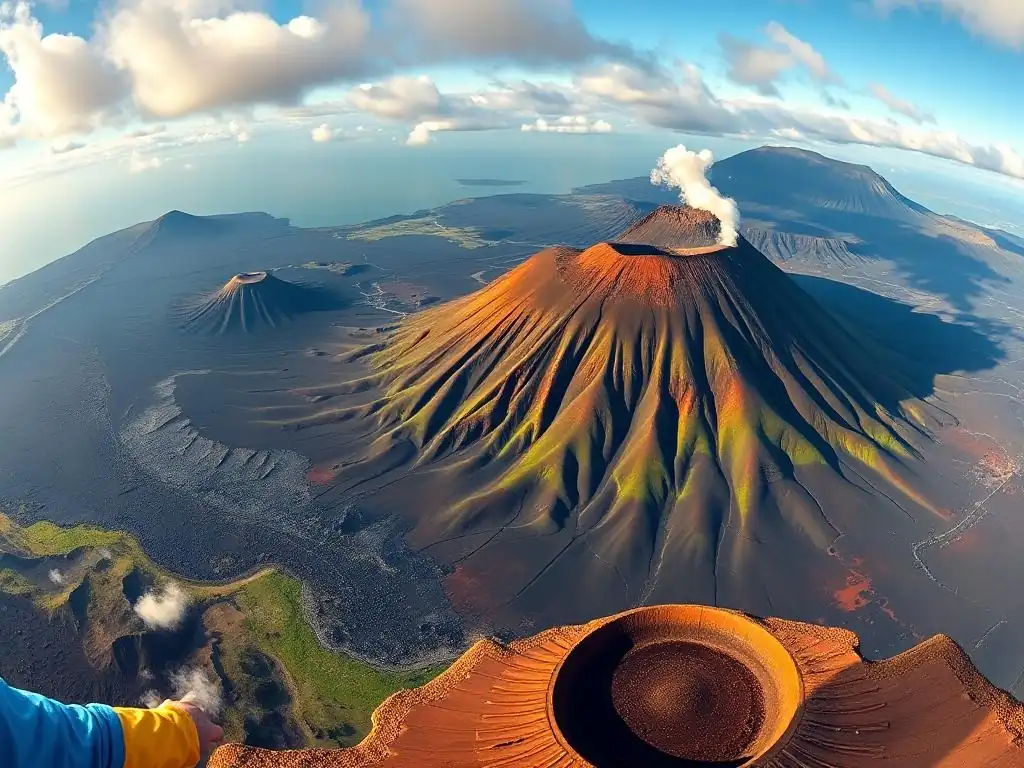
Mauna Loa, located on the Big Island of Hawaii, stands as the quintessential example of a shield volcano and embodies all the key characteristics of shield volcanoes we have discussed. Its name, meaning "Long Mountain" in Hawaiian, aptly describes its elongated, gently sloping profile. Mauna Loa is not only one of the largest volcanoes on Earth but also one of the most active. It is constructed almost entirely of basaltic lava flows, accumulated over hundreds of thousands of years of effusive eruptions.
The slopes of Mauna Loa are remarkably gentle, averaging around 4-6 degrees, contributing to its classic shield shape. Its eruptions are predominantly effusive, characterized by the outpouring of highly fluid pahoehoe and a'a lava flows. These flows have shaped the surrounding landscape of the Big Island and continue to add to the volcano's volume. Mauna Loa's summit features a large caldera, Mokuʻāweoweo, formed by summit collapses related to magma withdrawal. Its frequent eruptions and immense size make Mauna Loa a globally recognized and studied shield volcano, serving as a benchmark for understanding this type of volcanic formation.
Other Notable Shield Volcanoes: Kilauea, Skjaldbreiður, Erta Ale
Beyond Mauna Loa, several other shield volcanoes around the world exemplify these geological formations. Kilauea, also located on the Big Island of Hawaii, is another highly active and well-studied shield volcano. It is famous for its long-lasting eruptions, including decades-long continuous activity at its Puʻuʻōʻō vent. Kilauea shares many characteristics with Mauna Loa, including gentle slopes, basaltic lava flows, and effusive eruptive style.
Skjaldbreiður in Iceland, meaning "broad shield" in Icelandic, is another classic example. Its name itself reflects its shield-like shape and it is a prominent example of Icelandic shield volcanism, which is widespread due to Iceland's location on the Mid-Atlantic Ridge. Erta Ale in Ethiopia, located in the Afar region, is notable for hosting a persistent lava lake in its summit caldera.
This continuously active lava lake provides a unique opportunity for scientists to study the behavior of molten lava. These examples, along with countless others around the globe, showcase the diversity and global distribution of shield volcanoes, highlighting their importance in shaping our planet's volcanic landscapes.
The Eruptive Style of Shield Volcanoes: Relatively Calm and Predictable?
Characterizing Effusive Eruptions in Shield Volcanoes
The eruptive style of shield volcanoes is predominantly effusive, which is often perceived as relatively calm and predictable compared to the explosive eruptions of stratovolcanoes. Effusive eruptions are characterized by the outpouring of lava flows, lava fountains, and lava lakes. The low viscosity of basaltic magma allows gases to escape relatively easily, reducing the pressure buildup that leads to violent explosions. While gas is still present and plays a role in driving eruptions, the overall eruptive behavior is less energetic and more focused on the steady release of lava.
Effusive eruptions can manifest in various forms. Lava flows are the most common and significant product, spreading across the landscape and building up the volcano's shield shape. Lava fountains, driven by gas release from the magma, can occur at vents, spraying molten lava into the air. Lava lakes, persistent bodies of molten lava within craters or calderas, are less common but are fascinating features observed in some shield volcanoes like Erta Ale. While "calm" in comparison to explosive eruptions, effusive eruptions can still be powerful and have significant impacts on the surrounding environment.
Lava Flows and Volcanic Gases: Potential Hazards
Despite their generally non-explosive nature, shield volcano eruptions still pose hazards. Lava flows, while slow-moving in many cases, can be incredibly destructive. They can engulf everything in their path, destroying infrastructure, forests, and altering landscapes. The speed of lava flows can vary greatly depending on factors like slope, lava viscosity, and eruption rate. Faster-moving flows, particularly on steeper slopes, can be dangerous and difficult to outrun.
Volcanic gases are another significant hazard associated with shield volcano eruptions. Basaltic magma, while less gas-rich than magmas associated with explosive eruptions, still releases gases such as sulfur dioxide (SO2), carbon dioxide (CO2), and water vapor (H2O). Sulfur dioxide can cause respiratory problems and acid rain.
Carbon dioxide, being heavier than air, can accumulate in low-lying areas and displace oxygen, creating hazardous conditions. Volcanic gases can also contribute to vog (volcanic smog), a haze that can impact air quality and visibility downwind of volcanic eruptions. Therefore, while shield volcano eruptions are typically effusive, it is crucial to recognize and mitigate the potential hazards associated with lava flows and volcanic gases.
The Longevity of Shield Volcanoes: Building Over Time
How Shield Volcanoes Grow Over Thousands of Years
Shield volcanoes are not built overnight; their formation is a process that unfolds over vast geological timescales, often spanning hundreds of thousands to millions of years. Their longevity is a testament to the persistent and repeated effusive eruptions that gradually construct these massive structures. Each eruption adds a new layer of basaltic lava, slowly increasing the volcano's size and volume. This layer-by-layer construction is a slow and steady process, but over time, it results in the immense scale of shield volcanoes.
The long lifespan of shield volcanoes is also influenced by the magma supply. For a volcano to continue growing, there must be a consistent source of magma feeding eruptions. In many cases, shield volcanoes are associated with hotspots, plumes of hot mantle material rising beneath the Earth's crust.
These hotspots provide a long-term, stable source of magma, allowing for sustained volcanic activity and the gradual building of shield volcanoes over extended periods. The Hawaiian Islands, for example, are a classic example of a hotspot volcanic chain, where shield volcanoes have been forming for millions of years as the Pacific Plate moves over the stationary hotspot.
Plate Tectonics and Magma Supply: Influencing Lifespan
Plate tectonics and the underlying magma supply are fundamental factors controlling the lifespan and location of shield volcanoes. Many shield volcanoes are associated with divergent plate boundaries, such as mid-ocean ridges, where plates are moving apart, and magma from the mantle rises to fill the gap, creating new oceanic crust and shield volcanoes along the ridge axis. Iceland, situated on the Mid-Atlantic Ridge, is a prime example of shield volcanism at a divergent plate boundary.
Hotspots, as mentioned earlier, also play a crucial role in the formation and longevity of shield volcanoes. Hotspots are plumes of mantle material that are relatively stationary, while the tectonic plates move over them. As a plate moves over a hotspot, a chain of volcanoes is formed, with the oldest volcanoes being farthest from the hotspot and progressively younger volcanoes closer to the hotspot.
The Hawaiian Islands and the Galapagos Islands are classic examples of hotspot volcanic chains dominated by shield volcanoes. The interplay between plate tectonics and magma supply determines where shield volcanoes form, how long they erupt, and ultimately, their lifespan and distribution across the globe.
Conclusion: Appreciating the Unique Nature of Shield Volcanoes
Recap of the Defining Characteristics of Shield Volcanoes
Shield volcanoes stand as unique and fascinating geological features, distinguished by a set of defining characteristics. Their gentle slopes, broad bases, and relatively low profiles are a direct result of the low-viscosity basaltic lava that forms them. Effusive eruptions, characterized by the outpouring of lava flows, are the primary eruptive style, slowly and steadily building these volcanic giants over vast timescales. Basaltic lava, specifically pahoehoe and a'a flows, are the building blocks of shield volcanoes, shaping their landscapes and dictating their form.
Compared to other volcano types, shield volcanoes stand out in their size and shape. While stratovolcanoes are known for their steep cones and explosive eruptions, shield volcanoes are the "gentle giants" of the volcanic world, massive in volume yet subdued in profile. Examples like Mauna Loa, Kilauea, Skjaldbreiður, and Erta Ale showcase the global distribution and diversity of shield volcanoes, each with its own unique story to tell. Understanding the characteristics of shield volcanoes allows us to appreciate their significance in shaping our planet's volcanic landscapes and to recognize the power and beauty of these geological wonders.
VolcanoEnthusiasts.com: Continue Your Volcanic Exploration
We hope this exploration into the world of shield volcanoes has ignited your passion for volcanology! At VolcanoEnthusiasts.com, we are dedicated to providing you with comprehensive and engaging information about all things volcanoes. Continue your journey with us to discover more about different volcano types, famous eruptions, volcanic hazards, and the fascinating science behind these powerful natural phenomena. Explore our website for articles, resources, and a wealth of knowledge to deepen your understanding of the dynamic and awe-inspiring world of volcanoes. Thank you for joining us on VolcanoEnthusiasts.com, and keep exploring!
Frequently Asked Questions
What is the primary characteristic of a shield volcano?
The primary characteristic of a shield volcano is its broad, gently sloping shape, resembling a warrior's shield lying on the ground. This shape is due to the low-viscosity lava flows that erupt from them.
How does the lava of a shield volcano differ from that of other volcano types?
Shield volcanoes primarily erupt basaltic lava, which has a low silica content and, therefore, low viscosity. This allows the lava to flow easily and spread over large distances, creating their distinctive shape.
Are shield volcanoes known for explosive eruptions?
No, shield volcanoes are generally known for effusive eruptions, meaning they release lava in a relatively calm and continuous manner. Explosive eruptions are rare due to the low gas content of their magma.
Where are shield volcanoes typically found?
Shield volcanoes are often found in hotspot locations, such as Hawaii and Iceland, where magma rises from deep within the Earth. They can also be found along divergent plate boundaries.
What makes shield volcanoes "gentle giants" compared to other volcano types?
The term "gentle giants" refers to their non-explosive nature and the slow, predictable flow of lava, making them less immediately dangerous than stratovolcanoes. However, their size and long-term activity still pose risks.
Final Reflection: Embracing the Earth's Quiet Power
The exploration of shield volcanoes, as detailed in this article, reveals more than just geological formations; it unveils the patient and persistent power of the Earth's inner workings. Understanding the characteristics of these gentle giants allows us to appreciate the slow, steady forces that shape our planet, forces that stand in stark contrast to the explosive drama of other volcanic types. This understanding is crucial in a world increasingly focused on immediate gratification, reminding us of the profound beauty and enduring strength found in gradual processes.
The enduring presence of shield volcanoes, shaping landscapes and influencing ecosystems for millennia, serves as a powerful reminder of the long-term impact of natural processes. Their gentle slopes and expansive calderas speak to a different kind of power, one that builds rather than destroys, one that nurtures rather than decimates. The mountains are calling and I must go.
- John Muir. This quote encapsulates the inherent human connection to these geological wonders, a connection that transcends mere scientific interest and delves into a deeper appreciation for the Earth's artistry.
Now, consider the lessons embedded within the story of shield volcanoes. Their patient growth, their quiet strength, and their lasting impact invite us to reflect on our own lives. What can we learn from their steady persistence? How can we cultivate a similar sense of enduring purpose in our own endeavors? Let us embrace the quiet power within ourselves and strive to build, create, and nurture with the same gentle, unwavering force that defines these magnificent geological formations.
Ignite Your Inner Vulcanologist!
Thank you for exploring the fascinating world of shield volcanoes with Volcano Explorers. We hope you now appreciate the scale and unique characteristics of these gentle giants. Now it's time to put your newfound knowledge to the test!
Here's how you can continue your volcanic journey:
- Plan Your Dream Volcano Trip! Research accessible shield volcanoes and start planning an unforgettable adventure. Consider destinations like Hawaii, Iceland, or the Galapagos Islands.
- Share this article with a friend and challenge them to identify a shield volcano from satellite imagery on Google Earth.
- Join the Volcano Explorers community forum and share your thoughts and questions about shield volcanoes.
What volcanic mystery are you eager to explore next? Let us know in the comments!