
The Secret Life of Cinder Cones: Explosions in Miniature

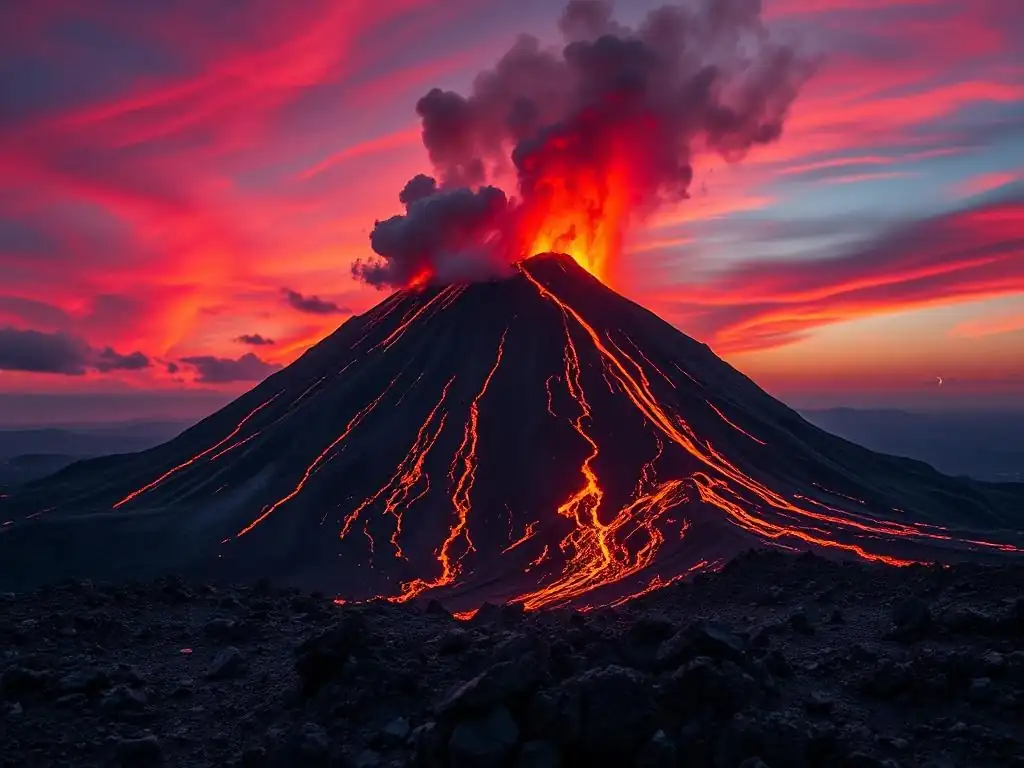
Welcome to Volcano Explorers, where the Earth's fiery secrets are revealed! Ever wondered what makes those seemingly unassuming hills – cinder cones – such dynamic geological players? Prepare to be captivated by the surprisingly explosive world of cinder cone volcano eruptions. They might be smaller, but their impact is anything but miniature. Dive in to uncover the hidden forces behind these fascinating formations and discover why they're more than just piles of ash. What secrets will you unearth?
- Introduction to Cinder Cone Volcanoes: Small but Mighty
- The Eruptive Process of Cinder Cone Volcanoes
- Understanding Cinder Cone Volcano Eruptions: A Closer Look
- Where Do Cinder Cone Volcanoes Form? Geographical Distribution
- The Impact of Cinder Cone Volcano Eruptions on the Landscape
- Cinder Cone Volcanoes: A Hazard Assessment
- Life After Eruption: The Legacy of Cinder Cone Volcanoes
- Conclusion: Appreciating the Power of Small Volcanoes
- Frequently Asked Questions
- Final Reflection: Echoes of Miniature Fury
- Ignite Your Inner Explorer: Unearth More Volcanic Wonders!
Introduction to Cinder Cone Volcanoes: Small but Mighty
What is a Cinder Cone Volcano?
Cinder cone volcanoes are the simplest type of volcano, often described as nature's fire fountains frozen in time. They are characterized by their cone shape, steep slopes, and relatively small size compared to stratovolcanoes or shield volcanoes. Typically, cinder cones rise no more than a thousand feet above their surrounding landscapes, a modest height that belies their potentially explosive nature.
These formations are built from ejected lava fragments – cinder, scoria, and ash – that accumulate around a single vent. The loose, unconsolidated nature of these pyroclastic materials gives cinder cones their distinctive shape and texture, often resembling piles of volcanic rubble.
Despite their diminutive stature, cinder cones are significant geological features. They are found across the globe, often in volcanic fields alongside other types of volcanoes, revealing areas of underlying tectonic activity. Their formation provides valuable insights into the Earth's internal processes, particularly the dynamics of magma ascent and gas release. Studying cinder cones helps volcanologists understand the fundamental mechanisms behind volcanic eruptions and assess potential hazards in volcanic regions.
Why Cinder Cones Are Called "Explosions in Miniature"
The term "explosions in miniature" aptly captures the eruptive style of cinder cones. Unlike the massive, caldera-forming eruptions of supervolcanoes or the effusive flows of shield volcanoes, cinder cone eruptions are generally smaller in scale but still distinctly explosive. This explosivity stems from the interaction of gas and magma during their ascent to the surface. As magma rises, dissolved gases, primarily water vapor, carbon dioxide, and sulfur dioxide, come out of solution and expand rapidly. This expansion drives explosive bursts that eject molten rock and fragmented material into the air.
These "mini-explosions," known as Strombolian eruptions, are characteristic of cinder cone activity. They are named after the Stromboli volcano in Italy, which exhibits persistent, mild explosions. While individual explosions might be relatively small, they occur repeatedly, building the cone over time through the accumulation of ejected material. The term "explosions in miniature" therefore highlights the key process behind cinder cone formation: a series of small, gas-driven explosions that construct these iconic volcanic landforms.
The Eruptive Process of Cinder Cone Volcanoes
Initial Stages of a Cinder Cone Eruption: The First Explosions
The birth of a cinder cone volcano typically begins with a fissure or vent opening in the Earth's crust, often in areas of pre-existing tectonic weakness or within larger volcanic fields. As magma, rich in dissolved gases, ascends towards the surface, the pressure decreases. This pressure reduction allows the dissolved gases to exsolve, forming bubbles within the magma. Initially, these gas bubbles may coalesce and grow, leading to the first explosive bursts. These initial explosions are crucial as they clear the vent pathway and begin to eject fragmented magma into the atmosphere.
These early eruptions are often characterized by relatively weak explosions, expelling incandescent lava fragments and volcanic gases. The material ejected in these initial phases is crucial for initiating the cone building process. As the vent clears and the magma supply stabilizes, the eruption intensity can increase, leading to more frequent and powerful explosions that further contribute to the growth of the cinder cone. The sound of these initial explosions can range from sharp cracks to booming sounds, depending on the intensity and depth of the gas release.
Formation of the Cone: Accumulation of Volcanic Cinder and Ash
The characteristic cone shape of cinder cone volcanoes is a direct result of the way erupted material accumulates around the vent. During Strombolian eruptions, fragments of lava, ranging in size from ash to cinder (pebble to walnut size) and scoria (larger, vesicular fragments), are ejected into the air. These pyroclastic materials follow ballistic trajectories, landing and piling up around the vent. The steepest slopes of a cinder cone, typically around 30-40 degrees, are naturally formed by the angle of repose of this loose, fragmented material.
The accumulation process is relatively rapid in geological terms. Cinder cones can form within weeks to months of continuous eruptive activity. The size and shape of the cone are influenced by factors such as the eruption rate, the duration of the eruption, wind conditions, and the consistency of the ejected material. Over time, as eruptions continue, the cone grows taller and wider, becoming a prominent feature on the landscape. The loose nature of the cinder and ash also makes these cones susceptible to erosion over longer periods, particularly in areas with significant rainfall or wind.
Strombolian Eruptions: A Common Style in Cinder Cone Volcanoes
Strombolian eruptions are the hallmark eruptive style of cinder cone volcanoes. Named after the Stromboli volcano in Italy, these eruptions are characterized by discrete, moderate explosions that eject incandescent bombs and lapilli (small rock fragments) to heights of tens to hundreds of meters. Strombolian eruptions are driven by the bursting of large gas bubbles at the magma surface within the volcanic conduit. These bursts are relatively gentle compared to the powerful Plinian eruptions associated with stratovolcanoes, but they are persistent and contribute significantly to cone building.
The rhythm of Strombolian eruptions can vary from nearly continuous, as seen at Stromboli itself, to intermittent bursts occurring every few minutes to hours. The explosions are often accompanied by bright flashes and booming sounds, making them visually and audibly dramatic, albeit on a smaller scale than larger explosive eruptions. The ejected material typically falls back to the ground near the vent, accumulating to build the cinder cone. Strombolian activity represents a balance between magma supply and gas release, where gas pressure builds up sufficiently to cause explosions but is not so excessive as to produce highly destructive eruptions.
Understanding Cinder Cone Volcano Eruptions: A Closer Look
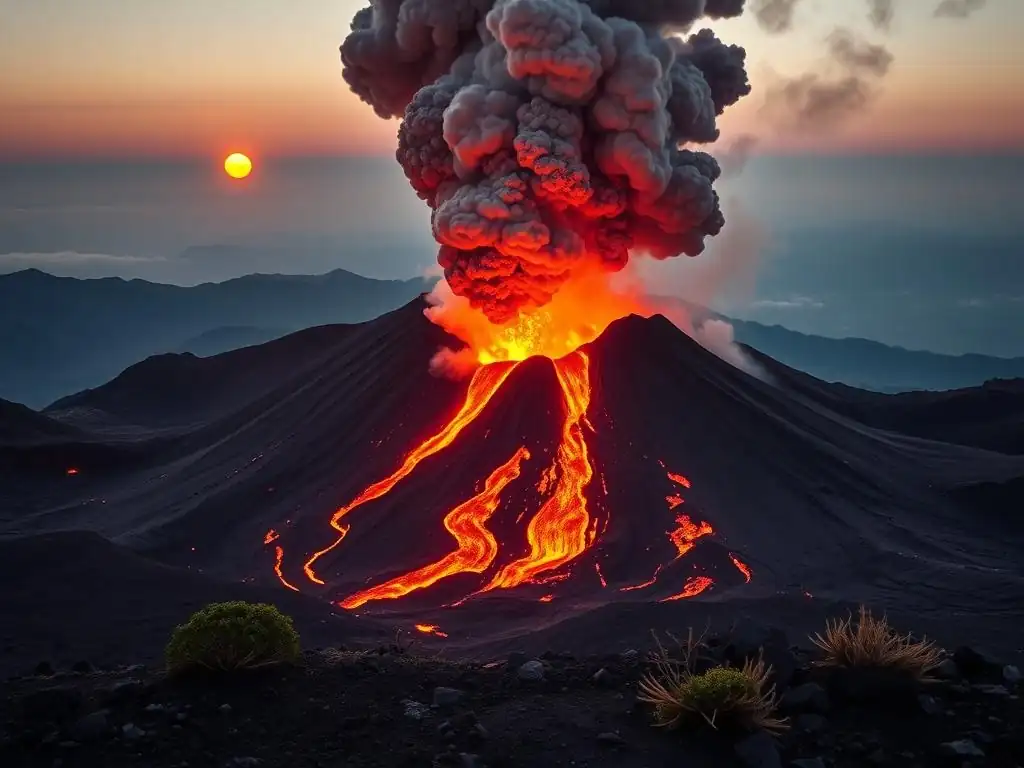
The Role of Gas in Cinder Cone Volcanic Activity
Gases are the primary driving force behind cinder cone volcano eruptions. Magma, deep within the Earth, contains dissolved gases, mainly water vapor, carbon dioxide, sulfur dioxide, and smaller amounts of other volatile compounds. As magma rises towards the surface, the pressure decreases, causing these dissolved gases to come out of solution and form bubbles. The volume of gas in magma can be substantial; for example, basaltic magma, common in cinder cone eruptions, can contain up to a few percent gas by weight, which expands dramatically as it reaches atmospheric pressure.
The expansion of these gas bubbles within the magma is responsible for the explosive nature of Strombolian eruptions. As bubbles grow and coalesce, they increase the pressure within the magma conduit. When the pressure overcomes the strength of the surrounding rock and the surface tension of the magma, the bubbles burst violently, fragmenting the magma and propelling pyroclastic material into the air. The type and amount of gas present in the magma significantly influence the style and intensity of cinder cone eruptions.
Magma Composition and its Influence on Eruption Style
The composition of magma plays a crucial role in determining the eruptive style of cinder cone volcanoes. Most cinder cones are formed from basaltic magma, which is relatively low in silica content and viscosity compared to the andesitic or rhyolitic magmas that often fuel stratovolcanoes. Basaltic magma is more fluid, allowing gas bubbles to rise and coalesce more easily. However, even basaltic magma can contain enough dissolved gas to produce explosive eruptions.
The lower viscosity of basaltic magma facilitates the Strombolian style of eruption. The gas bubbles can rise through the magma column and burst at the surface, leading to the characteristic mild to moderate explosions. If the magma were more viscous, like rhyolitic magma, the gas bubbles would have difficulty escaping, potentially leading to a build-up of pressure and more violent, Plinian-style eruptions. The basaltic composition of magma in cinder cone eruptions thus contributes to their characteristic "explosions in miniature" style, producing smaller, more frequent eruptions compared to volcanoes with more silica-rich magmas.
Eruption Duration and Intensity: What to Expect from a Cinder Cone
Cinder cone volcano eruptions are typically short-lived and monogenetic, meaning they erupt only once from a particular vent. Eruption durations can range from a few weeks to several years, but most last for only a few months. The intensity of cinder cone eruptions is generally considered low to moderate, with eruption columns rarely exceeding a few kilometers in height. The Volcanic Explosivity Index (VEI) for cinder cone eruptions typically ranges from 0 to 3, indicating relatively small explosive events compared to the VEI scale which goes up to 8.
Despite their relatively low intensity, cinder cone eruptions can still pose hazards, particularly in the immediate vicinity of the vent. Falling volcanic bombs and lapilli can cause damage and injury close to the cone. Lava flows, although often limited in extent due to the small magma volumes, can still inundate nearby areas. The accumulation of ash and cinder, known as tephra fall, can also impact surrounding regions, though usually less severely than from larger explosive eruptions. While not as catastrophic as major volcanic events, cinder cone eruptions are dynamic geological processes that reshape landscapes and present localized hazards.
Where Do Cinder Cone Volcanoes Form? Geographical Distribution
Cinder Cones in Volcanic Fields: Clusters of Activity
Cinder cone volcanoes are commonly found in volcanic fields, which are broad areas characterized by numerous volcanic vents and a variety of volcanic landforms. Volcanic fields often develop in regions of crustal extension or thinning, where magma can easily ascend to the surface. These fields can contain dozens to hundreds of individual volcanoes, including cinder cones, shield volcanoes, lava domes, and fissures. The spatial distribution of cinder cones within volcanic fields is often influenced by pre-existing faults and fractures in the Earth's crust, which act as pathways for magma ascent.
The presence of cinder cones in volcanic fields indicates areas of active volcanism and ongoing geological processes. Volcanic fields can be long-lived features, experiencing intermittent periods of eruptive activity over thousands to millions of years. Studying the distribution and characteristics of cinder cones within volcanic fields provides valuable insights into the underlying magmatic systems and the tectonic evolution of a region. Examples of prominent volcanic fields with numerous cinder cones include the San Francisco Volcanic Field in Arizona, USA, and the Michoacán-Guanajuato Volcanic Field in Mexico.
Famous Examples of Cinder Cone Volcanoes Around the World
Cinder cone volcanoes are distributed globally, showcasing diverse geological settings and eruptive histories. Parícutin Volcano in Mexico is perhaps one of the most famous examples, renowned for its dramatic birth in a cornfield in 1943. This volcano grew rapidly, reaching a height of over 400 meters within a year and burying two villages before ceasing eruption in 1952. Parícutin serves as a remarkable case study of cinder cone formation and eruption.
Sunset Crater Volcano National Monument in Arizona, USA, preserves a well-preserved cinder cone that erupted around 1085 AD. The dark, cinder-covered landscape contrasts sharply with the surrounding painted desert, offering a striking visual example of cinder cone volcanism. Capulin Volcano National Monument in New Mexico, USA, showcases a classic, symmetrical cinder cone with a well-defined crater, providing excellent opportunities for geological study and hiking. These examples, among many others worldwide, illustrate the global distribution and diverse expressions of cinder cone volcanism.
The Impact of Cinder Cone Volcano Eruptions on the Landscape
Lava Flows and Their Effects on Surrounding Areas
While cinder cone volcanoes are primarily known for their explosive eruptions of pyroclastic material, they can also produce lava flows. Lava flows from cinder cones are typically basaltic in composition and tend to be relatively small in volume and extent compared to those from shield volcanoes. These flows often erupt from vents at the base of the cinder cone or from fissures that open up around the cone's flanks. Due to the lower viscosity of basaltic lava, these flows can travel for several kilometers, inundating and reshaping the surrounding terrain.
The impact of lava flows on the landscape can be significant. They destroy vegetation, alter drainage patterns, and cover existing land surfaces with solidified rock. In populated areas, lava flows can pose a direct threat to infrastructure, homes, and agricultural land. However, lava flows also create new land and contribute to long-term landscape evolution. The solidified lava flows from cinder cones provide valuable geological records of past volcanic activity and contribute to the formation of volcanic landscapes.
Tephra Fall: Ash and Cinder Deposition and its Consequences
Tephra fall, the deposition of volcanic ash, cinder, and other pyroclastic fragments, is a significant consequence of cinder cone volcano eruptions. During Strombolian eruptions, fragmented material is ejected into the atmosphere and then falls back to the ground, blanketing the surrounding landscape. The thickness and distribution of tephra fall depend on factors such as eruption intensity, wind direction, and distance from the vent. Close to the cinder cone, tephra deposits can be thick, forming a layer of loose volcanic material.
Tephra fall can have a range of impacts on the environment and human activities. Ashfall can disrupt air travel, damage infrastructure, contaminate water supplies, and impact agriculture. The weight of ash accumulation can cause roofs to collapse. In agricultural areas, ashfall can bury crops and disrupt grazing lands. However, over time, weathered tephra can enrich soils, providing essential nutrients for plant growth. The long-term effects of tephra fall can be both destructive and beneficial, shaping ecosystems and influencing land use patterns.
Alteration of the Environment: Short-Term and Long-Term Effects
Cinder cone volcano eruptions, although relatively small in scale compared to other types of volcanic eruptions, significantly alter the environment in both the short and long term. In the short term, eruptions can cause widespread devastation in the immediate vicinity of the volcano. Vegetation is destroyed by lava flows and tephra fall, and landscapes are reshaped by cone building and pyroclastic deposits. Air and water quality can be affected by volcanic gases and ash.
However, volcanic landscapes are also remarkably resilient. Over time, ecosystems begin to recover and colonize the newly formed volcanic terrain. Pioneer plant species gradually establish themselves on cinder cones and lava flows, initiating ecological succession. Volcanic ash weathers to release nutrients, enriching soils and supporting plant growth. In the long term, cinder cone volcanoes become integral parts of the landscape, contributing to biodiversity and shaping regional ecosystems. The volcanic features themselves can become habitats for specialized plant and animal communities adapted to volcanic environments.
Cinder Cone Volcanoes: A Hazard Assessment
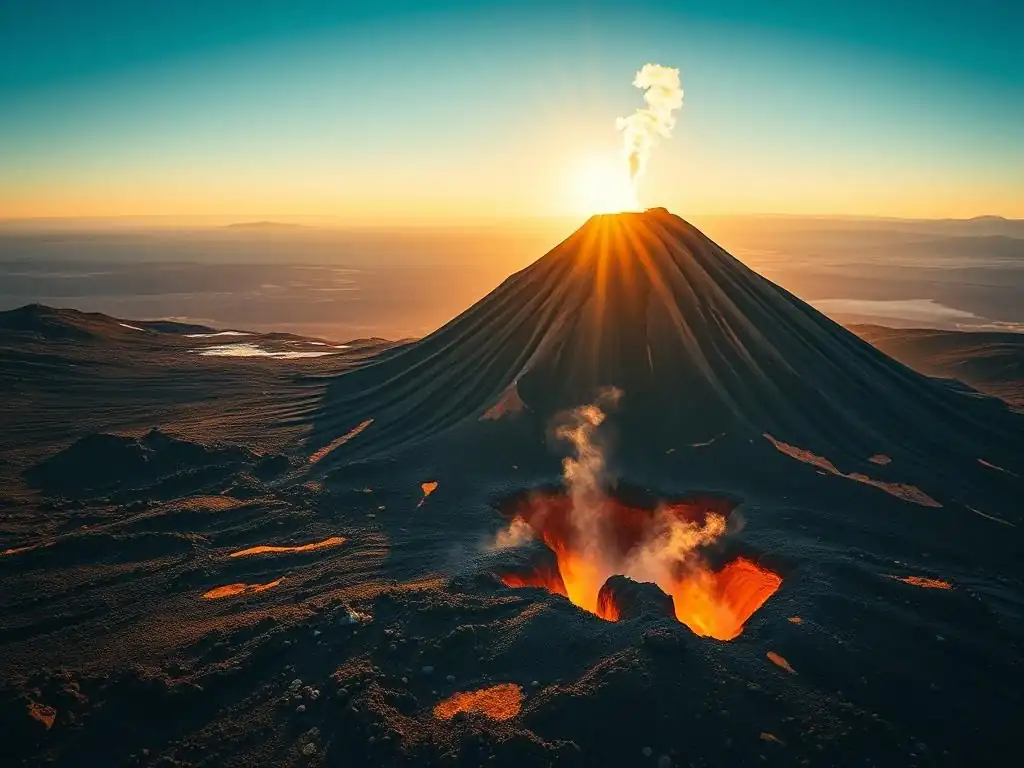
Potential Risks Associated with Cinder Cone Eruptions
Despite their smaller size and generally less violent eruptive style compared to stratovolcanoes, cinder cone eruptions still pose a range of potential hazards. Pyroclastic fall, including volcanic bombs and lapilli, is a significant risk in areas close to the vent. These projectiles can cause injury or death and damage property. Lava flows, while typically limited in extent from cinder cones, can still destroy infrastructure and engulf populated areas if eruptions occur near settlements.
Tephra fall (ashfall) can impact larger areas downwind of the volcano. While individual ashfalls from cinder cones may not be as thick or widespread as from major explosive eruptions, they can still disrupt transportation, damage agriculture, and cause respiratory problems.
Volcanic gases, such as sulfur dioxide, released during cinder cone eruptions can also pose health risks, particularly for people with respiratory conditions. Although cinder cone eruptions are often considered less hazardous than eruptions from stratovolcanoes, it's crucial to recognize and assess the specific risks associated with each cinder cone based on its location, eruptive history, and proximity to population centers.
Monitoring Cinder Cone Activity: Early Warning Signs
Monitoring cinder cone volcanoes is crucial for hazard mitigation and public safety, especially in areas with active or potentially active volcanic fields. While cinder cones are often considered monogenetic, meaning they erupt only once, new cinder cones can form in previously quiet volcanic fields. Monitoring techniques used for cinder cones are similar to those employed for other types of volcanoes and include seismic monitoring, which detects ground vibrations associated with magma movement and volcanic activity. Increased seismicity can be an early warning sign of an impending eruption.
Ground deformation monitoring using GPS and satellite-based techniques can detect subtle changes in the shape of the ground surface, which can indicate magma accumulation beneath the volcano. Gas monitoring measures the composition and flux of volcanic gases released from vents or fumaroles, changes in gas emissions can signal changes in volcanic activity. Thermal monitoring using infrared sensors can detect changes in ground temperature, which may indicate magma ascent. By integrating data from these monitoring techniques, volcanologists can assess the state of a cinder cone volcano and provide early warnings of potential eruptions.
Safety Measures During a Cinder Cone Volcanic Eruption
Knowing the appropriate safety measures during a cinder cone volcanic eruption is essential for people living in or visiting volcanic areas. During an eruption, it's crucial to follow the instructions of local authorities and emergency responders. Evacuation orders should be obeyed promptly and efficiently. If evacuation is not possible, seek shelter indoors, ideally in a sturdy building away from the immediate vicinity of the volcano.
To protect against ashfall, wear a dust mask or respirator and goggles to prevent inhalation of ash and eye irritation. Cover exposed skin to avoid irritation from ash. Stay indoors as much as possible and close windows and doors to minimize ash entry into buildings. Be aware of the potential for lahars (volcanic mudflows), particularly in areas with steep slopes and water sources, and move to higher ground if lahars are a risk. After an eruption, continue to follow official guidance and be aware of potential secondary hazards such as landslides and remobilized ash.
Life After Eruption: The Legacy of Cinder Cone Volcanoes
Colonization of Volcanic Landscapes: Plant and Animal Life
Despite the initially destructive nature of volcanic eruptions, cinder cone landscapes are surprisingly resilient and become sites of ecological renewal. Primary succession begins soon after an eruption as pioneer species colonize the barren volcanic terrain. These hardy plants, often lichens, mosses, and certain grasses and shrubs, are adapted to harsh conditions, including nutrient-poor soils and exposure to the elements. They gradually break down volcanic rock, contributing to soil formation and creating conditions for other plant species to establish.
Animal life also gradually returns to volcanic landscapes. Insects, birds, and small mammals are among the early colonizers, followed by larger animals as vegetation cover increases. The specific plant and animal communities that develop on cinder cones depend on factors such as climate, elevation, surrounding ecosystems, and the age of the volcanic feature. Over time, cinder cone landscapes can transform into diverse ecosystems, showcasing nature's capacity for recovery and adaptation.
Cinder Cones as Tourist Attractions and Educational Sites
The dramatic landscapes created by cinder cone volcanoes often become popular tourist attractions and valuable educational sites. Volcano National Parks and Monuments, such as Lassen Volcanic National Park in California and Capulin Volcano National Monument in New Mexico in the USA, protect cinder cones and associated volcanic features, allowing visitors to experience volcanic landscapes firsthand. Hiking trails to the summit of cinder cones offer panoramic views of volcanic terrain and opportunities to learn about volcanic processes.
Cinder cones provide excellent outdoor classrooms for studying geology, ecology, and natural history. Interpretive centers and guided tours at volcanic sites educate the public about volcano formation, eruptive processes, hazards, and the ecological significance of volcanic landscapes. The accessibility and relatively small scale of many cinder cones make them ideal locations for scientific research and public outreach, promoting a greater understanding and appreciation of volcanism.
The Enduring Beauty and Scientific Value of Cinder Cones
Cinder cone volcanoes, while seemingly small and simple volcanic features, possess both enduring beauty and significant scientific value. Their symmetrical cone shapes, often contrasting with surrounding landscapes, create visually striking landforms that attract photographers, artists, and nature enthusiasts. The stark, volcanic terrain surrounding cinder cones can evoke a sense of wonder and awe, reminding us of the powerful forces that shape our planet.
Scientifically, cinder cones provide valuable insights into fundamental volcanic processes. Studying their formation, eruptive histories, and geological characteristics helps volcanologists understand magma dynamics, gas release mechanisms, and the evolution of volcanic fields. Cinder cones serve as natural laboratories for studying ecological succession and the resilience of ecosystems in the face of volcanic disturbance. Their accessibility and relative simplicity make them important subjects of ongoing research, contributing to our broader understanding of volcanism and Earth system science.
Conclusion: Appreciating the Power of Small Volcanoes
The Importance of Studying Cinder Cone Volcano Eruptions
Studying cinder cone volcano eruptions is of paramount importance for several reasons. Firstly, despite their smaller scale compared to other types of volcanoes, cinder cones are globally distributed and represent a significant form of volcanic activity. Understanding their eruptive behavior and potential hazards is crucial for risk assessment and mitigation in volcanic regions worldwide. Many populated areas are located near volcanic fields containing cinder cones, making it essential to characterize their potential impacts.
Secondly, cinder cone eruptions provide valuable insights into fundamental volcanic processes. Their relatively simple eruptive style, often dominated by Strombolian activity, allows volcanologists to study the dynamics of gas release and magma fragmentation in detail. Research on cinder cones contributes to a broader understanding of the physics and chemistry of volcanic eruptions, which is applicable to all types of volcanoes. Finally, studying the long-term impacts of cinder cone eruptions on landscapes and ecosystems provides valuable information about ecological resilience and landscape evolution in volcanic environments.
Cinder Cones and the Broader Understanding of Volcanism
Cinder cones, often overlooked due to their modest size, play a vital role in our broader understanding of volcanism. They represent a fundamental type of volcanic eruption, driven by gas-rich magma and characterized by explosive but relatively low-intensity activity. By studying cinder cones, we gain insights into the basic building blocks of volcanism and the processes that shape volcanic landscapes. Their widespread distribution and accessibility make them ideal subjects for both scientific research and public education.
Cinder cones serve as a reminder that volcanic activity comes in many forms and scales. While stratovolcanoes and caldera eruptions often capture public attention due to their dramatic and destructive potential, cinder cones represent a more common and persistent form of volcanism that continuously shapes our planet. Appreciating the "explosions in miniature" of cinder cones allows for a more complete and nuanced understanding of the diverse and dynamic world of volcanoes and their profound influence on Earth's geological and ecological systems.
Frequently Asked Questions
What exactly is a cinder cone volcano?
A cinder cone volcano is a relatively small, steep-sided volcano built from accumulated volcanic cinders and other pyroclastic material ejected from a single vent. They are often found on the flanks of larger volcanoes or in volcanic fields.
How are cinder cone volcano eruptions different from other types of eruptions?
Cinder cone eruptions are typically less explosive and shorter-lived than those of stratovolcanoes. They are characterized by fire fountains and the ejection of hot cinders, rather than massive ash plumes or lava flows.
Are cinder cone eruptions dangerous?
While generally less catastrophic than other volcanic eruptions, cinder cone eruptions can still pose hazards. Falling cinders can cause burns and structural damage, and lava flows can destroy property.
Where are cinder cone volcanoes most commonly found?
Cinder cones are found worldwide in areas with volcanic activity. Some famous examples include Paricutin in Mexico, Sunset Crater in Arizona (USA), and many cones in Iceland.
What should I do if I live near a cinder cone volcano?
It's crucial to be prepared for potential eruptions. Familiarize yourself with evacuation routes, have an emergency kit ready, and stay informed about real-time volcanic activity updates from local authorities and resources like VolcanoExplorers.org.
Okay, here's a final reflection designed to fit your article "The Secret Life of Cinder Cones: Explosions in Miniature," optimized for the keyword "Cinder cone volcano eruptions" and adhering to the structure you provided:
Final Reflection: Echoes of Miniature Fury
The exploration of cinder cone volcano eruptions, as we've seen, reveals a fascinating interplay of geological forces on a manageable scale. While seemingly small compared to their stratovolcano cousins, these miniature explosions offer invaluable insights into the broader dynamics of volcanism and the Earth's restless nature. Understanding these eruptions is not just an academic exercise; it's crucial for hazard assessment and mitigating risks in volcanically active regions around the world.
The enduring fascination with cinder cones lies in their accessibility and the tangible evidence they provide of Earth's power. Witnessing a cinder cone, even a dormant one, evokes a sense of awe and a reminder of the planet's capacity for both creation and destruction. The mountains are calling and I must go,
John Muir famously wrote, and perhaps it's not just the mountains, but the silent, yet potent, stories etched into the landscape by events like cinder cone volcano eruptions that truly beckon us.
As we conclude our journey into the secret life of cinder cones, I invite you to reflect on the lessons learned from these miniature explosions. Consider how understanding these seemingly small events can inform our understanding of larger geological processes and our responsibility to live sustainably on a dynamic planet. Let the echoes of these miniature furies inspire you to learn more, to appreciate the power of nature, and to advocate for responsible stewardship of our Earth.
Ignite Your Inner Explorer: Unearth More Volcanic Wonders!
Thanks for diving into the captivating world of cinder cones with us! We hope you discovered the explosive secrets hidden within these miniature volcanoes and are feeling inspired to learn more. Now, let's take that inspiration and turn it into action!
- Plan Your Next Adventure: Use the Volcano Explorers trip planner on volcanoexplorers.org to find a cinder cone near you and start planning your own explosive exploration! This is the perfect way to experience the thrill of volcanic landscapes firsthand.
- Share Your Discovery: Tell your friends and family about the fascinating world of cinder cones. Help them appreciate the often-overlooked beauty of these small but mighty geological formations. Maybe even convince them to join you on your exploration!
- Delve Deeper: Explore the "Education" section on volcanoexplorers.org to access advanced research papers related to cinder cones around the world and learn about how they shape and have shaped our planet.
What's the most surprising thing you learned about cinder cones, and how will that change the way you view volcanic landscapes? Let us know in the comments!