
Unmasking Cinder Cones: Nature's Miniature Explosive Wonders

Welcome to Volcano Explorers!
Ever wondered about those seemingly small, yet surprisingly powerful volcanic hills dotting the landscape? Prepare to journey into the heart of these geological marvels as we unearth the secrets of cinder cone volcano characteristics. What makes these formations unique, and what explosive stories do they hold? Dive in and discover the dramatic world hidden within these miniature volcanic wonders.
- Introduction to Cinder Cone Volcanoes
- Understanding Cinder Cone Volcano Characteristics
- The Formation Process of Cinder Cone Volcanoes
- Cinder Cone Eruptions: Explosive Nature
- Global Distribution of Cinder Cone Volcanoes
- The Impact of Cinder Cone Volcanoes on the Landscape
- Differentiating Cinder Cones from Other Volcano Types
- Studying Cinder Cones: Volcanological Research and Techniques
- Cinder Cones and Human Interaction: Risks and Opportunities
- Conclusion: Appreciating the Dynamic Nature of Cinder Cones
- Frequently Asked Questions
- Final Reflection: Embracing the Volcanic Legacy
- Embark on Your Cinder Cone Adventure!
Introduction to Cinder Cone Volcanoes
What are Cinder Cones and Why Study Them?
Cinder cones are among the simplest and most common types of volcanoes, often dotting landscapes in volcanic regions across the globe. These geological formations, typically smaller than their shield volcano or stratovolcano counterparts, are characterized by their cone shape and steep slopes. They are built from ejected lava fragments, specifically pyroclastic material, that accumulate around a single vent.
Studying cinder cones offers invaluable insights into fundamental volcanic processes, particularly those associated with explosive eruptions driven by gas-rich magma. Due to their relatively straightforward formation mechanism and often well-preserved structures, cinder cones serve as natural laboratories for volcanologists to understand eruption dynamics, magma ascent, and the hazards associated with explosive volcanism.
Furthermore, the widespread distribution of cinder cones, often found in volcanic fields containing numerous such features, emphasizes their significant role in shaping volcanic landscapes. Analyzing the characteristics of cinder cones, including their size, composition, and distribution patterns, helps researchers reconstruct past volcanic activity, assess potential hazards in volcanic regions, and even understand broader tectonic processes that control magma generation and eruption. Their study bridges the gap between small-scale, localized volcanic events and large-scale geological phenomena, making them crucial subjects in volcanological research.
Resources for Cinder Cone Information
For those eager to delve deeper into the world of cinder cone volcanoes, a wealth of resources is available. Academic institutions with geology and volcanology departments are excellent starting points. Universities often conduct research on volcanic regions and publish findings in scientific journals, many of which are accessible online through databases like JSTOR or Google Scholar.
Geological surveys at the national and state levels, such as the United States Geological Survey (USGS) or the British Geological Survey (BGS), provide comprehensive information, maps, and reports on volcanic areas within their respective jurisdictions. These surveys often have dedicated sections on volcano types, including detailed descriptions of cinder cones and their characteristics.
Beyond academic and governmental sources, numerous books and educational websites cater to both specialist and general audiences interested in volcanoes. Reputable science communication websites and educational platforms often feature articles, documentaries, and interactive resources that explain the science behind cinder cone formation and eruptions in an accessible manner. Museums with geological exhibits, particularly those located near volcanic regions, often showcase displays about local volcanoes, including cinder cones, providing visual and tangible learning experiences. Exploring these diverse resources will provide a comprehensive understanding of cinder cone volcano characteristics and their significance in the broader context of volcanology.
Understanding Cinder Cone Volcano Characteristics
Key Physical Features: Shape and Size
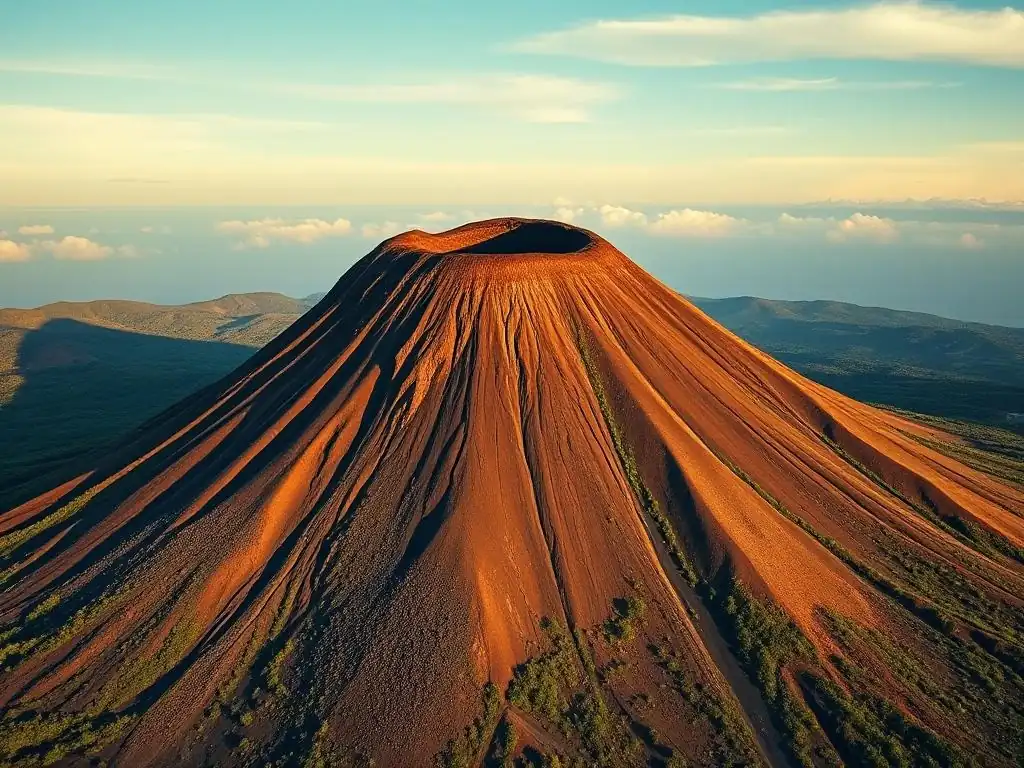
Cinder cone volcano characteristics are readily identifiable in their physical form. The most striking feature is their conical shape, resembling inverted ice cream cones or symmetrical hills rising from the surrounding terrain. This classic cone shape is a direct result of the way pyroclastic material is ejected and deposited during eruptions, accumulating symmetrically around the vent.
Cinder cones are typically characterized by steep slopes, often reaching angles of 30 to 40 degrees, a consequence of the loose, unconsolidated nature of the cinders and scoria that compose them. At the summit, a bowl-shaped crater is usually present, representing the vent from which the volcanic material was erupted. This crater can be relatively shallow or quite deep, depending on the eruption history and subsequent erosion.
In terms of size, cinder cones are generally the smallest type of volcano. Their height can range from tens of meters to several hundred meters. For instance, many cinder cones stand between 30 to 300 meters tall.
Their base diameter is also relatively modest, typically ranging from a few hundred meters to about a kilometer. While they are small in stature compared to massive shield volcanoes like Mauna Loa or towering stratovolcanoes like Mount Fuji, their concentrated form and distinctive shape make them prominent features in volcanic landscapes. The size of a cinder cone is primarily determined by the duration and intensity of the eruption that formed it, as well as the volume of erupted pyroclastic material.
Composition: Pyroclastic Material and Scoria
The defining characteristic of cinder cone volcano composition is their construction from pyroclastic material. This term refers to fragments of rock, lava, and volcanic glass that are explosively ejected from a volcano. In the case of cinder cones, the dominant pyroclastic material is scoria.
Scoria is a type of volcanic rock that is dark in color, typically black or reddish-brown, and characterized by its vesicular texture. This vesicularity, meaning it contains numerous gas bubbles, makes scoria relatively lightweight compared to solid rock. The bubbles are formed by gases that were dissolved in the magma and exsolved as pressure decreased during eruption and ascent.
Scoria is formed from basaltic or andesitic magma, which is relatively less viscous and richer in gases compared to the magma that forms other types of volcanoes. The explosive eruptions that build cinder cones are driven by the rapid expansion of these dissolved gases as the magma nears the surface.
Besides scoria, cinder cones may also contain other pyroclastic materials such as volcanic bombs (larger ejected fragments of molten rock), lapilli (gravel-sized fragments), and volcanic ash, although scoria constitutes the bulk of their composition. The loose and fragmented nature of this pyroclastic material contributes to the characteristic steep slopes and relatively rapid erosion of cinder cones over geological time.
The Formation Process of Cinder Cone Volcanoes
From Magma Ascent to Explosive Eruptions
The formation of a cinder cone volcano begins deep beneath the Earth's surface with the generation of magma. This molten rock, often basaltic in composition for cinder cones, rises through the crust due to its lower density compared to the surrounding solid rock. As the magma ascends, the pressure surrounding it decreases. This pressure reduction allows dissolved gases within the magma, primarily water vapor, carbon dioxide, and sulfur dioxide, to exsolve and form bubbles. The increasing volume of gas bubbles within the magma intensifies the pressure, leading to explosive eruptions at the surface.
These eruptions, typically Strombolian in style, are characterized by relatively mild explosions that eject incandescent pyroclastic fragments into the air. Unlike the highly violent Plinian eruptions associated with stratovolcanoes, Strombolian eruptions are more like fire fountains or bursts of gas and magma. The energy for these eruptions comes from the expanding gas bubbles within the magma, which fragment the molten rock into pieces of varying sizes. This fragmented material, now pyroclastic debris, is then propelled upwards and outwards from the volcanic vent.
The Role of Gas Content in Formation
Gas content plays a pivotal role in shaping the explosive nature and ultimately the formation of cinder cone volcanoes. Magma that forms cinder cones is typically relatively gas-rich, particularly compared to the magma that creates effusive eruptions like those seen in shield volcanoes. The dissolved gases in the magma are the driving force behind the explosive eruptions. As magma rises and pressure decreases, these gases exsolve rapidly, forming numerous bubbles. The expansion of these gas bubbles within the viscous magma causes it to fragment violently, creating pyroclastic material.
The higher the gas content and the more rapid the gas exsolution, the more explosive the eruption will be. This is why cinder cone eruptions are characterized by Strombolian activity, which is driven by the episodic release of gas from the magma column. The type of gas also influences the eruption style.
For example, water vapor is a significant component of volcanic gases and its rapid expansion upon vaporization contributes substantially to explosive eruptions. The interplay between magma viscosity and gas content is crucial; moderately viscous basaltic or andesitic magma with high gas content is ideal for generating the Strombolian eruptions that construct cinder cones.
Building the Cone: Layer by Layer Deposition
The characteristic cone shape of a cinder cone volcano is formed through a process of layer-by-layer deposition of pyroclastic material around the volcanic vent. During Strombolian eruptions, ejected scoria, bombs, and lapilli follow ballistic trajectories, meaning they are launched into the air and fall back to the ground under gravity. Because the eruption is centered around a single vent, the ejected material tends to accumulate symmetrically around it. Larger, heavier fragments typically land closer to the vent, while smaller, lighter fragments may be carried further away by wind and air currents.
As eruptions continue over time, this process of pyroclastic deposition builds up the cone layer by layer. The steep slopes of cinder cones are a direct consequence of the angle of repose of the loose pyroclastic material. The angle of repose is the maximum angle at which granular material can be piled without slumping.
For scoria and cinders, this angle is typically around 30 to 40 degrees. The crater at the summit of the cinder cone is formed as the area directly above the vent remains relatively empty due to the outward ejection of material. Over time, continued eruptions and deposition solidify the cone structure, although cinder cones remain relatively unconsolidated compared to other types of volcanoes.
Cinder Cone Eruptions: Explosive Nature
Types of Eruptions
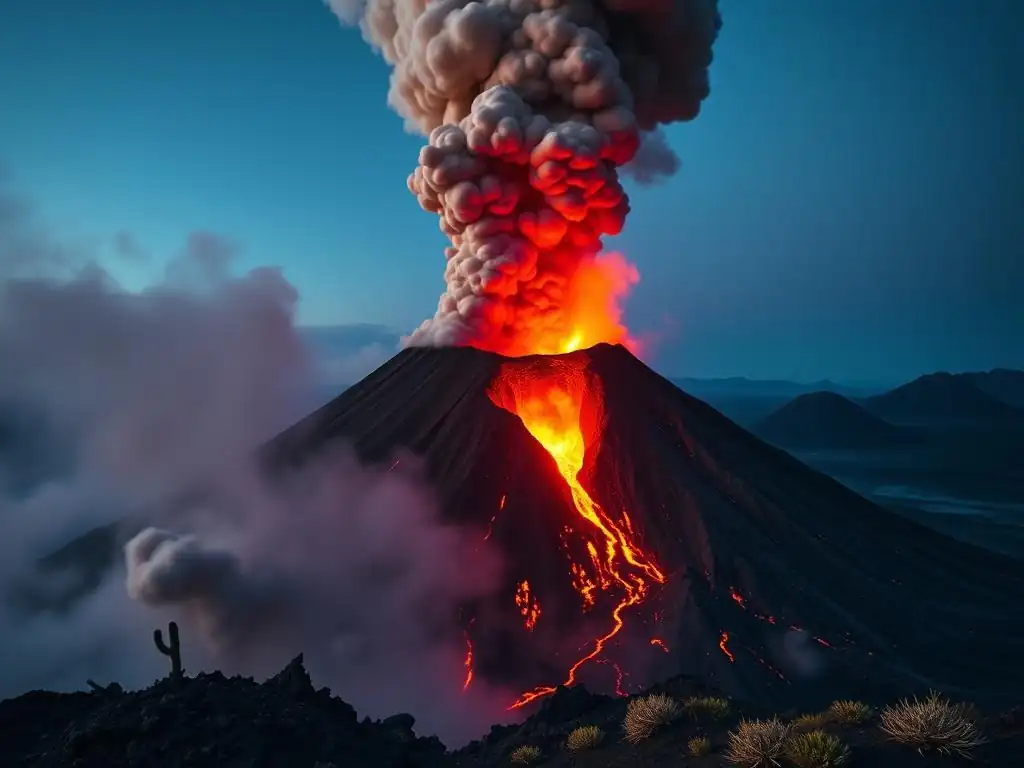
Cinder cone eruptions are predominantly characterized by Strombolian-type activity. Strombolian eruptions are named after the Stromboli volcano in Italy, which exhibits this type of persistent, mild explosive activity. These eruptions are driven by the episodic bursting of gas bubbles at the summit of a magma column. They are characterized by discrete bursts of gas and pyroclastic material, resulting in fire fountains or jets of incandescent lava fragments being ejected into the air. These explosions are typically short-lived, lasting from seconds to minutes, and occur at intervals ranging from minutes to hours.
Strombolian eruptions are considered relatively mild compared to more violent eruption types like Plinian or Vulcanian eruptions. They typically do not produce towering eruption columns that reach high into the atmosphere. Instead, the ejected material is thrown hundreds of meters into the air, falling back to accumulate around the vent. While primarily explosive, Strombolian eruptions can also be accompanied by small lava flows, especially if the eruption transitions in style or if lava breaches the base of the cone. The consistent, relatively low-intensity explosive nature of Strombolian eruptions is what primarily constructs the conical shape of cinder cone volcanoes.
Lava Flows and Pyroclastic Flows: Potential Hazards
While cinder cone eruptions are primarily known for their explosive pyroclastic activity, they can also produce lava flows. These lava flows typically originate from vents at the base of the cinder cone, rather than from the summit crater. This is because the accumulation of pyroclastic material can sometimes block the main vent, forcing magma to find alternative pathways to the surface.
Lava flows from cinder cones are usually basaltic in composition and can travel distances ranging from a few hundred meters to several kilometers, depending on the eruption rate, lava viscosity, and topography. While generally slower moving than pyroclastic flows, lava flows can still be destructive, burning vegetation and covering infrastructure in their path.
Pyroclastic flows, which are hot, fast-moving currents of gas and volcanic debris, are less commonly associated with typical cinder cone eruptions compared to stratovolcanoes. However, under certain circumstances, pyroclastic flows can occur in conjunction with cinder cone activity. For example, if a cinder cone forms on the flank of a larger volcano, or if a more energetic eruption phase occurs, pyroclastic flows could potentially be generated.
These flows are extremely hazardous due to their high temperatures, speed, and density, posing significant risks to areas downslope from the volcano. While lava flows and pyroclastic flows are not the defining hazards of cinder cone eruptions, their potential occurrence should be considered in volcanic hazard assessments.
Duration and Frequency of Volcanic Activity
A defining characteristic of cinder cone volcano eruptions is their typically short duration and monogenetic nature. Monogenetic means that a cinder cone volcano usually forms from a single, relatively short-lived eruptive episode. The entire lifespan of a cinder cone eruption, from the initial onset of activity to its cessation, can range from weeks to months, and in some cases, a few years, but rarely extends beyond that timeframe. For example, the eruption of Parícutin volcano in Mexico, a famous cinder cone, lasted for nine years, which is longer than typical but still considered a relatively short geological timeframe.
Once a cinder cone eruption ceases, the vent usually becomes sealed, and future eruptions are unlikely to occur from the same location. Volcanic activity in the region may continue, but it will likely manifest as new eruptions from different vents, potentially leading to the formation of new cinder cones in the vicinity.
This monogenetic nature contrasts sharply with polygenetic volcanoes like stratovolcanoes, which are built up over hundreds of thousands or even millions of years through numerous eruptive episodes from the same vent system. The short duration and monogenetic nature of cinder cone eruptions contribute to their relatively small size and distinct distribution patterns within volcanic fields.
Global Distribution of Cinder Cone Volcanoes
Parícutin, Mexico: A Famous Example
Parícutin volcano in Michoacán, Mexico, stands as one of the most famous and well-documented examples of a cinder cone volcano. Its birth in 1943 in a cornfield dramatically illustrates the rapid formation and dynamic nature of these volcanic features. Prior to 1943, the area was flat farmland. However, on February 20th, 1943, after weeks of rumbling and seismic activity, Dionisio Pulido, a local farmer, witnessed the ground in his cornfield swell and crack open. Within hours, a small fissure had opened and began erupting pyroclastic material. This marked the beginning of the Parícutin eruption.
Over the next few days, the eruption intensified rapidly. Pyroclastic material, primarily scoria and ash, was ejected into the air, quickly building a cone around the vent. Within the first week, the cone had already reached a height of several tens of meters.
The eruption continued for nine years, during which time the cinder cone grew to its final height of approximately 424 meters above the pre-eruption surface. Parícutin's eruption was primarily Strombolian, characterized by continuous explosive activity and occasional lava flows that eventually covered the nearby villages of Parícutin and San Juan Parangaricutiro. The eruption ceased in 1952, leaving behind a prominent cinder cone and a stark volcanic landscape, offering a remarkable case study in cinder cone formation.
Sunset Crater Volcano, Arizona: A Famous Example
Sunset Crater Volcano National Monument in Arizona, USA, preserves another iconic example of a cinder cone volcano: Sunset Crater. This volcano, estimated to have erupted around 1085 CE, is notable for its well-preserved cone and the surrounding volcanic landscape in the San Francisco Volcanic Field. The eruption of Sunset Crater had a significant impact on the local environment and the Sinagua people who inhabited the region.
Prior to the eruption, the area was likely fertile farmland. However, the eruption deposited a thick layer of volcanic ash and cinders over a wide area, significantly altering the landscape and impacting agricultural practices.
Sunset Crater is characterized by its reddish-orange summit, which gives it its name, derived from the colorful oxidized cinders near the crater rim. The eruption was primarily Strombolian, building a cinder cone that rises approximately 300 meters above the surrounding terrain. Lava flows also erupted from the base of the cone, extending for several kilometers.
Today, Sunset Crater is a popular tourist destination, allowing visitors to witness firsthand the features of a cinder cone volcano and learn about the geological and human history of the area. The well-preserved nature of Sunset Crater makes it a valuable site for volcanological research and public education about cinder cone volcano characteristics.
Cinder Cones in the Western United States: A Closer Look
The western United States is a region particularly rich in cinder cone volcanoes, reflecting its active geological history and ongoing volcanism. Numerous volcanic fields across states like California, Oregon, Nevada, Idaho, and Arizona are dotted with cinder cones, showcasing the prevalence of this volcano type. In California, the Mojave Desert and the Long Valley Caldera region are home to numerous cinder cones, such as those in the Coso Volcanic Field and the Mono-Inyo Craters chain. Oregon's High Lava Plains and the Newberry Volcano area also feature extensive cinder cone fields.
Nevada's Basin and Range province contains many cinder cones, often associated with faulting and extensional tectonics. Idaho's Snake River Plain is another prominent area with numerous cinder cones, reflecting hotspot volcanism. Arizona, as highlighted by Sunset Crater, is also a significant area for cinder cones, particularly within the San Francisco Volcanic Field and other volcanic regions of the Colorado Plateau. These western US cinder cone fields offer diverse examples of cinder cone volcano characteristics, varying in age, size, and associated volcanic features, providing valuable opportunities for volcanological study and illustrating the widespread distribution of these miniature explosive wonders.
The Impact of Cinder Cone Volcanoes on the Landscape
Reshaping the Terrain
Cinder cone volcanoes, despite their relatively small size compared to other volcano types, significantly contribute to reshaping the terrain in volcanic regions. Their formation process itself dramatically alters the pre-existing landscape. The eruption of a cinder cone can transform a flat plain or gently sloping area into a prominent conical hill within a relatively short period. The accumulation of pyroclastic material not only builds the cone itself but also blankets the surrounding area with ash and cinders, changing the surface topography and drainage patterns.
Lava flows associated with cinder cone eruptions further modify the landscape. These flows can carve new channels, fill valleys, and create lava fields, covering pre-existing terrain features. The overall effect of cinder cone volcanism is to increase the topographic complexity of a region, adding volcanic landforms to the existing geological framework. In volcanic fields containing numerous cinder cones, the cumulative impact on landscape evolution can be substantial, creating distinctive volcanic landscapes characterized by cones, lava flows, and pyroclastic deposits. These volcanic features then become subject to erosion and weathering, further shaping the long-term evolution of the terrain.
Influence on Local Ecosystems
The eruption of a cinder cone volcano has a profound and often immediate impact on local ecosystems. Initially, volcanic eruptions are highly destructive to vegetation and animal life in the immediate vicinity. Pyroclastic flows, lava flows, and ashfall can incinerate or bury entire ecosystems, leading to widespread devastation. The deposition of volcanic ash can also alter soil chemistry and fertility, at least in the short term. However, over longer timescales, volcanic materials can enrich soils with nutrients, leading to increased fertility and supporting new plant growth.
Volcanic landscapes, including cinder cones and lava flows, create new habitats and ecological niches. The barren volcanic terrain is gradually colonized by pioneer plant species, initiating ecological succession. Over time, more complex plant and animal communities establish themselves, adapting to the unique conditions of the volcanic environment. Cinder cones themselves can provide diverse microclimates and habitats, with variations in slope aspect, elevation, and substrate influencing vegetation patterns. Volcanic features also affect water drainage and availability, creating localized wetlands or influencing riparian ecosystems. Thus, while initially destructive, cinder cone volcanism ultimately contributes to ecological diversity and landscape heterogeneity.
Long-Term Geological Effects
Beyond their immediate impact, cinder cone volcanoes contribute to long-term geological effects and landscape evolution. Cinder cones are often formed in volcanic fields, which are regions characterized by clusters of volcanic vents and features. The repeated eruptions of cinder cones and other types of volcanoes over geological timescales contribute to the overall growth and evolution of volcanic fields. The accumulation of volcanic rocks and deposits from numerous eruptions builds up the volcanic crust and alters regional geology.
Cinder cones, although relatively small and often eroded over time, leave a lasting geological record. Their pyroclastic deposits and lava flows become incorporated into the stratigraphic record, providing valuable information about past volcanic activity and geological history. The presence of cinder cones can also influence regional tectonic processes. The loading of the crust by volcanic edifices can cause subsidence and flexure, while volcanic activity is often associated with faulting and crustal deformation. In the long term, cinder cone volcanism plays a role in shaping the Earth's surface, contributing to the creation of volcanic landscapes and influencing broader geological processes.
Differentiating Cinder Cones from Other Volcano Types
Cinder Cones vs. Shield Volcanoes
Distinguishing cinder cones from shield volcanoes involves considering key differences in their size, shape, eruption style, and composition. Shield volcanoes, like Mauna Loa in Hawaii, are the largest type of volcano, characterized by their broad, gently sloping, shield-like profile. They are formed by effusive eruptions of highly fluid basaltic lava that flows over long distances, creating vast, low-angle slopes. In contrast, cinder cones are much smaller, with steep conical shapes formed by explosive eruptions of pyroclastic material, primarily scoria.
Eruption styles also differ significantly. Shield volcano eruptions are predominantly effusive, characterized by lava flows with relatively low explosivity. Cinder cone eruptions are primarily explosive, Strombolian in style, ejecting pyroclastic material.
Compositionally, both are typically basaltic, but shield volcanoes are built almost entirely of lava flows, while cinder cones are composed mainly of pyroclastic debris. In terms of size, shield volcanoes can be tens of kilometers in diameter and thousands of meters high, dwarfing cinder cones, which are typically hundreds of meters in both height and diameter. These contrasting characteristics make it relatively straightforward to differentiate cinder cones from shield volcanoes in the field.
Cinder Cones vs. Stratovolcanoes
Stratovolcanoes, also known as composite volcanoes, represent another distinct volcano type easily differentiated from cinder cones. Stratovolcanoes, such as Mount Fuji or Mount Rainier, are large, conical volcanoes with steep upper slopes and gentler lower slopes. They are built from alternating layers of lava flows, pyroclastic deposits, and volcanic debris, hence the "strato" prefix. This layered structure reflects a history of both effusive and explosive eruptions. In contrast, cinder cones are much smaller, simpler in structure, and primarily formed by explosive pyroclastic eruptions.
Stratovolcano eruptions are typically more violent and diverse than cinder cone eruptions. They can produce a range of eruption styles, including explosive Plinian and Vulcanian eruptions, which generate towering eruption columns and pyroclastic flows, as well as lava flows. Cinder cone eruptions are mainly Strombolian, with less intense explosivity. Compositionally, stratovolcanoes are often composed of andesitic to dacitic lavas and pyroclastic materials, which are more viscous and gas-rich than the basaltic materials common in cinder cones. Stratovolcanoes are also significantly larger and more complex geological structures than cinder cones, reflecting their longer lifespan and more varied eruptive history.
Identifying Cinder Cones in the Field
Identifying cinder cones in the field relies on recognizing their characteristic shape, composition, and geological context. The conical shape with steep slopes and a summit crater is a primary visual indicator. The presence of loose, dark-colored, vesicular scoria on the surface and in eroded exposures is another key identifier.
Scoria is relatively lightweight and often has a reddish-brown to black color, easily distinguishable from denser volcanic rocks. Cinder cones are typically found in volcanic fields, often in association with lava flows and other volcanic features. Their relatively small size and simple structure compared to larger volcano types are also helpful distinguishing features.
Observing the surrounding landscape can provide additional clues. Cinder cones often sit on relatively flat terrain or gentle slopes, contrasting with the more mountainous settings of stratovolcanoes. The absence of extensive lava flow aprons and the dominance of pyroclastic deposits further suggest a cinder cone. Examining geological maps and reports of volcanic regions can also aid in identifying cinder cones and confirming their presence in specific locations. By combining visual recognition of shape and composition with contextual geological information, cinder cones can be readily identified in the field, allowing for further study and appreciation of these miniature volcanic wonders.
Studying Cinder Cones: Volcanological Research and Techniques
Monitoring Cinder Cone Activity
While cinder cone eruptions are typically short-lived and monogenetic, monitoring volcanic activity in regions with cinder cones is still crucial for hazard assessment and understanding volcanic processes. Volcanic monitoring techniques, commonly used for larger, more active volcanoes, can also be applied to volcanic fields containing cinder cones. Seismic monitoring is a fundamental tool, detecting earthquakes and volcanic tremor that may precede or accompany eruptions. Although individual cinder cones may not be continuously monitored after formation, regional seismic networks can detect activity that might indicate renewed volcanism in a volcanic field.
Gas monitoring is another valuable technique. Changes in the composition and flux of volcanic gases, such as sulfur dioxide or carbon dioxide, can signal magma movement and potential eruptive activity. Ground deformation monitoring, using techniques like GPS and InSAR, can detect subtle changes in ground surface elevation that may indicate magma accumulation or inflation beneath the surface.
Thermal monitoring, using satellite imagery or ground-based infrared sensors, can detect changes in heat output that may precede or accompany volcanic eruptions. While the focus of monitoring may be on the broader volcanic field rather than individual cinder cones, these techniques provide valuable data for understanding volcanic activity in cinder cone regions.
Analyzing Cinder Cone Deposits
Analyzing the deposits of cinder cone volcanoes provides valuable insights into their eruption history, magma characteristics, and formation processes. Tephrochronology, the dating and correlation of volcanic ash layers, is a key technique for establishing the age of cinder cone eruptions and reconstructing eruption sequences within volcanic fields. By analyzing the chemical composition of volcanic ash and scoria, researchers can determine the type of magma that was erupted and trace its source. Grain size analysis of pyroclastic deposits provides information about the explosivity of eruptions and the transport and depositional processes.
Studying the stratigraphy of cinder cone deposits, the layering and sequence of different pyroclastic units, reveals the eruptive history of the volcano and how it built up over time. Analyzing the orientation and shape of volcanic bombs and other clasts can provide information about eruption dynamics and ballistic trajectories. Paleomagnetic studies of cinder cone deposits can help determine the age of eruptions and track changes in the Earth's magnetic field. By combining these analytical techniques, volcanologists can reconstruct detailed eruption histories of cinder cones and gain a deeper understanding of the processes that govern their formation.
Advancements in Understanding Volcanism
The study of cinder cone volcanoes has significantly advanced our understanding of fundamental volcanological processes. Their relatively simple structure and formation mechanism make them ideal natural laboratories for investigating explosive volcanism. Research on cinder cones has contributed to our knowledge of Strombolian eruption dynamics, magma fragmentation processes, and the role of gas in driving volcanic explosions. Studies of cinder cone deposits have provided valuable data on pyroclastic transport and deposition, helping to refine models of volcanic eruption plumes and ash dispersal.
The monogenetic nature of most cinder cones has allowed researchers to study the entire life cycle of a volcanic eruption, from initiation to cessation, in a relatively short geological timeframe. The distribution patterns of cinder cones within volcanic fields provide insights into the underlying tectonic controls on volcanism and magma migration pathways. Comparative studies of cinder cones in different volcanic regions around the world have revealed commonalities and variations in their characteristics, contributing to a broader understanding of global volcanism. Continued research on cinder cone volcanoes remains essential for advancing volcanological knowledge and improving volcanic hazard assessment.
Cinder Cones and Human Interaction: Risks and Opportunities
Living Near Cinder Cones: Safety
Living near cinder cone volcanoes, particularly within volcanic fields containing numerous cones, presents both risks and opportunities. While individual cinder cone eruptions are typically smaller and less catastrophic than those of stratovolcanoes, they still pose potential hazards. The primary risks associated with cinder cone eruptions include ashfall, lava flows, and in some cases, pyroclastic flows or lahars (volcanic mudflows).
Ashfall can disrupt infrastructure, agriculture, and air travel, and can pose respiratory health hazards. Lava flows can destroy property and infrastructure in their path. Pyroclastic flows and lahars, though less common from typical cinder cones, are highly dangerous and can travel rapidly, posing significant risks to downslope areas.
Safety measures for communities living near cinder cones include volcanic monitoring, hazard assessments, and emergency preparedness planning. Volcanic monitoring networks can detect signs of renewed volcanic activity, providing early warnings. Hazard assessments identify areas at risk from different volcanic hazards, guiding land-use planning and evacuation strategies.
Emergency preparedness plans outline evacuation routes, shelter locations, and communication protocols in the event of an eruption. Community education and awareness programs are crucial for ensuring that residents understand volcanic hazards and know how to respond effectively during a volcanic crisis. While the risks from cinder cones may be perceived as lower than from larger volcanoes, preparedness remains essential for mitigating potential impacts.
Utilizing Cinder Cone Resources: Mining and Geothermal
Cinder cone volcanoes and their associated volcanic fields can offer various resources that can be utilized by humans. Scoria, the primary component of cinder cones, is a valuable material for landscaping, construction, and road building. Its lightweight, porous nature makes it ideal for drainage applications and as a decorative landscaping material. Scoria is also used in horticulture as a soil amendment and in lightweight concrete production. Mining scoria from cinder cones can provide economic benefits, but it must be managed sustainably to minimize environmental impacts and preserve the geological integrity of volcanic landscapes.
Volcanic regions with cinder cones often have geothermal potential. The heat associated with underlying magma systems can be harnessed for geothermal energy production. Geothermal power plants can generate electricity and provide heat for various applications. Geothermal resources can be a sustainable and renewable energy source, reducing reliance on fossil fuels. However, geothermal development must be carefully planned and managed to avoid environmental impacts and ensure long-term resource sustainability. Exploring and utilizing geothermal resources in cinder cone regions can offer economic and environmental benefits, contributing to sustainable development.
Cinder Cones as Tourist Attractions
Cinder cone volcanoes, with their distinctive shapes and dramatic volcanic landscapes, often become popular tourist attractions. Volcanoes, in general, attract significant tourist interest due to their geological significance, scenic beauty, and inherent fascination. Cinder cones, while smaller than other volcano types, are often readily accessible and offer excellent opportunities for hiking, sightseeing, and geological education. National parks and monuments, such as Sunset Crater Volcano National Monument in Arizona, showcase cinder cones and provide visitor facilities, trails, and interpretive programs.
Volcanic tourism, or geotourism, can bring economic benefits to local communities, generating revenue from visitor spending and creating employment opportunities. Responsible tourism practices are essential to minimize environmental impacts, protect volcanic landscapes, and ensure visitor safety. Educational tourism focused on volcanoes can promote scientific literacy and public understanding of geological processes. Cinder cones, as easily recognizable and accessible volcanic features, are valuable assets for geotourism, providing both recreational and educational opportunities while contributing to local economies.
Conclusion: Appreciating the Dynamic Nature of Cinder Cones
The Ongoing Evolution of Landscapes
Cinder cone volcanoes, though seemingly small and simple, are dynamic agents of landscape evolution. Their formation, eruptions, and subsequent erosion continuously reshape volcanic regions. The relatively rapid formation of cinder cones during short-lived eruptions demonstrates the power of volcanic forces to alter the Earth's surface quickly. The pyroclastic deposits and lava flows associated with cinder cones contribute to the ongoing build-up of volcanic landscapes and the creation of distinctive volcanic terrains. Even after eruptions cease, cinder cones are not static features. Erosion, weathering, and vegetation colonization gradually modify their form and integrate them into the surrounding environment.
The presence of cinder cones in volcanic fields highlights the ongoing nature of volcanic activity and landscape change. Volcanic fields are dynamic systems where new eruptions can occur in the future, potentially creating new cinder cones or modifying existing ones. Understanding the processes of cinder cone formation and evolution is crucial for comprehending the broader dynamics of volcanic landscapes and the long-term geological history of volcanic regions. Appreciating cinder cones as part of this ongoing evolution underscores the dynamic nature of our planet and the continuous interplay between volcanic forces and landscape development.
Further Exploration of Volcanoes
Cinder cone volcanoes serve as an excellent entry point into the fascinating and complex world of volcanology. Their relatively straightforward formation and readily observable characteristics make them ideal subjects for learning about volcanic processes. However, they represent just one type of volcano among a diverse array of volcanic features, each with its unique characteristics and eruptive behavior. Exploring other volcano types, such as shield volcanoes, stratovolcanoes, and lava domes, reveals the wide spectrum of volcanic phenomena and the diverse ways in which volcanoes shape our planet.
Delving deeper into volcanology involves investigating the underlying processes that drive volcanic activity, including magma generation, ascent, and eruption. Understanding plate tectonics, mantle plumes, and crustal melting is essential for comprehending the global distribution of volcanoes and the geological settings in which they form.
Exploring the hazards associated with different types of volcanoes and developing strategies for volcanic hazard mitigation is crucial for ensuring the safety of communities living in volcanic regions. Further exploration of volcanoes, beyond cinder cones, opens up a vast and rewarding field of scientific inquiry, offering insights into the Earth's dynamic processes and the powerful forces that shape our world.
Frequently Asked Questions
What are the defining characteristics of a cinder cone volcano?
Cinder cone volcanoes are characterized by their small size, steep slopes (typically between 30-40 degrees), and formation from ejected lava fragments that solidify as they fall around a single vent.
How are cinder cone volcanoes formed?
These volcanoes form during Strombolian eruptions, where gas-rich lava is ejected into the air, cooling and solidifying into cinders and ash. These fragments then accumulate around the vent, building the cone-shaped structure.
Are cinder cone volcanoes dangerous, and why?
While generally smaller and less destructive than other types, cinder cones can still pose risks. Pyroclastic flows and lava flows can emerge from the base, and their steep slopes are prone to landslides, especially during heavy rain.
Where are cinder cone volcanoes typically found?
Cinder cones are often found in volcanic fields alongside other types of volcanoes, or as parasitic cones on the flanks of larger volcanoes. They are globally distributed, occurring in diverse geological settings.
How do volcanologists study cinder cone volcanoes?
Volcanologists study cinder cones by analyzing the composition of ejected materials, mapping the extent of lava flows, and monitoring ground deformation around the volcano. This helps them understand the volcano's history and potential hazards.
Final Reflection: Embracing the Volcanic Legacy
The journey through the characteristics of cinder cone volcanoes reveals more than just geological formations; it unveils a profound connection to the Earth's dynamic processes. Understanding these miniature explosive wonders allows us to appreciate the raw power and creative force that shapes our planet. From their symmetrical cones to their often-violent eruptions, cinder cones serve as potent reminders of the Earth's ever-changing landscape and the forces that lie beneath our feet.
The study of cinder cones has not only broadened our scientific understanding but has also deeply influenced how we perceive the natural world. Witnessing the impact of these relatively small volcanoes underscores the importance of respecting and understanding the power of nature. The Earth is always speaking to us, but we must learn to listen.
This quote encapsulates the essence of geological exploration, reminding us that by studying these formations, we gain invaluable insights into the Earth's past, present, and future.
As we conclude our exploration of cinder cone volcano characteristics, let us carry forward a renewed sense of wonder and responsibility. Consider how the lessons learned from these miniature giants can inform our understanding of larger volcanic systems and, more broadly, our relationship with the planet. Embrace the volcanic legacy, and let it inspire you to become a more informed and engaged steward of our Earth.
Okay, I understand. Here's a CTA tailored for an article titled "Unmasking Cinder Cones: Nature's Miniature Explosive Wonders" on the website Volcano Explorers (volcanoexplorers.org):
Embark on Your Cinder Cone Adventure!
Thank you for joining us on this journey to explore the fascinating world of cinder cones! We hope you've gained a newfound appreciation for these miniature volcanic wonders and the powerful forces that shape our planet. Now, it's time to take your understanding to the next level!
Here are a few ways you can continue your cinder cone exploration:
- Plan a visit to a cinder cone near you! Use our interactive map on volcanoexplorers.org to find accessible locations and experience these geological marvels firsthand.
- Research the specific types of rocks and minerals that comprise cinder cones. Share your findings on our forums and challenge our other readers!
- Spread the wonder by sharing this article with a fellow geology enthusiast and spark their interest in these captivating formations!
Ready to become a true Cinder Cone Connoisseur? Which local cinder cone will you explore first? Share your plans in the comments below!