Volcano Monitoring Techniques: Gas Measurements – Reading the Invisible Signals
Welcome to Volcano Explorers’ dedicated guide on **volcano monitoring techniques through gas measurements**. When a volcano stirs, it doesn’t always announce itself with earthquakes or swelling ground. Often, the first whispers of an impending eruption come from invisible gases seeping from fissures and fumaroles. This subcategory unpacks how volcanologists use **gas chemistry**, **flux rates**, and **remote sensing** to decode these chemical messages. By understanding what gases like sulfur dioxide, carbon dioxide, and hydrogen sulfide are telling us, you’ll learn how scientists forecast eruptions, protect communities, and unravel the deep plumbing of Earth’s most restless giants. Whether you’re a student, a hobbyist, or an aspiring researcher, this resource transforms raw data into actionable science.
🌋 Why Gas Measurements Matter in Volcano Monitoring
Gas emissions are the volcano’s respiratory system. As magma rises, pressure drops, and dissolved volatile gases bubble out, altering the chemical composition of fumaroles and vents. Changes in gas ratios—especially the CO₂/SO₂ ratio—often precede ground deformation or seismic swarms by days or weeks. For example, an uptick in SO₂ flux signals fresh magma near the surface, while a sudden spike in CO₂ can indicate magma ascending from deeper crustal levels. These measurements provide an early warning system that complements other geophysical tools.
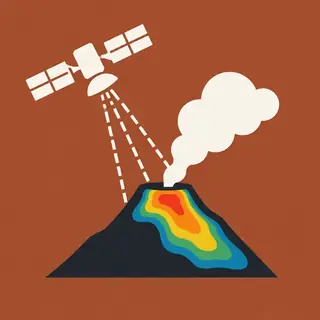
Moreover, gas monitoring helps assess **volcanic hazard zones** during unrest. High concentrations of CO₂ can accumulate in low-lying areas, posing lethal risks to humans and livestock long before an eruption. Continuous gas sampling allows observatories to issue health advisories and evacuation orders based on real-time toxicity thresholds. By pairing ground-based gas sensors with satellite imagery, scientists can track emission plumes across hundreds of kilometers, mapping the footprint of volcanic influence on air quality and aviation safety.
📡 Core Techniques: Direct Sampling vs. Remote Sensing
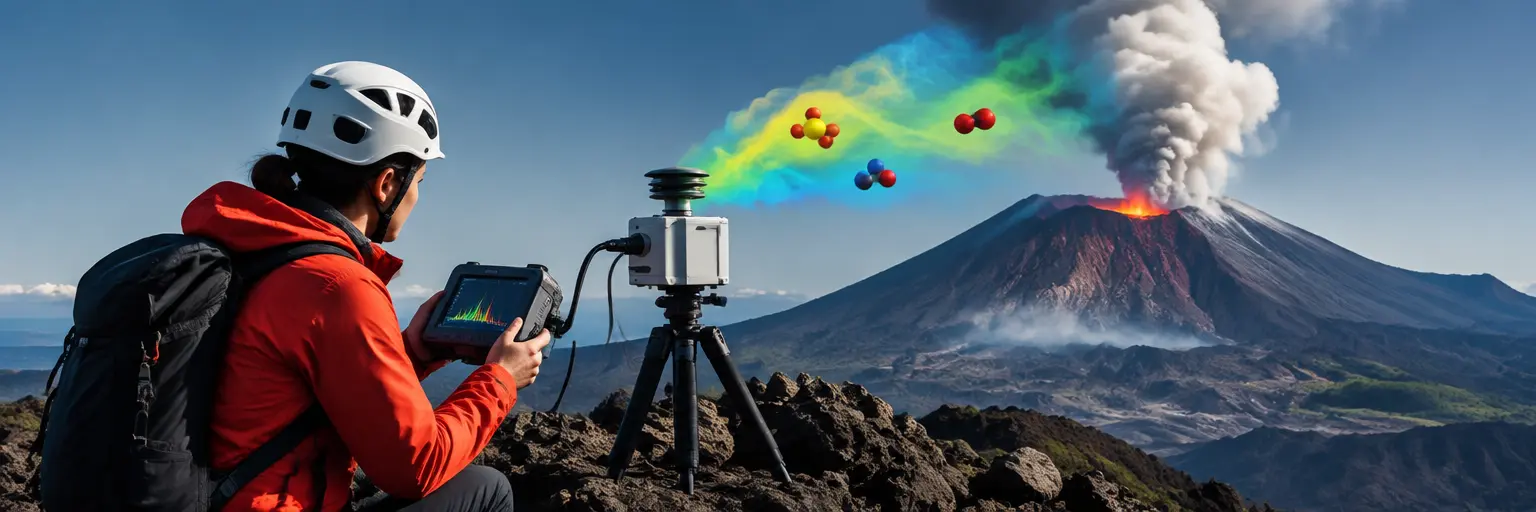
Direct gas sampling involves physically collecting gases from fumaroles, soil vents, or plume edges using evacuated flasks or alkaline solutions. Field portable gas analyzers measure concentrations of SO₂, H₂S, CO₂, and H₂O on-site, providing instant snapshots. Laboratory analysis using mass spectrometry or gas chromatography then reveals isotopic signatures—like δ¹³C of CO₂—which trace the magma’s origin depth and crustal interactions. These methods are precise but labor-intensive and limited to accessible areas.
For broader coverage, remote sensing techniques like Differential Optical Absorption Spectroscopy (DOAS) are mounted on vehicles, drones, or satellites. DOAS measures ultraviolet light absorption to calculate SO₂ flux in volcanic plumes without physical contact. Satellite instruments such as TROPOMI and MODIS detect thermal anomalies and gas emissions from space, enabling routine monitoring of remote or dangerous volcanoes. Combining these datasets yields a 3D view of gas emissions over time, revealing cyclic degassing patterns that predict eruptive phases.
⚖️ Key Gas Species and What They Reveal
Each gas acts as a tracer of magmatic processes. Sulfur dioxide (SO₂) is the most monitored species because it is rare in the atmosphere and easy to detect; its presence almost always indicates shallow magma. Carbon dioxide (CO₂) is less soluble in magma that rises slowly, so elevated CO₂ levels often signal deep magma recharge. Hydrogen sulfide (H₂S) indicates high-temperature hydrothermal systems, while radon spikes correlate with fracture openings that allow gas escape. Monitoring these ratios helps classify a volcano’s state: high CO₂/SO₂ typically suggests a closed conduit with pressurized magma, whereas low ratios imply open degassing and possible imminent eruption.
Water vapor (H₂O) is often the most abundant volcanic gas, but it’s challenging to measure due to atmospheric humidity. Isotopic compositions of hydrogen and oxygen in water vapor can discriminate between magmatic and meteoric sources. Halogen gases like HCl and HF are corrosive and can damage vegetation or infrastructure; their presence signals shallow magma degassing. By continuously tracking shifts in these species, scientists can create a “chemical barometer” that gauges the depth and rate of magma ascent, delivering alerts that are often more timely than seismic methods.
🚀 Innovative Tools: Drones, UAVs, and Multi-Gas Sensors
Modern volcano monitoring increasingly employs unmanned aerial vehicles (UAVs) equipped with miniaturized multi-gas sensors. These drones can fly directly into hazardous plumes, collecting real-time data on SO₂, CO₂, H₂S, and temperature without risking human lives. They also capture thermal imaging to locate new fumaroles and measure plume geometry. This technology is especially valuable for volcanoes with inaccessible craters or during explosive activity when ground crews must retreat.
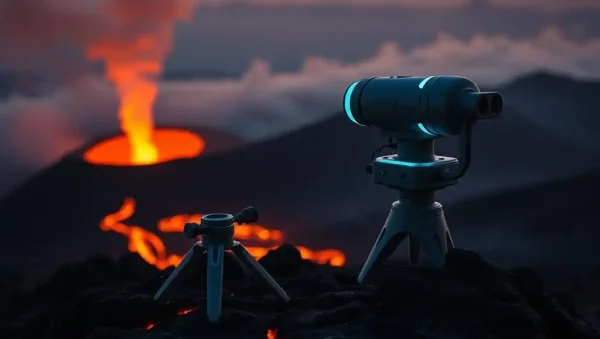
Another breakthrough is the use of open-path Fourier-transform infrared spectroscopy (OP-FTIR), which analyzes gas composition along a laser path without physical intrusion. Additionally, **automatic gas stations** installed on crater rims transmit data via satellite every few minutes, creating dense time-series datasets. Machine learning algorithms now process these streams to detect anomaly signatures—like a sudden doubling of SO₂ flux—triggering immediate volcanic alert levels. These tools have transformed volcano monitoring from a seasonal field campaign into a continuous, near-real-time surveillance network.
🌍 Case Studies: Gas Monitoring in Action
The 2018 Kīlauea eruption in Hawaii showcased gas monitoring’s predictive power. Weeks before fissures opened, SO₂ emissions at the summit crater dropped dramatically, signaling magma withdrawal and a shift to the lower East Rift Zone. That shift was later confirmed by increased CO₂ and SO₂ flux at the new vents. Similarly, at Villarrica in Chile, continuous gas measurements detected a sudden rise in CO₂/SO₂ ratio 48 hours prior to a minor strombolian burst, enabling local authorities to close hiking trails preemptively and avoid injuries.
In 2021, the Fagradalsfjall eruption in Iceland highlighted the value of satellite gas monitoring for remote eruptions. Instruments on the Sentinel-5P satellite tracked SO₂ plumes drifting across Europe, while ground-based DOAS instruments measured flux rates of up to 60 kilotons per day. These data helped model air traffic disruptions and informed public health advisories about volcanic smog (vog) reaching Reykjavík. Such integrated gas monitoring strategies exemplify how multidisciplinary approaches turn subtle chemical shifts into life-saving foresight.
❓ Frequently Asked Questions
What is the most common gas measured at volcanoes?
Sulfur dioxide (SO₂) is the most commonly measured volcanic gas because it has a distinct ultraviolet absorption signature, is rare in clean air, and correlates strongly with shallow magma. Its flux can be tracked by ground-based DOAS instruments or satellites, making it a reliable indicator of volcanic unrest.
How fast do volcanic gas concentrations change before an eruption?
Gas concentrations can change drastically within hours or days. For example, a sudden increase in SO₂ flux or a shift in CO₂/SO₂ ratio may occur 24-72 hours before an eruption. However, some volcanoes exhibit gradual trends over weeks, so continuous monitoring is essential to distinguish anomaly from background noise.
Can gas measurements predict explosive eruptions?
Yes, but only when combined with other methods. A sharp rise in halogen gases like HCl or HF, along with a high CO₂/SO₂ ratio, often indicates a sealed conduit and accumulating pressure, which increases the likelihood of an explosive eruption. Such signals have been observed before Plinian events.
Are volcanic gases dangerous to human health?
Absolutely. Carbon dioxide can accumulate in low-lying areas and cause asphyxiation, while sulfur dioxide and hydrogen sulfide can irritate lungs and respiratory systems even at low concentrations. Volcanic smog (vog) containing fine sulfate particles can worsen asthma and other conditions, especially near active vents.
Do all volcanoes emit the same types of gases?
No, gas compositions vary by tectonic setting. Subduction-zone volcanoes are richer in water vapor and halogens, whereas hotspots like Kīlauea emit more CO₂ and SO₂. Understanding each volcano’s baseline gas signature is crucial for interpreting anomalies, which is why long-term background datasets are vital for effective monitoring.