Lava Flow Gases: The Silent Killer in Volcanic Eruptions
VolcanoExplorers.org reveals the often-overlooked hazards of lava flow gases, highlighting their deadly potential during eruptions. Learn about these silent killers and stay…
Read article
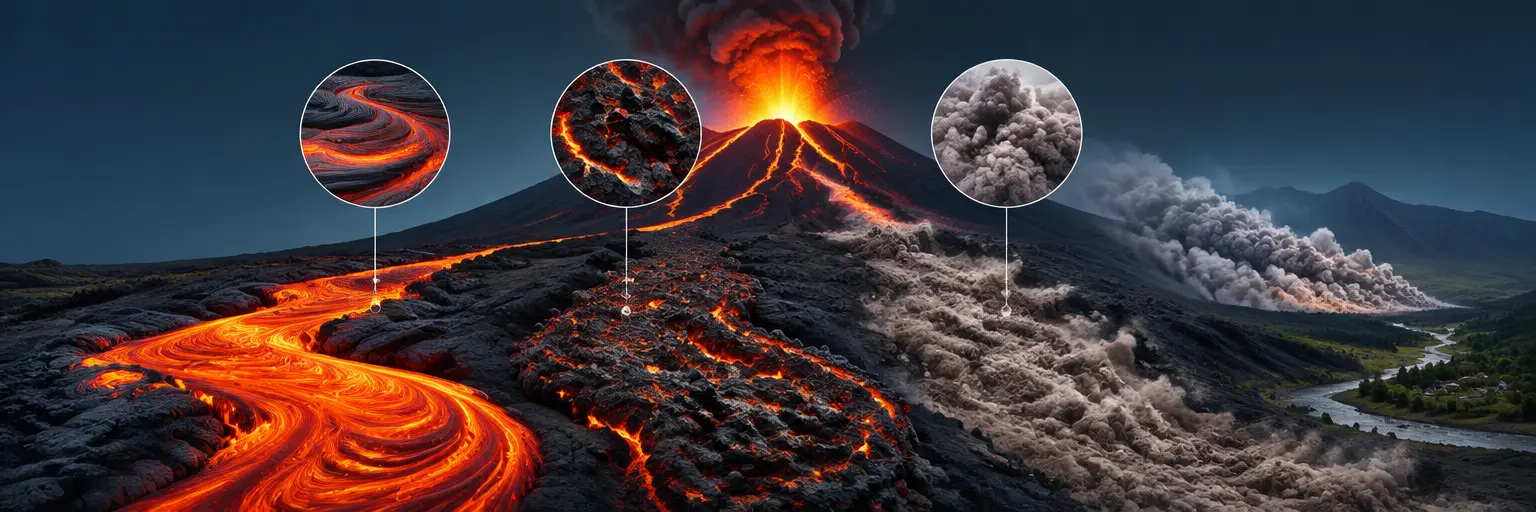
Discover the mesmerizing science of lava flows and how molten rock shapes our planet🌋. Explore the types of lava—from fast-moving pāhoehoe to chunky a’ā—and learn how temperature, gas content, and slope dictate their behavior and speed. Understand the hazards they pose, including property destruction, toxic gases, and secondary fires, plus how scientists monitor and predict their paths. Whether you’re a geology enthusiast or a curious traveler, this guide delivers expert insights into the fiery rivers that redefine landscapes—and the vital safety measures for those living in their shadow🔥.
VolcanoExplorers.org reveals the often-overlooked hazards of lava flow gases, highlighting their deadly potential during eruptions. Learn about these silent killers and stay…
Read article
VolcanoExplorers.org reveals the science behind lava flows and explores crucial strategies for mitigating their devastating impact. Learn how communities near active volcanoes…
Read article
Uncover the secrets of volcanic power! VolcanoExplorers.org reveals the fascinating chemistry of volcanic lava, exploring magma formation and the explosive forces that…
Read article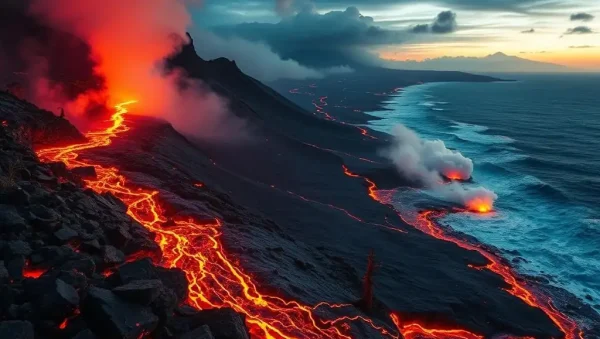
Witness the breathtaking lava flow journey explained, from its fiery birth deep within a volcano's crater to its eventual chilling solidification on…
Read article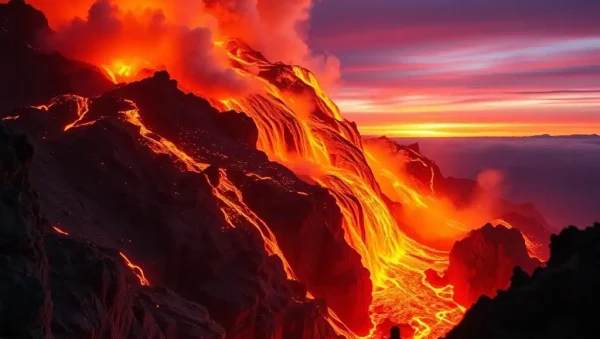
Witness firsthand the explosive power of lava flows! VolcanoExplorers.org unveils the science and breathtaking beauty of volcanic eruptions, offering educational resources, safety…
Read article
VolcanoExplorers.org reveals the surprising long-term economic impact of lava flows, extending far beyond initial devastation. Discover how volcanic landscapes, though initially destructive,…
Read article
Explore Iceland's dramatic volcanic landscapes through stunning lava flow photography on VolcanoExplorers.org. Discover the science behind these powerful forces and learn about…
Read articleLava flows are among the most mesmerizing yet destructive expressions of volcanic activity. On VolcanoExplorers.org, our subcategory "Lava Flows: Types, Behavior, and Hazards" serves as your definitive guide to molten rock’s journey from vent to landscape. Whether you are a student, a curious traveler, or a resident near active volcanoes, this resource breaks down the science of lava in plain language. You will learn how viscosity and gas content dictate flow style, why some flows move like rivers while others creep like toothpaste, and the real-world risks they pose to communities and ecosystems. Understanding lava behavior is not just academic—it can save lives, so we combine technical accuracy with actionable safety insights.
The Hawaiian terms ʻaʻā and pāhoehoe describe the most common lava flow morphologies, each shaped by temperature, gas, and underlying slope. ʻAʻā flows are rough, jagged, and clinkery, advancing slowly as a stiff crust breaks into rubble. In contrast, pāhoehoe flows are smooth, ropy, and often advance in lobes, because their hotter core allows a flexible skin to fold. Recognizing these flow types in the field helps scientists predict speed and destruction potential, as ʻaʻā tends to be faster on steep gradients but tears apart structures, while pāhoehoe can cover large areas with dense, solid rock.
Beyond appearance, the two types respond differently to cooling and topography. Pāhoehoe can transition into ʻaʻā if it cools or loses gas, often within a single eruption. This classification is vital for hazard mapping: ʻaʻā flows crush and bury infrastructure, while pāhoehoe can overrun roads and buildings with less immediate abrasion but greater coverage. For residents, knowing which type is approaching informs evacuation timing. The Kīlauea eruptions and Mount Etna’s frequent flows offer field examples where this distinction guides emergency responses.
Lava’s behavior is governed by three primary factors: silica content (viscosity), eruption rate, and ground slope. High-silica lavas, like rhyolite, are thick and explosive, rarely forming long flows. Basaltic lavas, with low silica, are fluid and can travel dozens of kilometers—as seen in Iceland’s Laki eruption. Slope accelerates flow velocity, while flat terrain spreads lava into broad sheets, affecting how far and fast it moves. Eruption rate, or the volume of lava emitted per hour, also determines whether flow stays channeled or spreads out.
Temperature and gas content further modify behavior. Hotter, gas-rich lavas stay fluid longer, allowing pāhoehoe to form. Degassed, cooler lavas become sluggish, forming blocky or ʻaʻā flows. Understanding these controls helps volcanologists create predictive models, which are crucial for issuing timely warnings. For example, the 2018 Kīlauea eruption saw a rapid increase in eruption rate, leading to fast-moving flows that engulfed hundreds of homes. By monitoring these parameters, scientists can anticipate flow paths and advise local authorities.
Lava flows pose direct and indirect hazards that extend beyond physical destruction. Directly, they incinerate vegetation, destroy buildings, roads, and utilities, and can bury entire neighborhoods under meters of rock. Indirectly, they ignite wildfires as they advance through forests or grasslands, and they release toxic gases like sulfur dioxide, which can create vog (volcanic smog) that affects respiratory health. The 2018 Kīlauea eruption destroyed over 700 homes and caused air quality alerts across Hawaiʻi Island, illustrating the multi-layered threat.
Additionally, lava entering the ocean can trigger explosive reactions, forming new land but also producing hydrochloric acid and glass shards that are dangerous to breathe. Lava flows can also dam rivers, causing flooding upstream and altering ecosystems. For communities, the primary mitigation is avoidance—mapping lava inundation zones and enforcing no-build areas. Public education is key, as many assume lava flows are slow enough to escape, but fast-moving channelized flows can reach speeds of 10 m/s on steep slopes, leaving little reaction time.
Historical eruptions provide sobering case studies of lava’s destructiveness. The 1783 Laki eruption in Iceland released vast basaltic flows that covered 600 km², along with gases that caused a famine killing 20% of the population. The 1986 Nyiragongo eruption in the Democratic Republic of Congo produced fast-moving lava that reached Goma’s suburbs, killing 147 people. More recently, the 2021 Cumbre Vieja eruption on La Palma destroyed over 2,800 buildings as flows crept toward the sea. Each event teaches new lessons about flow dynamics and risk communication.
Modern monitoring, including satellite imagery and thermal sensors, has improved forecasts, but challenges remain. For example, lava tubes can transport molten rock far beyond visible flows, causing unexpected breakouts. Historical events also show that lava flows rarely cause direct fatalities, but their secondary effects—gas emissions, fires, and infrastructure collapse—are significant. By studying these cases, volcanologists refine evacuation routes and building codes, helping communities adapt to living beside live volcanoes.
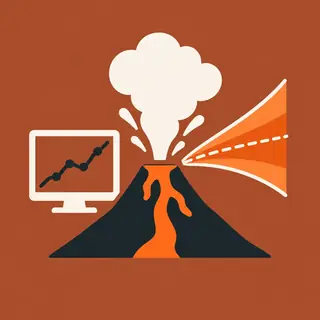
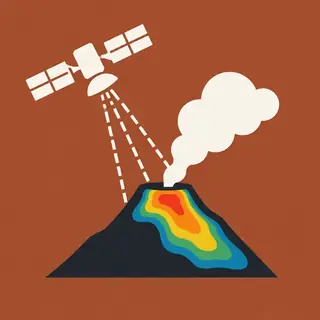
Volcanologists use a suite of tools to monitor lava flows in real time. Ground-based instruments measure ground deformation, temperature, and gas emissions, while drones and satellites capture thermal imagery and flow front positions. These data feed into computer models that simulate flow paths based on topography, viscosity, and eruption rate. Early warning systems can now forecast flow direction hours to days ahead, enabling proactive evacuations. For instance, the USGS’s HVO uses such models to guide Kīlauea response.
However, prediction is not perfect. Sudden changes in eruption rate or collapse of lava tubes can alter flow behavior unexpectedly. Scientists therefore combine modeling with constant visual observation, sometimes using helicopter overflights. For residents, understanding that forecasts are probabilistic—not certain—is crucial for preparedness. Public hazard maps, updated regularly, show likely inundation zones, helping authorities make informed decisions. Community engagement and drills are essential, because even the best science cannot fully remove uncertainty.
Lava flow speed varies widely. Basaltic pāhoehoe flows often move at less than 1 m/h, while channelized ʻaʻā flows can reach 10–20 m/h on steep slopes. Exceptionally fast flows, like those during the 1977 Nyiragongo eruption, traveled at up to 40 km/h. Most flows, however, are slow enough to outwalk, but their heat and gas make approach dangerous.
Attempts to divert lava have had limited success. In 1973, Iceland sprayed seawater to slow a flow, but it only worked partially. Earth barriers have been used in Etna and Hawaiʻi to channel flows, sometimes successfully. However, diverting lava can cause damage elsewhere, and most experts advise against interfering due to ethical and logistical challenges.
While lava itself rarely kills directly, secondary hazards are lethal. Sulfur dioxide and other gases can cause asphyxiation, and lava entering the sea produces acid fumes. Additionally, fires ignited by lava can trap people. The greatest risk is structural collapse or being cut off by flows, which can isolate communities and hinder rescue.
No. Even slow-moving lava radiates intense heat, can ignite clothing, and may have unstable crusts. Gases like hydrogen sulfide are toxic, and walking near the flow edge can cause serious burns. Only trained professionals with protective gear and gas monitors should be close. Public viewing is permitted at safe distances, but heed all official warnings.
When lava enters the ocean, it cools rapidly and shatters into on of volcanic rock, building new coastline. This process is active in Hawaiʻi, where Kīlauea adds acres of land. The new rock is initially unstable and can collapse, but over time, vegetation and soil form. This natural cycle highlights both creativity and destruction in volcanic landscapes.