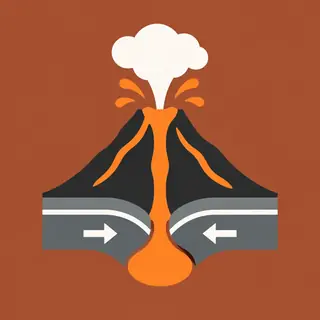
Divergent Boundaries: Magma's Creation Zones at Spreading Plates
Uncover the fiery heart of plate tectonics! VolcanoExplorers.org reveals how magma creation at divergent boundaries fuels the dramatic formation of new crust,…
Read article
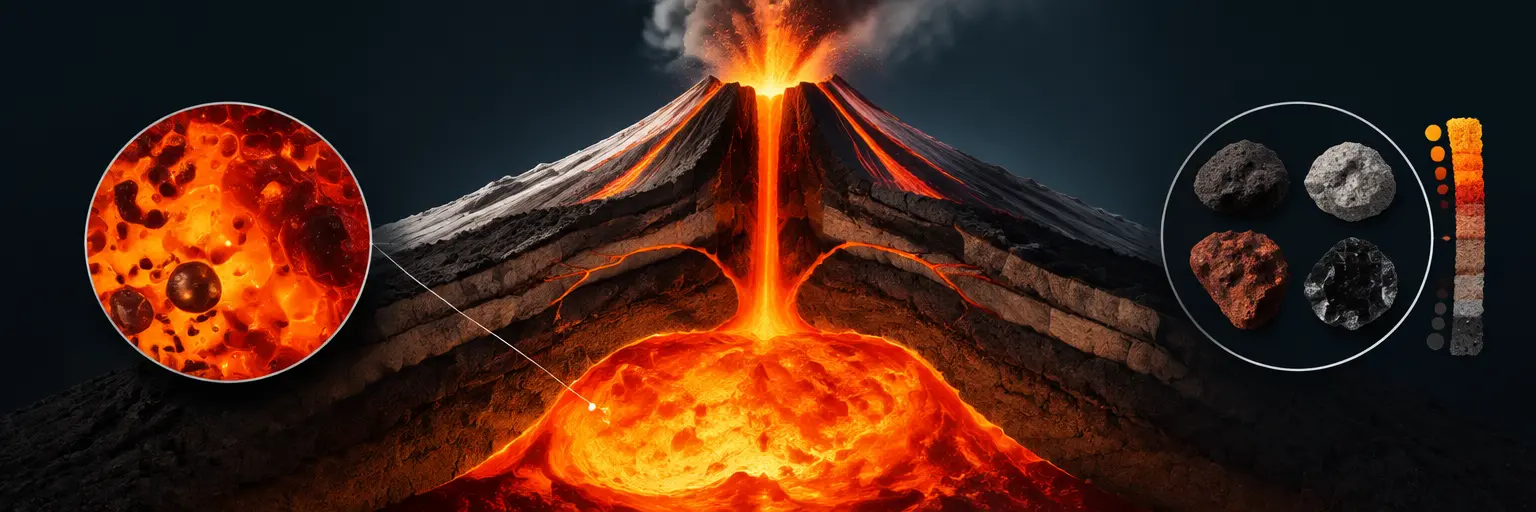
Beneath our feet lies a hidden world of molten rock, where magma formation begins in the intense heat of Earth’s mantle. At VolcanoExplorers.org, we unlock the secrets of this fiery journey—from the partial melting of the mantle to the complex composition that defines each volcano’s personality. Discover how pressure, temperature, and volatile gases shape everything from gentle basaltic flows to explosive rhyolitic eruptions. Dive into the chemistry of magma—silica content, viscosity, and dissolved gases—and see why no two eruptions are ever alike. Whether you’re a geology enthusiast or a curious traveler, understanding magma is your key to decoding volcanic behavior, hazard prediction, and the very forces that build our planet’s landscape. Explore with us and turn the unseen power below into knowledge you can see, feel, and appreciate. Your adventure into Earth’s inner furnace starts right here.
Uncover the fiery heart of plate tectonics! VolcanoExplorers.org reveals how magma creation at divergent boundaries fuels the dramatic formation of new crust,…
Read article
Uncover the secrets of magma's journey from Earth's depths to the surface! VolcanoExplorers.org reveals the complete magma ascent process explained, detailing the…
Read article
Uncover the secrets of our planet's fiery heart! VolcanoExplorers.org reveals the fascinating global magma distribution, mapping molten rock's hidden pathways and showcasing…
Read article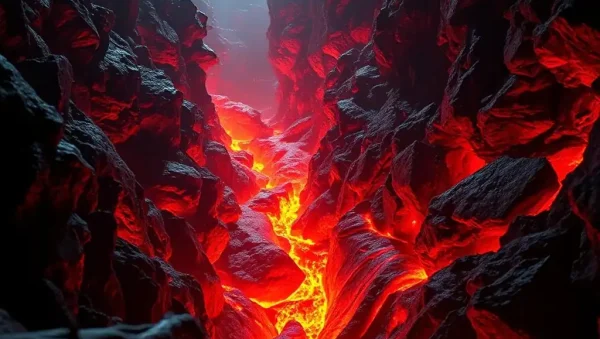
Uncover the secrets of Earth's fiery heart! VolcanoExplorers.org reveals the hidden world of magma pathways, using cutting-edge underground mapping techniques to understand…
Read article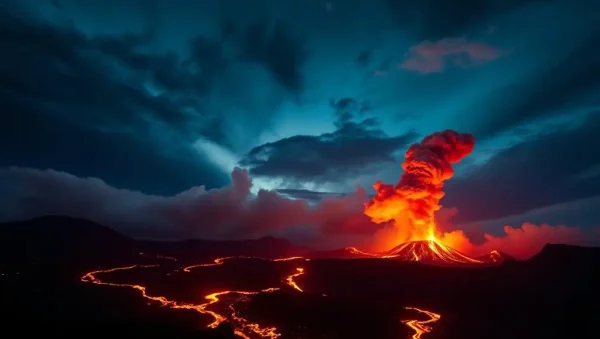
Uncover the mysteries behind volcanic eruptions! VolcanoExplorers.org explores the origins of magma formation, from deep Earth processes to explosive surface events, offering…
Read article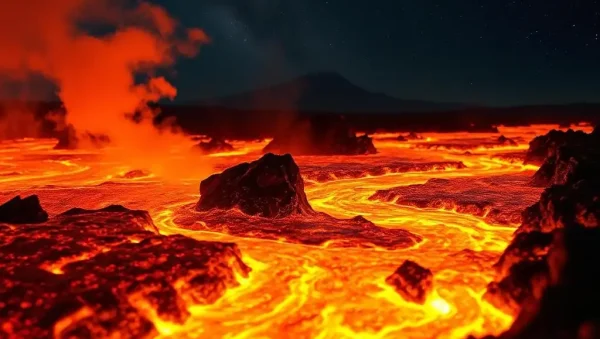
Unravel the mysteries of magma! VolcanoExplorers.org explores magma research's unexplained phenomena, from its deep-Earth origins to its explosive surface manifestations, offering insights…
Read articleWelcome to the heart of volcanic science. At VolcanoExplorers.org, our Magma Formation and Composition subcategory uncovers the hidden processes that begin miles beneath your feet. From the melting of solid rock to the final chemical cocktail that fuels eruptions, this page delivers authoritative, search-engine-optimized insights into igneous petrology, mantle dynamics, and melt evolution. Whether you are a geology student, a curious traveler, or a lifelong learner, you’ll find clear explanations backed by current research. Dive into the deep Earth and understand what makes magma—and the volcanoes it feeds—so powerful and unpredictable.
Magma does not simply appear—it forms under precise conditions of temperature, pressure, and volatile content. In this section, we explore the three primary melting mechanisms: decompression melting at mid-ocean ridges, flux melting in subduction zones where water lowers the solidus, and heat transfer melting from mantle plumes. Expect to learn how partial melting produces basaltic magmas that separate from the solid matrix, creating the primary building blocks of oceanic crust.
You’ll also discover why the mantle’s composition—rich in olivine, pyroxene, and garnet—determines the initial magma’s chemistry. By visualizing the geotherm versus the solidus curve, you’ll grasp why volcanic arcs and hotspots yield different melt fractions. This foundational knowledge is essential for predicting eruption style, from gentle lava flows to violent explosive events. We break down the physics and chemistry without jargon overload, making deep Earth processes accessible to every reader.
Magma composition is far from uniform. This section decodes the major oxide percentages—silica (SiO₂), alumina, iron, magnesium, calcium, sodium, and potassium—that classify magmas from felsic to ultramafic. You’ll see how silica content drives viscosity, gas retention, and explosivity, with high-silica rhyolites being far more dangerous than low-silica basalts. We also explain how trace elements like zirconium and rare earth elements act as fingerprints, revealing the magma’s source depth and the degree of partial melting.
Expect practical tables and comparative examples that tie composition to real volcanoes: Hawaiian tholeiitic basalts versus the andesitic magmas of Mount St. Helens. We’ll discuss normative mineralogy, using the CIPW method to infer which minerals would crystallize at depth. By the end, you can read a geochemical plot and interpret what it means for eruption behavior, hazard assessment, and even the economic potential of volcanic terrains. This is essential reading for anyone serious about volcanic science.
Magma’s physical state depends on its temperature (typically 700–1300°C), confining pressure, and dissolved volatiles like water, carbon dioxide, and sulfur dioxide. Here, we examine how water content drastically reduces melting temperature and increases melt buoyancy, driving magmas upward through the lithosphere. You’ll learn how pressure controls the depth of magma storage in crustal chambers, and why sudden pressure drops can trigger explosive degassing and fragmentation.
We also cover the role of gas exsolution—forming bubbles that accelerate magma ascent—and how the presence of crystals affects rheology. Case studies include the 1980 Mount St. Helens eruption, where water-rich dacite produced a lateral blast, versus the effusive, gas-poor eruptions of Kīlauea. By understanding these control knobs, you can predict whether a volcano will erupt quietly or catastrophically. This section bridges laboratory experiments and field observations, giving you a 360-degree view of magmatic systems.
Once formed, magma begins a complex journey through the crust, a path filled with obstacles like density contrasts, fractures, and pre-existing plumbing systems. This section explains how magma chambers develop over thousands of years through repeated injections, and how crystal fractionation, assimilation, and magma mixing alter the melt’s composition. Expect to see how geophysical imaging (seismic tomography and magnetotellurics) reveals the shape and depth of these reservoirs, from mid-crustal sills to shallow dike swarms.
We also delve into the rise timescales, ranging from days to centuries, and how decompression-induced crystallization can stall magma. You’ll read about the concept of “eruptible” magma—stored at a temperature and crystallinity that permits mobilization—and why only a fraction of any chamber’s volume ever reaches the surface. Real-world examples, such as the Campi Flegrei caldera and the Yellowstone hotspot, illustrate the hazards of hidden magma bodies. This knowledge is vital for volcanic hazard maps and for interpreting precursor signals like ground deformation and gas emissions.
No magma stays constant. Through processes like fractional crystallization, where early-formed crystals sink and remove elements from the melt, and assimilation of surrounding crustal rocks, magma evolves toward more silica-rich, viscous compositions. In this section, we map the Bowen reaction series to glassy obsidian, explaining why a continental arc may start erupting basalt and end with rhyolite. We highlight how mixing between mafic and felsic magmas creates banded pumice and hybrid rocks, visible in many eruption deposits.
You’ll also explore the role of magma recharge, where fresh hot basalt enters a cooler chamber, triggering convection and sometimes leading to sudden explosive eruptions after long quiescence. Examples include the 2010 Eyjafjallajökull eruption, where mixing of compositions produced an ash plume that disrupted air travel. We emphasize how geochemical monitoring—tracking changes in melt inclusion volatiles and isotopic ratios—offers a window into ongoing evolution. This section reveals the dynamic, ever-changing nature of magmatic systems and why each eruption is truly unique.
Understanding magma composition is not purely academic. Here, we connect the dots to volcanic hazard mitigation, geothermal energy exploration, and even ore deposit formation. You’ll learn how high-viscosity, gas-rich magmas cause pyroclastic flows and caldera collapses, guiding emergency planning for populated regions like Naples or Jakarta. Conversely, low-viscosity basaltic magmas create lava fields that slowly overrun infrastructure, leading to different evacuation strategies. We also explore how magmatic hydrothermal systems power Iceland’s geothermal plants and why copper-gold porphyry deposits are linked to cooling shallow plutons.
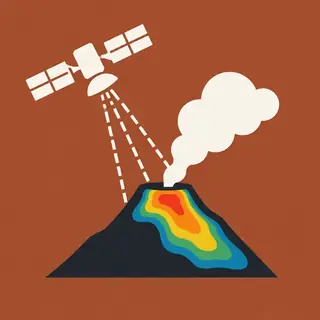
Additionally, we discuss the role of magma composition in shaping landforms—from steep stratovolcanoes to flat shield volcanoes—and how remote sensing via satellite odor spectroscopy detects volcanic gases before eruptions. For travelers and photographers, knowing whether a volcano is likely to produce glowing lava fountains or dangerous ash columns matters for safety and planning. This section provides actionable insights, whether you’re a risk manager, an investor in renewable energy, or simply a volcano enthusiast wanting to understand the world beneath your feet.
Magma is molten rock stored beneath the Earth’s surface, containing dissolved gases and suspended crystals under high pressure. When it erupts and reaches the surface, it is called lava. The key distinction is location: magma is underground, while lava is what flows or explodes above ground. The terms often confuse beginners, but remembering “magma below, lava above” makes it simple.
Differences in tectonic setting—mid-ocean ridges, subduction zones, or hotspots—produce distinct magma chemistries. Factors like the degree of partial melting, mantle source rocks, crustal contamination, and depth of melting all contribute. For example, subduction zones add water, causing melting at lower pressures and yielding andesitic magmas, whereas hotspots like Hawaii melt deep, producing silica-poor basalt.
Geologists analyze erupted lava, ash, and pumice samples, as well as melt inclusions trapped inside crystals. They also measure volcanic gas emissions (like SO₂) and use seismic tomography to image underground chambers. Geochemical analysis of these samples provides a direct window into magma composition, allowing prediction of eruption style based on silica and volatile content.
Yes, it can. Many eruptions tap multiple zones within a heterogenous magma chamber or draw in fresh recharge magma, causing compositional zoning. For instance, a volcano may start with silicic, explosive magma and gradually shift to more mafic, effusive lava over days or weeks. This layering is observed in deposits as alternating ash and lava bands.
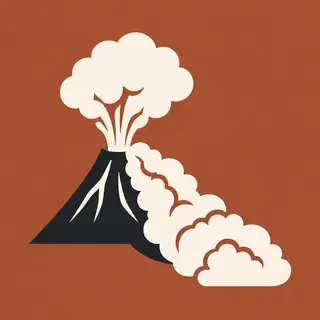
High silica content (greater than 65%) makes magma highly viscous, trapping gases like water vapor and CO₂. As pressure builds, these gases cannot escape easily, leading to violent fragmentation and explosive eruptions producing ash columns, pyroclastic flows, and lahars. In contrast, low-silica basaltic magmas are runny, allowing gases to escape gently, often resulting in Hawaiian-style lava fountains.