
Journey into the Plume: Exploring Volcanic Gases Up Close

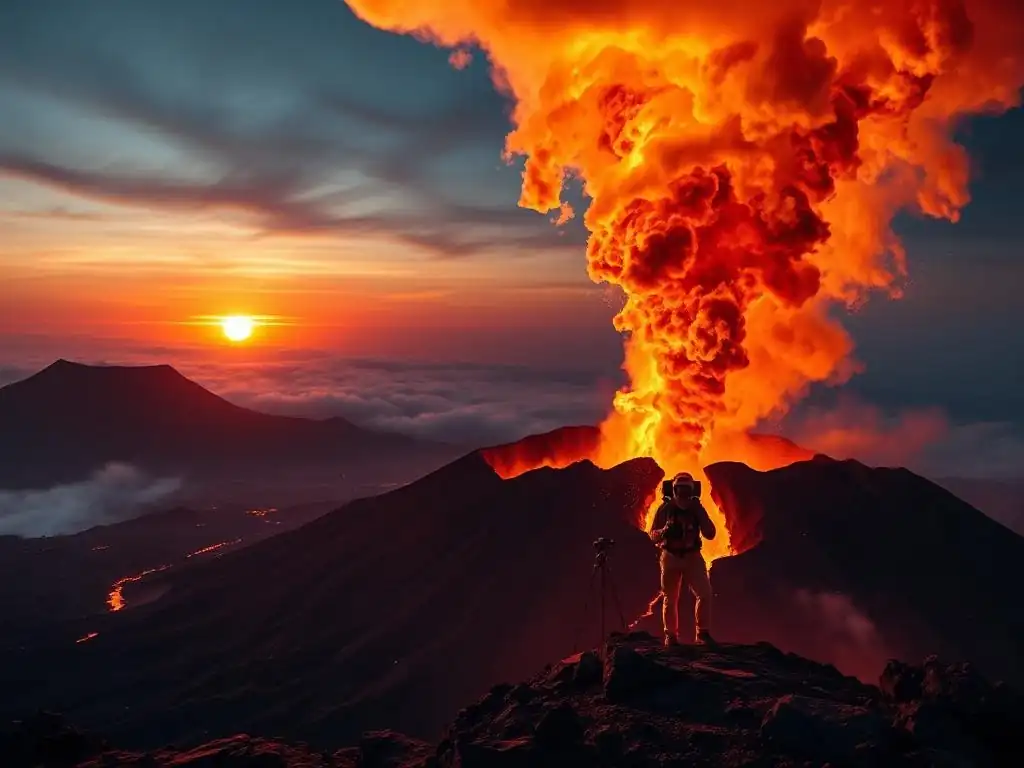
Welcome to Volcano Explorers!
Prepare to be captivated by the raw power and hidden secrets simmering beneath the Earth's surface. Ever wondered what's truly inside a volcanic plume? Our exploration of volcanic gases and their effects will pull you into the heart of these fiery giants, revealing the invisible forces that shape our planet and impact lives. What secrets do these gases hold, and what dangers do they present? Let's find out...
- Understanding Volcanic Gas Emissions: A Comprehensive Guide
- Introduction to Volcanic Gases: Significance in Volcanology
- Detailed Analysis of Volcanic Gas Composition
- Techniques for Measuring Volcanic Gases
- Environmental and Health Impacts of Volcanic Gases
- Case Studies: Volcanic Gas Emissions at Specific Locations
- Safety Protocols for Studying Volcanic Gases
- Future Trends in Volcanic Gas Monitoring
- Conclusion: Significance of Volcanic Gas Research
- Frequently Asked Questions
- Final Reflection: Breathing with the Earth's Breath
Understanding Volcanic Gas Emissions: A Comprehensive Guide
Introduction to Volcanic Gases: Significance in Volcanology
Composition and Importance of Volcanic Gases
Volcanic gases are a crucial component of volcanic eruptions and quiescent degassing, providing valuable insights into the processes occurring beneath the Earth's surface. These gases are primarily composed of water vapor (H₂O), carbon dioxide (CO₂), sulfur dioxide (SO₂), hydrogen sulfide (H₂S), and various trace gases such as hydrogen halides (HCl, HF), carbon monoxide (CO), and helium (He). The exact composition varies depending on magma type, depth, and the stage of volcanic activity. Analyzing the composition of volcanic gases is fundamental because it directly reflects the magmatic conditions and can reveal changes in the volcanic system that precede eruptions.
The study of volcanic gases is essential for understanding magma generation, ascent, and eruption dynamics. Volcanic gases drive eruptions, influencing their explosivity and style. For instance, the presence of dissolved volatiles, particularly water, lowers the melting point of rocks and contributes significantly to the pressure build-up in magma chambers. The release of these gases during eruptions is responsible for phenomena ranging from gentle lava fountains to catastrophic Plinian eruptions. Furthermore, the composition and flux rates of volcanic gases can be used as indicators of volcanic unrest, making their monitoring critical for eruption forecasting and hazard mitigation.
Role of Gas Measurements in Eruption Forecasting and Hazard Assessment
Volcanic gas monitoring plays a pivotal role in modern volcanology, acting as a crucial tool for eruption forecasting and hazard assessment. Changes in the rate and composition of volcanic gas emissions often precede volcanic eruptions, sometimes by weeks, months, or even years. An increase in the flux of gases like SO₂ or CO₂ can indicate magma ascent towards the surface, signaling heightened volcanic activity. Similarly, changes in the ratios of different gases, such as an increase in the CO₂/SO₂ ratio, might suggest deeper magma degassing or changes in magma composition.
Real-time monitoring of volcanic gases allows volcanologists to detect subtle shifts in volcanic activity that may not be apparent through other monitoring techniques, such as seismicity or ground deformation. By establishing baseline gas emission rates and identifying deviations from these baselines, scientists can better assess the likelihood of an impending eruption. This information is then used to inform hazard assessments, issue warnings to communities at risk, and guide decisions regarding evacuation and infrastructure protection. For example, increased SO₂ emissions at volcanoes like Popocatépetl in Mexico are often used to raise alert levels and prepare for potential eruptive activity.
Detailed Analysis of Volcanic Gas Composition
Abundant Gases: Water Vapor (H2O), Carbon Dioxide (CO2), and Sulfur Dioxide (SO2)
Water vapor (H₂O) is typically the most abundant volcanic gas, often constituting more than 60% of the total gas emissions. It originates from various sources, including magmatic water dissolved in the melt, groundwater heated by magma, and meteoric water interacting with hydrothermal systems. While largely benign in terms of direct toxicity, water vapor plays a significant role in eruption dynamics, contributing to explosive activity and influencing plume buoyancy. The condensation of water vapor in volcanic plumes is also responsible for the visible steam clouds often associated with volcanic eruptions.
Carbon dioxide (CO₂) is the second most abundant volcanic gas and is a key indicator of magmatic activity. CO₂ is released from magma at depth and can also originate from the degassing of carbonate rocks in the Earth's crust. Even during periods of volcanic quiescence, many volcanoes release substantial amounts of CO₂ into the atmosphere. Monitoring CO₂ fluxes is crucial as increases can signify magma recharge at depth and potential unrest. For instance, at Mammoth Mountain, California, elevated CO₂ emissions have been linked to deep magma intrusion and have raised concerns about potential volcanic hazards.
Sulfur dioxide (SO₂) is another critical volcanic gas, particularly important for eruption forecasting and environmental impact assessment. SO₂ is released from sulfur-bearing minerals in magma and is readily detectable using remote sensing techniques due to its strong absorption of ultraviolet light. High SO₂ emission rates are often associated with active degassing and can precede explosive eruptions.
Upon release into the atmosphere, SO₂ reacts with water vapor to form sulfuric acid aerosols, contributing to acid rain and influencing climate by reflecting sunlight. The Laki eruption in Iceland in 1783-1784, for example, released massive amounts of SO₂, causing widespread environmental and societal impacts across Europe.
Trace Gases: Hydrogen Sulfide (H2S), Hydrogen Halides (HCl, HF), and Carbon Monoxide (CO)
Hydrogen sulfide (H₂S) is a pungent and toxic trace gas found in volcanic emissions, characterized by its rotten egg smell. Although present in lower concentrations compared to H₂O, CO₂, and SO₂, H₂S poses significant health hazards, even at low levels. Exposure to H₂S can cause irritation of the eyes and respiratory system, and at higher concentrations, it can lead to asphyxiation. H₂S is also involved in the formation of volcanic smog (vog), particularly in volcanic regions like Hawaii, where it reacts with SO₂ and sunlight to create a haze of sulfuric acid and other aerosols.
Hydrogen halides, including hydrogen chloride (HCl) and hydrogen fluoride (HF), are highly reactive and corrosive trace gases released during volcanic eruptions, especially from volcanoes erupting silica-rich magmas. These gases are extremely soluble in water and readily form strong acids upon condensation. Volcanic eruptions can inject significant amounts of HCl and HF into the stratosphere, where they can contribute to ozone depletion and acid deposition.
HF is particularly hazardous due to its high toxicity and ability to cause severe burns and fluorosis in livestock grazing on contaminated vegetation near volcanoes. The 1783-1784 Laki eruption in Iceland released substantial HF, leading to widespread livestock deaths and famine.
Carbon monoxide (CO) is a colorless, odorless, and highly toxic trace gas present in volcanic plumes. It is produced by the incomplete combustion of organic matter in volcanic environments and also directly from magmatic degassing. CO is dangerous because it binds to hemoglobin in the blood, reducing the blood's capacity to carry oxygen, leading to asphyxiation.
While typically found in lower concentrations in volcanic plumes compared to CO₂, CO still poses a localized hazard, especially in areas of poor ventilation near volcanic vents or lava flows. Monitoring CO levels is crucial for ensuring the safety of volcanologists and communities living near active volcanoes.
Factors Influencing Gas Composition: Magma Composition, Depth, and Degassing Processes
The composition of volcanic gases is not static and is influenced by several key factors, including the composition of the magma source, the depth at which degassing occurs, and the processes of gas release and interaction with the surrounding environment. Magma composition is primary, as magmas with different chemical compositions will naturally contain varying amounts of dissolved volatiles. For example, basaltic magmas, typically lower in silica content, tend to be richer in iron and magnesium and may have different volatile signatures compared to rhyolitic magmas, which are silica-rich and often associated with more explosive eruptions.
The depth of magma storage and ascent also plays a crucial role in determining gas composition. As magma rises towards the surface, the pressure decreases, causing dissolved volatiles to exsolve and form gas bubbles.
Deeper degassing processes might favor the release of gases like CO₂, which are less soluble at higher pressures, while shallower degassing may result in a greater proportion of water vapor and sulfur gases being released. The pathway of magma ascent, whether through open conduits or more complex fracture systems, can also influence degassing efficiency and the interaction of gases with surrounding rocks, potentially altering their composition through processes like scrubbing or condensation.
Degassing processes themselves are complex and can vary depending on eruption style and volcanic activity. Open-system degassing, characterized by continuous gas release, might result in different gas compositions compared to closed-system degassing, where gas pressure builds up in a magma chamber before episodic release. Furthermore, the interaction of volcanic gases with hydrothermal systems, groundwater, and atmospheric gases can further modify their final composition observed at the surface. Understanding these complex interplay of factors is critical for interpreting volcanic gas data and using it effectively for volcano monitoring and hazard assessment.
Techniques for Measuring Volcanic Gases
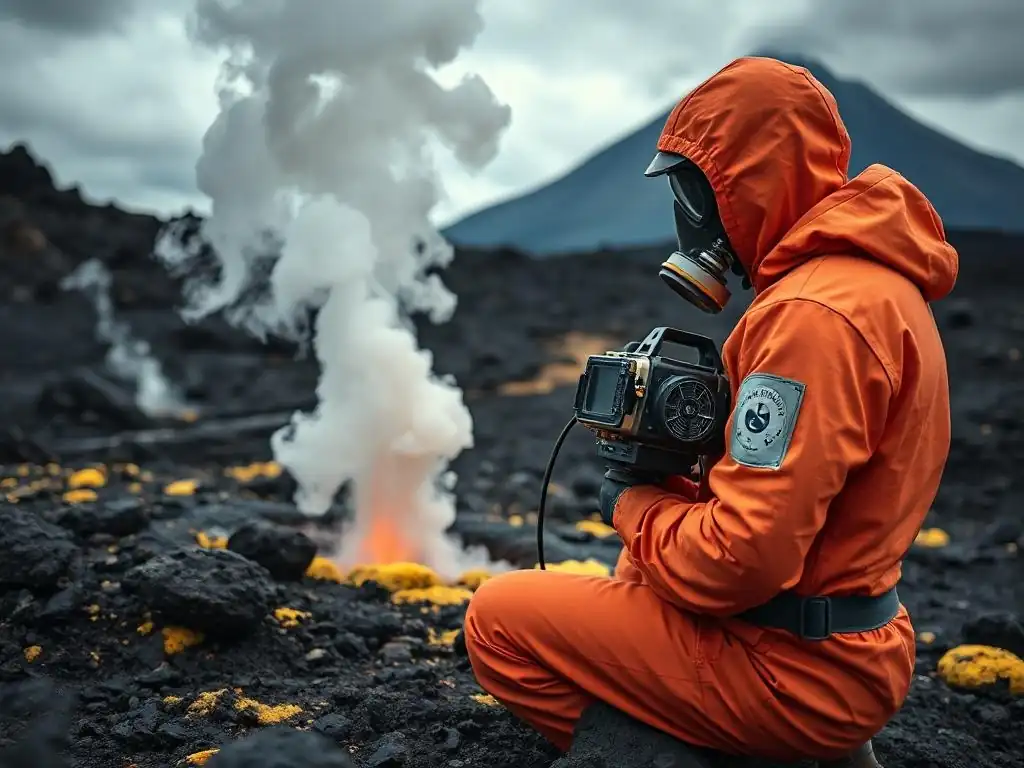
Direct Sampling: Canister and Evacuated Bottle Methods
Direct sampling of volcanic gases involves physically collecting gas samples at volcanic vents, fumaroles, or plumes for subsequent laboratory analysis. Two common methods for direct sampling are canister and evacuated bottle techniques. Canister sampling typically uses pre-evacuated stainless steel or glass containers to collect gas samples.
These canisters are opened at the sampling location, allowing the volcanic gases to flow in and equalize pressure. The canisters are then sealed and transported back to the laboratory for analysis using techniques like gas chromatography and mass spectrometry to determine the concentrations of various gas components. Canister sampling is relatively simple and robust, allowing for the collection of large volume samples suitable for detailed analysis.
Evacuated bottle methods also rely on pre-evacuated containers, but often utilize glass bottles with break-seal valves. At the sampling site, the break-seal is opened, and the vacuum draws in the volcanic gas sample. This method is particularly useful for collecting samples at high temperatures or in environments where rapid sampling is necessary.
Similar to canister samples, evacuated bottle samples are analyzed in the lab using sophisticated analytical instruments. Direct sampling methods provide the most accurate and comprehensive information on volcanic gas composition, including isotopic ratios, which can provide insights into magma sources and processes. However, direct sampling can be hazardous and logistically challenging, often requiring access to dangerous volcanic environments and specialized equipment.
Remote Sensing: Ground-Based and Satellite Techniques
Remote sensing techniques offer a safer and more spatially extensive approach to monitoring volcanic gases, allowing for measurements from a distance, without the need for direct access to hazardous volcanic areas. These techniques can be broadly categorized into ground-based and satellite-based methods. Ground-based remote sensing instruments are deployed at observation points around volcanoes and can continuously monitor gas emissions. Satellite-based instruments, on the other hand, provide a synoptic view of volcanic gas plumes over large areas and are particularly valuable for monitoring remote or inaccessible volcanoes.
Differential Optical Absorption Spectroscopy (DOAS) for SO2 Flux Measurement
Differential Optical Absorption Spectroscopy (DOAS) is a widely used ground-based remote sensing technique for measuring sulfur dioxide (SO₂) fluxes from volcanic plumes. DOAS instruments measure the absorption of ultraviolet (UV) and visible light by SO₂ molecules in the volcanic plume. By analyzing the differential absorption spectrum, DOAS can accurately determine the column density of SO₂ along the line of sight.
Combined with wind speed measurements, the SO₂ column density can be converted into SO₂ flux, which represents the amount of SO₂ emitted by the volcano per unit time, typically expressed in tonnes per day. DOAS systems are relatively portable and can be deployed for continuous monitoring at volcano observatories, providing valuable real-time data on SO₂ emissions, a key indicator of volcanic activity.
Applications of Correlation Spectrometers (COSPEC) in Plume Mapping
Correlation Spectrometers (COSPEC) were among the earliest remote sensing instruments used for volcanic gas monitoring and are still utilized in some observatories. COSPEC instruments, like DOAS, measure the absorption of UV light by SO₂ in volcanic plumes. However, COSPEC operates based on a different principle, using a gas filter correlation technique to selectively measure SO₂ absorption.
COSPEC instruments are often mounted on vehicles or aircraft and scanned across volcanic plumes to create spatial maps of SO₂ column density. These plume maps provide valuable information about the distribution and extent of SO₂ emissions and can be used to estimate total SO₂ flux. While COSPEC has been largely superseded by more advanced techniques like DOAS and FTIR, it played a significant role in establishing remote sensing as a key tool in volcanology.
Fourier Transform Infrared Spectroscopy (FTIR) for Multi-Gas Analysis
Fourier Transform Infrared Spectroscopy (FTIR) is a powerful remote sensing technique capable of measuring multiple volcanic gas species simultaneously, including H₂O, CO₂, SO₂, HCl, HF, and CO. FTIR instruments measure the absorption of infrared (IR) radiation by different gas molecules in the volcanic plume. Each gas species has a unique IR absorption spectrum, allowing FTIR to identify and quantify multiple gases in a single measurement.
FTIR systems can be deployed in both ground-based and airborne configurations and provide valuable data on the ratios of different volcanic gases, which can be used to infer magma source characteristics and degassing processes. The ability of FTIR to measure a suite of gases makes it a crucial tool for comprehensive volcanic gas monitoring and understanding volcanic processes.
Comparative Analysis: Advantages and Disadvantages of Measurement Techniques
Each technique for measuring volcanic gases, direct sampling and remote sensing, has its own set of advantages and disadvantages. Direct sampling methods, such as canister and evacuated bottle techniques, offer the highest accuracy and precision in determining gas composition, including isotopic analysis. They provide a comprehensive suite of gas data and are essential for calibrating remote sensing instruments. However, direct sampling is inherently hazardous, requiring close proximity to volcanic vents and plumes, and is logistically challenging, limiting its spatial and temporal coverage.
Remote sensing techniques, including DOAS, COSPEC, and FTIR, provide a safer and more efficient way to monitor volcanic gases, enabling continuous and spatially extensive measurements. Ground-based remote sensing allows for long-term monitoring from fixed locations, while satellite-based remote sensing offers global coverage, particularly valuable for remote volcanoes. DOAS is highly effective for SO₂ flux measurements, COSPEC for plume mapping, and FTIR for multi-gas analysis.
However, remote sensing techniques are less accurate than direct sampling and can be affected by atmospheric conditions and plume opacity. They typically measure integrated gas concentrations along a line of sight, requiring assumptions about plume geometry and wind speed to estimate fluxes. Therefore, a combination of direct sampling and remote sensing techniques is often employed for comprehensive volcanic gas monitoring, leveraging the strengths of each method to obtain a more complete and reliable understanding of volcanic gas emissions.
Environmental and Health Impacts of Volcanic Gases
Influence on Climate: CO2 and Aerosol Forcing
Volcanic gases, particularly carbon dioxide (CO₂) and sulfur dioxide (SO₂), have significant impacts on the Earth's climate system. While volcanic CO₂ emissions are dwarfed by anthropogenic CO₂ emissions from fossil fuel burning and deforestation, over geological timescales, volcanic outgassing has played a crucial role in regulating Earth's climate. Large volcanic eruptions can inject significant amounts of CO₂ into the atmosphere, contributing to long-term warming trends. However, the immediate climate impact of volcanic eruptions is often dominated by the effects of volcanic aerosols.
Sulfur dioxide (SO₂) released during volcanic eruptions reacts with water vapor in the atmosphere to form sulfate aerosols. These aerosols are highly reflective and scatter incoming solar radiation back into space, leading to a cooling effect on the Earth's surface. Major explosive eruptions, such as the 1991 eruption of Mount Pinatubo in the Philippines, can inject large quantities of SO₂ into the stratosphere, where aerosols can persist for several years, causing global cooling.
The Pinatubo eruption, for example, resulted in a global average temperature decrease of approximately 0.5°C for a couple of years. The balance between the warming effect of volcanic CO₂ and the cooling effect of sulfate aerosols determines the net climate impact of volcanic eruptions, which can vary depending on the eruption magnitude, gas composition, and atmospheric conditions.
Formation of Acid Rain: Environmental Consequences
Volcanic gases, particularly sulfur dioxide (SO₂) and hydrogen halides (HCl, HF), are major contributors to acid rain. When SO₂ is released into the atmosphere, it undergoes oxidation and reacts with water vapor to form sulfuric acid (H₂SO₄). Similarly, HCl and HF readily dissolve in water to form hydrochloric acid and hydrofluoric acid, respectively. These acids are then incorporated into cloud droplets and precipitation, resulting in acid rain. Acid rain has numerous detrimental environmental consequences.
Acid rain can acidify lakes and rivers, harming aquatic ecosystems and potentially leading to fish kills and the decline of sensitive aquatic species. It also damages forests by leaching essential nutrients from soils and damaging tree leaves, making trees more susceptible to disease and insect infestations. Acid rain can also corrode buildings, monuments, and infrastructure made of stone and metal, causing significant economic damage.
Volcanic regions are particularly susceptible to acid rain events following eruptions or during periods of intense degassing. For example, areas downwind of continuously degassing volcanoes like Kilauea in Hawaii experience frequent acid rain, impacting vegetation, water quality, and infrastructure.
Volcanic Smog (Vog): Respiratory Health Risks and Community Impacts
Volcanic smog, or vog, is a type of air pollution created when volcanic gases, primarily sulfur dioxide (SO₂), react with sunlight, oxygen, and water vapor in the atmosphere. Vog is a common phenomenon in volcanic regions, particularly in Hawaii, where the continuous degassing of Kilauea Volcano leads to persistent vog conditions. Vog is composed of fine particles, including sulfate aerosols and other secondary pollutants, which can penetrate deep into the respiratory system, posing significant health risks.
Exposure to vog can cause respiratory irritation, including coughing, wheezing, shortness of breath, and exacerbation of asthma and other respiratory conditions. Vog can also irritate the eyes, nose, and throat. Individuals with pre-existing respiratory or cardiovascular conditions, children, and the elderly are particularly vulnerable to the health effects of vog.
In addition to health impacts, vog can also reduce visibility, impacting tourism and transportation, and can damage crops and vegetation. Communities living in vog-prone areas need to take precautions to minimize exposure, such as staying indoors during vog events, using air purifiers, and avoiding strenuous outdoor activities. Public health advisories and vog forecasts are crucial for mitigating the health and community impacts of vog.
Asphyxiation Hazards: CO2 Accumulation and Mitigation Strategies
While many volcanic gases are irritants or toxic, carbon dioxide (CO₂) poses a significant asphyxiation hazard due to its odorless and colorless nature, and its ability to displace oxygen in confined spaces. CO₂ is denser than air and can accumulate in low-lying areas, depressions, and poorly ventilated spaces near volcanic vents or degassing ground. When CO₂ concentrations reach high levels, they can reduce the oxygen content in the air to below breathable levels, leading to asphyxiation, loss of consciousness, and even death.
Volcanic CO₂ asphyxiation events have occurred at several volcanoes worldwide. Lake Nyos in Cameroon, for example, experienced a catastrophic limnic eruption in 1986, releasing a massive amount of CO₂ that suffocated over 1,700 people and thousands of livestock in nearby villages. At Mammoth Mountain, California, elevated CO₂ emissions from volcanic sources have accumulated in tree kill zones and buildings, posing an ongoing asphyxiation risk.
Mitigation strategies for CO₂ asphyxiation hazards include proper ventilation of buildings in CO₂-prone areas, monitoring CO₂ levels using portable gas detectors, and avoiding low-lying areas during periods of high volcanic degassing. Public awareness campaigns and warning systems are crucial for educating communities about the risks of CO₂ asphyxiation and promoting safe practices in volcanic regions.
Case Studies: Volcanic Gas Emissions at Specific Locations
Gas Monitoring at Kilauea Volcano, Hawaii
Kilauea Volcano on the Big Island of Hawaii is one of the most continuously active volcanoes in the world and a prime location for volcanic gas monitoring. The Hawaiian Volcano Observatory (HVO) conducts comprehensive gas monitoring at Kilauea, utilizing a range of techniques including remote sensing and direct sampling. Continuous SO₂ monitoring using DOAS instruments is a cornerstone of HVO's monitoring efforts.
Data from these instruments provide real-time SO₂ emission rates, which are used to track changes in volcanic activity and assess eruption potential. During periods of increased lava effusion or explosive activity, SO₂ fluxes typically increase significantly, providing valuable warning signals.
HVO also employs FTIR spectroscopy to measure the concentrations of multiple volcanic gases, including H₂O, CO₂, SO₂, HCl, and HF, in Kilauea's plumes. These multi-gas measurements provide insights into magma degassing processes and the relative proportions of different volatiles. Direct sampling of volcanic gases from fumaroles and vents is also conducted periodically to obtain detailed gas compositions and isotopic data.
The long-term gas monitoring record at Kilauea has been instrumental in understanding the volcano's eruptive behavior and developing effective eruption forecasting strategies for Hawaii. The data also informs public health advisories related to vog, a persistent issue due to Kilauea's continuous degassing.
CO2 Emission Studies at Mammoth Mountain, California
Mammoth Mountain, located in California's Long Valley Caldera, is a volcano that exhibits significant CO₂ degassing, even during periods of quiescence. Studies at Mammoth Mountain have focused extensively on understanding the sources and pathways of CO₂ emissions and assessing the associated hazards. Elevated CO₂ concentrations were first detected in the area in the late 1980s, coinciding with a period of volcanic unrest in the Long Valley Caldera. Subsequent investigations revealed widespread CO₂ emissions from soil gas, fumaroles, and tree kill zones around Mammoth Mountain.
Researchers have used soil gas surveys, flux chambers, and isotopic analyses to quantify CO₂ emission rates and trace their origin to deep magmatic sources. The CO₂ emissions at Mammoth Mountain are linked to magma intrusion at depth and degassing of the magma system.
Continuous monitoring of CO₂ concentrations in soil gas and buildings is conducted to assess asphyxiation risks, particularly in areas where CO₂ can accumulate. Studies at Mammoth Mountain have provided valuable insights into the dynamics of volcanic CO₂ degassing and the potential hazards associated with non-eruptive volcanic gas emissions, highlighting the importance of monitoring even during periods of apparent volcanic inactivity.
Volcanic Gas Research in Iceland's Volcanic Regions
Iceland, a volcanically active island nation situated on the Mid-Atlantic Ridge, is a major center for volcanic gas research. Icelandic volcanoes exhibit a wide range of eruption styles and gas compositions, providing diverse opportunities for studying volcanic degassing processes. Extensive research has been conducted on the gas emissions from Icelandic volcanoes, including Eyjafjallajökull, Katla, and Hekla, using both remote sensing and direct sampling techniques. The Icelandic Meteorological Office (IMO) and various research institutions conduct continuous gas monitoring as part of their volcano surveillance efforts.
During the 2010 eruption of Eyjafjallajökull, volcanic gas measurements, particularly SO₂ fluxes, were crucial for tracking the eruption's intensity and assessing its impact on air traffic. Studies of the Holuhraun eruption in 2014-2015 involved comprehensive gas measurements to quantify the massive release of SO₂ and its environmental consequences. Research in Iceland has also focused on the degassing of basaltic lava flows, the formation of volcanic plumes, and the interactions of volcanic gases with glacial ice and hydrothermal systems. Iceland's volcanic gas research contributes significantly to our understanding of volcanic processes and the global impact of volcanic emissions.
Safety Protocols for Studying Volcanic Gases
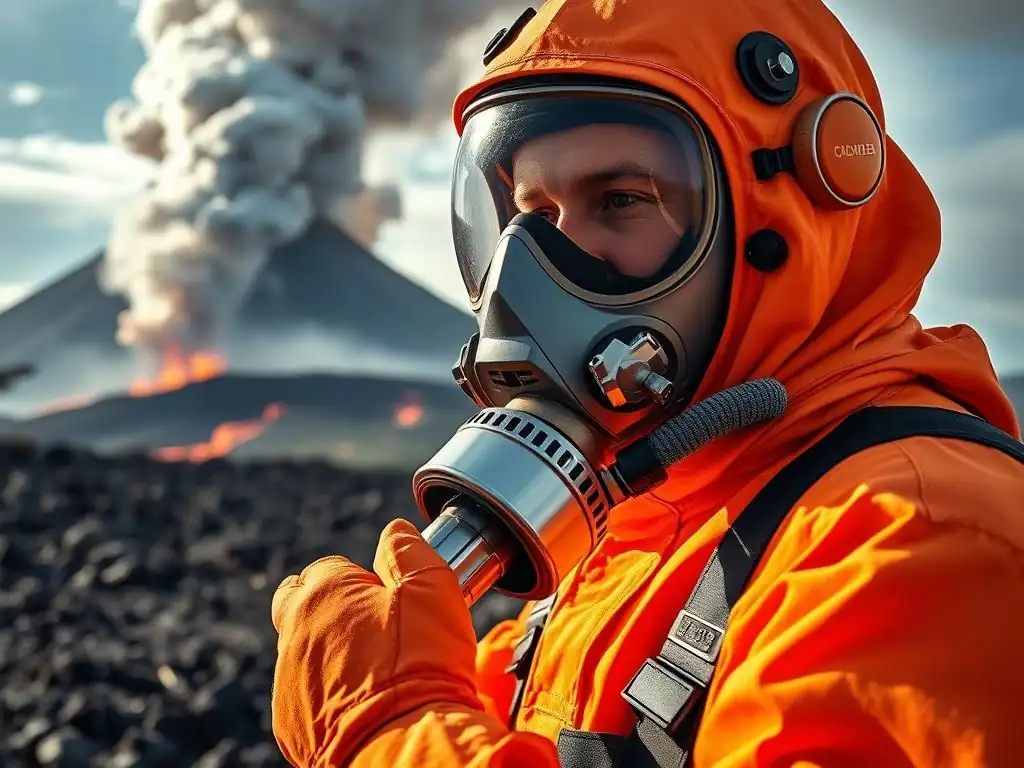
Essential Personal Protective Equipment (PPE)
Studying volcanic gases in the field can be hazardous, requiring strict adherence to safety protocols and the use of essential Personal Protective Equipment (PPE). The specific PPE required depends on the volcanic environment and the type of gas measurements being conducted, but generally includes respiratory protection, eye protection, skin protection, and head protection. Respiratory protection is paramount due to the presence of toxic gases such as SO₂, H₂S, HCl, HF, and CO. Appropriate respirators, such as half-face or full-face respirators with chemical cartridges suitable for acid gases and particulate matter, are essential for filtering out harmful gases and aerosols.
Eye protection, in the form of safety glasses or goggles, is necessary to protect against irritating and corrosive volcanic gases and aerosols, as well as potential projectiles in volcanic environments. Skin protection includes wearing long sleeves, long pants, gloves, and sturdy boots to minimize skin exposure to volcanic gases, acidic solutions, and hot ground. Acid-resistant gloves and clothing are particularly important when handling direct gas samples or working near fumaroles.
Hard hats are crucial for head protection against falling rocks or debris in volcanic areas. Properly fitted and maintained PPE is the first line of defense against the hazards of volcanic gas exposure and is critical for ensuring the safety of volcanologists working in the field.
Assessing Wind Direction and Plume Dynamics
Prior to conducting volcanic gas measurements, a thorough assessment of wind direction and plume dynamics is essential for planning safe and effective fieldwork. Wind direction determines the downwind dispersal of volcanic gases and aerosols, influencing the areas of potential exposure. Understanding plume dynamics, including plume height, width, and trajectory, is crucial for positioning remote sensing instruments and planning sampling strategies. Wind direction can be assessed using weather forecasts, local weather stations, and handheld anemometers in the field.
Plume dynamics can be observed visually or using remote sensing instruments. It is important to approach volcanic plumes from upwind to minimize gas exposure and ensure that measurements are taken from the plume margins or outside the main plume core where gas concentrations are typically highest. Changes in wind direction and plume dynamics can occur rapidly, especially in volcanic environments, so continuous monitoring of these factors is necessary throughout fieldwork.
Safety briefings should include clear protocols for responding to changes in wind direction and plume behavior, including pre-planned evacuation routes and safe zones. Effective communication and real-time information sharing among field team members are crucial for adapting to changing conditions and maintaining safety.
Using Portable Gas Detectors for Real-Time Monitoring
Portable gas detectors are indispensable tools for real-time monitoring of volcanic gas concentrations in the field, providing immediate warnings of hazardous gas levels. These detectors are typically small, lightweight, and can be worn on a belt or carried in a backpack. They are equipped with electrochemical sensors that detect specific gases, such as SO₂, H₂S, CO, and CO₂, and provide audible and visual alarms when gas concentrations exceed pre-set safety thresholds. Multi-gas detectors capable of simultaneously monitoring multiple gases are particularly valuable for volcanic gas studies.
Portable gas detectors should be calibrated and tested regularly to ensure accuracy and reliability. Before entering a volcanic gas hazard zone, detectors should be activated and allowed to warm up. During fieldwork, gas detectors should be monitored continuously, and alarms should be heeded immediately. If an alarm sounds, personnel should evacuate the area to a safer location upwind until gas concentrations return to safe levels. Portable gas detectors provide an essential layer of safety for volcanologists working in volcanic gas environments, enabling them to detect and avoid hazardous gas exposures in real-time.
Emergency Response: Procedures for Gas Exposure Incidents
Despite rigorous safety protocols, volcanic gas exposure incidents can still occur. Therefore, it is essential to have well-defined emergency response procedures in place to address gas exposure incidents effectively and minimize potential harm. Emergency response procedures should be developed prior to fieldwork and communicated clearly to all team members during safety briefings. These procedures should include protocols for recognizing symptoms of gas exposure, administering first aid, evacuating injured personnel, and contacting emergency medical services.
Symptoms of volcanic gas exposure can vary depending on the gas and concentration, but may include respiratory irritation, coughing, shortness of breath, eye and skin irritation, headache, dizziness, nausea, and loss of consciousness. First aid for gas exposure may include moving the affected person to fresh air, providing oxygen if available, and rinsing eyes or skin with water. In case of severe gas exposure or loss of consciousness, immediate evacuation and medical attention are crucial.
Emergency communication plans should be established, including pre-determined evacuation routes, assembly points, and contact information for emergency services. Field teams should carry first aid kits, oxygen cylinders (if appropriate), and communication devices, such as satellite phones or radios, to facilitate emergency response in remote volcanic areas. Regular drills and simulations of emergency response procedures can help ensure that teams are prepared to respond effectively in the event of a gas exposure incident.
Future Trends in Volcanic Gas Monitoring
Advancements in Gas Sensor Technology
Advancements in gas sensor technology are continuously improving the capabilities of volcanic gas monitoring. New generations of gas sensors are becoming smaller, more sensitive, more energy-efficient, and more selective, enabling more precise and versatile gas measurements. Miniaturized gas sensors are facilitating the development of smaller and lighter portable gas detectors, as well as integration into drone-based and wearable monitoring systems. Improved sensor sensitivity allows for the detection of trace gases at lower concentrations, enhancing our ability to detect subtle changes in volcanic degassing.
Electrochemical sensors, non-dispersive infrared (NDIR) sensors, and photoionization detectors (PIDs) are among the sensor technologies being advanced for volcanic gas monitoring. Research is also focused on developing new sensor materials and sensing principles to improve sensor performance and expand the range of gases that can be detected.
For example, micro-electromechanical systems (MEMS) based gas sensors and optical fiber-based sensors are being explored for their potential in volcanic gas monitoring. These advancements in gas sensor technology are paving the way for more comprehensive, real-time, and spatially distributed volcanic gas monitoring networks, enhancing our ability to forecast eruptions and assess volcanic hazards.
Drone-Based Volcanic Gas Measurements
Drone-based volcanic gas measurements are emerging as a transformative technology in volcanology, offering a safe and efficient way to access volcanic plumes and measure gas concentrations in situ. Unmanned Aerial Vehicles (UAVs), or drones, equipped with gas sensors, GPS, and telemetry systems, can be deployed to fly directly into volcanic plumes and collect gas data in three dimensions.
Drones can access areas that are too dangerous or inaccessible for ground-based measurements, such as active volcanic vents and high-altitude plumes. They can also provide high-resolution spatial mapping of gas concentrations within volcanic plumes, offering insights into plume structure and gas dispersion.
Various types of gas sensors, including electrochemical sensors, NDIR sensors, and miniature FTIR spectrometers, are being integrated into drone platforms for volcanic gas monitoring. Drone-based measurements can complement ground-based and satellite-based techniques, providing a valuable intermediate scale of observation. Data from drone-based gas measurements can be used to estimate gas fluxes, validate remote sensing data, and improve models of volcanic plume dispersion. The use of drones in volcanic gas monitoring is rapidly expanding, with ongoing research focused on improving drone flight stability in turbulent volcanic plumes, enhancing sensor payload capacity, and developing autonomous drone operation capabilities.
Integration of Gas Data with Geophysical Monitoring
The integration of volcanic gas data with other geophysical monitoring data, such as seismic, deformation, and thermal data, is crucial for a holistic understanding of volcanic processes and improved eruption forecasting. Volcanic gas emissions are closely linked to magma dynamics, and changes in gas fluxes and compositions often correlate with changes in other geophysical parameters. For example, increases in SO₂ emissions may coincide with increased seismicity or ground deformation, indicating magma ascent and potential eruption. Integrating gas data with seismic data can help to distinguish between different types of volcanic unrest and refine eruption probability estimates.
Real-time integration of gas data with geophysical data requires robust data acquisition and processing systems, as well as sophisticated data analysis techniques. Machine learning and artificial intelligence algorithms are being increasingly applied to analyze multi-parameter volcanic monitoring datasets, including gas, seismic, deformation, and thermal data, to identify patterns and precursors to eruptions. Integrated monitoring approaches provide a more comprehensive and robust assessment of volcanic activity and hazard, leading to more accurate and timely eruption warnings. Future volcanic monitoring networks are likely to increasingly incorporate multi-parameter sensor systems and integrated data analysis platforms to enhance volcano observatory capabilities.
Conclusion: Significance of Volcanic Gas Research
Volcanic gas research stands as a cornerstone of modern volcanology, providing invaluable insights into the inner workings of volcanoes and their profound impact on our planet. From understanding magma genesis and eruption dynamics to assessing environmental and health hazards, the study of volcanic gases is essential for mitigating risks and advancing our fundamental knowledge of Earth processes. The composition and flux of volcanic gases serve as key indicators of volcanic activity, enabling scientists to monitor, forecast, and respond to volcanic unrest.
The diverse techniques employed in volcanic gas research, ranging from hazardous direct sampling to sophisticated remote sensing methods, reflect the multifaceted nature of this field. Ongoing advancements in gas sensor technology, drone-based measurements, and integrated data analysis are further enhancing our ability to probe volcanic degassing processes and improve eruption prediction capabilities.
As we continue to refine our understanding of volcanic gases and their effects, we strengthen our capacity to live safely and sustainably in volcanic regions and appreciate the dynamic forces that shape our planet. Volcanic gas research is not merely an academic pursuit; it is a vital endeavor that directly contributes to the safety and well-being of communities living in the shadow of these powerful natural wonders.
Frequently Asked Questions
What are the most common volcanic gases?
The most common volcanic gases are water vapor (H2O), carbon dioxide (CO2), and sulfur dioxide (SO2). These gases are released from magma both during eruptions and passively from vents.
How do volcanic gases affect the environment?
Volcanic gases can contribute to acid rain and smog. They can also impact the global climate by releasing greenhouse gases like carbon dioxide into the atmosphere.
What are the dangers of volcanic gases to human health?
Exposure to volcanic gases can cause respiratory problems, eye irritation, and skin irritation. In high concentrations, some gases like hydrogen sulfide can be lethal.
How do scientists measure volcanic gases?
Scientists use specialized instruments like gas spectrometers and remote sensing techniques to measure the composition and concentration of volcanic gases. This data helps them understand volcanic activity.
What is the role of volcanic gases in volcanic eruptions?
Volcanic gases play a crucial role in driving eruptions. The pressure built up by dissolved gases in magma can lead to explosive eruptions when released.
Final Reflection: Breathing with the Earth's Breath
The exploration of volcanic gases, as detailed in this journey into the plume, is not merely an academic exercise; it is a vital undertaking with profound implications for understanding our planet's dynamic processes and safeguarding human health. The insights gleaned from studying these emissions are directly relevant to predicting eruptions, assessing environmental impacts, and mitigating potential hazards in volcanically active regions worldwide.
The study of volcanic gases has irrevocably shaped our understanding of the Earth's inner workings and its influence on the atmosphere. My own fascination with this field stems from a deep respect for the raw power and delicate balance of nature, a balance that volcanic activity so vividly illustrates. The Earth speaks to us, and volcanic gases are one of its most eloquent languages.
This quote encapsulates the profound connection between our planet's interior and the air we breathe, a connection we must strive to understand and protect.
Now, as you reflect on the journey into the plume, consider the implications of these findings for your own understanding of the world. How does this knowledge reshape your perspective on the power of nature and our responsibility to protect our environment? Embrace the curiosity sparked by these explorations and seek out opportunities to learn more about the intricate systems that govern our planet. The future of our world depends on our ability to understand and respect the Earth's breath.
Ready to transform your business? Learn how our expert strategies can boost your profits and market share. Contact us today for a free consultation.