
Citizen Science and Volcanoes: Can Volunteers Contribute to Gas Monitoring?

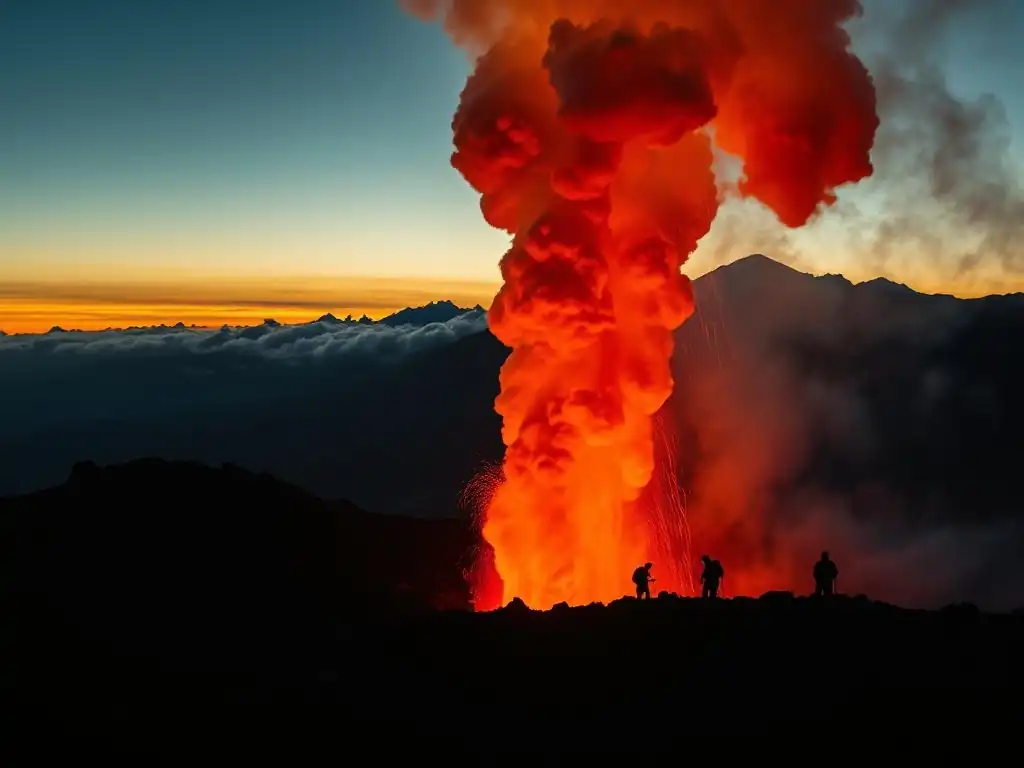
Welcome to Volcano Explorers, where the Earth breathes fire! Ever wondered if you could play a role in understanding these fiery giants? Our latest article dives deep into the fascinating world of citizen science volcano gas monitoring, exploring how everyday volunteers are helping scientists unlock the secrets hidden within volcanic plumes. Are you ready to join the adventure and learn how you can contribute to our understanding of these powerful forces of nature? Let the exploration begin...
- Citizen Science and Volcanoes: Empowering Communities Through Gas Monitoring
- Introduction: The Expanding Role of Citizen Scientists in Volcanic Research
- Understanding Volcanic Gas Emissions: Composition and Significance
- Citizen Science Initiatives for Volcano Gas Monitoring: Opportunities and Implementation
- Methods and Technologies for Citizen Scientist Gas Monitoring
- Ensuring Data Quality and Accuracy in Citizen Science Volcano Gas Monitoring
- The Future of Citizen Science in Volcano Gas Research
- Ethical Considerations in Citizen Science Volcano Research
- Conclusion: Transforming Volcano Research Through Collaborative Gas Monitoring
-
Frequently Asked Questions
- What is citizen science in the context of volcano gas monitoring?
- Why is monitoring volcanic gas emissions important?
- What kind of equipment is typically used in citizen science volcano gas monitoring projects?
- What are the benefits of involving citizen scientists in volcano gas monitoring?
- Are there any safety precautions that citizen scientists need to take when monitoring volcanic gases?
- Final Reflection: Empowering Discovery Through Shared Observation
- Unleash Your Inner Volcanologist: Join the Monitoring Mission!
Citizen Science and Volcanoes: Empowering Communities Through Gas Monitoring
Introduction: The Expanding Role of Citizen Scientists in Volcanic Research
Why Monitoring Volcanic Gas Emissions is Vital for Hazard Assessment
Volcanic gas monitoring is a critical component of volcano hazard assessment. Volcanoes release a variety of gases, including water vapor, carbon dioxide, sulfur dioxide, and hydrogen sulfide. Changes in the composition and flux of these gases can provide early warning signs of changes in volcanic activity, potentially preceding eruptions.
For example, an increase in sulfur dioxide (SO2) emissions can indicate rising magma within the volcano, while changes in the ratios of different gases can reflect shifts in the magma's depth and degassing processes. By continuously monitoring these emissions, volcanologists can gain valuable insights into the internal dynamics of volcanoes and improve their ability to forecast eruptions, ultimately reducing risks to nearby communities.
Furthermore, volcanic gases themselves pose direct hazards. Sulfur dioxide and hydrogen sulfide are toxic and can cause respiratory problems and irritation even at low concentrations. In areas surrounding active volcanoes, persistent degassing can lead to acid rain, damaging infrastructure, agriculture, and ecosystems.
Understanding the spatial distribution and concentration of volcanic gases is therefore vital not only for eruption forecasting but also for assessing and mitigating the chronic health and environmental impacts on populations living near volcanoes. Real-time gas monitoring data allows for informed decisions regarding public health advisories and potential evacuations in response to both eruptive and non-eruptive volcanic unrest.
Harnessing Citizen Science to Enhance Volcano Monitoring Capabilities
Traditional volcano monitoring relies heavily on sophisticated scientific instruments deployed and maintained by volcanologists. However, the sheer number of active and potentially active volcanoes globally, many located in remote and under-resourced regions, far outstrips the capacity of professional monitoring networks. Citizen science offers a powerful approach to expand the spatial and temporal coverage of volcano monitoring, particularly for gas emissions. By engaging trained volunteers from local communities in data collection, citizen science initiatives can significantly increase the density of monitoring points and provide continuous, near real-time data streams that would be unattainable through conventional methods alone.
Moreover, citizen science fosters a stronger connection between communities and scientific research. Involving local residents in volcano monitoring empowers them to become active participants in understanding and managing the risks associated with living near volcanoes. This participatory approach not only enhances data collection but also increases community awareness and preparedness.
Citizen scientists, being residents of the area, can provide invaluable local knowledge and context to the scientific data, contributing to a more comprehensive and nuanced understanding of volcanic activity and its impacts. This collaborative approach strengthens the resilience of communities living with volcanoes by building local capacity for hazard monitoring and response.
Understanding Volcanic Gas Emissions: Composition and Significance
Key Gases Emitted by Volcanoes: Composition and Environmental Impact
Volcanic gases are a complex mixture, predominantly composed of water vapor (H2O), which can make up over 90% of the total emissions. Carbon dioxide (CO2) is typically the second most abundant gas, followed by sulfur dioxide (SO2). Other significant volcanic gases include hydrogen sulfide (H2S), hydrogen halides (HCl, HF), and trace amounts of other compounds like carbon monoxide (CO), helium (He), and radon (Rn). The exact composition varies significantly between volcanoes and can change over time, reflecting the magma source, depth, and degassing processes.
The environmental impact of these gases is multifaceted. Sulfur dioxide, upon reacting with water vapor in the atmosphere, forms sulfuric acid, contributing to acid rain and air pollution, which can damage vegetation, acidify lakes and soils, and corrode buildings. Carbon dioxide, while naturally occurring, is a potent greenhouse gas, and while volcanic CO2 emissions are dwarfed by anthropogenic emissions, they are still a significant natural contributor to the global carbon cycle.
Hydrogen sulfide is toxic and has a characteristic rotten egg smell, posing health risks at higher concentrations. Hydrogen halides, particularly hydrogen fluoride, are highly corrosive and can contaminate water sources and damage ecosystems. Understanding the composition and fluxes of these gases is crucial for assessing both immediate and long-term environmental and health consequences of volcanic activity.
Traditional and Emerging Techniques for Measuring Volcanic Gases
Traditionally, volcanic gas measurements have relied on sophisticated instruments deployed in the field, often in challenging and hazardous environments. Techniques such as filter packs and Giggenbach bottles are used to collect gas samples for laboratory analysis, providing detailed compositional information. Spectroscopic methods, like Fourier Transform Infrared Spectroscopy (FTIR) and Ultraviolet Spectroscopy (UV), are employed for remote sensing of gas plumes, allowing for real-time measurements of gas fluxes and ratios from a distance. These instruments are often expensive, require specialized expertise for operation and maintenance, and may be limited in their spatial coverage due to logistical constraints.
Emerging technologies are revolutionizing volcano gas monitoring, offering opportunities for wider deployment and citizen science applications. Electrochemical sensors, for instance, are becoming increasingly affordable, compact, and user-friendly, enabling the development of portable and low-cost gas detectors. Miniaturized spectrometers and drone-based gas sensors are enhancing spatial coverage and accessibility, allowing for measurements in previously inaccessible areas. Satellite-based remote sensing techniques are also evolving, providing global-scale monitoring of volcanic gas plumes, particularly sulfur dioxide. These advancements, coupled with the proliferation of internet-connected devices and data platforms, are paving the way for more distributed, real-time, and community-engaged volcano gas monitoring networks.
Citizen Science Initiatives for Volcano Gas Monitoring: Opportunities and Implementation
Case Studies: Examples of Citizen Science Contributions to Volcanology
Several successful citizen science initiatives have demonstrated the valuable contributions of volunteers to volcanology. The "Mount Etna Volcano Monitoring Project" in Italy, for example, engaged local residents in collecting ash samples after eruptions, providing crucial data on ashfall distribution and composition. In Iceland, the "FutureVolc" project utilized citizen scientists to deploy and maintain weather stations and GPS sensors around volcanoes, enhancing the spatial resolution of monitoring networks. While not exclusively focused on gas monitoring, these projects highlight the feasibility and effectiveness of citizen involvement in volcano research.
Specifically focusing on gas monitoring, the "Volcano Watch" program in Hawaii, although primarily run by the USGS Hawaiian Volcano Observatory, incorporates observations from local residents regarding volcanic gas odors and visible plumes. Citizen reports contribute to a broader understanding of gas dispersion patterns and potential impacts on communities.
Furthermore, pilot projects are emerging that directly involve citizens in using low-cost gas sensors to monitor ambient volcanic gas concentrations in areas surrounding volcanoes. These nascent initiatives demonstrate the potential for citizen science to play a more active role in volcanic gas monitoring and hazard assessment, building upon the established successes of citizen science in related fields.
Advantages of Citizen Involvement in Volcanic Gas Monitoring Programs
Citizen involvement in volcanic gas monitoring offers numerous advantages. Firstly, it significantly increases the spatial and temporal resolution of data collection. Volunteers residing in areas surrounding volcanoes can collect data continuously and across a wider geographic area than is feasible for professional scientists alone. This enhanced data density provides a more comprehensive picture of gas dispersion patterns, temporal variations in emissions, and potential localized hotspots of gas concentration.
Secondly, citizen science programs can reduce monitoring costs. Utilizing volunteers reduces the need for expensive deployments of professional personnel and specialized equipment across vast areas. The use of affordable and accessible gas sensors further contributes to cost-effectiveness. This makes it possible to establish and sustain monitoring networks in resource-constrained regions where traditional monitoring infrastructure may be lacking.
Finally, citizen science fosters community empowerment and ownership of volcano monitoring. By actively participating in data collection and analysis, citizens gain a deeper understanding of volcanic processes and hazards, enhancing their preparedness and resilience. This participatory approach builds trust between scientists and communities and promotes a collaborative approach to risk management.
Challenges and Mitigation Strategies for Citizen Science in Volcanic Environments
Despite the numerous benefits, citizen science in volcanic environments faces challenges. Ensuring data quality is paramount. Volunteers may have varying levels of technical expertise and may not be familiar with scientific protocols. Mitigation strategies include providing comprehensive training programs, developing user-friendly data collection protocols, and implementing rigorous quality control measures. Calibration and validation of citizen-collected data against established scientific measurements are crucial to ensure accuracy and reliability.
Safety is another critical concern. Volcanic environments can be hazardous due to gas emissions, unstable terrain, and potential eruptive activity. Stringent safety protocols must be established and enforced, including providing volunteers with appropriate safety equipment, conducting risk assessments, and establishing clear communication channels. Volunteer fatigue and attrition can also be challenges. Maintaining long-term engagement requires sustained community outreach, recognition of volunteer contributions, and clear communication of the value and impact of their work. Addressing these challenges proactively is essential for the success and sustainability of citizen science volcano gas monitoring programs.
Methods and Technologies for Citizen Scientist Gas Monitoring
Accessible and Affordable Sensors for Volcanic Gas Detection
The advent of low-cost, user-friendly gas sensors has been a key enabler for citizen science volcano gas monitoring. Electrochemical sensors, in particular, are well-suited for this purpose. These sensors are available for detecting various volcanic gases, including sulfur dioxide (SO2), carbon monoxide (CO), and hydrogen sulfide (H2S). They are compact, relatively inexpensive, and require minimal power, making them ideal for portable and battery-operated devices. Examples include commercially available sensors that can be integrated into handheld devices or small, autonomous monitoring stations.
Colorimetric gas detection tubes offer another accessible and affordable option for citizen scientists. These tubes change color in the presence of specific gases, providing a semi-quantitative indication of gas concentration. While less precise than electrochemical sensors, they are simple to use, require no power, and are highly portable. They can be particularly useful for initial gas surveys and for detecting the presence or absence of specific gases in different locations. Choosing the appropriate sensor technology depends on the specific gases of interest, the desired level of accuracy, and the resources available for citizen science programs.
Utilizing Drones and Remote Sensing for Enhanced Gas Measurements
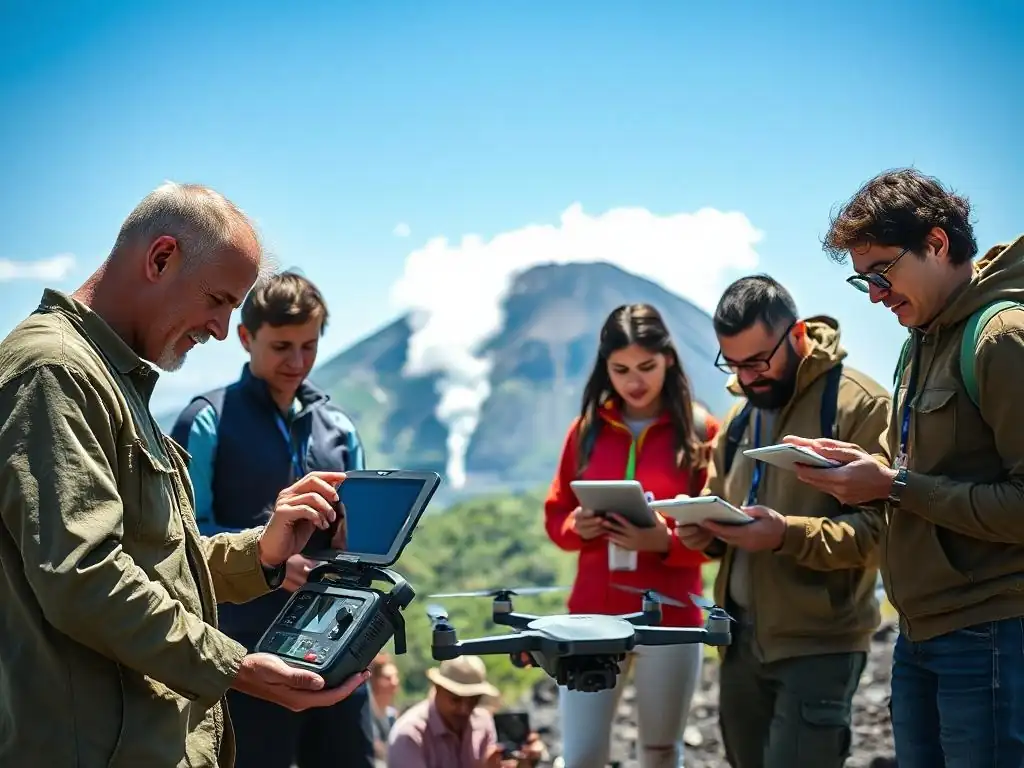
Drones, or Unmanned Aerial Vehicles (UAVs), are emerging as powerful tools for enhancing citizen science volcano gas monitoring. Equipping drones with gas sensors allows volunteers to collect measurements in areas that are difficult or dangerous to access on foot, such as within volcanic plumes or in areas of steep terrain. Drones can rapidly survey large areas, providing spatially distributed gas concentration data and mapping gas plumes. This expands the reach and efficiency of citizen science monitoring efforts.
Furthermore, drone-based remote sensing techniques, such as thermal infrared cameras and multispectral imagers, can provide additional information about volcanic activity and gas emissions. Thermal cameras can detect thermal anomalies associated with degassing vents or fumaroles, while multispectral imagers can be used to estimate SO2 concentrations in volcanic plumes based on their spectral signature. Integrating drone-based measurements with ground-based citizen science data provides a more comprehensive and multi-dimensional view of volcanic gas emissions and their spatial and temporal dynamics.
Standardized Data Collection and Analysis Protocols for Citizen Scientists
To ensure the quality and comparability of data collected by citizen scientists, standardized data collection and analysis protocols are essential. These protocols should be clear, concise, and easy for volunteers to follow, regardless of their scientific background. Standardized protocols should specify the types of sensors to be used, the frequency and location of measurements, and the procedures for recording and reporting data. Data collection forms, either paper-based or digital, should be designed to facilitate consistent data entry and minimize errors.
Data analysis protocols should outline the steps for data processing, quality control, and interpretation. This may include procedures for data cleaning, calibration, and visualization. Providing citizen scientists with access to user-friendly data analysis tools and platforms empowers them to participate in the entire data lifecycle, from collection to analysis and interpretation. Standardized protocols, combined with comprehensive training, are crucial for ensuring the reliability and scientific rigor of citizen science volcano gas monitoring data.
Ensuring Data Quality and Accuracy in Citizen Science Volcano Gas Monitoring
Comprehensive Training and Education for Volunteer Gas Monitors
Comprehensive training and education are the cornerstones of ensuring data quality in citizen science volcano gas monitoring. Training programs should cover the fundamentals of volcanic gas emissions, the principles of gas detection using the chosen sensors, and the standardized data collection protocols. Hands-on training sessions, where volunteers practice using the sensors and collecting data in simulated or controlled environments, are highly effective. Training should also emphasize safety procedures and risk awareness in volcanic environments.
Educational materials, such as manuals, videos, and online resources, should be provided to reinforce training and serve as ongoing references for volunteers. Regular refresher training sessions and workshops can help maintain volunteer skills and address any questions or challenges that arise during data collection. Building a strong sense of community among volunteer gas monitors through regular communication and networking opportunities can also enhance motivation and data quality. Investing in thorough training and education ensures that citizen scientists are well-equipped to collect accurate and reliable data.
Rigorous Calibration and Validation Procedures for Citizen-Collected Data
Rigorous calibration and validation procedures are essential to verify the accuracy of citizen-collected gas monitoring data. Sensors used by citizen scientists should be calibrated regularly against reference standards to ensure their accuracy and consistency over time. Calibration procedures should be clearly documented and easily implementable by citizen scientists, or facilitated through centralized calibration facilities.
Validation of citizen-collected data involves comparing it with data from established scientific instruments and monitoring networks. This can be achieved through co-location studies, where citizen scientists collect data alongside professional scientists using calibrated instruments. Statistical methods can be used to assess the agreement between citizen-collected and professionally collected data, and to identify any systematic biases or errors. Regular validation exercises build confidence in the reliability of citizen science data and contribute to its acceptance within the broader scientific community.
Minimizing Potential Biases in Citizen Science Data
Potential biases can arise in citizen science data due to various factors, including volunteer selection, data collection methods, and data interpretation. Volunteer selection bias may occur if the participant pool is not representative of the broader community. Efforts should be made to recruit diverse groups of volunteers from different backgrounds and demographics. Data collection biases can be minimized through standardized protocols, comprehensive training, and quality control procedures.
Confirmation bias, where volunteers may unconsciously favor data that aligns with their pre-existing beliefs or expectations, is another potential concern. Blinded data collection protocols, where volunteers are unaware of the expected data values, can help mitigate this bias. Transparent data analysis and interpretation procedures, involving both citizen scientists and professional scientists, are crucial for ensuring objectivity and minimizing biases in the overall data lifecycle. Addressing potential biases proactively enhances the credibility and scientific rigor of citizen science volcano gas monitoring data.
The Future of Citizen Science in Volcano Gas Research
Broadening the Scope of Citizen Science Volcano Monitoring Programs
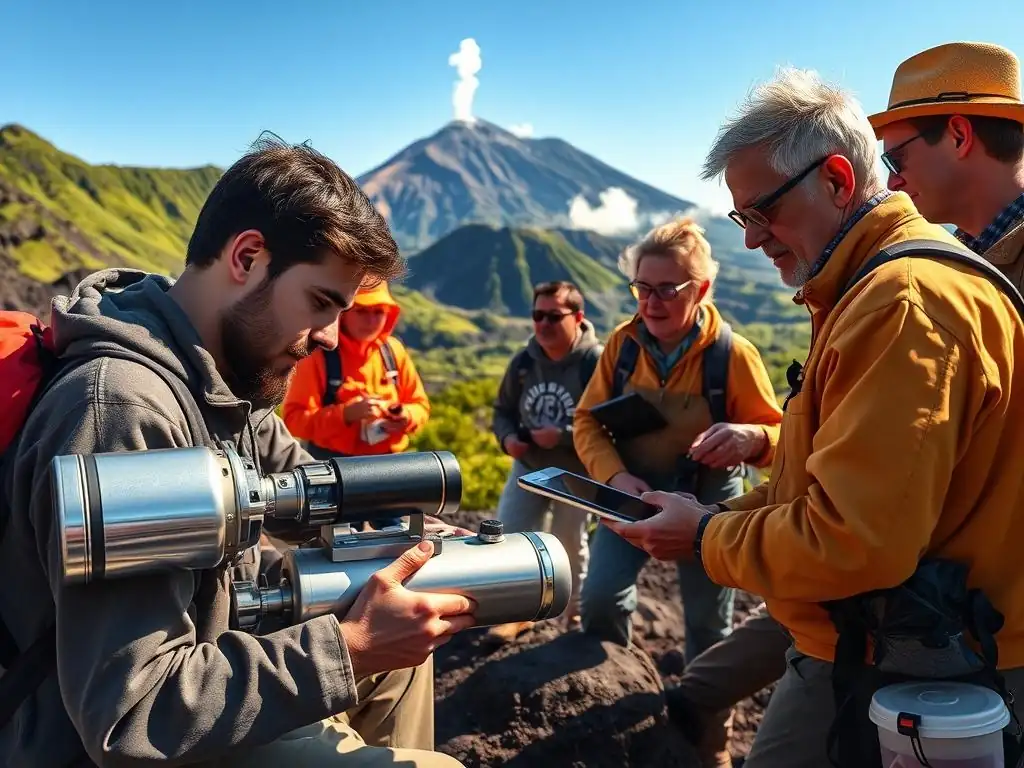
The future of citizen science in volcano gas research holds immense potential for broadening the scope of monitoring programs. Expanding beyond single-gas monitoring to multi-gas detection, using more advanced sensor technologies, is a promising direction. Citizen scientists could be trained to deploy networks of sensors that simultaneously measure multiple volcanic gases, providing a more comprehensive picture of volcanic degassing processes.
Integrating other environmental parameters, such as meteorological data and ground deformation measurements, into citizen science monitoring programs can further enhance their value. Citizen scientists could contribute to collecting data on rainfall, temperature, and humidity, which can influence gas dispersion patterns. Simple GPS measurements of ground deformation could also be incorporated to detect subtle changes in volcano shape. Broadening the scope of citizen science monitoring provides a more holistic understanding of volcanic systems and their interactions with the surrounding environment.
Integrating Citizen Science Data into Established Monitoring Networks
Integrating citizen science data into established volcano monitoring networks is crucial for maximizing its impact and ensuring its long-term sustainability. Data collected by citizen scientists should be seamlessly integrated into existing databases and data management systems used by volcanological observatories and research institutions. This requires developing interoperable data formats and sharing protocols.
Establishing formal partnerships between citizen science programs and professional monitoring agencies is essential for data integration and validation. Volcanologists can provide scientific guidance, training, and quality control support to citizen science initiatives, while citizen scientists can contribute valuable data and local knowledge to established monitoring efforts. Integrating citizen science data into official monitoring networks enhances the spatial and temporal coverage of volcano monitoring and strengthens the scientific basis for hazard assessments and eruption forecasts.
Fostering Community Resilience Through Citizen Science and Education
Citizen science in volcano gas research plays a vital role in fostering community resilience. By actively involving local communities in volcano monitoring, these programs enhance public awareness and understanding of volcanic hazards. Education and outreach activities, integrated into citizen science initiatives, can empower communities to make informed decisions about preparedness and risk mitigation. Citizen scientists become local ambassadors for volcano science and safety, disseminating knowledge and promoting preparedness within their communities.
Furthermore, citizen science programs can contribute to building local capacity for disaster response. Trained citizen scientists can play a crucial role in providing real-time information to emergency responders during volcanic crises, assisting with evacuation planning and hazard assessment. By fostering a sense of ownership and responsibility for volcano monitoring and risk management, citizen science strengthens community resilience and reduces vulnerability to volcanic hazards.
Ethical Considerations in Citizen Science Volcano Research
Stringent Safety Protocols for Volunteers Monitoring Volcanic Gases
Ethical considerations are paramount in citizen science volcano research, particularly regarding volunteer safety. Stringent safety protocols must be implemented and rigorously enforced to protect volunteers from the hazards associated with volcanic environments and gas exposure. Comprehensive risk assessments should be conducted before any fieldwork activities, and safety protocols should be tailored to the specific hazards of each volcano and monitoring location.
Volunteers must be provided with appropriate personal protective equipment (PPE), including respirators, gas masks, eye protection, and sturdy footwear. Training on safety procedures, emergency communication protocols, and first aid should be mandatory for all volunteers. Fieldwork activities should be conducted in teams, with clear lines of communication and supervision. Continuous monitoring of volcanic activity and gas concentrations during fieldwork is essential, and protocols for immediate evacuation in case of escalating hazards must be in place. Volunteer safety should always be the top priority in citizen science volcano gas monitoring programs.
Open Data Practices and Accessibility in Citizen Science Projects
Open data practices are an ethical imperative in citizen science. Data collected by citizen scientists should be made publicly accessible and freely available to the wider scientific community, policymakers, and the public. Open data sharing promotes transparency, reproducibility, and collaboration in volcano research. Data should be published in open-access repositories and databases, with clear metadata and documentation to ensure discoverability and usability.
Accessibility of citizen science projects is also an ethical consideration. Participation in citizen science should be open and inclusive to all members of the community, regardless of their background, education, or technical skills. Outreach efforts should target diverse communities and ensure that participation is equitable and accessible to all. Language barriers and logistical constraints should be addressed to maximize community engagement and participation.
Community-Based Participatory Research and Benefit Sharing
Community-based participatory research (CBPR) principles should guide citizen science volcano gas monitoring projects. CBPR emphasizes equitable partnerships between researchers and community members, with shared decision-making and mutual benefit. Citizen science projects should be designed and implemented in collaboration with local communities, ensuring that community needs and priorities are addressed. Community input should be sought at all stages of the project, from research design to data interpretation and dissemination.
Benefit sharing is a key ethical consideration in CBPR. Citizen science projects should aim to provide tangible benefits to participating communities, such as enhanced volcano hazard awareness, improved preparedness, and capacity building. Data and knowledge generated through citizen science should be used to inform local decision-making and contribute to community resilience. Recognizing and acknowledging the contributions of citizen scientists is essential for fostering trust and ensuring the long-term sustainability of community-engaged volcano research.
Conclusion: Transforming Volcano Research Through Collaborative Gas Monitoring
The Synergistic Value of Scientist-Public Partnerships
The synergy between scientists and the public in citizen science volcano gas monitoring programs is transformative for volcano research. Scientists benefit from the expanded data collection capacity, enhanced spatial and temporal coverage, and valuable local knowledge contributed by citizen scientists. The public, in turn, gains a deeper understanding of volcanic processes and hazards, becomes empowered to participate in scientific research, and contributes to improving community safety and resilience.
This collaborative approach fosters a more democratic and inclusive model of volcano research, breaking down traditional barriers between scientists and the public. Citizen science bridges the gap between scientific knowledge and community needs, promoting a more participatory and community-driven approach to hazard management. The synergistic value of scientist-public partnerships lies in the mutual benefits and shared ownership of volcano research and its societal impact.
Sustaining Long-Term Participation in Volcano Monitoring Initiatives
Sustaining long-term participation in citizen science volcano monitoring initiatives requires ongoing effort and commitment. Maintaining volunteer motivation and engagement is crucial. Regular communication, recognition of volunteer contributions, and feedback on the impact of their work are essential for fostering a sense of value and purpose. Providing opportunities for continued learning and skill development can also enhance volunteer engagement.
Building strong community ownership of citizen science programs is key to long-term sustainability. Integrating citizen science into local education curricula, community organizations, and disaster preparedness plans can embed monitoring efforts within the community fabric. Securing long-term funding and institutional support for citizen science initiatives is also vital for ensuring their continuity and impact. Sustained participation, driven by community ownership and scientific partnerships, is the foundation for the long-term success of citizen science volcano gas monitoring and its contribution to volcano research and community resilience.
Frequently Asked Questions
What is citizen science in the context of volcano gas monitoring?
Citizen science involves public participation in scientific research. In volcano gas monitoring, it means volunteers help collect and analyze gas samples, contributing valuable data to scientists studying volcanic activity. This allows for more widespread data collection.
Why is monitoring volcanic gas emissions important?
Volcanic gas emissions provide valuable insights into a volcano's internal state. Changes in gas composition or flux can indicate increased activity and potential for eruption. Monitoring helps scientists assess volcanic hazards.
What kind of equipment is typically used in citizen science volcano gas monitoring projects?
Equipment can vary, but often includes portable gas detectors, sample collection tubes, and GPS devices for recording location. Training is provided to ensure volunteers understand how to use the equipment safely and accurately.
What are the benefits of involving citizen scientists in volcano gas monitoring?
Citizen scientists offer several benefits, including increasing the frequency and geographic coverage of data collection. They also promote public awareness and engagement in scientific research, fostering a better understanding of volcanic hazards.
Are there any safety precautions that citizen scientists need to take when monitoring volcanic gases?
Yes, safety is paramount. Volunteers must be trained to recognize hazardous conditions, use protective gear (masks, gloves), and maintain a safe distance from volcanic vents. They should always follow the instructions of volcanologists.
The exploration of citizen science in volcano gas monitoring reveals a powerful truth: collective intelligence can significantly enhance scientific understanding and hazard mitigation. By democratizing access to scientific tools and knowledge, we move beyond traditional research models and unlock a vast potential for data collection and analysis, particularly in remote and challenging environments like active volcanoes. This collaborative approach not only expands our capacity to monitor volcanic activity but also fosters a deeper connection between communities and the scientific process.
This shift towards participatory science has profoundly influenced how we perceive and interact with the natural world. The ability for anyone, regardless of their scientific background, to contribute meaningfully to research underscores the importance of accessible knowledge and the power of shared curiosity. Science is not only a disciple of reason but, also, one of romance and passion.
- Stephen Hawking. This quote resonates deeply, reminding us that scientific advancement thrives on both rigorous analysis and the inherent human desire to explore and understand the world around us. The involvement of citizens in volcano gas monitoring exemplifies this blend, transforming passive observers into active participants in scientific discovery.
As we look to the future, let us embrace the potential of citizen science to address pressing global challenges. Consider how you can contribute your own unique skills and perspectives to scientific endeavors, whether it's through participating in data collection, analyzing existing datasets, or simply sharing your newfound knowledge with others. The power to understand and protect our planet lies within each of us. Let's harness that power together and build a future where scientific discovery is a collaborative and inclusive endeavor.
Unleash Your Inner Volcanologist: Join the Monitoring Mission!
Thank you for exploring the exciting world of citizen science and its impact on volcano monitoring! You've learned how valuable volunteer contributions are to understanding these powerful forces of nature. Now, it's your turn to contribute!
Ready to get involved and make a real difference?
- Sign up to become a Volcano Explorer and receive alerts about upcoming citizen science projects in your area. Your observations could help scientists predict eruptions!
- Connect with other enthusiasts and share your knowledge of volcanoes in the Volcano Explorers forum.
- Build a simple DIY gas sensor and share your results with the community. You might even make a significant discovery!
What fascinating volcanic phenomenon will you document and share first? Let us know in the comments below!