Understanding Plate Tectonics and Volcanoes: The Engine of Earth’s Fiery Power
Welcome to the Plate Tectonics and Volcanoes subcategory at VolcanoExplorers.org. Here, we unravel the deep connection between Earth’s moving crust and the volcanic eruptions that shape our planet. This resource is designed for students, educators, and curious minds eager to understand why volcanoes form where they do. From divergent ridges to subduction zones, you’ll discover the driving forces behind magma generation and eruption styles. Dive into clear, science-backed explanations that demystify complex geological concepts, all while keeping safety and global awareness in mind.
🌍 How Plate Boundaries Create Volcanoes
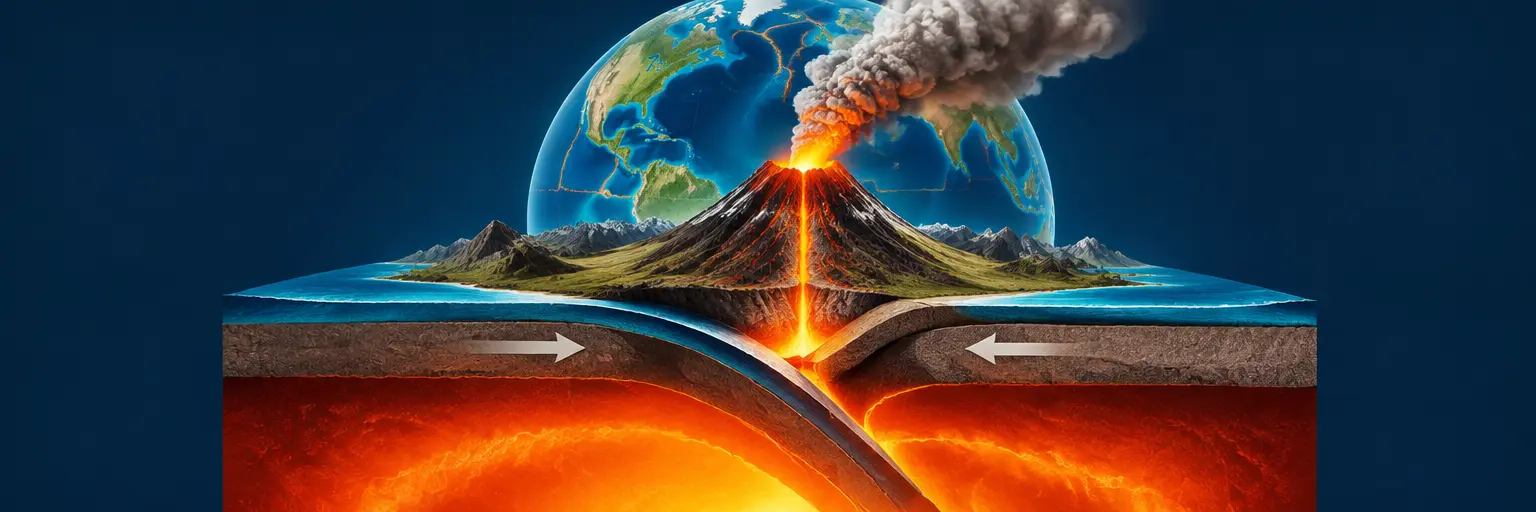
Earth’s lithosphere is broken into massive plates that float on the semi-fluid asthenosphere. Most volcanoes are born at plate boundaries, where plates either move apart, collide, or slide past each other. At divergent boundaries, like the Mid-Atlantic Ridge, magma rises to fill the gap, creating shield volcanoes and new oceanic crust. At convergent boundaries, an oceanic plate subducts beneath a continental or another oceanic plate, releasing water that lowers the melting point of the mantle, generating explosive stratovolcanoes such as Mount St. Helens.
Transform boundaries, where plates slide horizontally, rarely produce volcanoes but often trigger earthquakes. Understanding these settings helps volcanologists predict eruption likelihood and style. For example, hotspot volcanoes like Hawaii defy boundary rules, forming from deep mantle plumes. This section equips you with the foundational mapping of global volcanic zones, making it easier to interpret real-time eruption reports and hazard maps.
🔥 Types of Volcanoes and Their Tectonic Signatures
Not all volcanoes look or erupt alike. Shield volcanoes, with broad, gentle slopes, are typical of divergent boundaries and hotspots, producing fluid basaltic lava that flows far. Stratovolcanoes (composite cones) dominate subduction zones, alternating between viscous lava, ash, and pyroclastic flows. Cinder cones are smaller and form from gas-rich eruptions, often appearing on the flanks of larger edifices. Each type’s morphology directly reflects its tectonic environment—a key clue for geologists.
Moreover, calderas, like Yellowstone, form when huge magma chambers empty and the ground collapses. These are tied to supervolcanoes, which are rare but capable of global climate impact. By linking volcano shape and eruption behavior to plate motion, you’ll learn to “read” landscapes and assess volcanic hazards. This knowledge is vital for local communities and travelers exploring volcanic regions safely.
🔍 Magma Formation and the Role of Water and Pressure
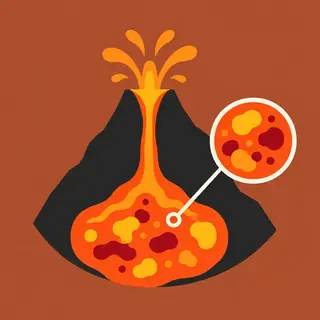
Magma doesn’t simply exist deep underground; it forms under specific conditions. Decompression melting occurs at divergent boundaries and hotspots, where mantle rock rises and pressure drops, causing partial melting. Flux melting happens in subduction zones, where water from the descending slab acts like a salt on ice, lowering the mantle’s melting point. The composition of the magma—basaltic, andesitic, or rhyolitic—controls eruption viscosity and explosivity.
This section explains how temperature, pressure, and volatile content (water, CO2) dictate whether an eruption is effusive or catastrophic. For instance, high silica content traps gases, leading to violent explosions, while low silica allows gases to escape easily. Volcanologists monitor these parameters via gas emissions and seismic data to forecast eruptions. Understanding magma chemistry also clarifies why continental volcanoes are more dangerous than oceanic ones, offering practical insights for hazard preparedness.
🗺️ Famous Eruptions Linked to Plate Movements
History books are filled with eruptions that reshaped civilizations, all rooted in tectonic activity. The 79 AD eruption of Mount Vesuvius, a subduction-zone stratovolcano, buried Pompeii under ash and pumice. In 1883, Krakatoa’s explosive collapse (at a convergent boundary) generated tsunamis and global sunsets. More recently, the 1980 Mount St. Helens eruption demonstrated how subduction-fueled pressure can cause lateral blasts. These examples illustrate the power of plate tectonics in real time.
Beyond destruction, eruptions also build land; Iceland’s volcanic island continues to grow due to divergent spreading. The 2010 Eyjafjallajökull eruption disrupted air travel, highlighting how tectonic forces affect modern infrastructure. By studying these events, you’ll appreciate the scale and unpredictability of volcanic systems. This historical context enriches your understanding and supports informed discussions about volcanic risk management.
📡 Monitoring Techniques and Tectonic Indicators
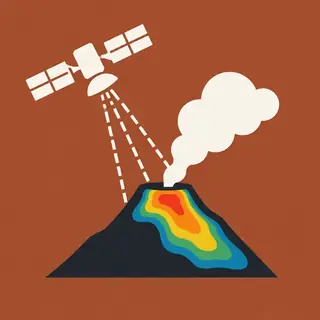
Volcanologists use a suite of tools to watch for signs of impending eruptions, many tied to plate motion. Seismometers detect tiny earthquakes caused by magma moving through fractures. GPS and InSAR measure ground deformation—swelling or sinking—as magma accumulates. Gas sensors track sulfur dioxide and CO2 emissions, which increase before eruptions. Tectonic signals, such as plate strain and fault slip rates, help contextualize volcanic unrest.
Combining satellite imagery with ground-based data creates a comprehensive monitoring network. For example, changes in the tilt of a volcano’s flanks can indicate pressure buildup. Real-time dashboards from agencies like USGS and GVP offer public updates. This section provides a practical guide to interpreting volcano alert levels and understanding how tectonic activity triggers warning signs. Whether you’re a student or a local resident, these insights empower you to respond calmly and scientifically during volcanic crises.
Frequently Asked Questions
What is the difference between a convergent and divergent plate boundary in volcano formation?
Convergent boundaries occur where plates collide, causing one to subduct beneath the other. This leads to flux melting and explosive stratovolcanoes. Divergent boundaries are where plates move apart, allowing decompression melting to create gentle shield volcanoes along mid-ocean ridges.
Can volcanoes form far away from plate boundaries?
Yes, hotspot volcanoes like Hawaii and Yellowstone form when a mantle plume melts through the crust, independent of plate boundaries. These stationary plumes create chains of volcanoes as plates move over them, providing key evidence for plate tectonics.
Why are subduction-zone volcanoes more explosive than rift-zone volcanoes?
Subduction zones introduce water-rich sediments into the mantle, generating silica-rich magma that is thick and trap gases. This builds pressure, leading to violent eruptions. Rift zones produce low-silica basaltic magma that allows gas escape, resulting in less explosive, flow-style eruptions.
How do scientists predict an eruption using plate tectonic data?
They monitor earthquake swarms, ground deformation, and gas emissions, which often increase as magma moves. Tectonic data helps identify stress changes nearby. No single signal is foolproof, but combining these indicators with historical patterns improves forecasting accuracy.
Does the movement of plates affect volcanic activity on the ocean floor?
Absolutely. Most underwater eruptions occur along divergent boundaries, creating new seafloor. These eruptions are typically effusive, forming pillow basalts. Submarine volcanoes at convergent boundaries, like the Mariana Arc, can be explosive but are often hidden by water pressure. Satellite altimetry helps track seafloor spreading rates.