
RealTime Data Streaming: Instant Insights from Volcanic Gas Monitoring Networks


Welcome to Volcano Explorers!
Prepare to be captivated by the Earth's fiery breath. Ever wondered how scientists anticipate volcanic eruptions? Our latest deep dive into Volcanic Gas Monitoring Insights unveils the groundbreaking techniques used to decode the secrets hidden within plumes of smoke. Unravel the mysteries of real-time data streaming and discover how it's revolutionizing our understanding of these awe-inspiring, yet dangerous, natural wonders. Intrigued? Let's explore the cutting edge of volcanic science...
- Introduction: Unveiling Volcanic Secrets with Real-Time Gas Data
- The Power of Volcanic Gas Analysis: A Window into Magmatic Processes
- Traditional vs. Real-Time Volcanic Gas Monitoring: A Paradigm Shift
- Building a Real-Time Volcanic Gas Monitoring Network: Key Components
- Analyzing Real-Time Volcanic Gas Data: Extracting Meaningful Insights
- Case Studies: Real-World Applications of Volcanic Gas Monitoring Insights
- Future Directions in Volcanic Gas Monitoring: Innovation and Advancements
- Conclusion: Empowering Volcanic Science with Real-Time Data
-
Frequently Asked Questions
- What is volcanic gas monitoring, and why is it important?
- How does VolcanoExplorers.org provide real-time data on volcanic gases?
- What types of volcanic gases are typically monitored?
- How can VolcanoExplorers.org's data help people living near volcanoes?
- What are the limitations of volcanic gas monitoring as a predictive tool?
- Final Reflection: Unveiling Earth's Breath
- Ignite Your Curiosity: Dive Deeper into Volcanic Insights!
Introduction: Unveiling Volcanic Secrets with Real-Time Gas Data
Volcanoes, Earth’s dramatic vents, have always held a mystique, both terrifying and captivating. For centuries, understanding their behavior relied heavily on observing visible signs – ground deformation, seismic activity, and the dramatic spectacle of eruptions. However, beneath the surface, a silent yet potent messenger reveals the inner workings of these geological powerhouses: volcanic gases. These gaseous emissions, released from magma deep within the Earth, are a crucial indicator of volcanic activity. Traditionally, studying these gases was a challenging endeavor, limited to infrequent and often hazardous sampling missions. But the advent of real-time data streaming from volcanic gas monitoring networks has revolutionized volcanology, offering unprecedented insights into volcanic processes and paving the way for more effective eruption forecasting and hazard mitigation. This shift towards continuous monitoring is transforming our ability to decipher the complex signals emanating from volcanoes, providing a constant stream of volcanic gas monitoring insights that were previously unattainable.
The Power of Volcanic Gas Analysis: A Window into Magmatic Processes
Volcanic gases are not merely byproducts of eruptions; they are integral components of magma and play a fundamental role in volcanic activity. The composition and flux of these gases provide a direct window into the magmatic processes occurring beneath the volcano. As magma ascends towards the surface, the pressure decreases, causing dissolved gases to exsolve, much like opening a soda bottle.
These gases, primarily water vapor (H2O), carbon dioxide (CO2), sulfur dioxide (SO2), hydrogen sulfide (H2S), and hydrogen halides (like HCl and HF), carry valuable information about the magma's depth, temperature, composition, and volatile content. For instance, an increase in the SO2/CO2 ratio can indicate magma ascent and potential unrest, while changes in the isotopic composition of helium can reveal shifts in magma source regions.
Analyzing these volcanic gas monitoring insights allows volcanologists to track changes in magmatic systems that precede eruptions, understand degassing processes, and ultimately, improve our ability to forecast volcanic events. The subtle variations in gas emissions are like whispers from the Earth's interior, and with real-time monitoring, we are finally able to listen and interpret these crucial messages.
Traditional vs. Real-Time Volcanic Gas Monitoring: A Paradigm Shift
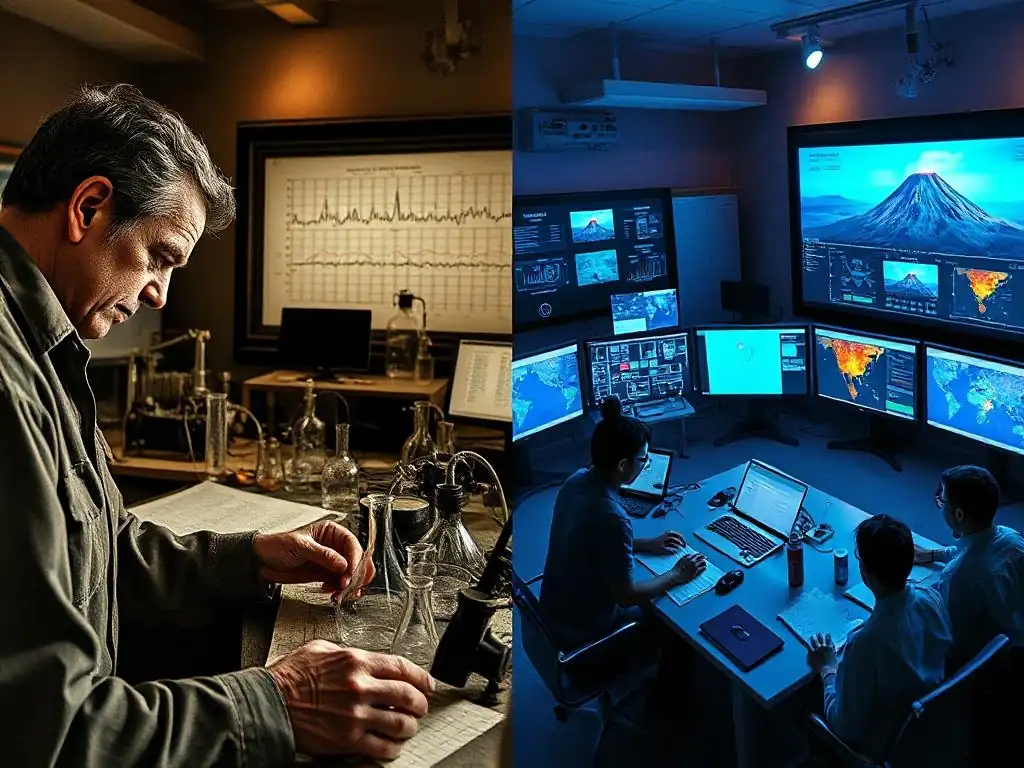
The study of volcanic gases has historically been constrained by the limitations of traditional sampling methods. For decades, volcanologists relied on techniques like collecting gas samples in evacuated flasks or using filter packs to trap specific gases. These methods, while providing valuable data, were inherently limited in their temporal resolution and practicality, especially for continuous monitoring of active volcanoes.
Real-time volcanic gas monitoring represents a paradigm shift, moving away from snapshot measurements to continuous data streams. This transition is analogous to moving from still photographs to video, offering a dynamic and comprehensive view of volcanic gas emissions and their evolution over time. This leap forward in technology has fundamentally changed how we approach volcanic gas monitoring insights, providing a level of detail and responsiveness that was simply impossible with traditional methods.
Limitations of Traditional Gas Sampling Techniques
Traditional volcanic gas sampling techniques, while foundational to volcanology, suffer from several inherent limitations. One major drawback is their discrete nature. Samples are collected at specific times and locations, providing only a snapshot of the gas emissions at that moment. Volcanic gas fluxes can change rapidly, sometimes within minutes, and these short-term variations can be missed entirely by infrequent sampling.
Furthermore, traditional methods often involve physically accessing volcanic vents or fumaroles, which can be extremely dangerous, especially on active or restless volcanoes. Collecting samples near hot vents or in areas prone to eruptions poses significant risks to researchers. Another challenge is sample contamination. Collecting and transporting gas samples without altering their composition is difficult.
Condensation, reactions with flask materials, or atmospheric contamination can all introduce errors into the analysis. Finally, the time-consuming nature of sample collection and laboratory analysis means that results are often delayed, hindering timely responses to rapidly evolving volcanic situations. These limitations underscored the need for more efficient and continuous methods for obtaining volcanic gas monitoring insights.
Advantages of Real-Time Data Streaming from Gas Sensors
Real-time data streaming from gas sensors overcomes many of the limitations inherent in traditional volcanic gas monitoring. The most significant advantage is the continuous nature of the data. Sensors deployed in the field provide a constant stream of measurements, capturing both long-term trends and short-term fluctuations in gas emissions. This continuous data stream allows for the detection of subtle changes in gas fluxes that might be missed by infrequent sampling, providing a much more complete picture of volcanic activity.
Real-time monitoring also significantly enhances safety. Remote sensors can be deployed in hazardous areas, such as near active vents or within volcanic plumes, eliminating the need for researchers to be physically present in dangerous zones. The data is transmitted wirelessly, allowing scientists to monitor volcanic gas emissions from a safe distance.
Furthermore, the rapid availability of data from real-time networks allows for quicker responses to volcanic unrest. Changes in gas fluxes that might indicate an impending eruption can be detected and analyzed almost instantaneously, providing crucial volcanic gas monitoring insights for early warning systems and hazard assessment. This rapid response capability is vital for mitigating the risks associated with volcanic eruptions and protecting communities living near active volcanoes.
Building a Real-Time Volcanic Gas Monitoring Network: Key Components
Establishing a real-time volcanic gas monitoring network is a complex undertaking, requiring careful consideration of various components working in concert. The core of such a network lies in its ability to reliably and continuously measure and transmit volcanic gas data. This involves selecting appropriate gas sensors, establishing robust data acquisition and transmission systems, and ensuring a reliable power supply for remote monitoring stations.
Each component plays a critical role in the overall effectiveness of the network in providing valuable volcanic gas monitoring insights. The successful deployment and operation of these networks depend on a combination of scientific expertise, engineering ingenuity, and logistical planning.
Selecting Appropriate Gas Sensors for Volcano Monitoring
Choosing the right gas sensors is paramount for obtaining accurate and reliable volcanic gas monitoring insights. Several types of gas sensors are employed in volcanology, each with its own strengths and weaknesses. Electrochemical sensors are commonly used for measuring gases like SO2, H2S, and CO. They are relatively inexpensive, compact, and consume low power, making them suitable for remote deployments.
Non-Dispersive Infrared (NDIR) sensors are effective for measuring CO2 and other infrared-absorbing gases. They are generally more robust than electrochemical sensors but can be more power-intensive. For measuring total gas flux, spectroscopic techniques like Differential Optical Absorption Spectroscopy (DOAS) and Fourier Transform Infrared Spectroscopy (FTIR) are often used.
These instruments can measure multiple gases simultaneously and are typically deployed at a distance from the volcanic vent, enhancing safety. The selection of sensors depends on several factors, including the target gases, the expected gas concentrations, the environmental conditions (temperature, humidity, altitude), power availability, and budget constraints. Careful sensor calibration and regular maintenance are also essential to ensure data accuracy and long-term reliability in the harsh volcanic environment.
Data Acquisition and Transmission Systems for Volcanic Gas
Once gas sensors collect measurements, robust data acquisition and transmission systems are crucial to relaying volcanic gas monitoring insights in real-time. Data loggers are used to collect and store sensor readings at pre-programmed intervals. These loggers often have built-in microprocessors for data processing and can be configured for various sampling rates and data storage capacities. For real-time transmission, telemetry systems are employed to wirelessly transmit data from remote monitoring stations to a central receiving station.
Common telemetry options include radio telemetry, satellite telemetry, and cellular networks. Radio telemetry is suitable for relatively short distances and can be cost-effective but requires line-of-sight communication. Satellite telemetry provides global coverage and is ideal for remote volcanoes where terrestrial communication infrastructure is lacking, but it can be more expensive and power-intensive.
Cellular networks offer a good balance of coverage, bandwidth, and cost in areas with cellular service, but their availability can be limited in remote volcanic regions. The choice of telemetry system depends on factors such as distance, terrain, data volume, power availability, and budget. Reliable data transmission is vital for ensuring the timely delivery of volcanic gas monitoring insights for effective volcano monitoring and early warning.
Powering Remote Volcanic Gas Monitoring Stations
Powering remote volcanic gas monitoring stations, often located in harsh and inaccessible terrain, presents a significant logistical challenge. Access to the electrical grid is typically unavailable in these environments, necessitating the use of autonomous power sources. Solar panels are the most common and widely used power source for remote volcanic gas monitoring stations.
Solar energy is abundant in many volcanic regions, and solar panels are relatively reliable and require minimal maintenance. Batteries are used to store solar energy and provide power during periods of low sunlight or nighttime. The size and capacity of the battery bank are determined by the power consumption of the sensors, data logger, telemetry system, and the expected duration of cloudy periods.
In some cases, wind turbines can be used as a supplementary power source, particularly in windy volcanic areas. Thermoelectric generators (TEGs), which convert heat energy from volcanic fumaroles into electricity, are also being explored as a potential power source in specific locations. Careful power budgeting and efficient energy management are crucial for ensuring the continuous and reliable operation of remote volcanic gas monitoring stations, which are the foundation for obtaining consistent volcanic gas monitoring insights.
Analyzing Real-Time Volcanic Gas Data: Extracting Meaningful Insights
The raw data streaming from real-time volcanic gas monitoring networks is only the first step. To truly unlock the power of volcanic gas monitoring insights, sophisticated data analysis techniques are essential. This involves processing and calibrating the raw sensor data, identifying patterns and trends in gas emissions, and relating these patterns to underlying volcanic processes. The goal is to transform the continuous stream of numerical data into meaningful information that can be used for volcano monitoring, eruption forecasting, and hazard assessment.
Data Processing and Calibration Techniques for Volcanic Gas Measurements
Raw data from volcanic gas sensors often requires significant processing and calibration before it can be interpreted meaningfully. Sensor drift, temperature and humidity effects, and cross-sensitivities to other gases can introduce errors into the measurements. Calibration is a crucial step to ensure data accuracy. Sensors are typically calibrated in the laboratory using standard gases of known concentrations before deployment in the field.
In-situ calibration, using portable calibration gas sources, may also be performed periodically in the field to account for sensor drift over time. Data processing techniques are used to remove noise, correct for environmental effects, and convert raw sensor readings into gas concentrations or fluxes. Baseline correction is often applied to remove long-term drifts in sensor signals.
Statistical methods, such as moving averages and filtering techniques, can be used to smooth noisy data and highlight underlying trends. Advanced data processing algorithms may also be employed to compensate for cross-sensitivities between different gases. These rigorous data processing and calibration procedures are essential for ensuring the quality and reliability of volcanic gas monitoring insights derived from real-time networks.
Identifying Volcanic Activity Patterns from Real-Time Gas Emissions
One of the key benefits of real-time volcanic gas monitoring insights is the ability to identify patterns and anomalies in gas emissions that may indicate changes in volcanic activity. Volcanoes exhibit a range of gas emission behaviors, from relatively stable background fluxes to dramatic increases associated with unrest and eruptions. Changes in the flux of specific gases, such as SO2, CO2, and H2S, can be precursors to volcanic eruptions.
For example, a rapid increase in SO2 flux is often observed before explosive eruptions at volcanoes like Popocatépetl in Mexico and Mount Etna in Italy. Changes in gas ratios, such as the SO2/CO2 ratio, can also provide valuable information about magma ascent and degassing processes. Analyzing time series data of gas emissions, using techniques like time series analysis and spectral analysis, can reveal periodicities and trends that may be related to magma recharge, degassing cycles, or tectonic stresses.
Statistical methods, such as change point detection algorithms, can be used to identify statistically significant changes in gas emission patterns. By carefully analyzing these patterns and anomalies in real-time gas data, volcanologists can gain valuable insights into the state of a volcano and improve their ability to forecast future activity.
Case Studies: Real-World Applications of Volcanic Gas Monitoring Insights
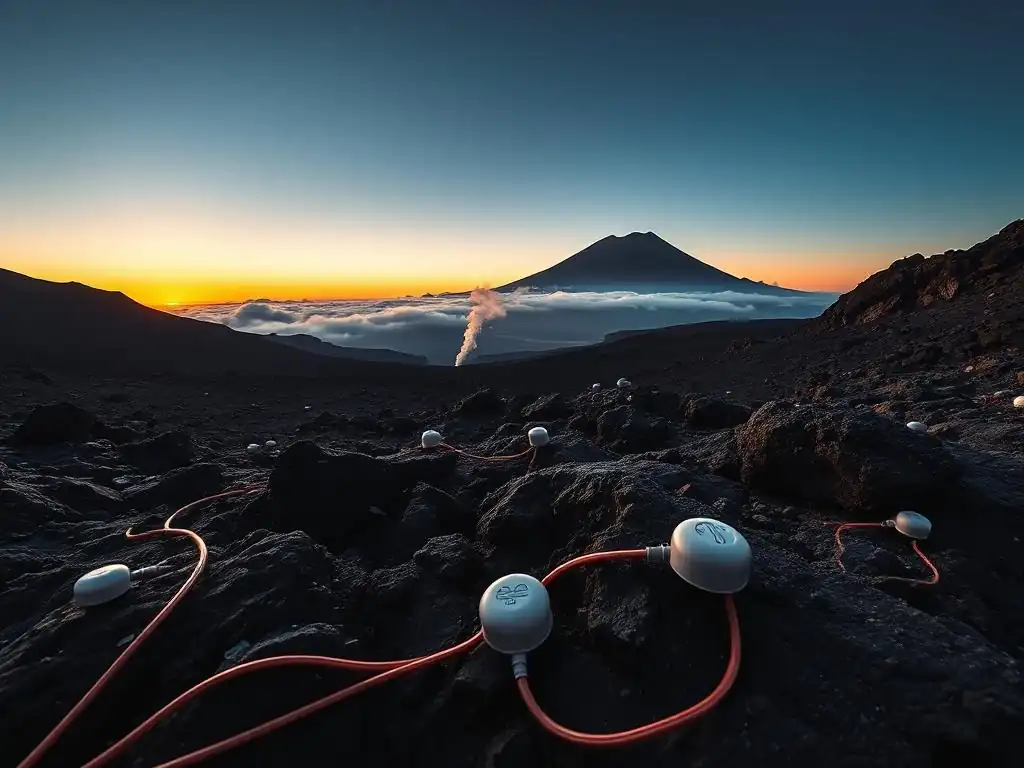
The value of real-time volcanic gas monitoring is best illustrated by examining real-world case studies where these techniques have been successfully applied. Across the globe, volcanic observatories are increasingly relying on real-time gas data to monitor volcanic activity, issue warnings, and mitigate volcanic hazards. The following case studies highlight how volcanic gas monitoring insights have made a tangible difference in understanding and managing volcanic risk at specific volcanoes.
Popocatépetl Case Study: Early Warning System Development
Popocatépetl, a highly active volcano near Mexico City, poses a significant hazard to millions of people. The volcano is closely monitored by the Centro Nacional de Prevención de Desastres (CENAPRED), which utilizes a comprehensive monitoring network, including real-time volcanic gas sensors. Continuous monitoring of SO2 emissions at Popocatépetl has proven to be a crucial component of its early warning system.
Studies have shown a strong correlation between increases in SO2 flux and explosive activity at Popocatépetl. For instance, during periods of heightened volcanic unrest, CENAPRED observes significant increases in SO2 emissions days to weeks before major explosions. These volcanic gas monitoring insights, combined with seismic and deformation data, allow CENAPRED to assess the level of volcanic alert and issue timely warnings to the public.
The real-time gas data contributes directly to the volcano's traffic light alert system, informing decisions about evacuation and public safety measures. The success of Popocatépetl's monitoring program demonstrates the critical role of real-time gas data in developing effective early warning systems for explosive volcanoes.
Mount Etna Case Study: Tracking Magma Movement
Mount Etna, Europe's largest and most active volcano, is a prime example of how real-time gas monitoring can be used to track magma movement and understand eruptive processes. Researchers at the Istituto Nazionale di Geofisica e Vulcanologia (INGV) in Italy have deployed extensive real-time gas monitoring networks on Etna. Continuous measurements of CO2 flux from the summit craters of Etna have been used to track changes in magma degassing and ascent.
Studies have shown that increases in CO2 flux often precede Strombolian eruptions and lava flows at Etna. Furthermore, analysis of the isotopic composition of helium in volcanic gases provides insights into the depth and source of magma feeding Etna. Changes in helium isotopes can indicate shifts in magma pathways and mixing processes within the volcano's plumbing system.
These volcanic gas monitoring insights, combined with other geophysical data, allow scientists to develop a more detailed understanding of Etna's complex magmatic system and improve their ability to forecast eruptive activity. The continuous gas data provides a vital window into the dynamic processes occurring beneath Etna, enabling more informed hazard assessments and mitigation strategies.
Future Directions in Volcanic Gas Monitoring: Innovation and Advancements
The field of volcanic gas monitoring is continuously evolving, driven by technological advancements and a growing need for more comprehensive and robust monitoring capabilities. Future directions in this field are focused on miniaturization, integration, and enhanced data analysis techniques, promising even more powerful volcanic gas monitoring insights in the years to come.
Miniaturization and Integration of Gas Sensors
A key trend in volcanic gas monitoring is the miniaturization and integration of gas sensors. Advances in micro-electromechanical systems (MEMS) technology are leading to the development of smaller, lighter, and more energy-efficient gas sensors. These miniaturized sensors can be integrated into portable and versatile monitoring platforms, such as drones and wearable devices. Drone-based gas monitoring systems are becoming increasingly popular for surveying volcanic plumes and inaccessible areas, providing high-resolution spatial maps of gas concentrations.
Wearable gas sensors can be deployed by researchers in the field for personal safety monitoring and for collecting data in challenging environments. The development of multi-gas sensors, capable of simultaneously measuring multiple gas species in a single compact device, is also advancing rapidly. These integrated sensors will simplify monitoring network deployments and reduce the overall cost and complexity of gas monitoring systems, making volcanic gas monitoring insights more accessible and widespread.
Machine Learning and Artificial Intelligence for Enhanced Volcanic Gas Analysis
Machine learning (ML) and artificial intelligence (AI) are emerging as powerful tools for enhancing volcanic gas analysis and extracting more meaningful information from real-time data streams. ML algorithms can be trained to recognize complex patterns and anomalies in gas emission data that might be difficult for humans to identify. AI-powered systems can automate data processing, calibration, and quality control, freeing up volcanologists to focus on data interpretation and scientific analysis.
ML models can be used to forecast volcanic activity based on real-time gas data, by learning the relationships between gas emission patterns and past eruptions. For example, AI algorithms can be trained to predict the likelihood of an eruption based on changes in gas fluxes, ratios, and trends.
Furthermore, AI can be used to integrate gas data with other geophysical datasets, such as seismic and deformation data, to develop more comprehensive and robust volcanic eruption forecasting models. The application of ML and AI to volcanic gas monitoring insights holds immense potential for improving our understanding of volcanic processes and enhancing our ability to predict and mitigate volcanic hazards.
Conclusion: Empowering Volcanic Science with Real-Time Data
Real-time data streaming from volcanic gas monitoring networks has fundamentally transformed volcanology, ushering in a new era of continuous and dynamic volcano monitoring. The ability to continuously measure and analyze volcanic gas emissions provides unprecedented volcanic gas monitoring insights into magmatic processes, degassing behavior, and eruptive potential. From early warning systems at volcanoes like Popocatépetl to tracking magma movement at Mount Etna, real-time gas data is proving to be an invaluable tool for understanding and managing volcanic risk. Ongoing advancements in sensor technology, data transmission, and data analysis, particularly the integration of machine learning and AI, promise to further enhance the power of volcanic gas monitoring in the future. As these technologies continue to evolve, real-time volcanic gas monitoring will undoubtedly play an increasingly critical role in empowering volcanic science, improving eruption forecasting capabilities, and ultimately, protecting communities living in the shadow of these magnificent and potentially dangerous natural wonders.
Frequently Asked Questions
What is volcanic gas monitoring, and why is it important?
Volcanic gas monitoring involves measuring the composition and concentration of gases emitted from volcanoes. This is crucial for detecting changes that could indicate an impending eruption, helping to save lives.
How does VolcanoExplorers.org provide real-time data on volcanic gases?
VolcanoExplorers.org utilizes real-time data streaming from volcanic gas monitoring networks. This provides instant insights into gas emissions, allowing experts and the public to stay informed.
What types of volcanic gases are typically monitored?
Commonly monitored volcanic gases include sulfur dioxide (SO2), carbon dioxide (CO2), and water vapor (H2O). Changes in their ratios can be indicative of magma movement or other volcanic activity.
How can VolcanoExplorers.org's data help people living near volcanoes?
The data provides early warning signs of increased volcanic activity, allowing communities to prepare for potential eruptions. This enables timely evacuation and safety measures, minimizing risks.
What are the limitations of volcanic gas monitoring as a predictive tool?
While valuable, gas monitoring is not a perfect predictor. Other factors like ground deformation and seismic activity also need to be considered for a comprehensive assessment of volcanic risk.
Final Reflection: Unveiling Earth's Breath
The ability to analyze volcanic gas emissions in real-time, as we've explored, is no longer a futuristic dream, but a vital tool for safeguarding communities and deepening our understanding of Earth's dynamic processes. The insights gleaned from these networks are directly impacting hazard assessments and mitigation strategies, transforming how we respond to volcanic activity and minimizing potential disasters.
This constant stream of data not only provides immediate warnings but also allows us to witness the subtle, long-term changes within volcanic systems. The potential for proactive intervention, driven by these insights, is profoundly impactful, offering a chance to shift from reactive responses to preventative measures. The Earth speaks to all of us, and if we listen, we can understand.
This quote, though simple, encapsulates the essence of what real-time volcanic gas monitoring allows us to do: listen to the Earth's whispers before they become roars.
As we look to the future, the possibilities for refining and expanding these monitoring networks are boundless. Let us embrace the power of these technologies, not just as scientists and engineers, but as global citizens invested in the well-being of our planet.
Consider how you can support the advancement of these crucial monitoring efforts, whether through advocating for funding, promoting scientific literacy, or simply appreciating the intricate dance between our planet and the atmosphere. The insights gained from volcanic gas monitoring are not just data points; they are threads in a larger tapestry of understanding, and each of us has a role to play in weaving a safer, more informed future.
Ignite Your Curiosity: Dive Deeper into Volcanic Insights!
Thank you for exploring the fascinating world of real-time volcanic gas monitoring! We hope you've gained valuable insights into how this cutting-edge technology helps us understand and predict volcanic activity. Ready to take your exploration further?
Here are some ways you can stay connected and contribute to the Volcano Explorers community:
- Share your newfound knowledge: Tell your friends and family about the importance of real-time data in volcanic monitoring and how it helps keep communities safe.
- Explore the Volcano Explorers Data Hub: Dive into our interactive map at volcanoexplorers.org and discover real-time data from volcanic gas monitoring networks around the world.
- Contribute to citizen science by reporting your volcanic observations. Share your photos and stories via the online forum and social media using #VolcanoExplorers.
What fascinating volcanic gas readings have you uncovered, and how do they shape your understanding of our planet's fiery forces?