Volcanic Dust Veils: The Science Behind Little Ice Age Cooling
Uncover the chilling truth behind the Little Ice Age. VolcanoExplorers.org reveals how massive volcanic eruptions and their atmospheric dust significantly impacted global…
Read article
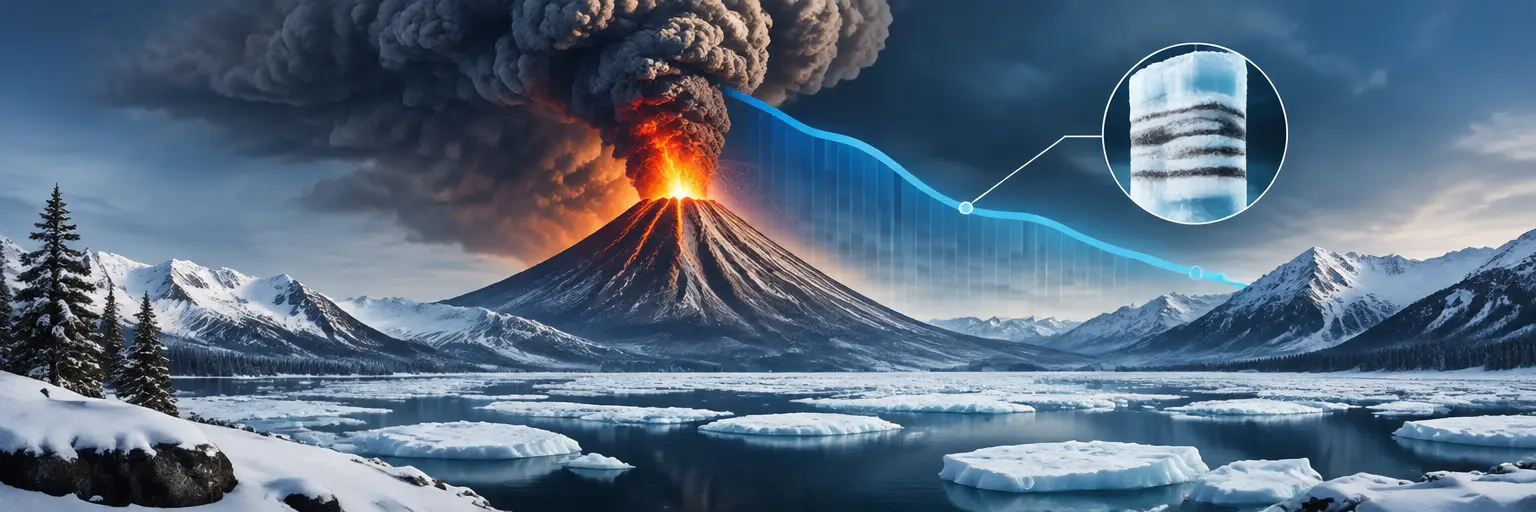
Uncover the chilling story of how volcanic eruptions plunged the world into a “Little Ice Age,” a period of profound climatic disruption that reshaped history. In this deep dive, we explore the powerful link between explosive volcanism and global cooling, revealing how massive injections of sulfur dioxide into the stratosphere created a reflective veil, dimming the sun and altering weather patterns for decades. Discover the compelling evidence—from ice cores and tree rings to historical records of failed harvests and frozen rivers—that connects specific eruptions, like the mysterious 1257 Samalas event and the 1815 Tambora catastrophe, to drastic temperature drops and societal upheaval. Learn about the complex mechanisms of volcanic forcing, including aerosol optical depth and the impact on atmospheric circulation, and how these natural phenomena continue to inform modern climate models. Whether you’re a geology enthusiast, a history buff, or concerned about our planet’s future, this compelling exploration reveals the immense power of Earth’s inner fire to cool its surface.
Uncover the chilling truth behind the Little Ice Age. VolcanoExplorers.org reveals how massive volcanic eruptions and their atmospheric dust significantly impacted global…
Read article
Uncover the chilling truth: VolcanoExplorers.org reveals how significant volcanic activity may have triggered the Little Ice Age, a period of unprecedented global…
Read article
Volcanoes and the Little Ice Age: Did massive volcanic eruptions trigger the dramatic climate shift? VolcanoExplorers.org investigates the evidence linking these powerful…
Read article
Uncover the chilling link between volcanoes and climate change! VolcanoExplorers.org explores how massive eruptions, like those during the Little Ice Age, dramatically…
Read article
VolcanoExplorers.org investigates whether another volcanic winter is feasible. Explore the historical evidence and understand the profound volcanic activity climate impact, crucial for…
Read article
Uncover the hidden history of the Little Ice Age! VolcanoExplorers.org reveals lesser-known volcanic eruptions that shaped this period, offering insights into their…
Read article
Discover how the Little Ice Age sculpted volcanic landscapes, a dramatic interplay of ice, wind, and volcanic fury. Explore these breathtaking formations…
Read articleWelcome to VolcanoExplorers.org, where we journey into one of history’s most intriguing climate puzzles: the Little Ice Age and volcanic forcing. This subcategory within our Historical Eruptions section reveals how massive volcanic eruptions injected sulfate aerosols into the stratosphere, reflecting sunlight and temporarily cooling the planet. From the 13th to the 19th centuries, these natural experiments in climate change altered harvests, reshaped societies, and even influenced art. Here, you’ll discover the science linking eruptions to cold spells, the specific volcanoes responsible, and how modern researchers decode ice cores, tree rings, and historical records to separate human and natural climate drivers.
Volcanic forcing refers to the temporary cooling caused by sulfur dioxide gas converting into sulfate aerosols. Unlike CO₂, these particles spread globally within weeks, blocking incoming solar radiation. For the Little Ice Age, multiple eruptions, such as the 1257 Samalas event and the 1815 Tambora explosion, coincided with colder decades. Scientists estimate that a single large eruption can lower global temperatures by 0.5–1°C for one to three years, but clustered eruptions can sustain cooling over centuries. This section explains the physics of radiative forcing, aerosol optical depth, and how volcanic winters amplify existing climate variability, making it essential reading for anyone curious about climate feedback loops.
Readers will learn why not all eruptions cause cooling—only those with high sulfur output and tropical or high-latitude locations are most effective. We also examine the “volcanic drought” hypothesis, where cooling reduces evaporation, weakening monsoon rains and triggering famines. Through historical case studies, you’ll see how volcanic forcing interacted with solar variability, ocean currents, and greenhouse gas changes to produce the Little Ice Age’s most frigid periods. This foundational knowledge helps you distinguish between natural and anthropogenic climate influences in centuries past.
While the Little Ice Age spanned roughly 1300–1850, certain eruptions stand out as climatic tipping points. The 1257 Samalas eruption in Indonesia, the largest of the Holocene, injected an estimated 150–200 megatons of sulfur, initiating decades of cooling. Similarly, the 1600 Huaynaputina eruption in Peru caused severe winters in Europe and China, while the 1783–1784 Laki eruptions in Iceland produced a volcanic haze that chilled the Northern Hemisphere. This subcategory profiles these events, using ice-core sulfate spikes and tree-ring density to date them precisely. You’ll comprehend how each eruption’s latitude, seasonality, and sulfur yield dictated its climatic fingerprint.
Discover the chilling “Year Without a Summer” (1816) after Tambora, which led to crop failures from New England to Europe, and the earlier ‘Krakatoa’ eruption in 1883 that, though later, demonstrates similar mechanisms. By analyzing volcanic stratigraphy, we reconstruct eruption magnitudes and sulfur budgets, showing how a single event can trigger multi-year endure. You’ll also learn about the “volcanic winter” versus “volcanic summer” paradox, where high-latitude eruptions can actually warm winter regions due to altered atmospheric circulation. This knowledge not only deepens historical understanding but also improves eruption hazard forecasting.
No direct thermometer records exist for most of the Little Ice Age, so scientists rely on paleoclimate proxies. Ice cores from Greenland and Antarctica preserve annual layers of sulfate, providing exact eruption dates and sulfur magnitudes. Tree rings offer annual summer temperature estimates, capturing frost rings and growth suppression following major eruptions. This section explains how researchers cross-reference these records with historical chronicles, ship logs, and grape harvest dates to build robust temperature reconstructions. You’ll see how the 1257 Samalas event was pinpointed through radiocarbon dating and sulfur isotopes, solving a long-standing mystery about the missing eruption of that era.
Beyond dating, proxies reveal spatial patterns: volcanic forcing often triggers El Niño–Southern Oscillation (ENSO) responses, with cooling in one region and warming in another. For instance, the 1809 and 1815 eruptions likely shifted Pacific trade winds, intensifying tropical rainfall deficits. We also explore model–data comparisons, where general circulation models simulate the climatic response to past eruptions, validating proxy interpretations. By triangu-ating evidence from multiple archives, you’ll understand the confidence levels behind each conclusion and how uncertainties are quantified. This rigorous approach is vital for testing future climate scenarios.
Volcanic cooling didn’t just shift temperatures—it unraveled societies. The 1315–1317 Great Famine, triggered by successive eruptions, saw relentless rain and crop failure, killing millions in Europe. Similarly, the 1780s Laki eruptions correlated with poor harvests in Iceland, leading to mortality and emigration. This subcategory examines how volcanic forcing exacerbated existing vulnerabilities, sparking food riots, rising bread prices, and even political unrest. You’ll learn about the “Tambora effect” on global agriculture, where the 1815 eruption caused the 1816–1818 typhus epidemics across Europe and the first cholera pandemic in Asia. These case studies illustrate how geophysical extremes can alter human history.
Beyond subsistence, volcanic haze affected cultural life: artists like J.M.W. Turner painted vivid sunsets inspired by post-eruption aerosols, while religious processions sought to appease a wrathful God. The ‘Year Without a Summer’ inspired Mary Shelley’s “Frankenstein” during a dark indoor retreat near Lake Geneva. We also discuss how governments responded—emergency grain imports, food relief programs, and early climate monitoring—offering lessons for modern disaster resilience. By connecting volcanic forcing to socioeconomic outcomes, you’ll grasp the true depth of climate–human interaction, emphasizing the fragility of preindustrial food systems.
The Little Ice Age’s volcanic episodes provide a natural laboratory for testing modern climate models. Current research uses these past eruptions to validate projections of stratospheric aerosol injection—a proposed geoengineering method to counter global warming. By studying how volcanic cooling affected sea ice, permafrost, and ocean heat content, scientists improve model sensitivity to external forcings. This section highlights state-of-the-art paleoclimate simulations, like those from the PMIP4 and VolMIP projects, which reconstruct the Last Millennium to isolate volcanic signals from solar and greenhouse gas changes.
You’ll learn why current global warming (0.2°C per decade) contrasts sharply with the temporary dip after Mount Pinatubo (1991), which cooled the planet by 0.5°C for two years. These comparisons reveal both the limits and potential of solar radiation modification. However, volcanic forcing isn’t a perfect analogue—modern eruptions lack the persistent greenhouse gas rise, and geoengineering poses ethical and logistical challenges. Our content also covers ongoing volcano monitoring, early warning systems, and how advances in satellite remote sensing detect aerosols in real time. Ultimately, this section bridges historical knowledge with future climate resilience strategies.
Volcanic forcing occurs when large eruptions release sulfur dioxide, which forms sulfate aerosols in the stratosphere, reflecting sunlight back to space. This reduces solar energy reaching Earth’s surface, causing global temperatures to drop by 0.5–1°C for one to three years. The Little Ice Age saw multiple such events that reinforced natural cooling trends, prolonging cold periods.
The 1257 Samalas eruption in Indonesia is often called a primary trigger, injecting massive sulfate into the stratosphere and initiating centuries of cooling. However, no single eruption caused the entire Little Ice Age; it resulted from combined volcanic activity, solar minima, and ocean–atmosphere feedbacks.
Scientists use ice cores—annual sulfate layers with high precision—and tree rings that show frost damage or narrow growth rings. Radiocarbon dating and sulfur isotopes help pinpoint exact events, while historical documents from monasteries, ship logs, and tax records verify eruption impacts.
No, cooling is uneven. High-latitude and Northern Hemisphere regions experience stronger seasonal shifts, while tropical zones see altered monsoons and unpredictable rainfall. Volcanic forcing can also trigger El Niño events, leading to droughts in some areas and floods in others, complicating regional impacts.
Yes, paleoclimate studies help validate climate models that simulate both natural and human-driven changes. They test how Earth responds to rapid external forcings, informing projections of aerosol injection and helping scientists distinguish natural variability from anthropogenic warming signals.