
Volcanoes and Climate: A Little Ice Age Case Study in Natural Climate Variability

Welcome to Volcano Explorers!
Ever wondered how a mountain of fire can influence the very air you breathe? We invite you to journey with us into the heart of Earth's fiery giants and uncover their secrets. In this article, we'll explore the fascinating relationship between volcanoes and their profound impact on climate, focusing on a compelling case study: how a series of historical eruptions may have triggered a mini ice age. Prepare to delve into the science, the history, and the sheer power of nature – the story that follows may just change how you see the world.
- Introduction: Understanding Volcanoes' Role in Climate
- The Little Ice Age: A Period of Climate Anomaly
- Volcanic Forcing: How Volcanoes Impact Climate
- Major Volcanic Eruptions During the Little Ice Age
- Linking Volcanic Activity to Little Ice Age Cooling
- Debates and Alternative Explanations
- Modern Implications: Volcanoes and Future Climate Projections
- Conclusion: Volcanoes as a Key Driver of Natural Climate Variability
-
Frequently Asked Questions
- How do volcanoes impact the Earth's climate?
- What is the "Little Ice Age" and what role did volcanoes play?
- How long does the cooling effect from a volcanic eruption typically last?
- Are all volcanic eruptions the same in terms of their climate impact?
- Can volcanic eruptions cause warming, or are they only associated with cooling?
- Final Reflection: Echoes of Fire, Whispers of Ice
- Ignite Your Inner Vulcanologist: Explore and Act!
Introduction: Understanding Volcanoes' Role in Climate
The Interplay Between Volcanoes and Climate
Volcanoes, often perceived as agents of destruction, play a significant role in shaping our planet's climate. Their eruptions, while seemingly isolated events, can have far-reaching consequences for global atmospheric conditions. The relationship between volcanoes and climate is intricate, involving the release of gases and particles into the atmosphere that can both warm and cool the Earth. Understanding this dynamic interplay is crucial for comprehending natural climate variability and distinguishing it from human-induced climate change. The study of past volcanic events, particularly their impact on historical climate periods, provides invaluable insights into these complex processes.
The impact of volcanoes on climate is not limited to immediate, short-term effects. Large eruptions can inject massive quantities of sulfur dioxide and ash into the stratosphere. Sulfur dioxide, in particular, undergoes chemical reactions to form sulfate aerosols, which are tiny particles that can reflect sunlight back into space.
This phenomenon reduces the amount of solar radiation reaching the Earth's surface, leading to a temporary cooling effect. Conversely, volcanoes also release greenhouse gases like carbon dioxide, but the amount is generally dwarfed by human emissions over longer timescales and their immediate cooling effect from aerosols is more pronounced in the short-term aftermath of large eruptions. Therefore, to fully grasp the volcanoes impact on climate, it is necessary to examine both the short-term cooling effects of aerosols and the long-term contributions of greenhouse gases, while recognizing the dominant short-term cooling impact of major eruptions.
The Significance of Studying Volcanic Eruptions and Climate
Studying the volcanoes impact on climate, especially through historical events like the Little Ice Age, offers a unique window into the Earth's natural climate system. By analyzing past volcanic eruptions and their associated climate responses, scientists can better understand the sensitivity of the climate system to external forcings. This knowledge is essential for refining climate models and improving predictions of future climate change. Furthermore, understanding the natural variability driven by volcanic eruptions helps to contextualize the current warming trend and to differentiate between natural and anthropogenic influences on the climate.
The Little Ice Age, a period of widespread cooling that affected much of the Northern Hemisphere for centuries, provides a compelling case study to investigate the volcanoes impact on climate. During this period, several significant volcanic eruptions occurred, coinciding with periods of colder temperatures and altered weather patterns.
By examining the timing and magnitude of these eruptions, along with paleoclimate records such as ice cores and tree rings, researchers can establish a clearer picture of the role volcanoes played in driving climate variability during this era. This historical perspective is invaluable for understanding the potential for future volcanic eruptions to influence global climate and for developing strategies to mitigate and adapt to climate change in a world where both natural and human factors interact.
The Little Ice Age: A Period of Climate Anomaly
Defining the Little Ice Age: Timeline and Characteristics
The Little Ice Age (LIA) is a period of regional cooling, most pronounced in the Northern Hemisphere, that occurred after the Medieval Warm Period. While not a true ice age, it was characterized by significantly colder temperatures, glacial expansion, and altered weather patterns across many parts of the world. The timeline of the Little Ice Age is not precisely defined and varies depending on geographical location and the specific climate indicators used. However, it is generally considered to have spanned roughly from the 14th to the mid-19th centuries.
During the Little Ice Age, Europe experienced notably colder winters, shorter growing seasons, and increased frequency of severe weather events. Glaciers in mountain ranges worldwide advanced, and sea ice extent in the North Atlantic expanded. Historical records, such as paintings depicting frozen rivers and canals in Europe, and harvest records indicating crop failures, provide compelling evidence of the colder conditions.
Scientific data from tree rings, ice cores, and sediment records further corroborate the widespread cooling and its impact on ecosystems and human societies. While the exact global average temperature decrease is debated, estimates suggest a cooling of perhaps 0.5 to 1.0 °C compared to the centuries preceding and following the LIA.
Natural Climate Variability During the Little Ice Age: Other Contributing Factors
While volcanic eruptions are increasingly recognized as a major driver of the Little Ice Age, it is important to acknowledge that natural climate variability is complex and influenced by multiple factors. Solar variability, changes in ocean circulation, and internal climate system dynamics also likely played a role in shaping the climate during this period.
Solar activity, indicated by sunspot cycles, can influence the amount of energy reaching the Earth. Periods of reduced solar activity, such as the Maunder Minimum (roughly 1645 to 1715), which coincided with a particularly cold phase of the LIA, are hypothesized to have contributed to the cooling.
Ocean circulation patterns, such as the Atlantic Meridional Overturning Circulation (AMOC), also redistribute heat around the globe and can undergo natural fluctuations. Changes in AMOC strength could have influenced regional temperature patterns during the Little Ice Age, contributing to cooling in some areas and potentially warming in others.
Furthermore, internal climate variability, arising from interactions within the atmosphere, oceans, and ice sheets, can also lead to decadal- to centennial-scale climate fluctuations. Therefore, while the volcanoes impact on climate during the Little Ice Age is significant, it is crucial to consider it within the broader context of natural climate system dynamics and the interplay of various contributing factors.
Volcanic Forcing: How Volcanoes Impact Climate
Understanding Volcanic Aerosols and Their Climate Effect
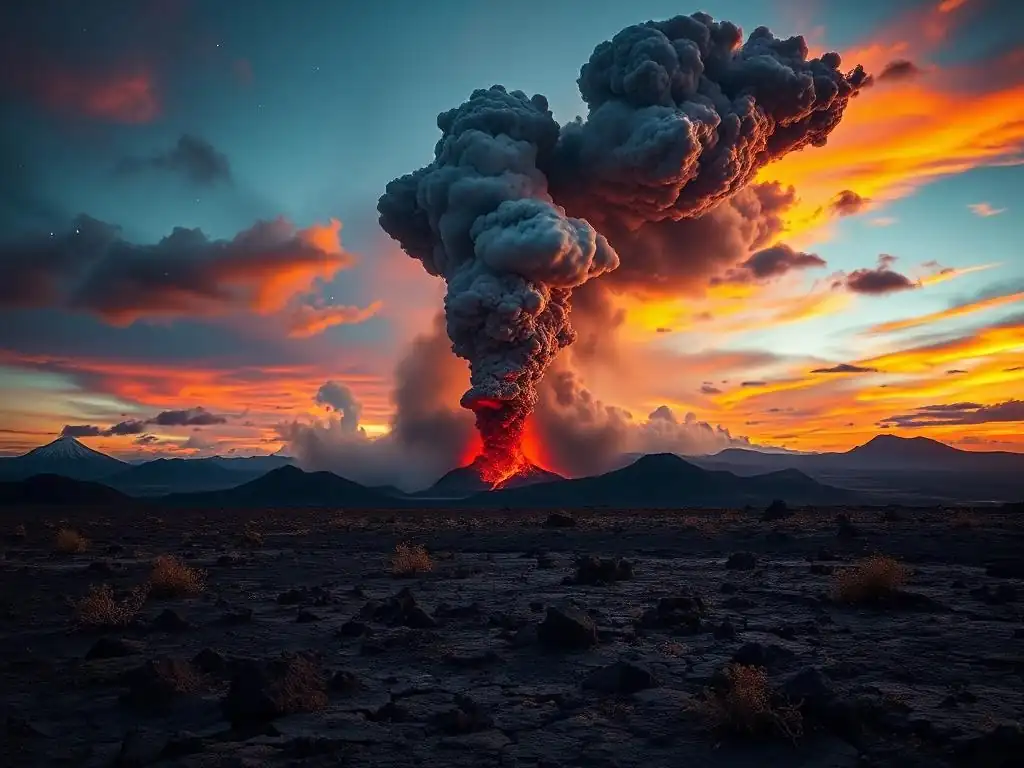
Volcanic forcing refers to the influence of volcanic eruptions on the Earth's climate. This influence is primarily exerted through the injection of volcanic gases and particles, collectively known as volcanic aerosols, into the atmosphere, particularly the stratosphere. While volcanoes release various gases, including carbon dioxide (CO2), water vapor (H2O), and sulfur dioxide (SO2), it is sulfur dioxide that has the most significant short-term impact on global climate. Large explosive eruptions can propel sulfur dioxide gas high into the stratosphere, reaching altitudes above the troposphere where weather occurs.
Once in the stratosphere, sulfur dioxide undergoes chemical reactions, primarily oxidation, to form sulfate aerosols. These sulfate aerosols are tiny droplets of sulfuric acid and water that can persist in the stratosphere for months to years due to the lack of precipitation at those altitudes. These aerosols act as highly effective reflectors of incoming solar radiation.
By scattering sunlight back into space, they reduce the amount of solar energy that reaches the Earth's surface and lower atmosphere. This reduction in solar radiation leads to a cooling effect on the planet, a phenomenon known as volcanic cooling. The magnitude and duration of this cooling depend on the size and sulfur content of the eruption, as well as the altitude to which the aerosols are injected.
The Science Behind Sulfate Aerosols and Global Cooling
The process of global cooling following volcanic eruptions is primarily driven by the radiative properties of sulfate aerosols. Sulfate aerosols are particularly effective at scattering incoming shortwave solar radiation. This scattering effect increases the Earth's albedo, which is the measure of how much solar radiation is reflected back to space. A higher albedo means less solar energy is absorbed by the Earth's system, leading to a decrease in global average temperatures.
The size of the sulfate aerosol particles is crucial to their radiative efficiency. Volcanic eruptions tend to produce sulfate aerosols in the size range that is most effective at scattering sunlight. Furthermore, the stratospheric residence time of these aerosols is significant.
Unlike aerosols in the lower troposphere, which are quickly removed by precipitation, stratospheric aerosols can persist for one to two years, or even longer for exceptionally large eruptions. This longer lifespan allows them to exert a sustained cooling effect on the climate system. Scientific studies using climate models have confirmed the link between volcanic sulfate aerosols and global cooling, demonstrating that these aerosols are a primary driver of the short-term climate response to large volcanic eruptions.
Volcanic Eruptions and Solar Radiation: A Complex Relationship
While the dominant effect of volcanic eruptions on climate is cooling due to sulfate aerosols reflecting solar radiation, the relationship between volcanic eruptions and solar radiation is more complex. Volcanic ash, also released during eruptions, can have a different, though generally shorter-lived, impact on solar radiation. Ash particles are larger and heavier than sulfate aerosols and tend to fall out of the atmosphere more quickly, typically within weeks or months. Ash can also absorb solar radiation, as well as scatter it, which can have a more localized and variable effect on temperature.
Furthermore, the absorption of solar radiation by sulfate aerosols themselves can also lead to some warming in the stratosphere. While the overall effect at the Earth's surface is cooling, the stratosphere can actually warm slightly due to this absorption. This stratospheric warming can influence atmospheric circulation patterns and potentially have indirect effects on tropospheric climate. The precise radiative effects of volcanic eruptions depend on the composition, size distribution, and altitude of the emitted particles and gases, making it a complex area of ongoing research to fully understand the volcanoes impact on climate and solar radiation interactions.
Major Volcanic Eruptions During the Little Ice Age
Tambora (1815): A Case Study of Climate Impact
Tambora, Indonesia, 1815
The eruption of Mount Tambora in Indonesia in April 1815 stands as one of the largest volcanic eruptions in recorded history. Located on the island of Sumbawa, Tambora had been dormant for centuries before its cataclysmic awakening. The eruption culminated in a massive explosion that ejected an estimated 160 cubic kilometers of volcanic material into the atmosphere. This event was not only devastating locally, causing widespread destruction and tens of thousands of deaths in the immediate vicinity, but it also had profound global climate consequences.
The Tambora eruption serves as a prime example of how volcanoes impact on climate on a global scale. The sheer volume of sulfur dioxide released into the stratosphere was unprecedented in recent history. Eyewitness accounts from the time describe darkened skies and unusual atmospheric phenomena observed thousands of kilometers away from the eruption site. The eruption's impact on global temperatures was so significant that 1816 became known as the "Year Without a Summer," particularly in North America and Europe, highlighting the far-reaching climate effects of this single volcanic event.
VEI 7 and Global Atmospheric Impact
The Tambora eruption is classified as a Volcanic Explosivity Index (VEI) 7 event, the second-highest level on the scale, indicating an exceptionally powerful eruption. The VEI 7 classification reflects the immense volume of ejected material, the height of the eruption column, and the widespread impact of the eruption. It is estimated that the Tambora eruption injected between 30 to 50 megatons of sulfur dioxide into the stratosphere. This massive injection of sulfur dioxide led to the formation of a substantial stratospheric sulfate aerosol layer that encircled the globe.
The global atmospheric impact of the Tambora eruption was immediate and dramatic. The sulfate aerosol layer reflected a significant portion of incoming solar radiation, causing a notable drop in global average temperatures. Globally, temperatures in 1816 are estimated to have decreased by 0.4 to 0.7 °C, with regional cooling being even more pronounced. This cooling resulted in widespread crop failures, famine, and social unrest in many parts of the world. The Tambora eruption provides a stark illustration of the potential for a single, exceptionally large volcanic eruption to significantly perturb global climate and have cascading effects on human societies.
Samalas (1257): Analyzing Another Significant Event
Samalas, Indonesia, 1257
While Tambora is widely recognized for its climate impact, another VEI 7 eruption, the 1257 Samalas eruption, also in Indonesia, predates it and is increasingly recognized as a significant contributor to the onset of the Little Ice Age. The Samalas eruption, located on the island of Lombok, was even larger than Tambora in terms of erupted mass, although its sulfur dioxide release is still being refined by research. Like Tambora, Samalas was a Plinian/Ultraplinian eruption, characterized by highly explosive activity and the ejection of vast quantities of volcanic material and gases into the atmosphere.
The Samalas eruption was largely forgotten in historical records until recently. Paleoclimate research, particularly analysis of ice cores from Greenland and Antarctica, revealed a massive sulfate spike dating to around 1257-1258. This sulfate spike was significantly larger than that associated with Tambora, suggesting an even more powerful eruption.
Geological investigations on Lombok subsequently identified the Rinjani caldera as the source, and the eruption was named Samalas after a historical Javanese text that described a catastrophic volcanic event. The rediscovery of the Samalas eruption has significantly revised our understanding of the volcanoes impact on climate during the 13th century and the onset of the Little Ice Age.
VEI 7 and Global Atmospheric Impact
The Samalas eruption, like Tambora, is classified as a VEI 7 event, but some estimates suggest it might have been even more explosive and impactful than Tambora in terms of total erupted mass. While the exact sulfur dioxide yield is still being researched, the massive sulfate spike in ice cores indicates a substantial injection of sulfur into the stratosphere. Climate model simulations, incorporating the estimated sulfate loading from Samalas, suggest a significant global cooling in the years following the eruption.
Studies indicate that the Samalas eruption likely caused a global temperature decrease of around 0.7 to 1.0 °C in the years immediately following the event, potentially larger than the cooling associated with Tambora. This cooling event is considered to have played a crucial role in triggering or exacerbating the onset of the Little Ice Age. The combined effects of the Samalas eruption and subsequent volcanic activity in the following decades are now seen as a major factor in the prolonged period of colder temperatures that characterized the Little Ice Age, further emphasizing the profound volcanoes impact on climate.
The Cumulative Effect of Multiple Eruptions on the Climate
While individual large eruptions like Tambora and Samalas had significant climate impacts, the cumulative effect of multiple volcanic eruptions over decades and centuries likely played a crucial role in sustaining the Little Ice Age. The 13th and 17th centuries, in particular, witnessed clusters of moderate to large volcanic eruptions. Each eruption, even if smaller than Tambora or Samalas, would have injected sulfur dioxide into the stratosphere, contributing to the overall stratospheric sulfate aerosol loading.
The cumulative effect of these eruptions would have been a more persistent and prolonged cooling effect compared to the short-lived cooling following a single eruption. Climate models suggest that repeated volcanic forcing, even from moderate eruptions, can lead to a sustained shift in global climate.
The Little Ice Age may therefore be viewed not just as a response to one or two exceptionally large eruptions, but as a result of a period of heightened volcanic activity, where the cumulative volcanoes impact on climate from multiple eruptions contributed to a sustained cooling trend. This highlights the importance of considering long-term volcanic activity patterns when assessing their influence on climate over decadal to centennial timescales.
Linking Volcanic Activity to Little Ice Age Cooling
Evidence Supporting the Volcano-Climate Connection
The link between volcanic activity and the Little Ice Age cooling is supported by a growing body of evidence from various sources, including paleoclimate archives, historical records, and climate model simulations. Ice core records from Greenland and Antarctica provide perhaps the most compelling evidence. These ice cores contain layers of volcanic sulfate deposited from past eruptions. By analyzing the timing and magnitude of sulfate spikes in ice cores, scientists can reconstruct a history of volcanic eruptions stretching back thousands of years.
The ice core record clearly shows a cluster of large sulfate spikes coinciding with the onset and periods of particularly cold conditions during the Little Ice Age. The sulfate spikes associated with the Samalas (1257) and Kuwae (c. 1450s) eruptions, as well as several other significant eruptions, are clearly evident in ice cores. The timing of these eruptions closely aligns with periods of cooling inferred from other paleoclimate proxies, such as tree rings, lake sediments, and glacier records. This temporal correlation provides strong evidence supporting the volcanoes impact on climate during the Little Ice Age.
Ice Core Data: Tracing Volcanic Signals
Ice cores are invaluable archives for tracing volcanic signals in the past climate record. As snow accumulates and compacts into ice in polar regions and high-altitude glaciers, it traps atmospheric aerosols, including volcanic sulfate. Scientists can drill deep into these ice sheets and glaciers to retrieve ice cores that represent a continuous record of past atmospheric composition. Analyzing the chemical composition of ice layers allows for the identification and quantification of volcanic sulfate deposits.
By dating the ice layers using techniques like annual layer counting and radiometric dating, researchers can precisely determine the timing of volcanic eruptions recorded in the ice. The concentration of sulfate in each layer provides an estimate of the magnitude of the eruption's sulfur dioxide release.
Furthermore, the isotopic composition of the sulfate can sometimes help to identify the source volcano. Ice core data has been instrumental in reconstructing the history of volcanic eruptions over millennia and in establishing the link between volcanic forcing and past climate changes, including the Little Ice Age, solidifying the understanding of volcanoes impact on climate.
Historical Records: Correlating Eruptions with Climate Anomalies
Historical records, while less precise than ice core data, provide complementary evidence for the volcano-climate connection during the Little Ice Age. Following major volcanic eruptions, particularly those in the tropics that inject sulfate aerosols globally, historical accounts often describe unusual atmospheric phenomena, such as vividly colored sunsets and sunrises, and a persistent dry fog or haze. These optical phenomena are consistent with the presence of stratospheric sulfate aerosols.
More importantly, historical records document periods of unusually cold weather, crop failures, and famines that sometimes followed large eruptions. For example, the "Year Without a Summer" in 1816, following the Tambora eruption, is well-documented in historical accounts from North America and Europe, describing widespread frosts, snow in summer, and agricultural disasters.
Similarly, historical records from the 17th century, a period of heightened volcanic activity and cold conditions, also contain accounts of severe winters and societal hardships. While historical records are often qualitative, they provide valuable corroborating evidence for the volcanoes impact on climate, supporting the scientific findings from paleoclimate archives.
Debates and Alternative Explanations
Other Factors Contributing to the Little Ice Age: Solar Activity and Ocean Circulation
While volcanic forcing is now recognized as a primary driver of the Little Ice Age, other natural factors likely contributed to the prolonged period of cooling. Solar variability, particularly periods of reduced solar activity, such as the Maunder Minimum, is often cited as another potential contributing factor. The Maunder Minimum, a period of exceptionally low sunspot activity from approximately 1645 to 1715, coincided with a particularly cold phase of the Little Ice Age. Reduced solar output during this period would have decreased the amount of solar energy reaching the Earth, potentially contributing to cooling.
Changes in ocean circulation patterns, specifically the Atlantic Meridional Overturning Circulation (AMOC), are also considered as potential drivers of Little Ice Age climate variability. A weakening of the AMOC, which transports warm water northward in the Atlantic, could have reduced heat transport to the North Atlantic region and contributed to cooling in Europe and surrounding areas.
However, the exact mechanisms and magnitude of ocean circulation changes during the Little Ice Age, and their relative contribution to the overall cooling, are still subjects of ongoing research and debate in the scientific community, alongside the established role of volcanoes impact on climate.
Differentiating Volcanic Influence from Other Climate Drivers
Differentiating the specific influence of volcanic eruptions from other climate drivers, such as solar variability and ocean circulation changes, is a complex challenge in paleoclimate research. Climate models are essential tools for disentangling these different influences. By running climate model simulations with different forcings, such as volcanic aerosols, solar irradiance changes, and altered ocean circulation, researchers can assess the individual and combined effects of these factors on past climate.
Studies using climate models have shown that volcanic forcing, particularly from large sulfur-rich eruptions, is highly effective at producing short-term global cooling. However, the relative importance of volcanic forcing versus other factors in explaining the full extent and duration of the Little Ice Age cooling is still debated.
Some research suggests that volcanic forcing was the dominant driver, especially for the initial onset and major cooling phases, while others emphasize the combined influence of volcanic eruptions, solar variability, and internal climate variability. Further research, incorporating improved paleoclimate data and more sophisticated climate models, is needed to fully differentiate and quantify the contribution of each factor to the complex climate history of the Little Ice Age and understand the nuances of volcanoes impact on climate in relation to other natural forcings.
Modern Implications: Volcanoes and Future Climate Projections
Understanding the Potential for Future Volcanic Climate Impact
Understanding the volcanoes impact on climate during the Little Ice Age has significant implications for assessing the potential for future volcanic eruptions to influence modern climate. While human-induced climate change is the dominant long-term climate forcing today, large volcanic eruptions remain a significant source of natural climate variability. The frequency and magnitude of future volcanic eruptions are unpredictable, but geological records indicate that large, climate-altering eruptions have occurred throughout Earth's history and will likely occur again.
Given the current context of global warming, the short-term cooling effect of a large volcanic eruption could temporarily offset some of the warming trend. However, this cooling would be temporary, lasting for a few years at most, and would not address the underlying issue of long-term greenhouse gas accumulation in the atmosphere. Furthermore, the regional climate responses to a volcanic eruption can be complex and vary geographically, potentially leading to disruptions in weather patterns and agricultural production, even in a globally warmed world.
Pinatubo (1991) and Potential Climate Effects
The 1991 eruption of Mount Pinatubo in the Philippines provides a recent example of the volcanoes impact on climate in the modern era. While not as large as Tambora or Samalas, the Pinatubo eruption was a significant VEI 6 event that injected approximately 20 megatons of sulfur dioxide into the stratosphere. The eruption resulted in a measurable global cooling of about 0.5 °C in the year following the eruption. This cooling effect was detectable in global temperature records and confirmed the ability of even moderate-sized volcanic eruptions to influence global climate on a short-term basis.
The Pinatubo eruption also provided valuable data for validating climate models and improving our understanding of volcanic aerosol radiative effects. The observed cooling following Pinatubo was broadly consistent with climate model predictions, strengthening confidence in our ability to simulate volcanic climate forcing. The Pinatubo case study highlights the potential for future volcanic eruptions to cause temporary but significant climate perturbations, even in the context of ongoing anthropogenic warming, and provides a benchmark for assessing the potential climate effects of future volcanic events.
The Importance of Monitoring Volcanic Activity for Climate Modeling
Monitoring volcanic activity is crucial for improving climate models and for better predicting both short-term and long-term climate changes. Real-time monitoring of volcanic eruptions, including the measurement of sulfur dioxide emissions and the characteristics of volcanic plumes, is essential for accurately representing volcanic forcing in climate models. Satellite observations, ground-based instruments, and aircraft-based measurements all contribute to this monitoring effort.
Accurate representation of volcanic forcing in climate models is important for several reasons. Firstly, it allows for a more complete understanding of natural climate variability and for distinguishing between natural and human-induced climate changes. Secondly, it improves the accuracy of climate projections, particularly on decadal timescales, by accounting for the potential influence of future volcanic eruptions. Finally, understanding the volcanoes impact on climate from past and potential future eruptions is essential for developing robust climate adaptation strategies and for assessing the overall resilience of human societies to climate change in a world influenced by both natural and anthropogenic forcings.
Conclusion: Volcanoes as a Key Driver of Natural Climate Variability
The Legacy of the Little Ice Age in Understanding Volcano-Climate Interactions
The Little Ice Age serves as a powerful case study demonstrating the significant role of volcanoes as a key driver of natural climate variability. The evidence linking volcanic eruptions to the prolonged cooling of the Little Ice Age is compelling, supported by ice core data, historical records, and climate model simulations. The eruptions of Samalas, Tambora, and numerous other volcanoes during this period injected massive quantities of sulfur dioxide into the stratosphere, leading to global cooling through the formation of sulfate aerosols.
The Little Ice Age highlights the sensitivity of the Earth's climate system to volcanic forcing and underscores the importance of considering natural factors in understanding long-term climate changes. While human activities are now the dominant driver of global warming, the lessons learned from the Little Ice Age regarding volcanoes impact on climate remain highly relevant for understanding the complexities of the Earth's climate system and for preparing for future climate challenges.
Further Research and Exploration of Volcanic Influence on Global Climate
Further research is crucial to deepen our understanding of volcanic influence on global climate. Ongoing research is focused on refining estimates of past volcanic sulfur dioxide emissions, improving climate models to better simulate volcanic aerosol effects, and investigating the regional climate responses to volcanic eruptions. Paleoclimate studies continue to explore the volcanic record preserved in ice cores and other archives to reconstruct a more detailed history of volcanic activity and its climate impacts.
Exploring the complex interactions between volcanic forcing and other climate drivers, such as solar variability and ocean circulation changes, is also a key area of research. Understanding the long-term effects of volcanic eruptions on ocean chemistry, ice sheet dynamics, and ecosystem responses is essential for a comprehensive assessment of the volcanoes impact on climate. By continuing to explore these aspects, scientists can further refine our understanding of the Earth's climate system and improve our ability to predict and respond to both natural and human-induced climate changes in the future.
Frequently Asked Questions
How do volcanoes impact the Earth's climate?
Volcanoes primarily impact climate by releasing aerosols and gases, like sulfur dioxide, into the stratosphere. These particles can reflect sunlight back into space, leading to a temporary cooling effect on the Earth's surface.
What is the "Little Ice Age" and what role did volcanoes play?
The Little Ice Age was a period of regional cooling that occurred between approximately the 14th and 19th centuries. Several studies suggest that a cluster of large volcanic eruptions contributed to the onset and maintenance of these cooler temperatures.
How long does the cooling effect from a volcanic eruption typically last?
The cooling effect from a single volcanic eruption is generally short-lived, typically lasting for a few years. This is because the aerosols eventually settle out of the stratosphere.
Are all volcanic eruptions the same in terms of their climate impact?
No, the climate impact of a volcanic eruption depends on several factors, including the magnitude of the eruption, the amount of sulfur dioxide released, and the latitude of the volcano.
Can volcanic eruptions cause warming, or are they only associated with cooling?
While the primary effect is cooling due to sulfur dioxide, volcanoes also release greenhouse gases like carbon dioxide. However, the CO2 released by volcanoes is typically far less than that produced by human activities, and the cooling effect of aerosols usually dominates in the short term.
Final Reflection: Echoes of Fire, Whispers of Ice
The intricate dance between volcanic eruptions and climate, as explored throughout this article, remains profoundly relevant today. Understanding the past impact of volcanoes on climate is crucial for interpreting current climate change and predicting future scenarios. The Little Ice Age serves as a stark reminder that natural climate variability, driven by events like volcanic eruptions, can significantly alter global temperatures and impact human societies.
The legacy of volcanic forcing on climate is not just a historical footnote; it continues to shape our understanding of Earth's complex systems. The realization that natural events can trigger such dramatic shifts underscores the urgency of addressing human-caused climate change. We must learn from the past to better navigate the challenges of the present. The past is never dead. It's not even past.
- William Faulkner. This quote resonates deeply when considering the long-term effects of volcanic eruptions and their lasting influence on our planet's climate.
As we look towards the future, let us remember the lessons learned from the Little Ice Age and the powerful influence of volcanoes. Consider how these natural forces have shaped our world and how our actions today will shape the climate of tomorrow. Let us strive to be informed stewards of our planet, working towards a future where we mitigate the risks of climate change and build resilience in the face of both natural and human-induced challenges.
Ignite Your Inner Vulcanologist: Explore and Act!
Thanks for diving into the fascinating world of volcanoes and their impact on climate! We hope this article shed light on the power of natural climate variability and the lessons we can learn from historical events like the Little Ice Age. Ready to take your exploration further?
Here's how you can delve deeper:
- Become a citizen scientist: Monitor volcanic activity near you using resources from volcanoexplorers.org and share your findings with our community.: This is our primary action, contributing directly to our understanding of volcanic influences.
- Share this article with friends and family interested in climate science or volcanology. Spark a conversation about the complex relationship between natural events and our planet.
- Challenge yourself to research a different volcanic eruption and its impact on global climate. Document your findings and consider submitting them as a guest blog post to Volcano Explorers!
What surprising connection between a volcano and your local weather patterns can you uncover? Share your thoughts in the comments below!