When the Sky Turned Black: Volcanic Darkness and the Famine That Followed
Witness the devastating consequences of cataclysmic volcanic eruptions and climate impact in our chilling account of a sky-darkening eruption and the subsequent…
Read article
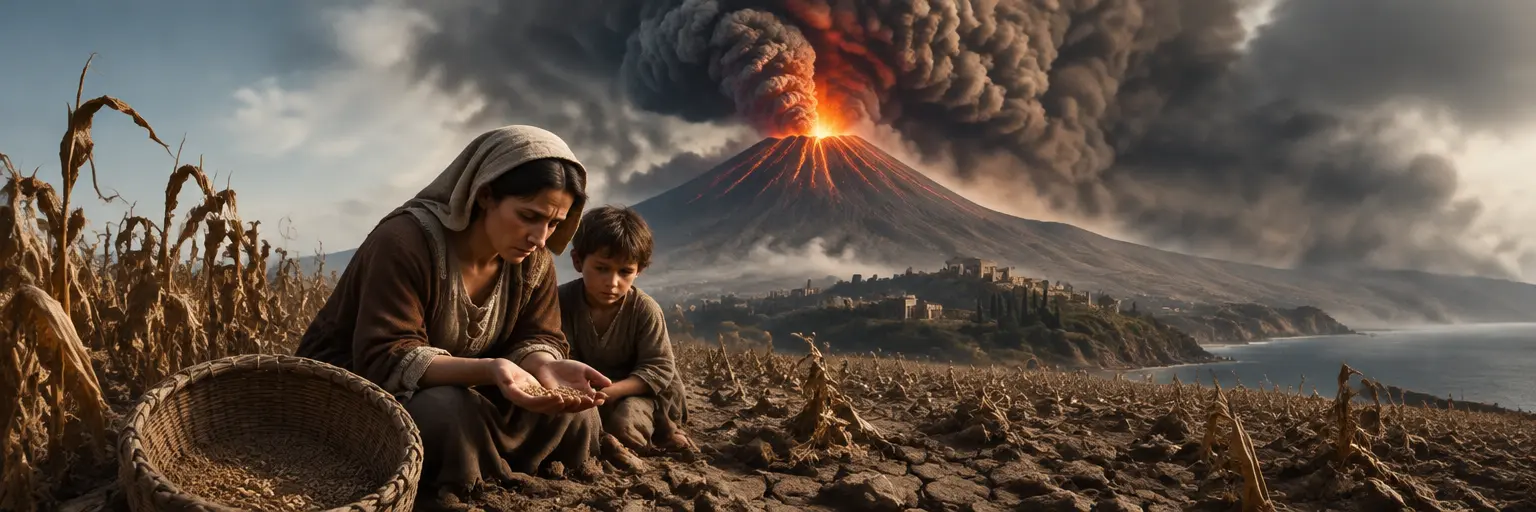
Uncover the chilling link between volcanic eruptions and famines—a hidden thread in human history where the sky darkens and harvests wither. When colossal eruptions inject ash and sulfur aerosols into the stratosphere, they can trigger global cooling and climate disruption, turning fertile lands into barren fields. From the eruption of Tambora in 1815, which spawned the “Year Without a Summer” and widespread crop failures, to the mysterious 536 AD event that contributed to famine and plague across continents, these natural disasters have reshaped societies, economies, and migrations. Explore how volcanic winters and agricultural collapse have repeatedly altered civilizations, forcing adaptation and resilience. Dive into the science behind these cascading impacts and witness how ancient texts and ice cores reveal the stark consequences. This is a gripping journey through climate-induced food shortages and the human struggle for survival against nature’s most explosive forces.
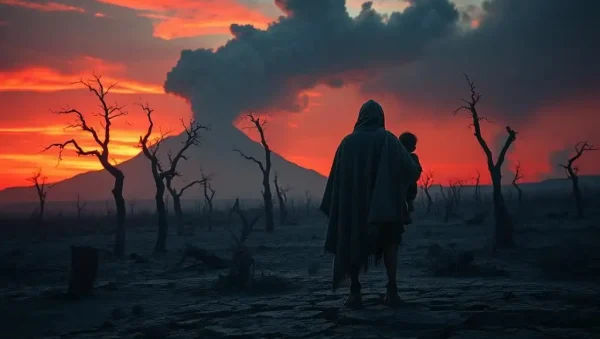
Witness the devastating consequences of cataclysmic volcanic eruptions and climate impact in our chilling account of a sky-darkening eruption and the subsequent…
Read article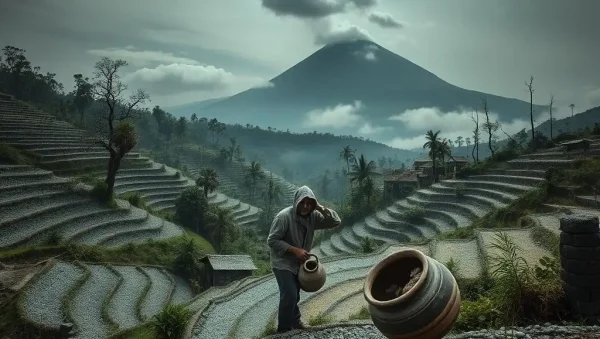
Volcanoes, majestic and terrifying, have profoundly impacted agriculture throughout history. Discover how massive eruptions, detailed on VolcanoExplorers.org, caused widespread famine and reshaped…
Read article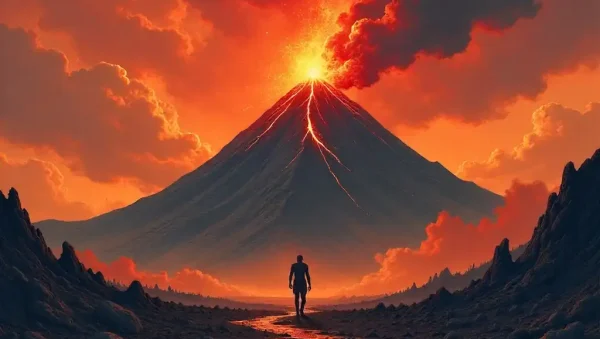
Volcanic eruptions and their devastating impacts are explored in "From Fire to Famine," tracing the catastrophic chain reaction—from initial eruption to subsequent…
Read article
Uncover the devastating impact of the Tambora eruption on global climate in 1816, the "Year Without a Summer," and its catastrophic consequences…
Read article
VolcanoExplorers.org reveals crucial historical volcanic famine survival lessons. Explore how past eruptions devastated civilizations, and discover the insights vital for future preparedness…
Read articleExplore the chilling connection between volcanic eruptions and famines in history, where a single explosion altered climate patterns, destroyed harvests, and triggered mass starvation. This subcategory at VolcanoExplorers.org reveals how ancient societies faced the double blow of fire and hunger, reshaping populations and political power.
Discover how the Tambora eruption of 1815 and the Laki fissure eruption of 1783 injected sulfur aerosols into the stratosphere, blocking sunlight and dropping global temperatures by up to 1°C. These so-called “volcanic winters” disrupted monsoon cycles and growing seasons across Europe, Asia, and North America. The resulting crop failures transformed regional economies and triggered the Year Without a Summer in 1816.
Learn how more ancient events, such as the Kuwae eruption in 1452, likely contributed to the Little Ice Age’s onset. Historical records from China, Japan, and Scandinavia document unprecedented cold, famine, and social unrest following these eruptions. This section connects geological evidence — ice core sulfate spikes, tree ring anomalies — with written chronicles to show how volcanoes acted as both destroyers and catalysts for societal change.
Focus on the immediate local impacts: volcanic ash blanketing fertile farmlands, poisoning soils with fluorine and heavy metals, and killing livestock that grazed on contaminated grass. The 2010 Merapi eruptions in Indonesia, though less extreme, still destroyed thousands of hectares of crops. In historical contexts, the Huaynaputina eruption in 1600 in Peru caused a regional famine that some anthropologists link to the collapse of local economic systems.
Understand how volcanic winters compounded with existing vulnerabilities, such as dense populations or poor infrastructure. In 1783, Iceland’s Laki eruption alone produced a hazard of fluorine gases that killed 50% of the country’s livestock, leading to a famine that killed about 20% of the Icelandic population. This section explores the cascade: ash fall → soil degradation → water contamination → harvest failure → food storage depletion → social unrest and displacement.
Famines from eruptions did not just cause hunger; they redrew political maps. The 1783 Laki eruption’s famine contributed to tenant farmer revolts in Iceland under Danish rule, while the Tambora-related famine in Europe sparked food riots in France and Switzerland. In the 1600–1601 Huaynaputina case, Russian grain shortages tied to the eruption helped fuel the Time of Troubles, a chaotic period of civil war and foreign invasion.
This section links historical famine data with modern resilience strategies. For example, regional authorities in volcanic zones now stockpile emergency grain and diversify crops to tolerate cold summers. By analyzing how past societies coped — or failed — we can better predict the socioeconomic fragility of modern nations facing a mega-eruption. The lesson: food security is deeply vulnerable to atmospheric changes, and preparedness must begin well before an eruption occurs.
Delve into primary sources: monastic chronicles in Europe, Japanese rice tax records, and Chinese administrative logs that recorded harvest yields and famines. These documents allow researchers to cross-reference eruption dates with famine peaks. For instance, accounts of “mysterious dry fog” and below-freezing summer nights in 1783–1784 align precisely with Laki’s eruption sequence, confirming the cause-effect chain.
See how modern science validates these records using ice core sampling and volcanostratigraphic dating. The concept of the “dust veil index” helps quantify the atmospheric impact of past eruptions. By merging quantitative geology with qualitative narratives, this subcategory offers a compelling balance — showing history is not just about politics but about the planet’s violent moods.
Consider what if a Volcanic Explosivity Index 7 eruption occurred today. The Food and Agriculture Organization warns that a Tambora-scale event could eliminate 10–20% of global crop production in a single year. Current global food reserves only cover about 50 days of world needs. This section outlines innovative solutions: breeding cold-resistant crops, creating strategic grain reserves, and improving volcano early warning systems beyond just evacuation.
Real-time monitoring of volcanic gas emissions and satellite temperature data can now forecast potential climate impacts. Countries like Indonesia and Japan have integrated volcanic risk assessments into national food security plans. By studying past famines, scientists can model “dry runs” for emergency responses, ensuring history does not repeat itself with even deadlier consequences due to our larger global population and interconnected trade networks.
The 1815 Tambora eruption in Indonesia is widely regarded as the worst, creating the “Year Without a Summer” in 1816. Crop failures and livestock deaths across Europe, North America, and China led to an estimated 100,000–200,000 famine-related deaths globally.
Eruptions release sulfur dioxide that forms sulfate aerosols, which reflect sunlight and cool the planet. This shortens growing seasons, reduces rainfall in monsoon regions, and causes frost in summer. Ash also contaminates soil and water, multiplying crop damage.
Not fully. Modern crops depend on specific climate conditions, and global reserves are limited. However, climate-controlled greenhouses, hybrid crops, and international food aid could mitigate some losses, though a multi-year event would still cause severe shortages.
Yes, high-threat volcanoes like Yellowstone (USA), Campi Flegrei (Italy), and Agung (Indonesia) have potentials for large eruptions. However, no current monitoring shows imminent danger; scientists continuously track gas outputs and deformation to provide warnings.
Maintain at least a two-week supply of non-perishable foods and water, grow hardy backyard crops, and stay informed via local volcanic observatories. Community-level strategies include establishing shared storage facilities and diversifying local food sources.